196 myths · Page 5 of 7
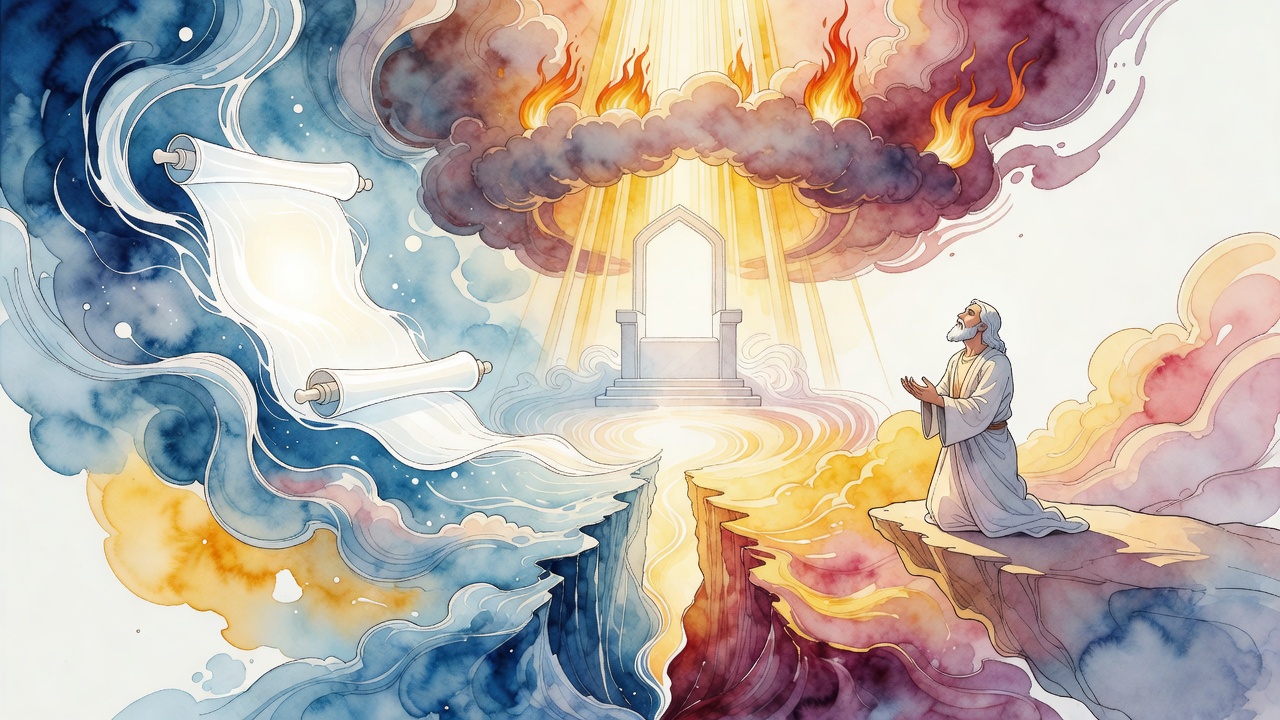
Torah stopped at the world's door and would not go in. Humans would fail, it said. God answered by naming a redeemer already appointed.
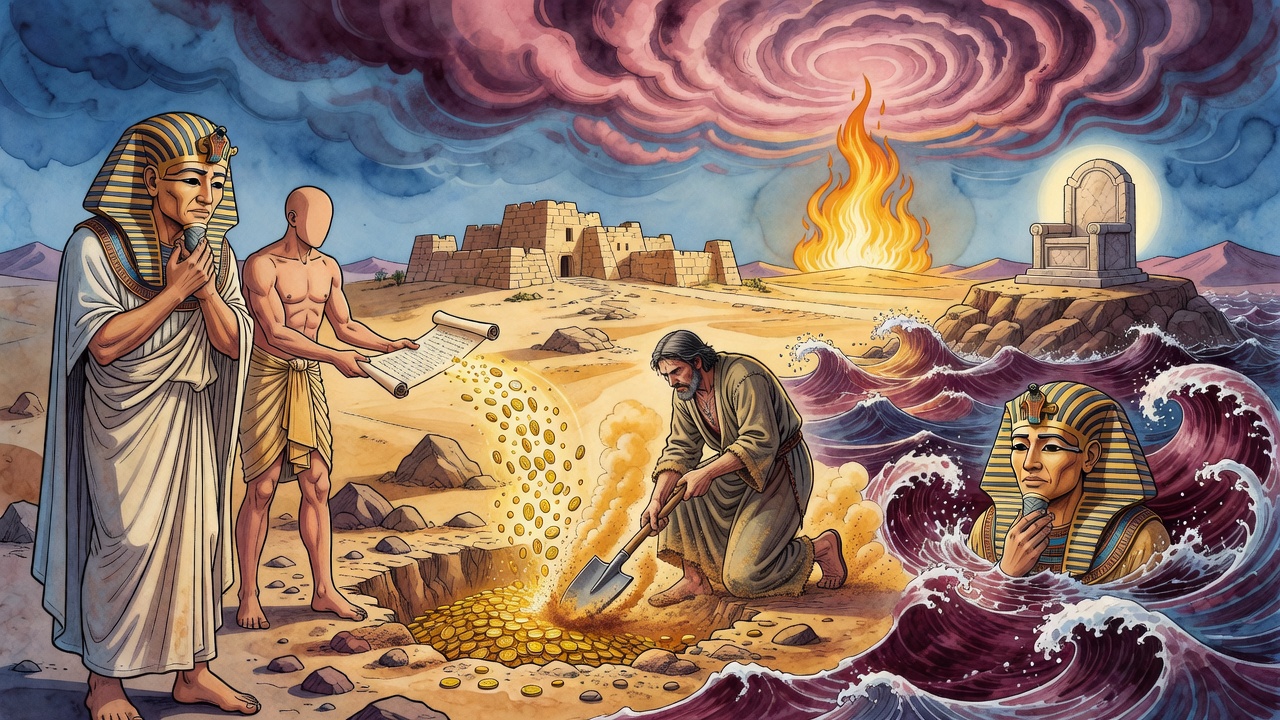
He sold a country-seat he had never walked. The buyer dug and pulled gold and pearls from the dirt. On the shore Egypt began to choke.
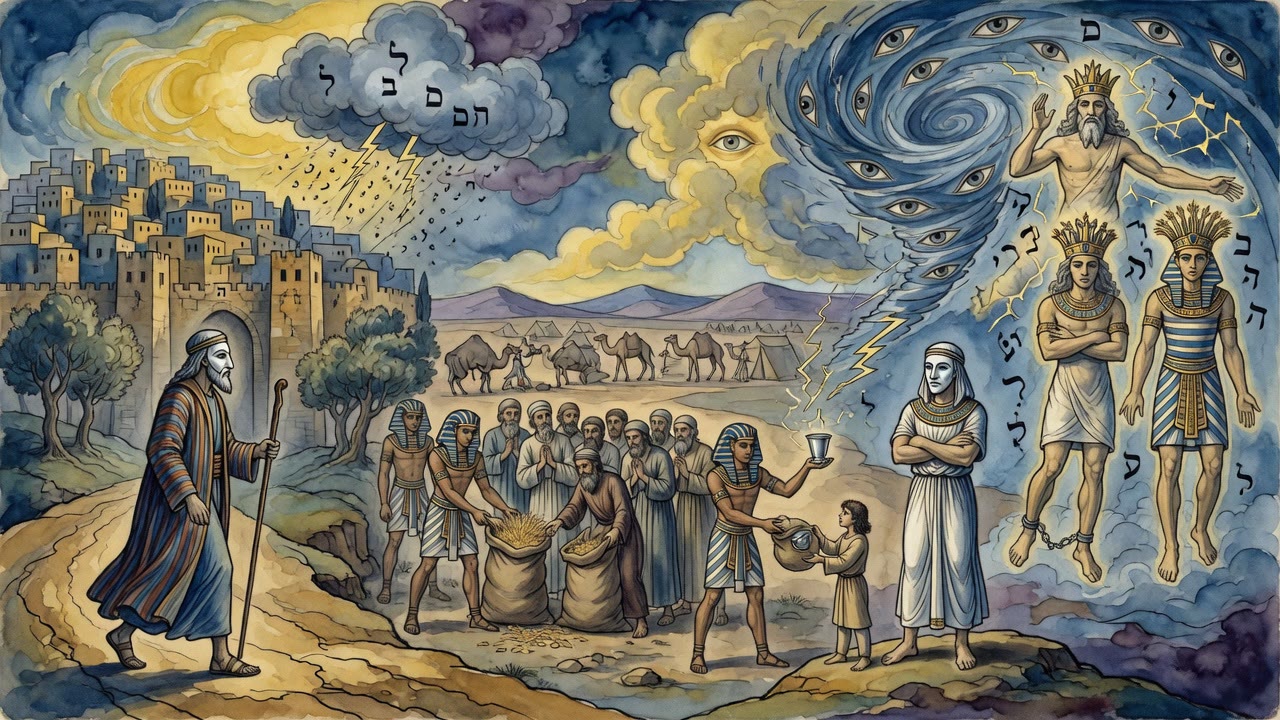
Jacob blesses Joseph's firm bow after Potiphar's house, and Egypt stays soft only while Joseph lives, then hardens into slavery.
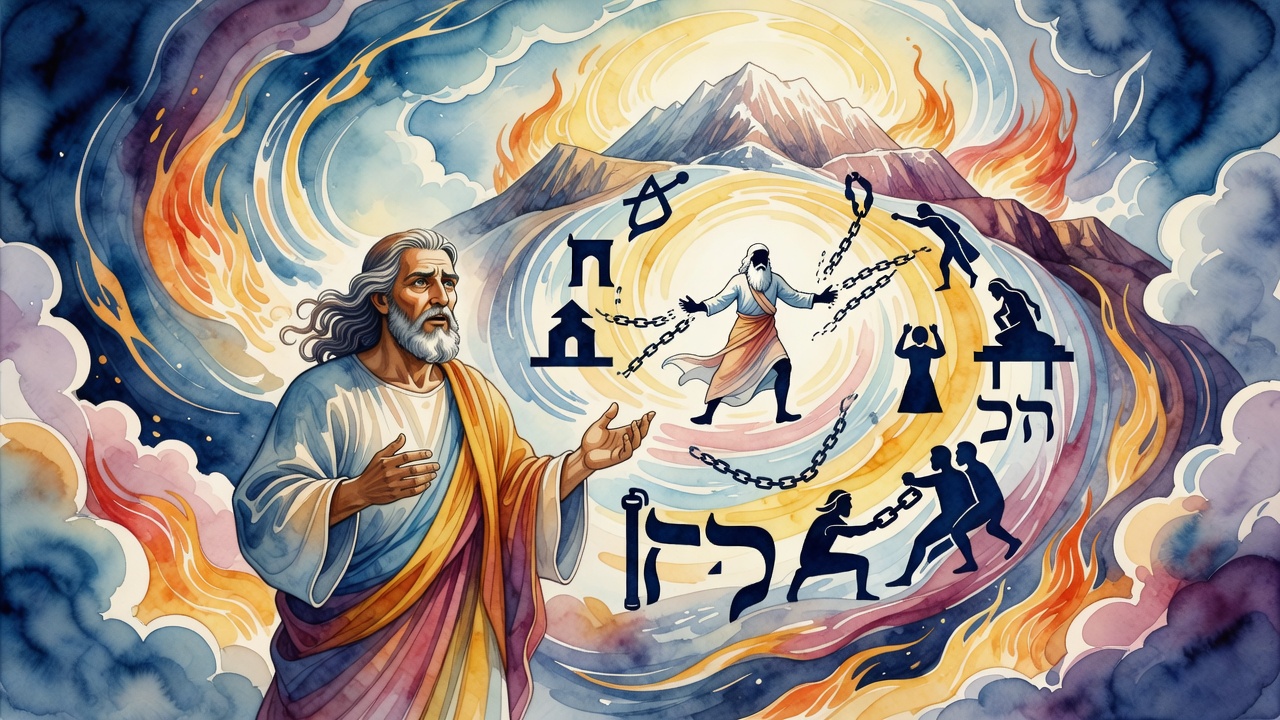
At Sinai Moses fears Israel will be sold into exile, so God opens with a servant freed in the seventh year, six kingdoms of bondage already counted.
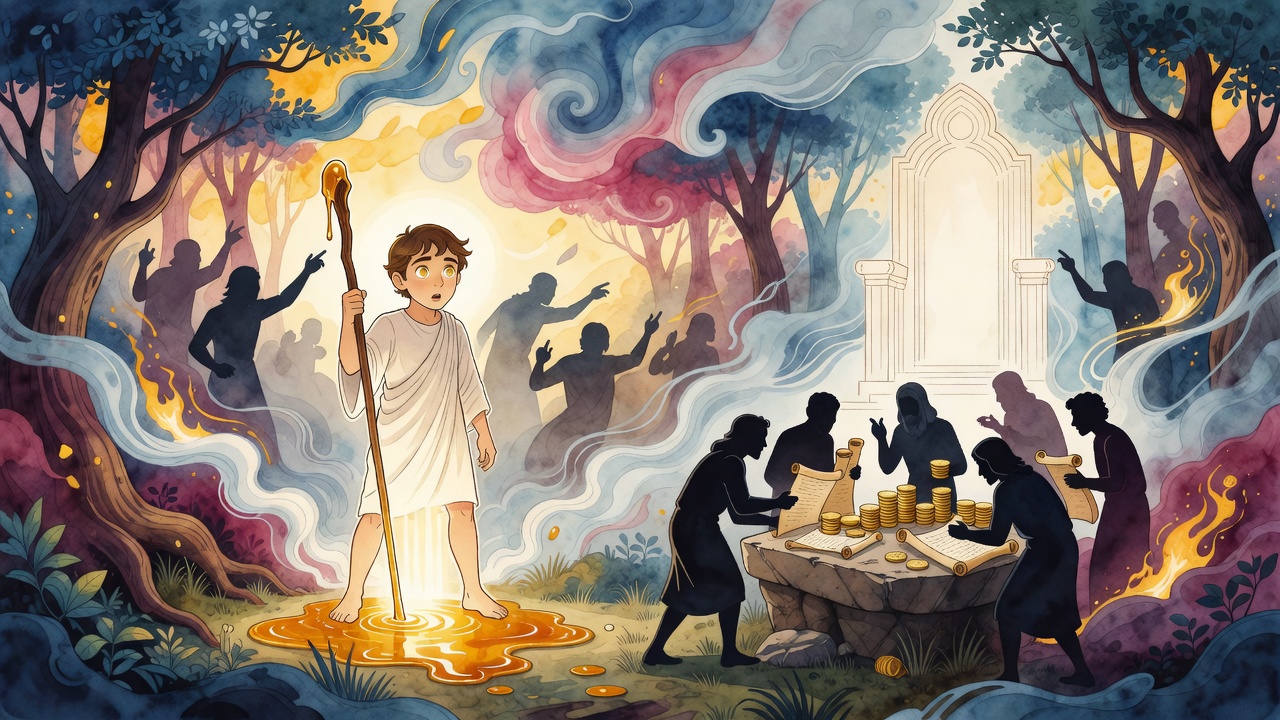
The army chased Philistines all day on empty stomachs. Jonathan, deep in the woods, had never heard the oath that nearly killed him by nightfall.
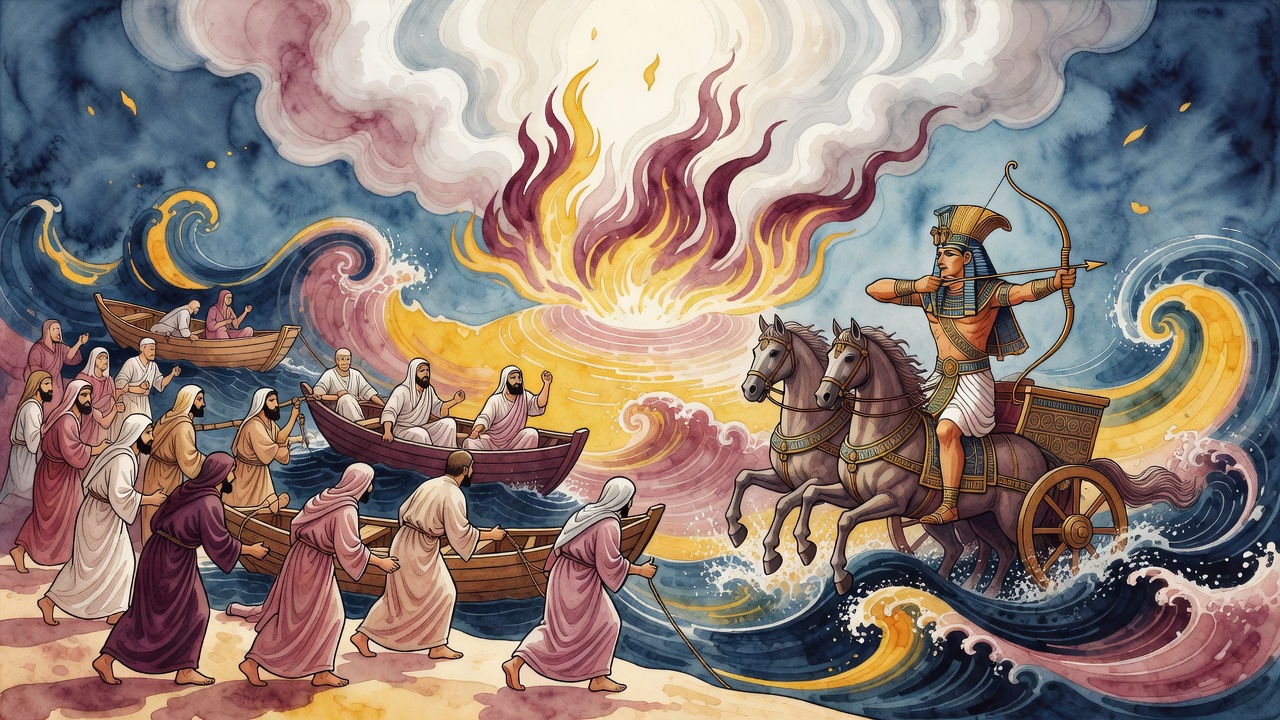
Israel took three days to reach the shore. Pharaoh burned that same road into one day of rage. At the sea the water was already waiting.
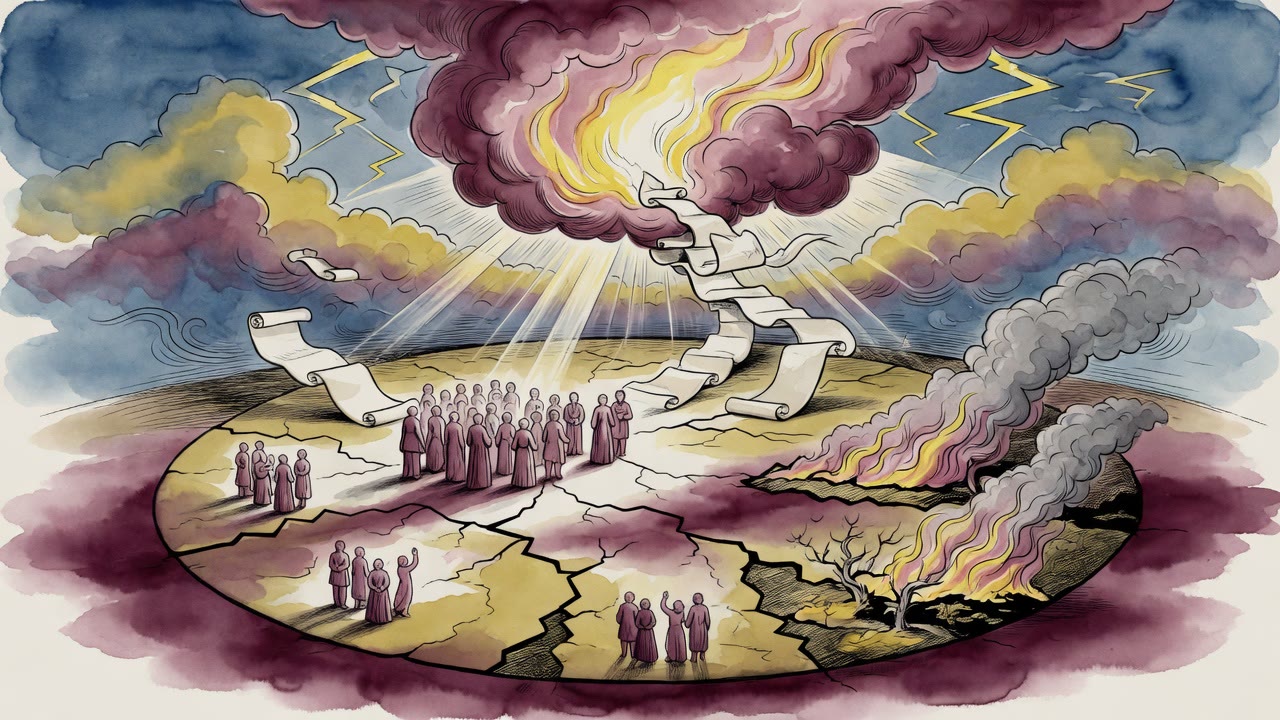
The air itself chewed. He wanted erasure. The angel opened a ledger, and the blank lines meant the burning was not done.
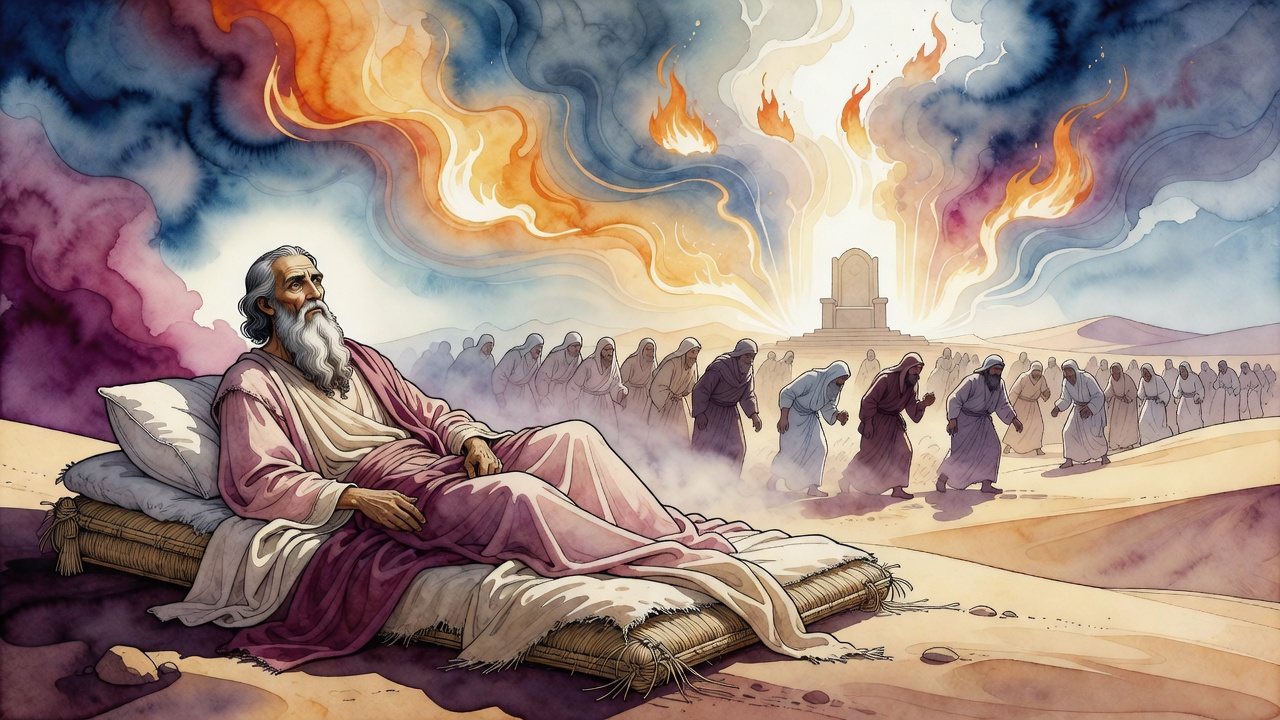
Grain filled Joseph's storehouses. On the bed in Goshen, Jacob watched roads of exile his grandsons would never walk. He did not tell them.
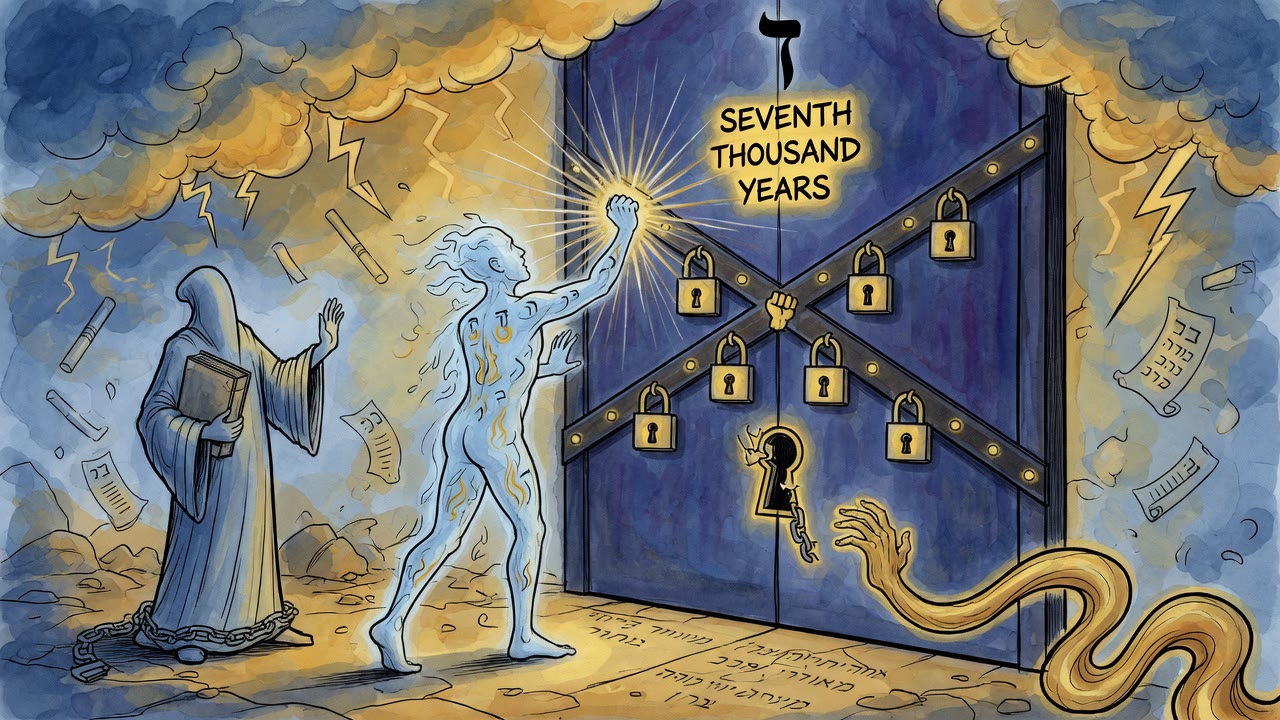
Heat leaked through a door with no handle. The Soul knocked once to mark the place, then turned back toward the rooms that still answered.
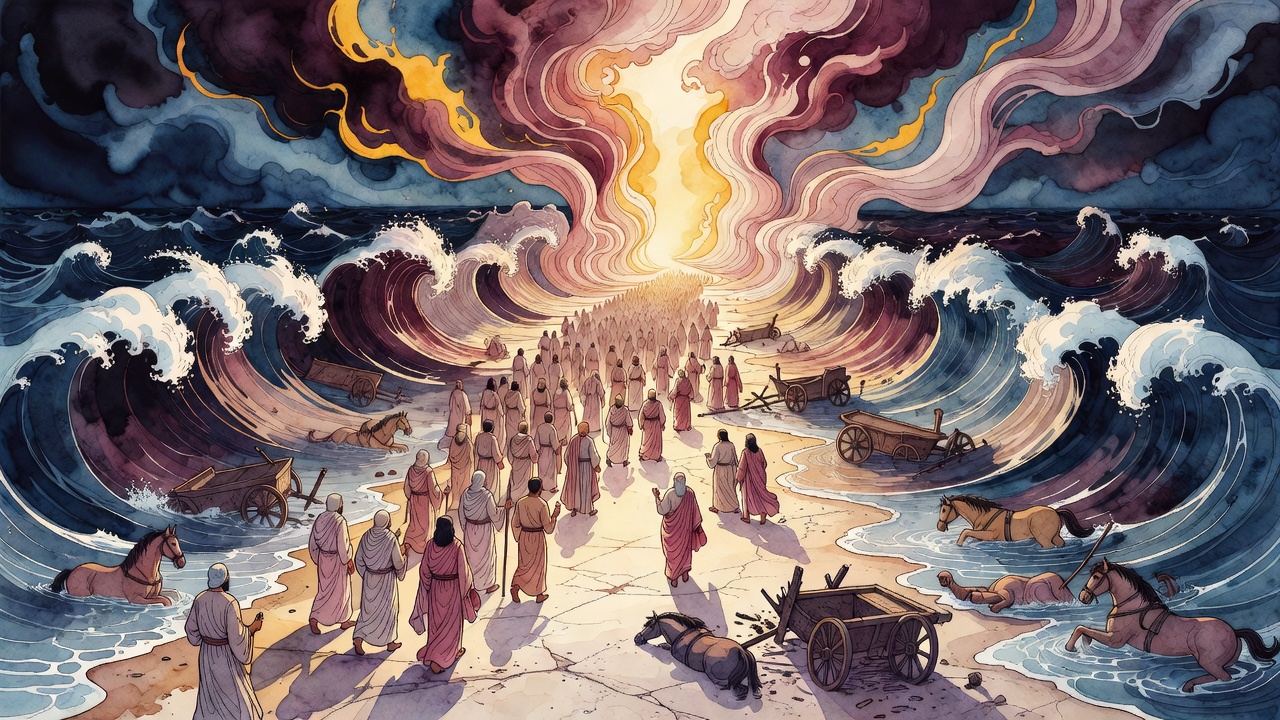
Moses told Pharaoh the last plague would make him shove Israel out. At midnight the king hunted the brothers through the dark himself.
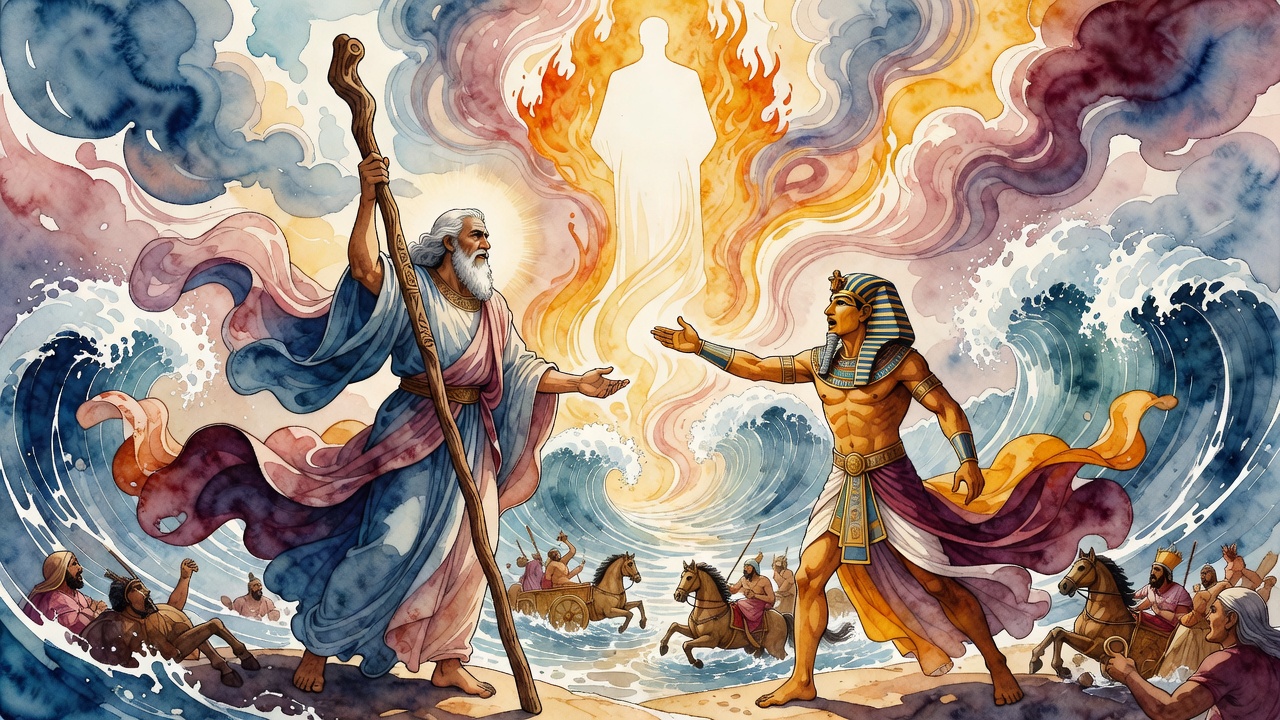
Sand in front. Chariots behind. They told Moses they had already chosen Egypt over a death in the open desert.
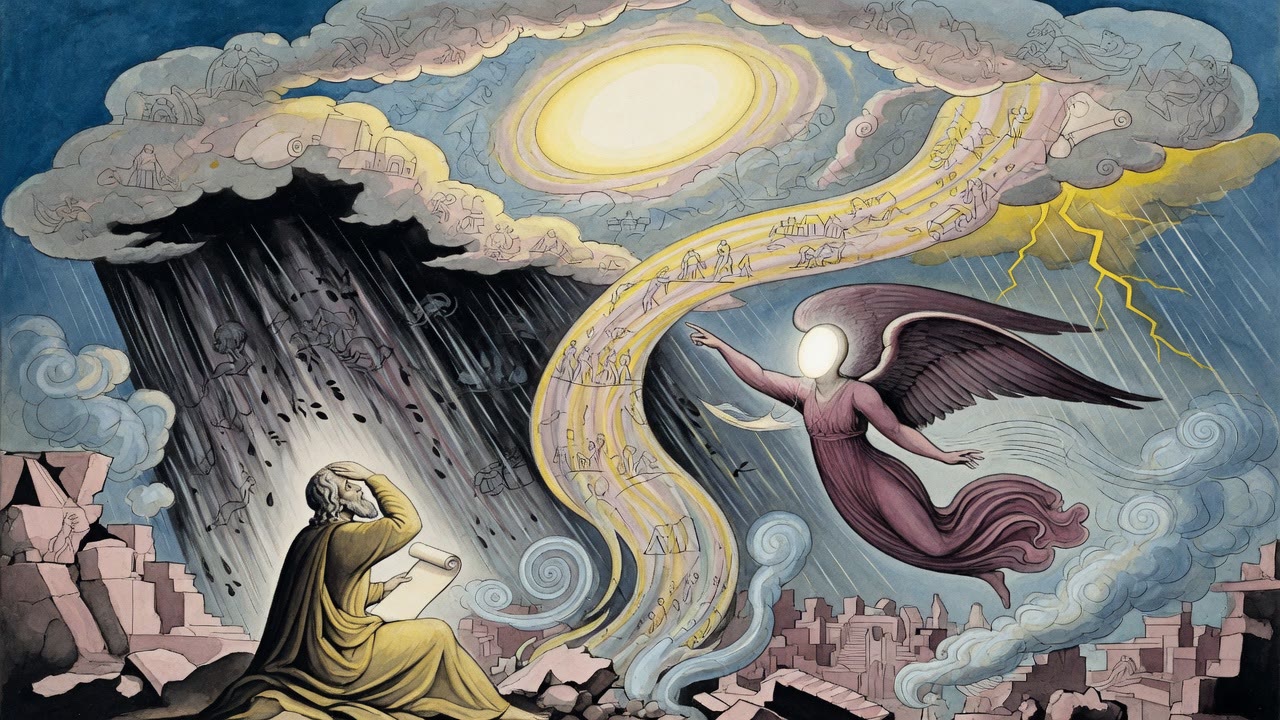
After Jerusalem falls, Baruch sees a cloud pour Adam's black waters and Abraham's bright ones. Ramiel names each flood until history itself becomes weather.
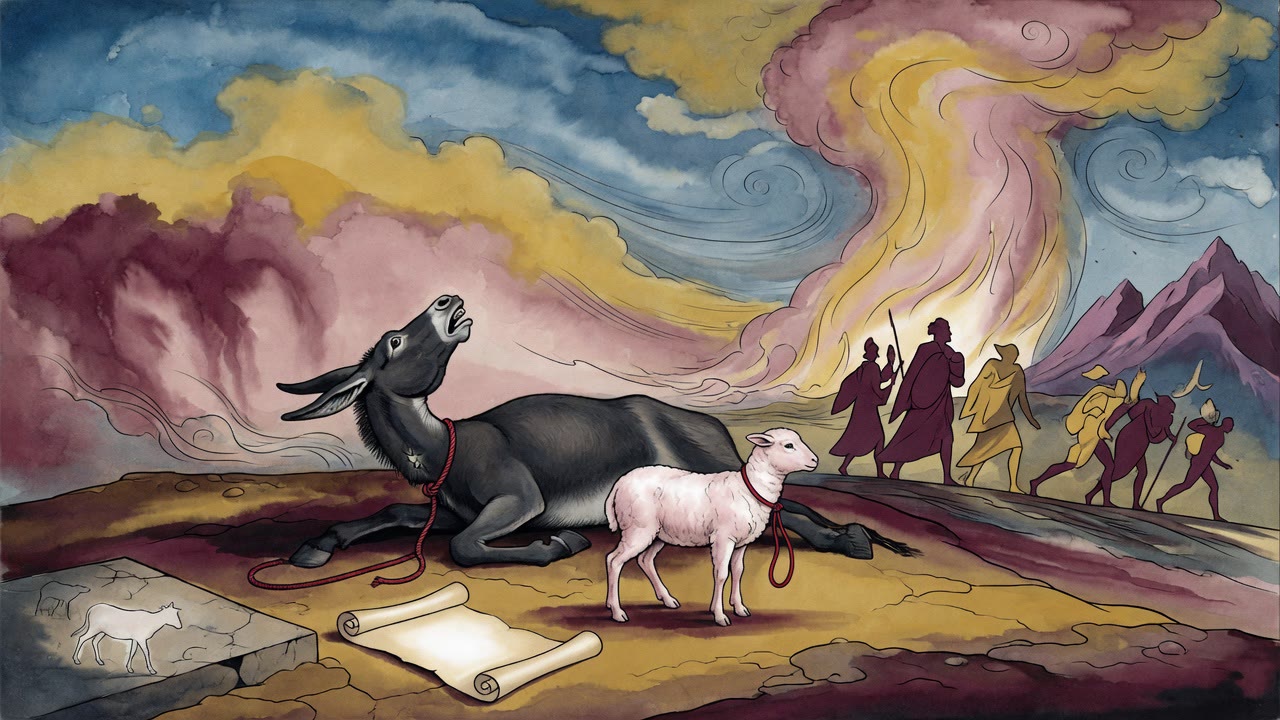
On Nisan night Israel ate whole lamb from open flame with horehound and lettuce before midnight, loins girded, staff ready.
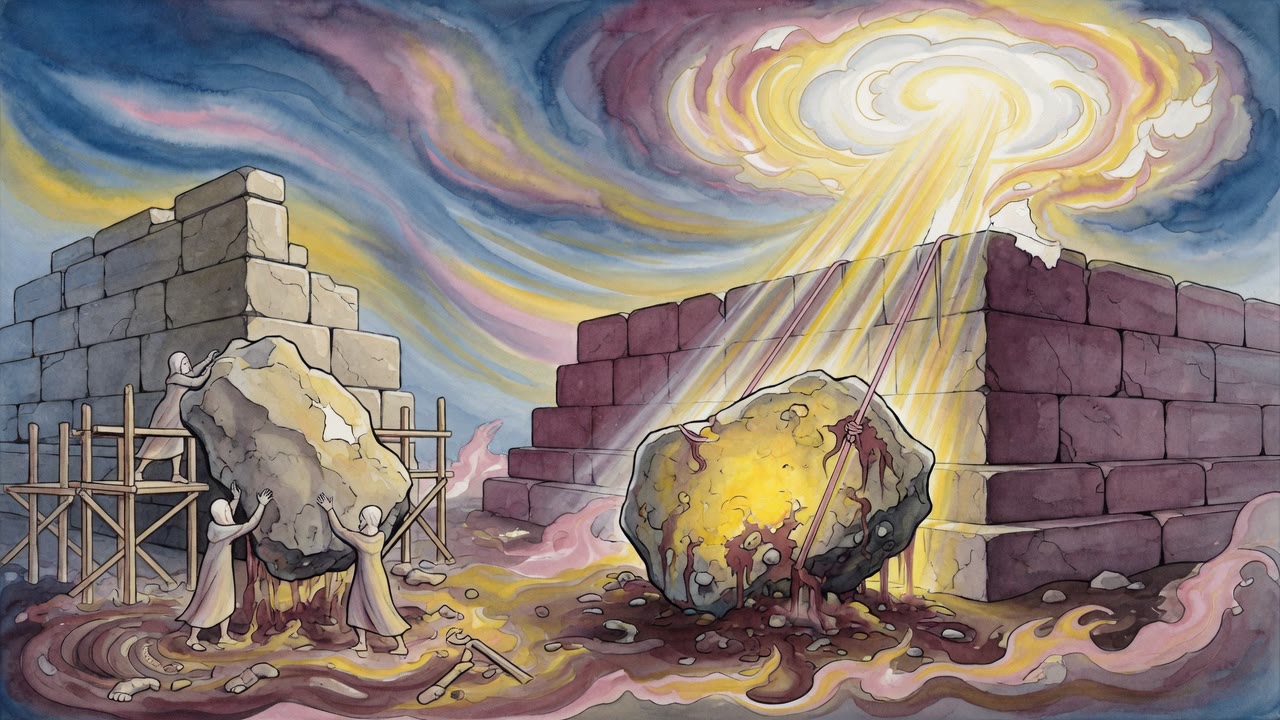
Nebuchadnezzar looked down from his boat, saw the kings of Judah walking the riverbank with nothing on their backs, and ordered loads put on them.
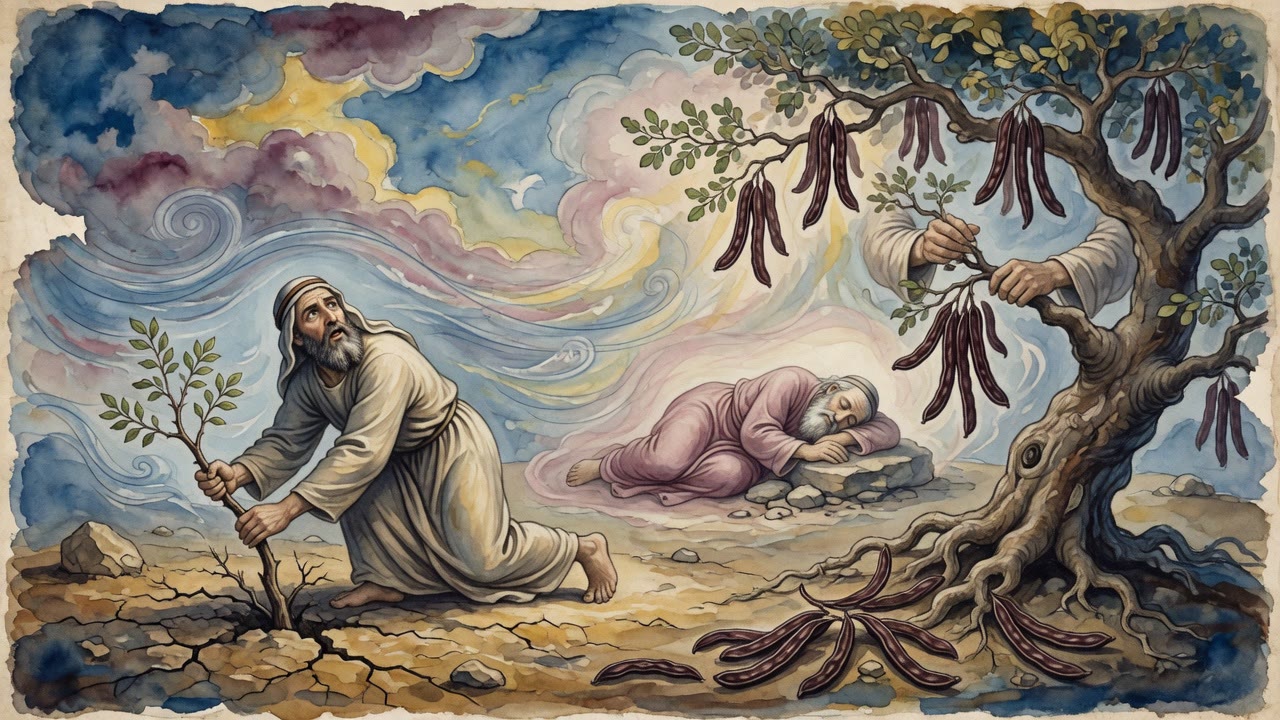
Sixty myriads cannot fit at the Tent door. God answers with stretched heavens, Sinai chariots, and a future Jerusalem that climbs to the Throne.
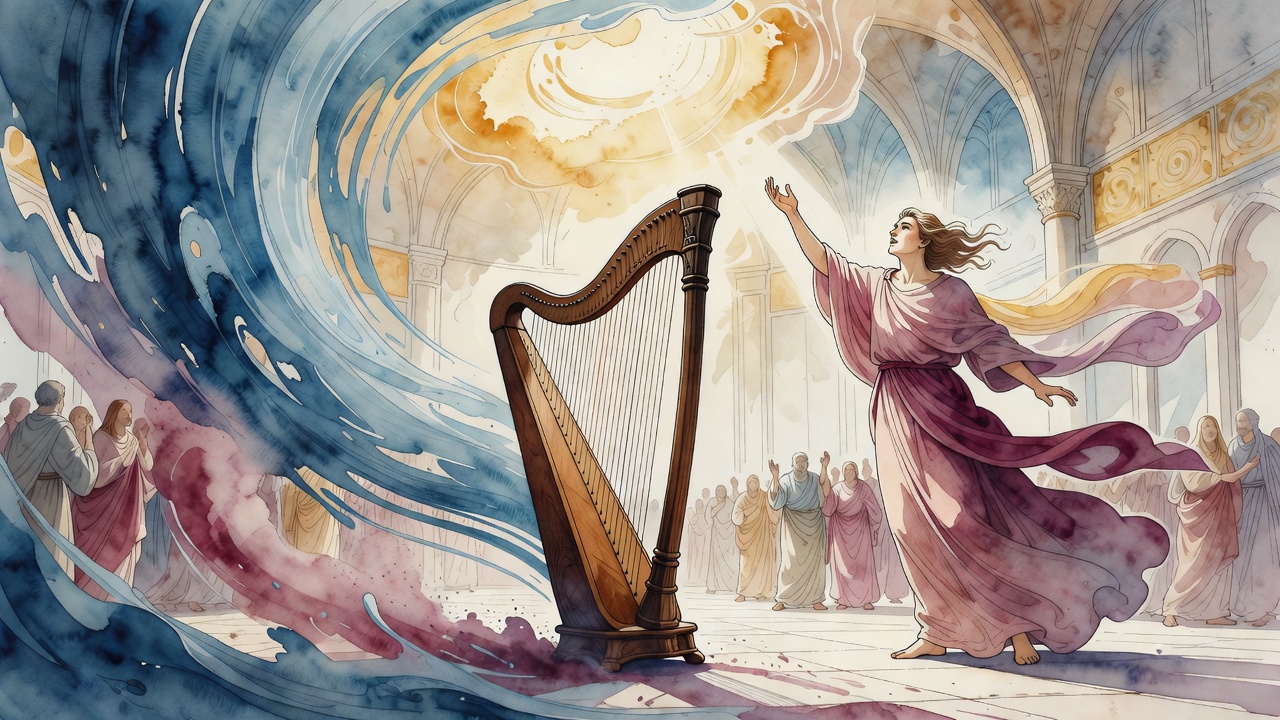
At midnight the north wind played the harp above David's bed. Ten melodies began with Ashrei, and even a frog claimed to out-sing the king.
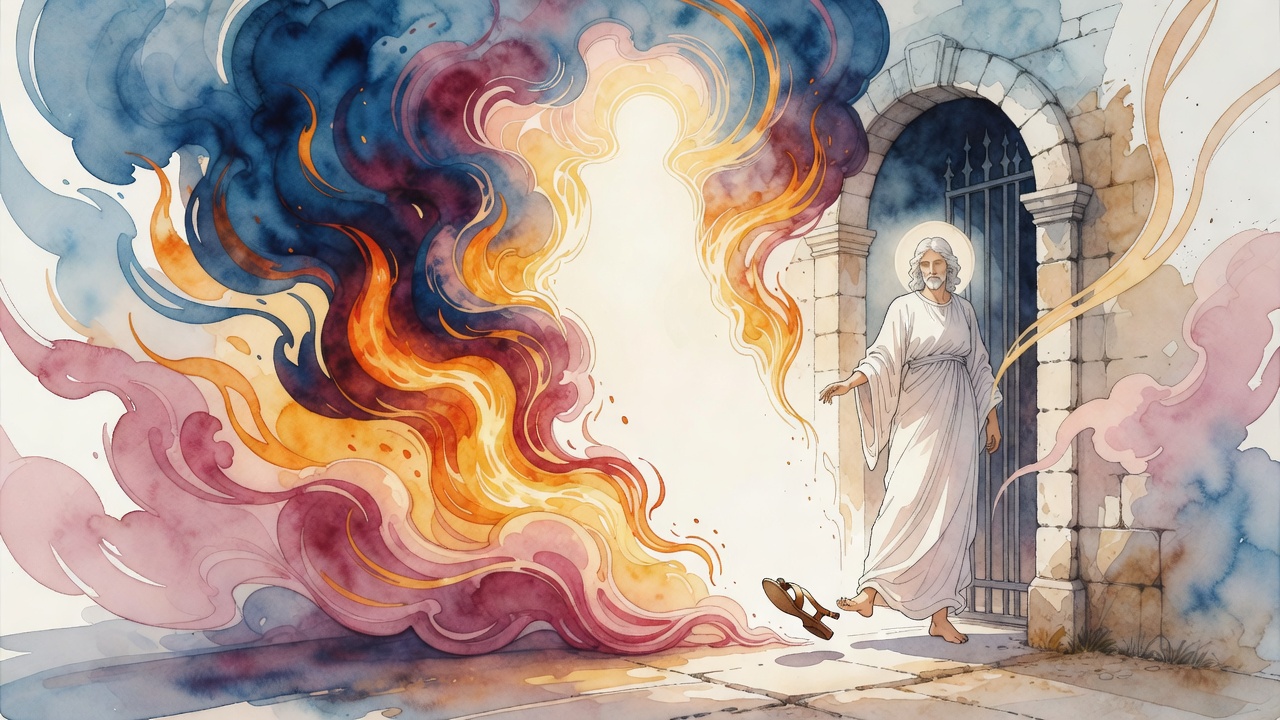
Chaff blew across the stones at Bethlehem's gate. The nearer kinsman would not take the field or the widow. A sandal left a man's foot.
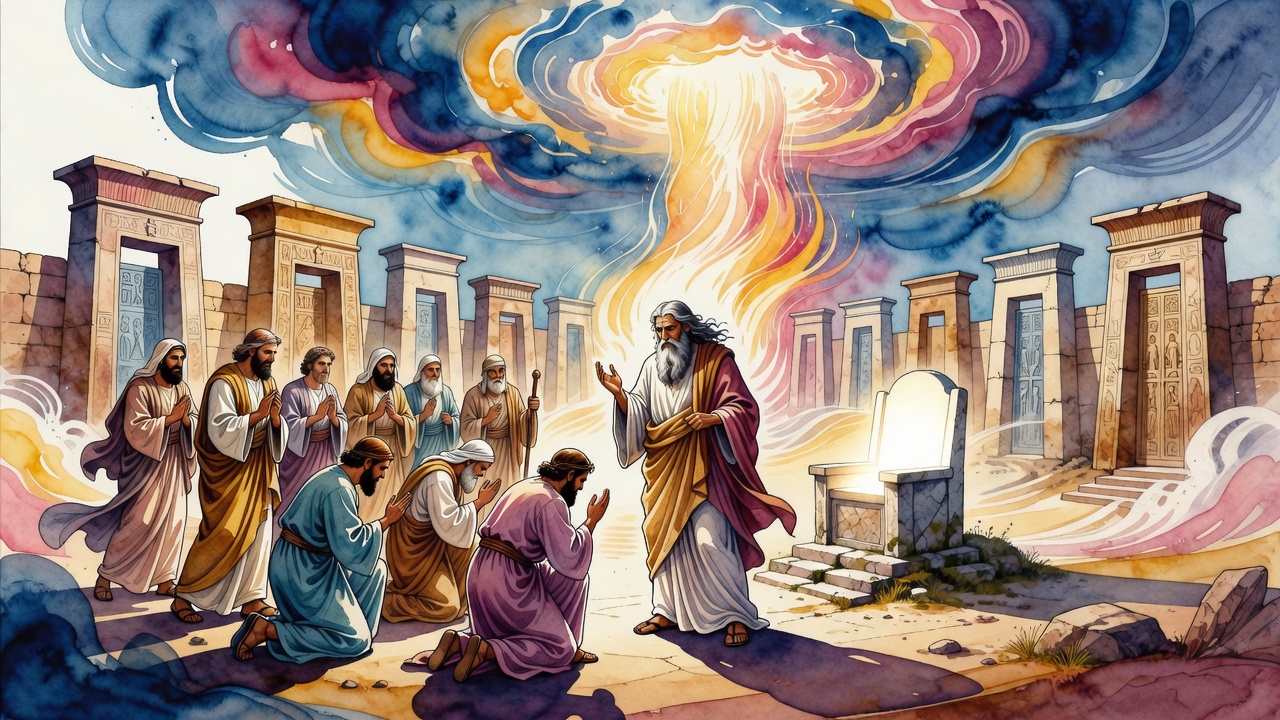
Jacob asked why his sons feared the road to Egypt. They split across ten gates against the evil eye, then bowed to a bearded stranger who remembered dreams.
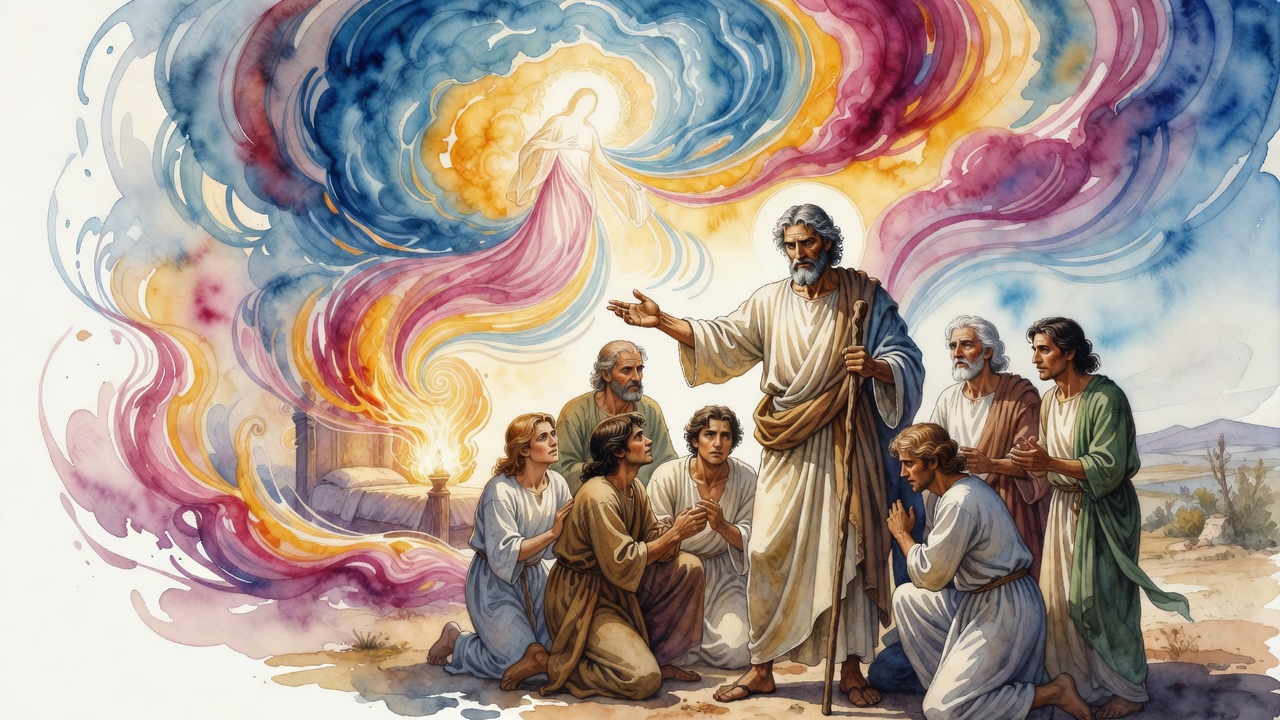
The brothers saw the empty seat and feared the pit again. Joseph made them swear a doubled word no false deliverer would know.
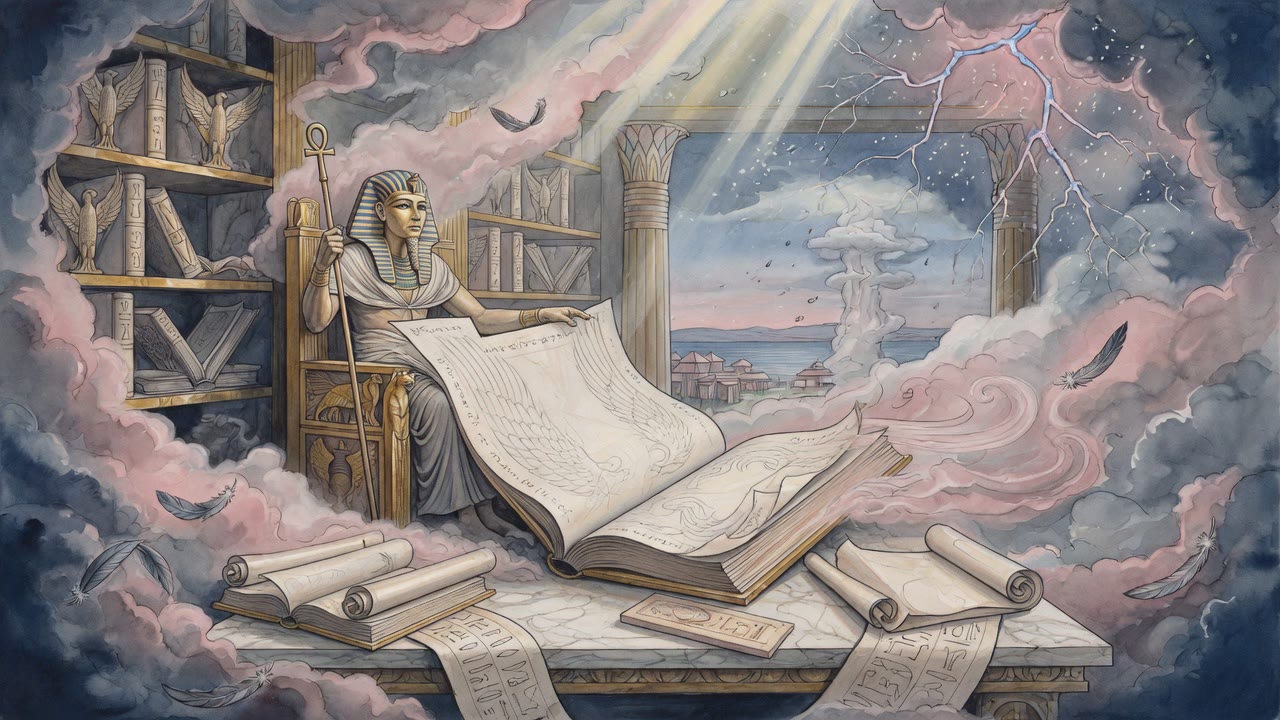
Pharaoh ran a finger down every name Egypt feared. The Name Moses carried was not written in the Book of the Angels.
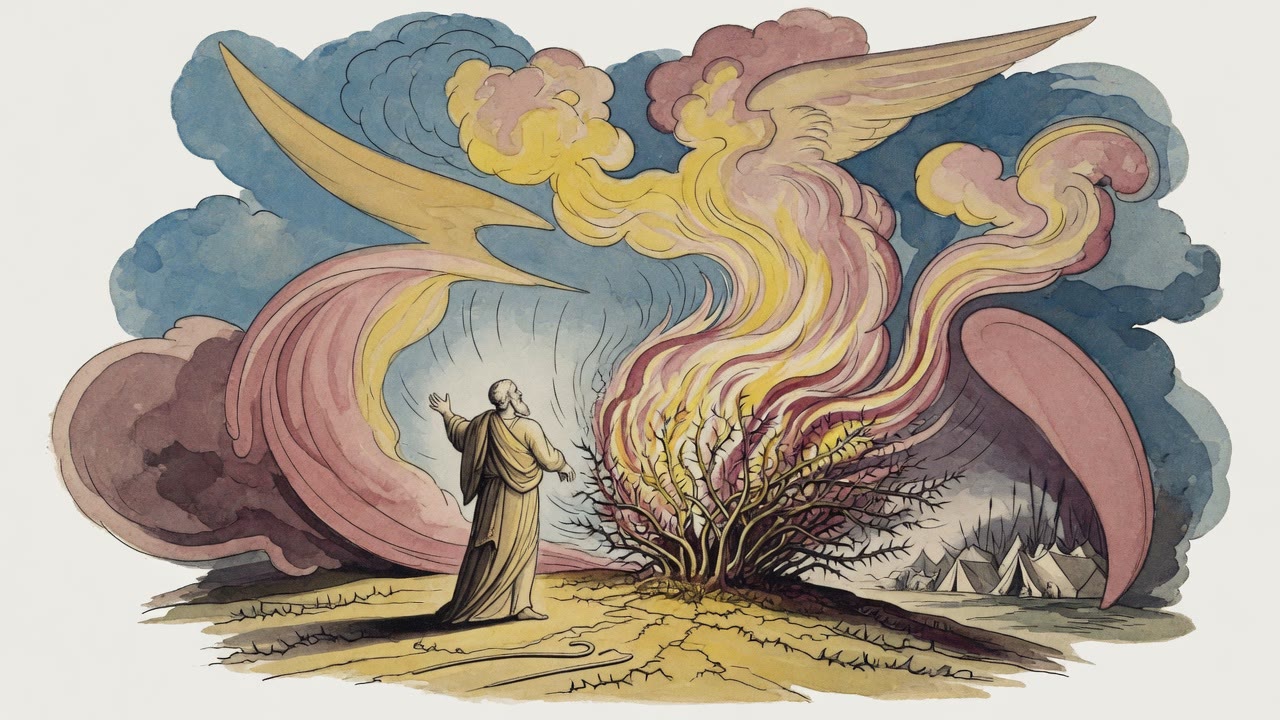
The bush burned and made no ash. Moses wanted a name he could carry into Egypt. What he got was a future he had to keep behind his teeth.
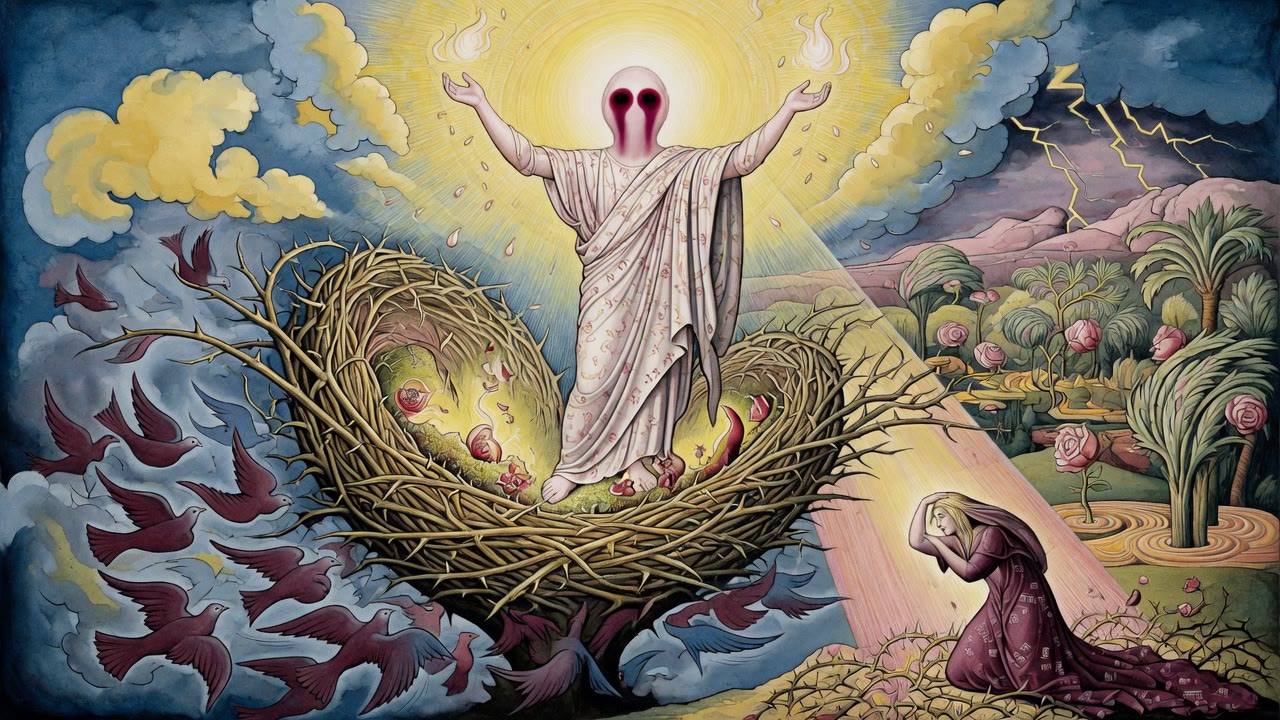
Each sixth day the Bird's Nest opens in Gan Eden (the Garden of Eden). The Messiah rises, eyes pure as wine, and Zion is redeemed before her trembling arrives.
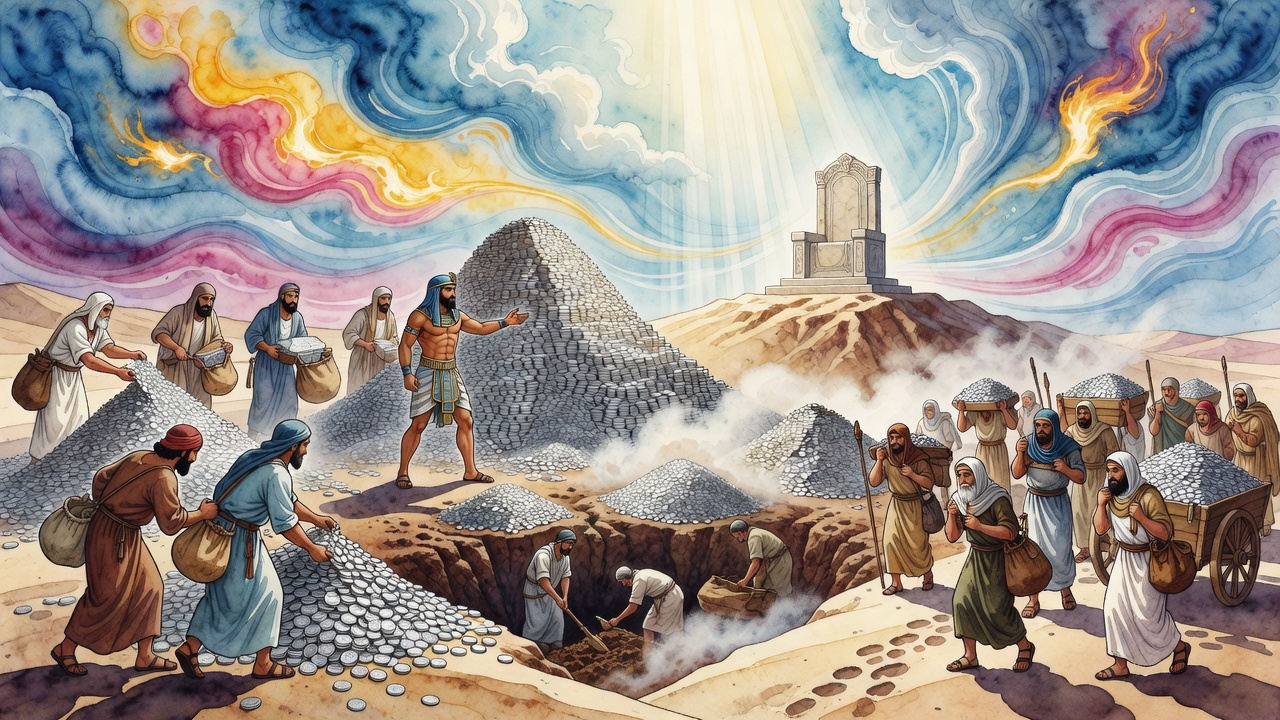
Nations empty their purses for grain. Joseph stacks the earth's silver in Egypt, buries three hoards, and later Israel carries the treasure out.
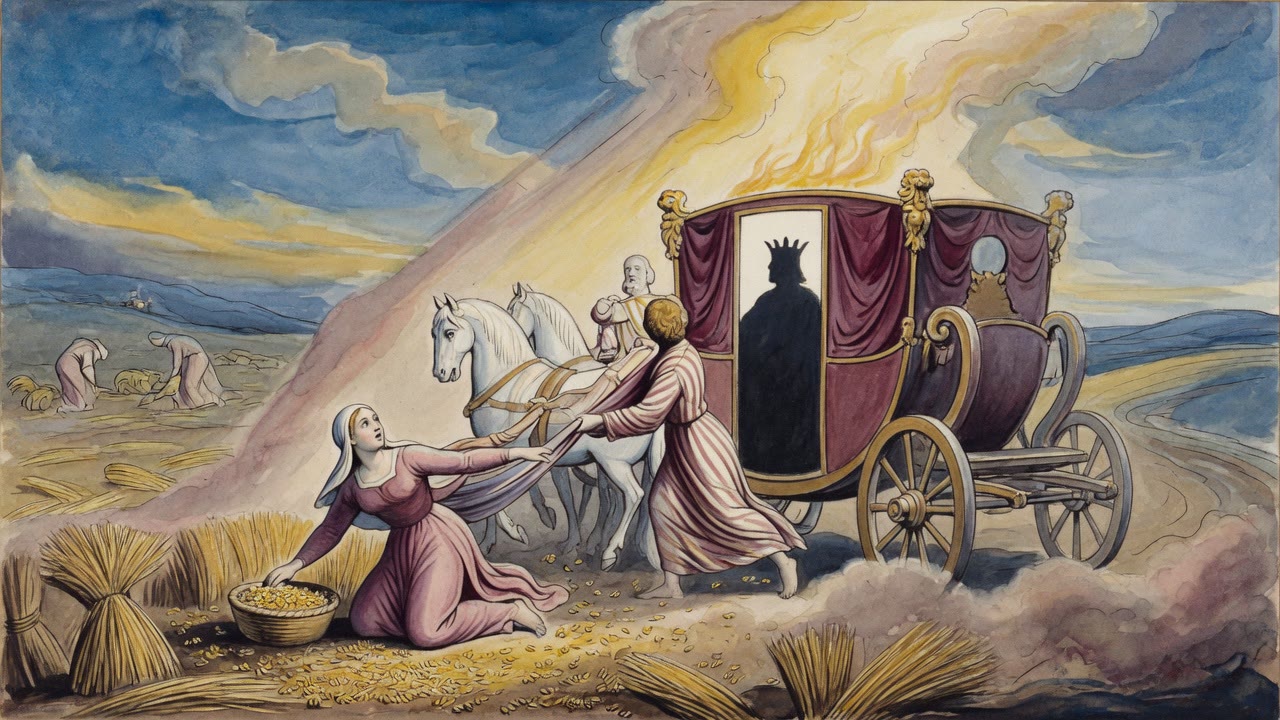
A princess gleaning leftovers is lifted into the royal carriage. Israel and Joseph know that same astonished rise from dust to throne.
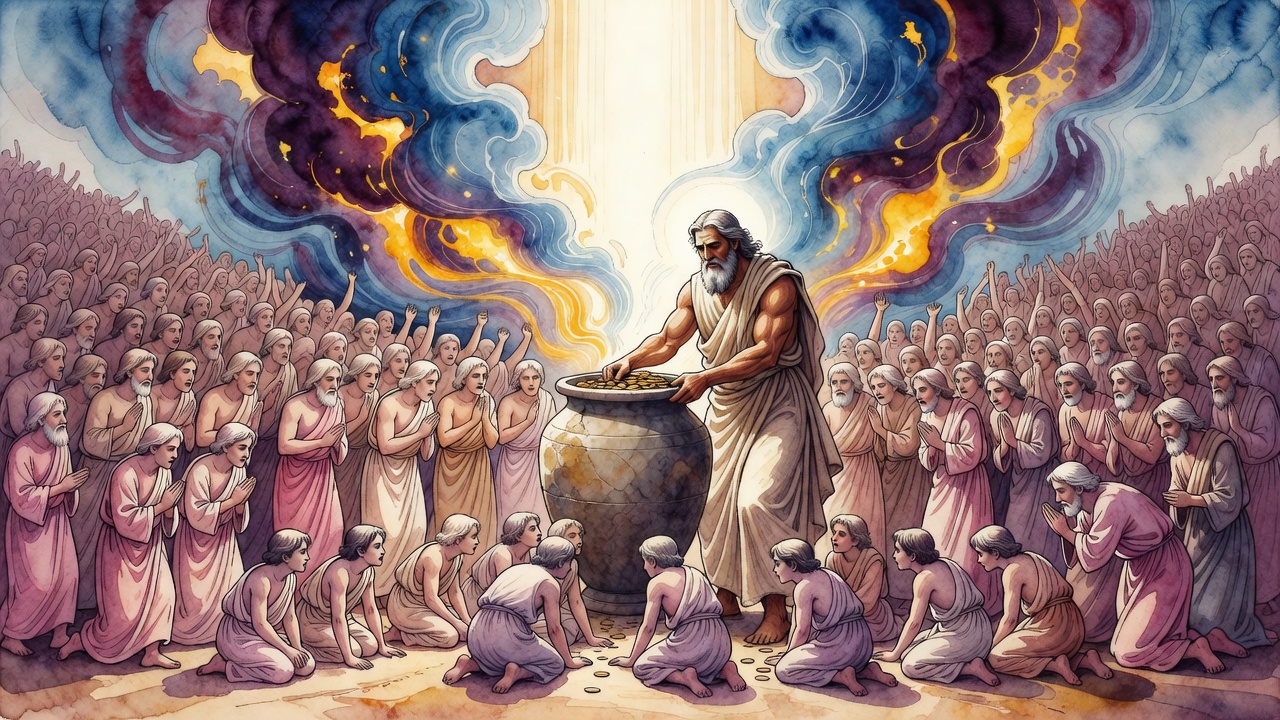
Twenty-two thousand Levites cover Israel's firstborn, but two hundred seventy-three sons still owe five coins. Moses fills an urn so no father can cry foul.
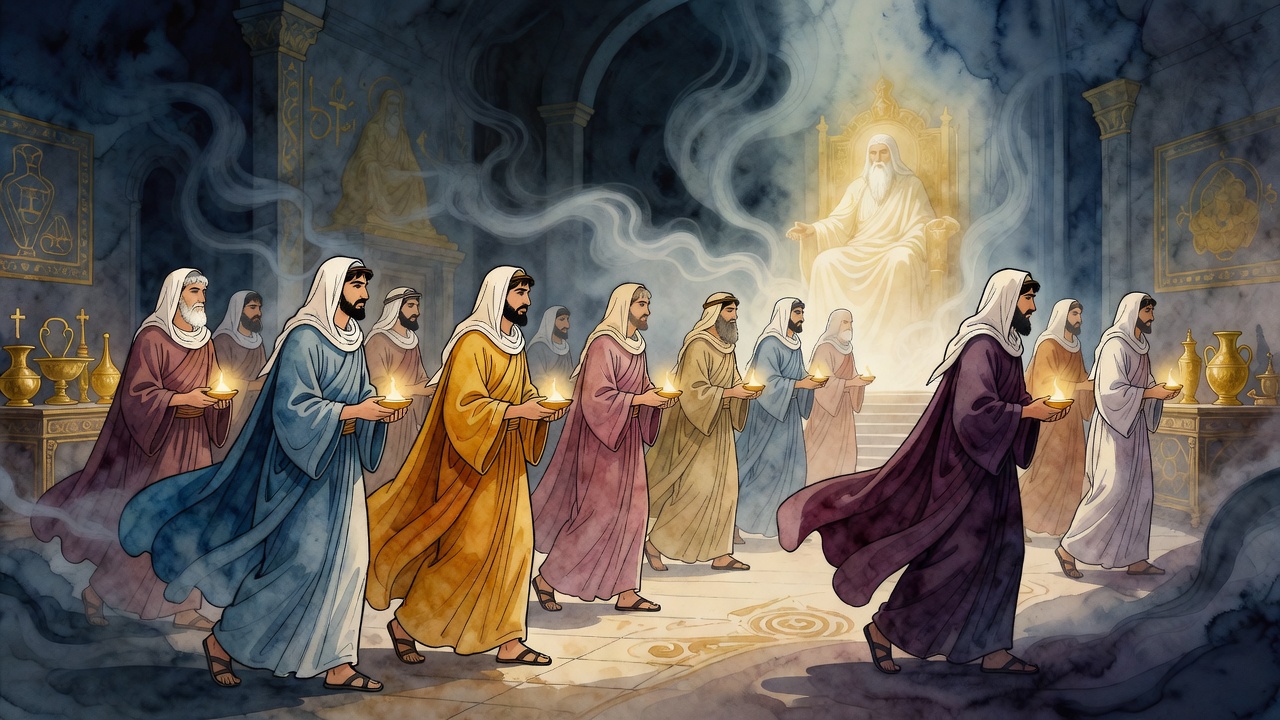
For three days an Egyptian could not find his own water jar. In the next room an Israelite stood over gold and left it on the table.
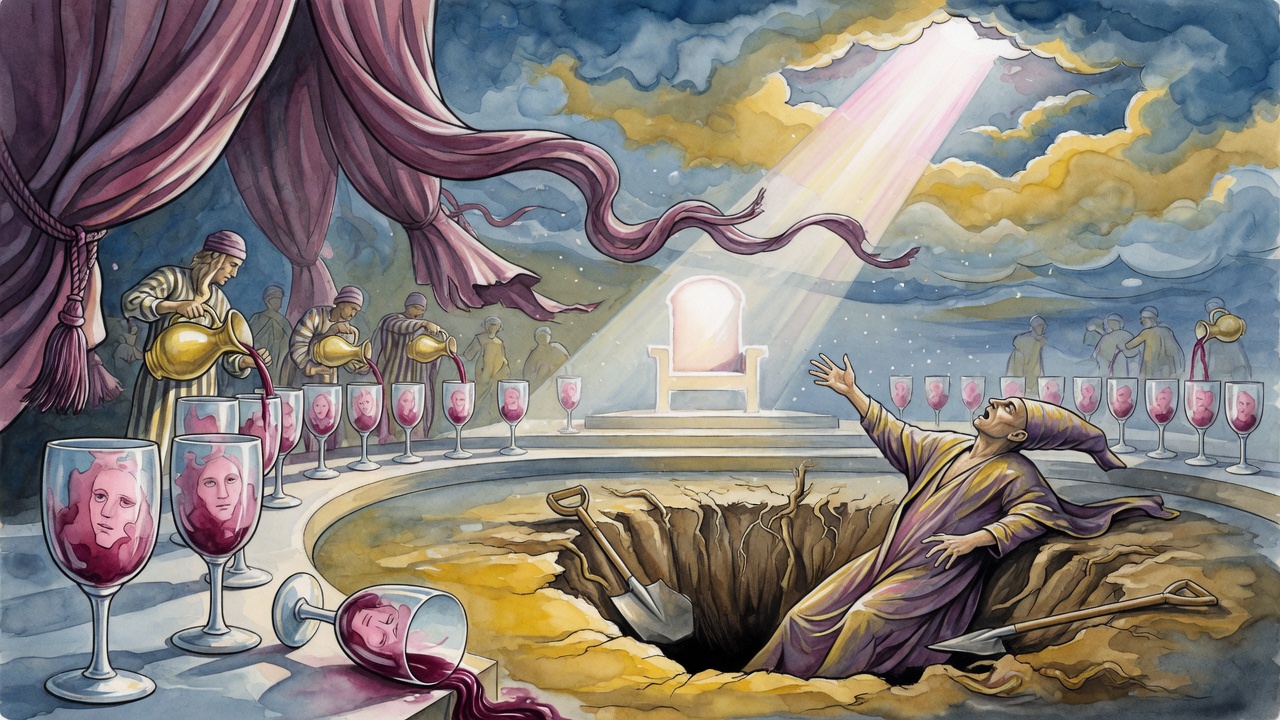
Israel grew poor through sin and sold itself in Media under Haman. Mordecai, nearest redeemer, covers a people that ate at the wrong tables.
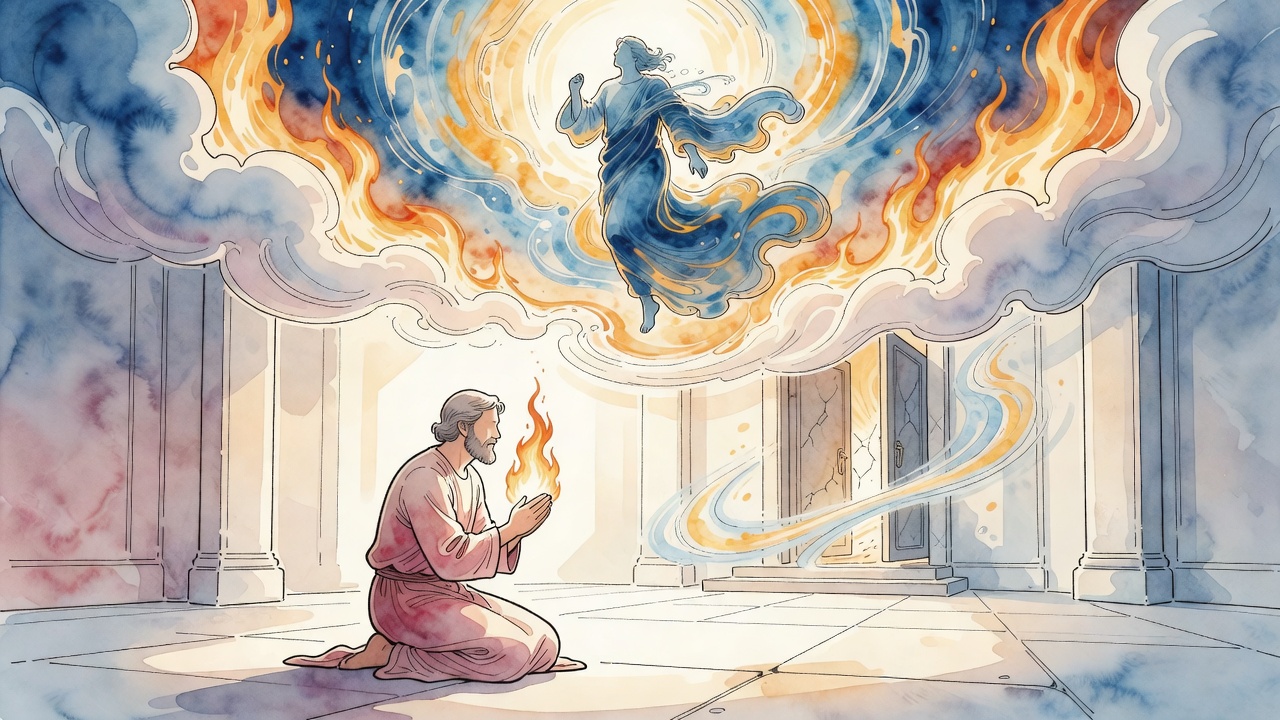
Rabbi Menachem finished the midnight tikkun, the repair rite, with a voice that cracked on the last psalm. He felt the empty chair beside him, almost occupied.
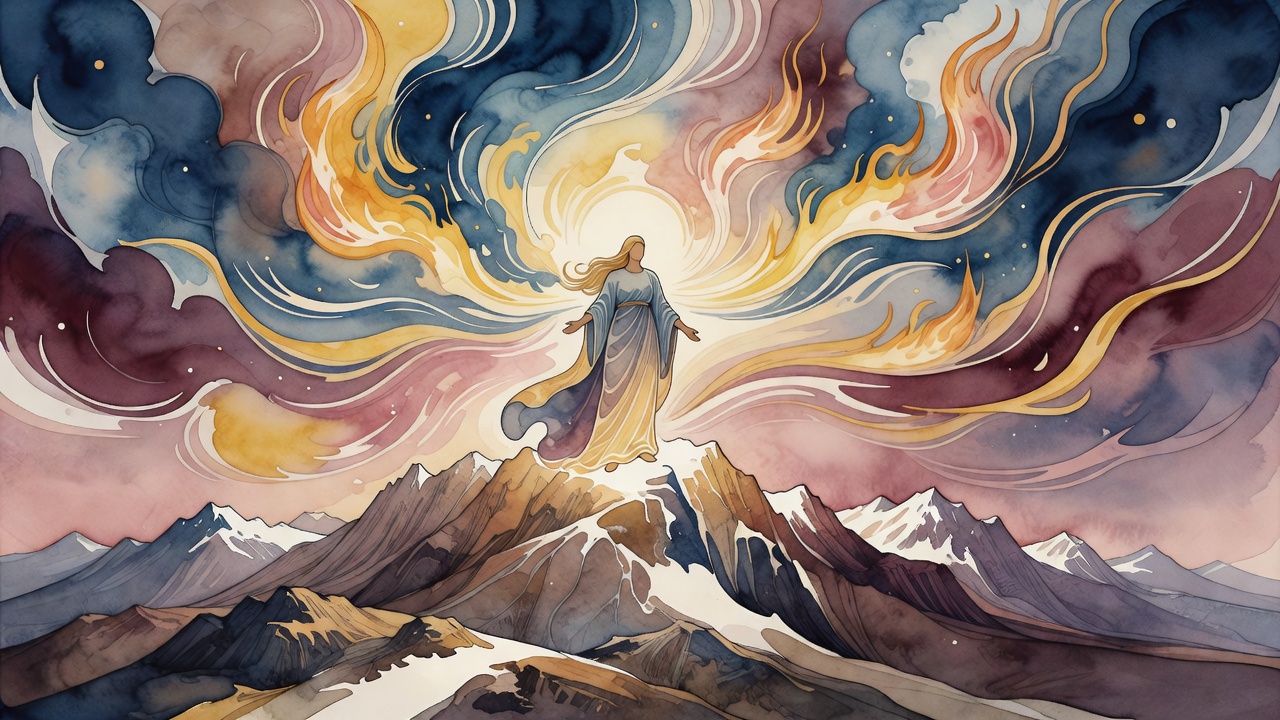
Forty-nine nights they counted, and children asked if today was the day. On the fiftieth morning the air on the mountain grew heavy.
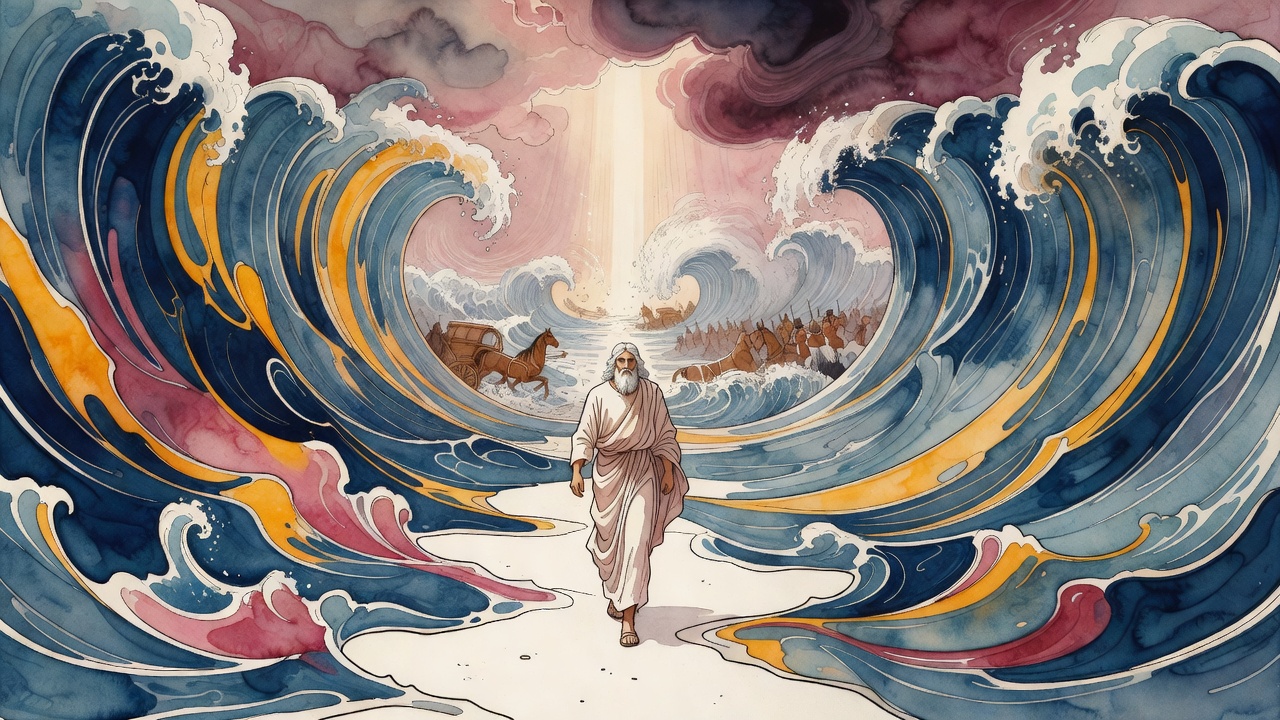
Israel walked between walls of water three hundred miles to each side. Egypt named God too late. The waves returned and not one soldier remained behind.
