72 myths · Page 2 of 3
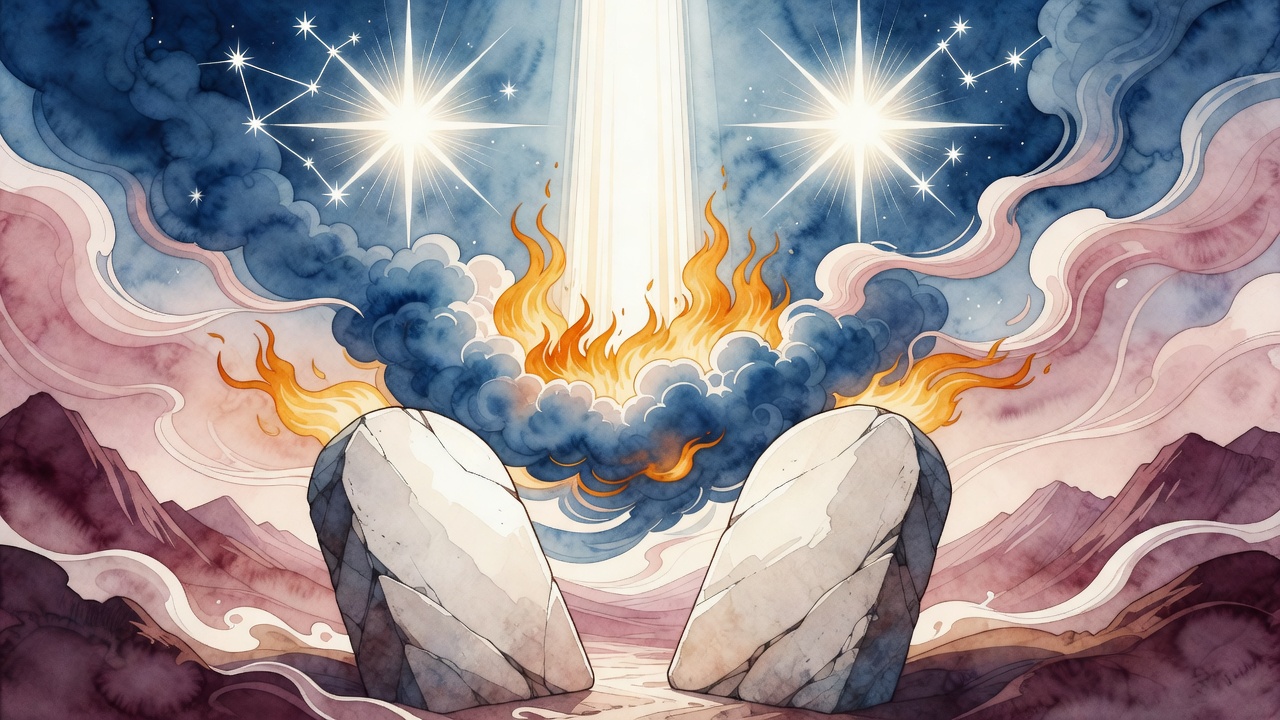
Wicked Esau could still walk in and learn, God said, and pointed at the calendar. That was the whole answer the nations were given.
Jacob had not lain down to sleep in fourteen years. God told him to lie down, and he argued back that the sun was still too high in the sky.
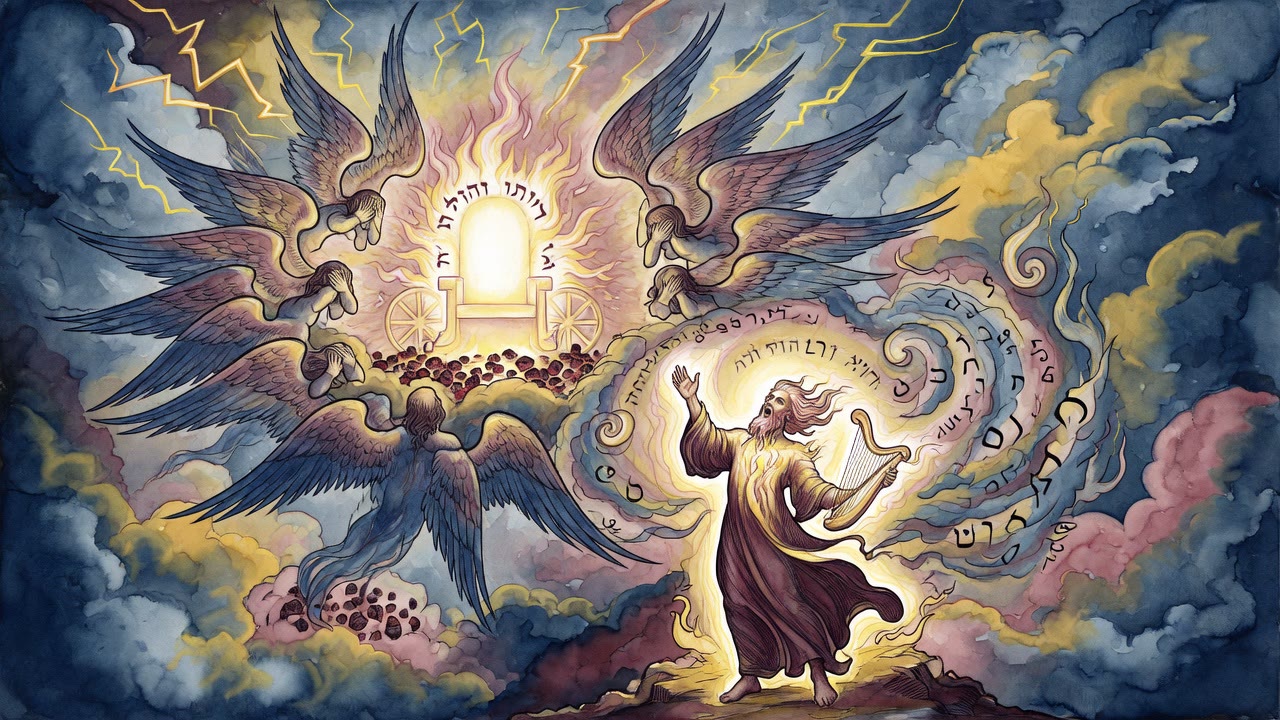
She had been told to look at the floor. Between two walls of standing water she pointed at the glory and named God as hers.
A shrunken aleph, the first Hebrew letter, and a missing one teach Akiva that God calls Israel in full speech and the nations in half.
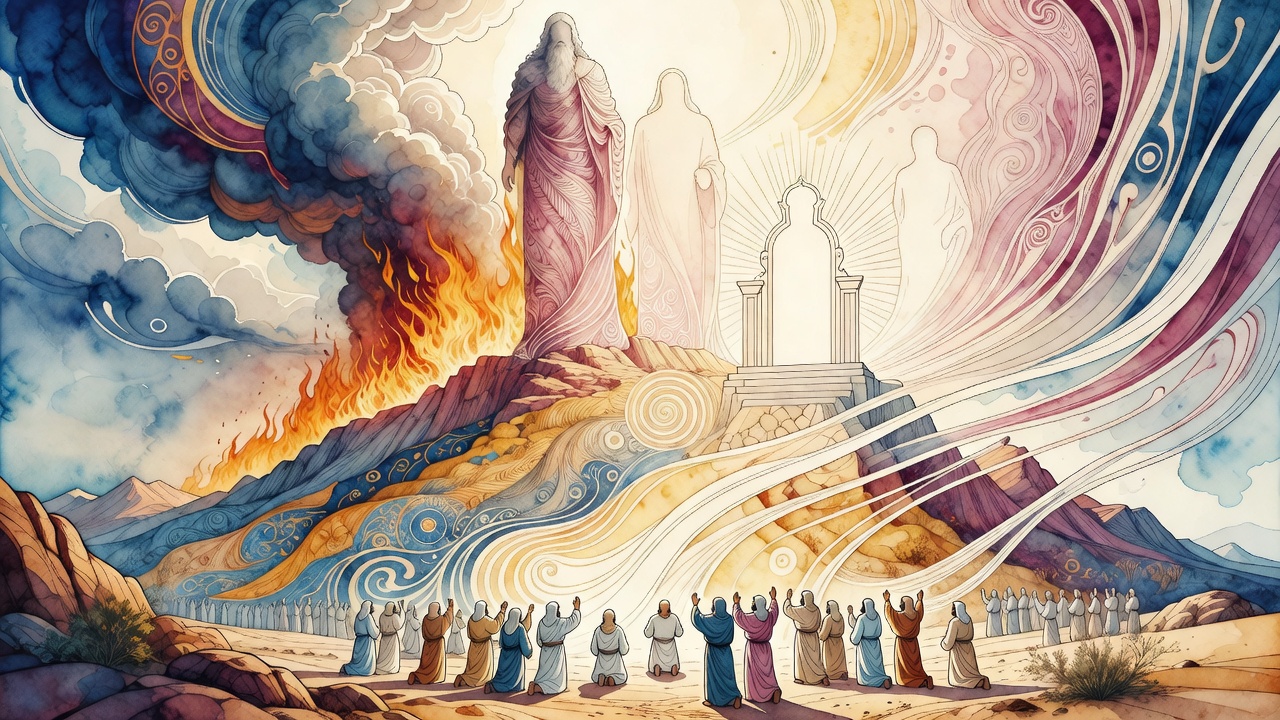
A kindness done in a low place with no witness rose as a thread of light. The Presence wore a robe cut from that cloth. When Israel turned, she wore black.
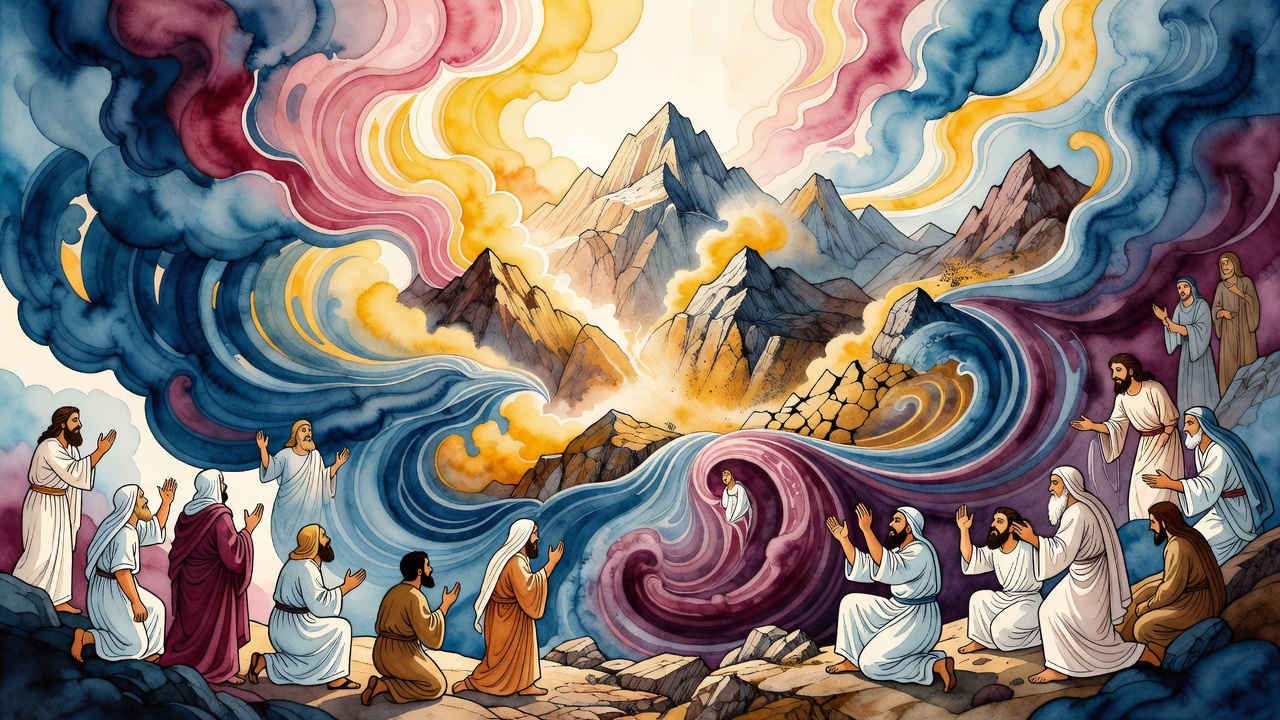
When the first commandment left God's mouth the mountains bowed and the sound turned visible, and each Israelite met a different face.
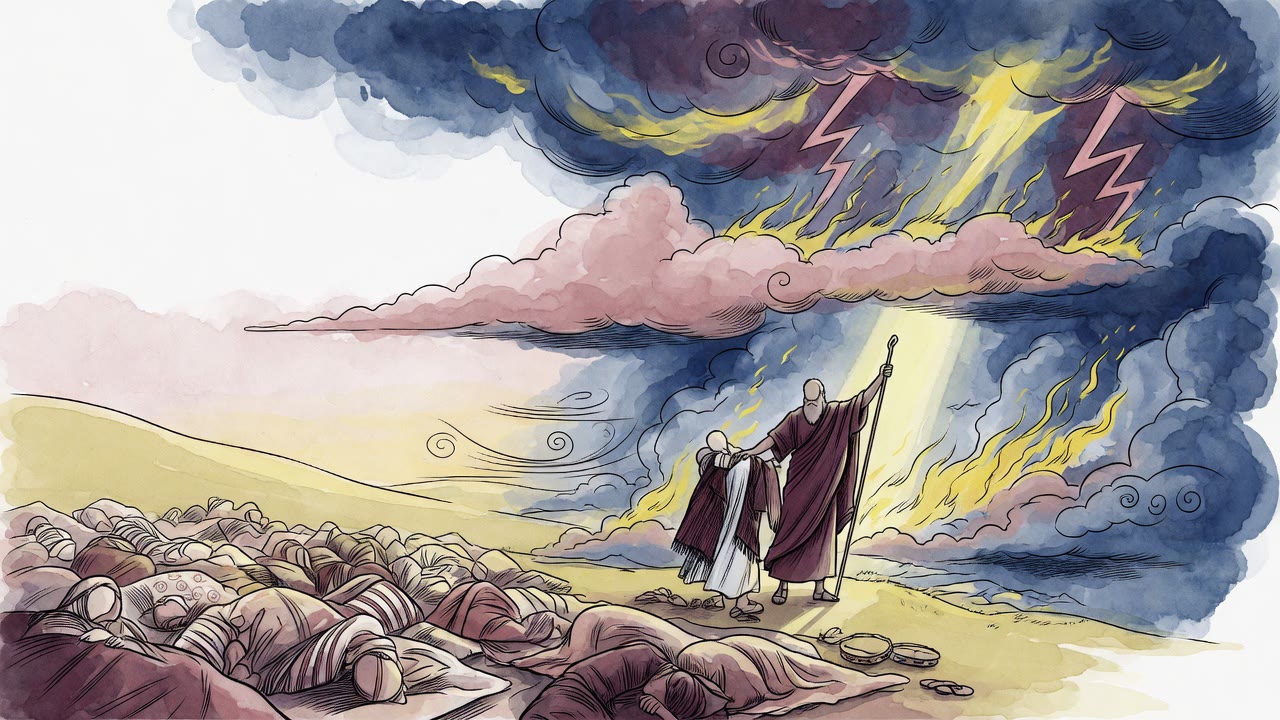
On the morning Torah was given, Israel slept late after a short summer night. Moses woke them as a bridegroom wakes a bride, and heaven walked out to meet them.
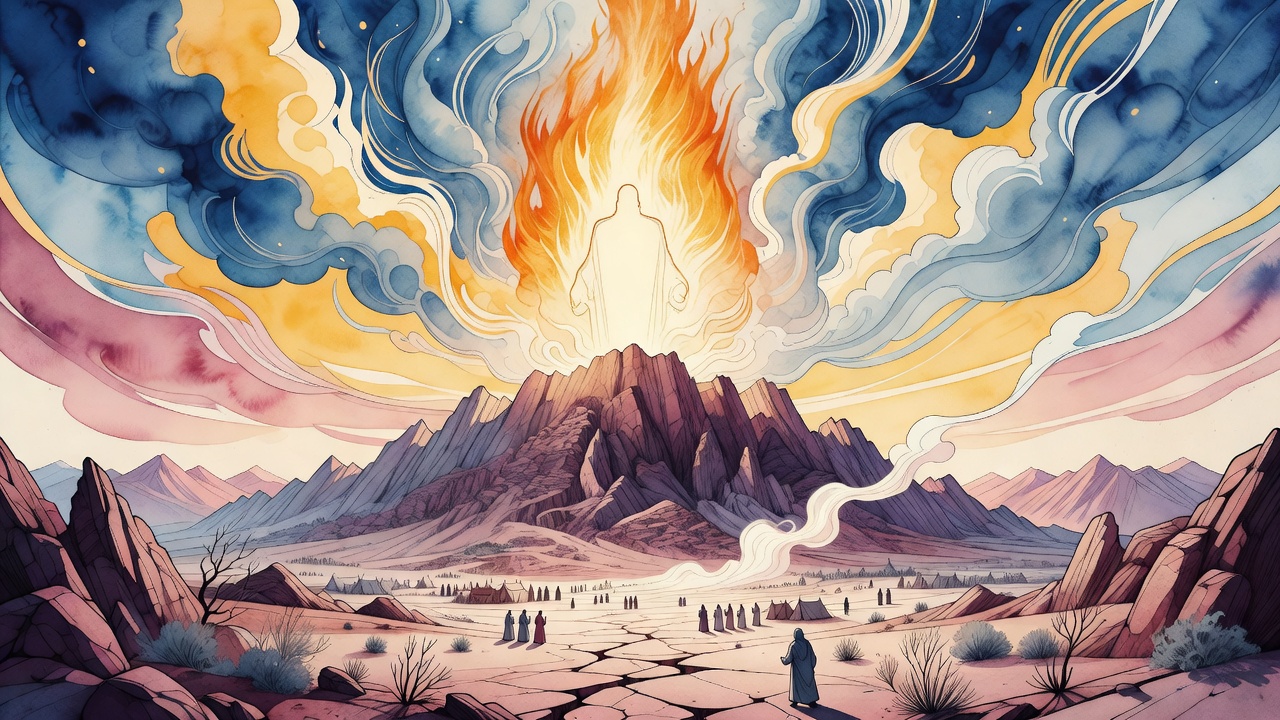
No bird sang. No ox lowed. A voice without echo said I am the Lord your God, and even the nations at the mountain's rim shook.
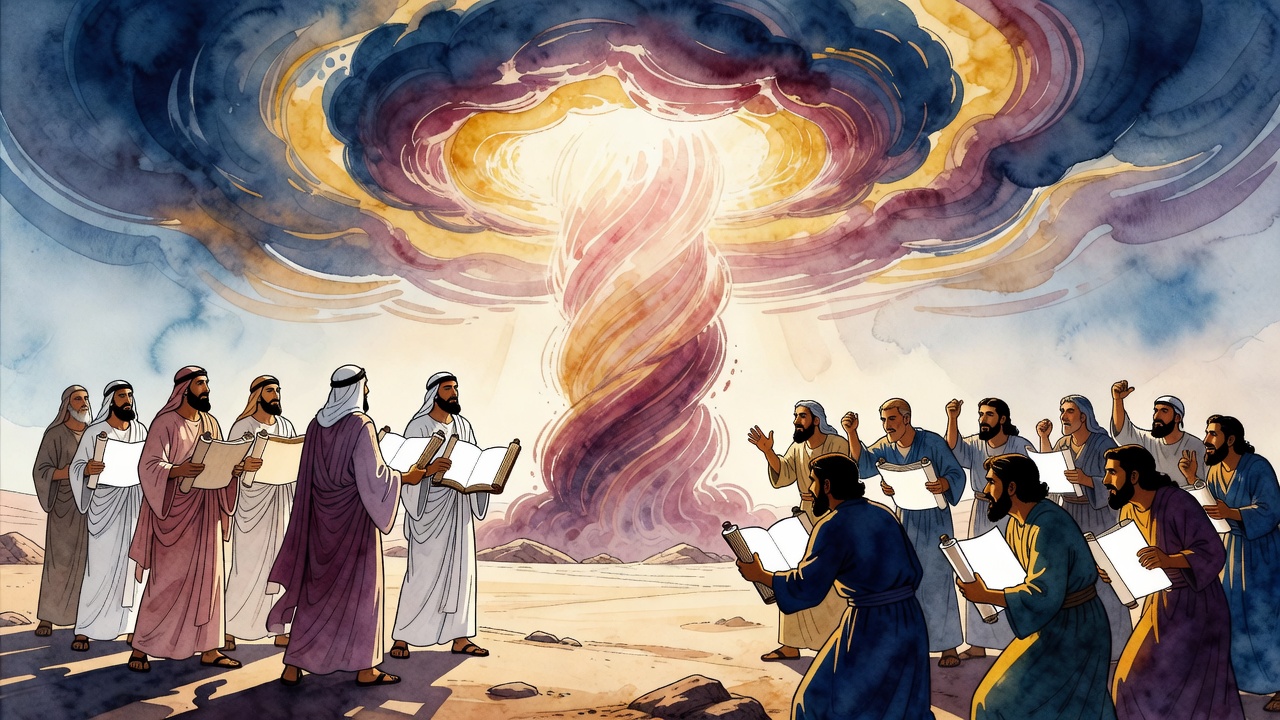
Before Sinai, the nations demanded to know why Israel was chosen. God asked for family records. Only Israel could open pure books of descent.
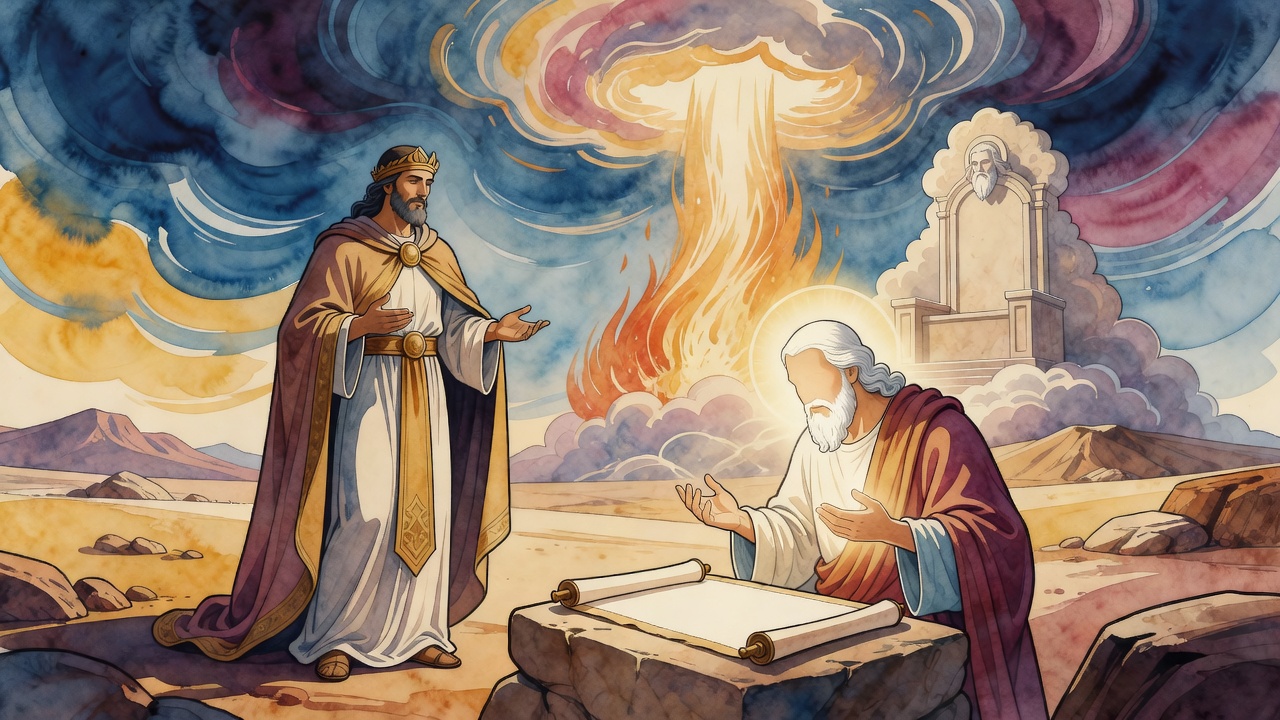
A king kept his daughter hidden from every stranger. One friend saw her face. Moses wrote the betrothal and came down shining.
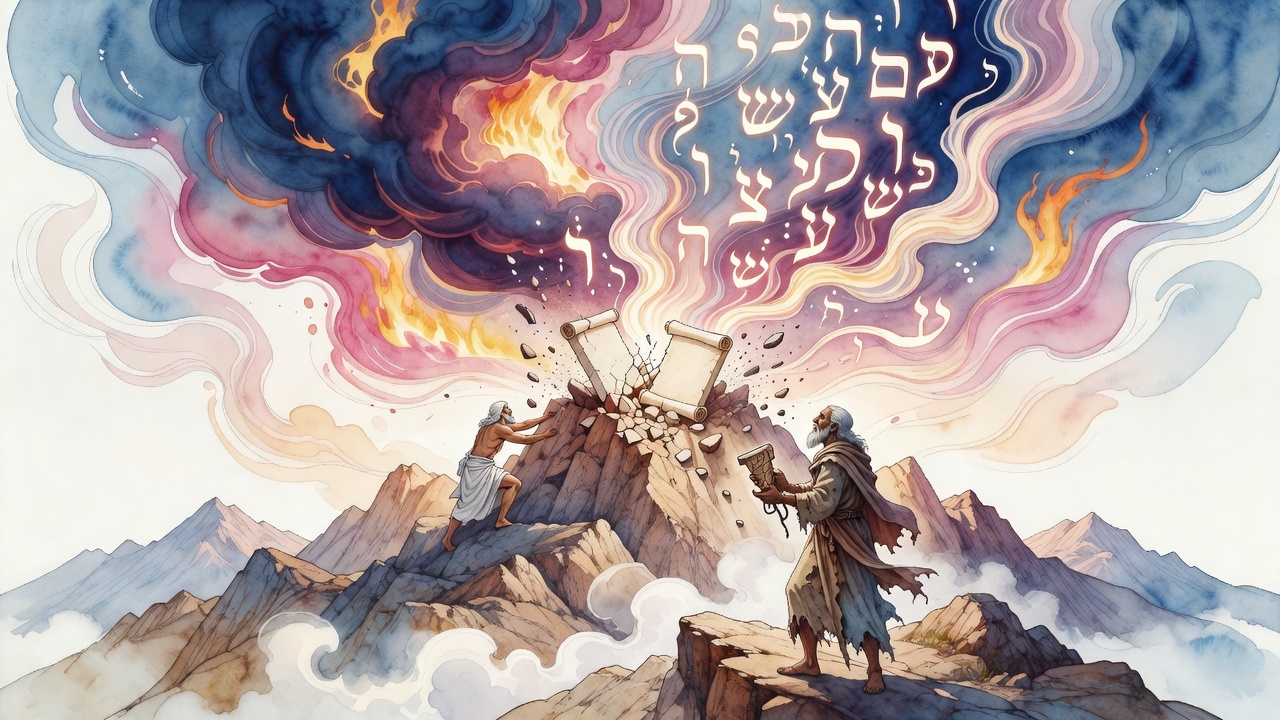
Moses asked how a defiled priest gets clean and heard nothing. Years later God handed him ashes and called it a statute.
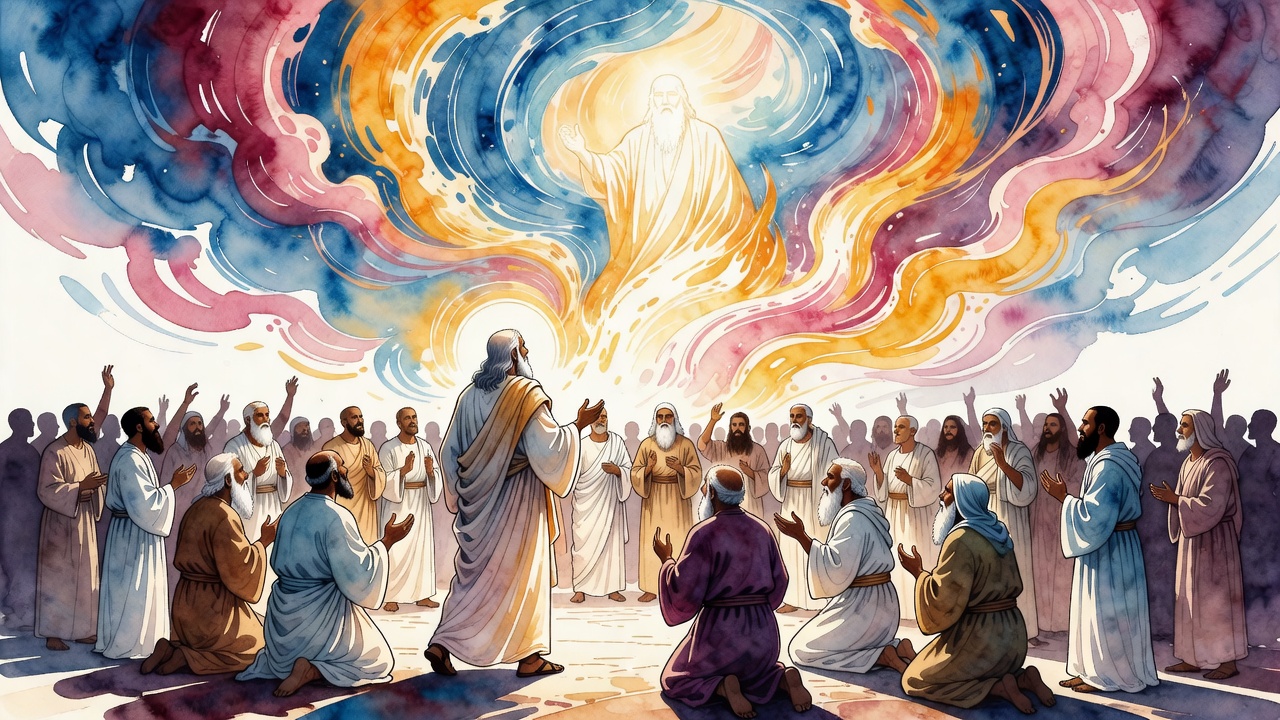
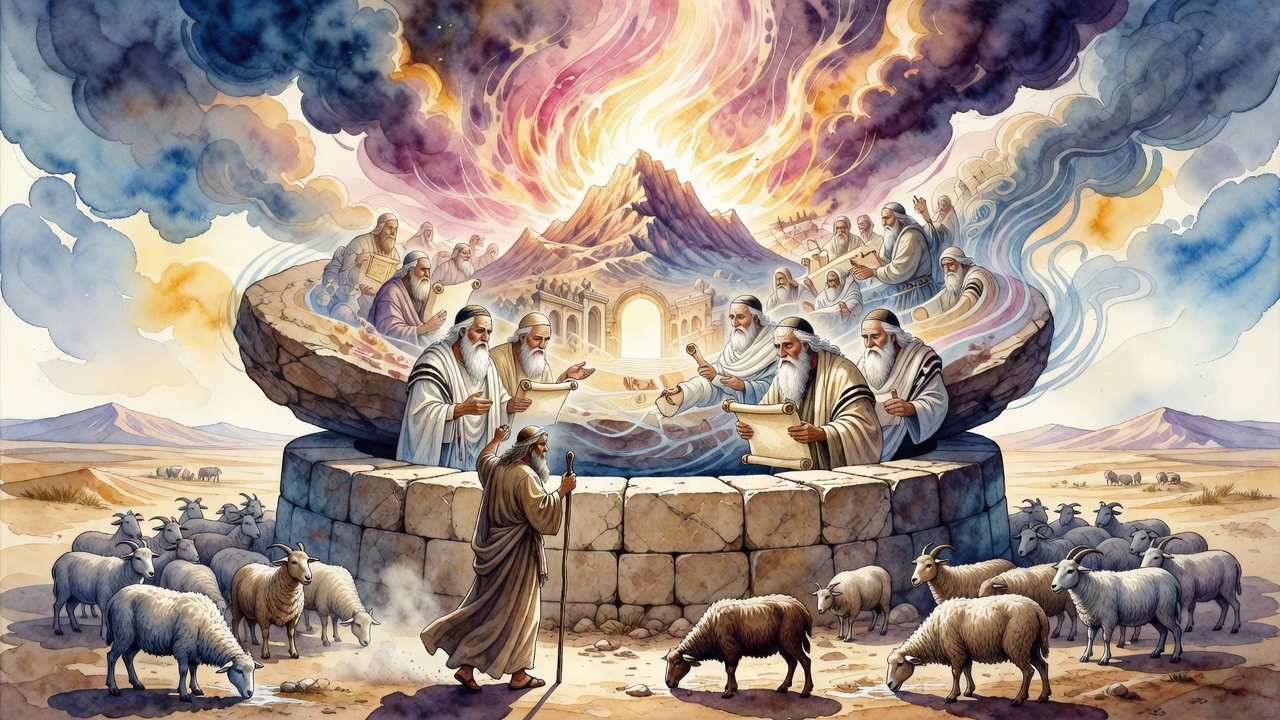
He could have climbed a rock and shouted the terms to the whole camp. The old men heard them first, and he stayed until they understood every word.
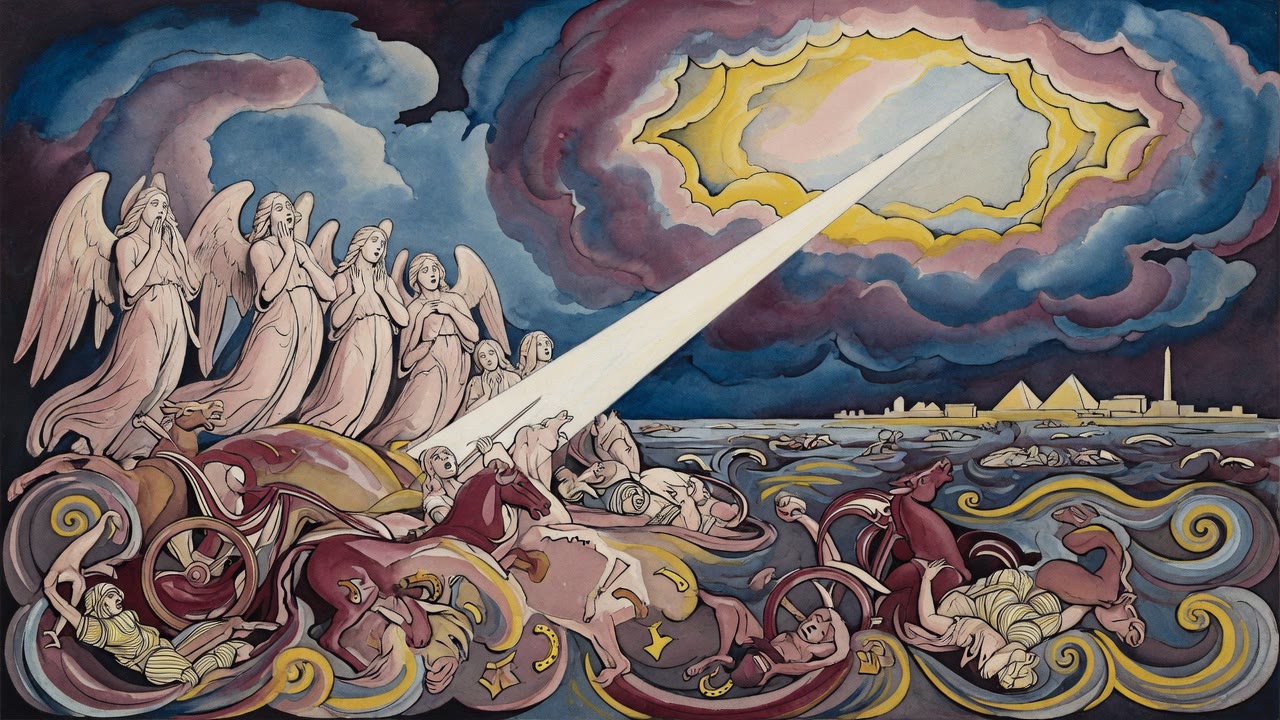
At Sinai every word leaves God's mouth at once. Death and life, wound and healing, sea and staff reverse in the same undivided speech.
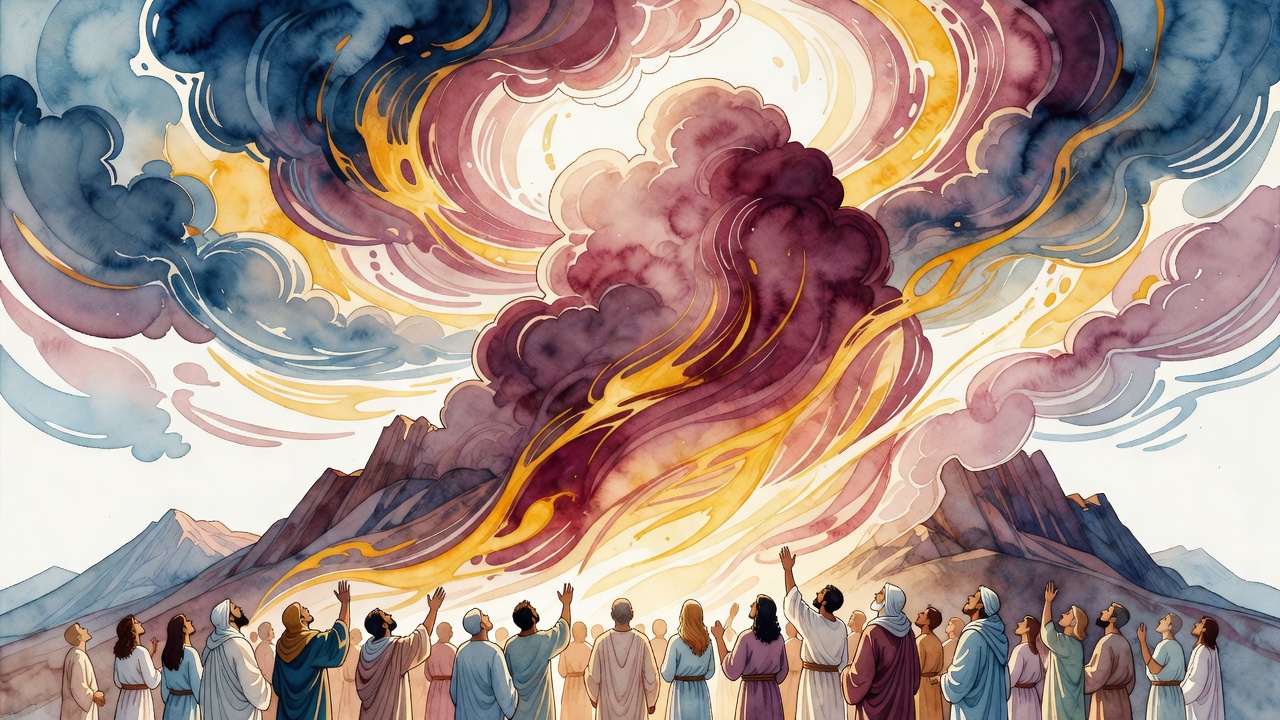
On the third morning the camp still had sleep in its eyes. God was already on the mountain. Thunder spoke in voices that did not copy each other.
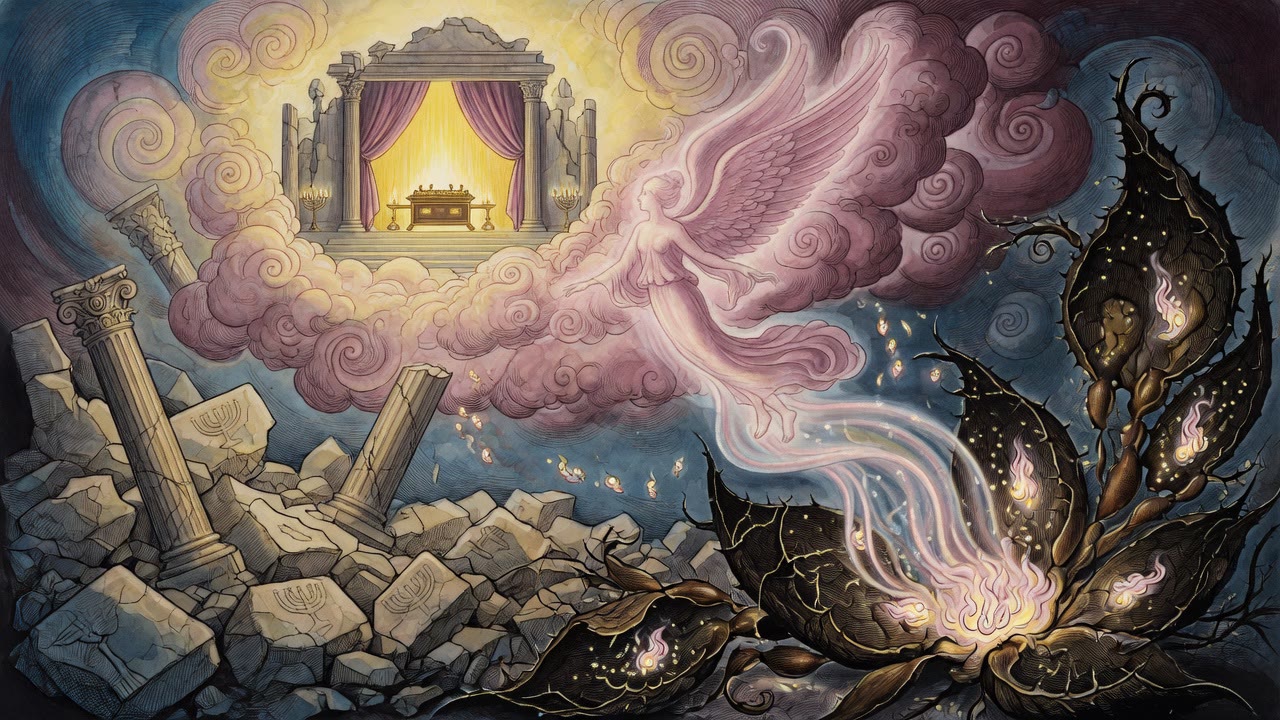
The first sentence emptied every chest on the mountain. The word itself turned back and said it had been sent to the dead.
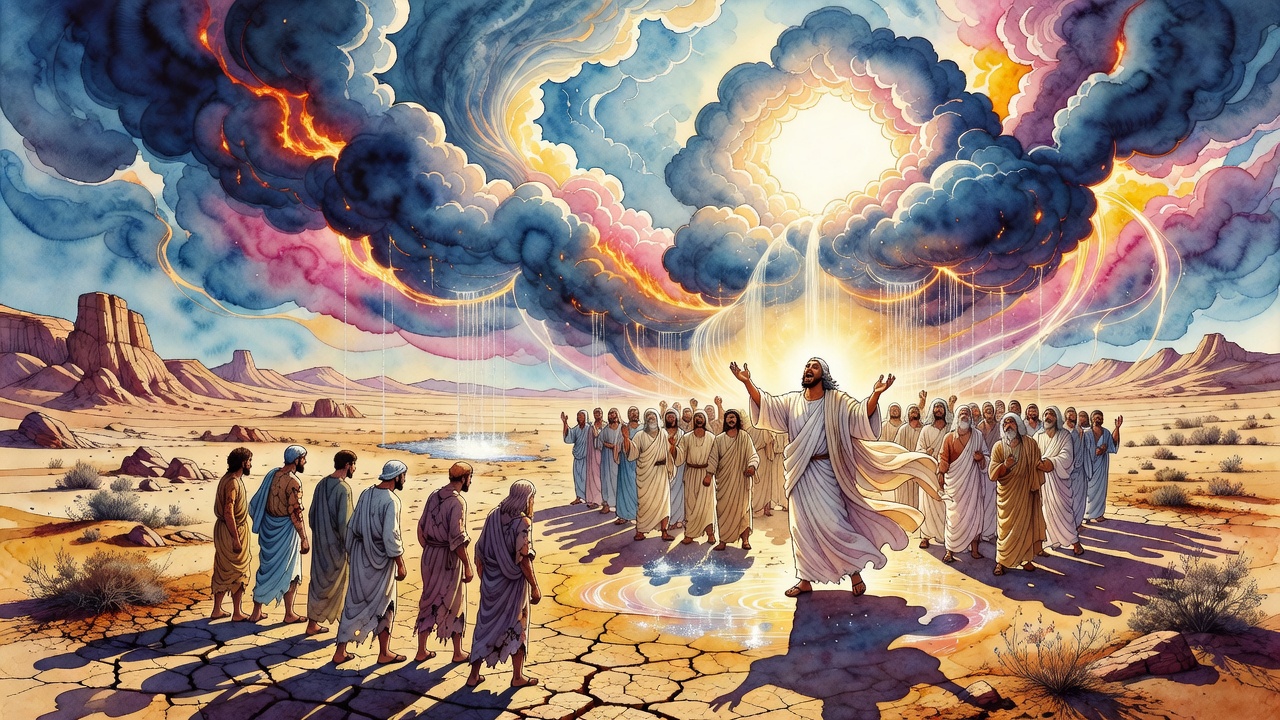
There was no shade at the foot of the mountain, and every neck was burning. Then God told the clouds to let go, and cool water hit the whole camp at once.
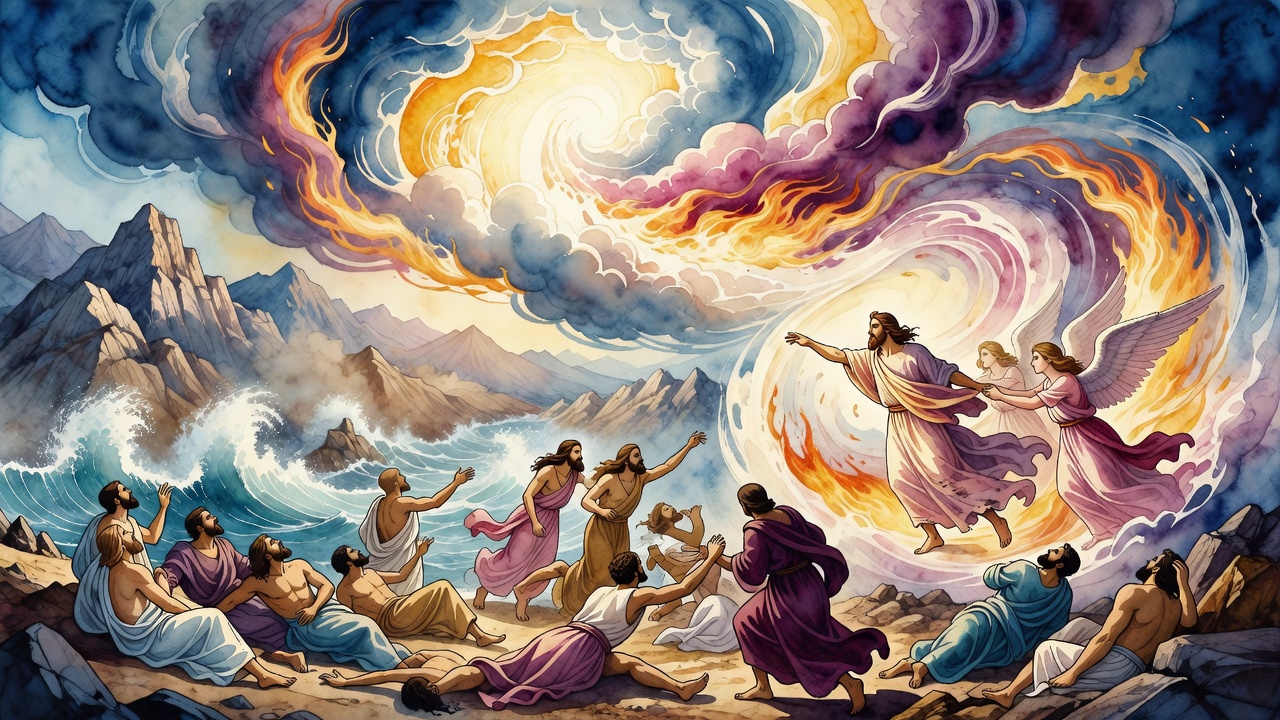
Heaven's first utterance shakes seas and mountains. Israel's dead stand up, the living fall twelve mil back, and angels drag Moses into the cloud.
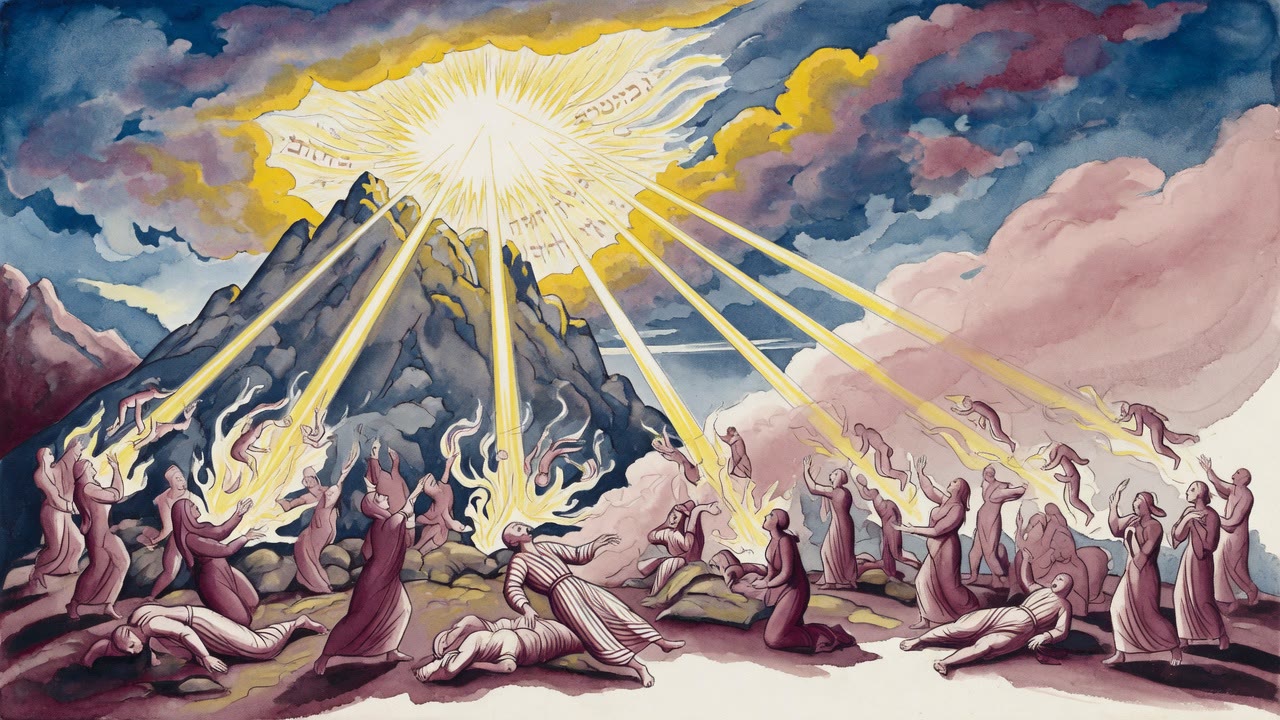
At Sinai each divine word knocks Israel's souls out of their bodies until God must soften the light so a people can stand and live.
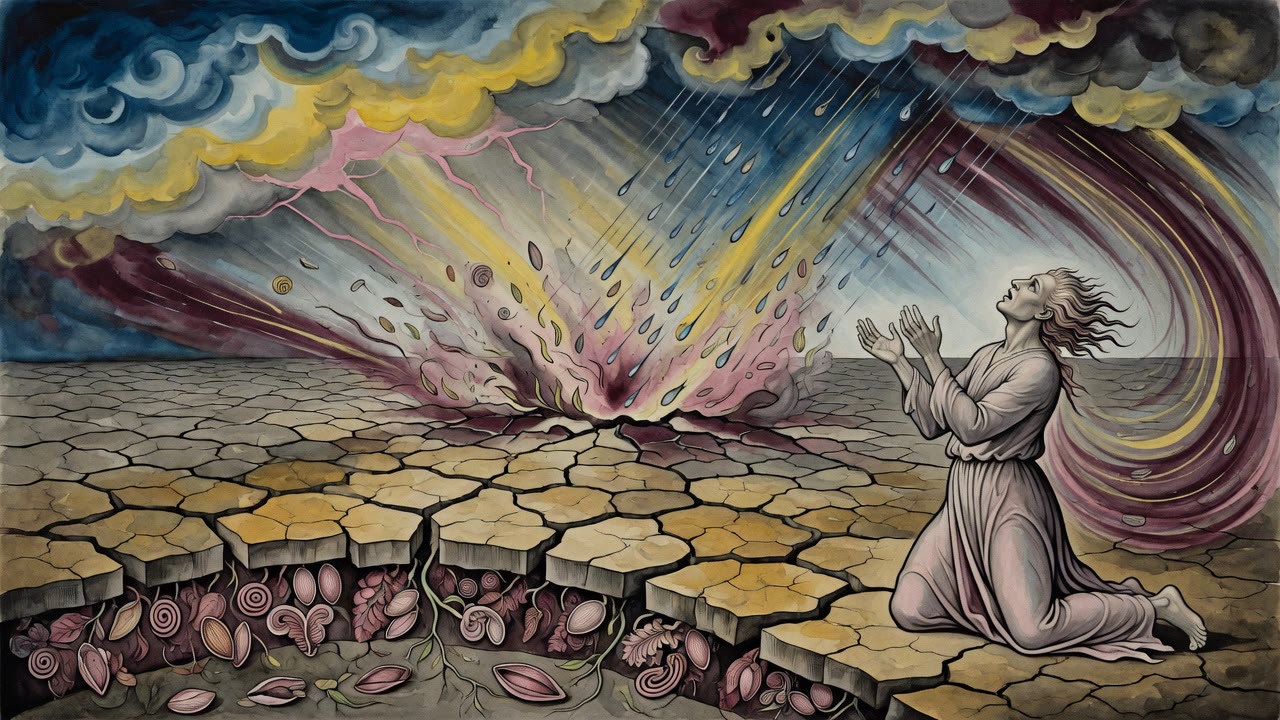
At the bush God named a mountain after the rescue. Through every plague Moses kept one private calendar. When the third month arrived, the long watch answered.
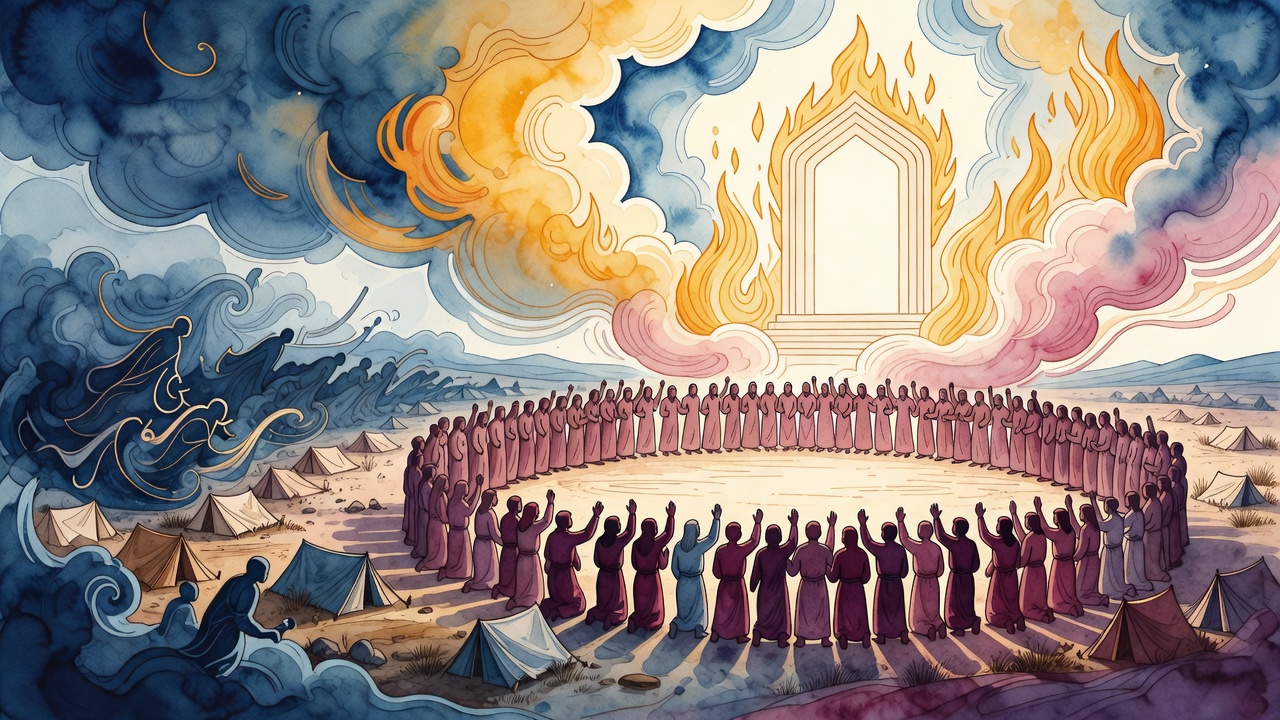
Quarrel followed them from Egypt to every campsite. Only when the nation camped as one body did Heaven open the wedding of Torah.
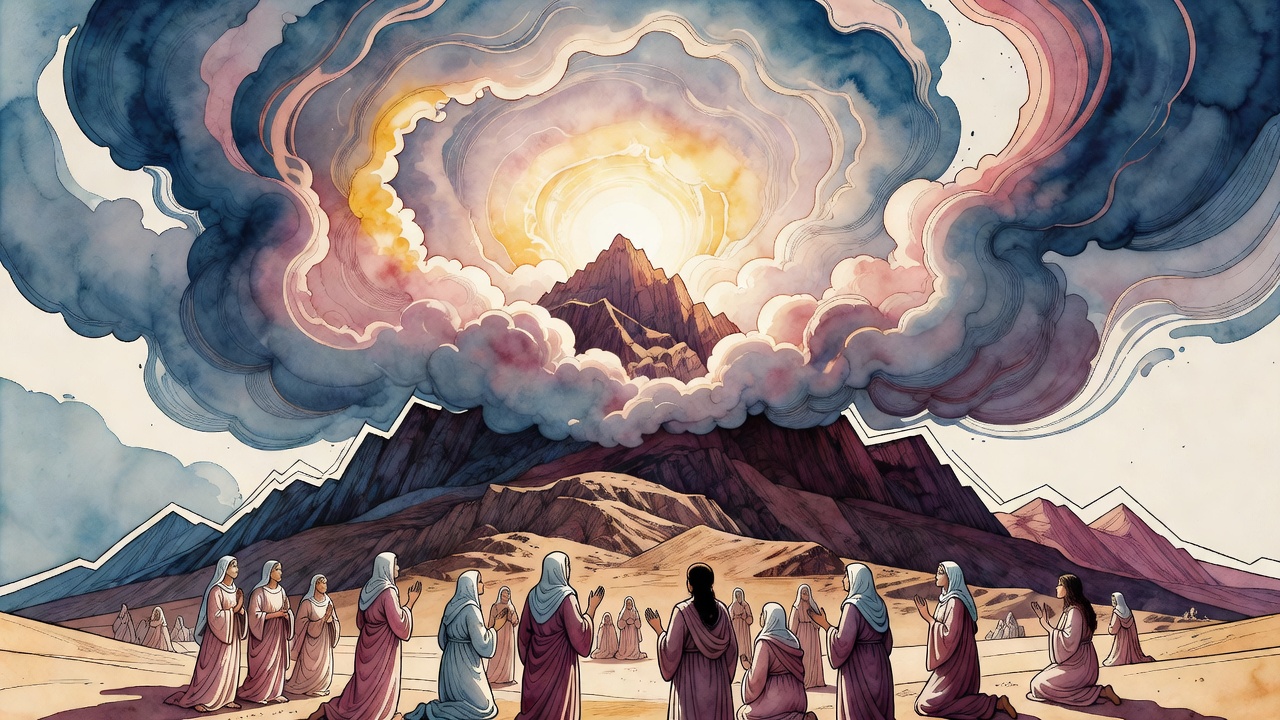
Glory covered Sinai for six silent days. Moses waited. God spoke first to the women of Jacob's house. Limits held the mountain so the people would not die.
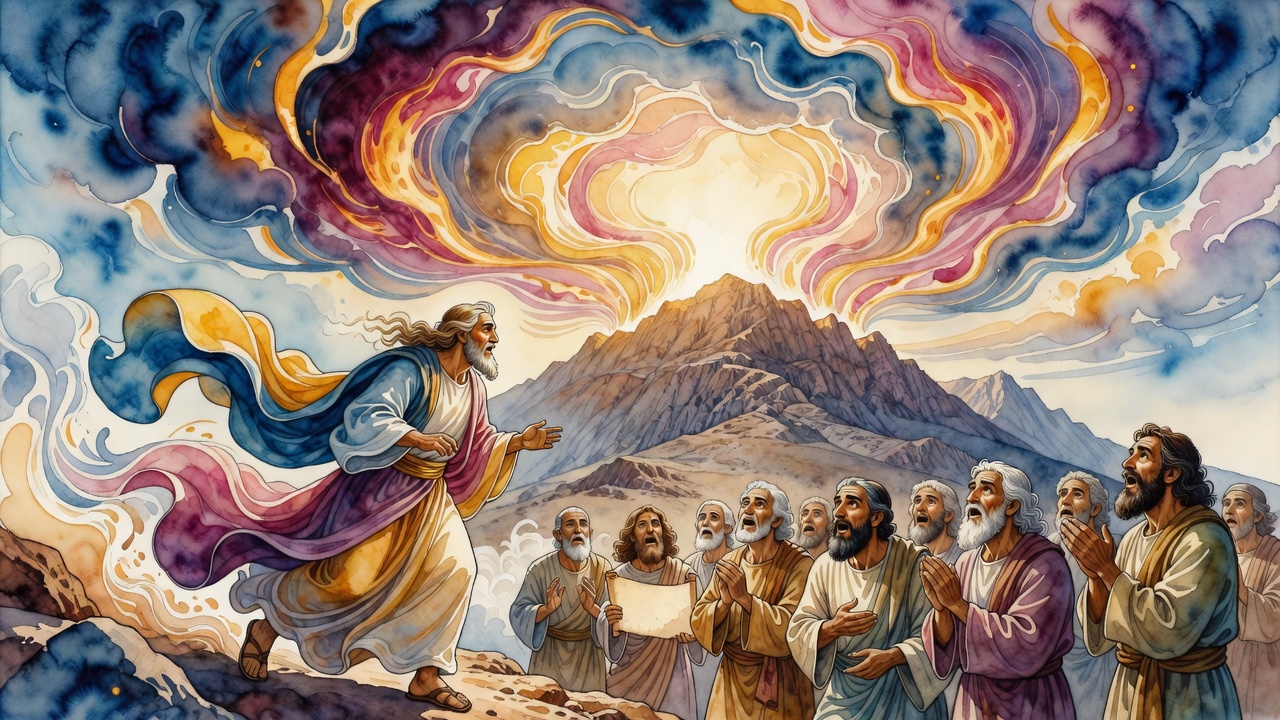
The elders came with dust on their beards, some leaning on staffs. Moses laid the covenant words out for them like a table set for honored guests.
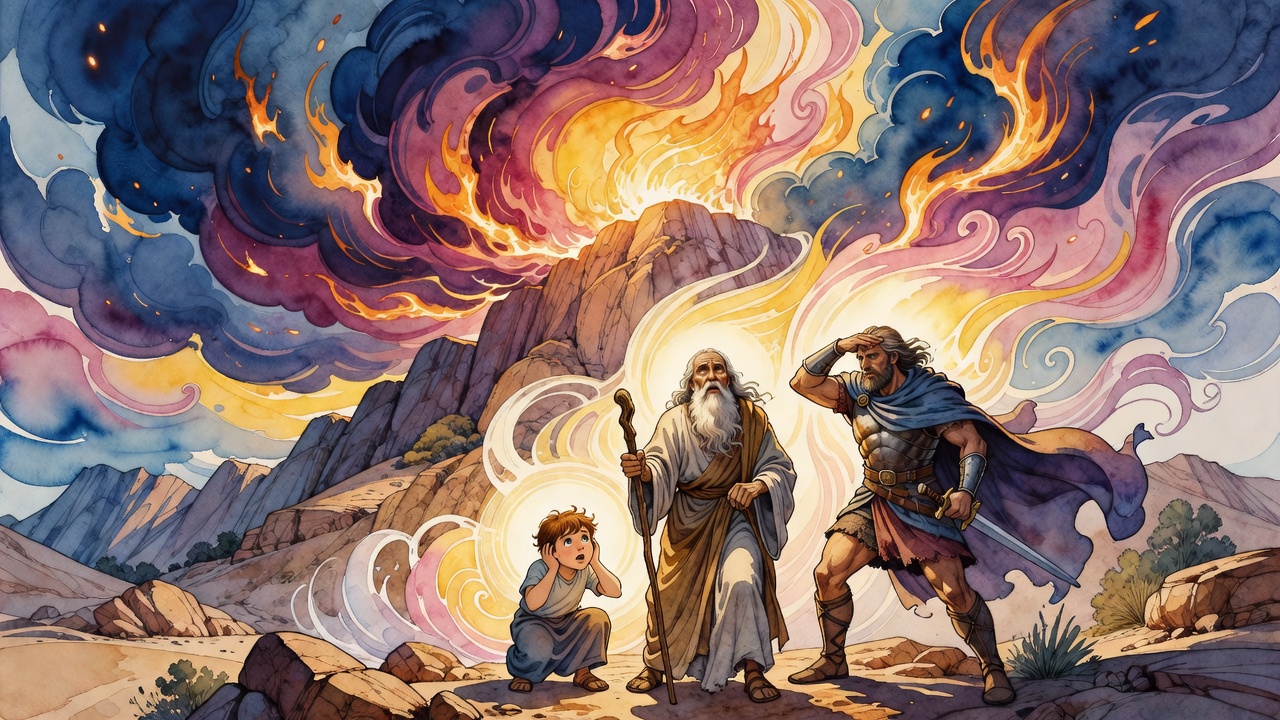
At Sinai the fire spoke one Word, yet a child, an elder, and a warrior each survived a different measure of the same sound.
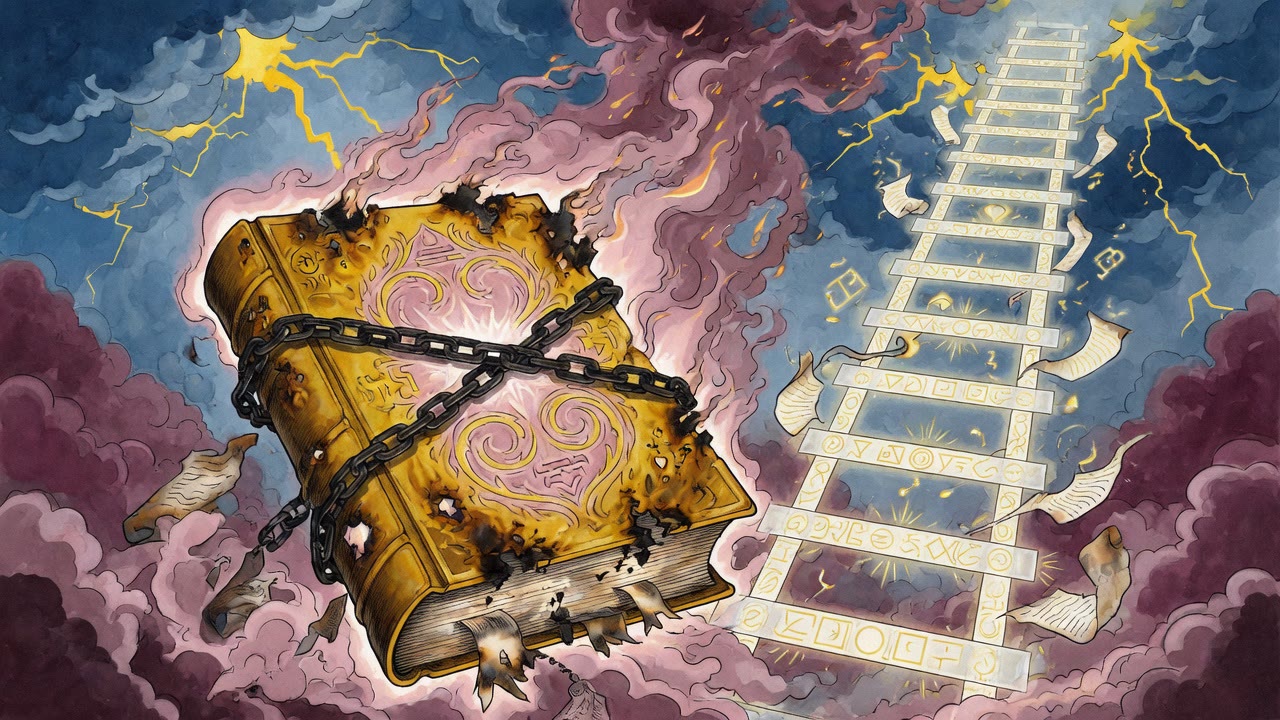
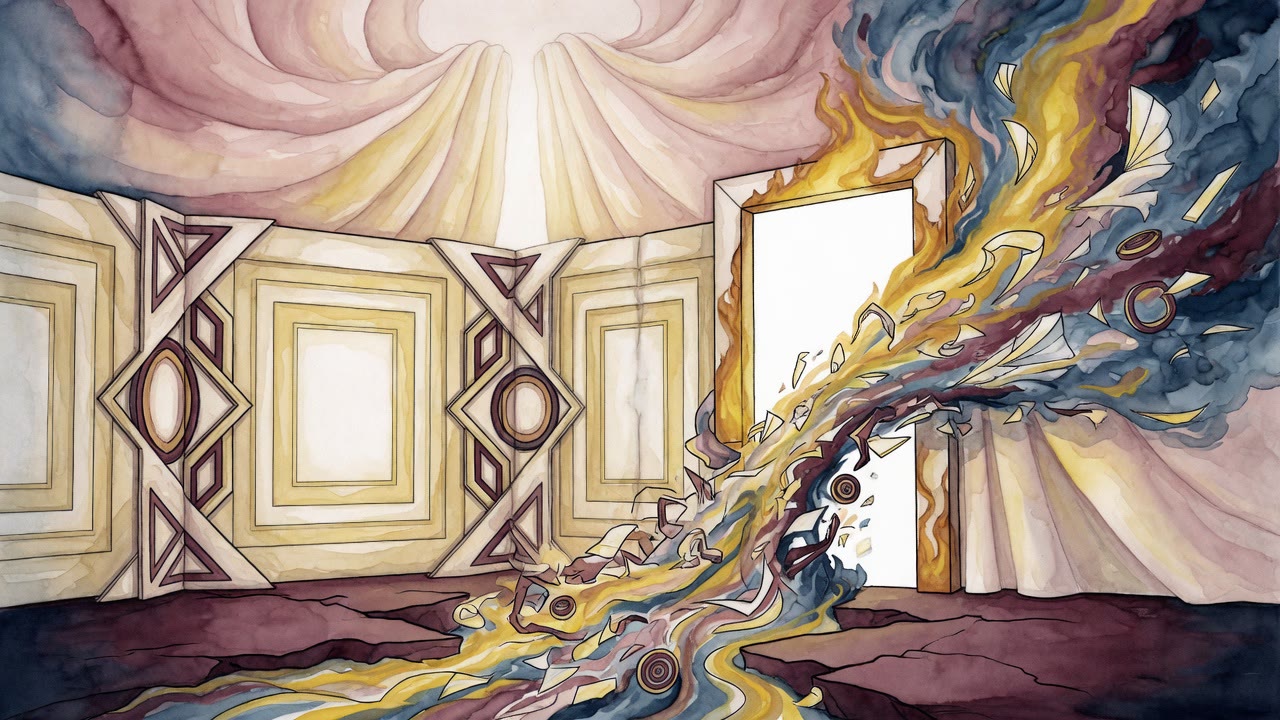
Rabbi Shimon's book burned for centuries while its depths stayed locked. A later master built a ladder of commentary so a generation could climb.
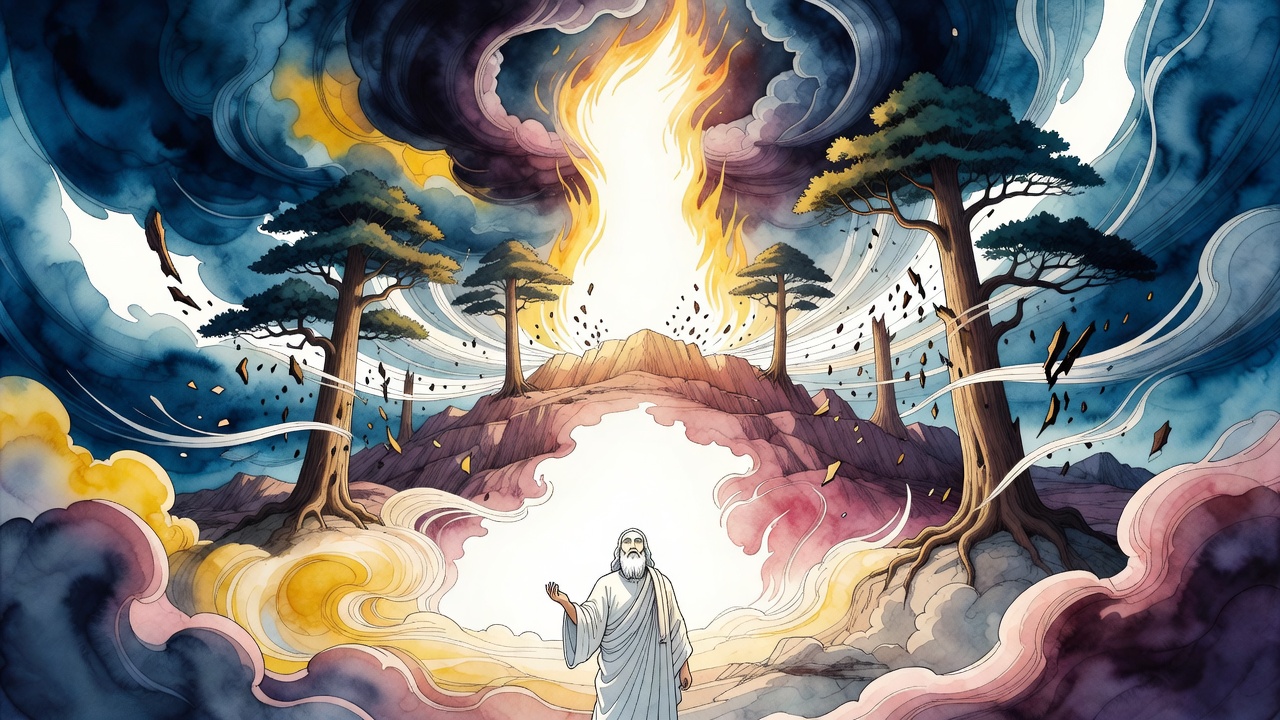
Moses climbed into fire thick enough to taste. Below the fence each Israelite heard a private address and did not dissolve.
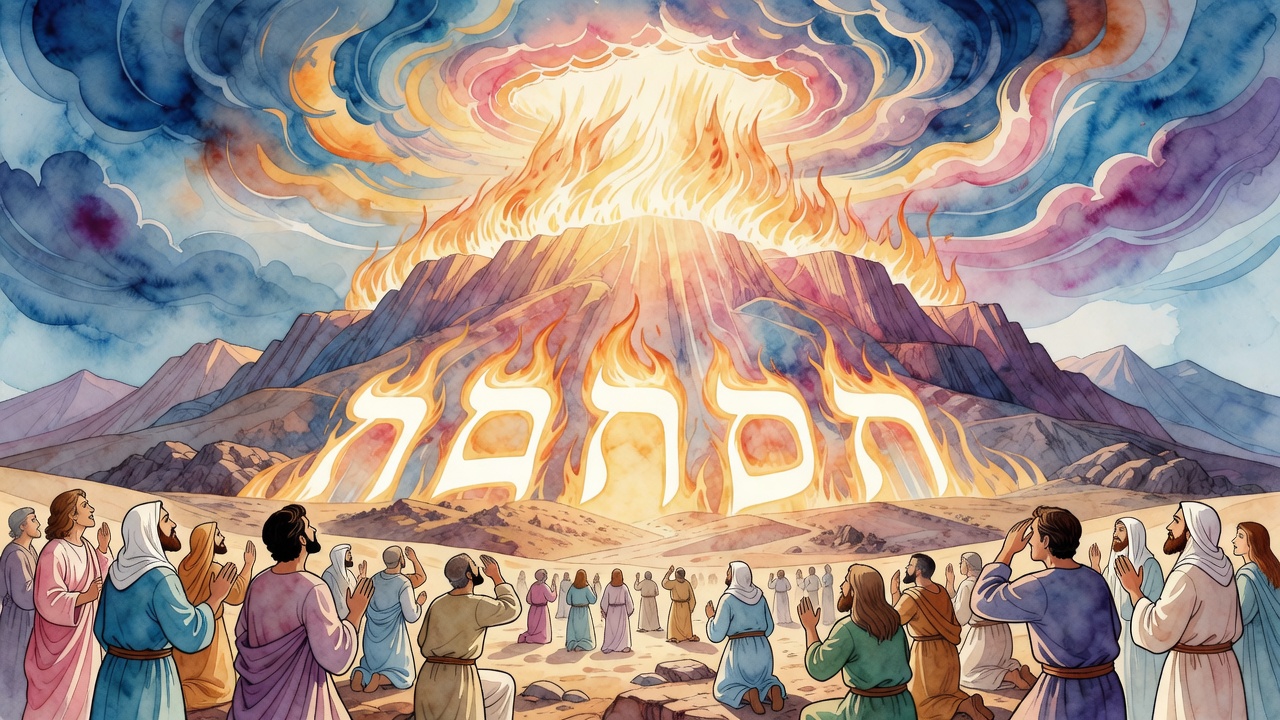
At Sinai the people saw sounds and lightnings unlike any storm, each voice calibrated to every heart while fire hewed words into stone before their eyes.
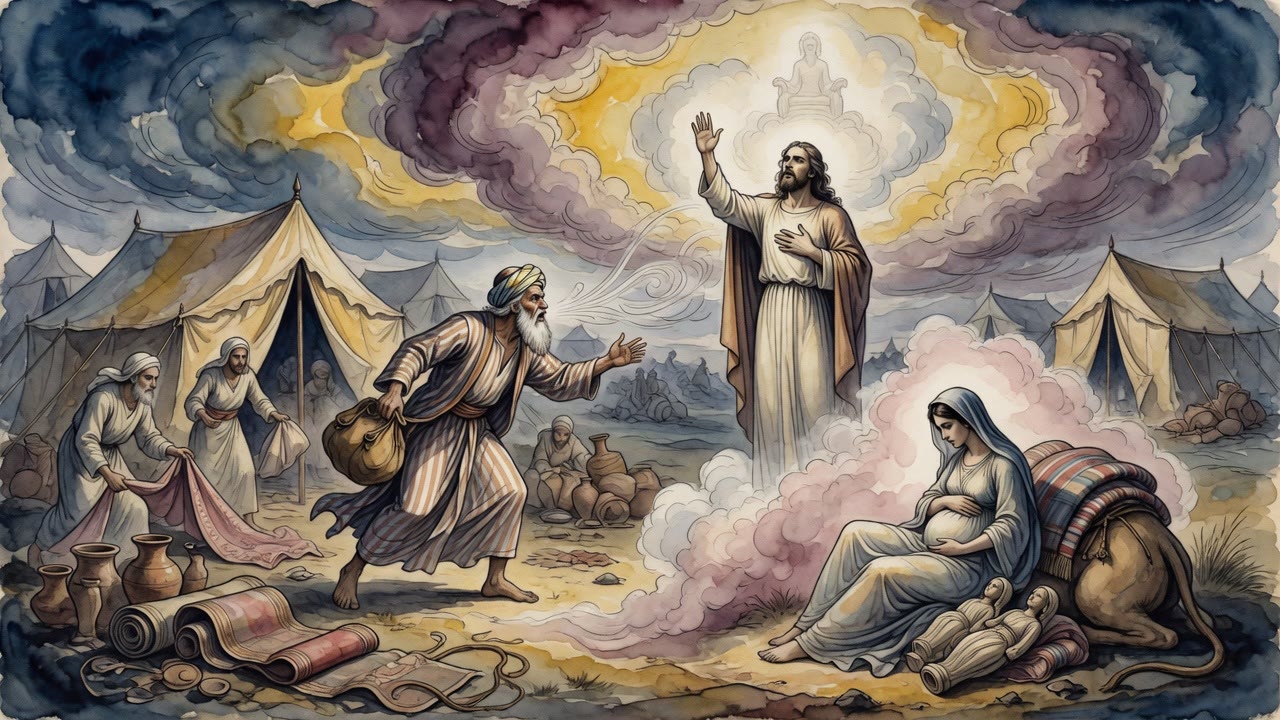
At the mountain Israel rushed to say we will do and we will hear, and the midrash names that rush a theft of the Higher Mind Heaven had not finished offering.
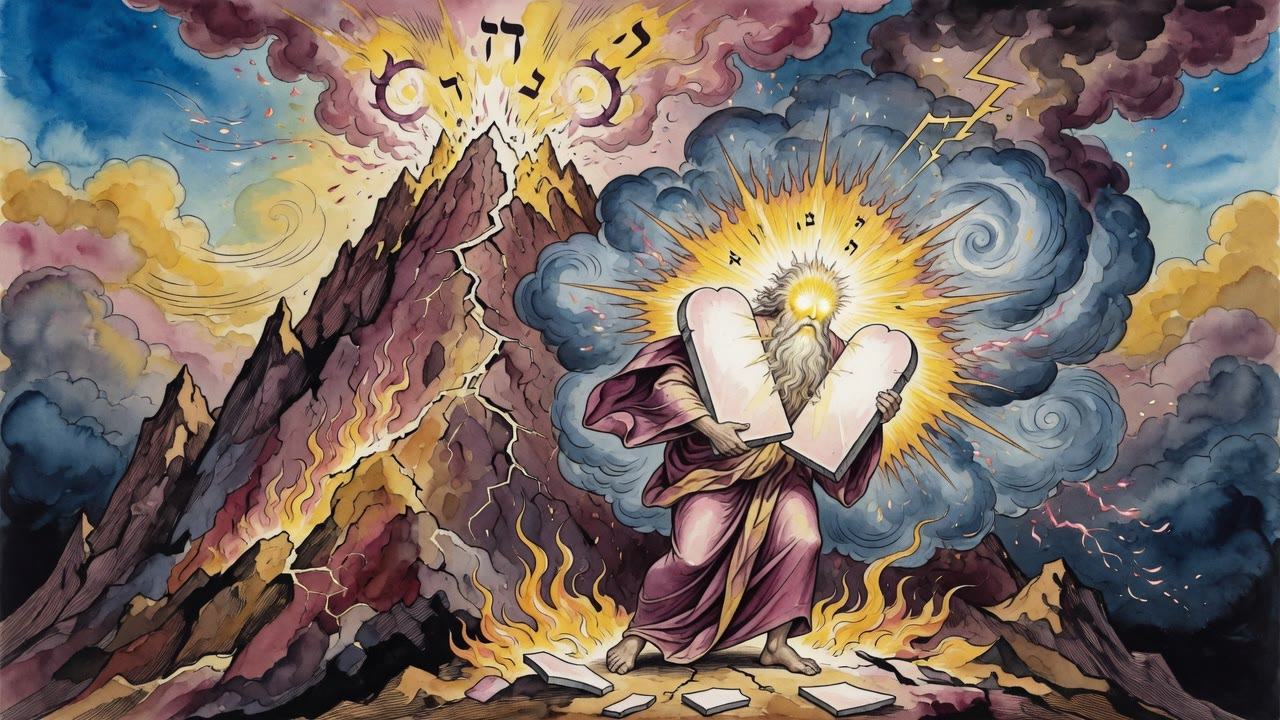
The first tablets left his face unmarked. He cut the second set with his own hands. The camp saw the light before he did.
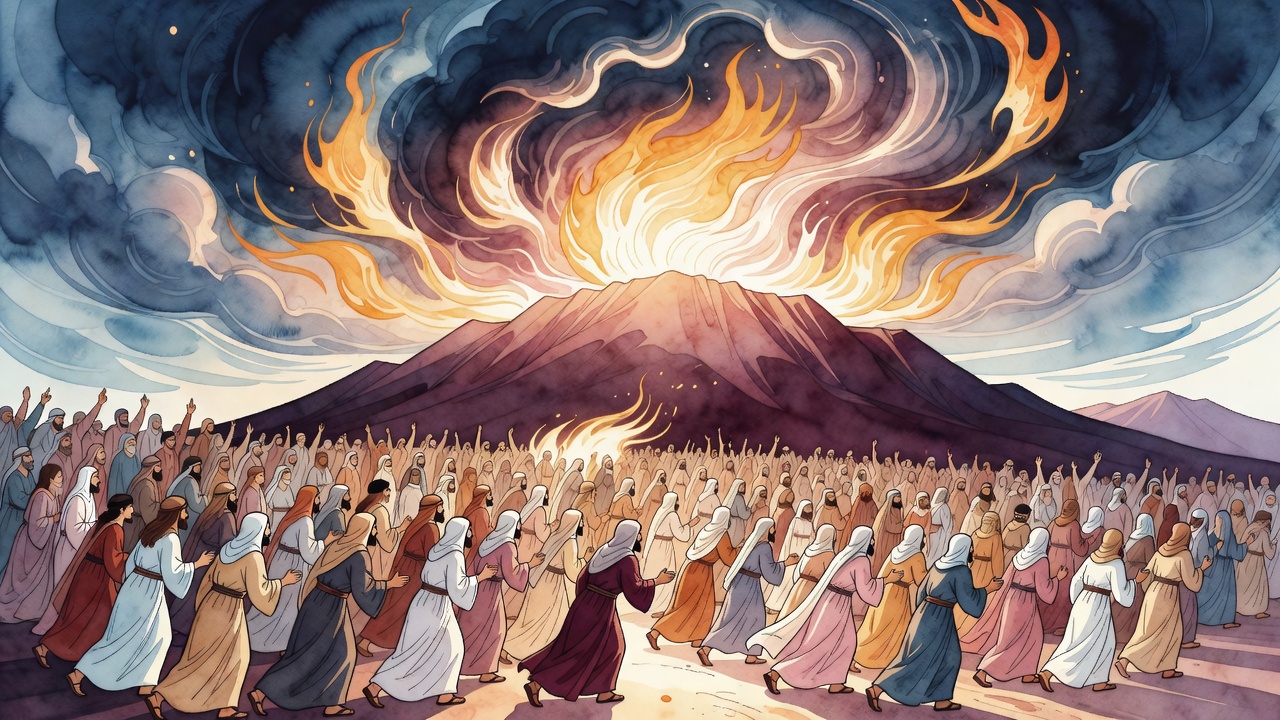
At Sinai each divine utterance drove the camp twelve mil back, then mercy drew the people forward to hear the next command.
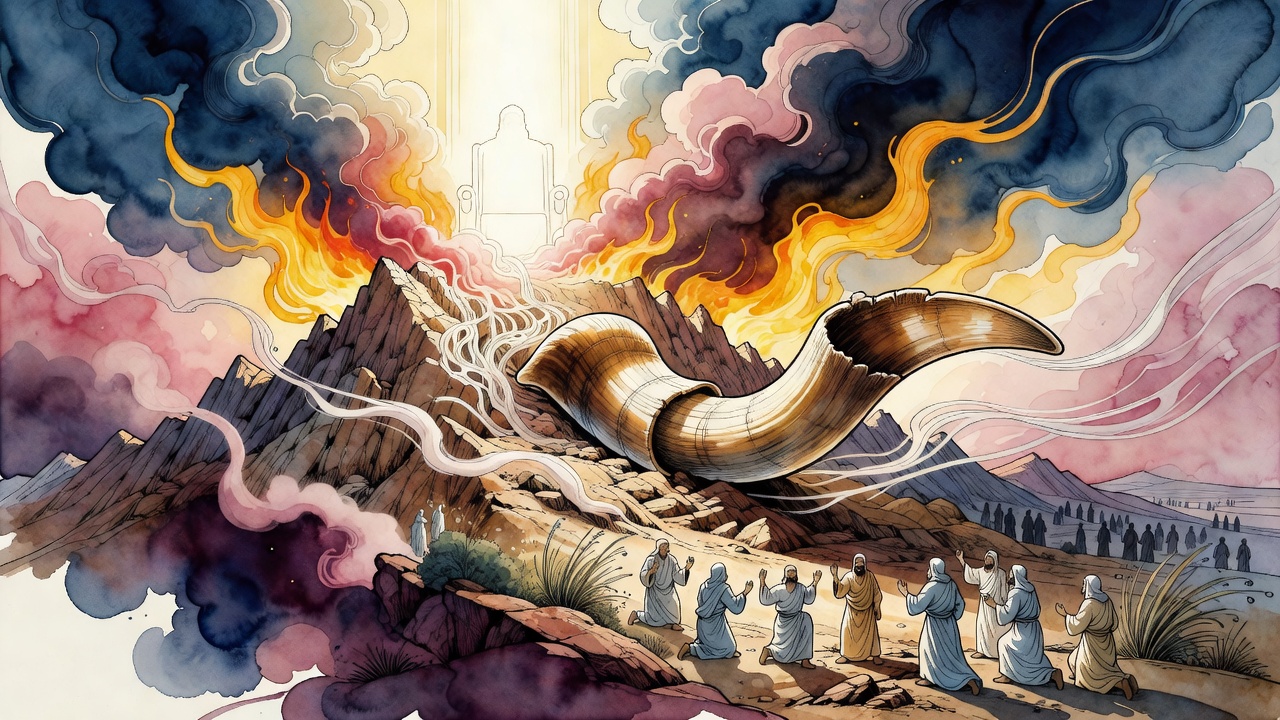
The horn at Sinai did not fade. It climbed until the camp shook. Israel said yes before anyone finished counting the cost.
