82 myths · Page 3 of 3
A single Hebrew letter transformed Sarai into Sarah. The Midrash of Philo says this was not a formality but the deepest change a name can carry.
Philo of Alexandria stopped at the letter added to Sarai's name and argued it was the moment private excellence became a public inheritance that outlives death.
Sarah's barrenness was not a pause before the covenant. In Philo's reading and Bereshit Rabbah, the closed womb made Isaac impossible to explain without God.
Rebekah filled her pitcher at the well and went up. Tikkunei Zohar says the Shekhinah does the same, drawn full from the middle pillar and rising.
Targum Pseudo-Jonathan finds Sarah's name already in the family record before Abraham is called, hidden as Iscah, which means to gaze and to be gazed upon.
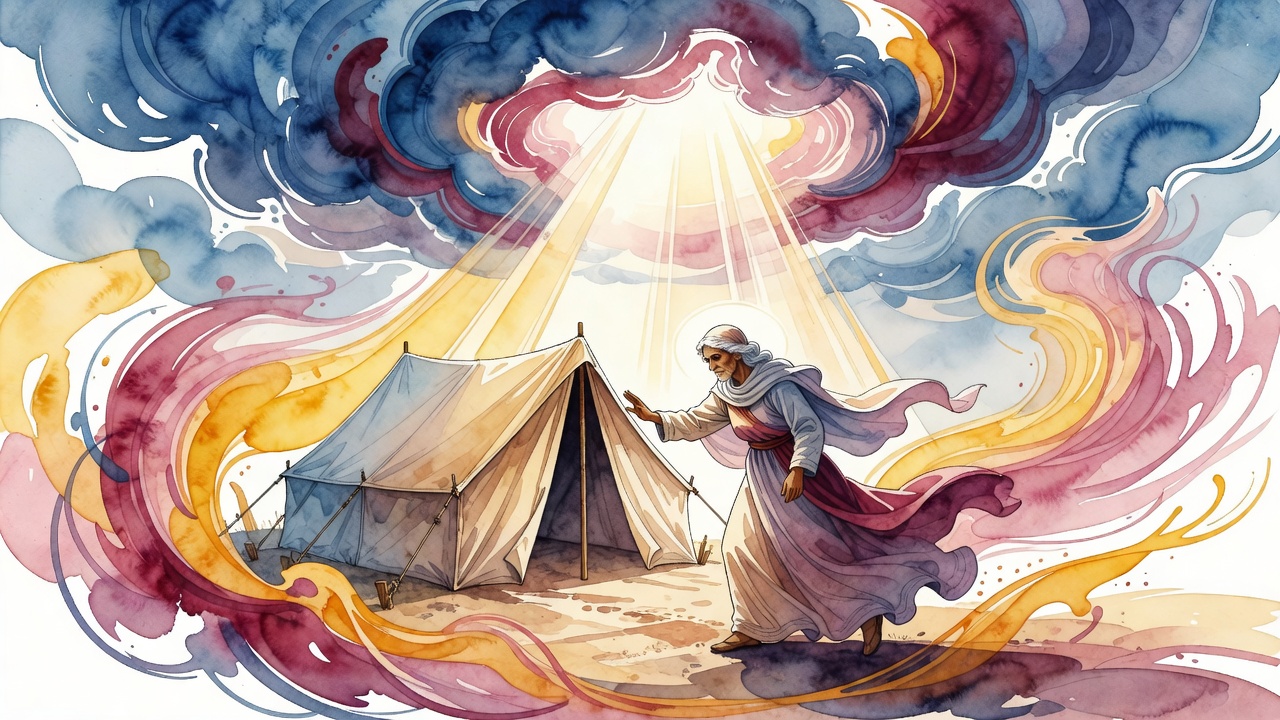
Pharaoh confesses plagues stopped him from touching Sarah. A dark tent fills with light when Rebekah enters. Laban searches every tent but saves one for last.
Abraham descends from Moriah with Isaac alive and finds the future already demanding: a wife for his son, a tomb for his wife, and Esau still on the road.
Moses, Aaron, and Hur climb a hill above the battle with Amalek, and the names they carry up are not the living but the dead.
Miriam died, her well vanished, and Moses wept six hours before the thirsting camp dragged him to a rock that would not give water.
The sages counted every road out of the body and found nine hundred and three, the hardest a thorned rope dragged backward, the gentlest a kiss.
Israel's only female judge sat under a palm tree and handed down rulings, then sent a reluctant general to face Sisera's nine hundred iron chariots.
Deborah earned her authority by making wicks for the Tabernacle. Under an open sky she judged, led an army to victory, and was mourned for seventy days.
Rebekah's nurse died under an oak near Beth-el. Centuries later a prophetess named Deborah judged Israel nearby. The rabbis asked what connected them.
Hannah stood alone at Shiloh, but Aggadat Bereshit places ancestral merit in the heavenly court where closed wombs can open.
Four hundred armed men were marching toward her husband's estate. Abigail rode out alone to meet them, armed with a point of law.
Abigail earned her seat beside the matriarchs in Paradise. The tradition praises her on nearly everything. There was one moment she almost missed.
Ruth chose Naomi over Moab, accepted her people and God, and carried a broken family toward Boaz, Bethlehem, and King David.
Naomi told both daughters-in-law to find new husbands. Orpah wept and turned back. Ruth refused with words that have outlasted every kingdom in the story.
A foreign widow gleans barley at the edge of a field in Bethlehem while the Shekhinah itself moves through her toward redemption.
Rachel said nothing on her wedding night, Saul said nothing to his uncle, and a thousand years later Esther found the silence she needed.
Rabbi Akiva woke his students with one number: Sarah lived 127 years, and Esther ruled 127 provinces across Persia for Israel.
In Kabbalistic teaching, Leah is not merely a matriarch who wept for a husband who loved another. She is the concealed face of God turned toward the world.