215 myths · Page 3 of 8
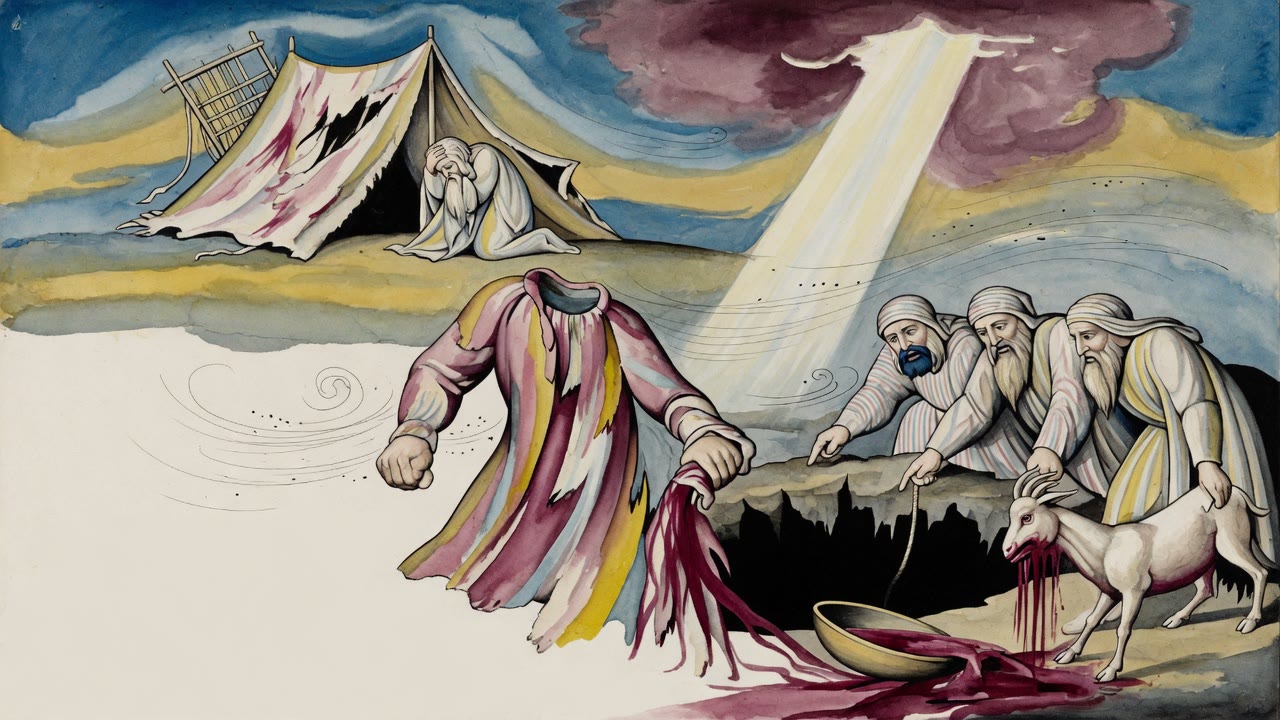
Joseph wore a coat light enough to hide in one hand, and the brothers answered with a pit, a sale, and goat blood that broke Jacob's house.
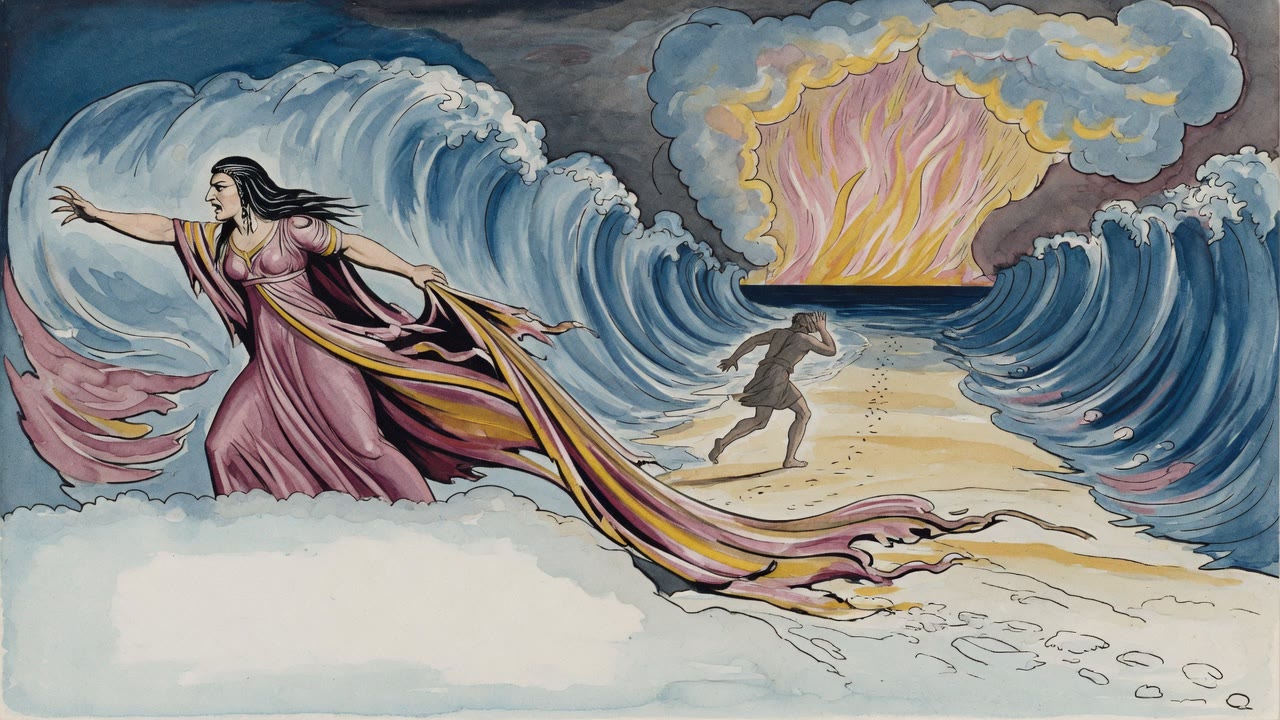
Joseph fled Zuleika's grasp and left his cloak behind. Her lie sent him to prison, but his flight later opened the sea for Israel.
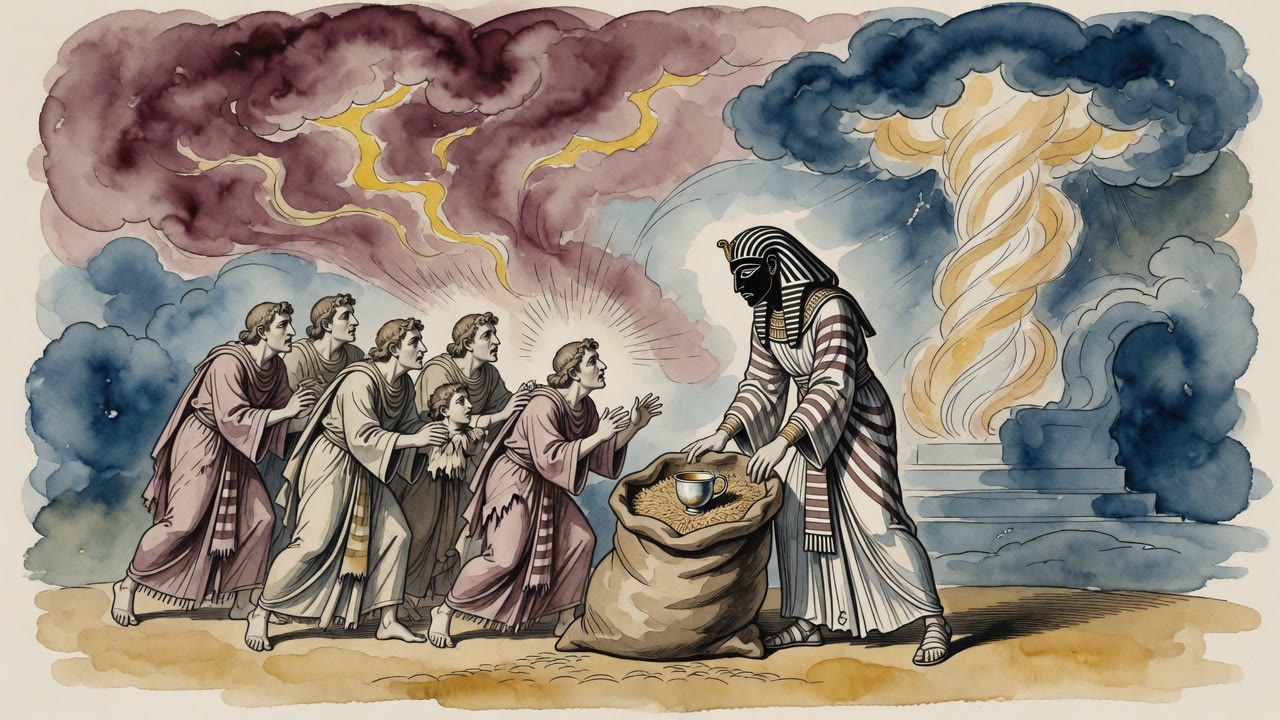
Joseph has the power to keep Benjamin forever. He wants to know what his brothers will do when given the chance to abandon the youngest.
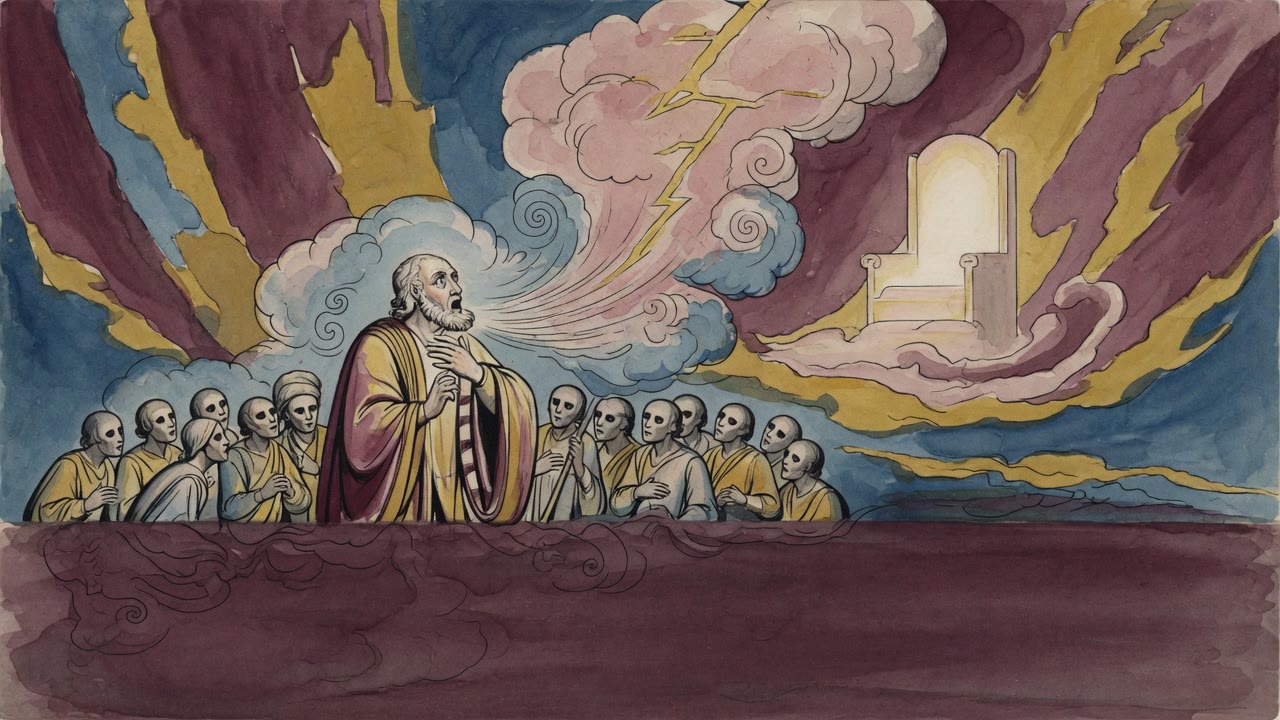
Jacob gathers his sons to reveal the End of Days. The moment he opens his mouth, the holy spirit lifts and the words freeze.
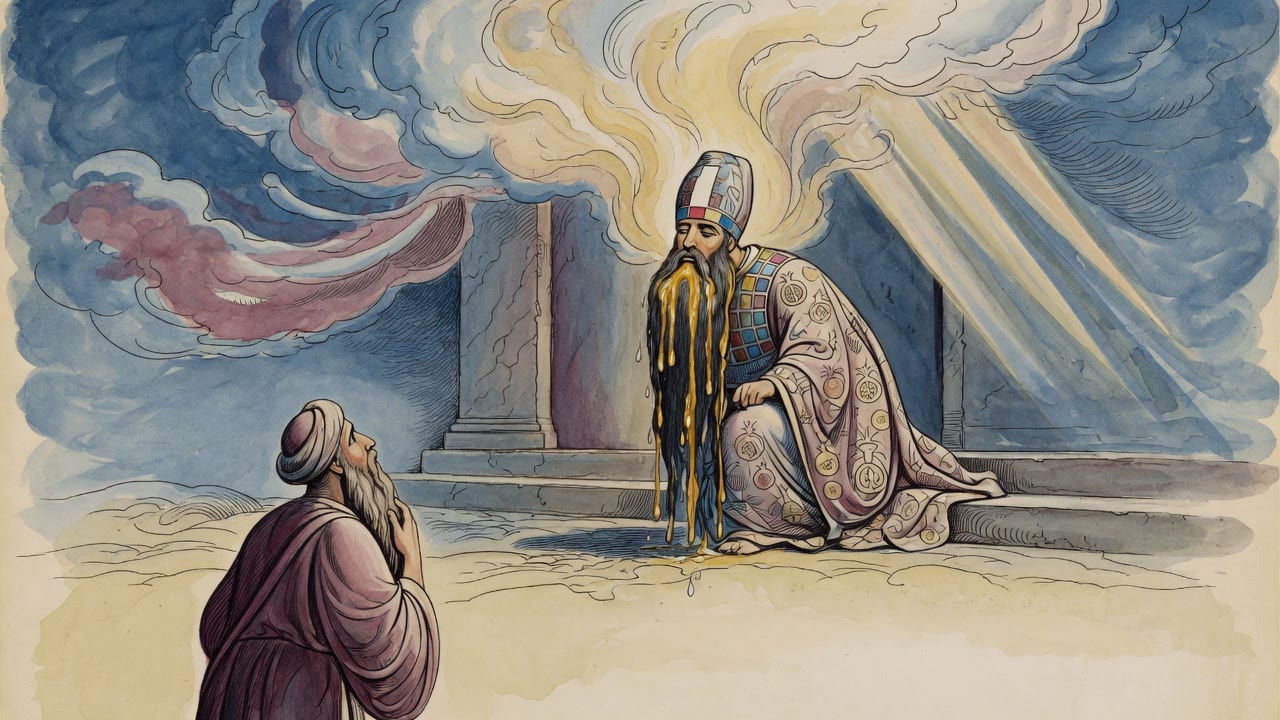
Moses tipped the holy oil over Aaron's head and felt it slide onto his own beard. One wet drop nearly broke him with fear.
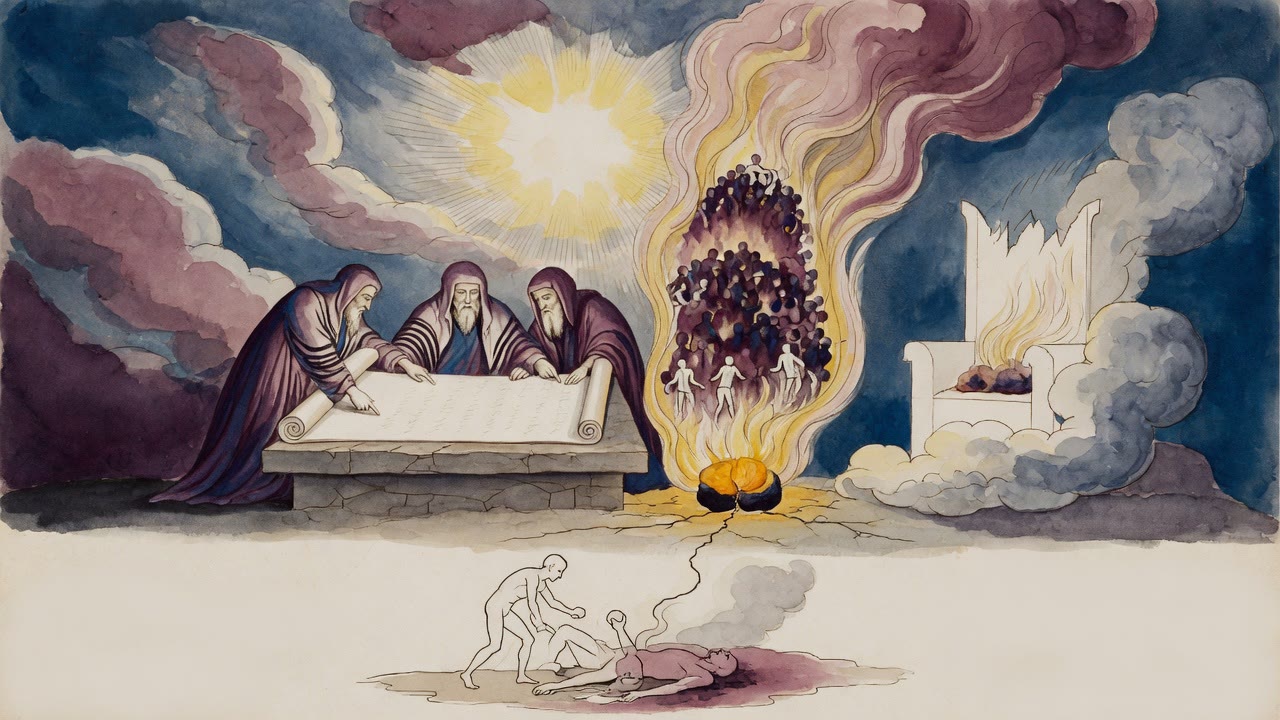
The Levites carried Temple harps to the Euphrates. Nebuchadnezzar wanted psalms with dinner. They looked at their own hands first.
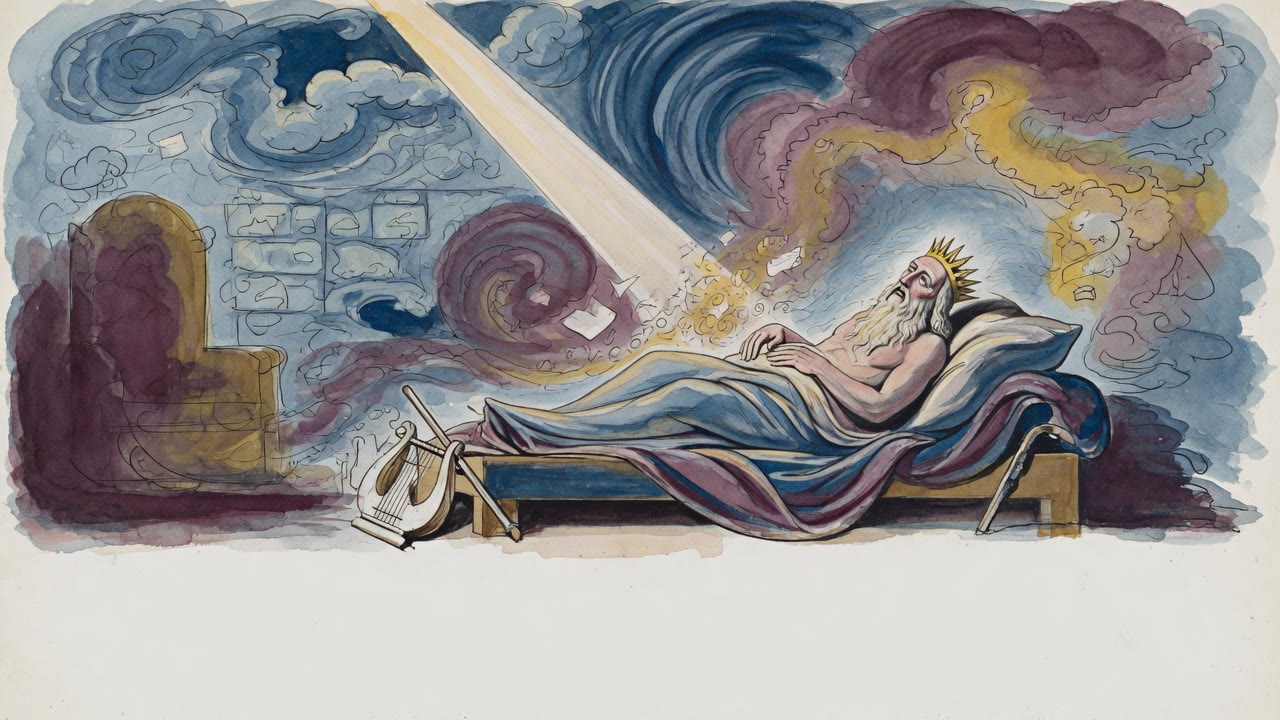
King David survived lions, bears, and Goliath, but under his own blankets the old king could not get warm, and his inner fire was leaving.
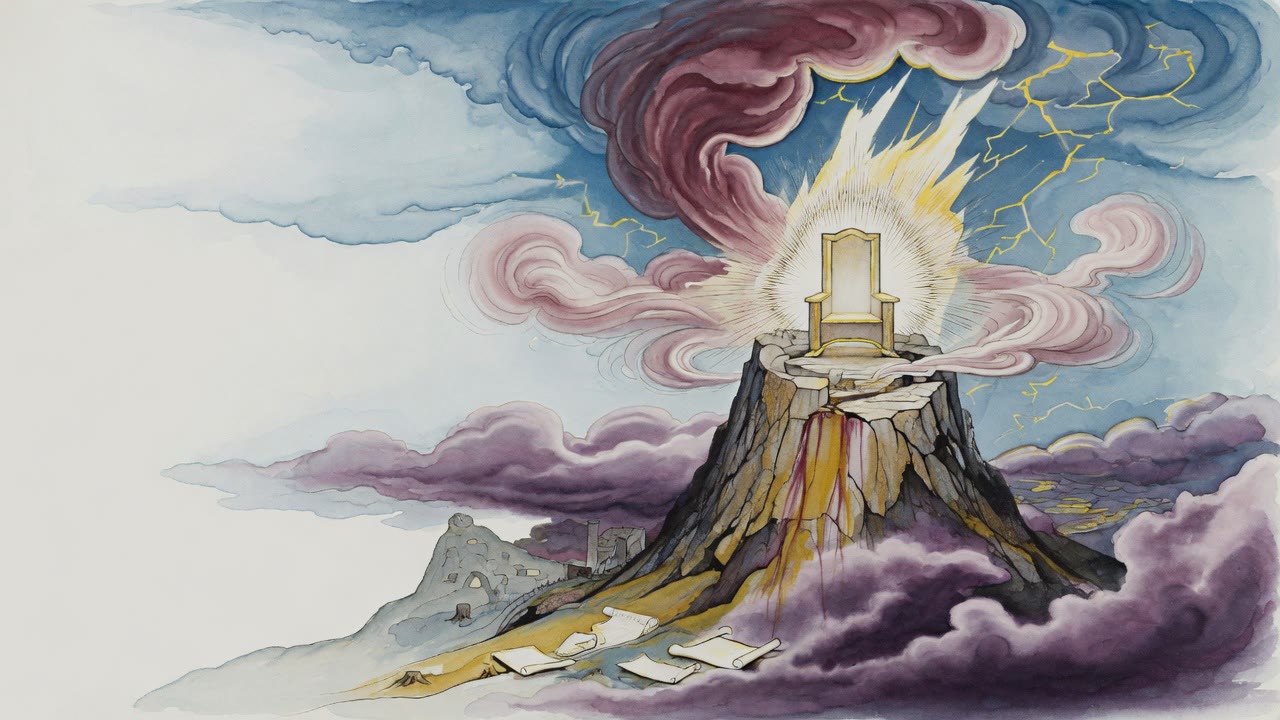
God can speak from anywhere. The rabbis believed he would end the story in one place only, and pinned the final act to a specific mountain.
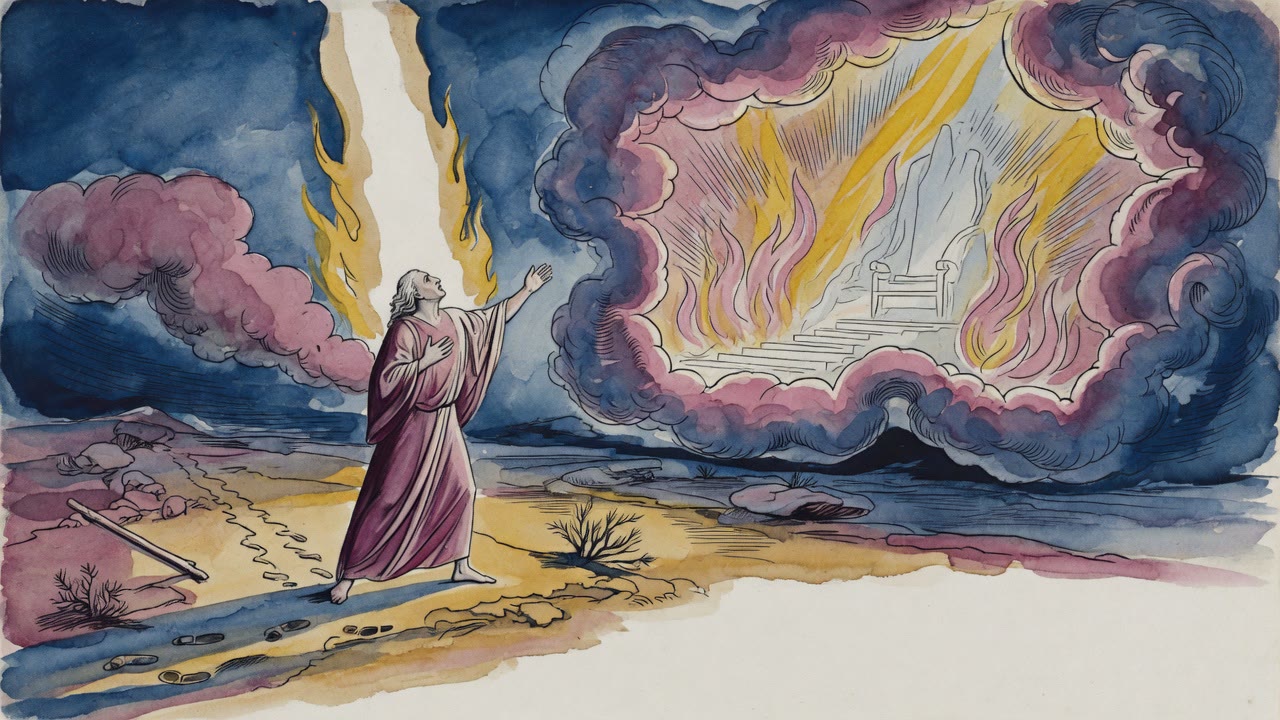
The brothers cut a young goat's throat and dipped the coat in its blood. Their father believed it for more than twenty years.
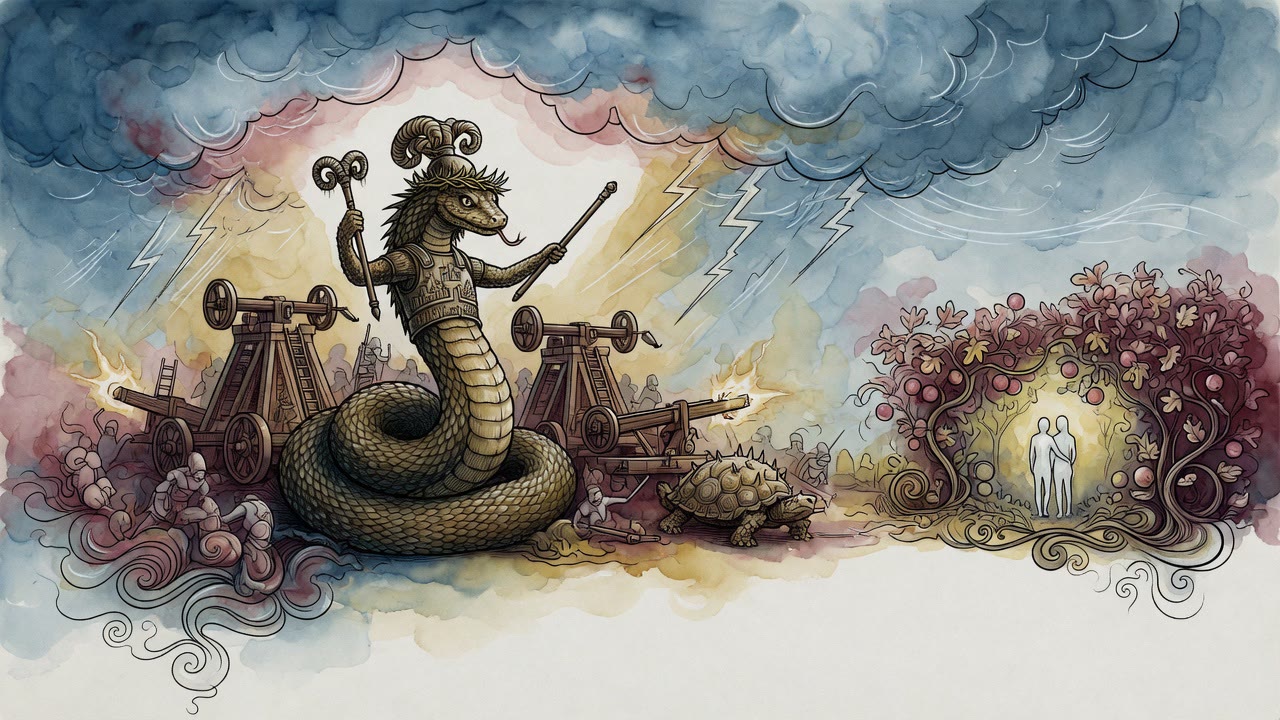
A tenth-century midrash read a parable in Ecclesiastes as an allegory for Eden. The great king outside the walls is the serpent. The poor wise man is Adam.
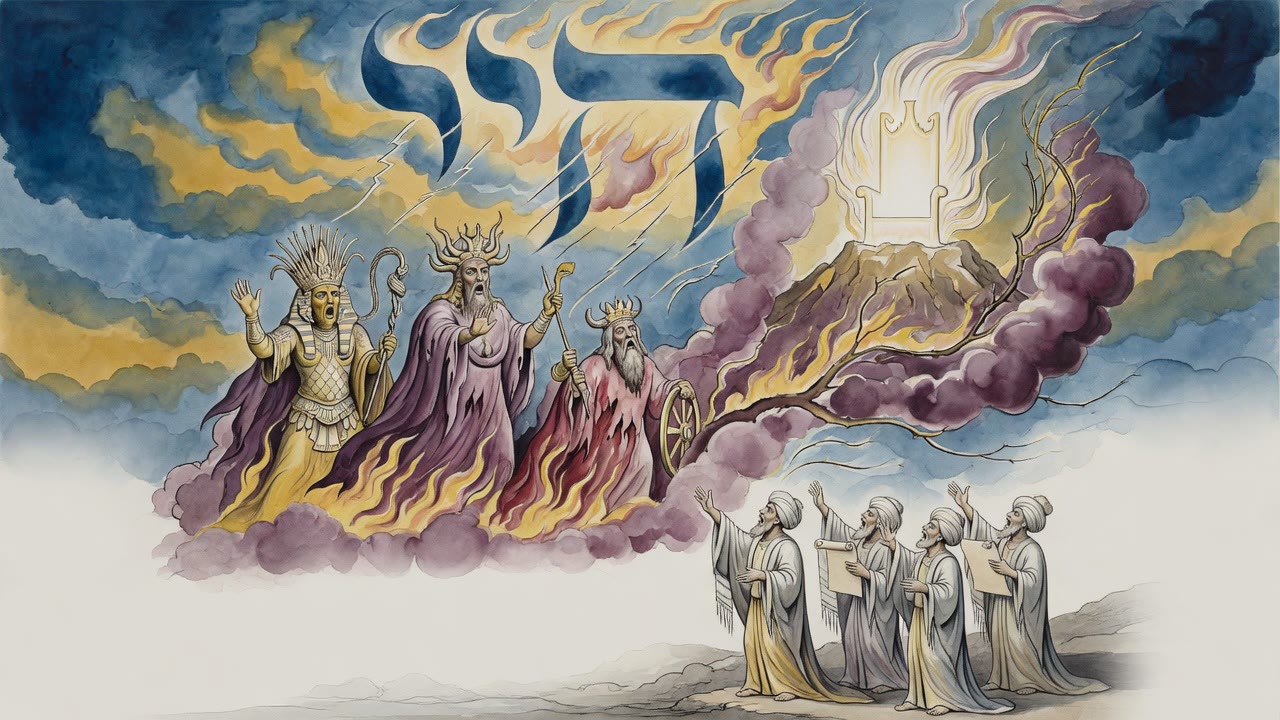
The rabbis of Esther Rabbah noticed Haman and three biblical villains all opened with the same Hebrew word. That word also means anger.
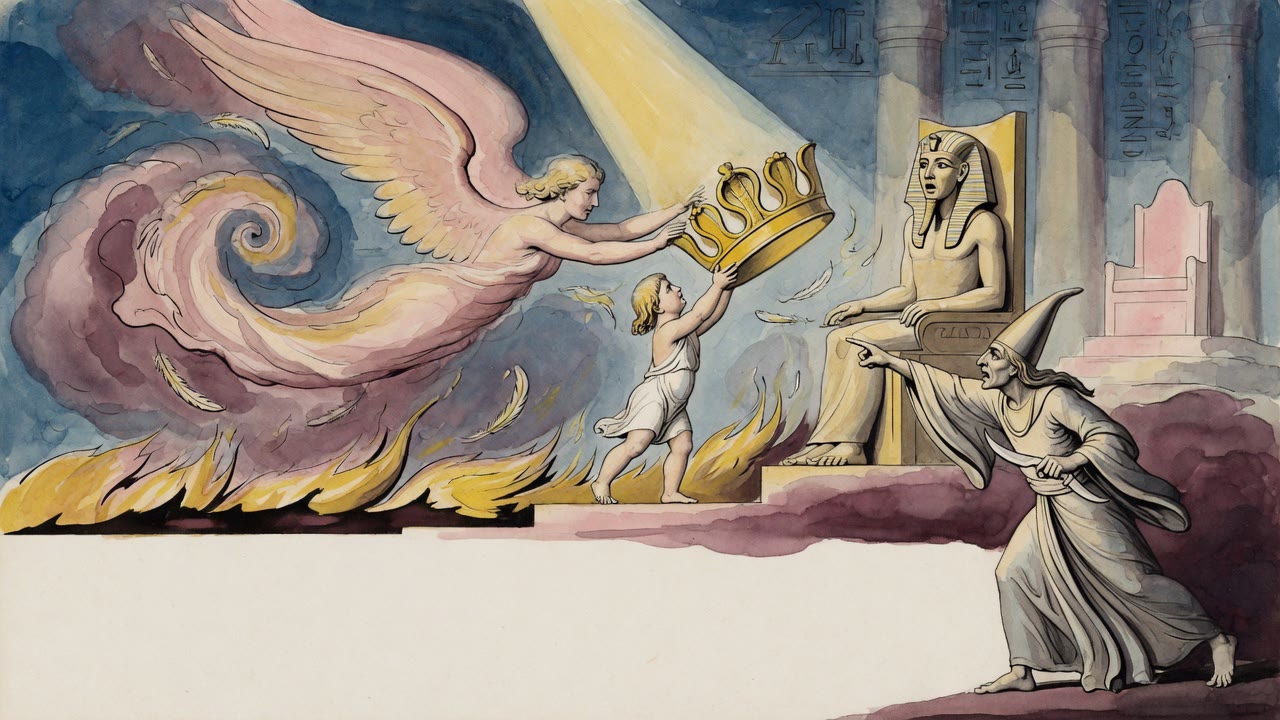
The child was three. He took the crown off Pharaoh's head and set it on his own. A sorcerer in the room called for his death.
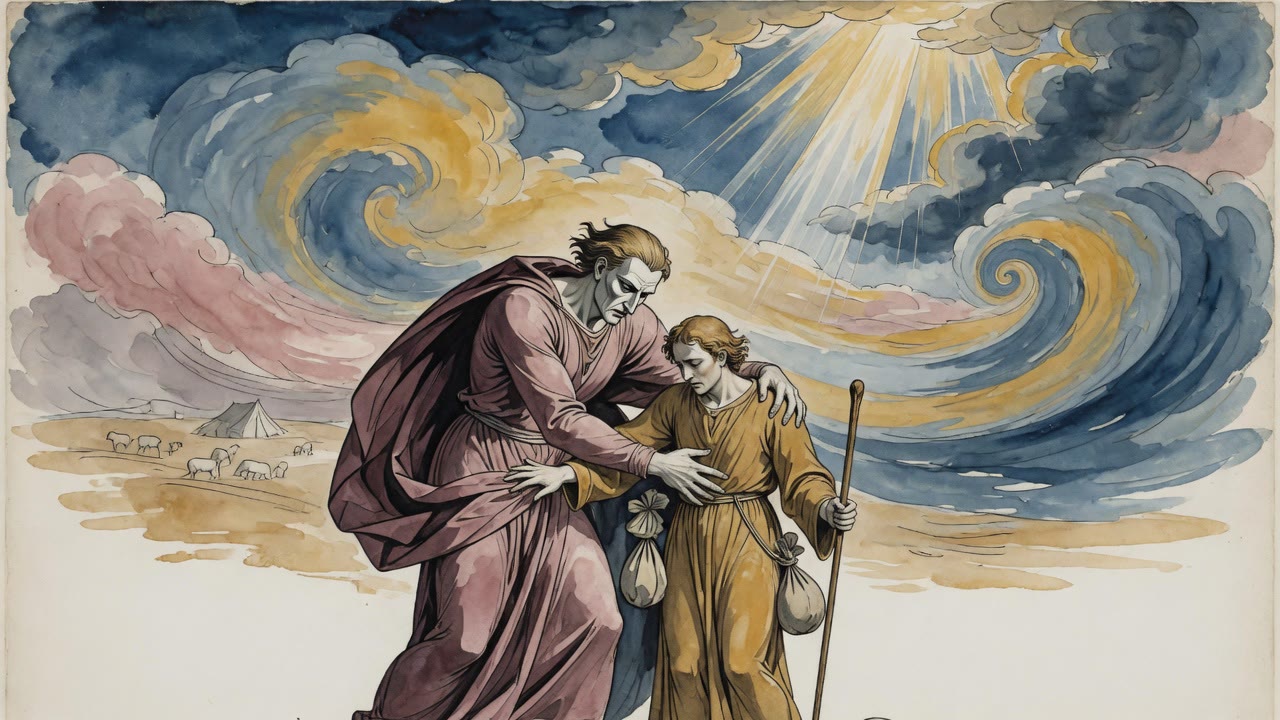
Ten camels had come with Eliezer a generation earlier. Laban ran out expecting the same weight. His hands found a staff.
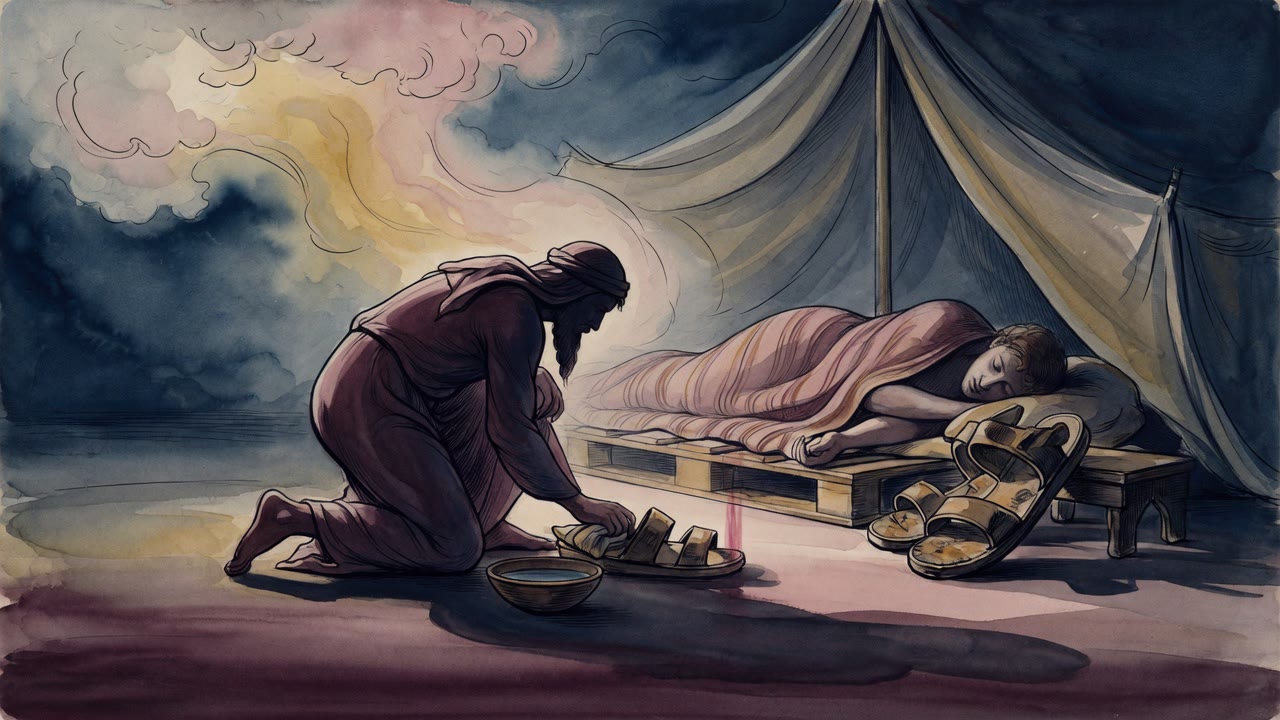
Joshua woke to a folded shirt by the pillow. The shoes sat clean beside the bed. He never saw who had knelt there in the dark.
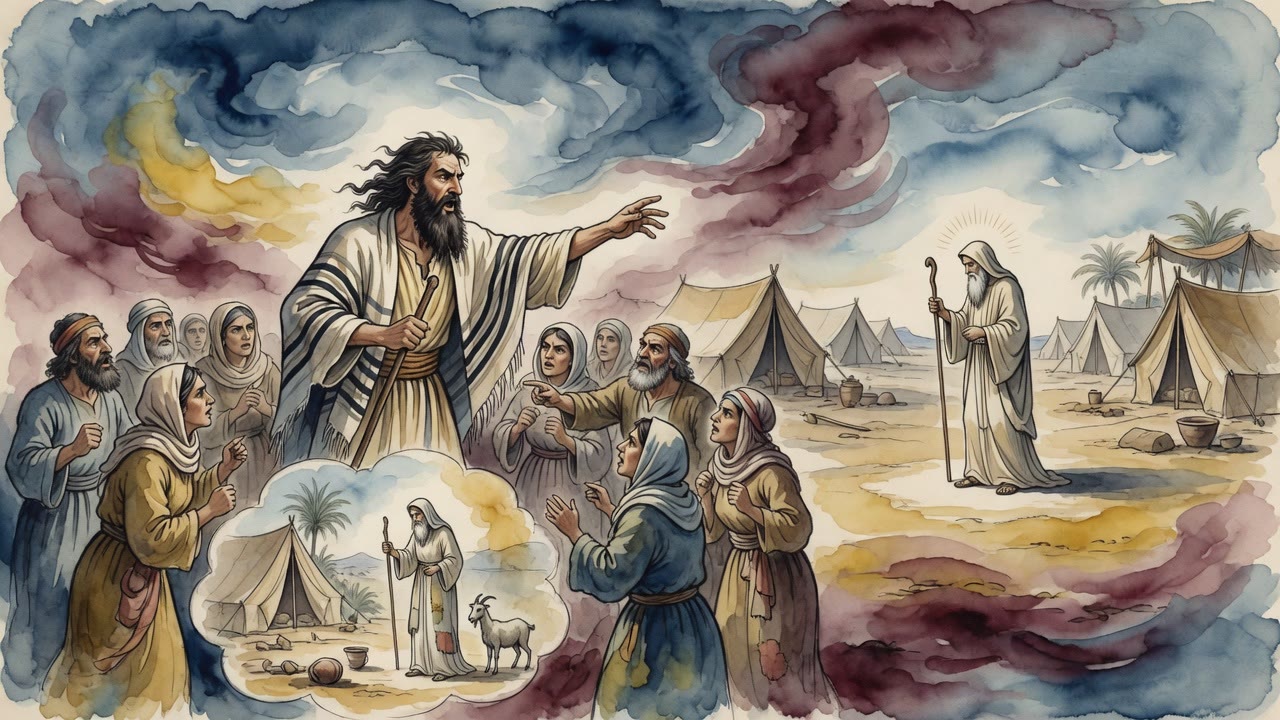
Korah did not start his rebellion with a speech. He started it with a story about a poor widow that made every listener hate Moses on the spot.
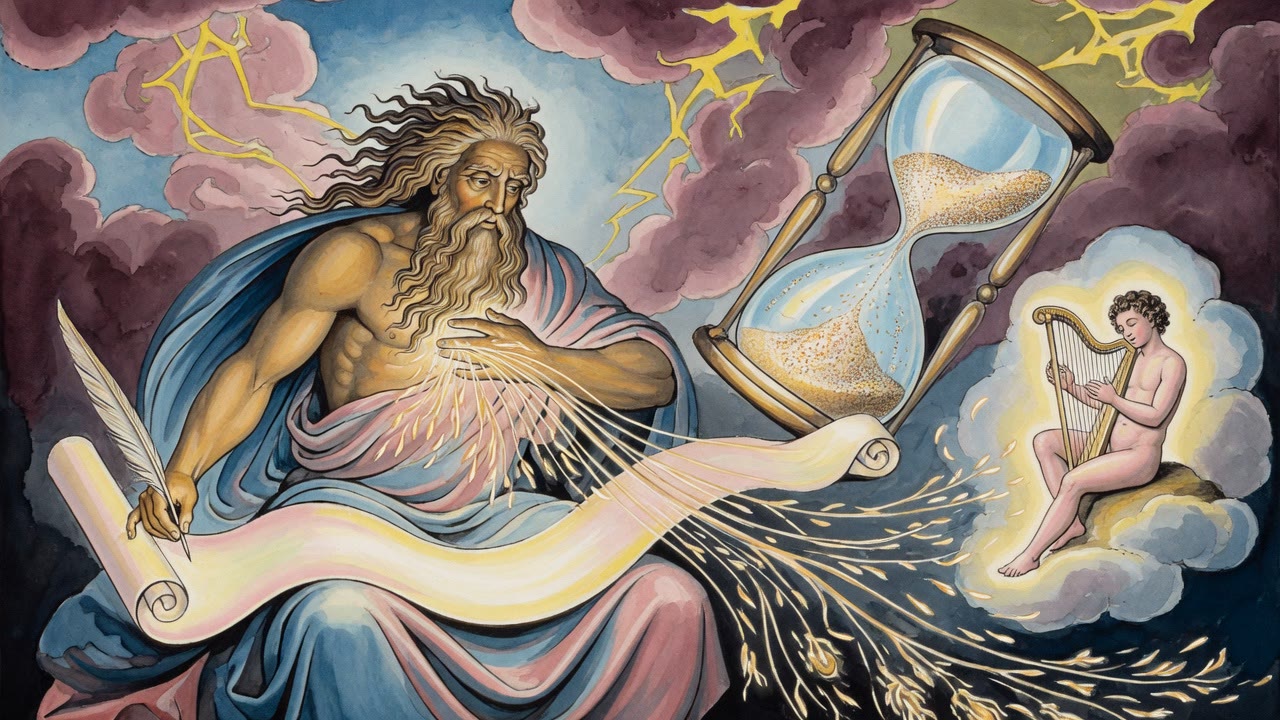
Adam saw David would live only three hours. He signed away seventy years of his own life so the greatest king of Israel could exist at all.
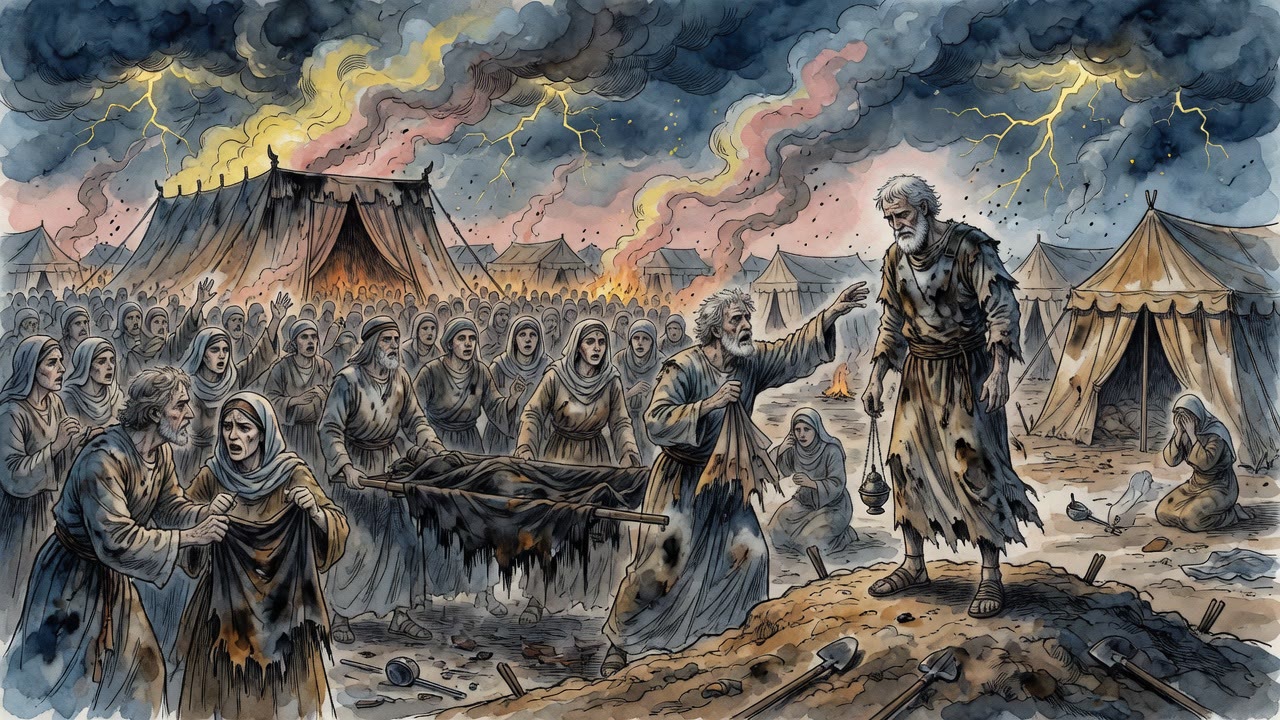
Aaron covered the Ark with his own hands before every march. Then Israel stopped the registration to ask, out loud, who his son had married.
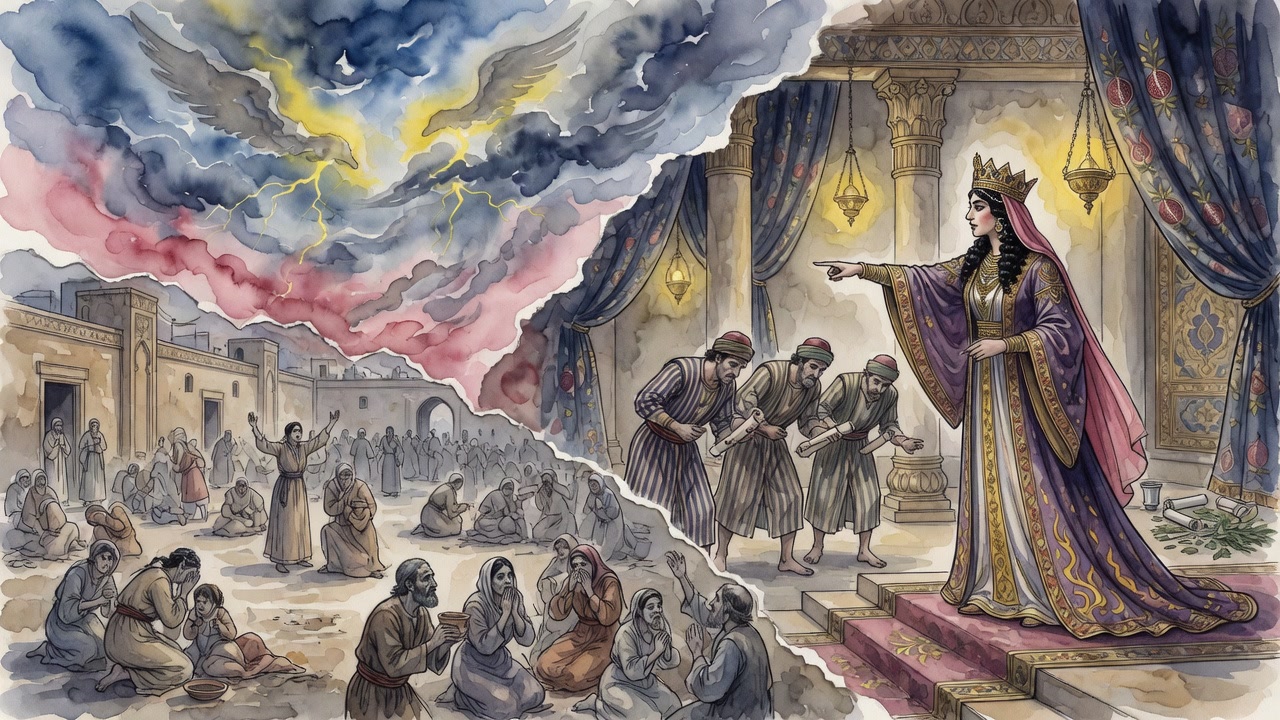
Mordechai named the festival sitting inside her three days. Esther did not blink. If the people died, the holiday would have no one left to keep it.
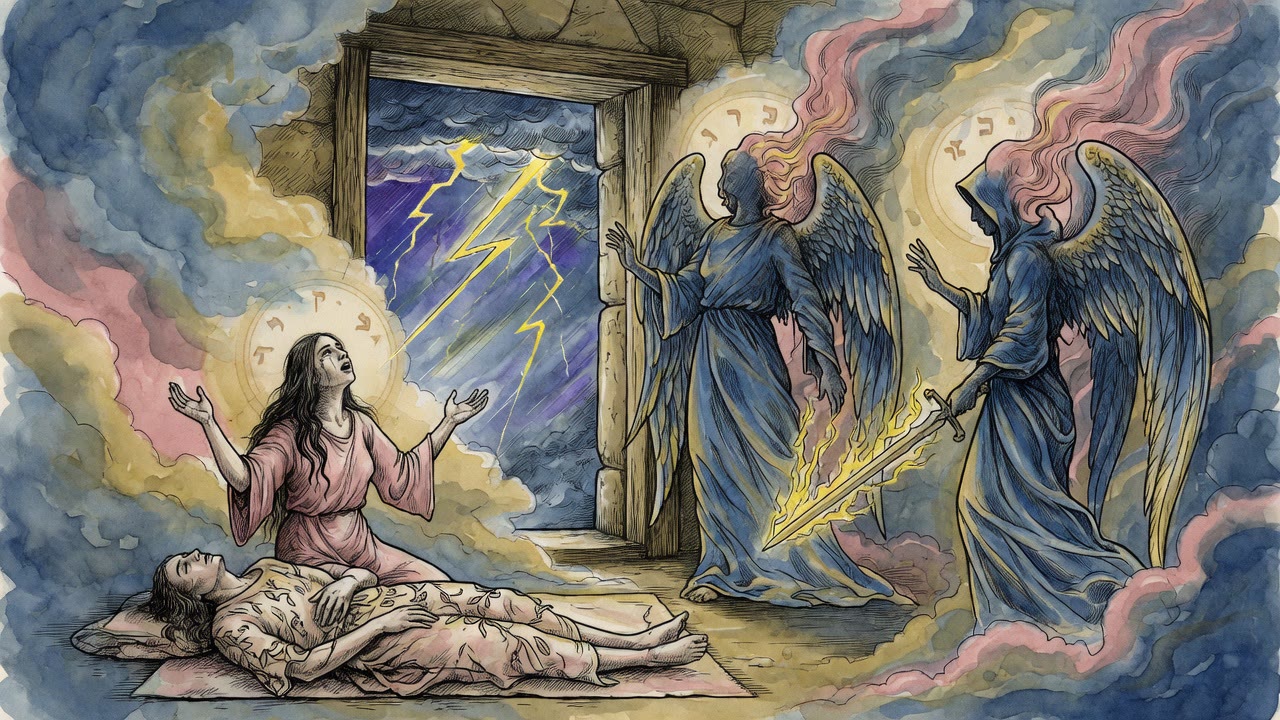
Eve stands outside the gate of paradise begging heaven for relief while Adam lies dying inside and two angels keep watch at the door.
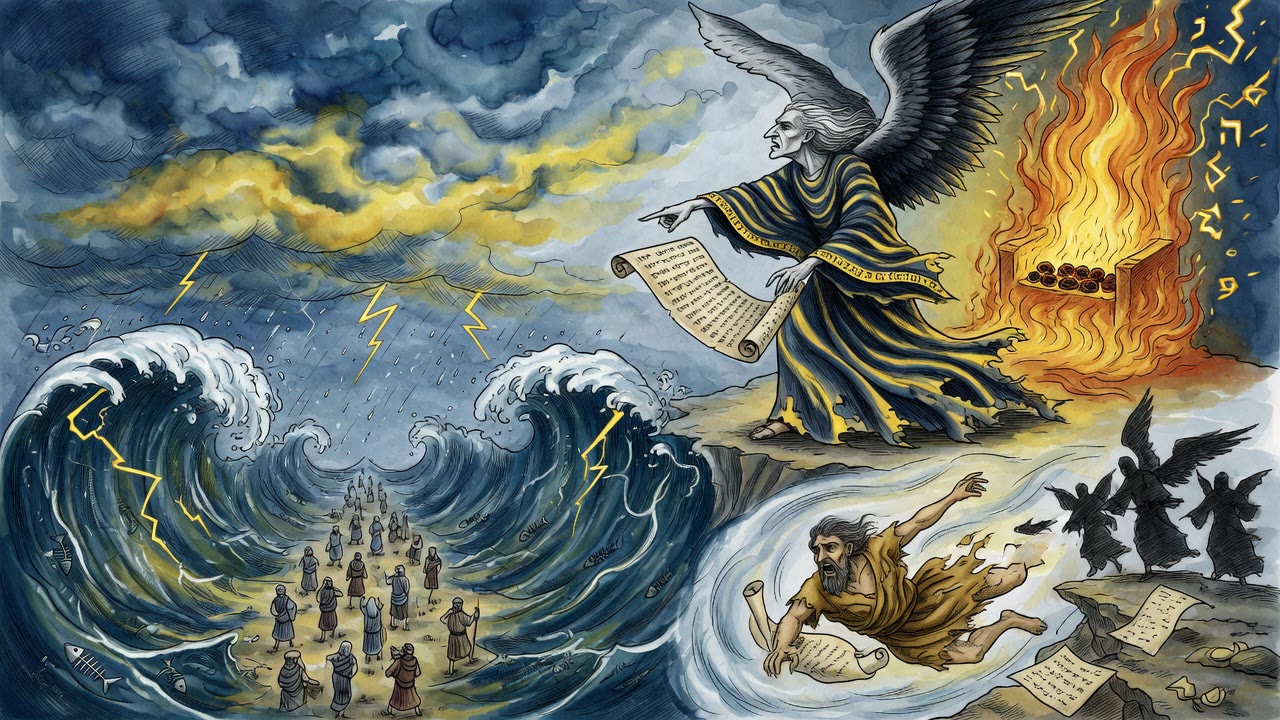
Chariots shook the reeds. In heaven Samael opened a true ledger against Israel. God did not argue. He threw the accuser a ram named Job.
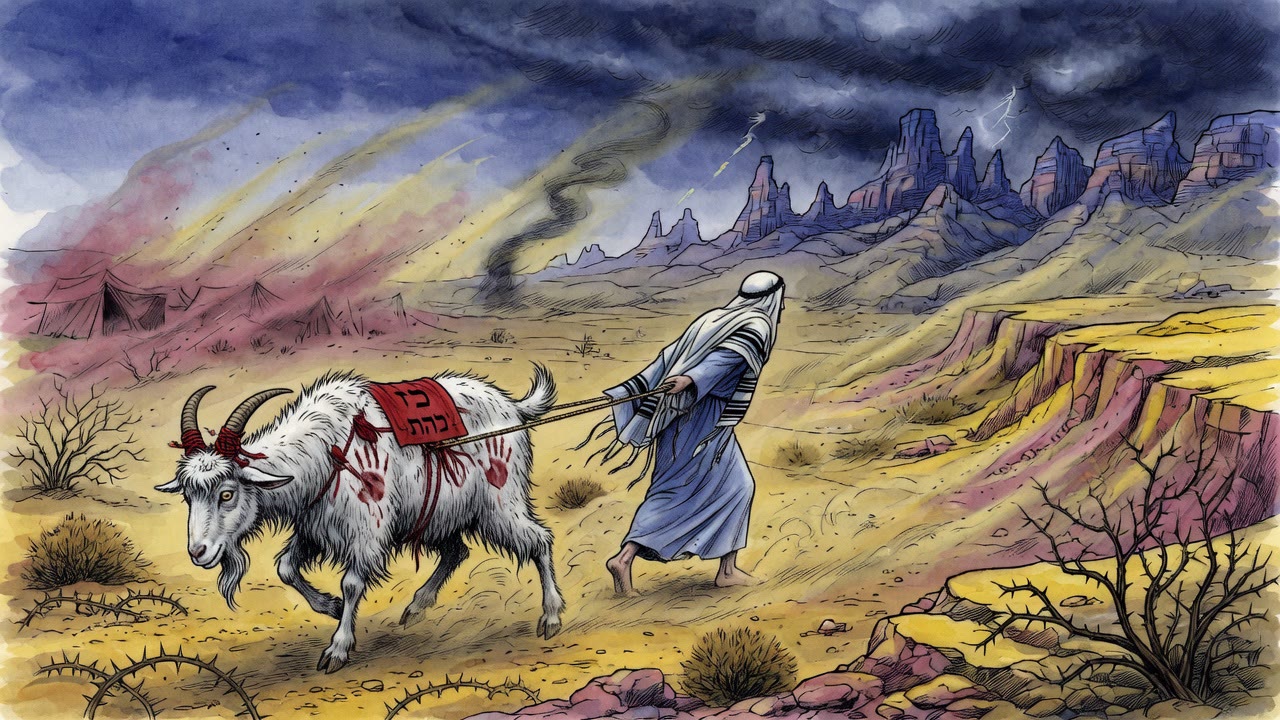
The High Priest drew lots over two identical goats. One went to God and one went to Azazel. The second goat went to the edge of the world and was destroyed.
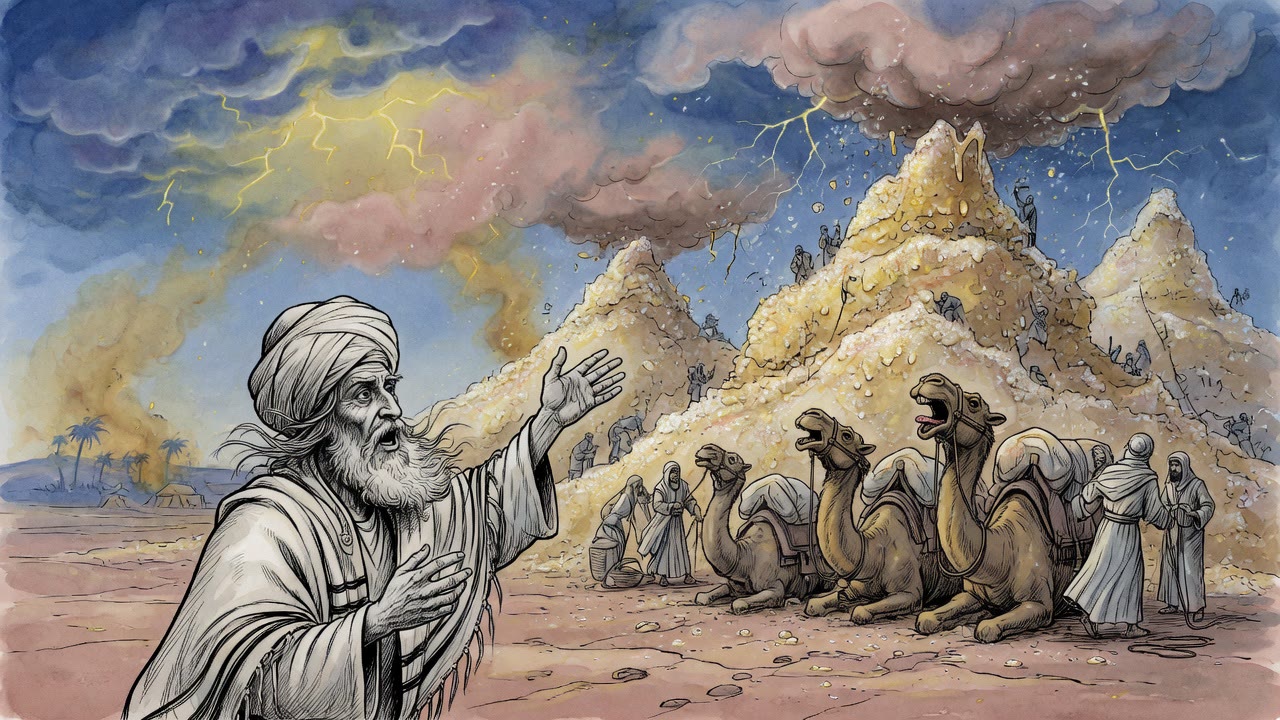
Tarfon groaned loud enough for the row to hear. Elazar of Modiim did not smile. He asked which of God's two measures was larger. Then he counted doors.
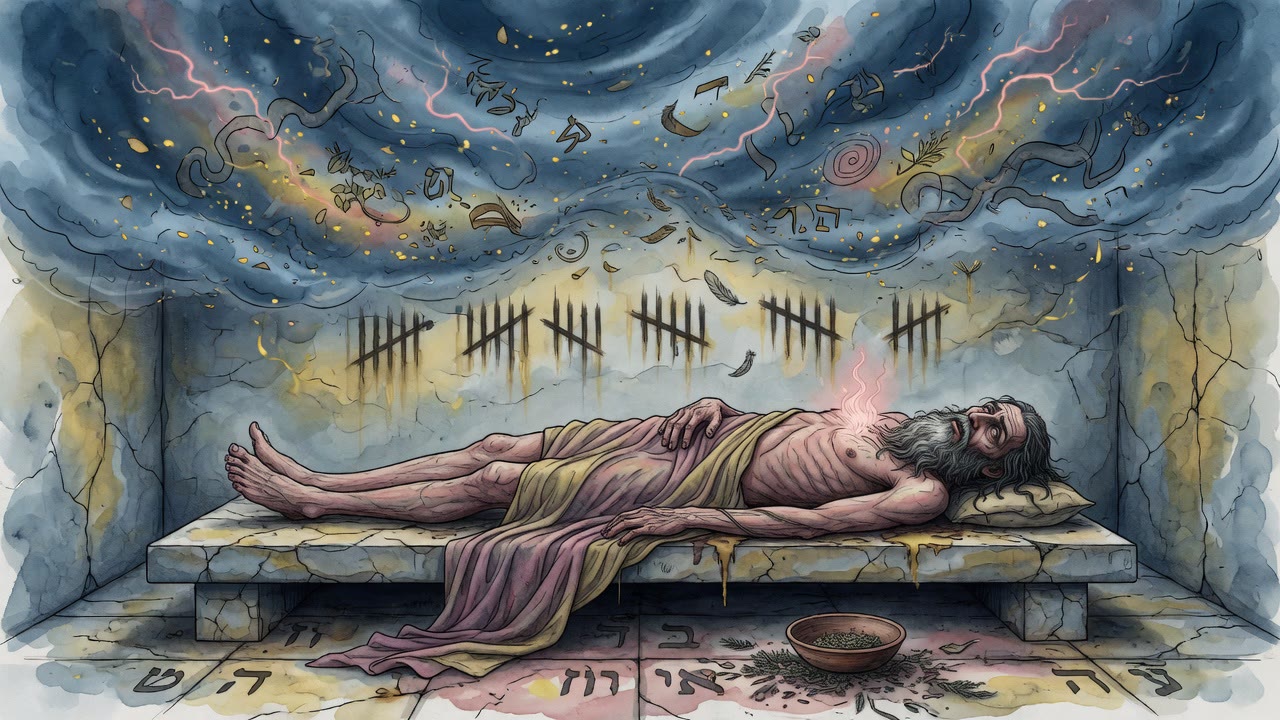
Seven sheep were laid against David each day for warmth, and none of it reached him. He had counted Israel, and seventy thousand men died in the plague.
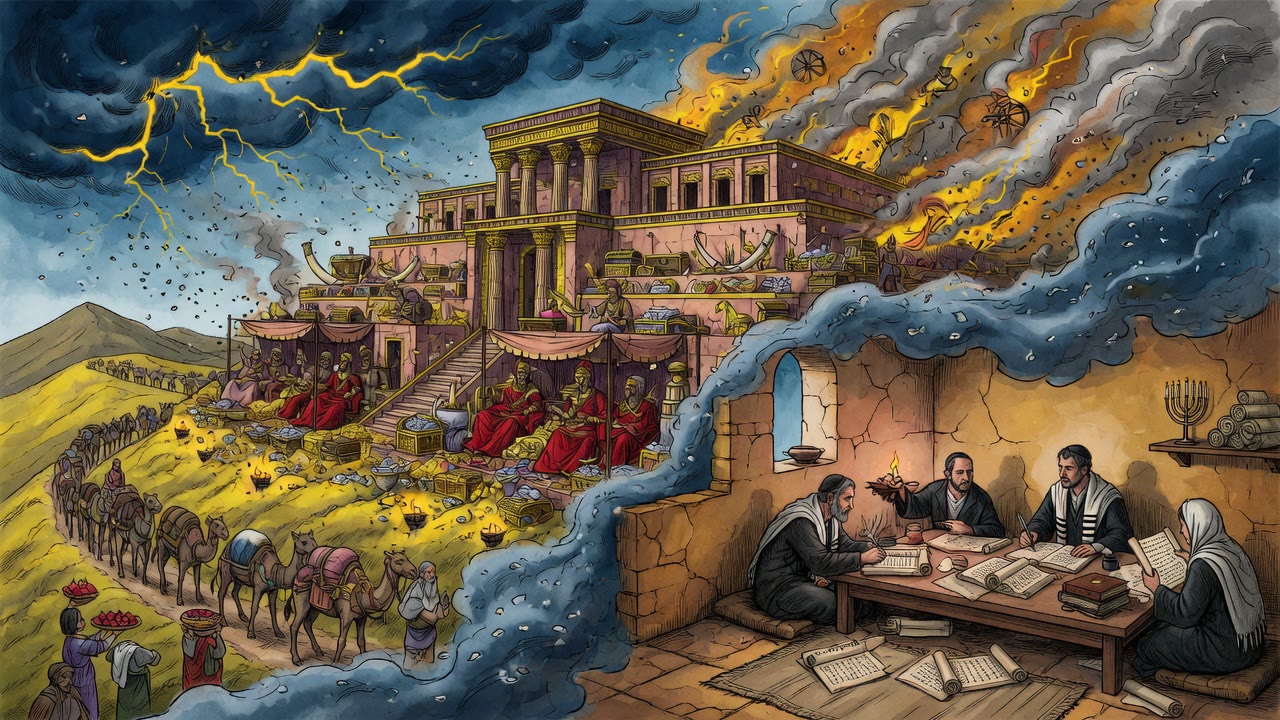
All the rivers run to the sea, Ecclesiastes says. The rabbis read that as Rome, and said the scholars would get the money in the end.
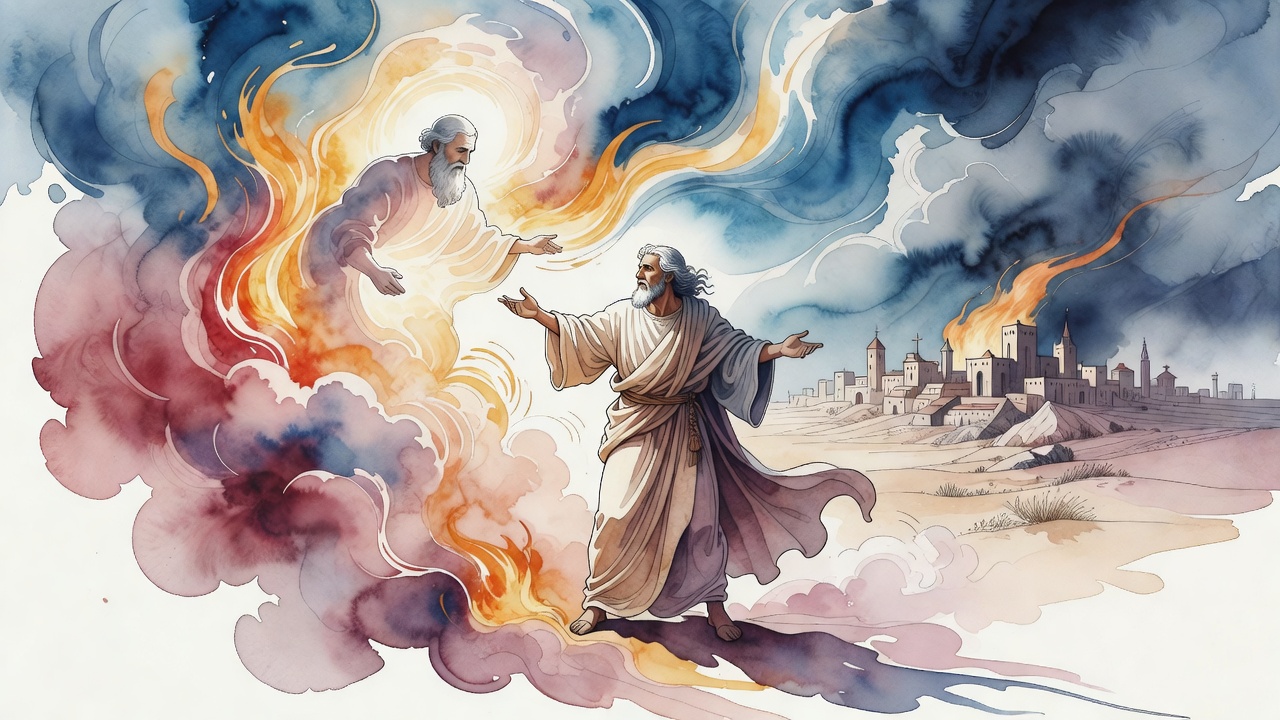
Abraham accused God of slipping out of His own oath. God answered by offering to march every generation He had ever destroyed past him, one at a time.
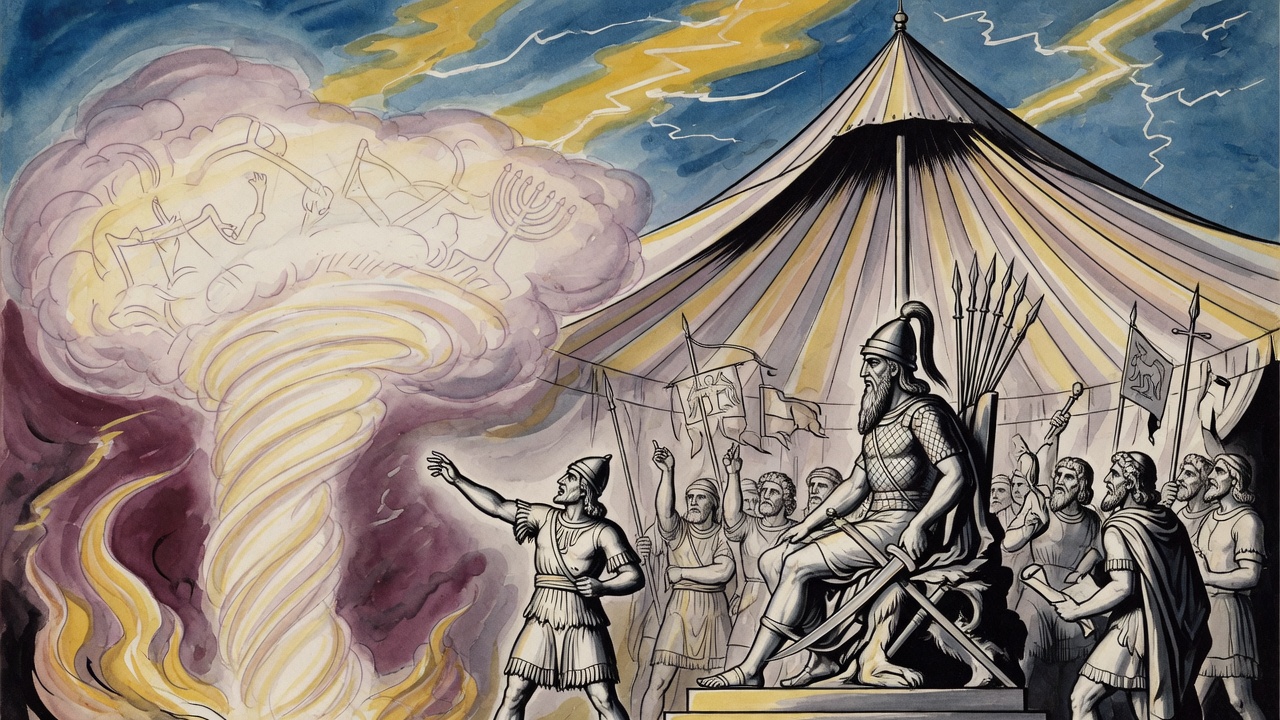
Figs and olives and mountain water met Abraham in Canaan. None of it was his. He asked God how a childless man could inherit a country.
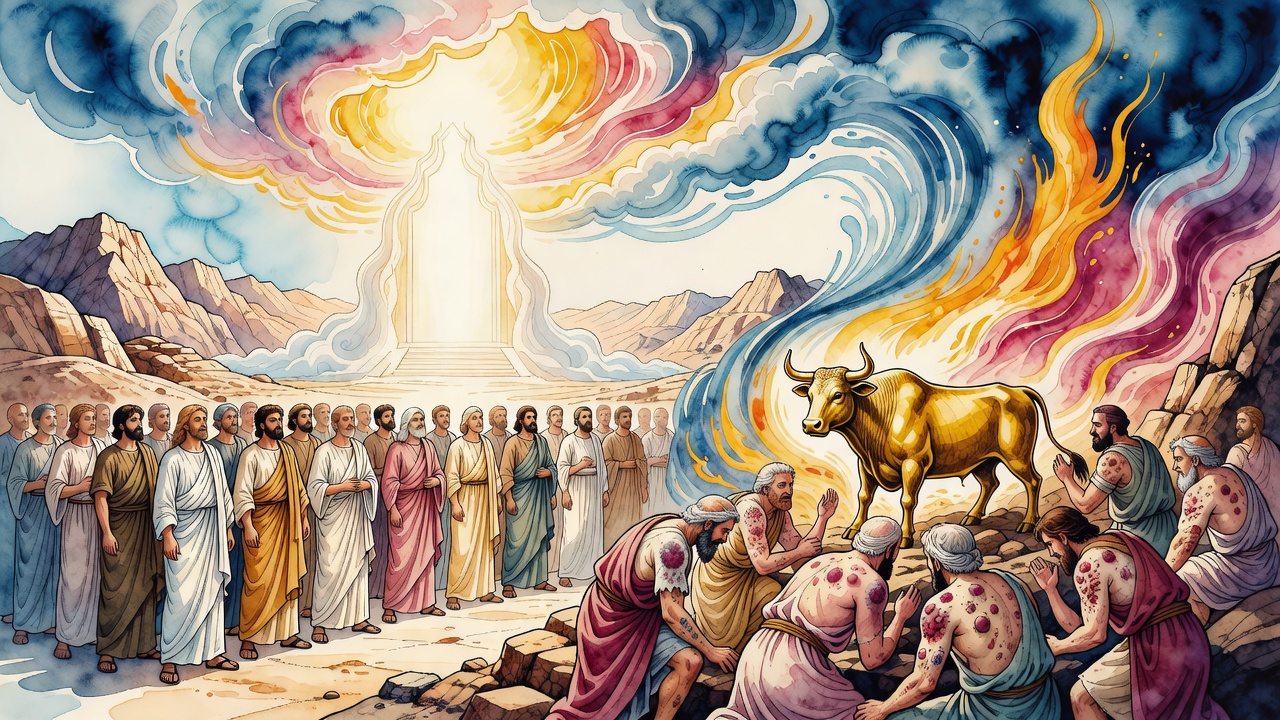
At Sinai, not one Israelite carried a wound or a blemish. For forty days it held. Then the golden calf broke the spell, and every illness returned at once.
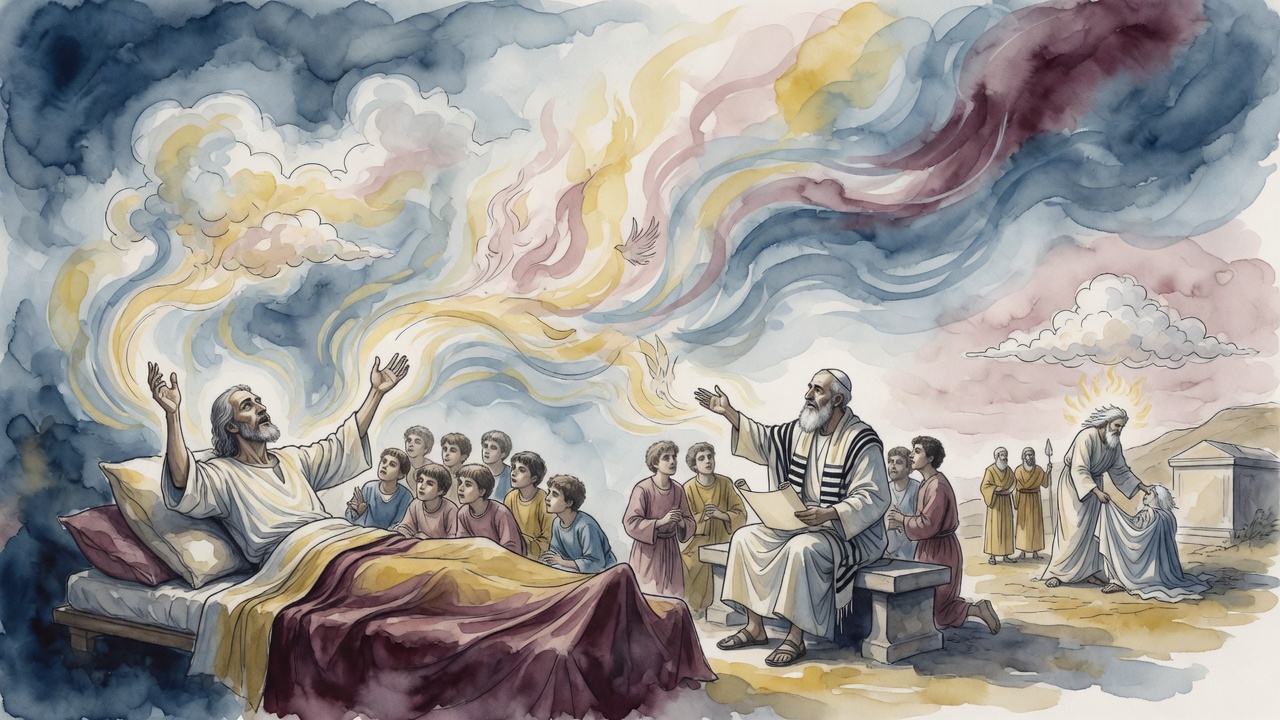
After Abel's blood soaked the ground, Adam fled Eve for 130 years. Female spirits found him there, and grief took on bodies.
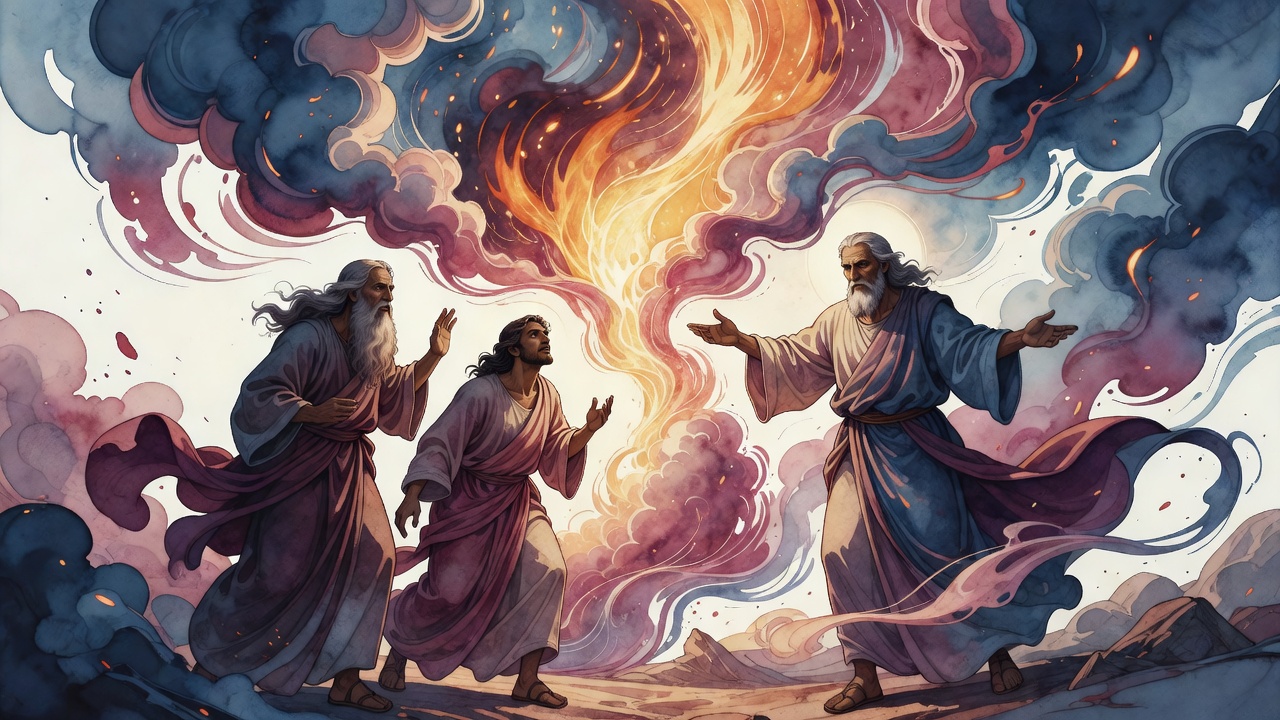
The knife was still in Abraham's hand when he named the mountain. Jacob woke on a stone and said the same word into the dark.
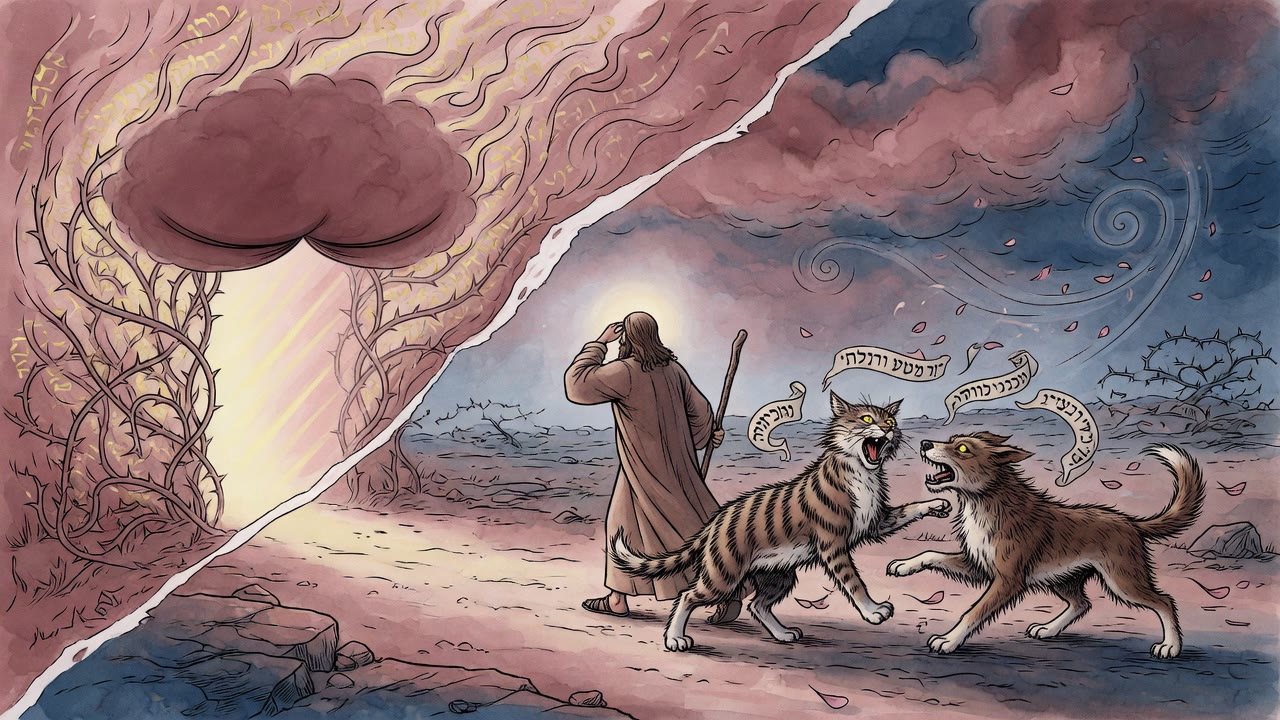
They put their paws together and swore never to share a house. The dog starved his way to Adam's door. The cat was already inside.
