496 myths · Page 12 of 17
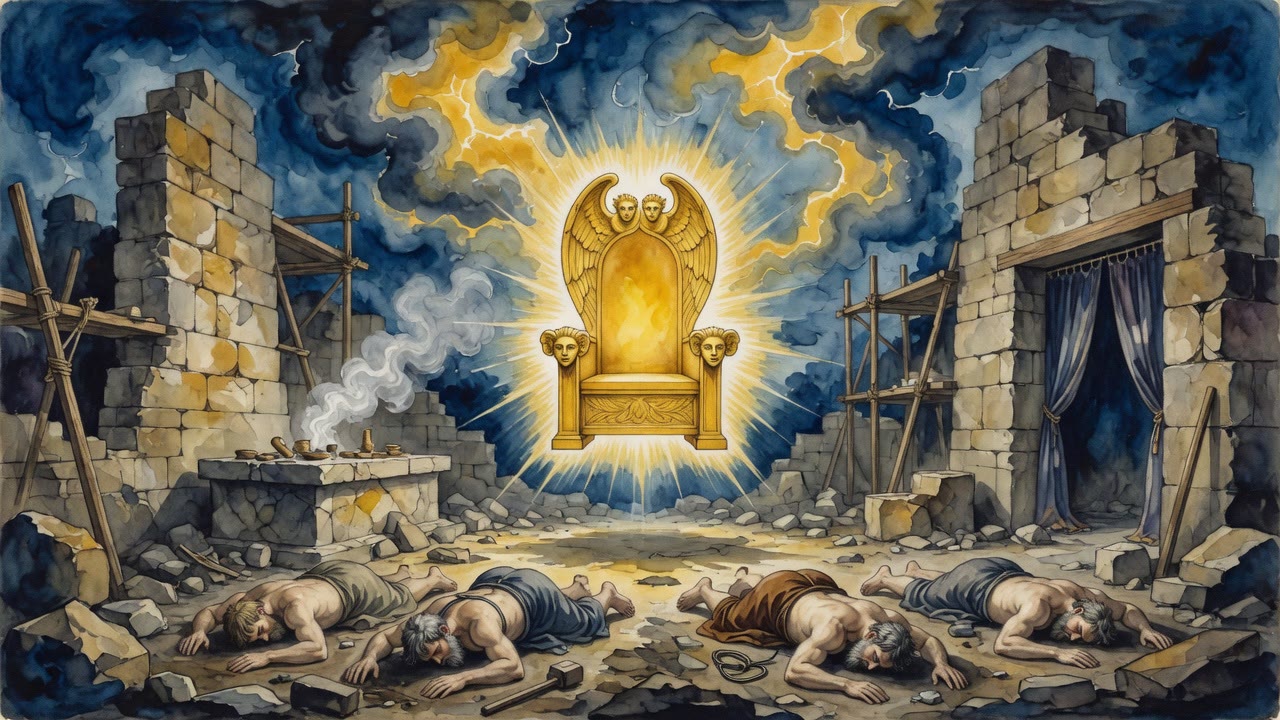
He was three, in a house stocked with gods. On Friday he set a cooked dish aside for a Sabbath nobody had commanded yet.
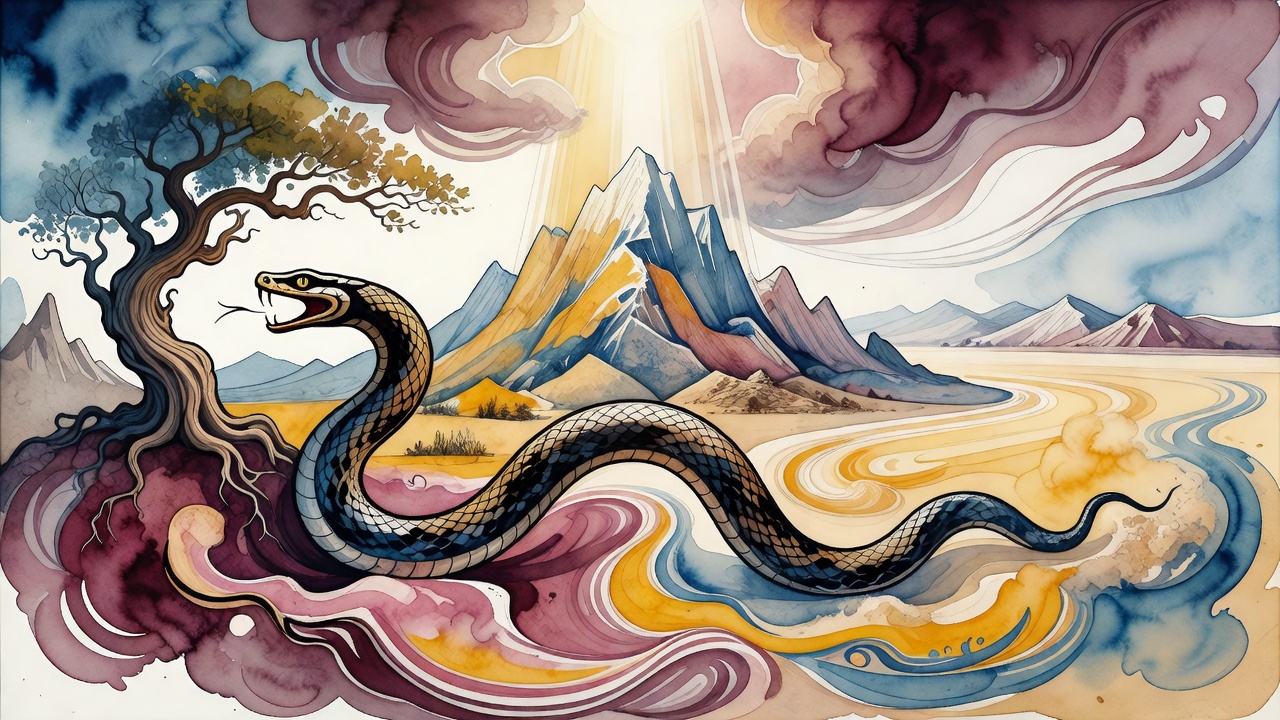
The serpent asked tree, mountain, and desert for Moses son of Amram. Each answered with the last work Moses had done to them, then fell silent.
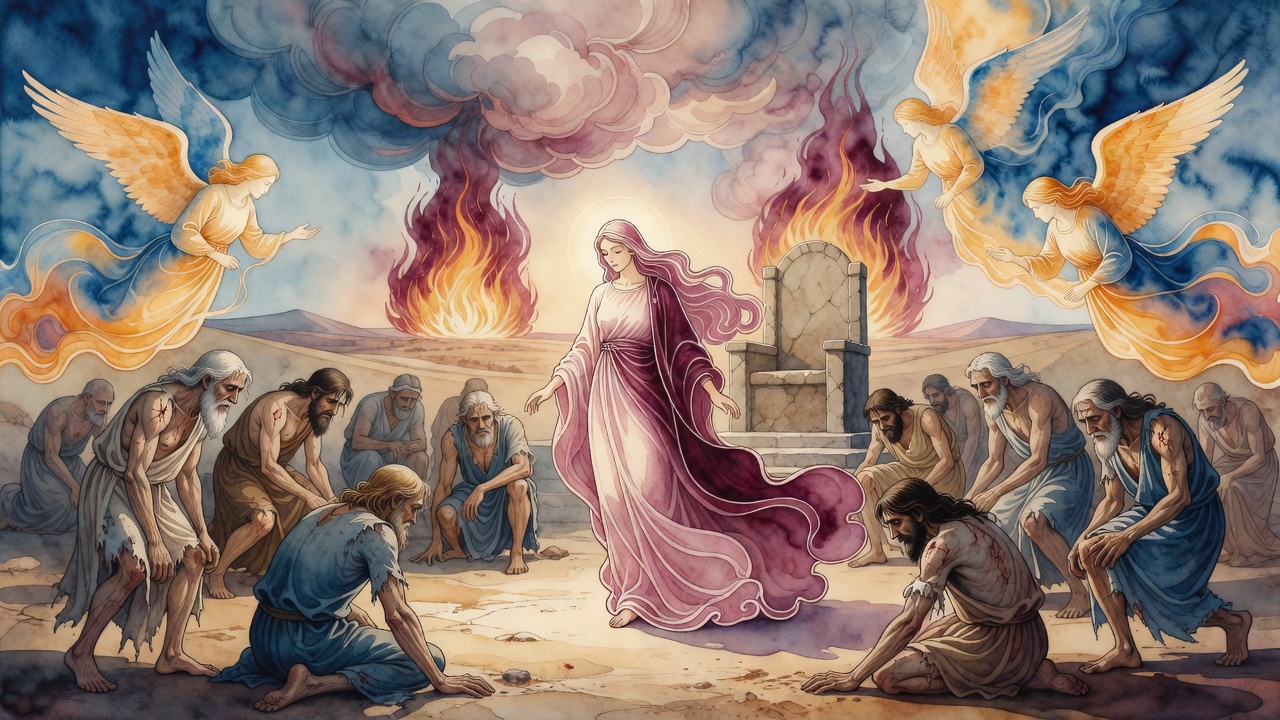
They reached the mountain with crushed hands. Angels went through the camp first. The seventh day still had no partner, and it asked why.
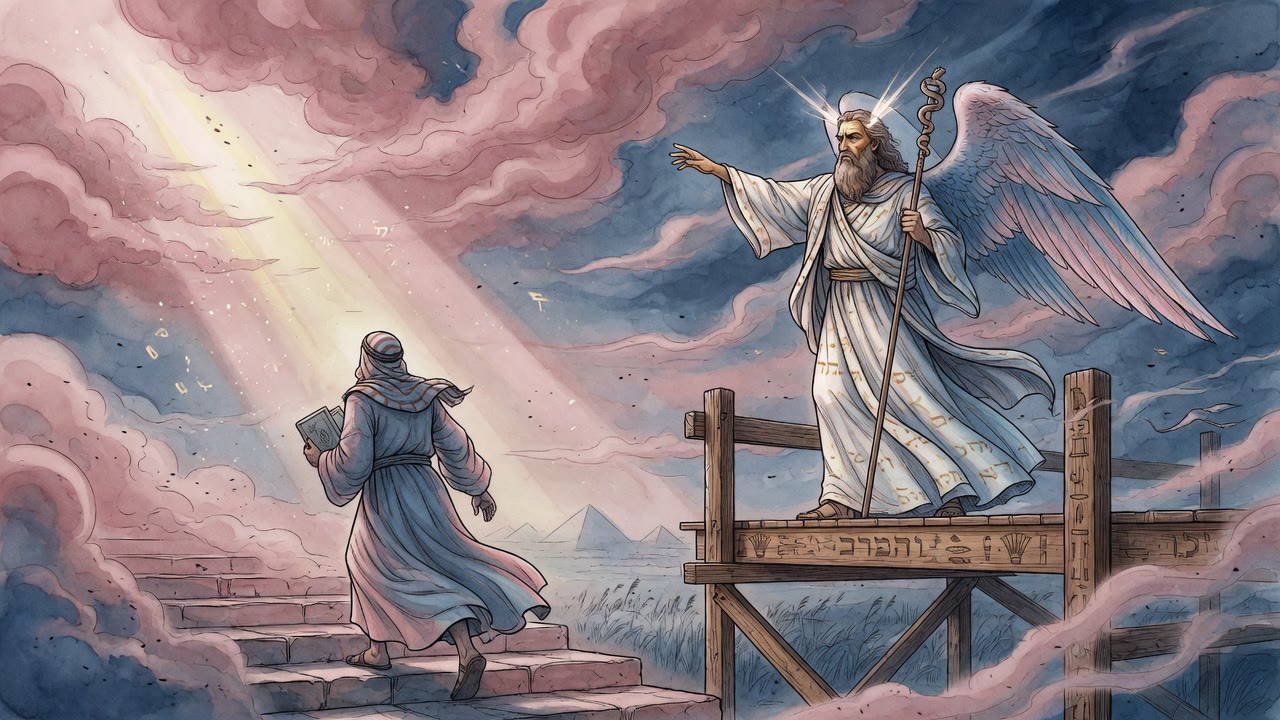
Pharaoh's men set a knife on Moses's neck. An angel took his face, the blade found the wrong body, and Eliezer's name kept the rescue forever.
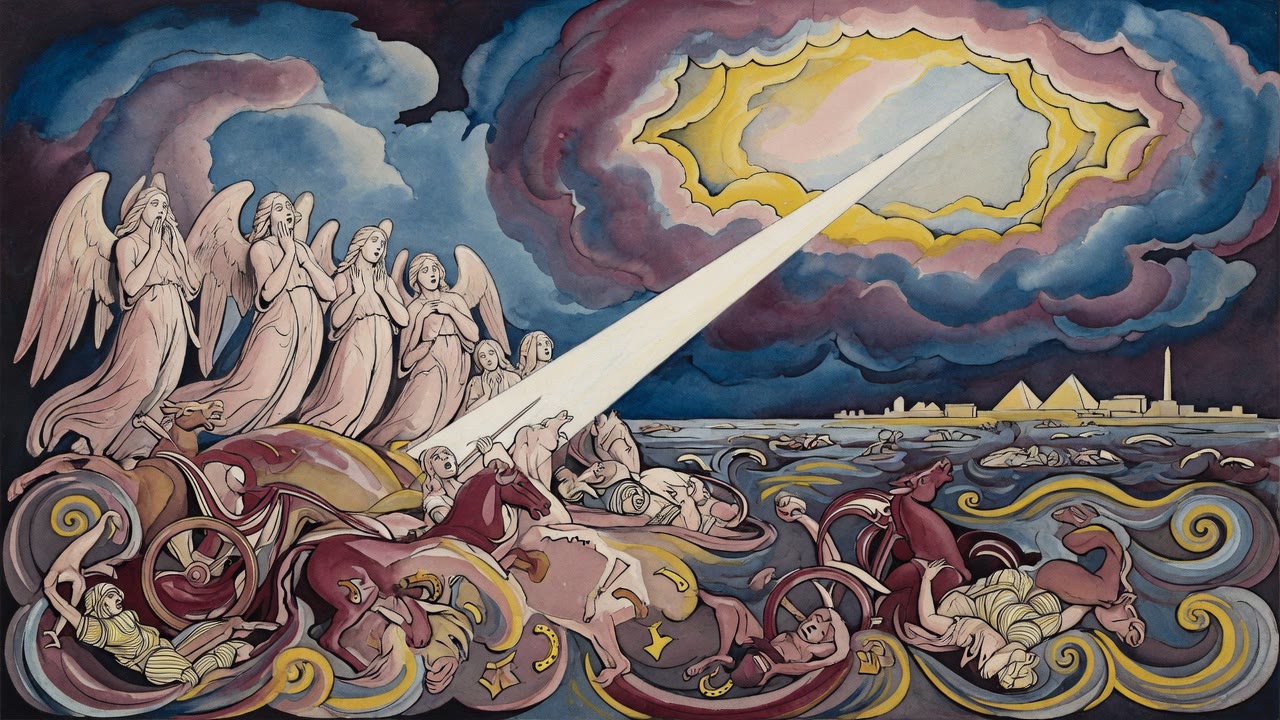
At Sinai every word leaves God's mouth at once. Death and life, wound and healing, sea and staff reverse in the same undivided speech.
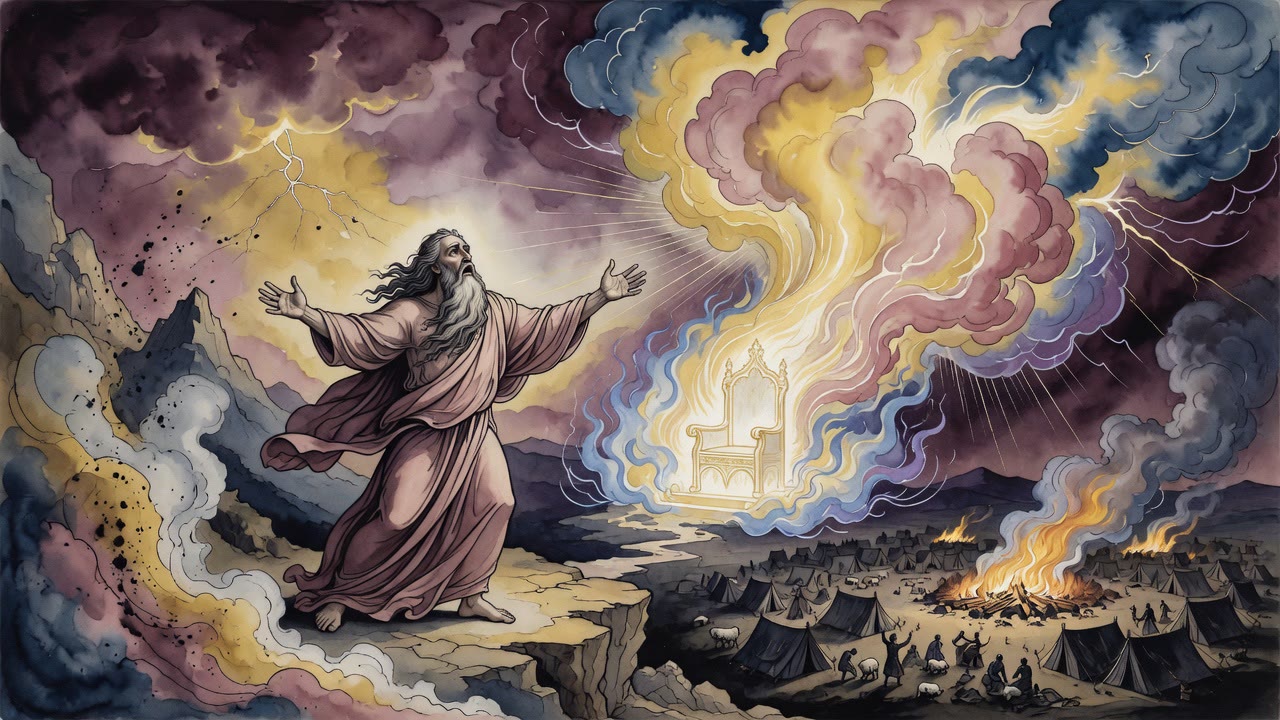
God would break one vow, not two. Live, and the people fall. Moses looked at both ends of the rope and left his own life on the table.
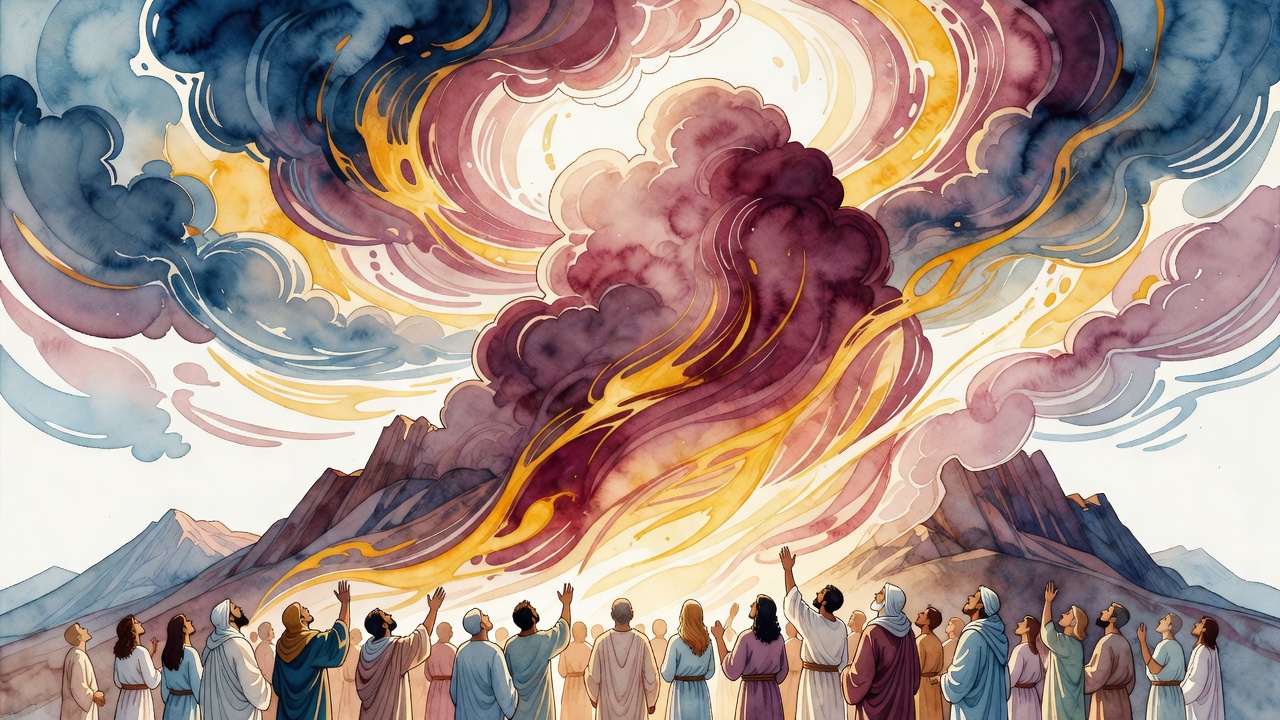
On the third morning the camp still had sleep in its eyes. God was already on the mountain. Thunder spoke in voices that did not copy each other.
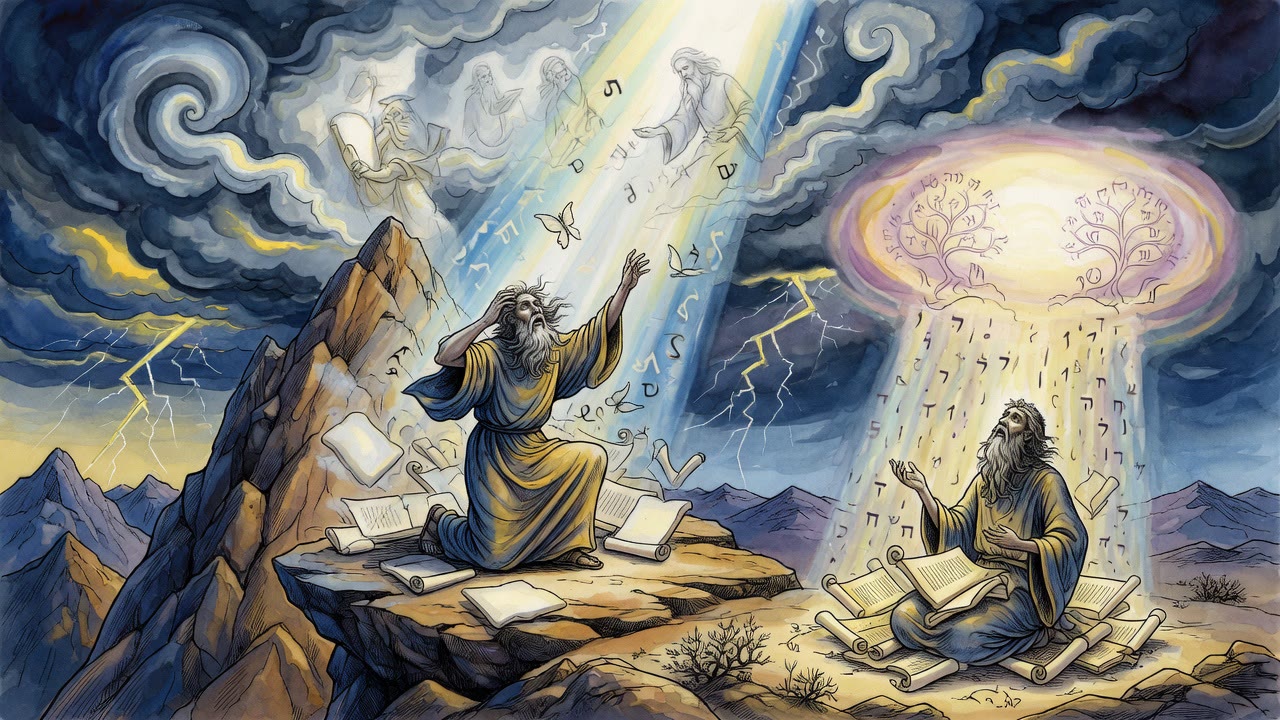
For forty days Moses learned Torah and forgot it. God poured it into him as a gift, and Ha-Satan (the Accuser) hunted the treasure across earth, sea, and death.
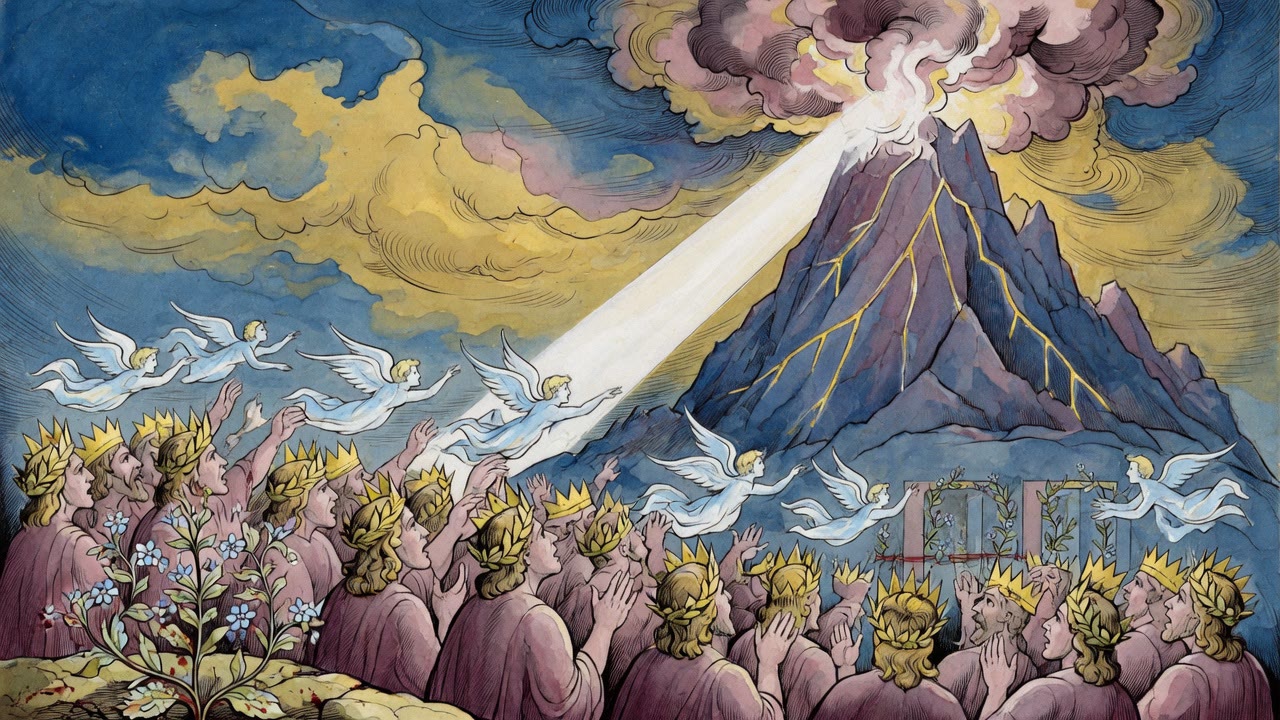
They did not wait to hear the terms. Six hundred thousand mouths promised to do, and angels came down with two crowns for each head.
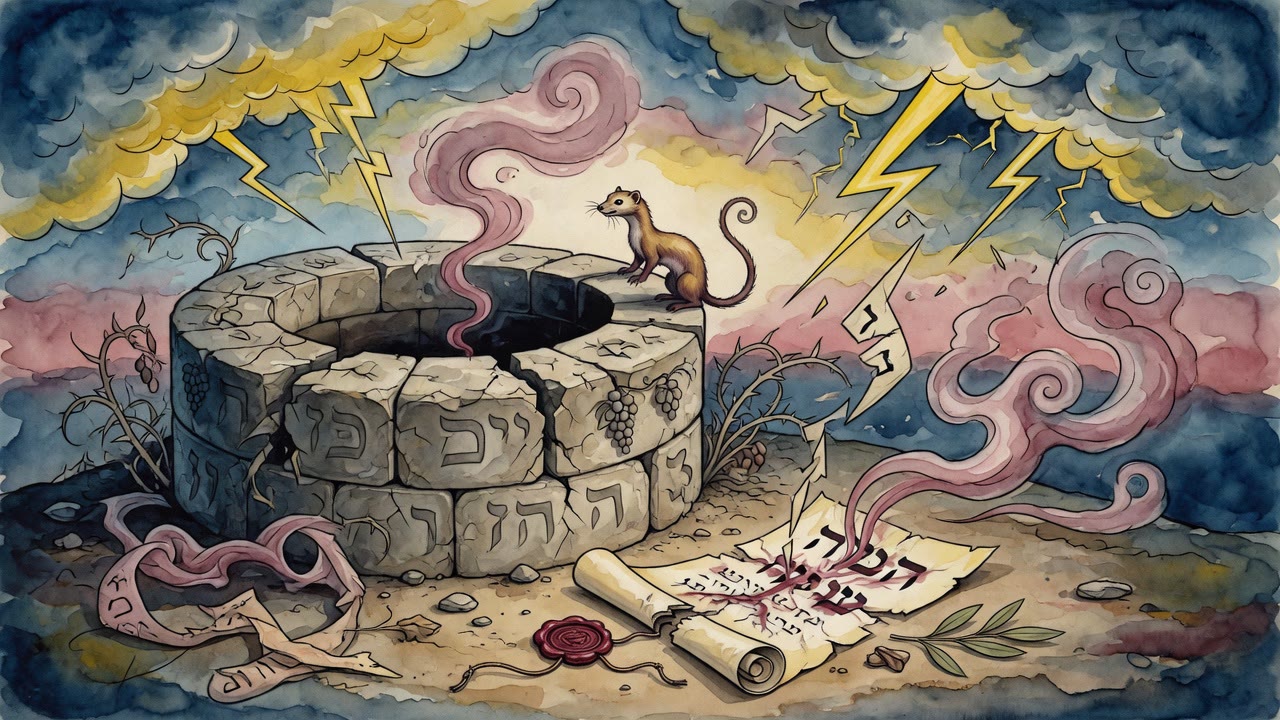
The first sentence emptied every chest on the mountain. The word itself turned back and said it had been sent to the dead.
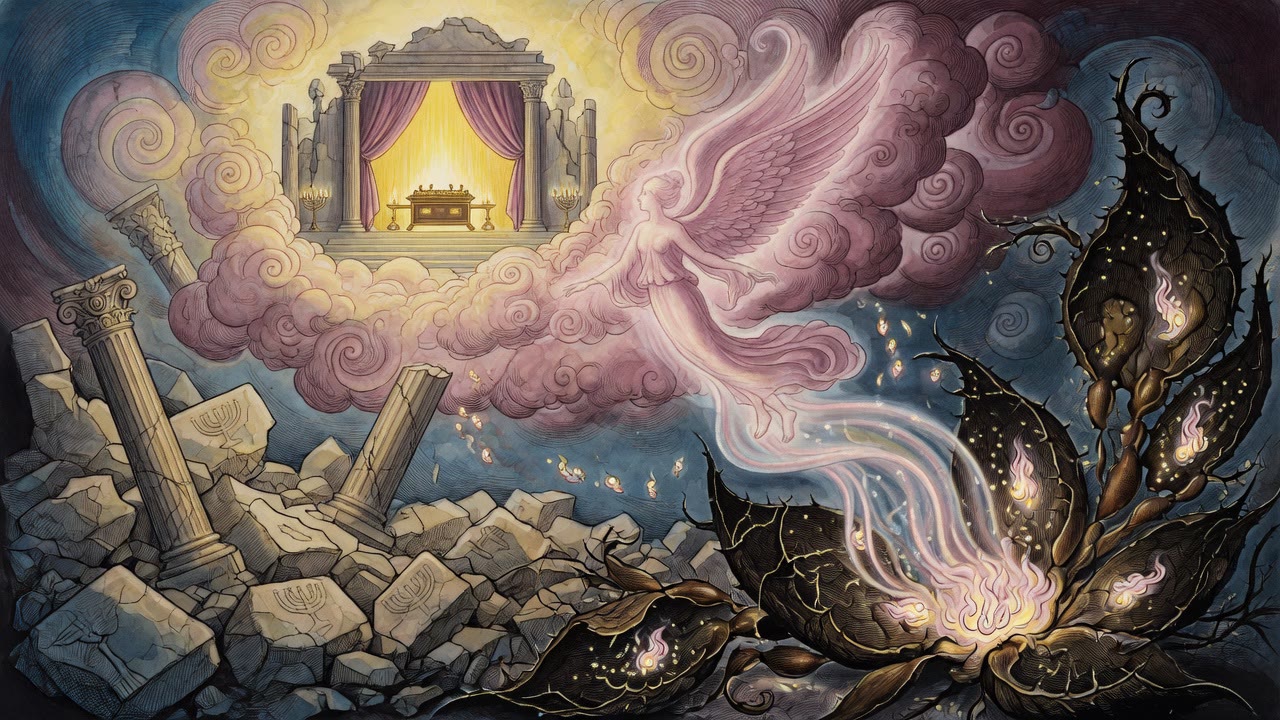
Returned exiles found no sacred fire until an old man led Ezra to Jeremiah's cache, oil that rose into pure flame.
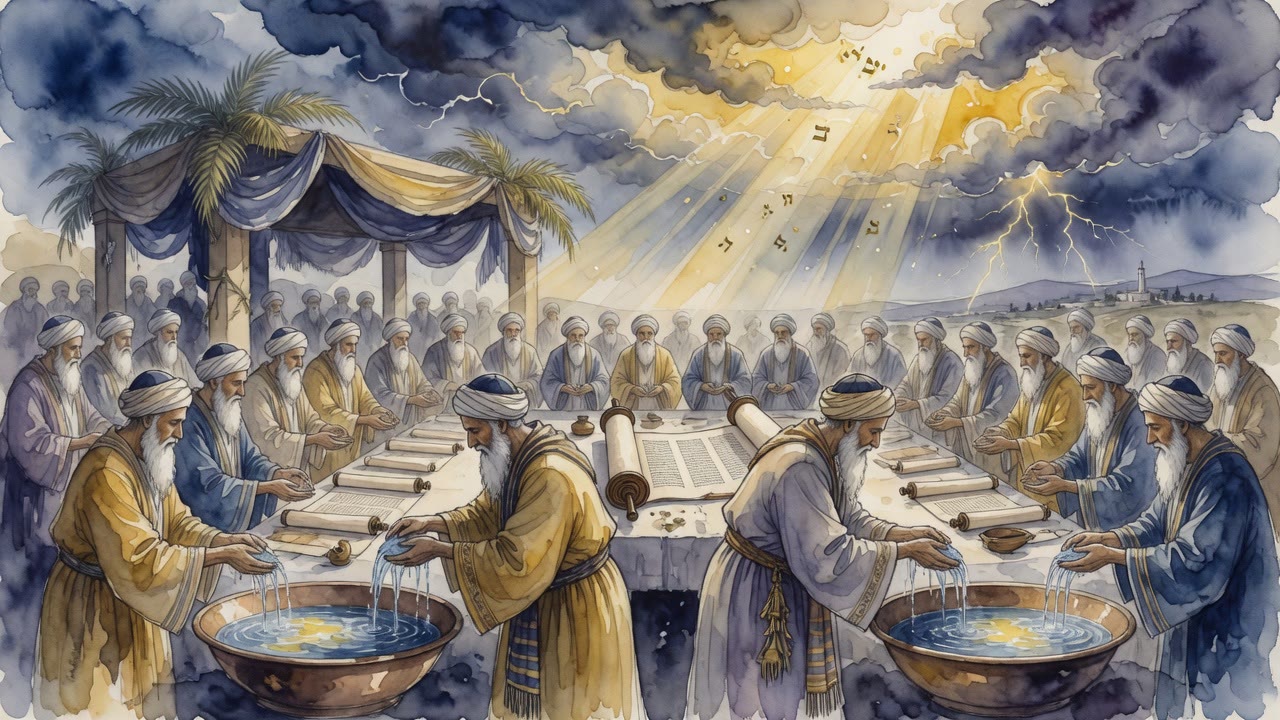
Aristeas asked why they rinsed before praying. Every activity is done by the hands, one elder said. They went home with two talents of gold each.
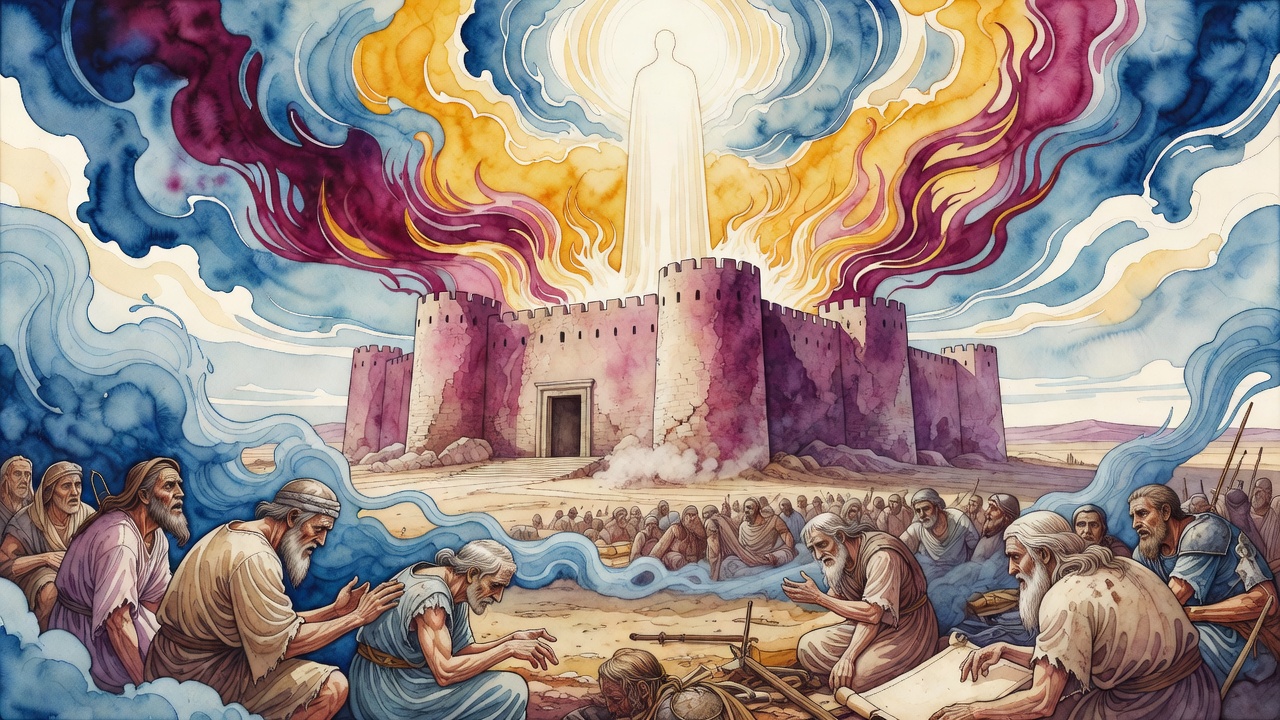
The siege starved the camp. The stronghold would not fall. An officer chose peace: let them live after their own laws.
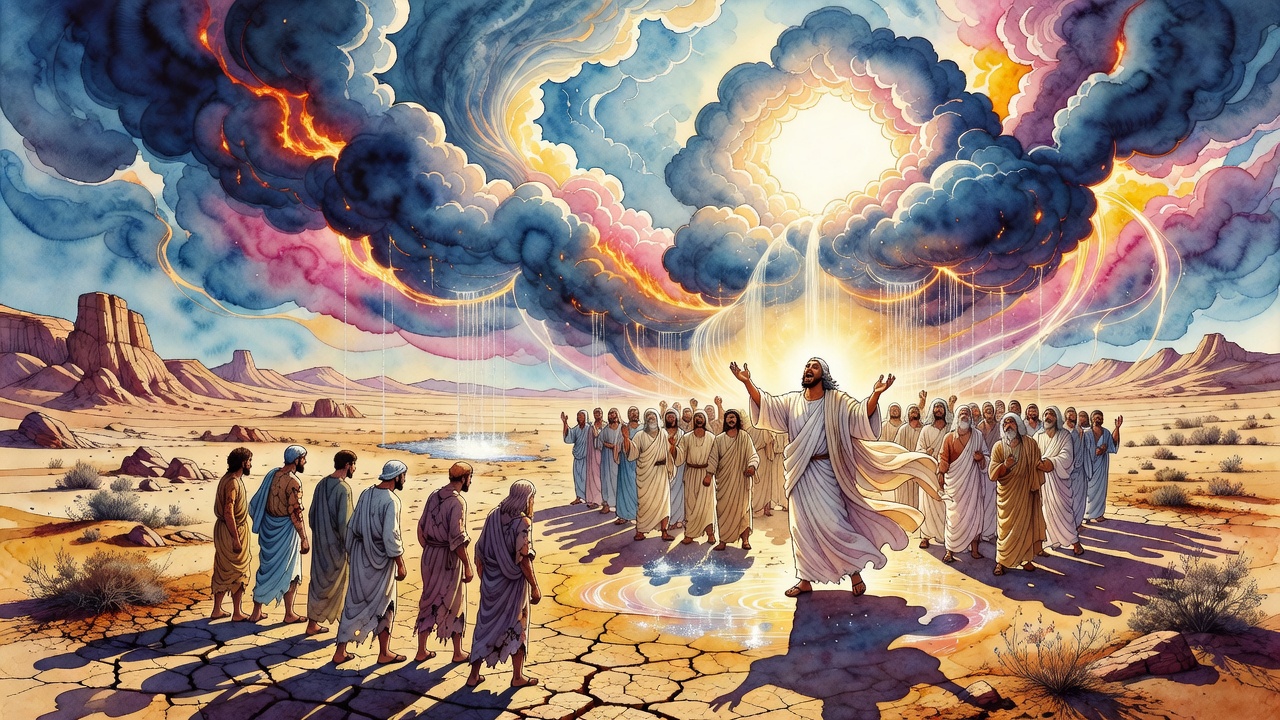
There was no shade at the foot of the mountain, and every neck was burning. Then God told the clouds to let go, and cool water hit the whole camp at once.
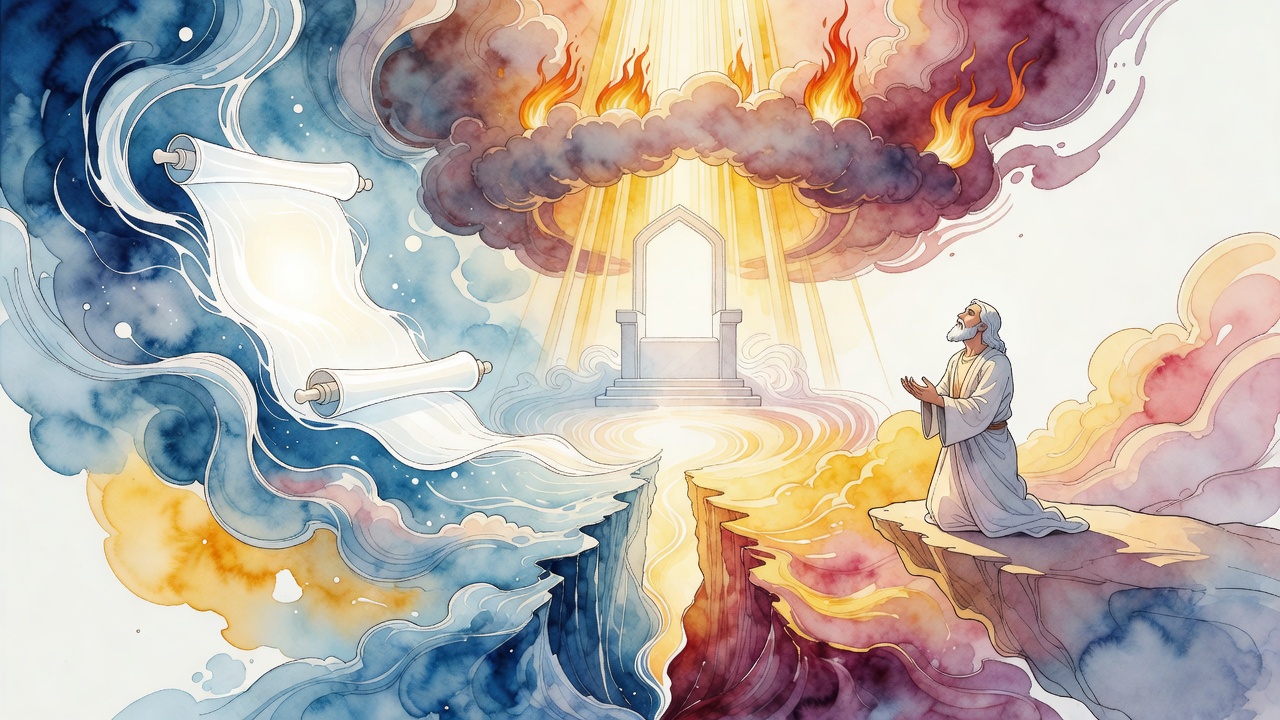
Torah stopped at the world's door and would not go in. Humans would fail, it said. God answered by naming a redeemer already appointed.
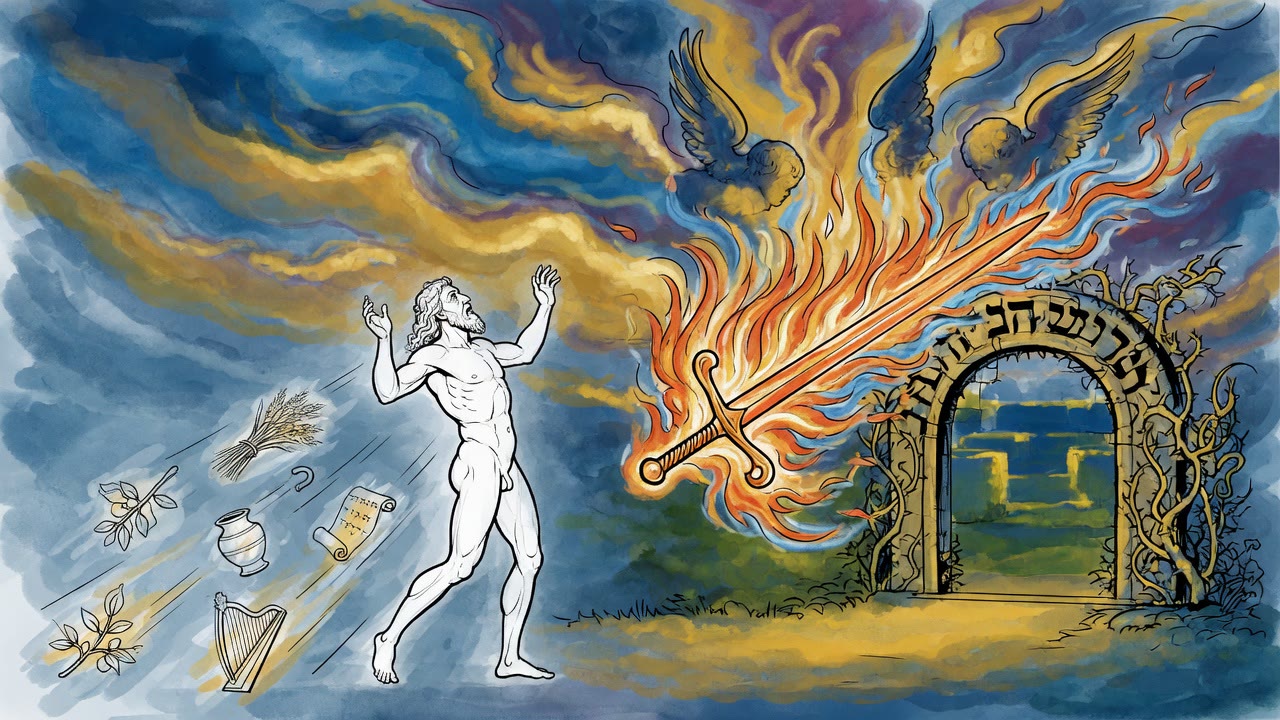
Adam asked for the fruit that would let him live forever. The angels wept and still drove him east, under a sword that would not hold still.
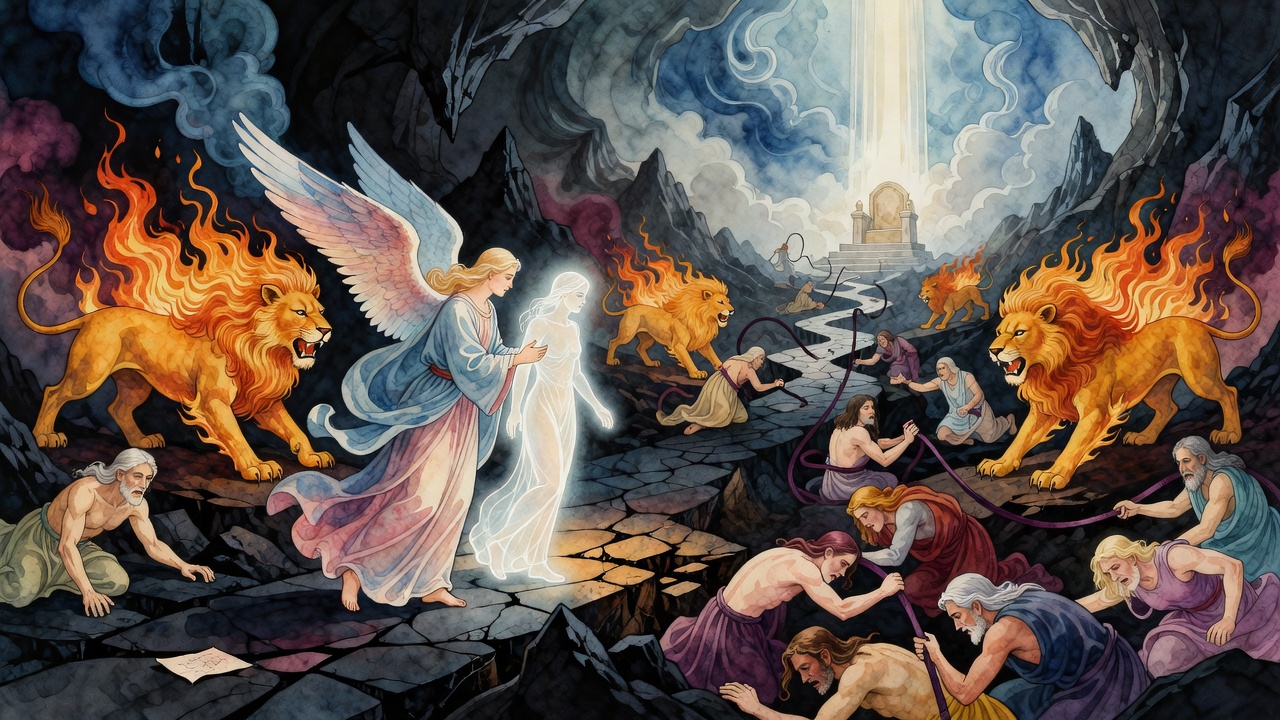
An angel walks a new soul past fire-lions and scourges in Gehinnom (afterlife of judgment), naming the damned as once-living people who ignored Torah.
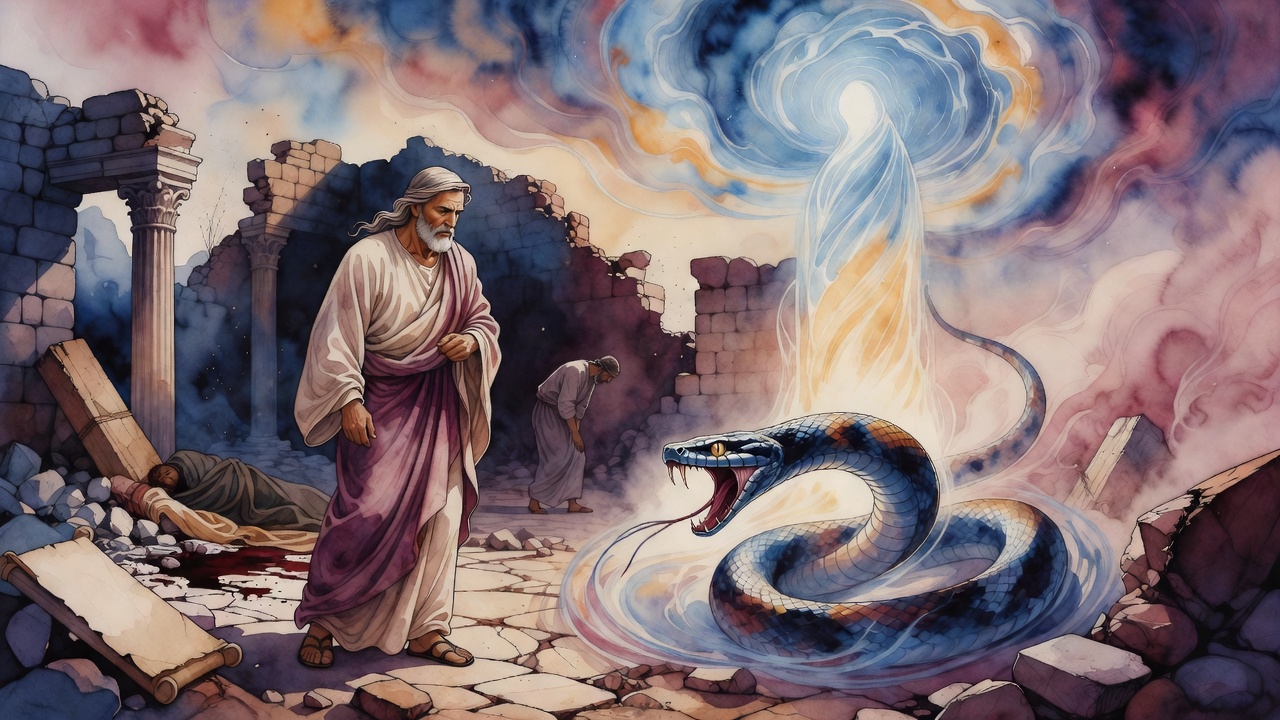
A man lay dying in a ruin and a second man stood over him holding a wet knife. Yehudah ben Tabbai was the only person who saw it, and one is not two.
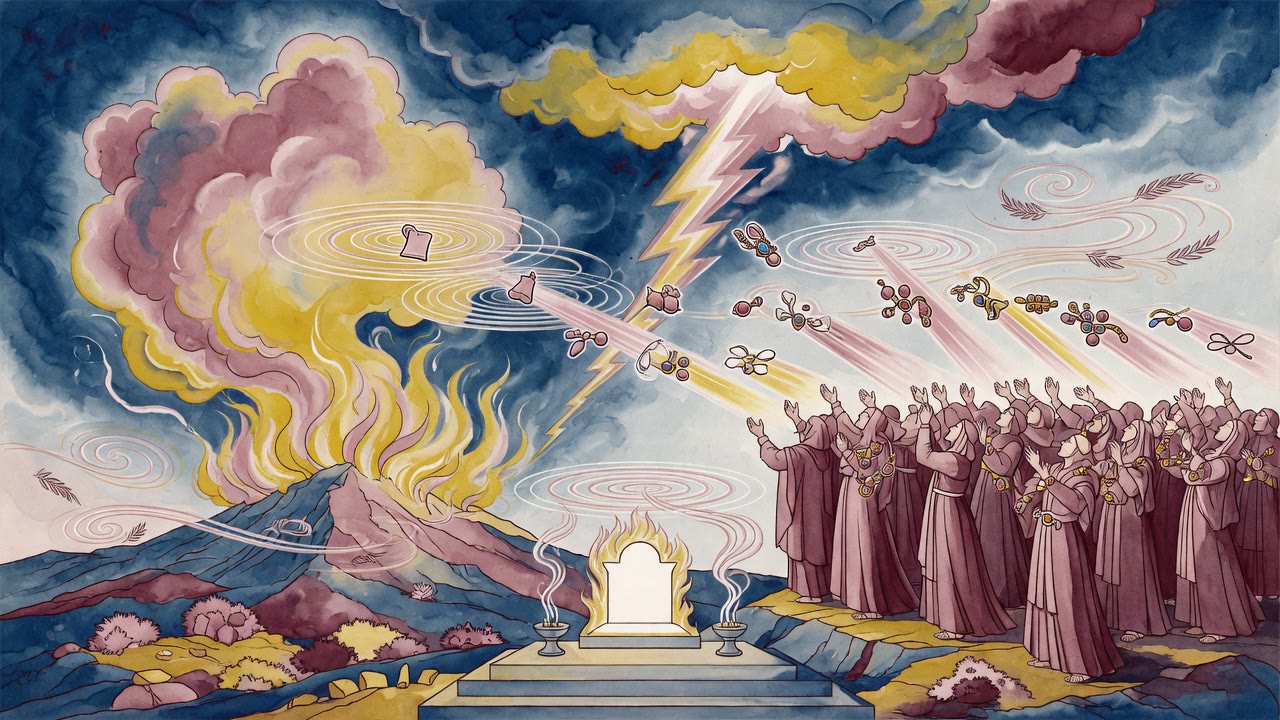
A king tells his wife to put on every jewel she owns so he will want her. Here the stones are commandments, and the camp still tasted honey in the air.
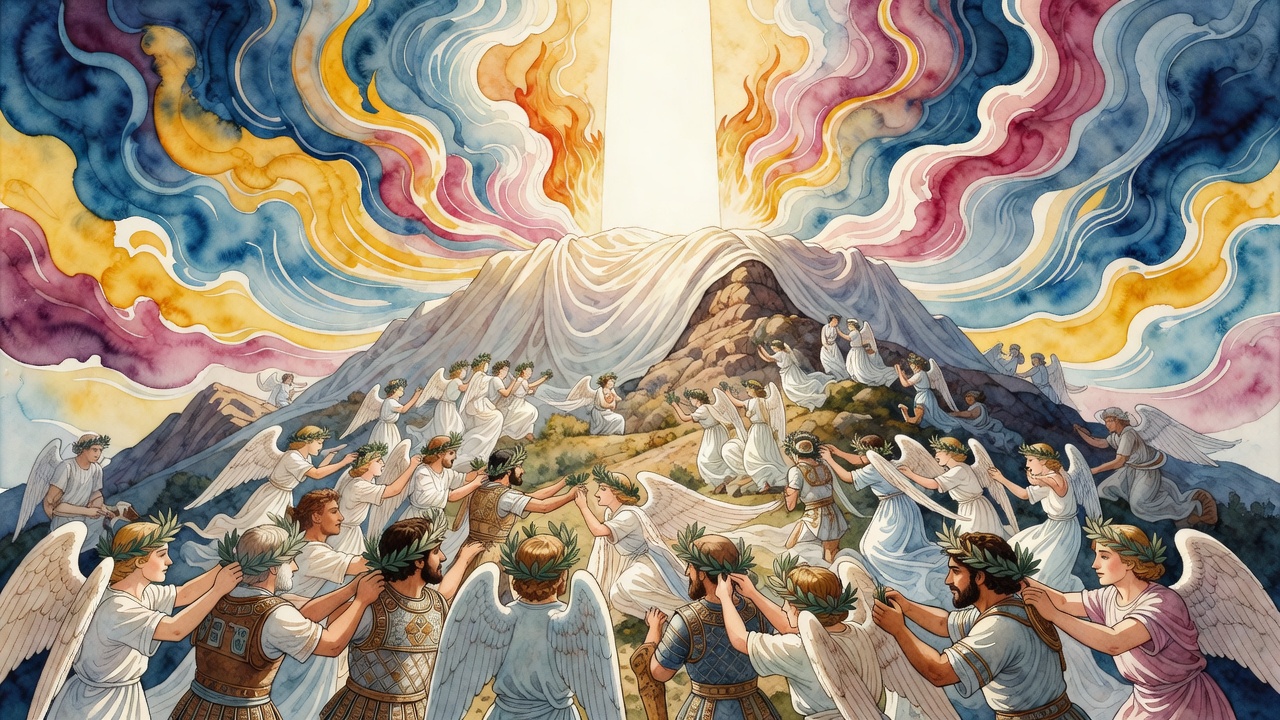
Israel spoke one sentence on the mountain. Before the echo died, an angel set a wreath on a head that had mixed mortar in Egypt.
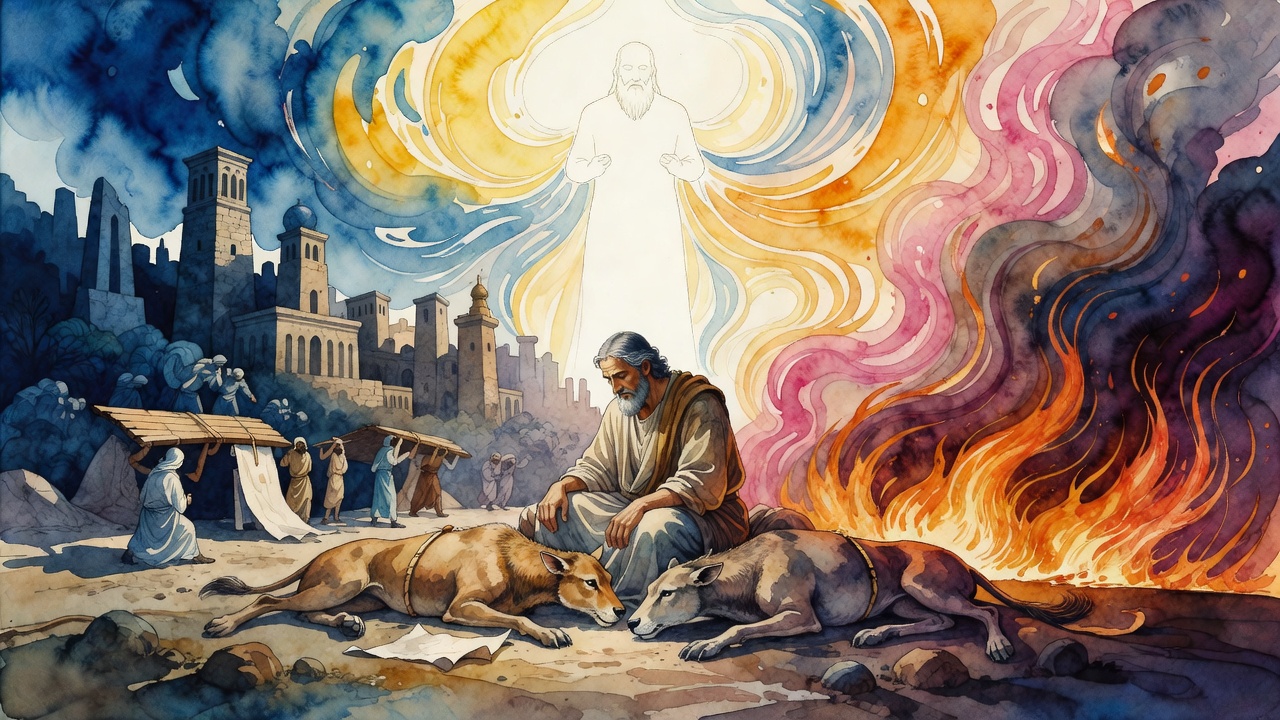
Between the pieces Abraham sees two futures, empire's yoke or Gehinnom (afterlife of judgment)'s oven. He sits all day, then chooses exile over the fire below.
Joshua cuts Amalek's ranks below while Moses' arms fail on the hill, and Aaron and Hur hold them skyward until the enemy breaks at dusk.
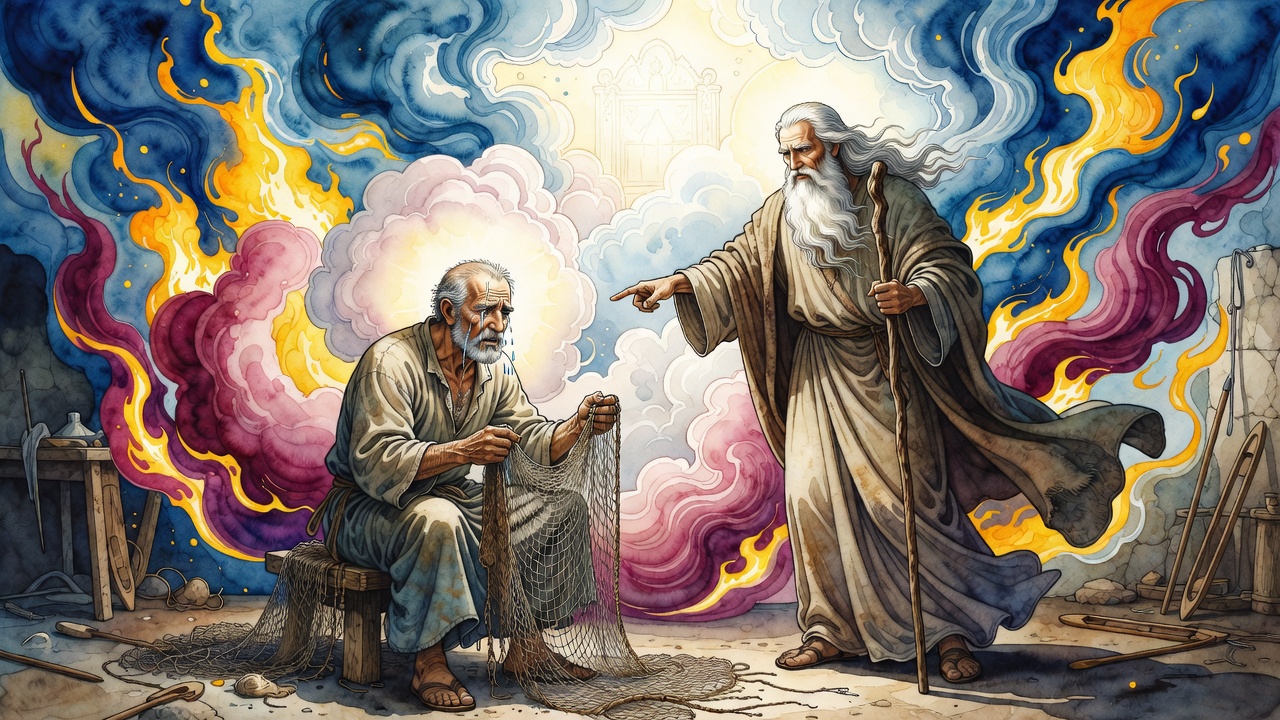
A scoffer said heaven never gave him understanding for study. The teacher asked who taught him to weave nets, and the man wept.
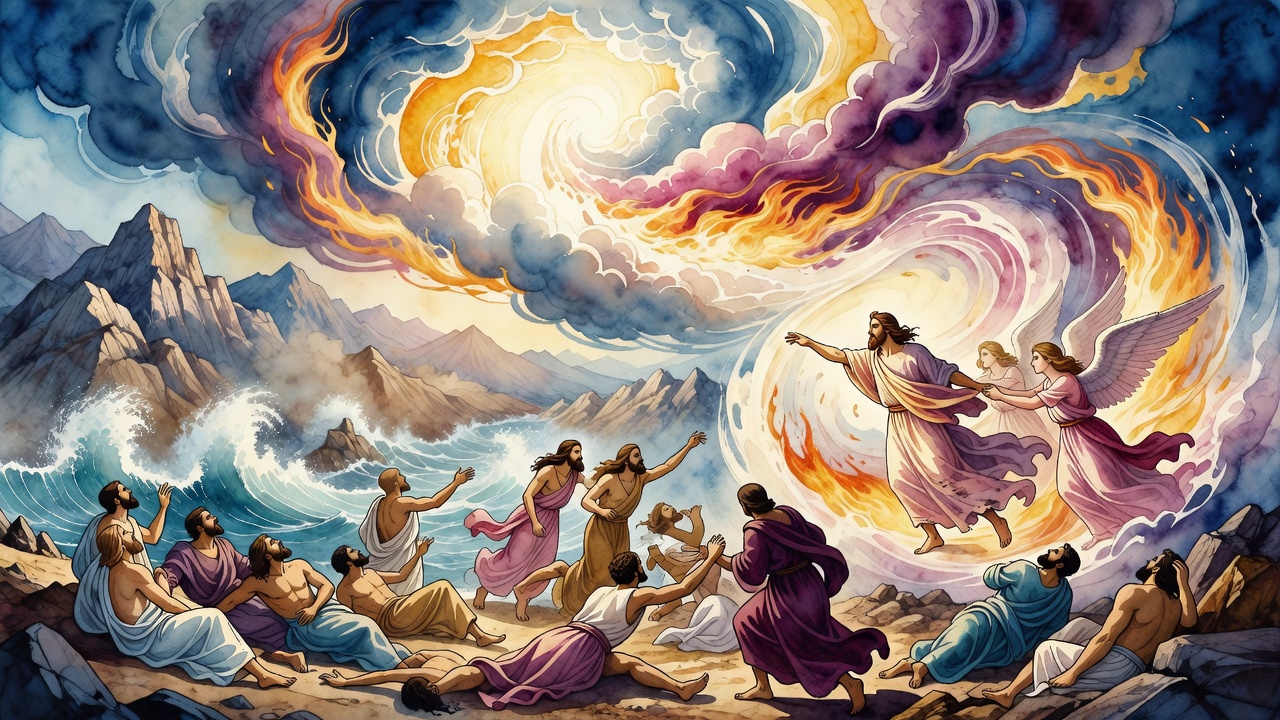
Heaven's first utterance shakes seas and mountains. Israel's dead stand up, the living fall twelve mil back, and angels drag Moses into the cloud.
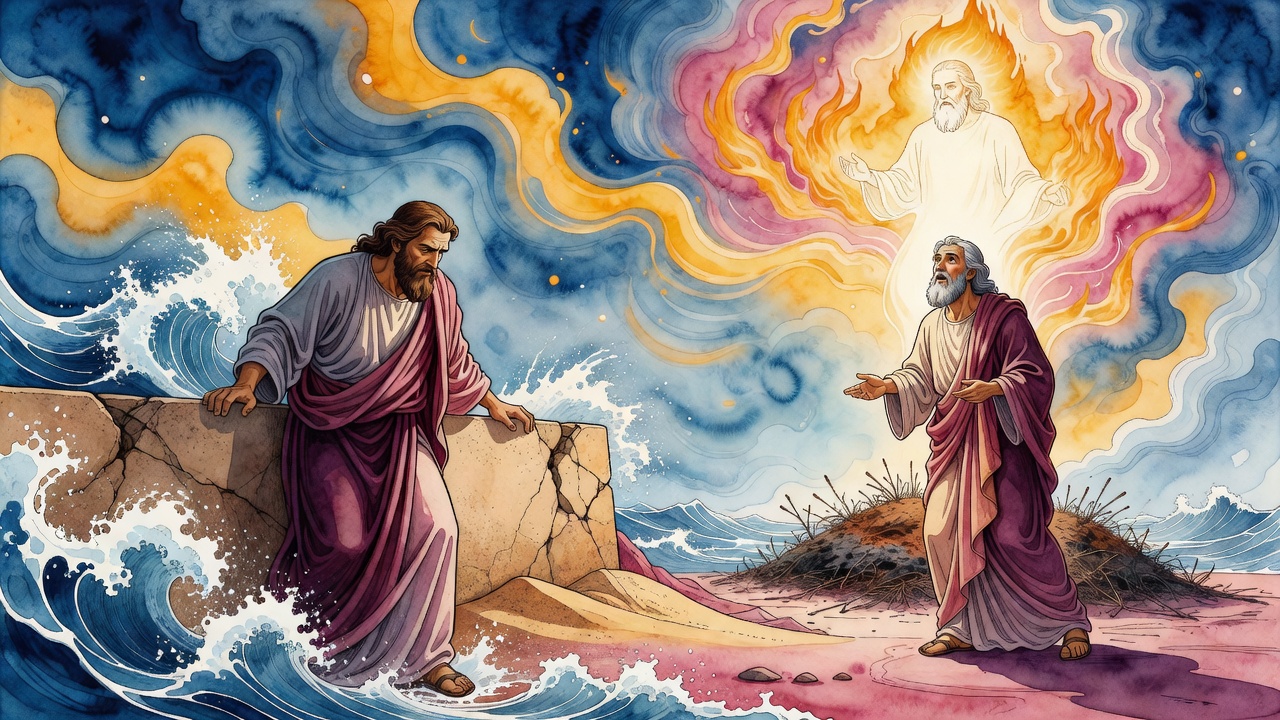
Pharaoh sent men whose year was already up. Solomon measured them for burial and sent them home carrying their own linen.
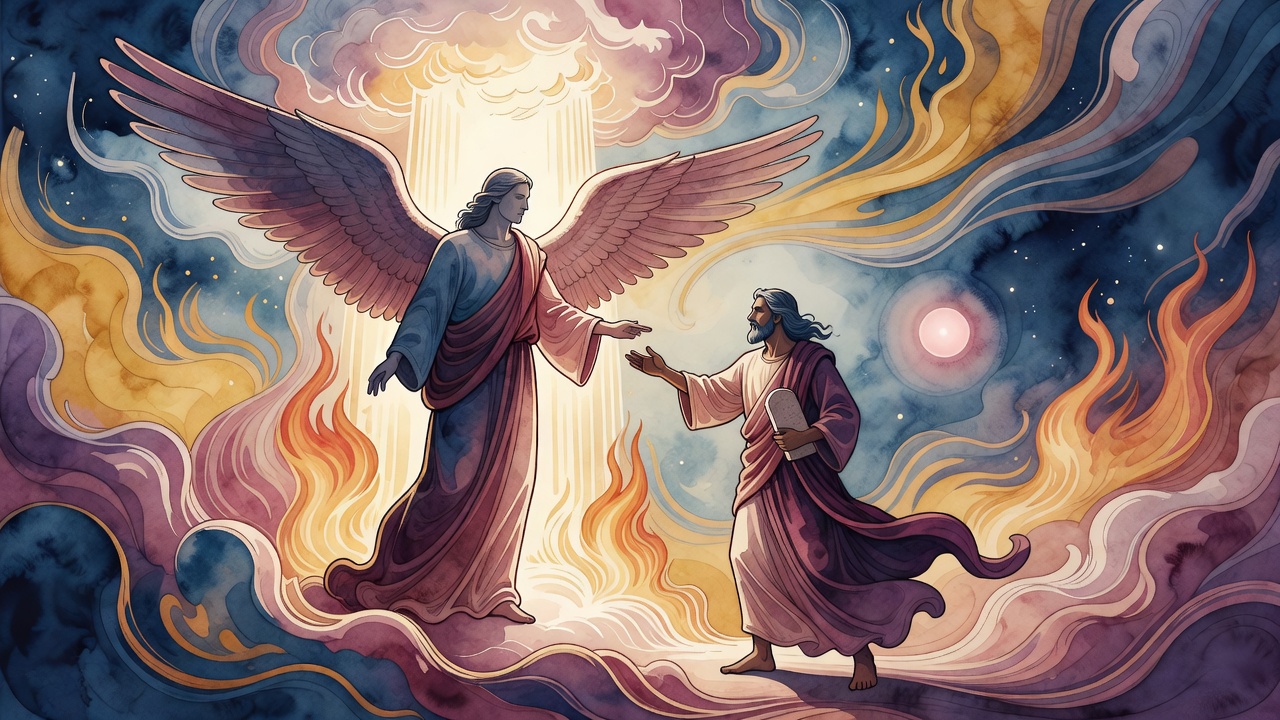
An angel blocks the earth-born stranger. A homesick star tells its exile. Moses grips the throne, walks the commandments, and wins Torah for needy bodies.
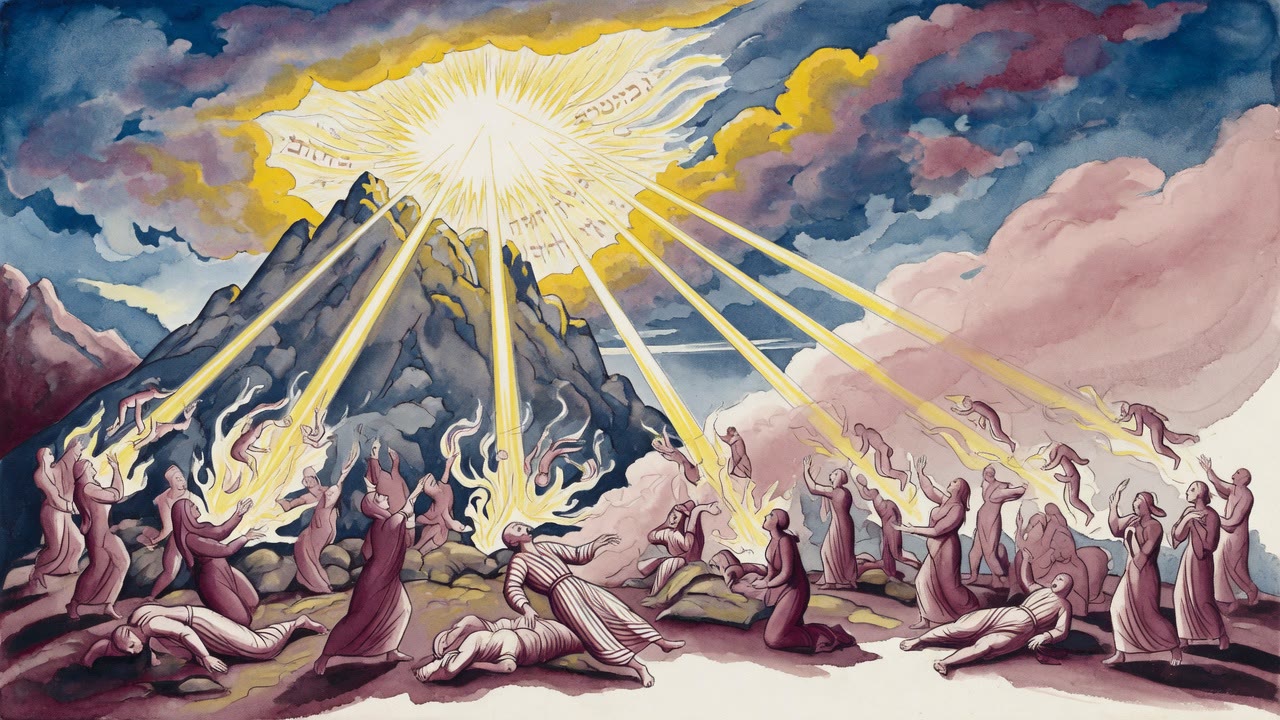
At Sinai each divine word knocks Israel's souls out of their bodies until God must soften the light so a people can stand and live.
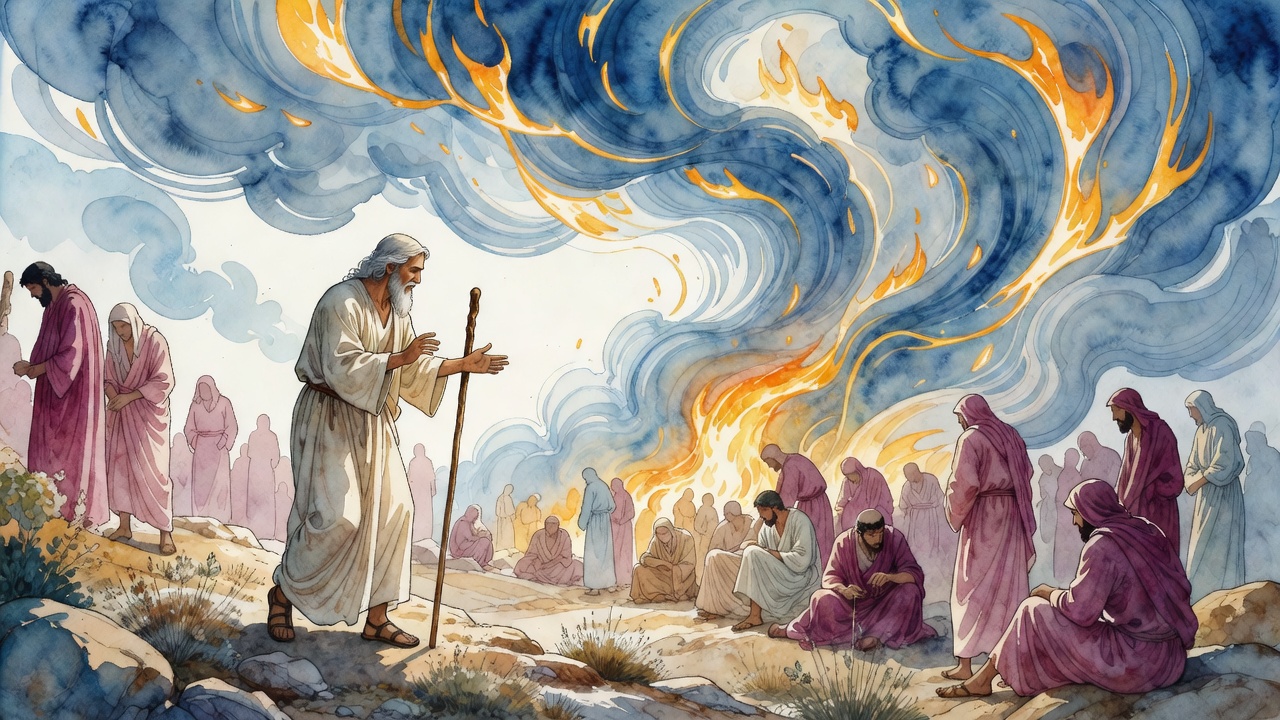
After the calf thins the camp, God tells Moses to number the tribes by their initials, a shepherd counting sheep after wolves, not a king counting for pride.
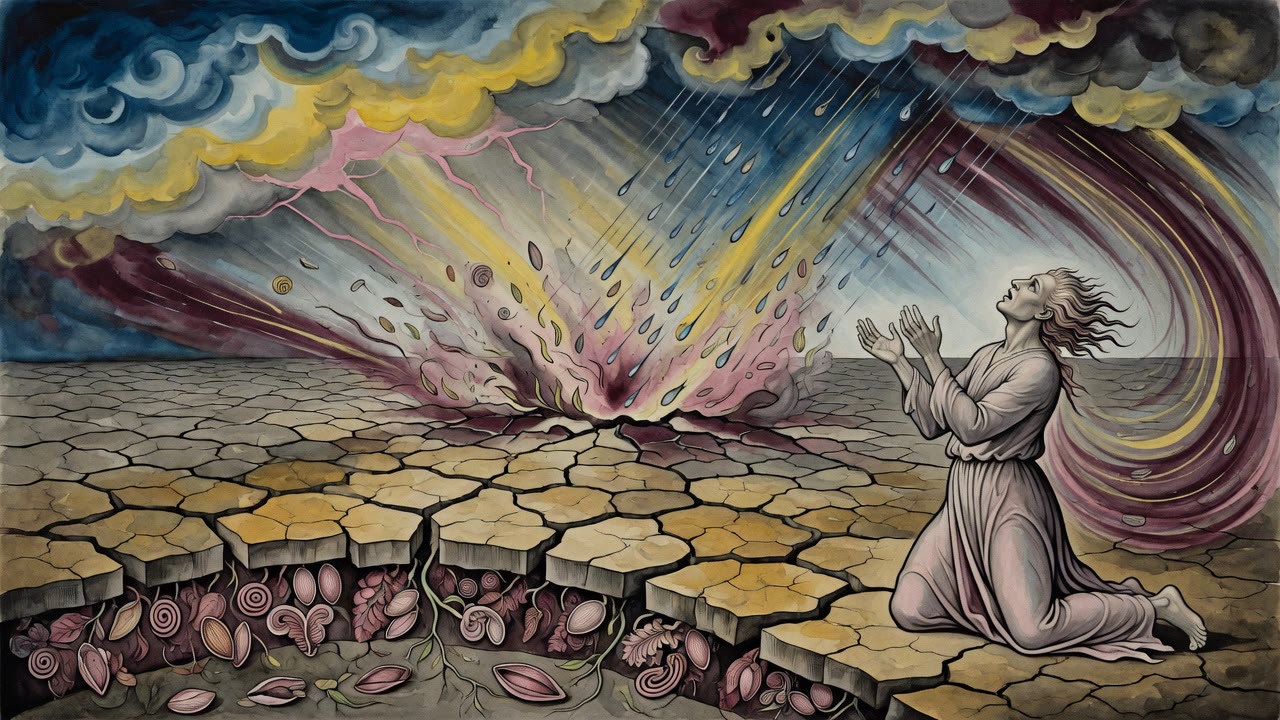
At the bush God named a mountain after the rescue. Through every plague Moses kept one private calendar. When the third month arrived, the long watch answered.
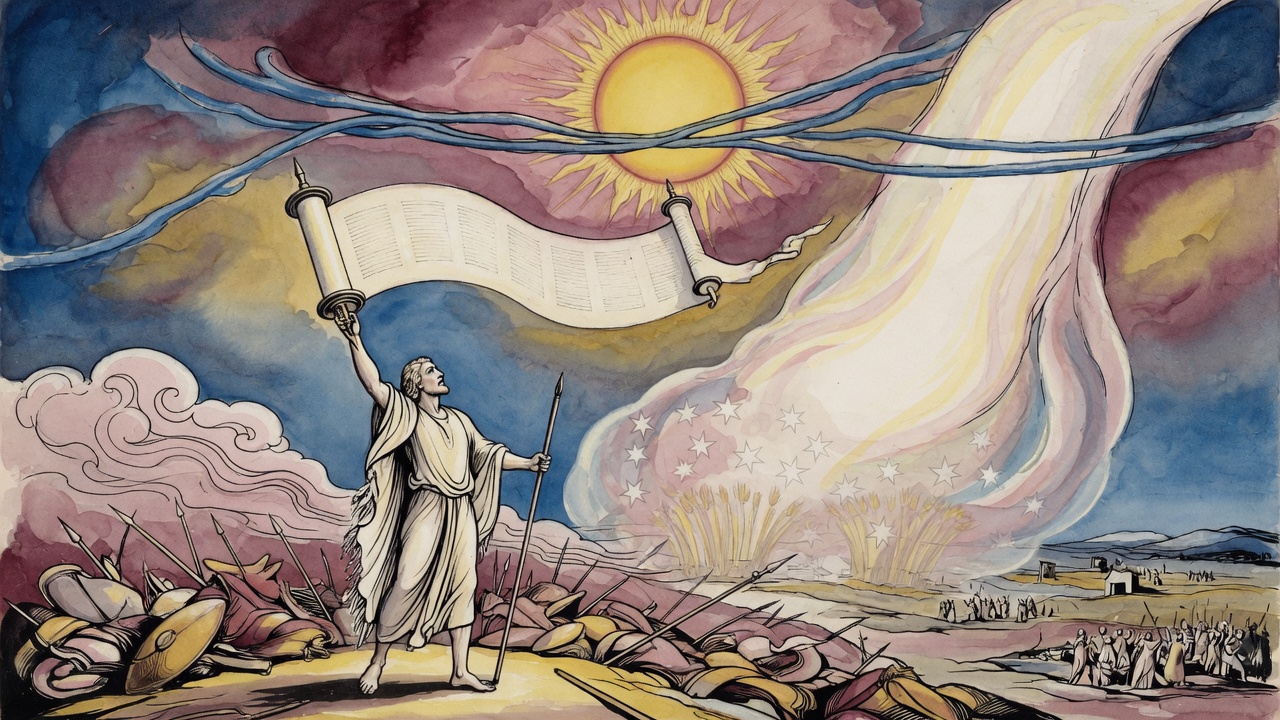
On the field of battle Joshua lifts the scroll he never stopped reading and orders the sun to halt, calling in Joseph's old dream as debt.
