233 myths · Page 3 of 8
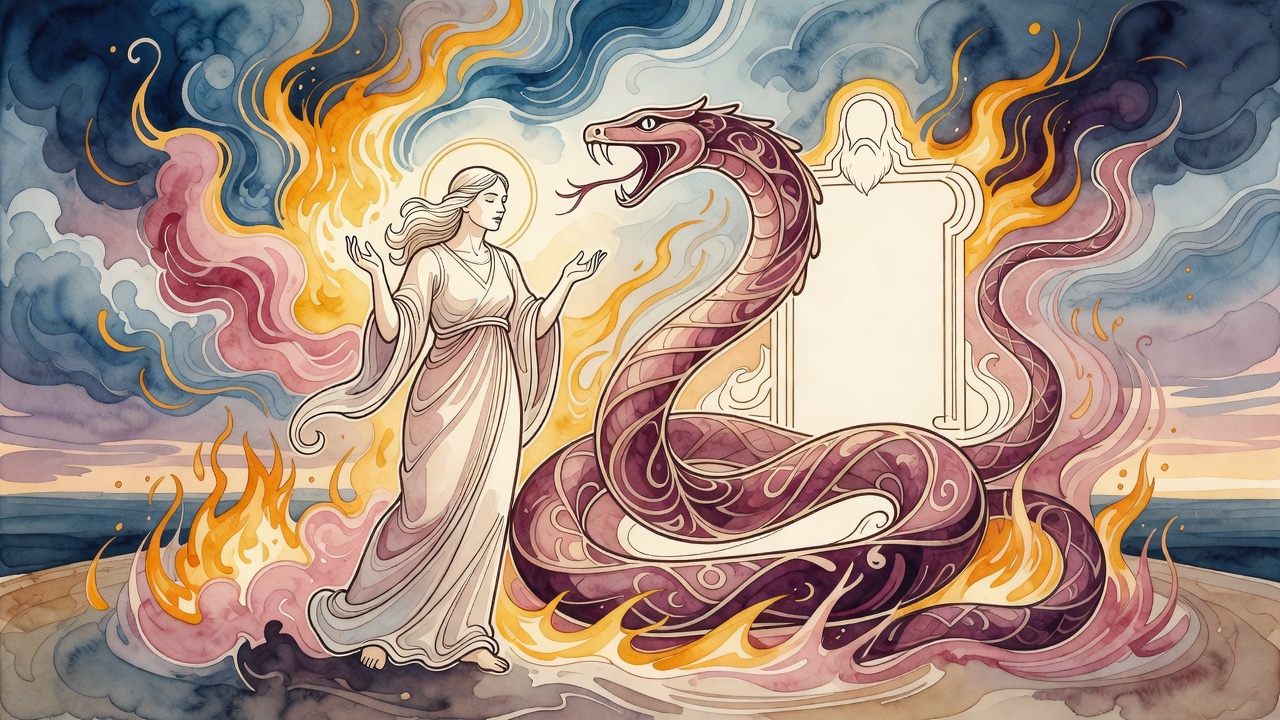
Adam's first Sabbath Eve began with expulsion at twilight. Hours before, the serpent wrapped one truth inside its lie and Eve could not find the seam.
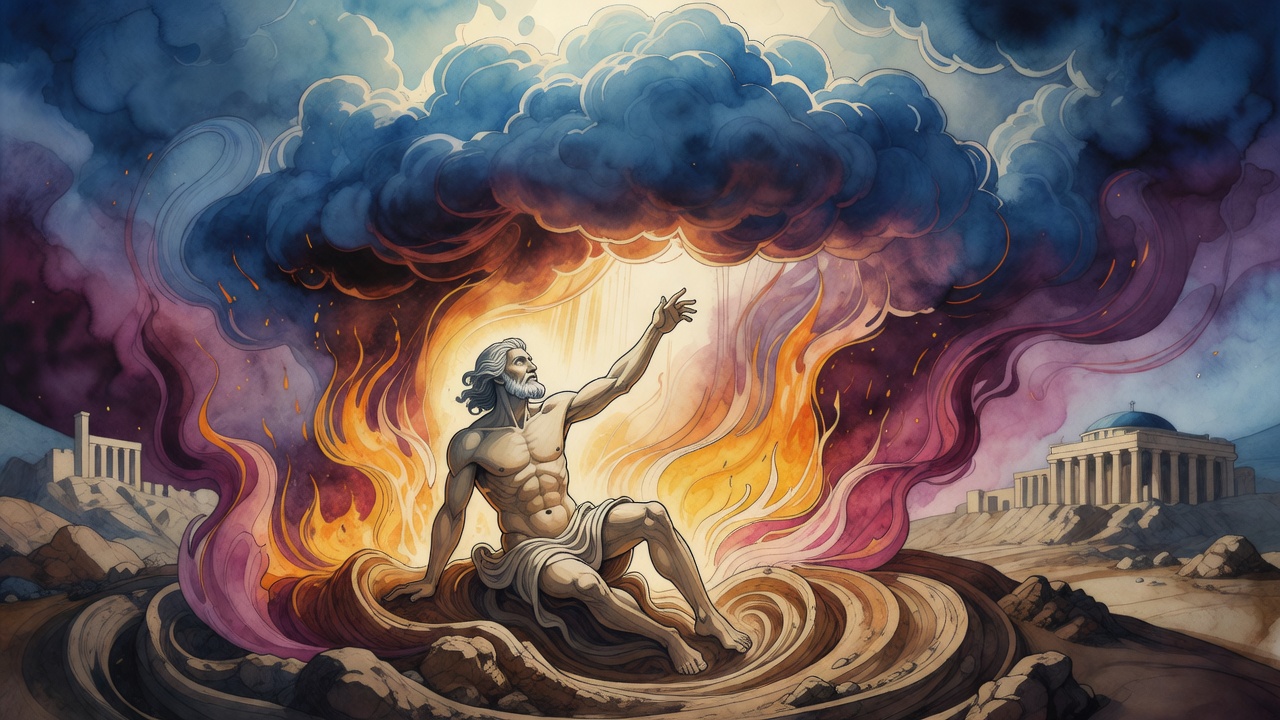
God scooped the dust for the first man out of the one patch of ground where his children would later come to be forgiven, and said, if only he stands.
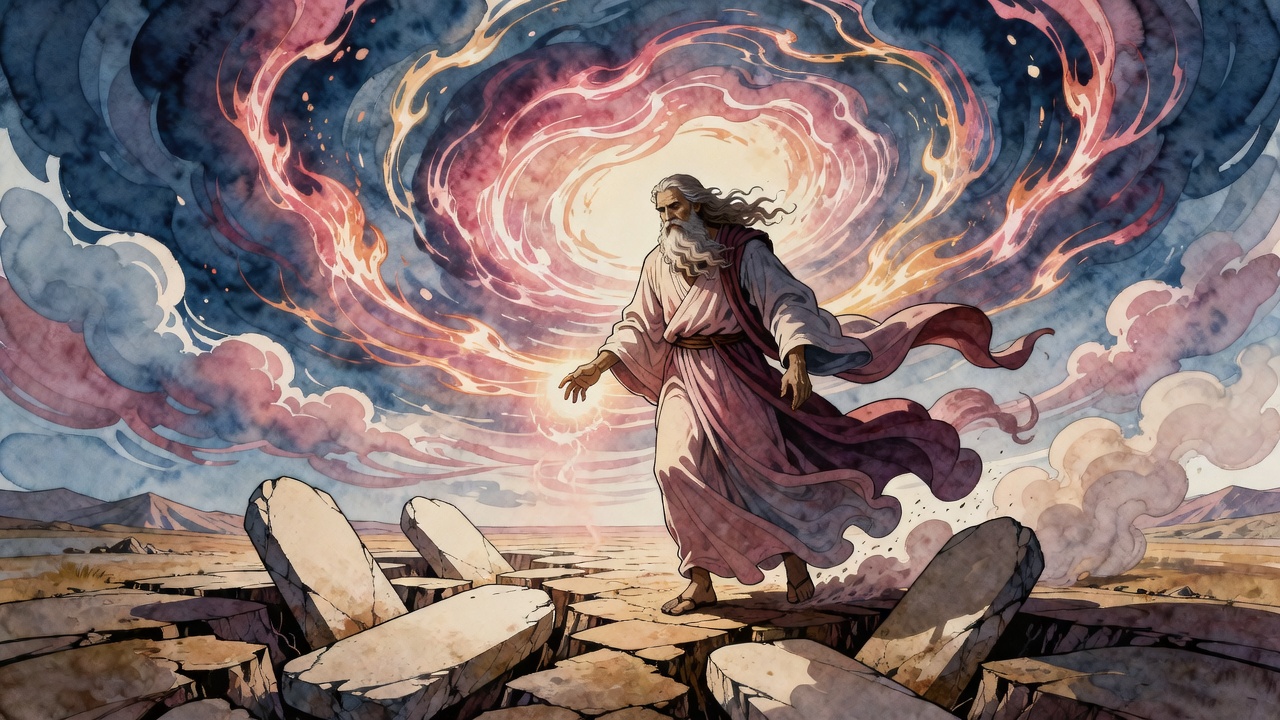
A horse paced in the air above the crowd. Enoch said it had come for him. Eight hundred thousand men followed him out of the city anyway.
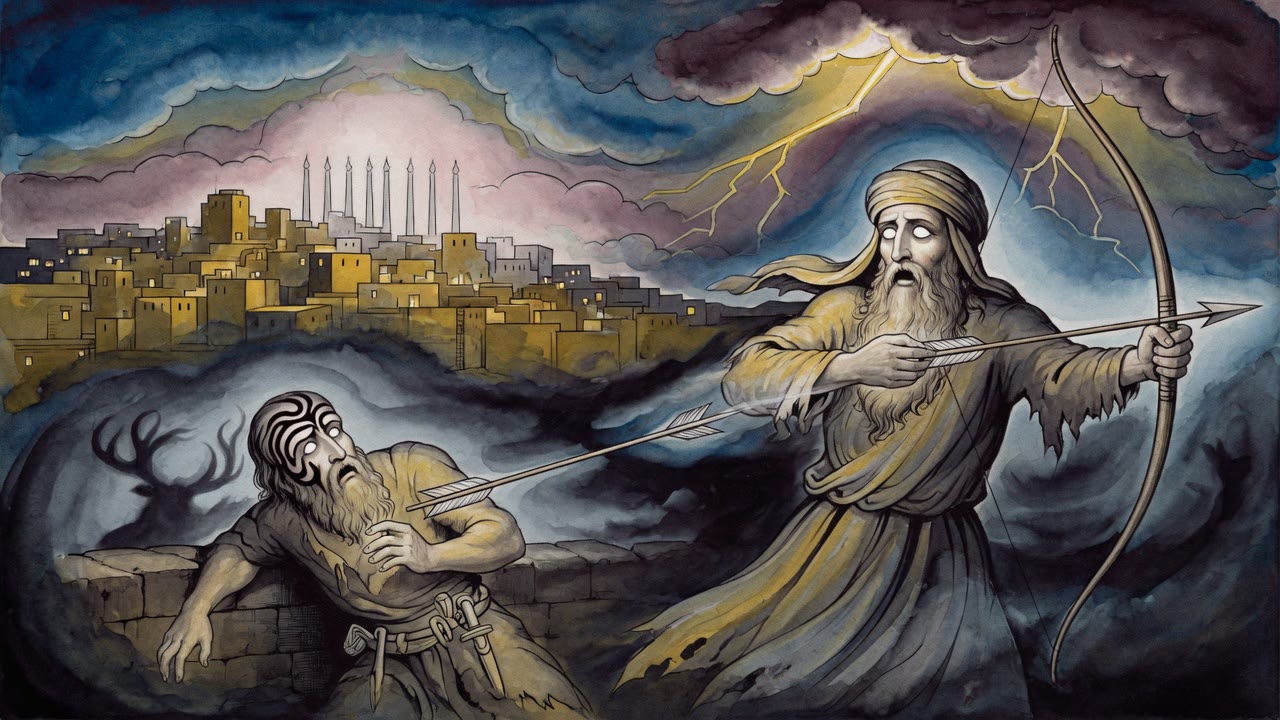
Cain built cities and survived the mark, but the count ran to seven generations. His blind descendant Lamech shot him in the dark, mistaking him for an animal.
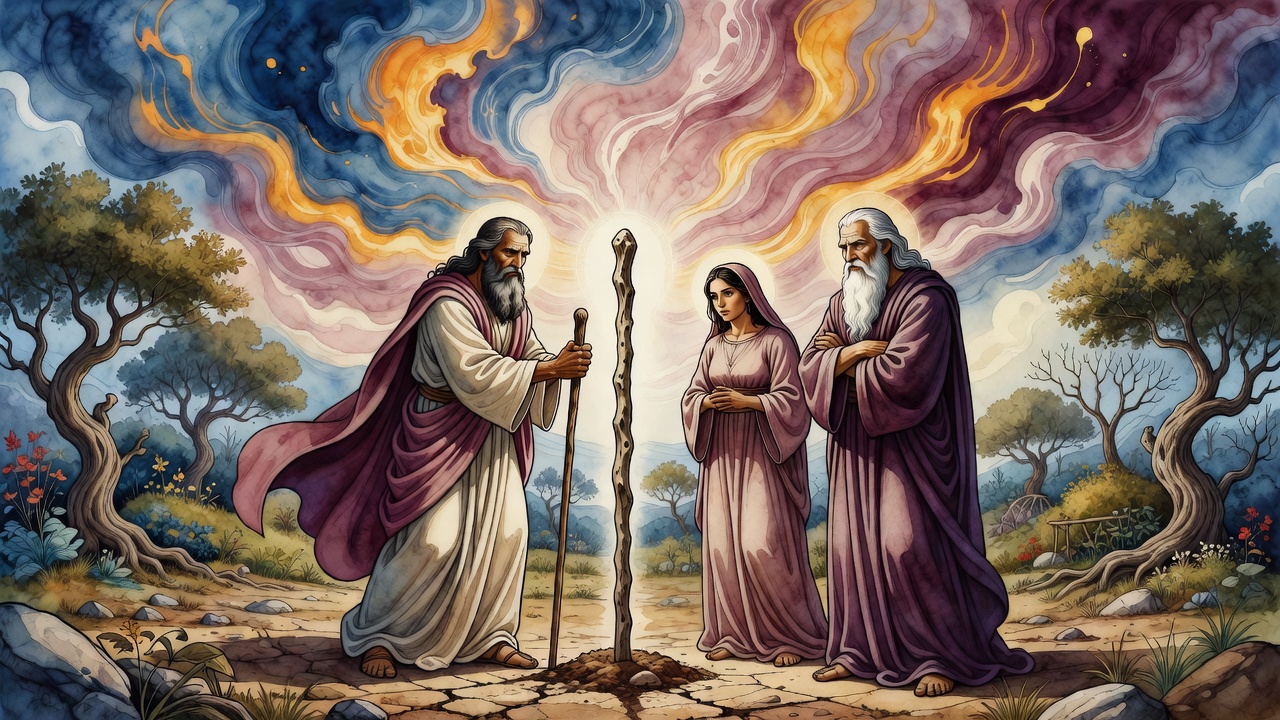
Zipporah warned him. Every man who had tried to take her had died on a planted rod. Moses drew it out, and her father threw him in a pit.
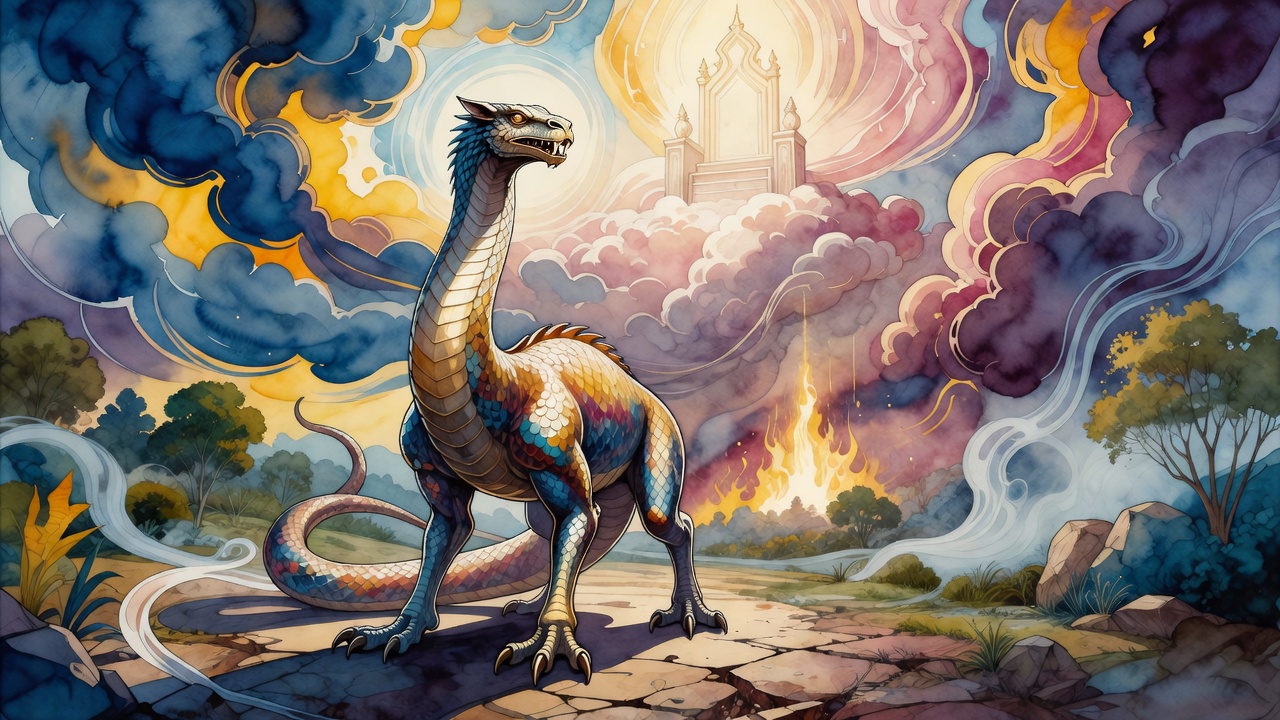
One pair of serpents could have done all of humanity's work and dug up gold and pearls besides. Then one of them decided it wanted Adam dead.
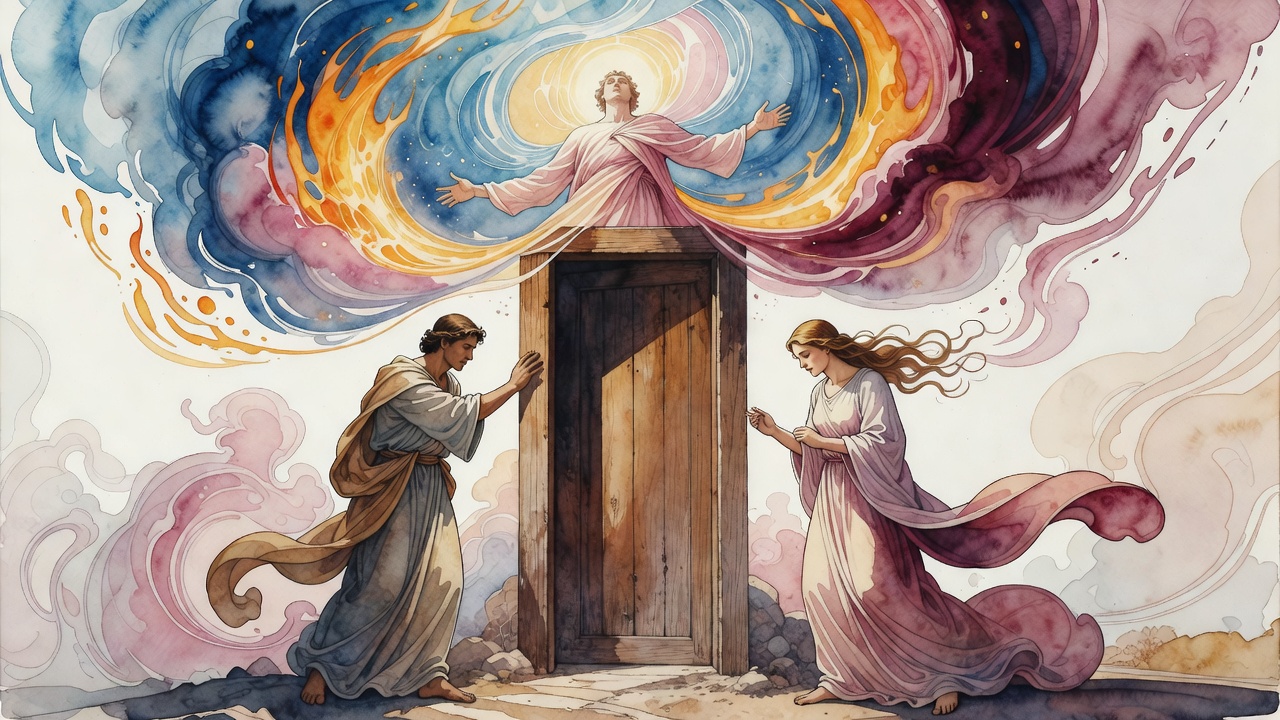
He took the offer back once she opened the latch. She swore by the throne of God, and by the tree of life, before he climbed.
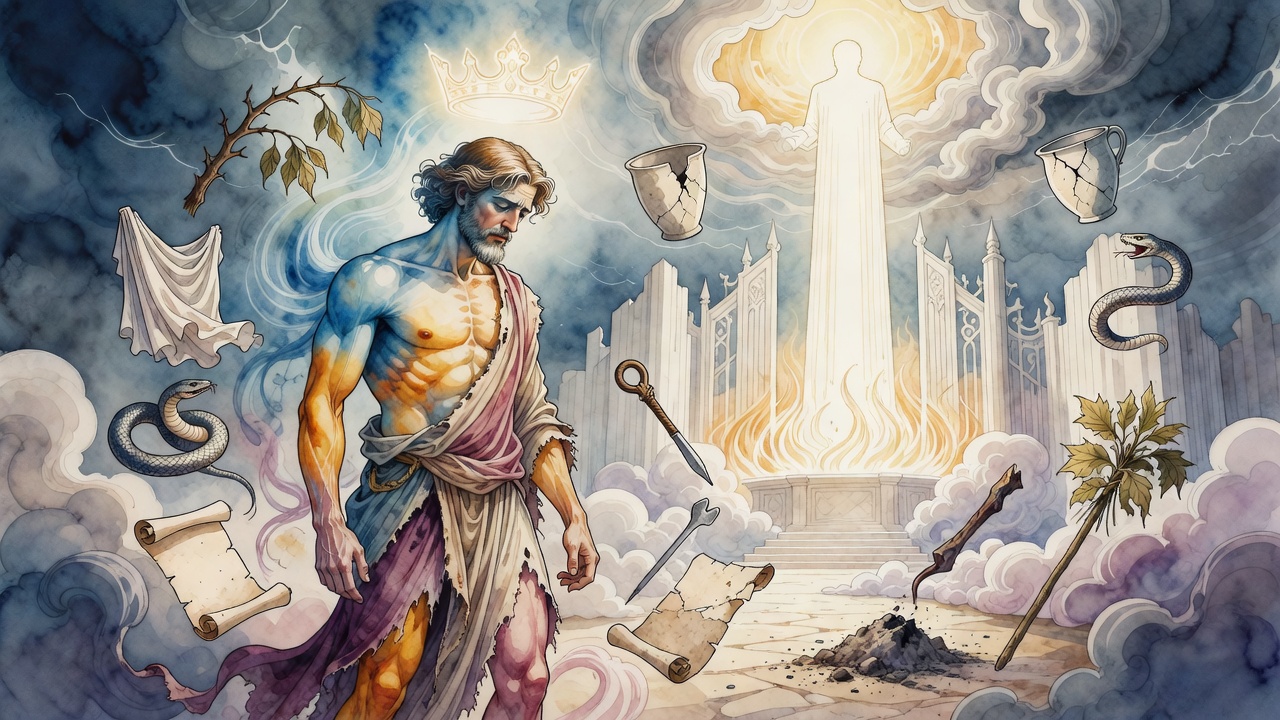
Eve asked to carry half of his dying. He sent her and Seth to the garden gate instead, to beg for oil from the tree.
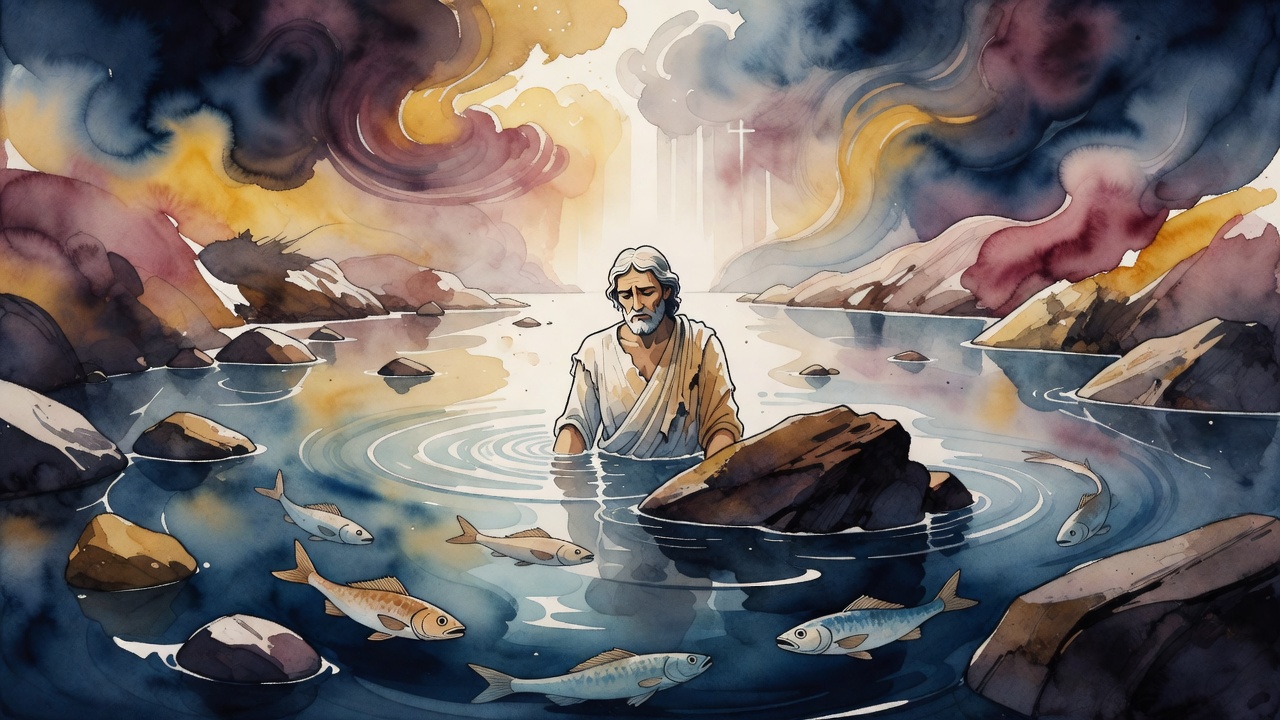
He stood on a stone until the water reached his neck. He told the fish not to beat their own breasts. The Jordan held still.
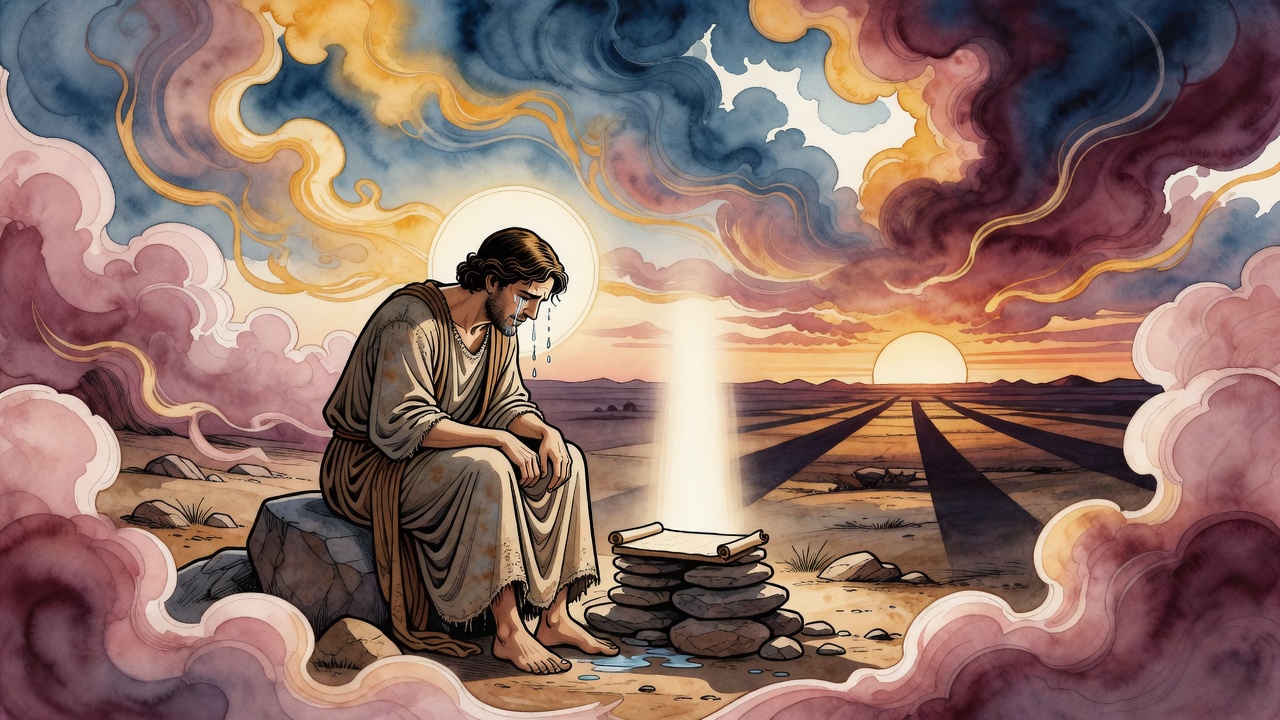
Eve sat facing him on the dark ground and wept because he was weeping. Neither of them knew that mornings existed until the hills went gray.
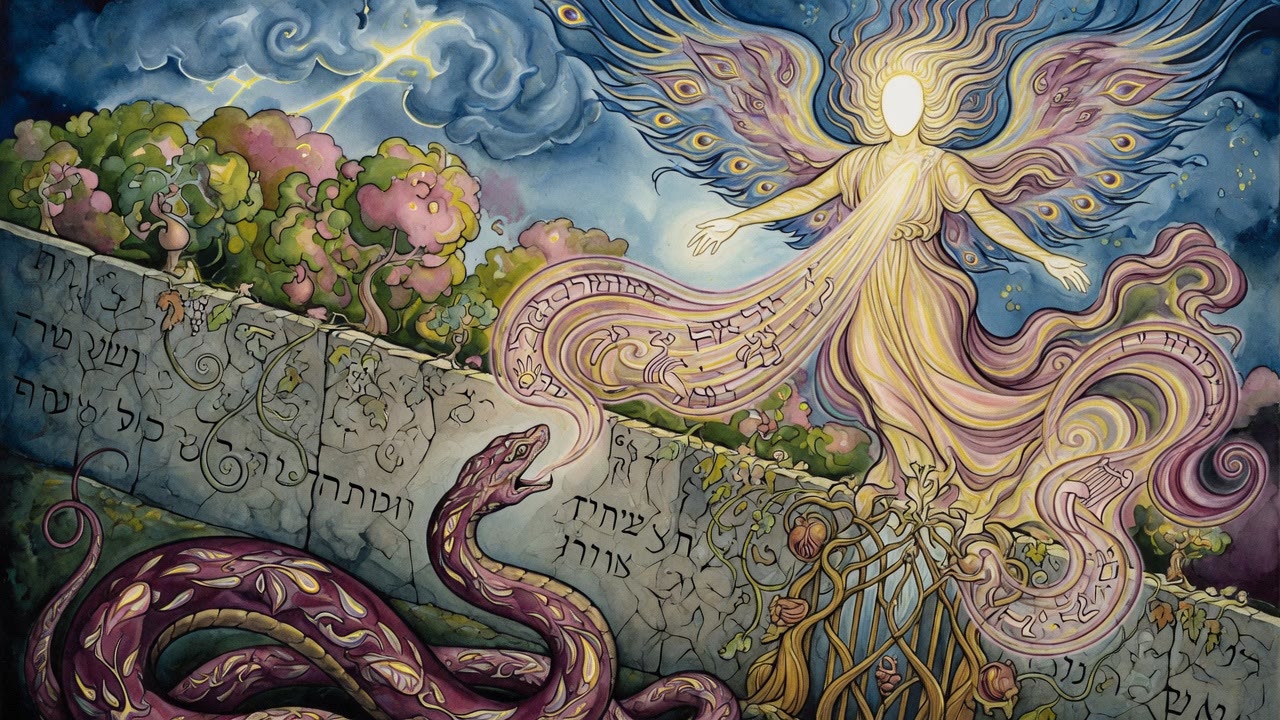
Ha-Satan, the Accuser, recruited the serpent by flattery, then sang angelic praises from Paradise's wall until Eve turned toward the music.
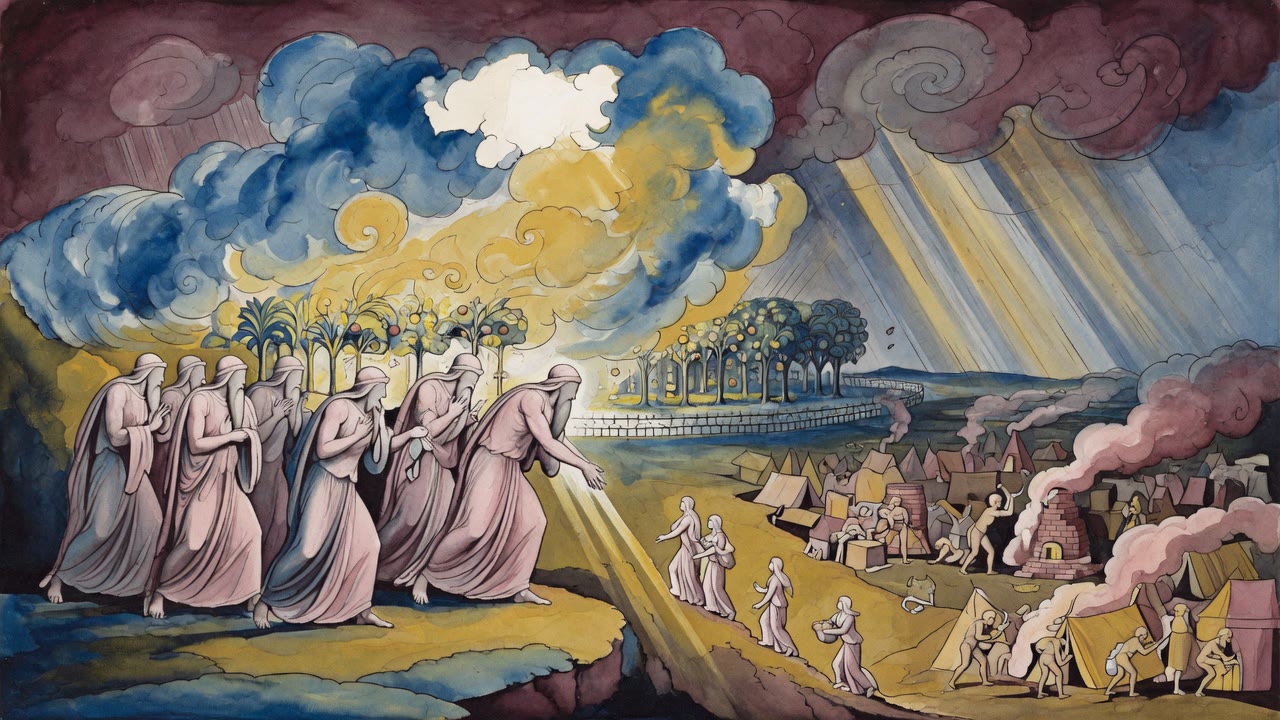
Seth's descendants lived near Paradise for generations, pious and untouched. Then they looked down at the Cainites and made a choice they could not take back.
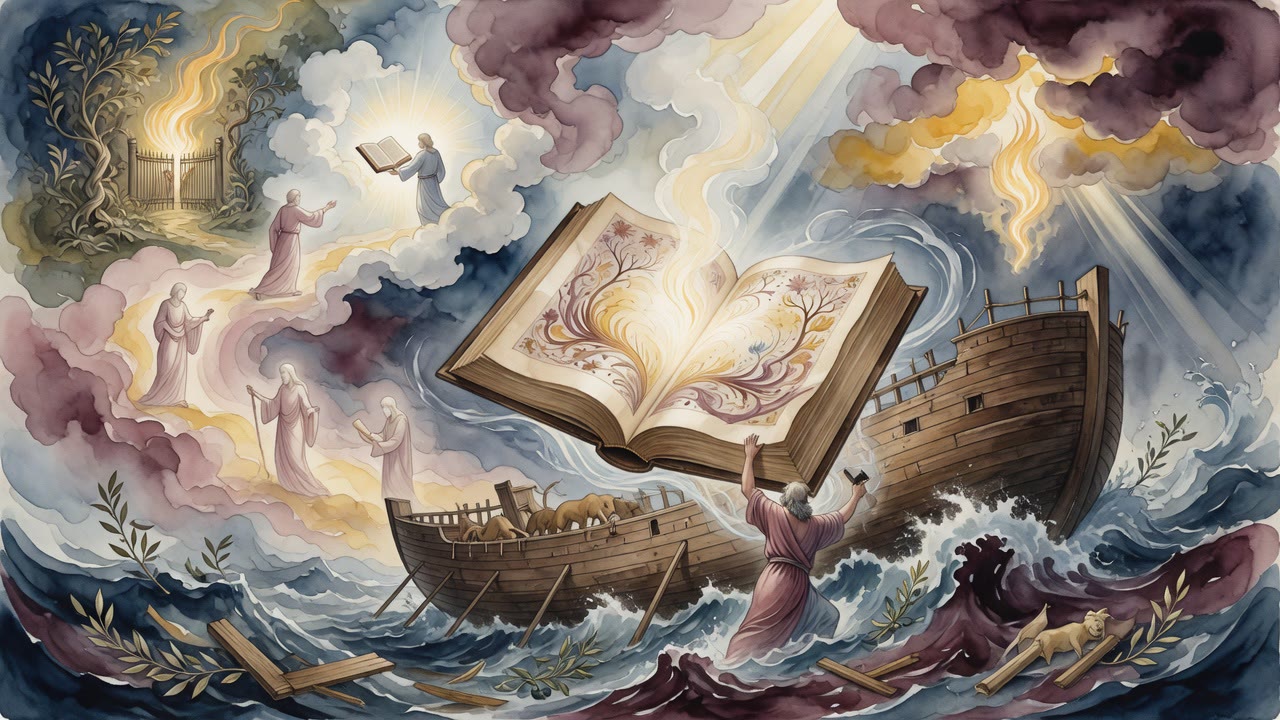
God gave Adam a book before leaving Eden. It passed through every righteous hand until Noah used it to build the ark. A book of secrets crossed the flood.
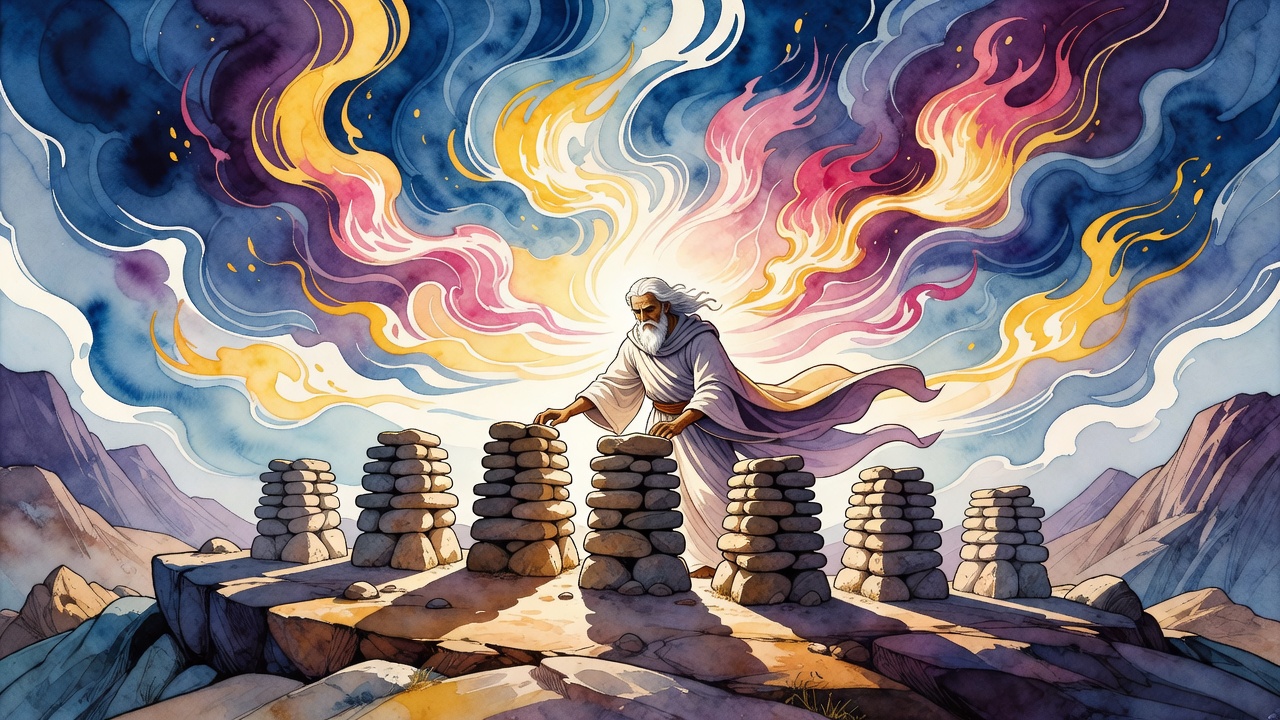
Balaam counted every altar the patriarchs had ever built, then built the same number to match their merit. God answered with a single verse about dry bread.
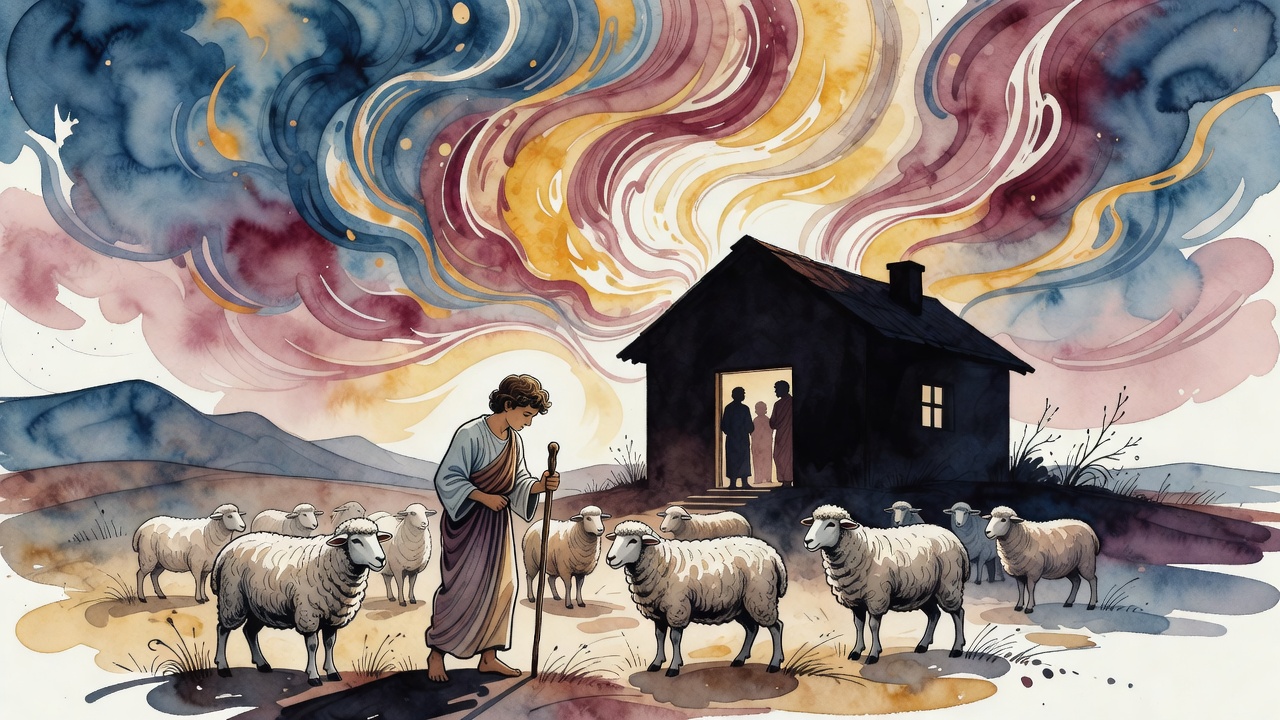
Jesse thought he was sinning with a slave that night. The boy born from it was sent to the hills, because nobody at the table would say whose he was.
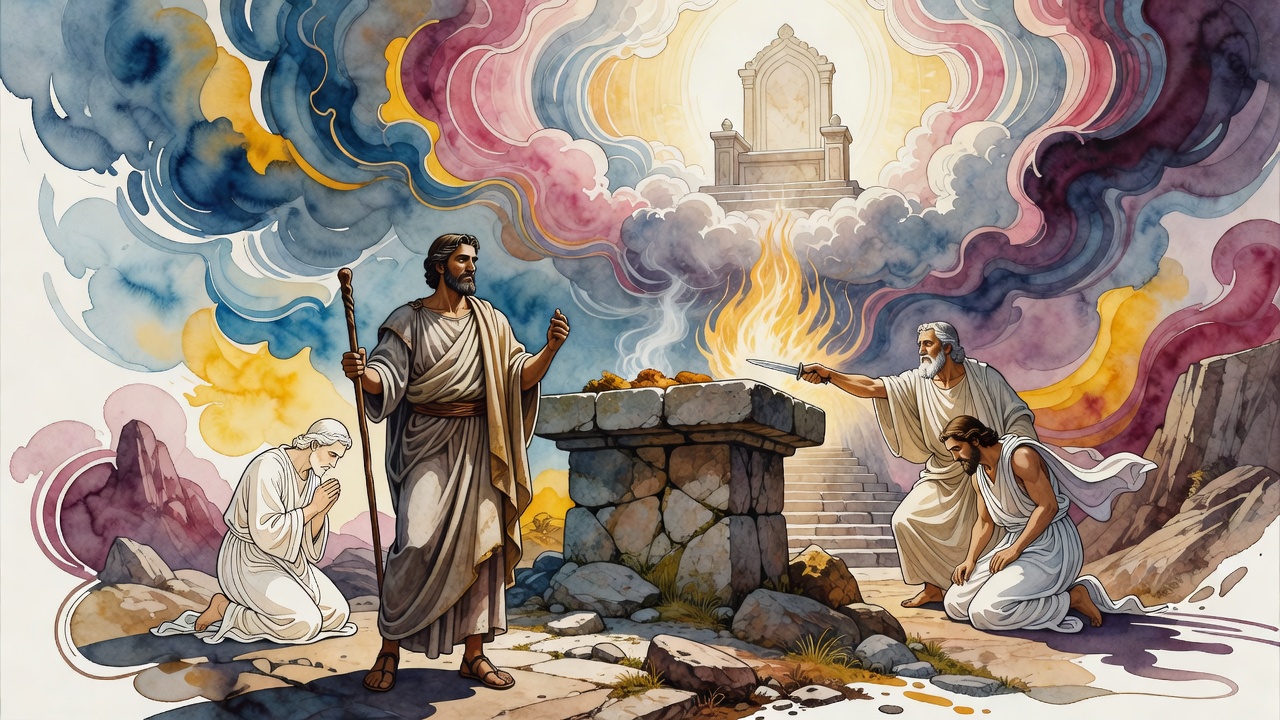
When David claimed Jerusalem, he was not discovering a place. Adam had prayed there. Noah had built an altar. Abraham had nearly lost his son there.
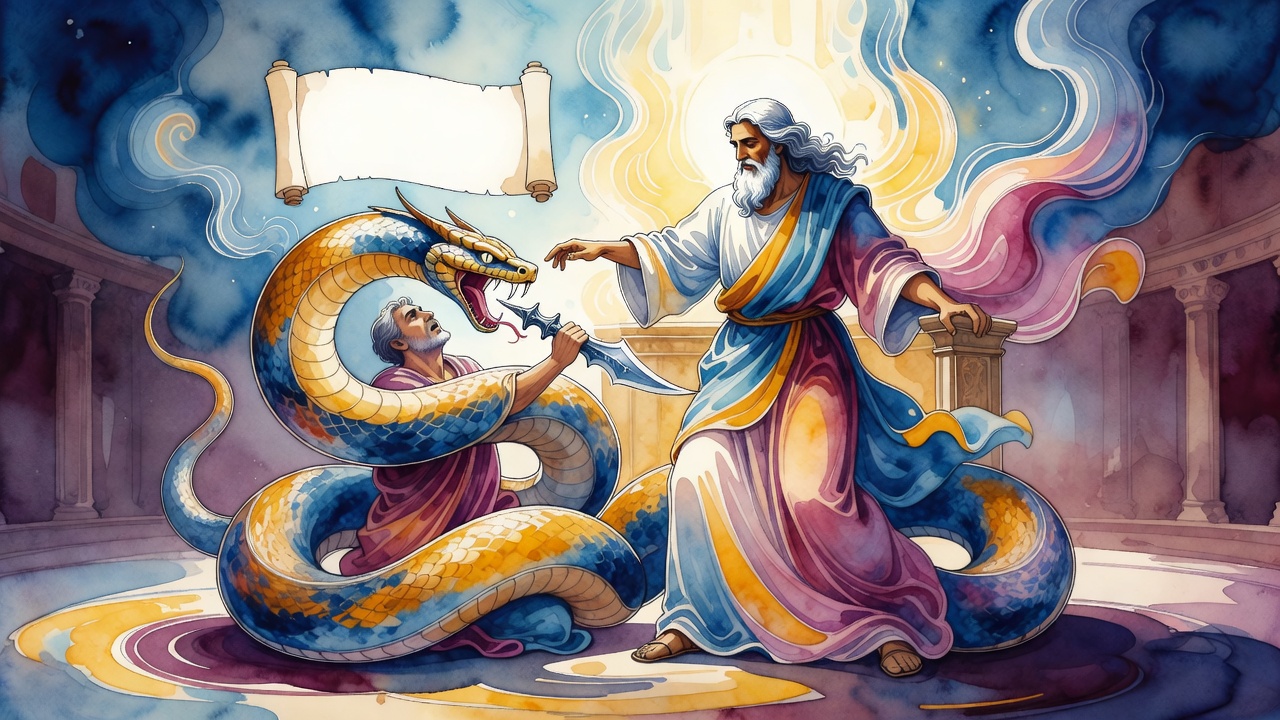
The serpent still had the man's neck when it quoted scripture. Solomon told it to get down. Then he told the man to finish the verse.
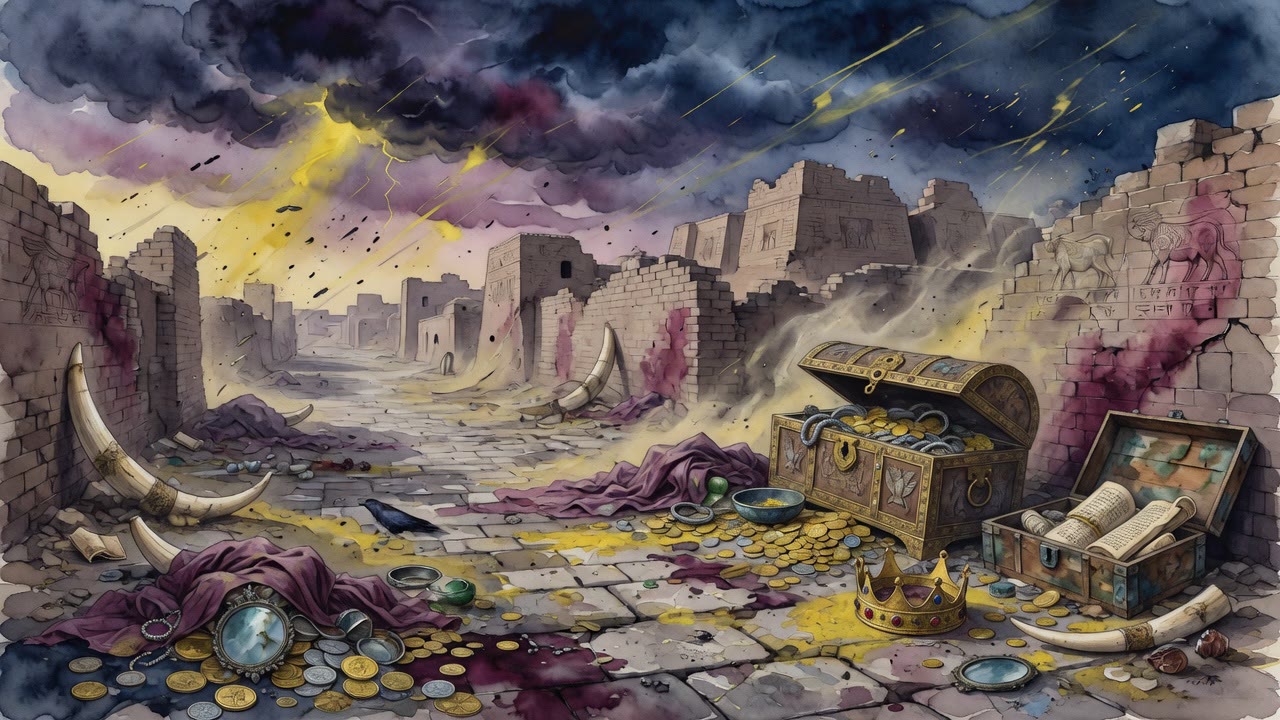
A man in Nineveh pulled his house down for one stolen brick. Two others found gold in a trench and spent weeks trying to give it away.
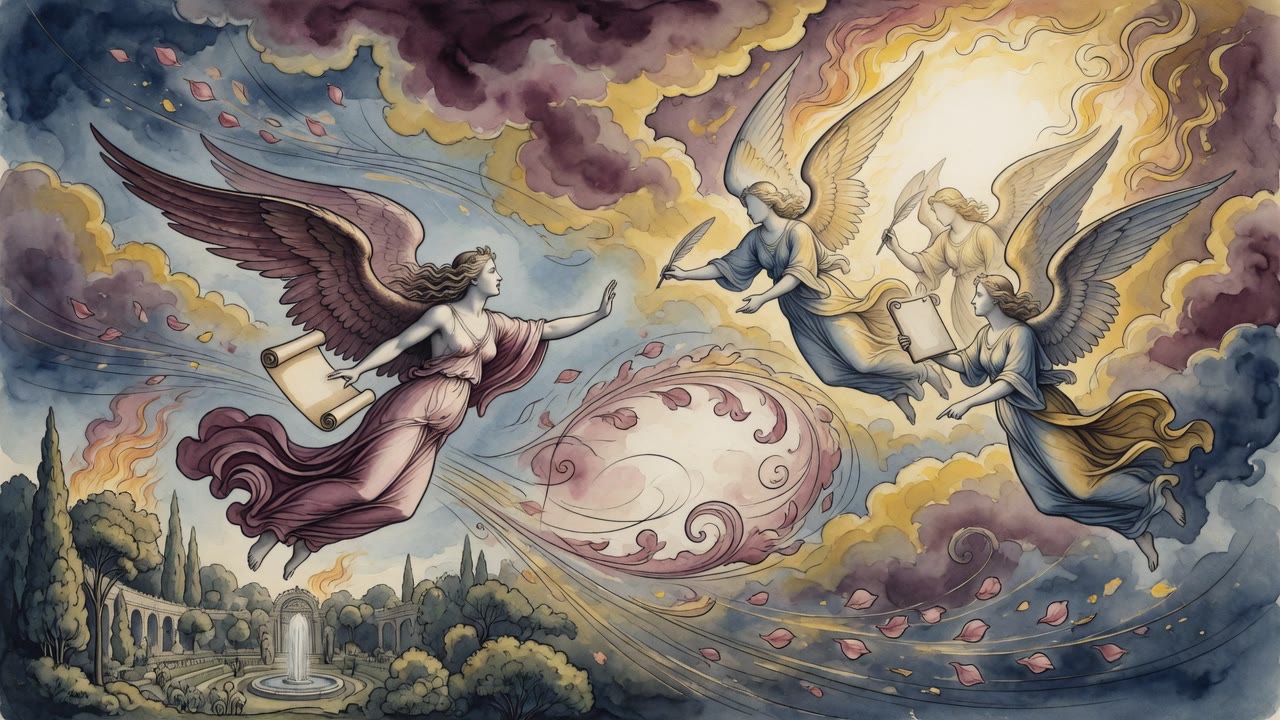
When Lilith flew from Eden, God sent three angels after her. She refused to return. What she offered instead became the contract that still limits her power.
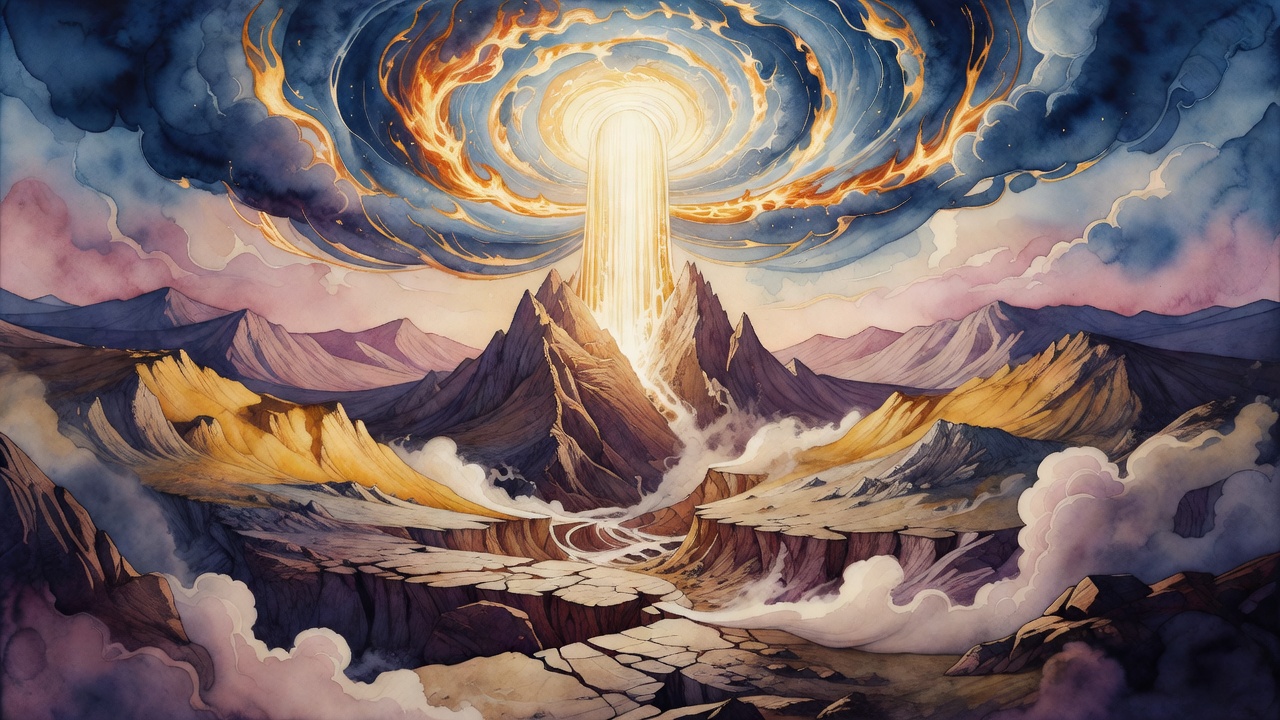
God summoned the surrounding hills and commanded them to merge. What had been a hollow in the earth rose to become the axis of the world.
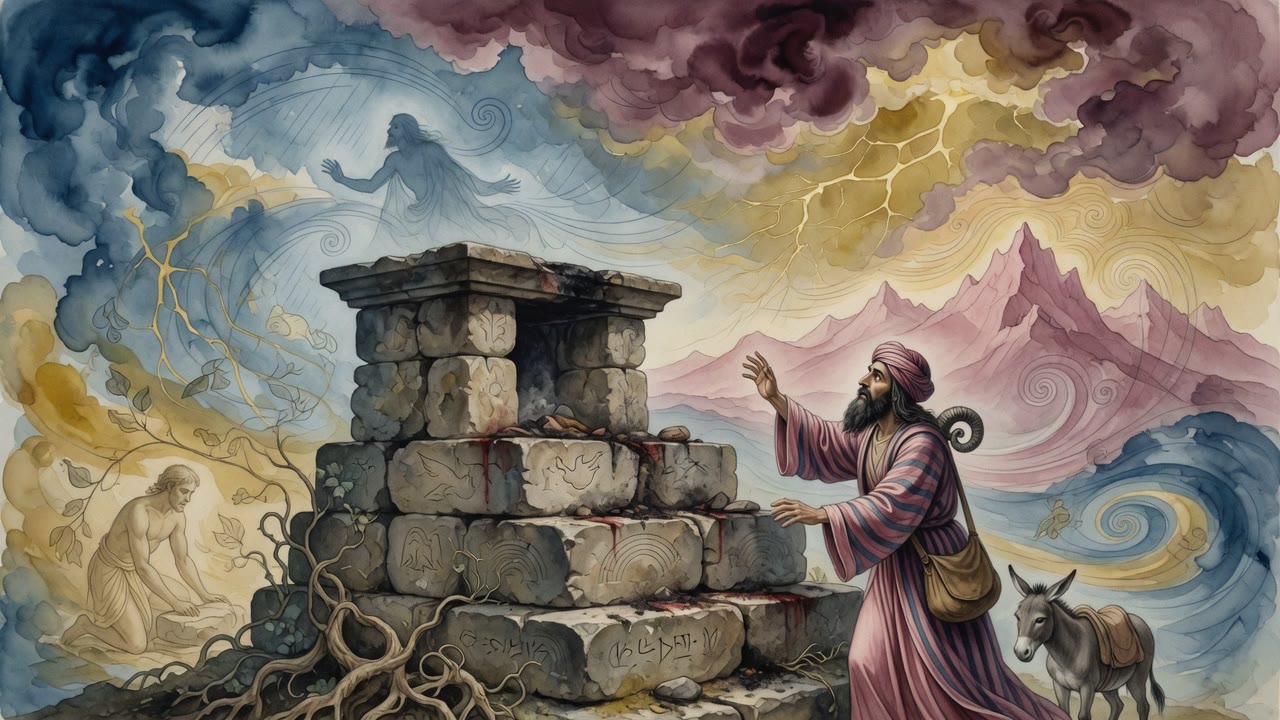
The stones at Mount Moriah were already arranged when Abraham arrived. Adam had built the altar first. Noah had rebuilt it. Then Abraham found it waiting.
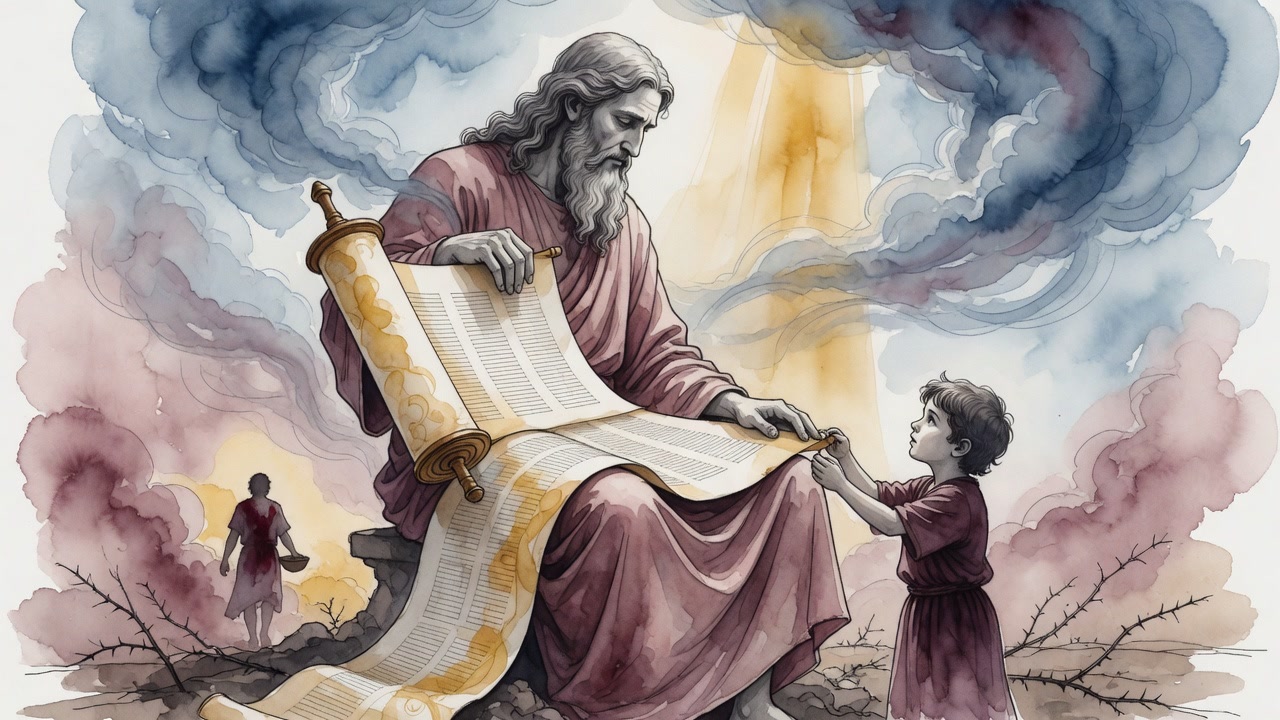
Adam held the entire Torah from the first day. When Cain proved unworthy to carry it, Adam waited two decades before Seth was born to receive it.
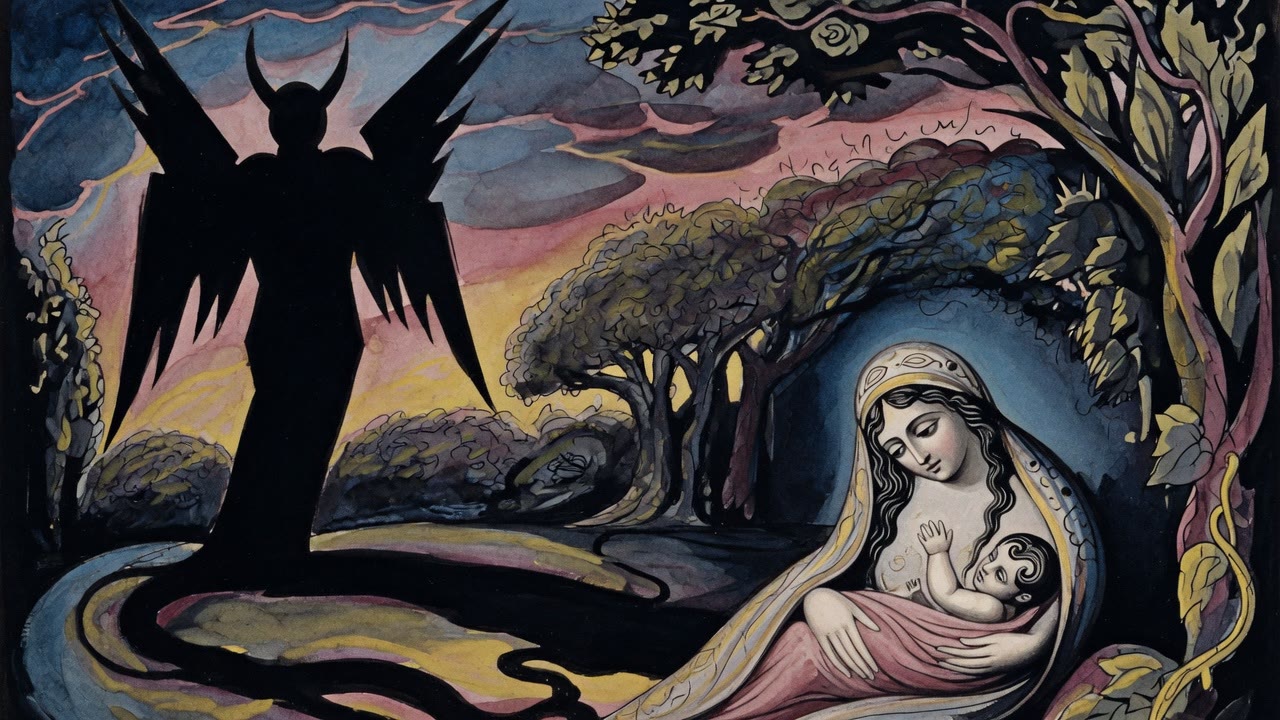
A tradition in Talmud and Kabbalah says Adam was not Cain's father. Samael seduced Eve in the Garden, and the murder of Abel was written into Cain's blood.
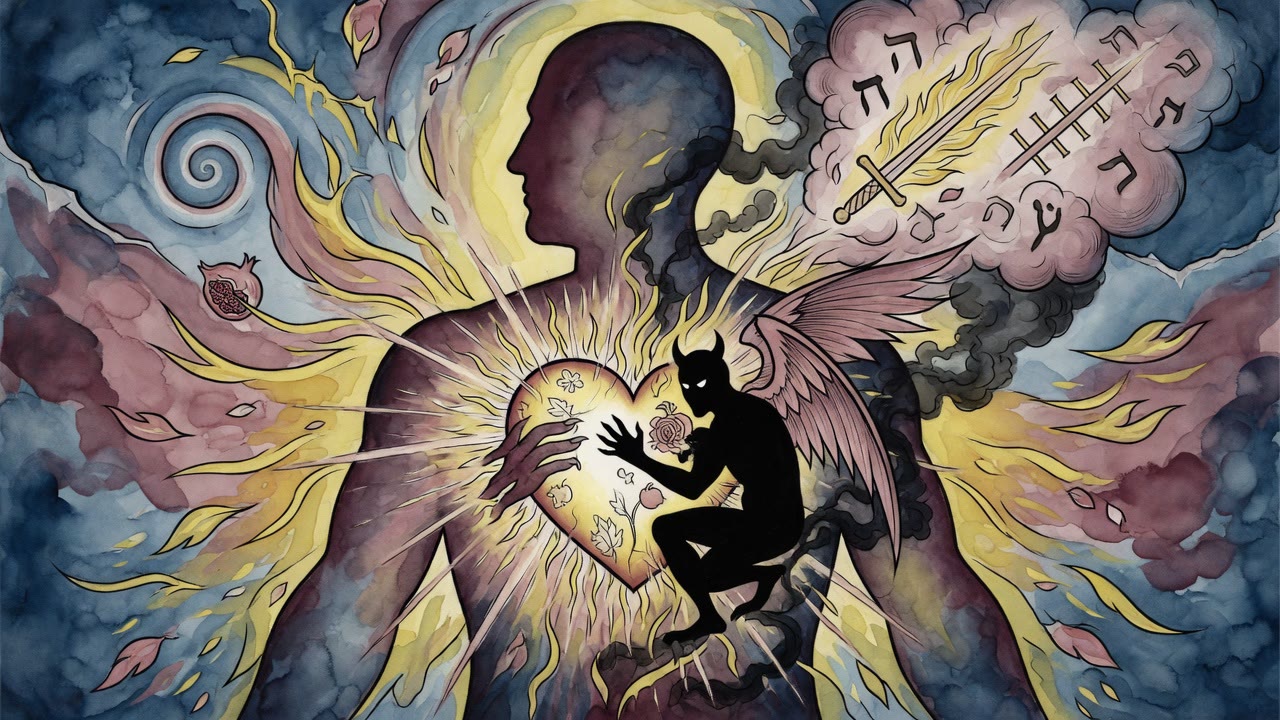
Samael did not tempt from outside the Garden. He entered. A folktale explains how the yetzer hara, the evil inclination, found its home in the human heart.
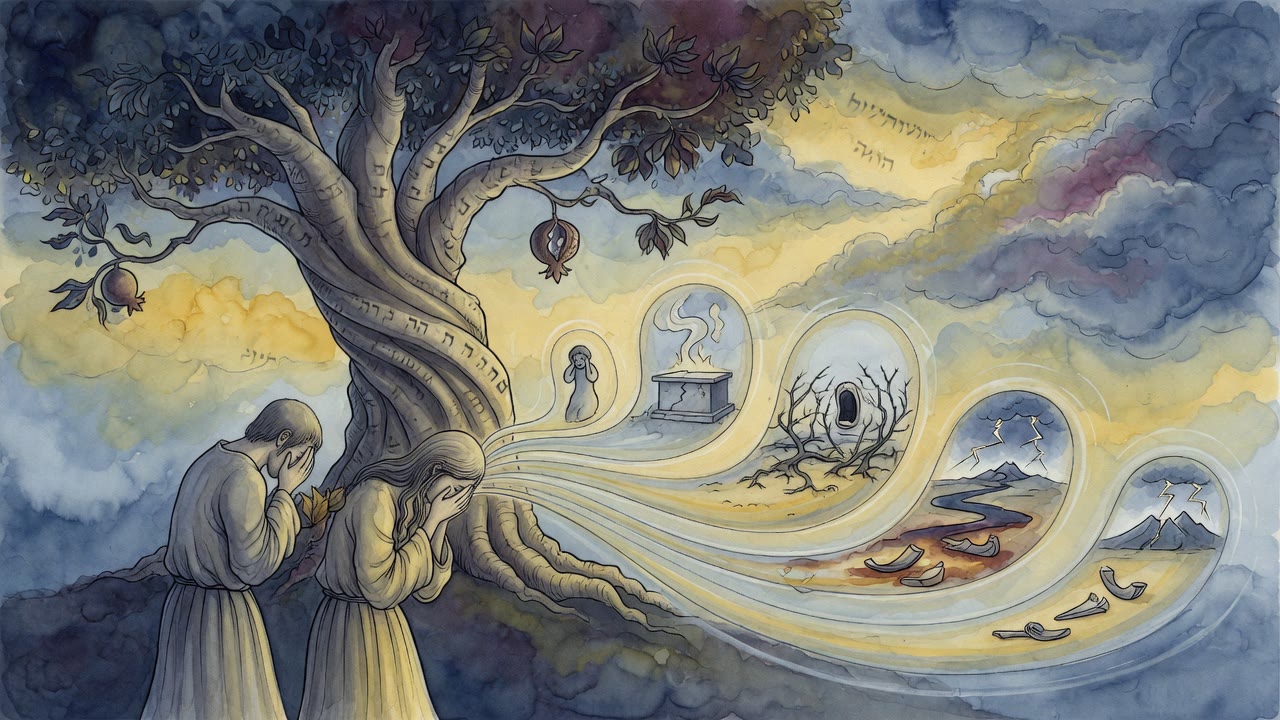
In the first moments after creation, every animal prostrated itself before Adam as if he were their god. What Adam did next set the pattern for all worship.
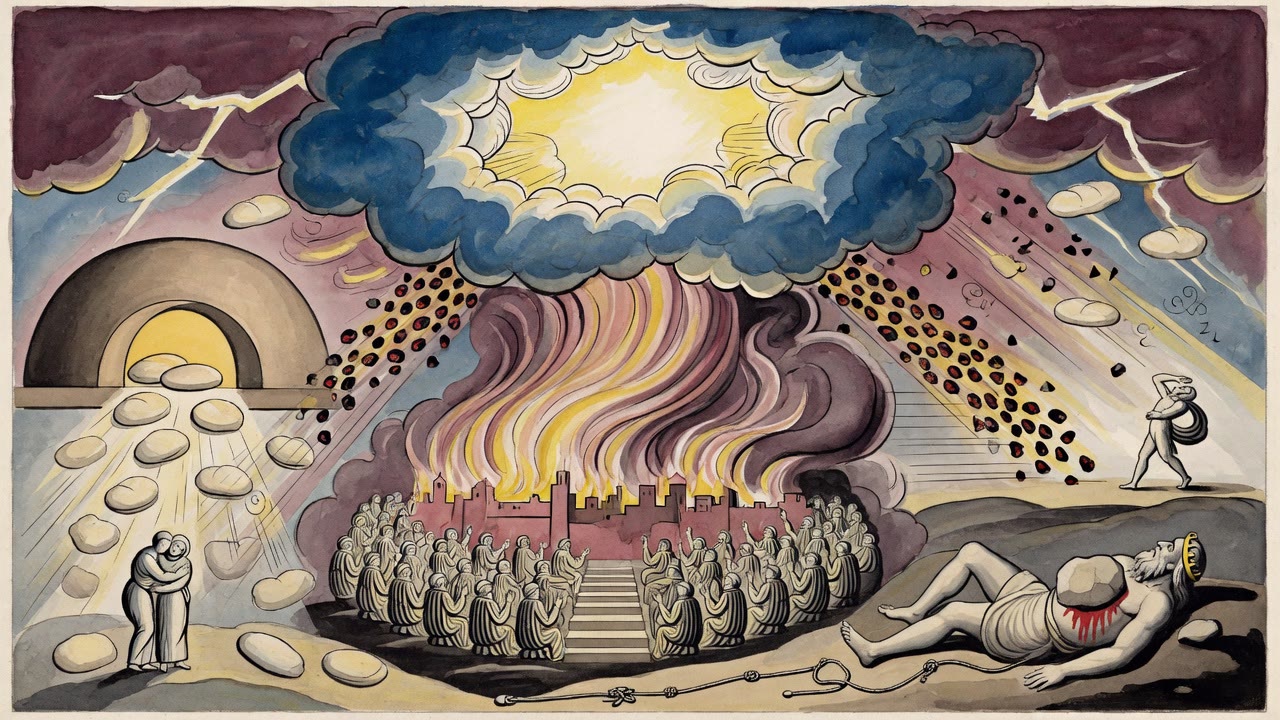
Adam named every beast. The angels could not. Sammael found a serpent that still stood upright and rode it through the gate.
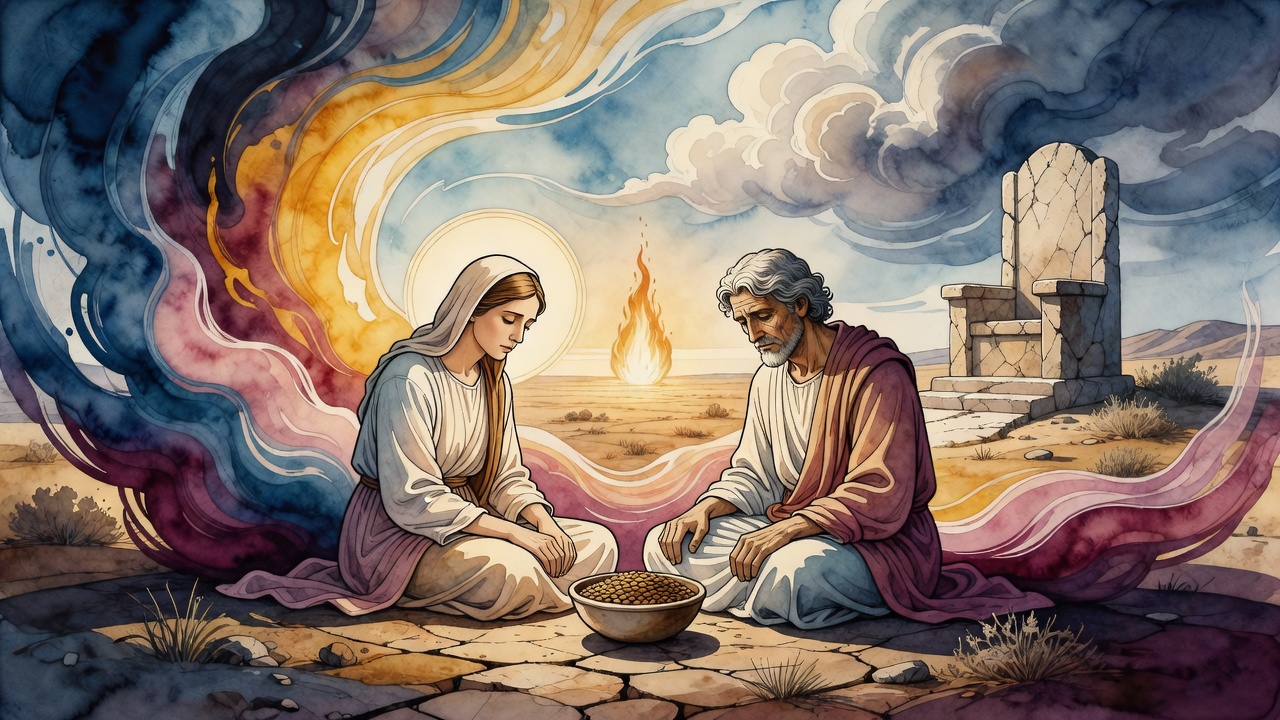
The first mourners in human history were Adam and Eve. They ate lentils. The rabbis traced every Jewish shiva table back to that first meal.
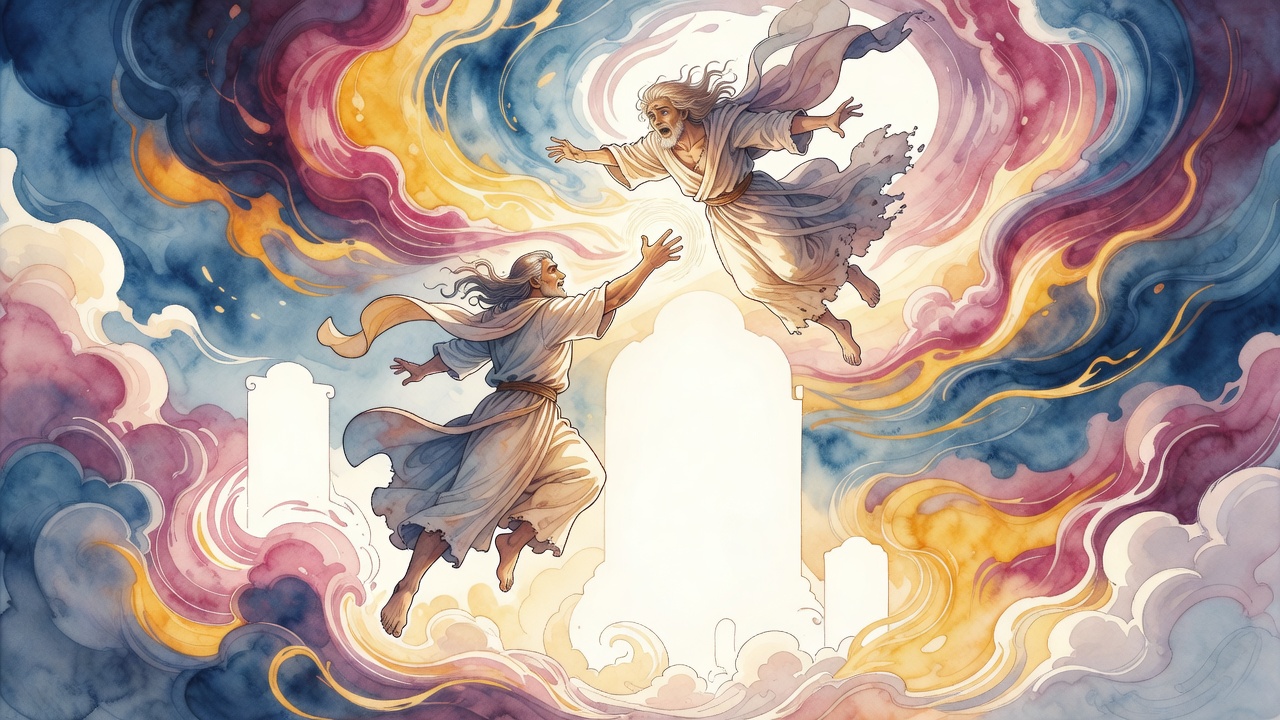
Balaam left the ground and found a road in the air no soldier could walk. Zaliah of Dan followed and lost him in the fifth sky.
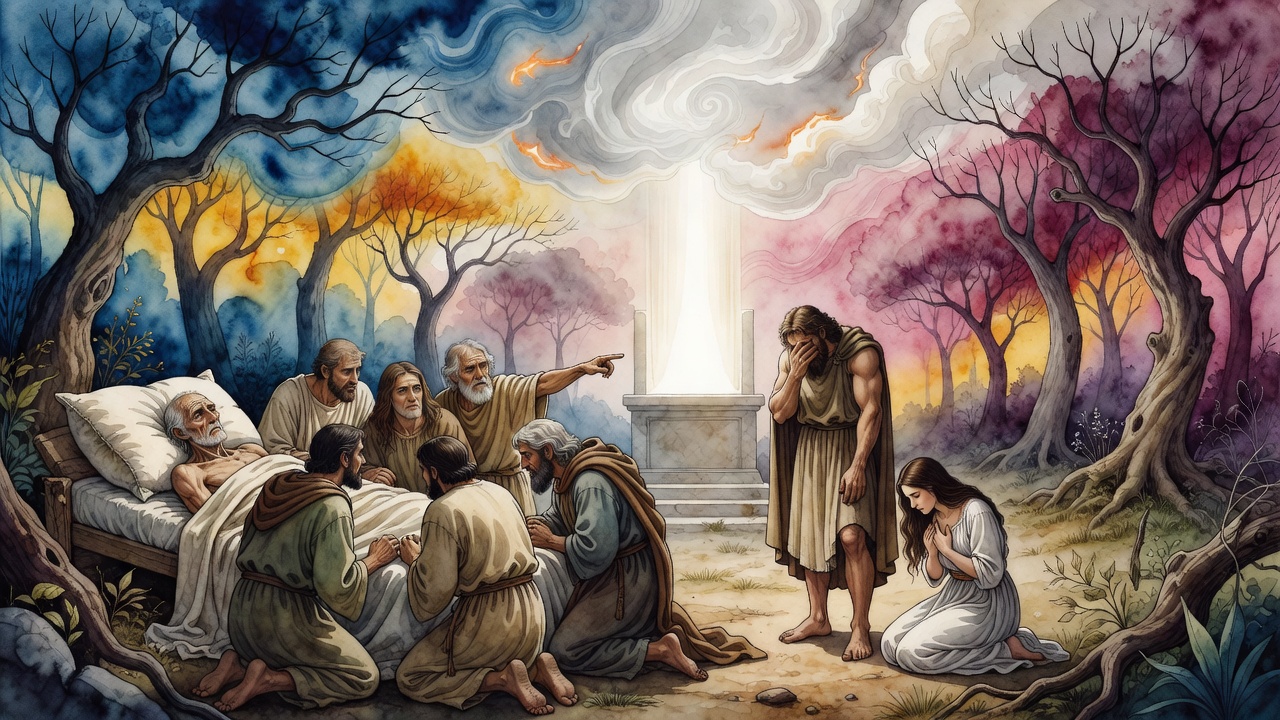
He was a hundred and twenty-five. He kissed his sons, then went back to the tree Eve had looked at until looking became eating.
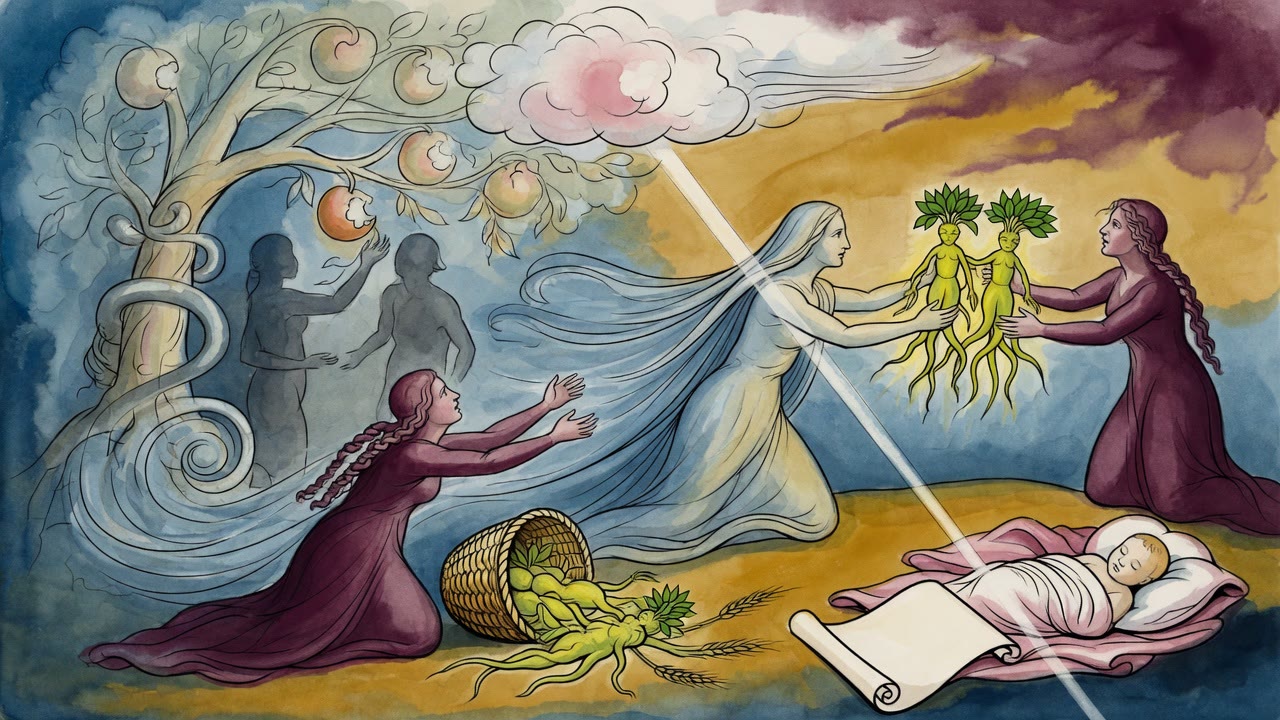
Reuben tied his father's donkey to a mandrake root and walked off. He came back to find the plant torn out of the ground and the donkey dead beside it.
