195 myths · Page 5 of 7
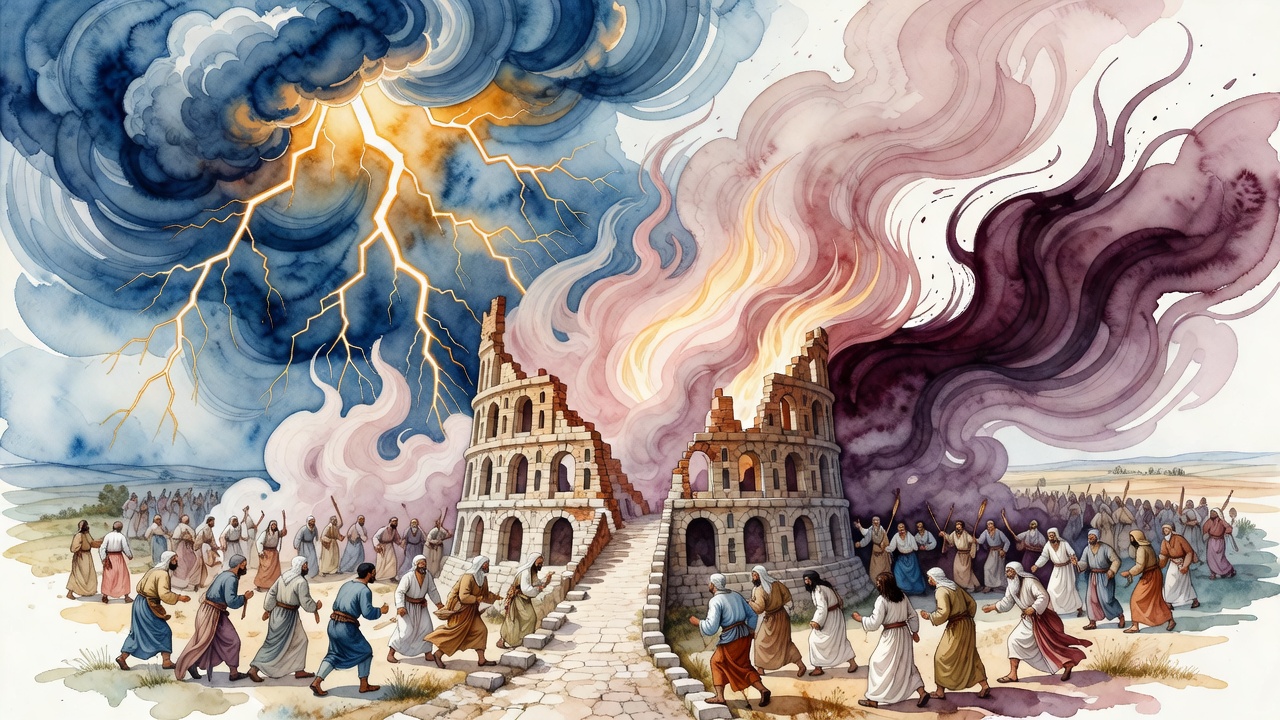
After the flood they still spoke with one mouth. On the plain of Shinar the crews split, and one of them brought axes for the sky.
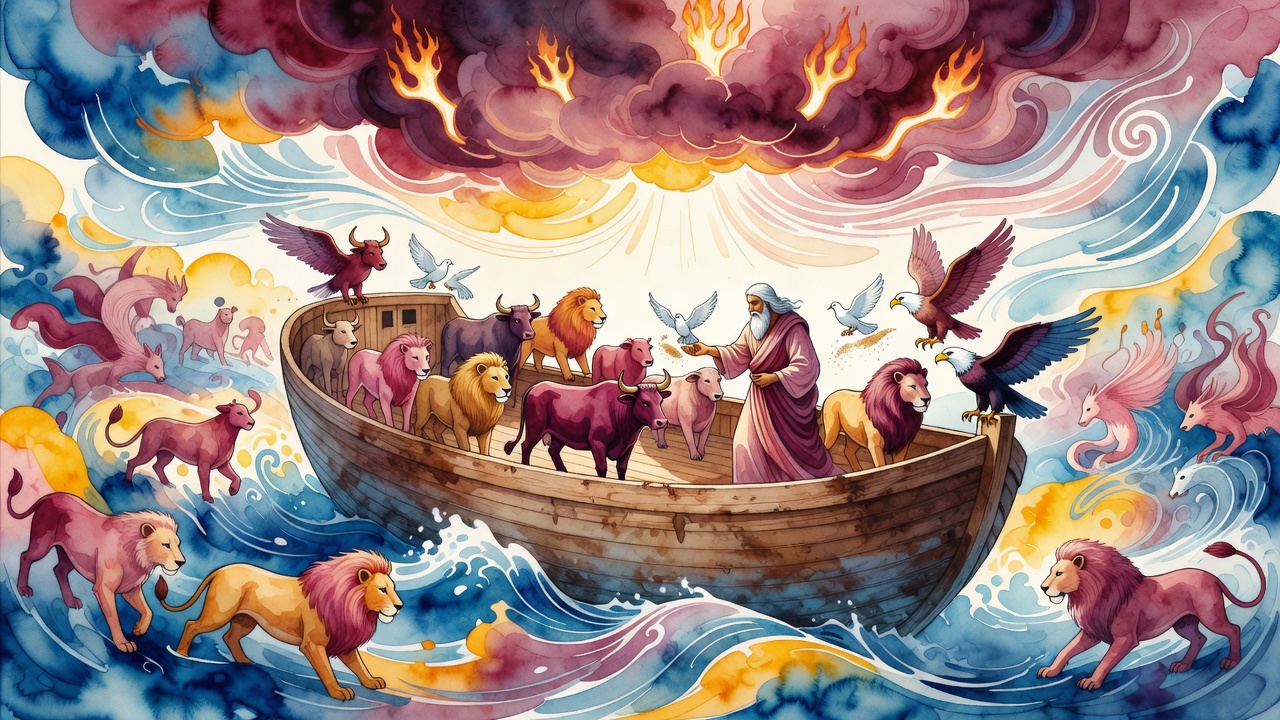
The neighbors asked what the cedar saplings were for. Noah told them the truth. They laughed, and he went on watering the trees.
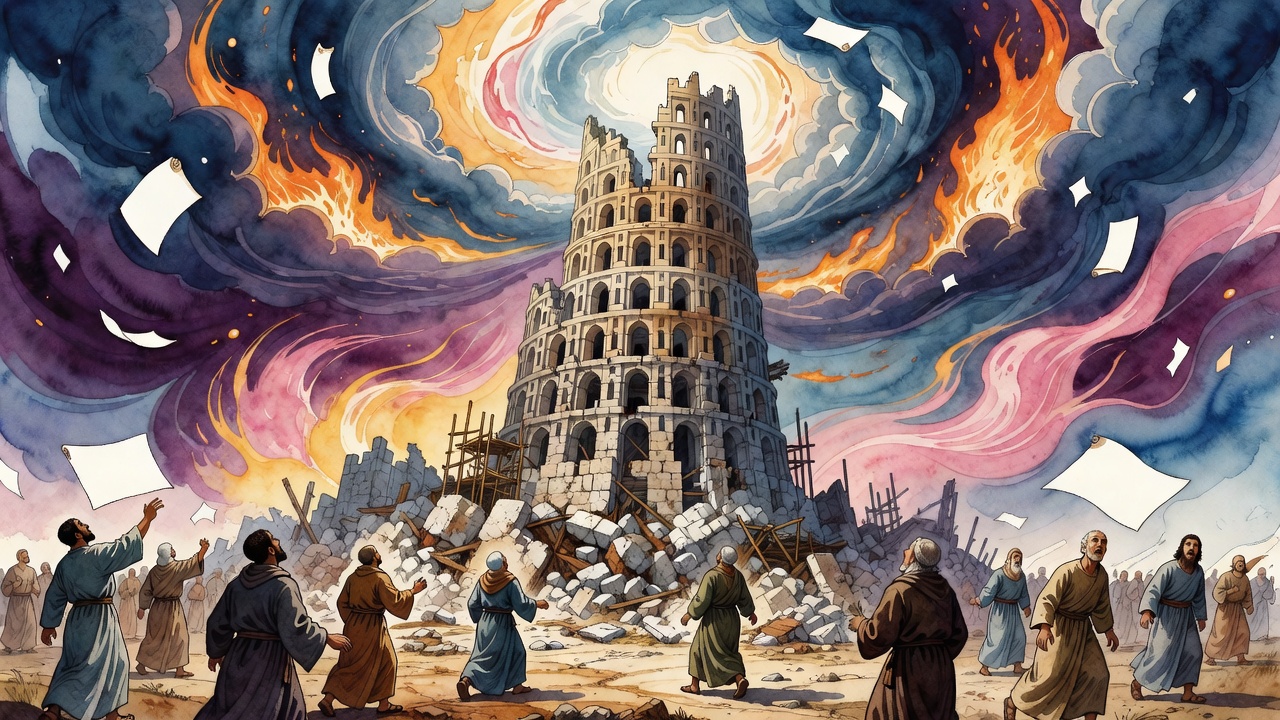
The tower was still climbing when speech broke. A man called for tar and was handed a tool he did not know how to use.
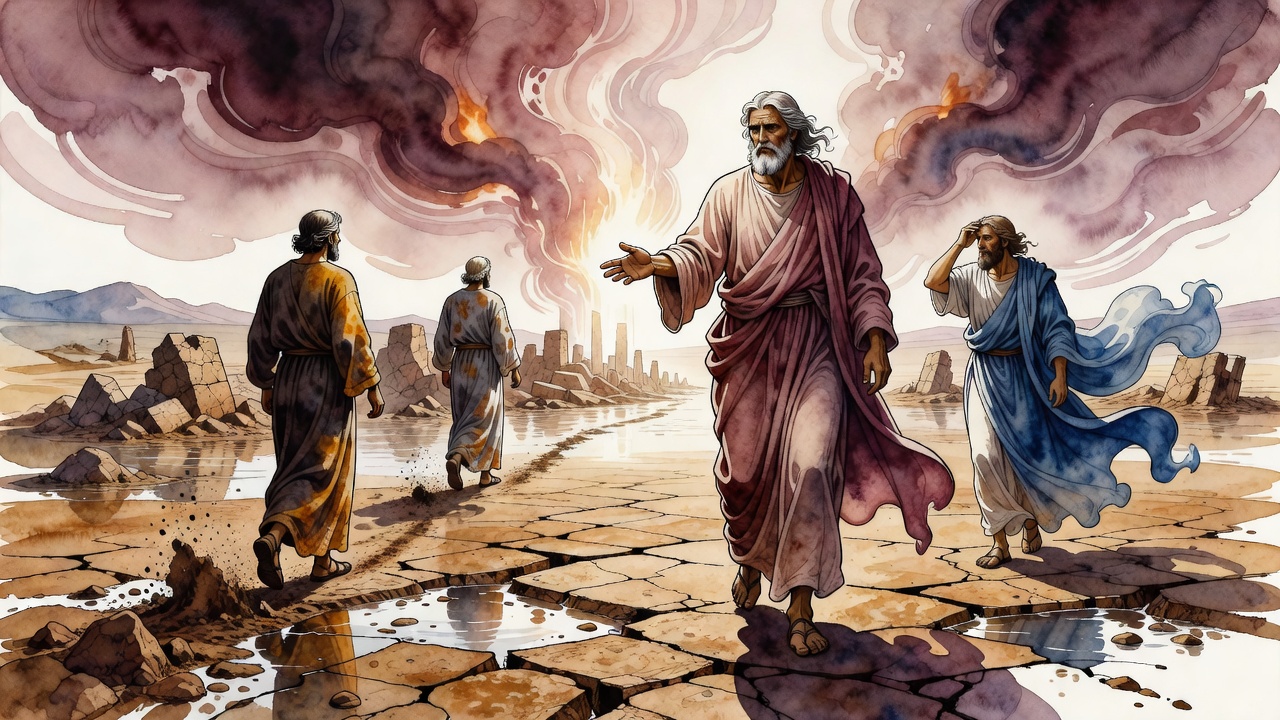
The mud still held the old world's bones. Noah looked at his sons. He told them they had already started walking toward ruin.
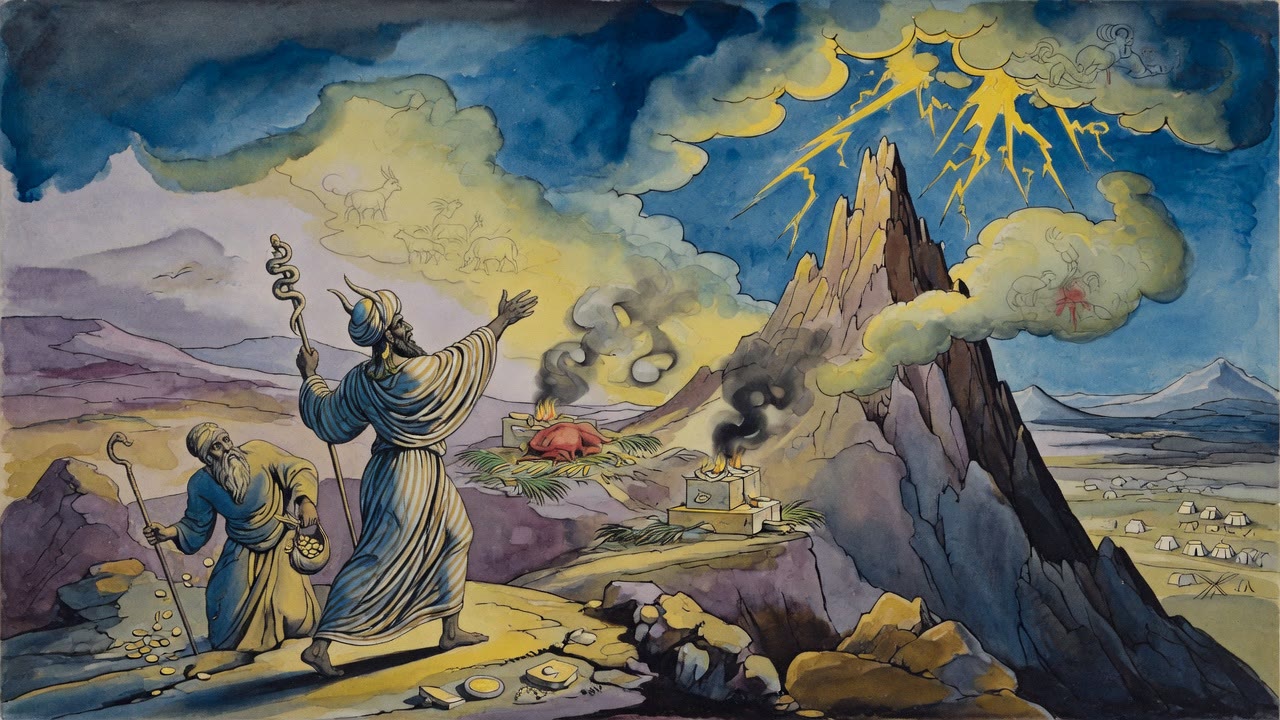
Bilam swore no house of silver and gold could move him. Then he stayed another night anyway, hoping God would change the answer.
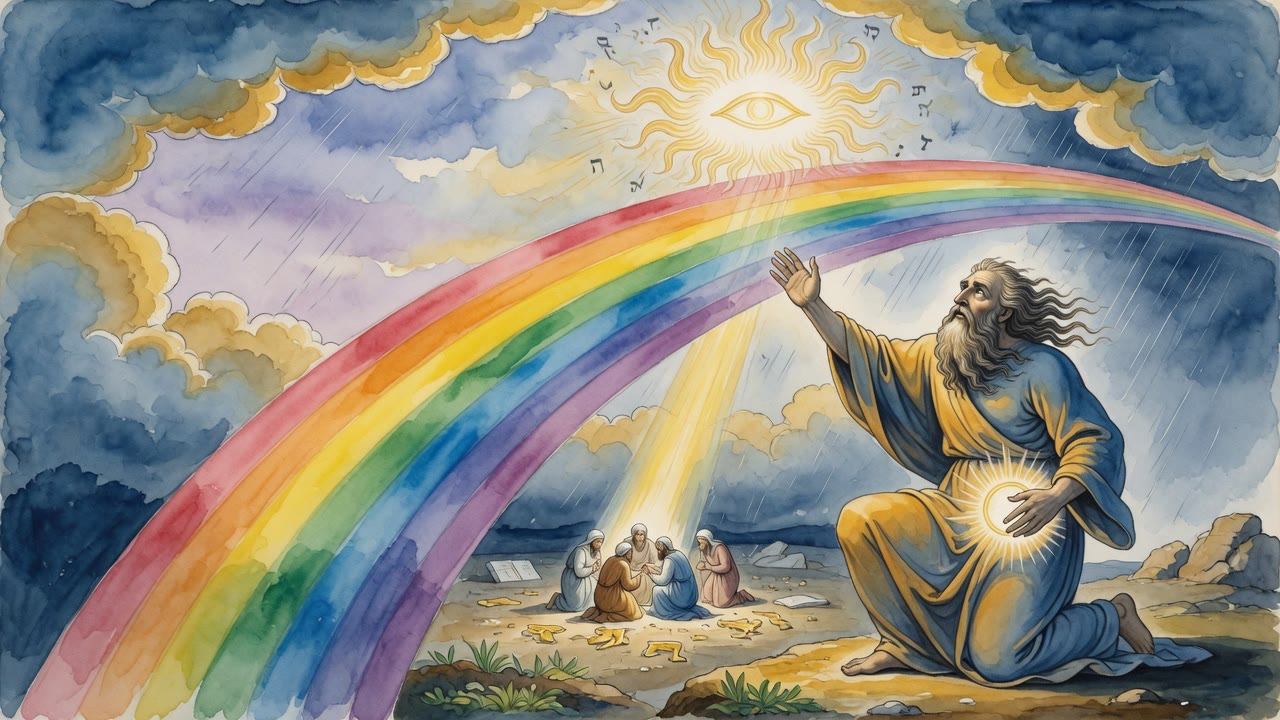
A prophet stood in the Temple court wearing a wooden yoke on his neck. Another prophet walked up, tore it off him, and smashed it in front of the crowd.
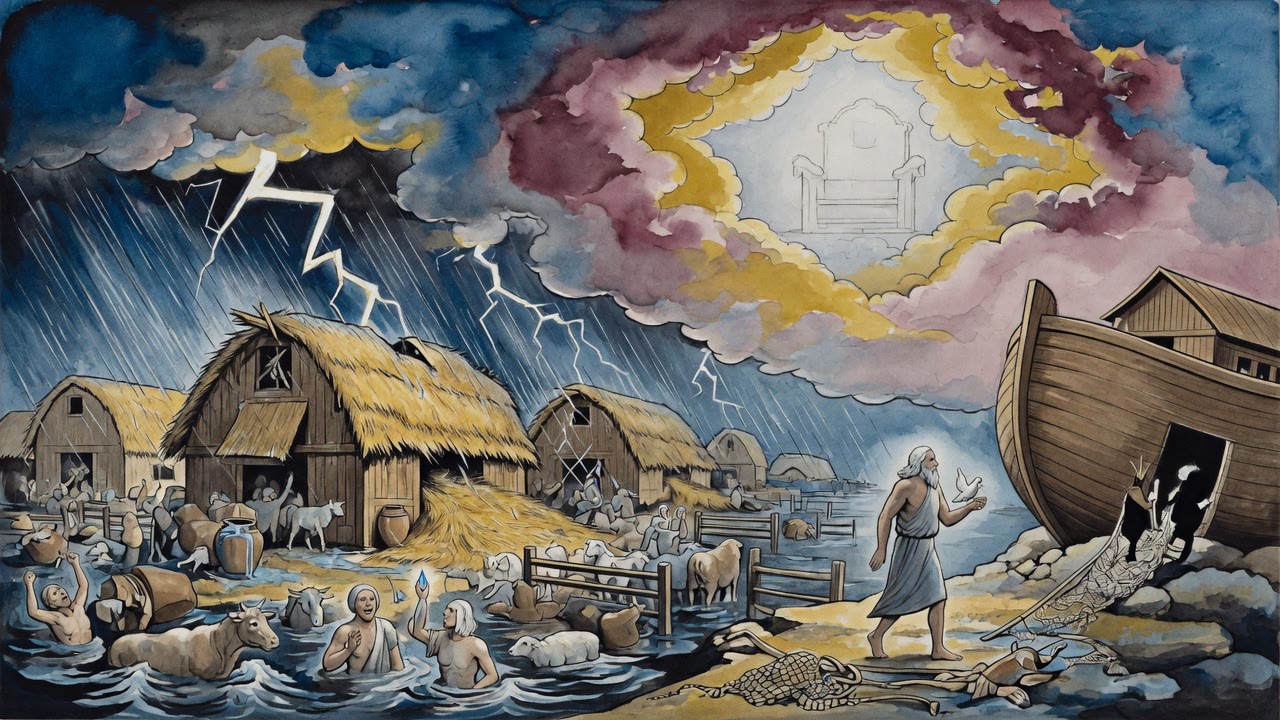
A mist came up and watered the whole earth by itself, so they asked heaven for one drop of rain and nothing else. Noah later said he was no better.
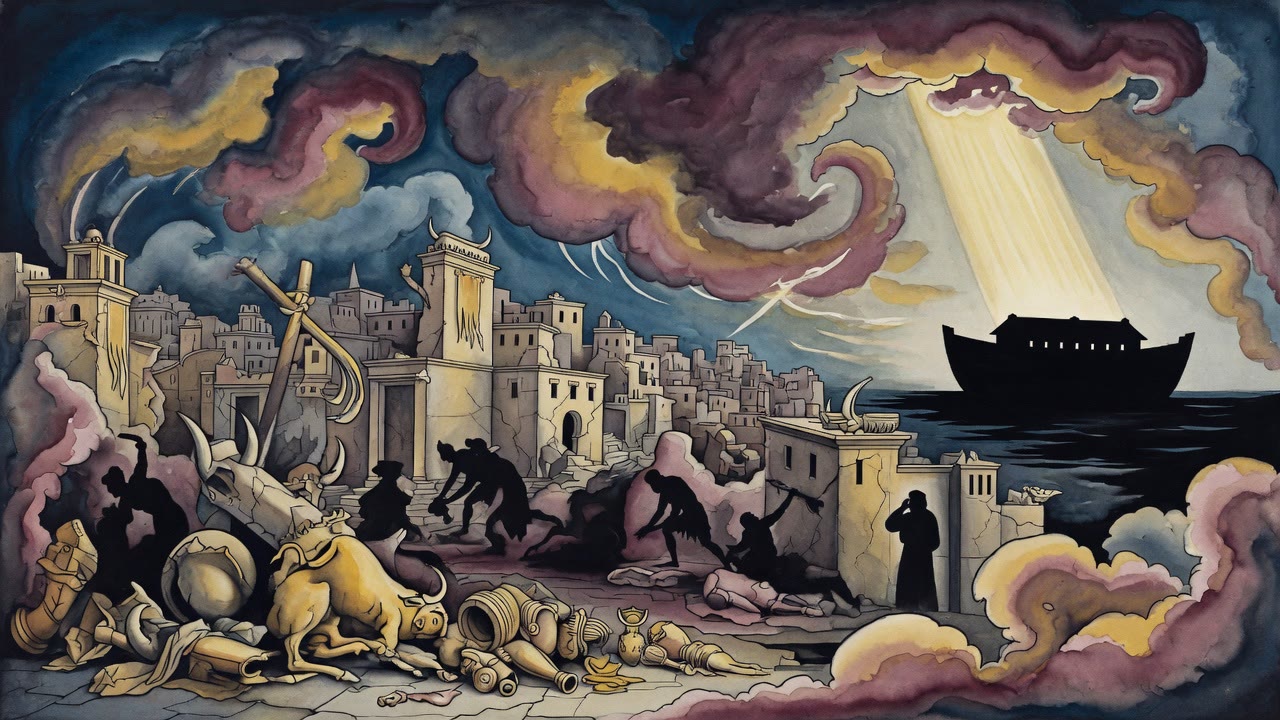
Before the rain, the earth filled with hamas. Rabbi Levi heard idolatry, bloodshed, and sexual ruin in one word, and only Noah found favor.
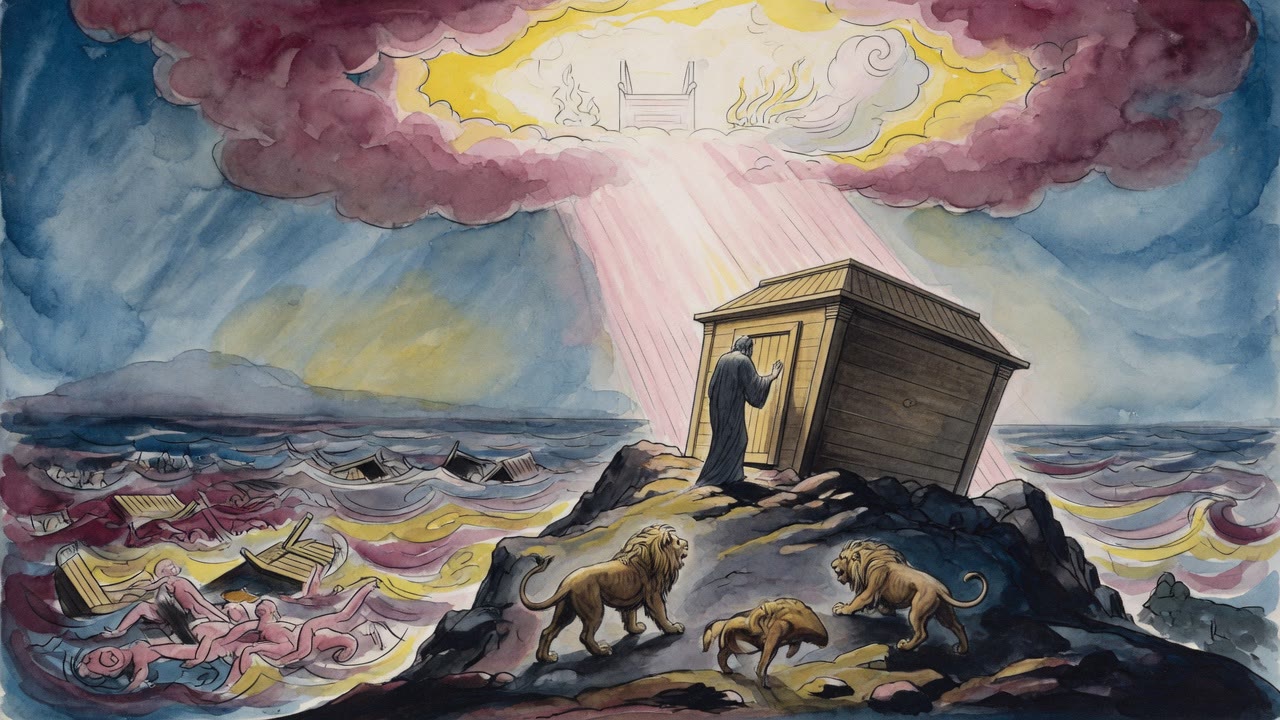
Each man went and got his son. They pressed the children into the springs as stoppers. The water came around them and kept coming.
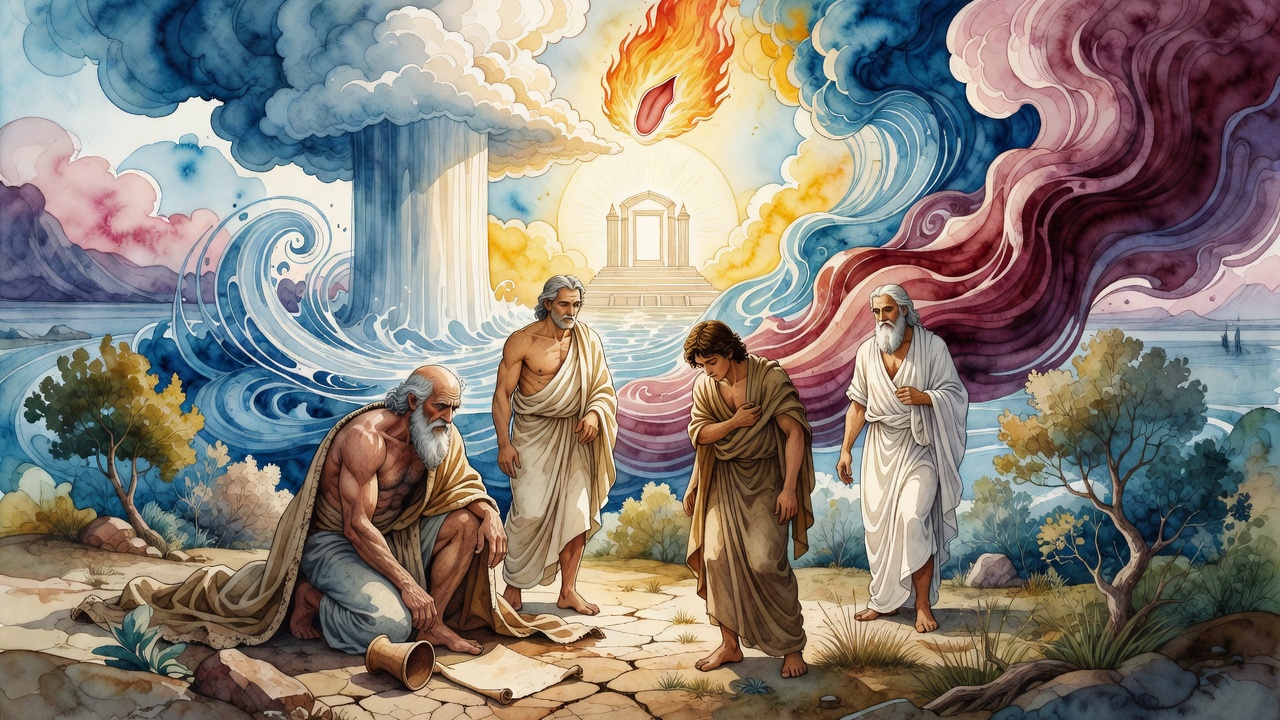
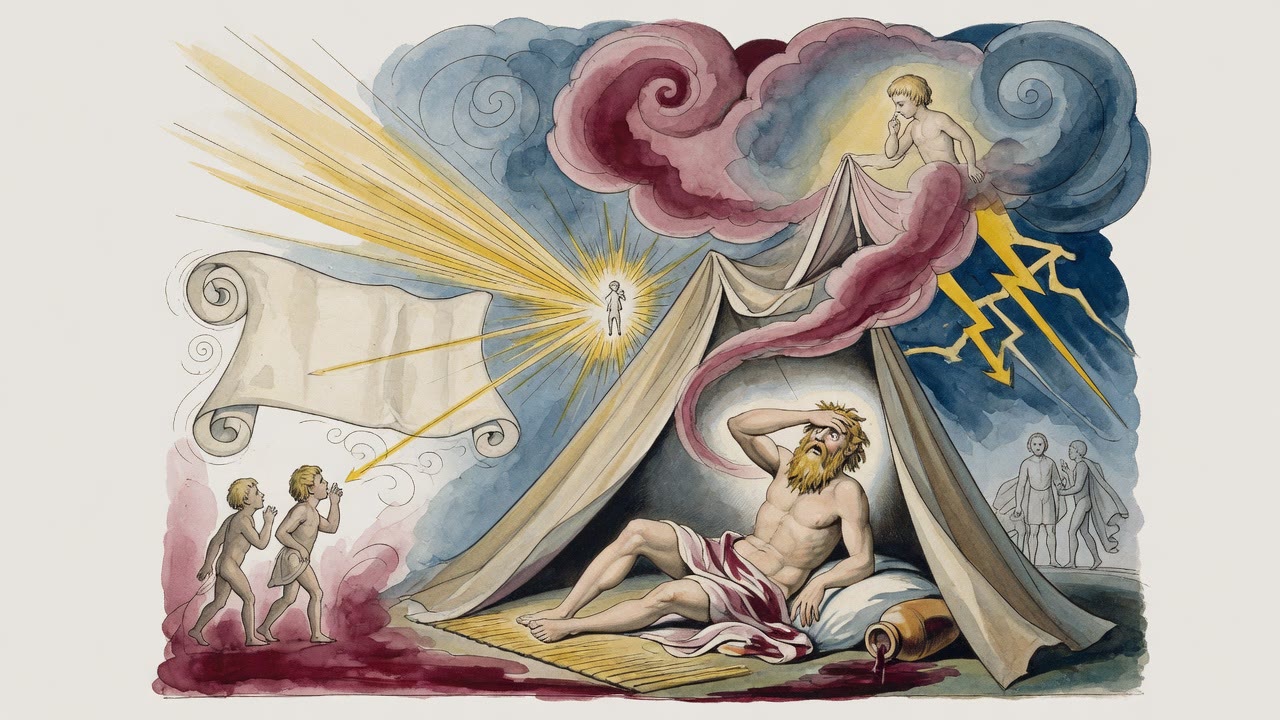
One cup uncovered Noah. Ham looked and told. The curse skipped a blessed son and lodged in Canaan, while wine kept toppling generations after the flood.
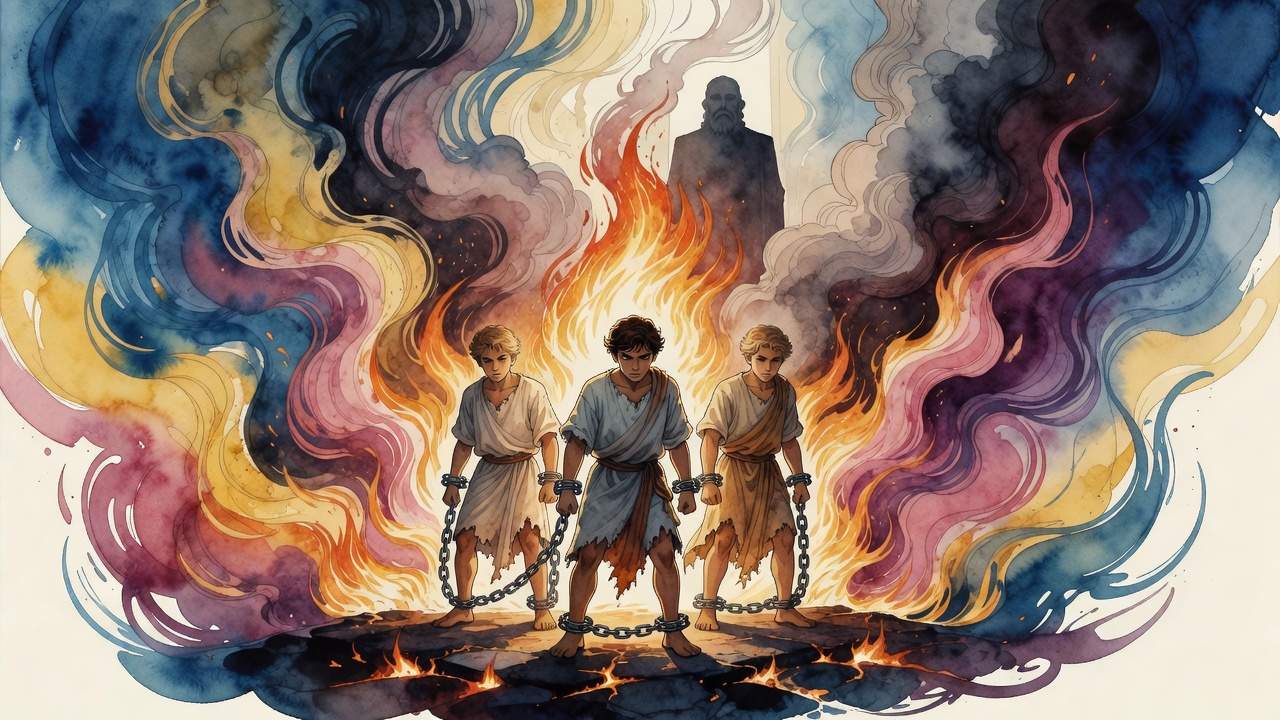
Hananiah, Mishael, and Azariah refused Nebuchadnezzar's image, entered fire, and would not leave until the king who bound them spoke them free.
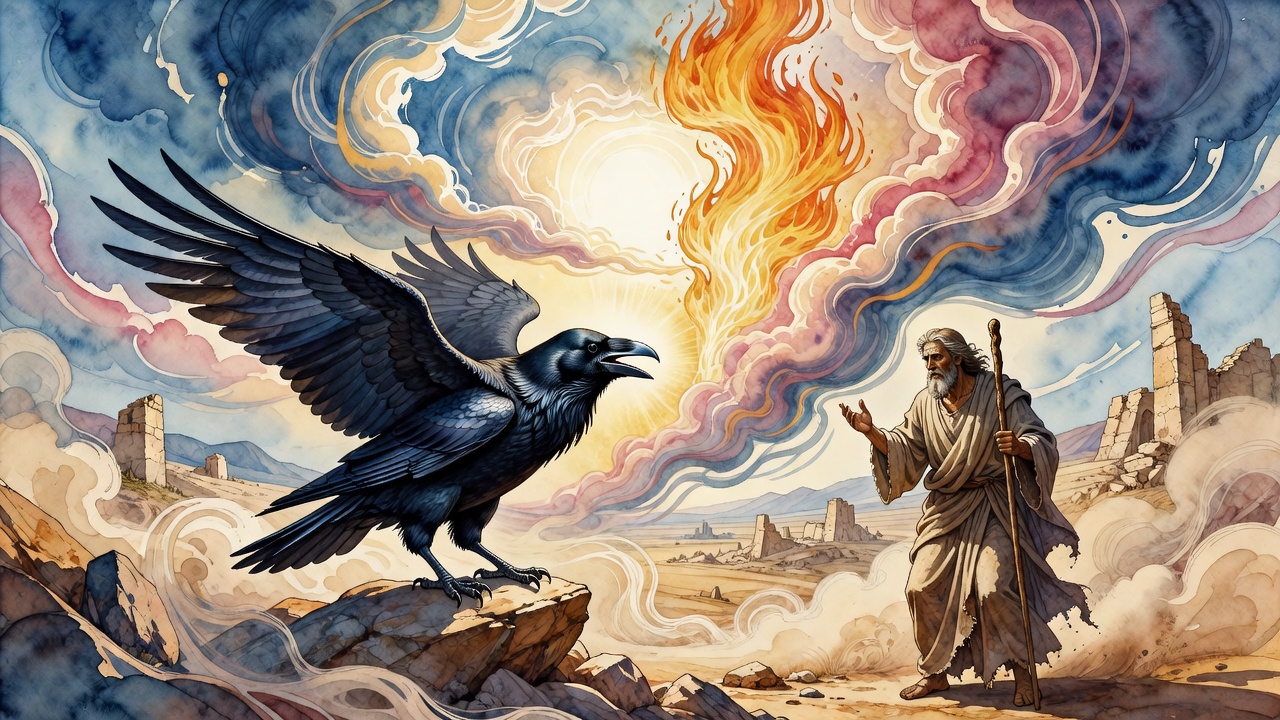
Noah's raven refused the mission and argued for its species. God ordered it kept for Elijah. Wonders followed, and exile still came for unrepentant kings.
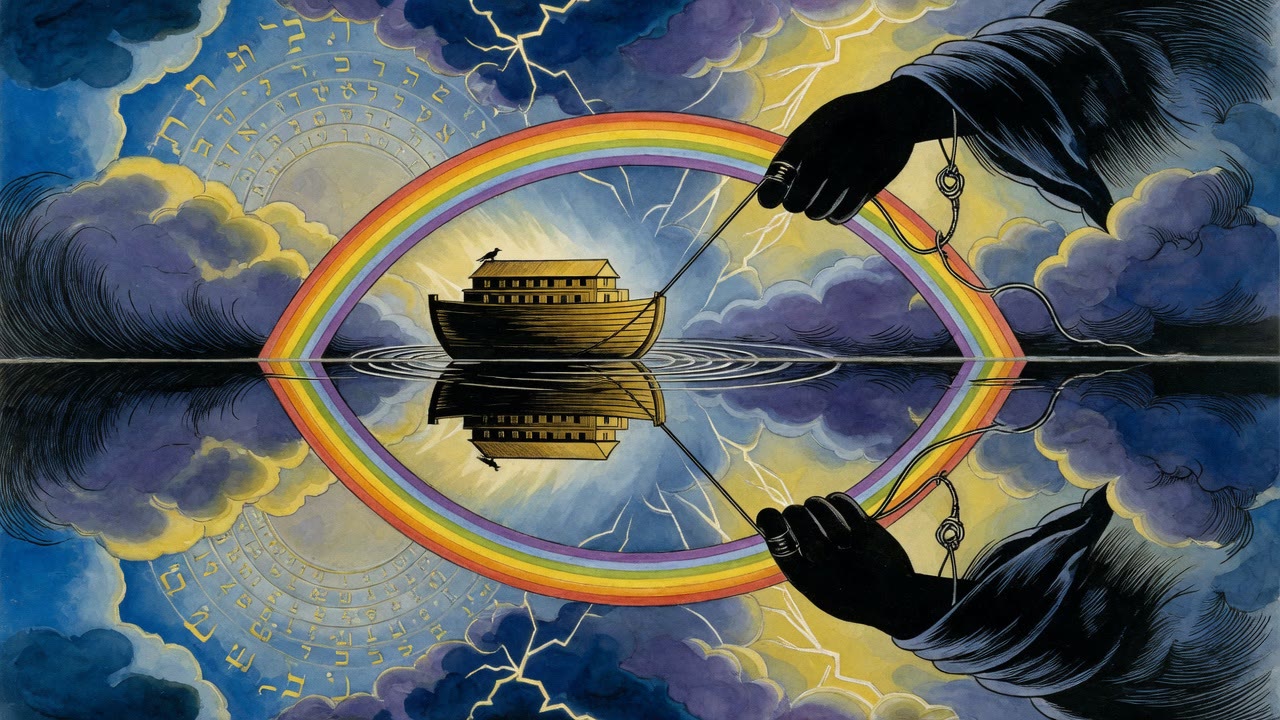
The flood began and ended on the same calendar day. Noah counted the mirrored year from inside the hull, and the bow held judgment on a leash.
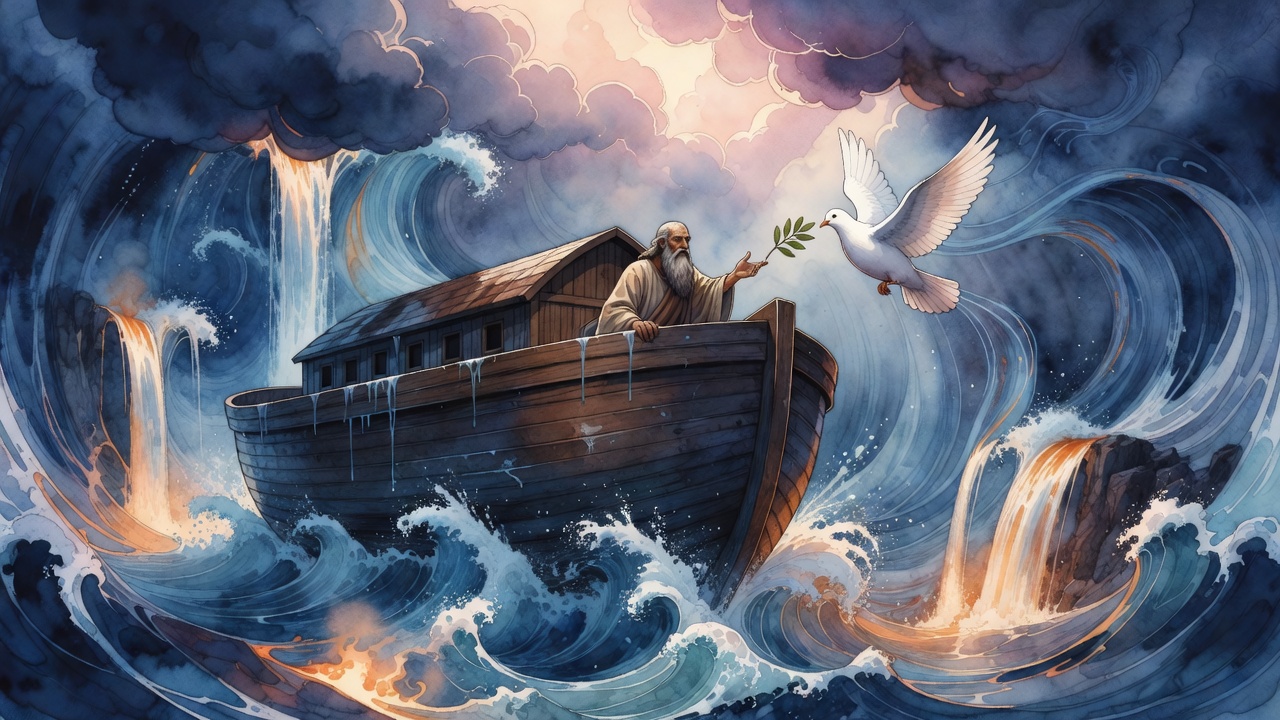
The raven went out over the drowned world and never came back. The dove could not find one dry stone to stand on, so she came home.
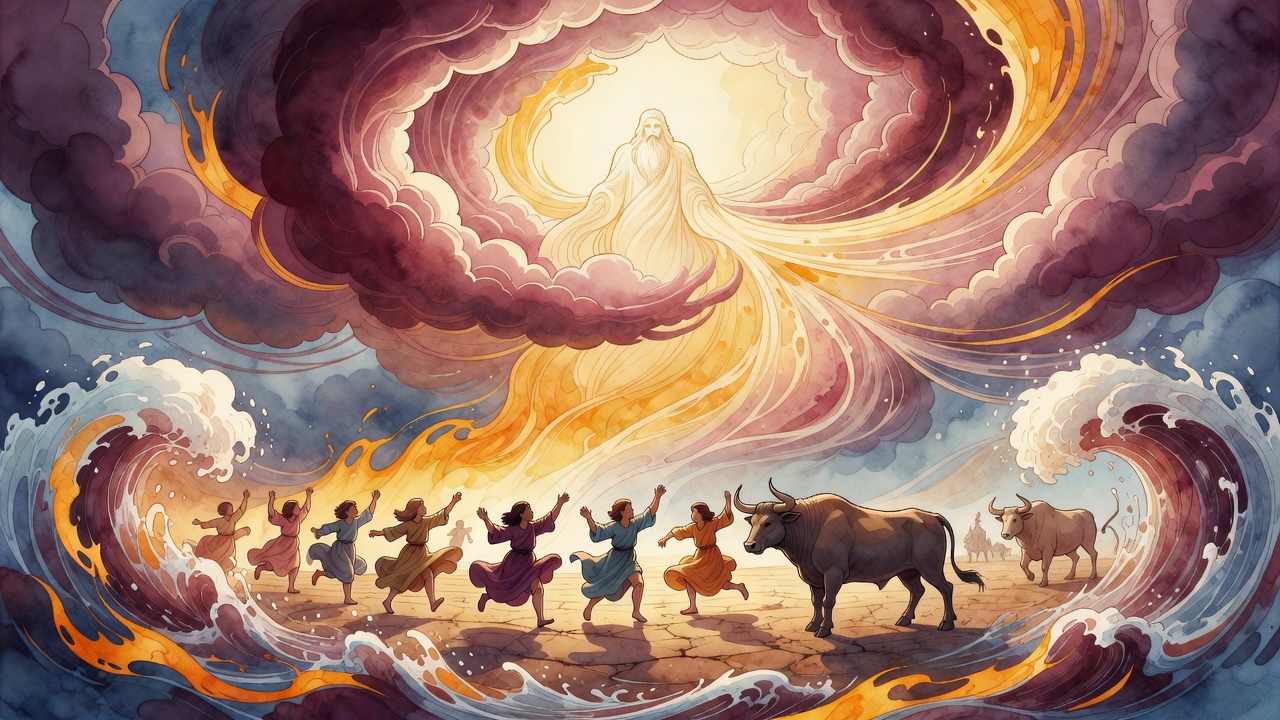
Their bulls bred and never failed, and their children ran loose through the fields with drums and harps. Then they told God to leave them alone.
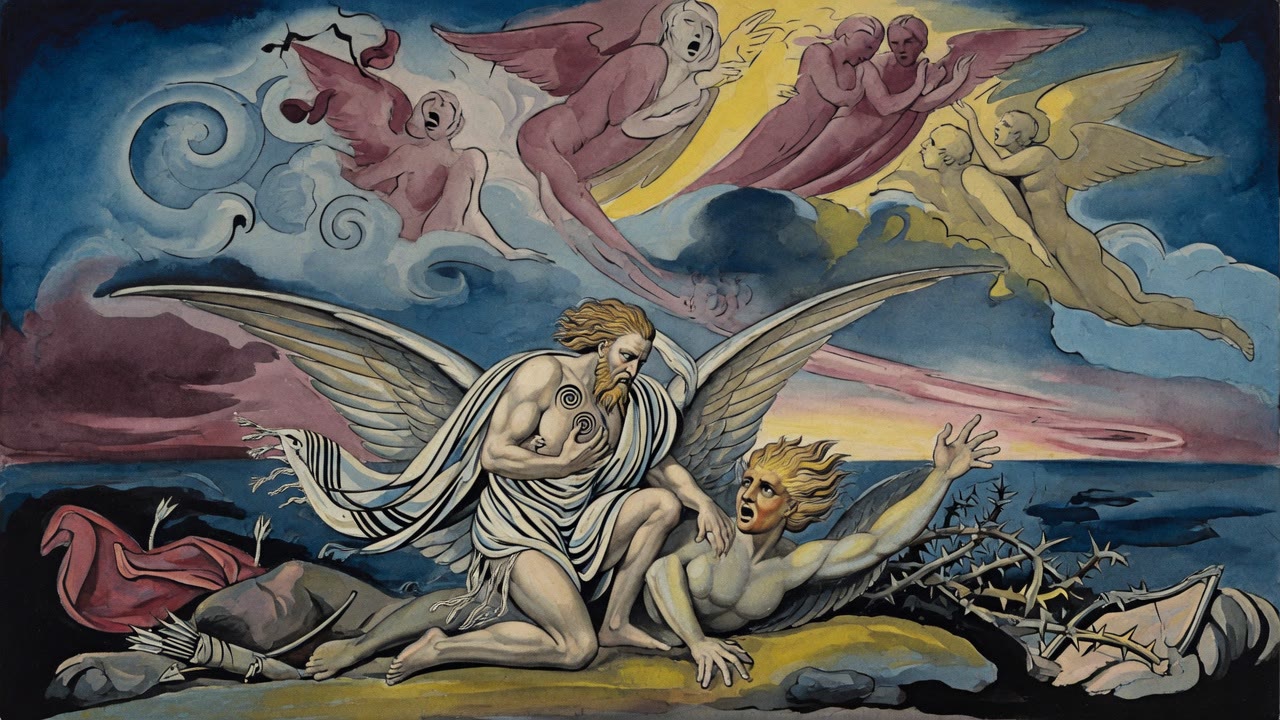
Two of Esau's tears ran down his face. The third stayed in his eye and never fell, and Heaven paid him in this world for honoring Isaac.
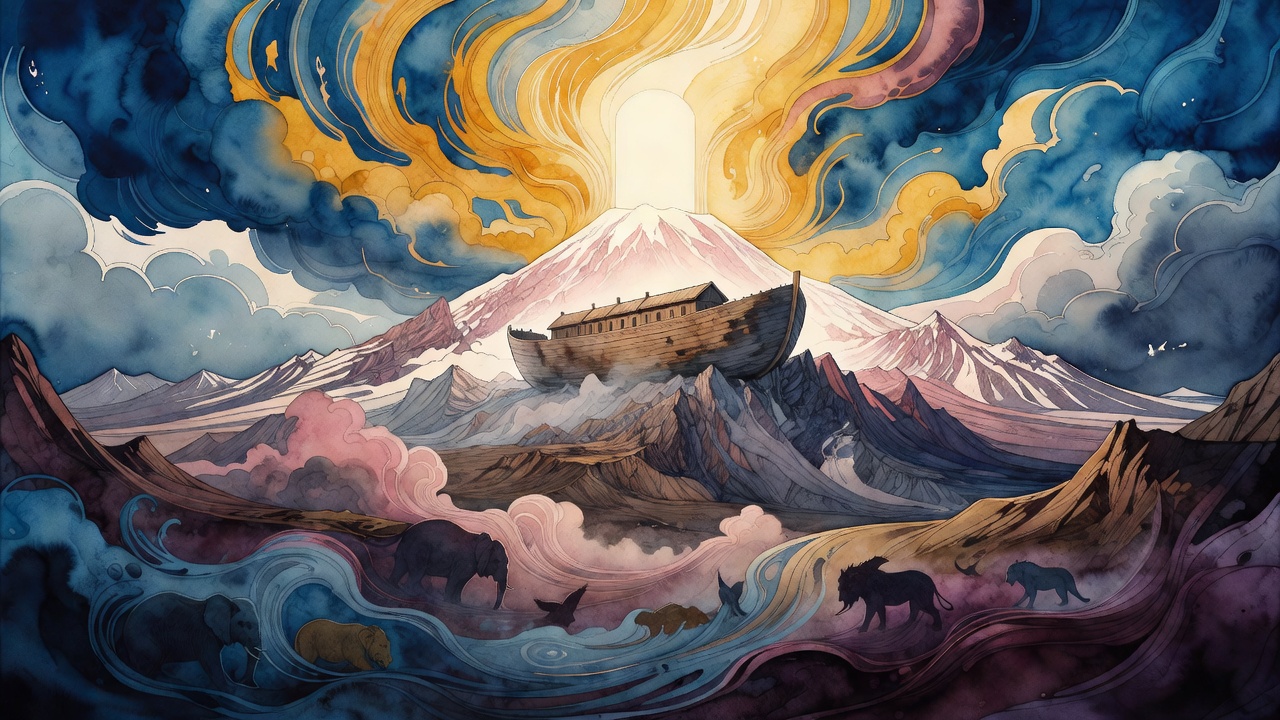
Rain hit the ark's roof without pause. Noah moved among stalls that stank of wet fur. Mercy had not shown its height.
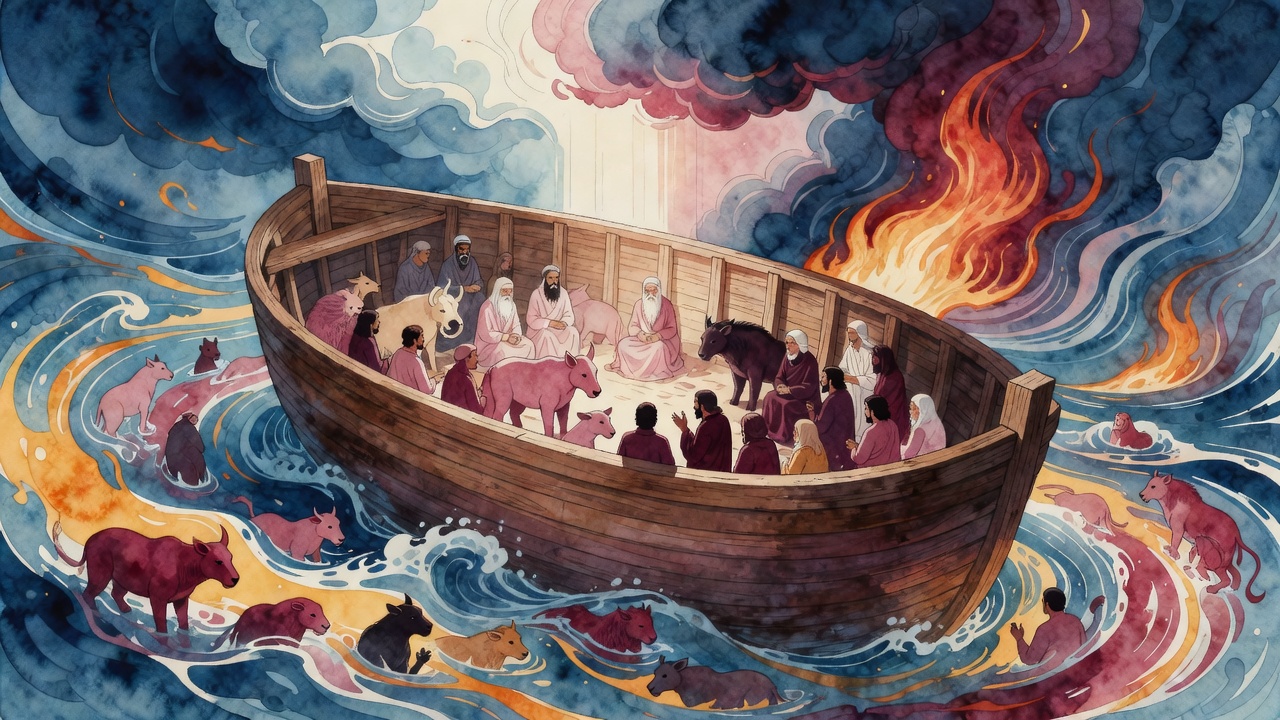
The stone dimmed and Noah called it day. Outside, rain was a wall. When the ground took feet again, God promised the water would not.
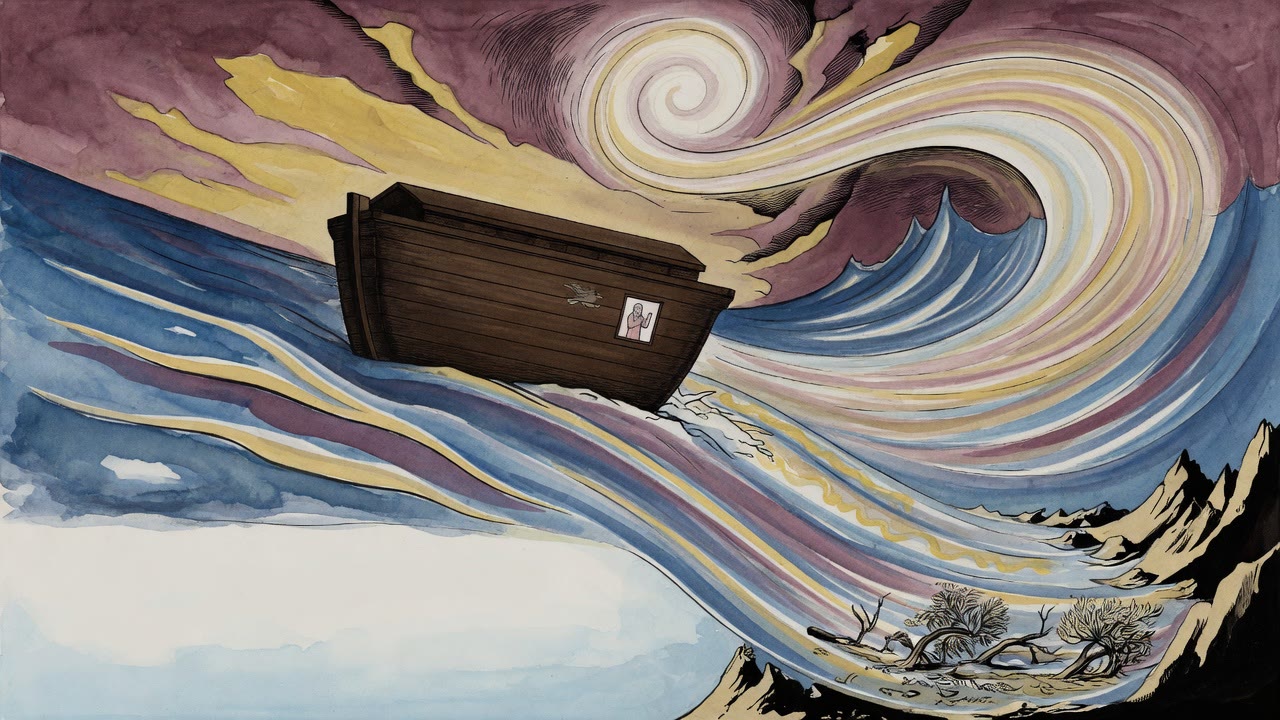
Noah waited in a sealed ark while the world drowned. Then a breath moved, wind or spirit, and the waters began to walk backward.
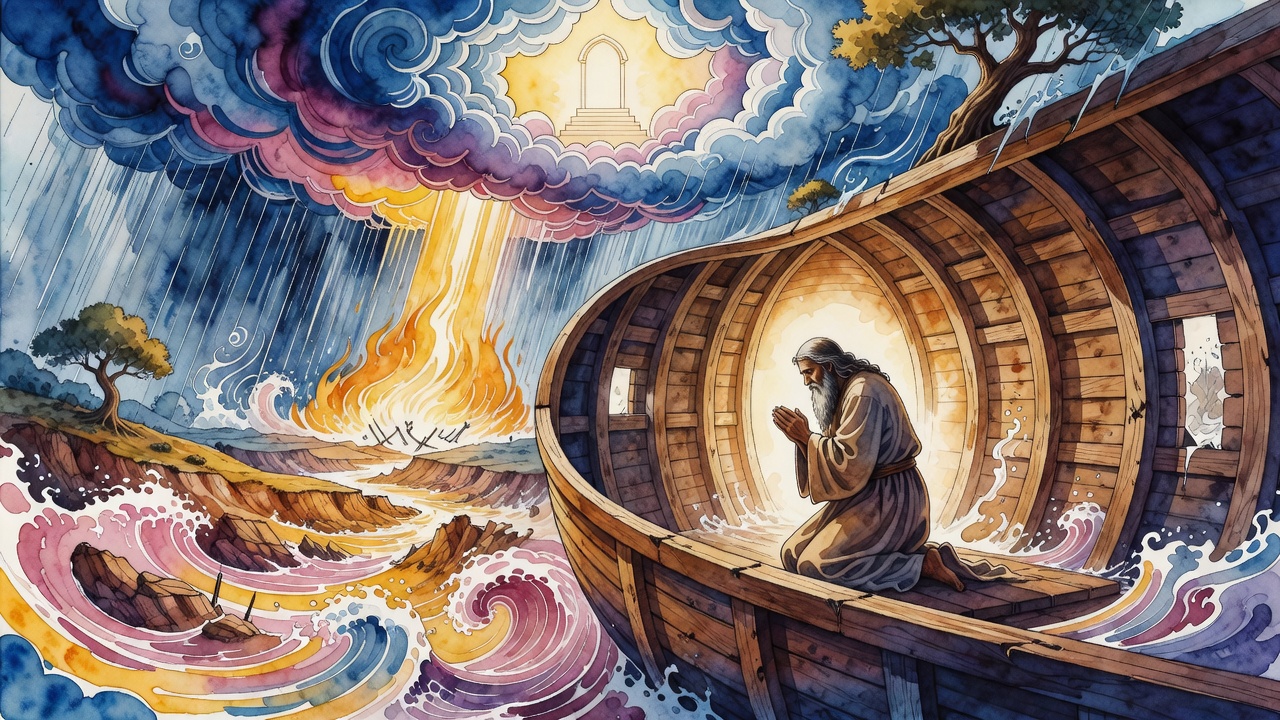
For twelve months Noah prays in a sealed wooden world. God forbids love on board while He tears the old earth down outside.
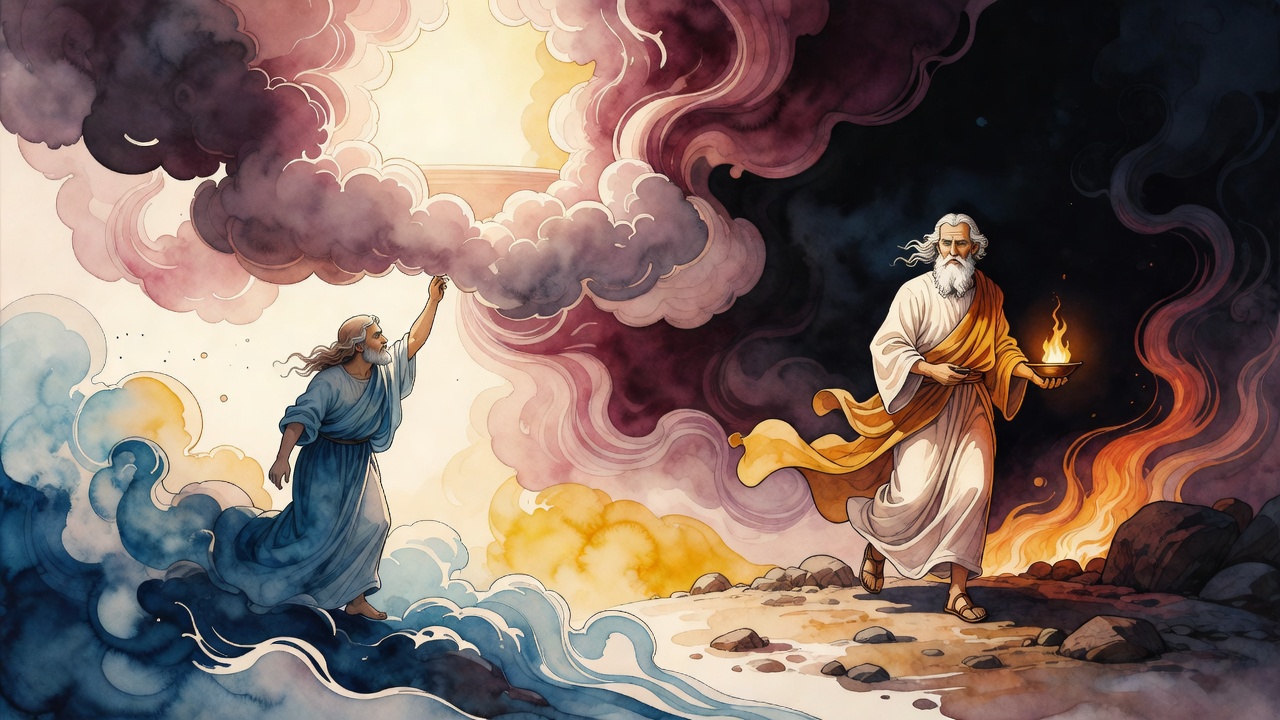
Noah walked with God like a child holding a father's hand. Abraham was told to walk before God, a lamp bearer sent ahead into darkness.
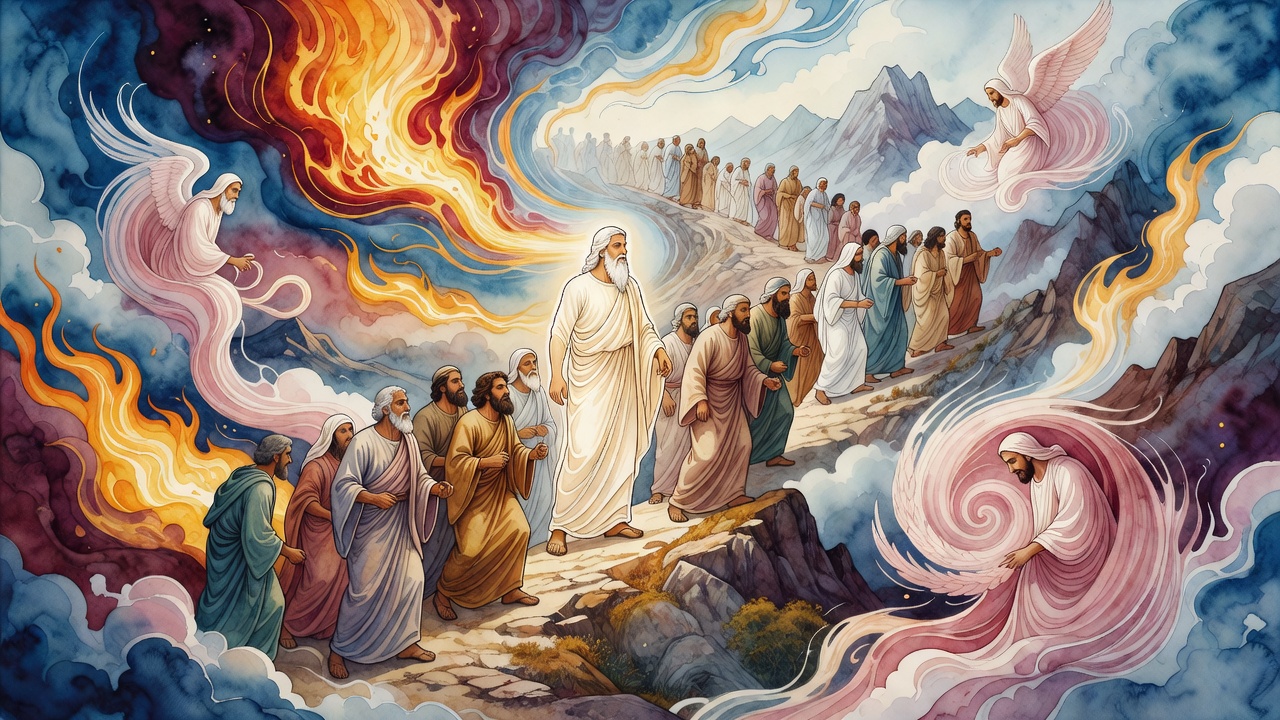
On his last day Moses did the arithmetic and it frightened him. Bilam was called a prophet too. Both of them were going to die.
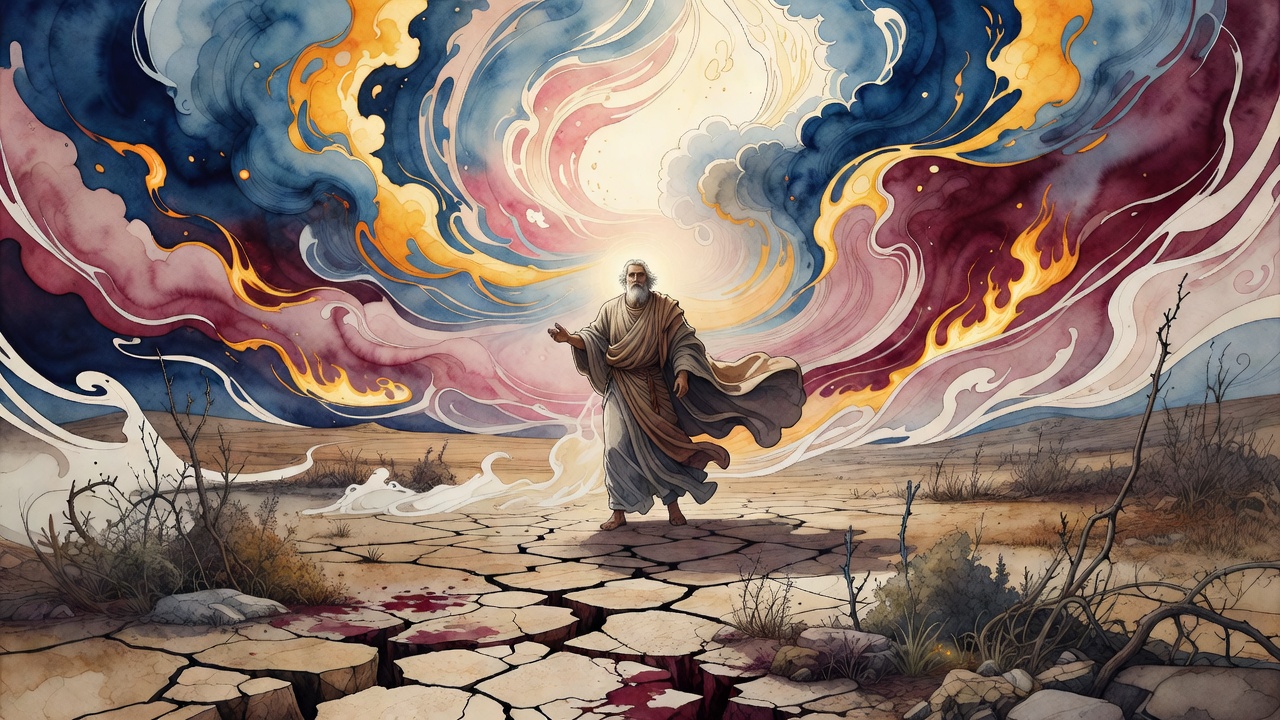
Eve's knees were in the dirt when the new boy came. The field still held Abel's cry. Cain walked the far furrow with the mark on him.
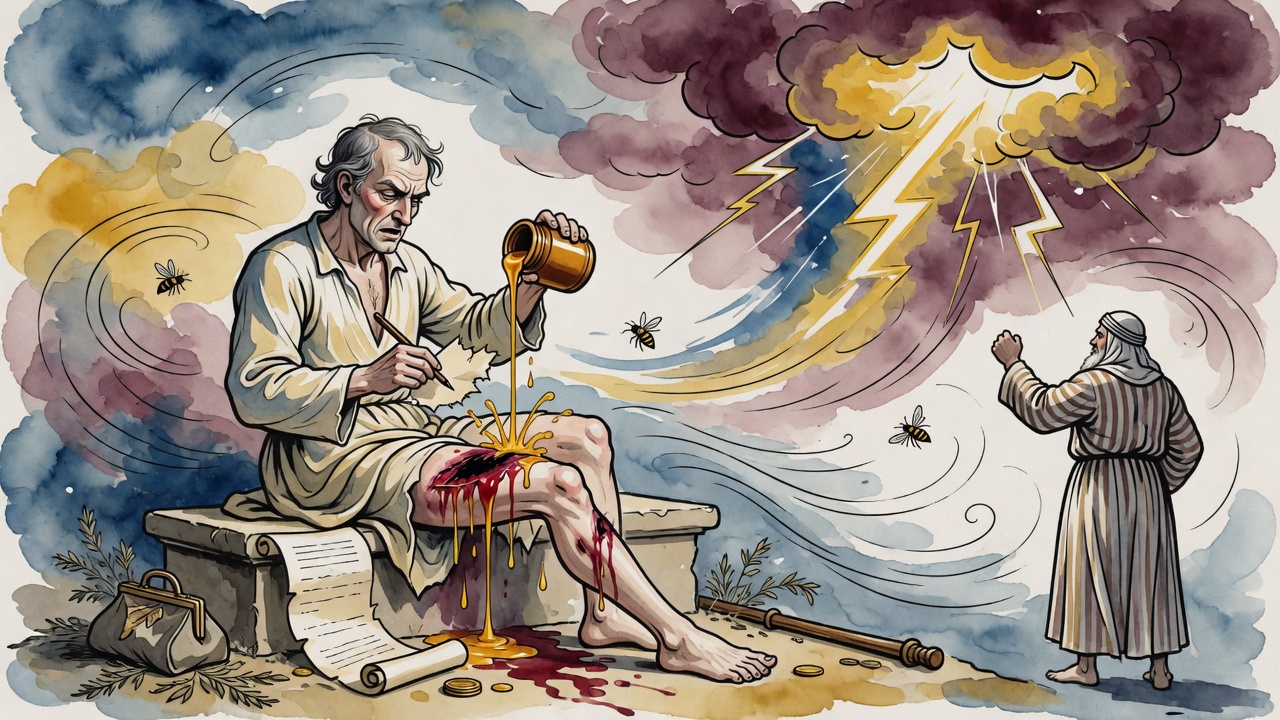
Water rose fifteen cubits over every peak while Noah fed lions and worms, until the first of a new year cracked the silence.
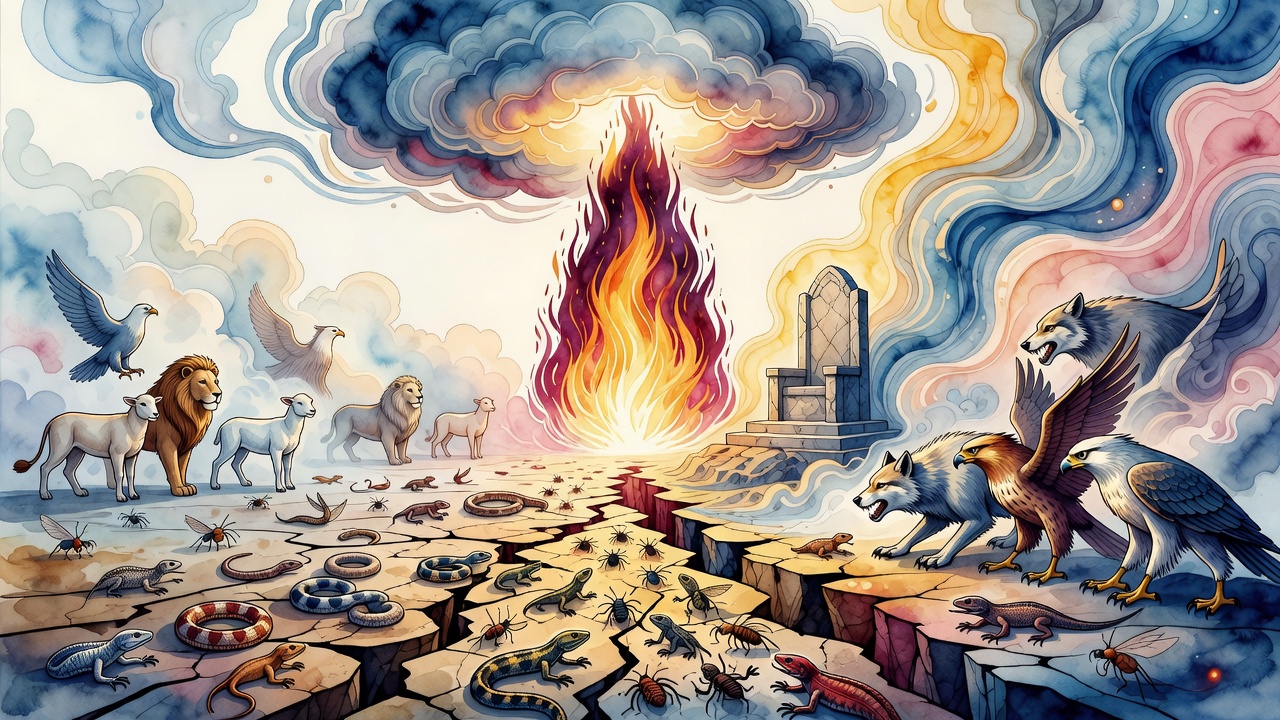
Once a lion did not see a man as prey. Then Noah stood on drying mud and heard that even the creeping things were food for him now.
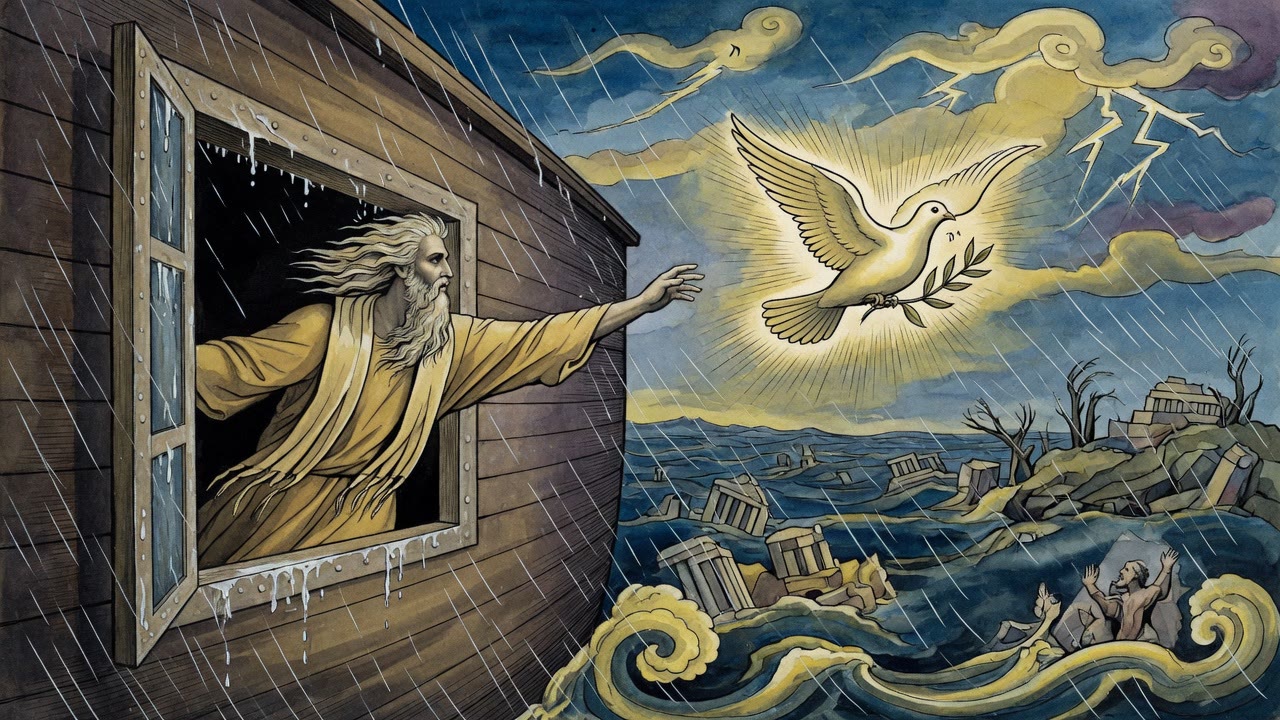
Before the rain, Noah hears the world call itself flesh, self-love thick as mud, until even the breath under heaven reeks of desire.
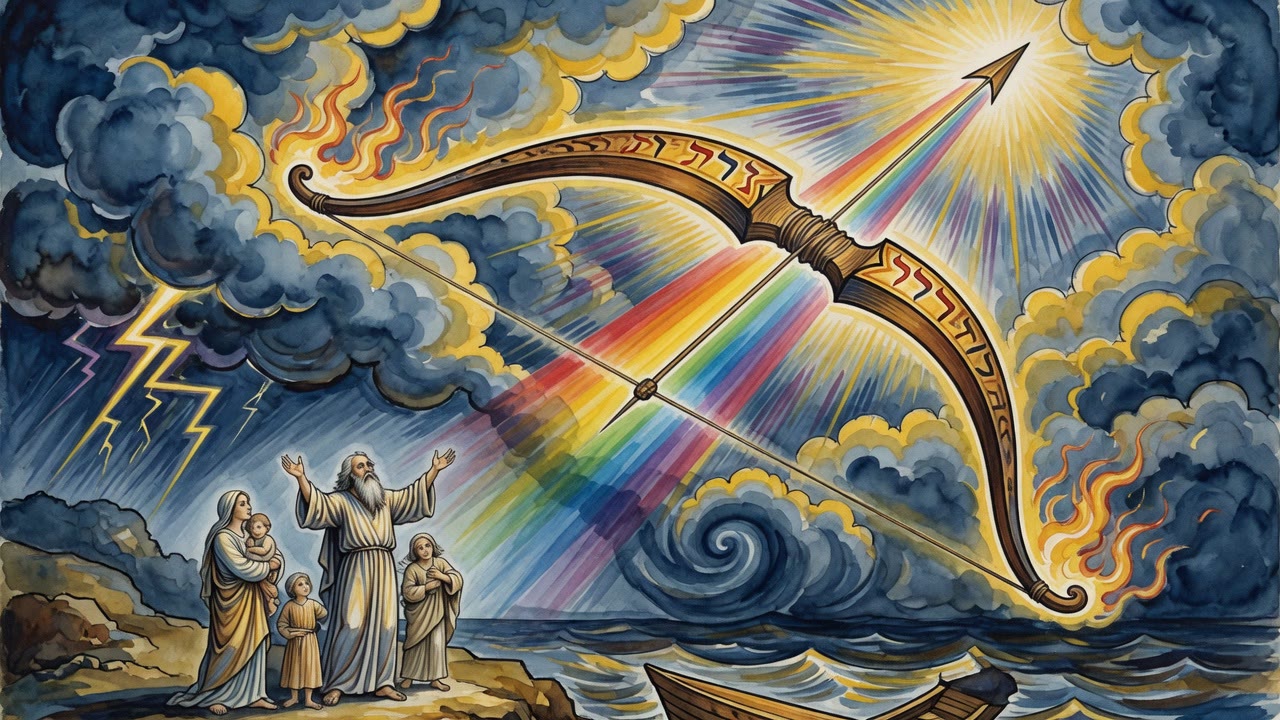
After the flood God sets a war-bow in the cloud, point turned from earth, so Noah's shaking household can trust the world will not drown twice.
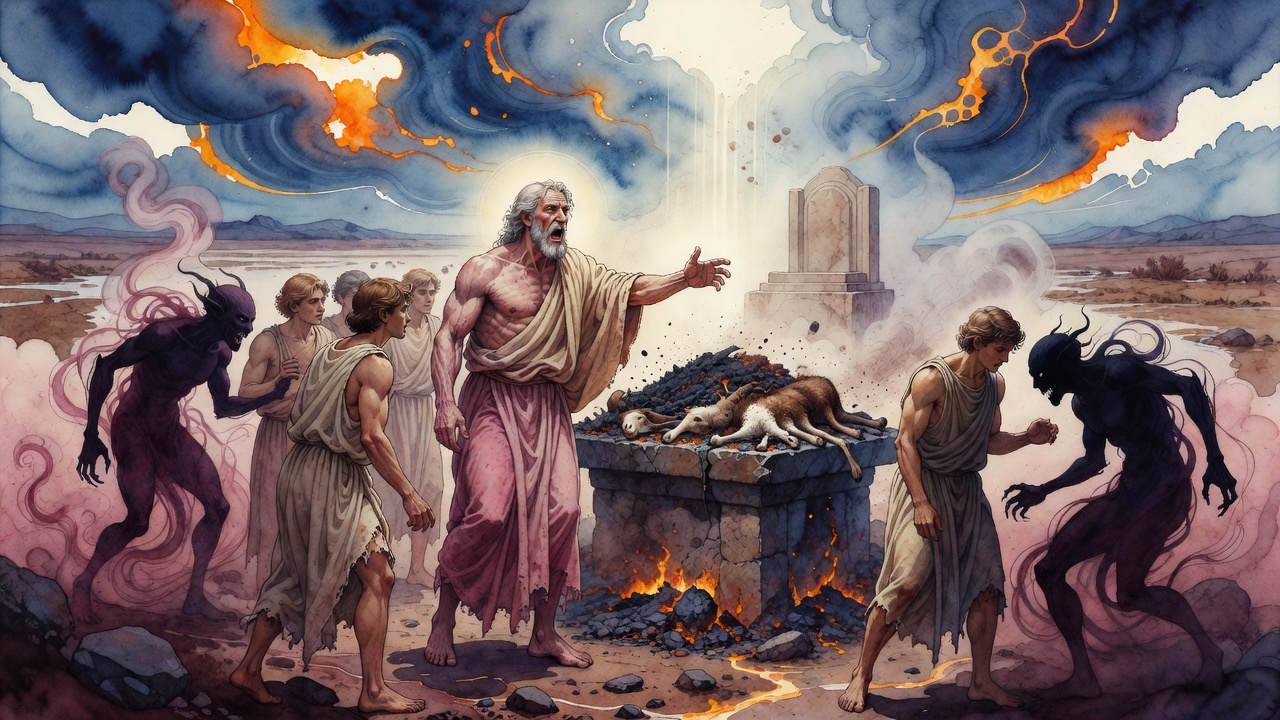
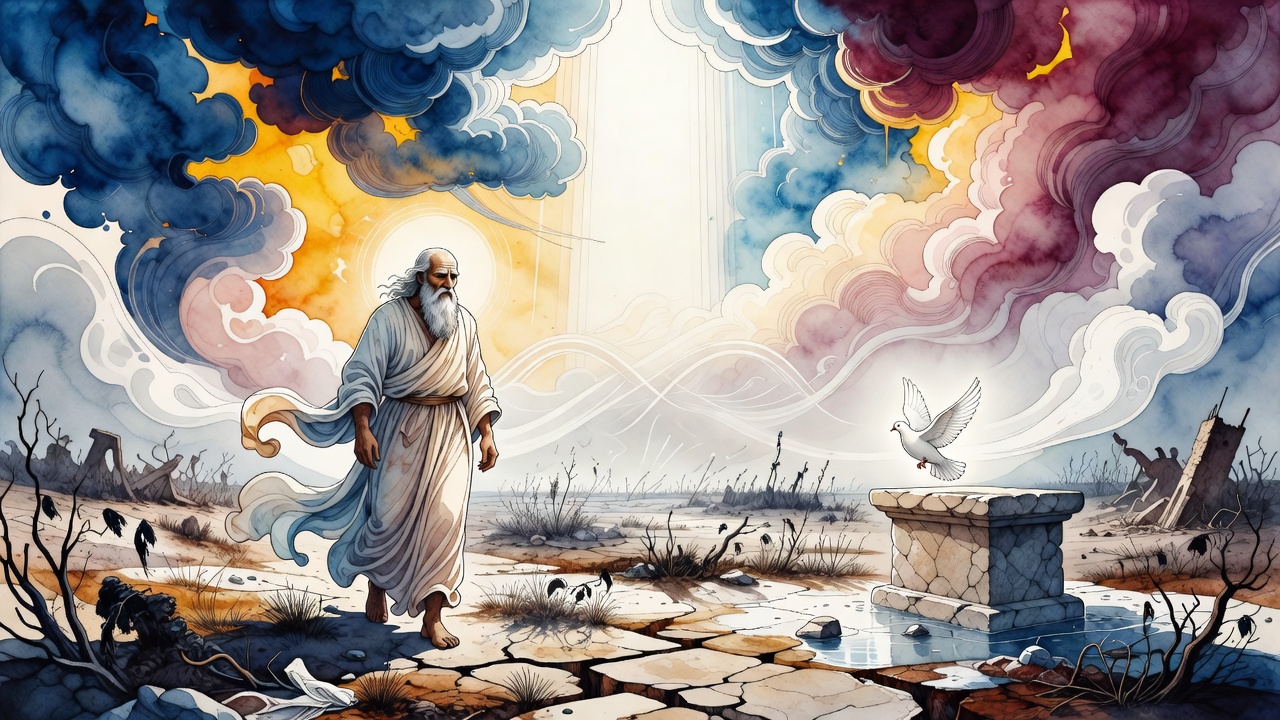
The water was gone. The ground still held the shape of the sea. Shem, Ham, and Japheth stood while their father named what had already begun.
Neighbors watched a box rise where a house should be. Noah matched every cubit. Inside, the family had to stay one name.
The neighbors laughed while he measured beams, and their children threw stones at the hull. The sky stayed blue long enough to make him look foolish.
