376 myths · Page 6 of 13
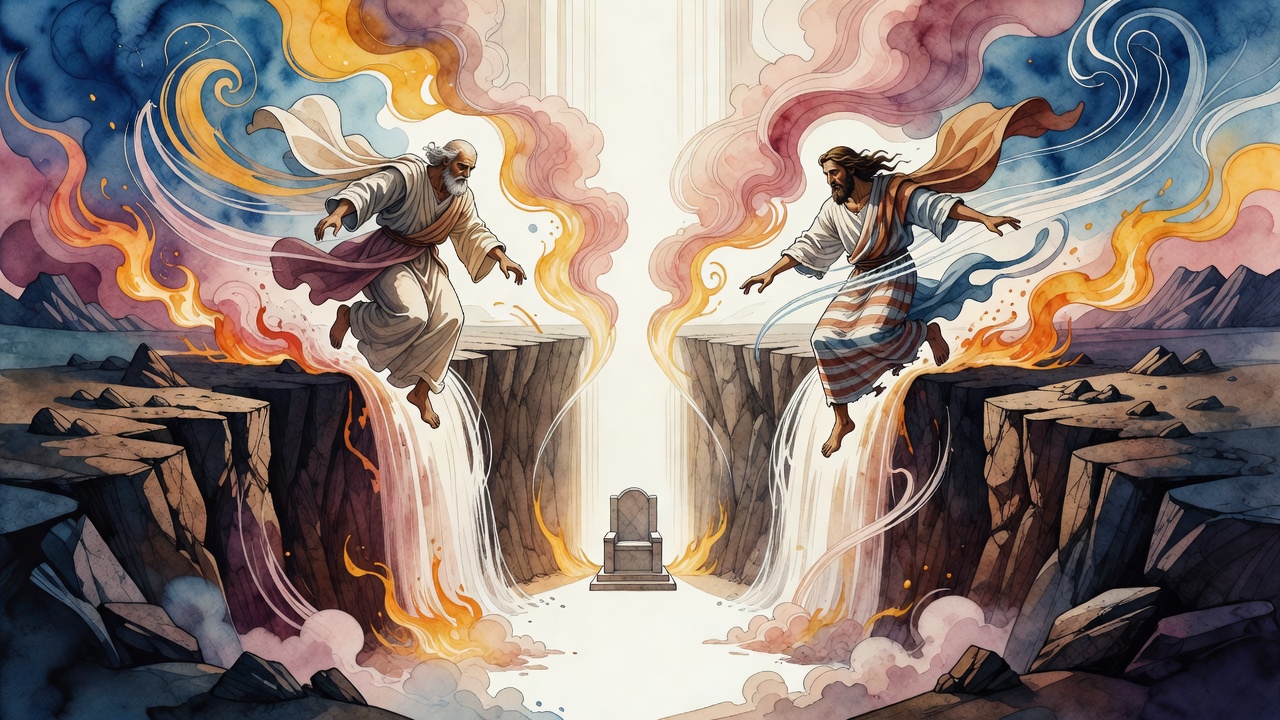
Lot looked at a valley that wore Eden's face and walked in. Years later a king in a cave asked God not to destroy him, because that walk had been paid.
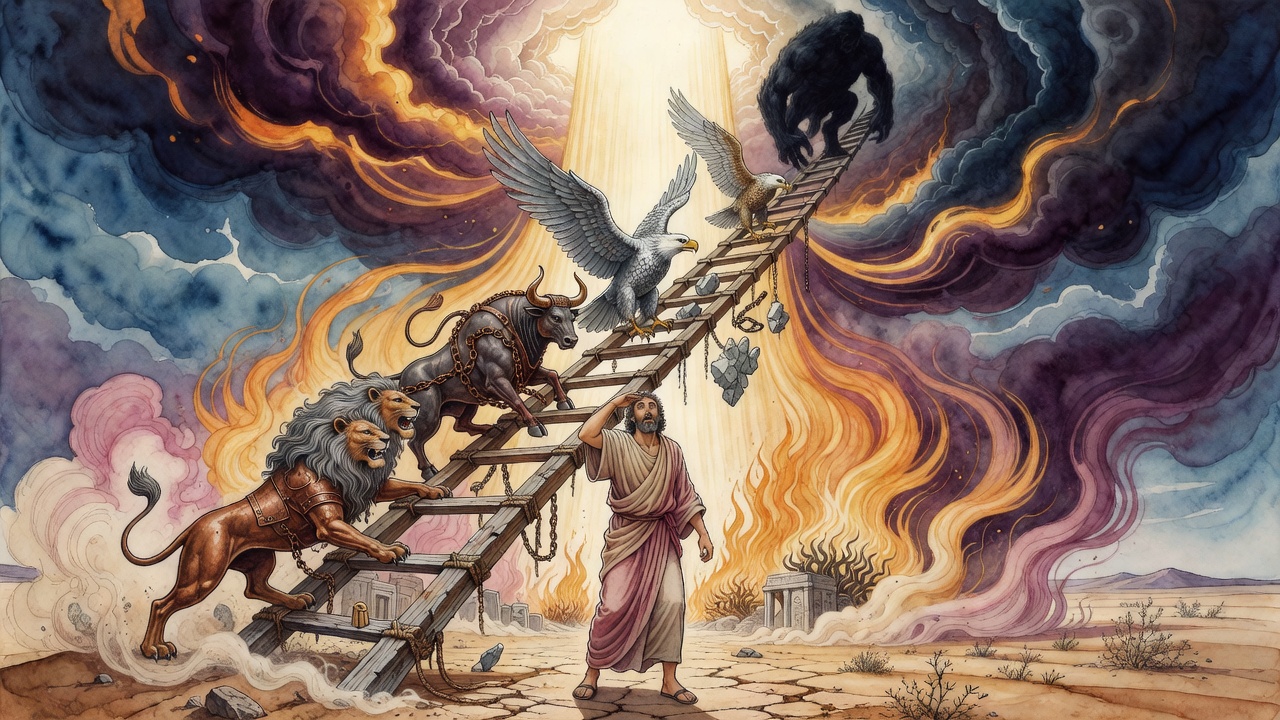
Each empire climbed the ladder and descended. The fourth climbed so high Jacob could no longer see the top and terror seized him until God spoke.
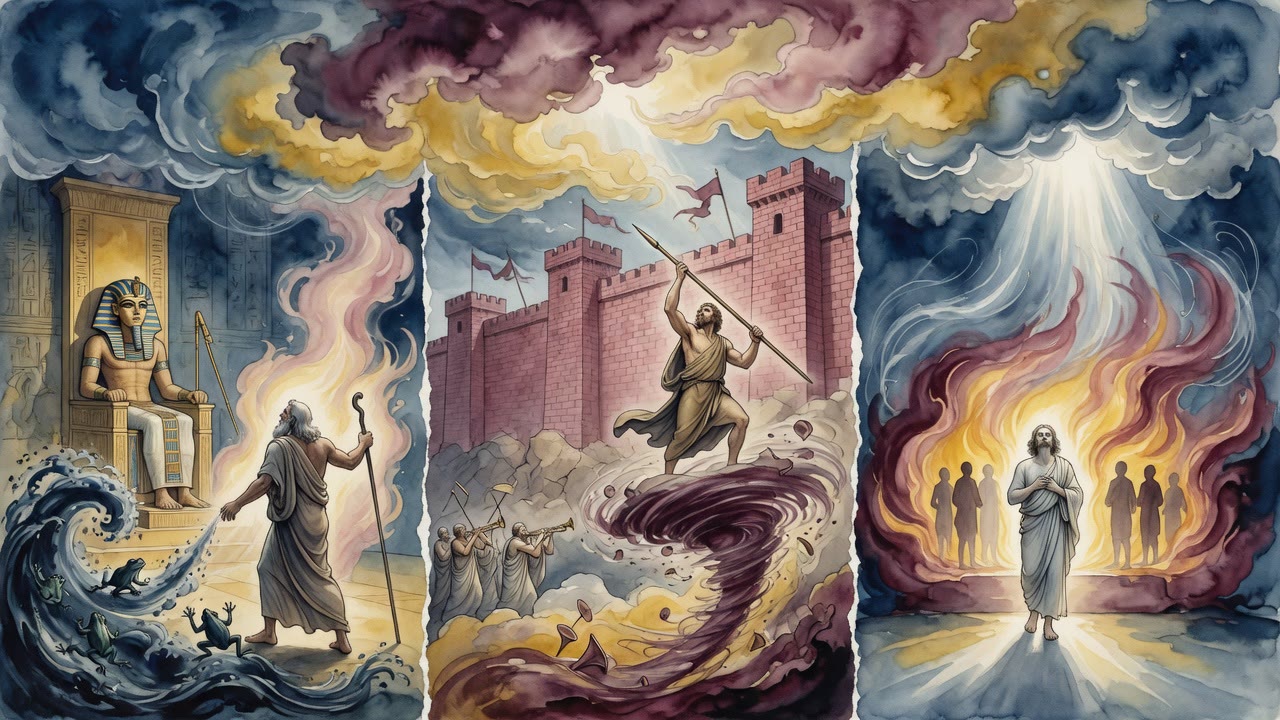
Moses said let my people go ten times. Joshua raised a javelin at Ai. Belshazzar locked the palace doors and then could not get out himself.
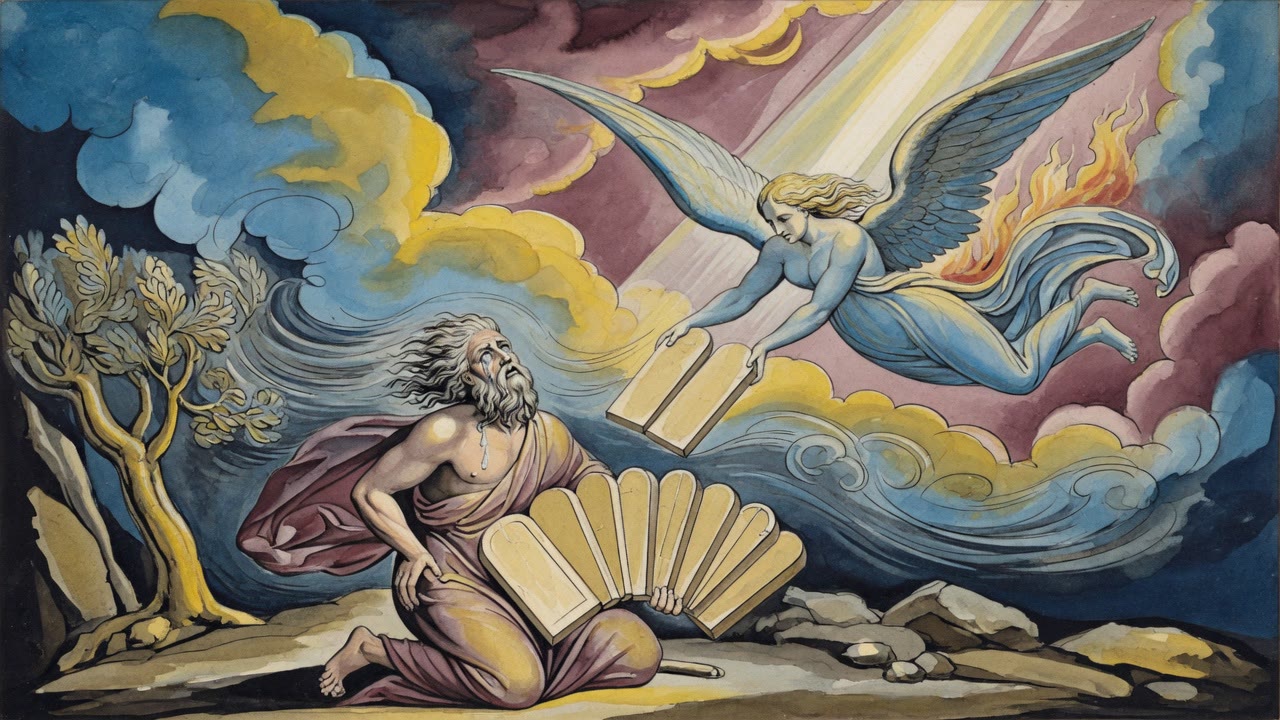
He had already put up the altar and planned the wall. Then an angel handed him everything that would happen to his sons, and told him to leave.
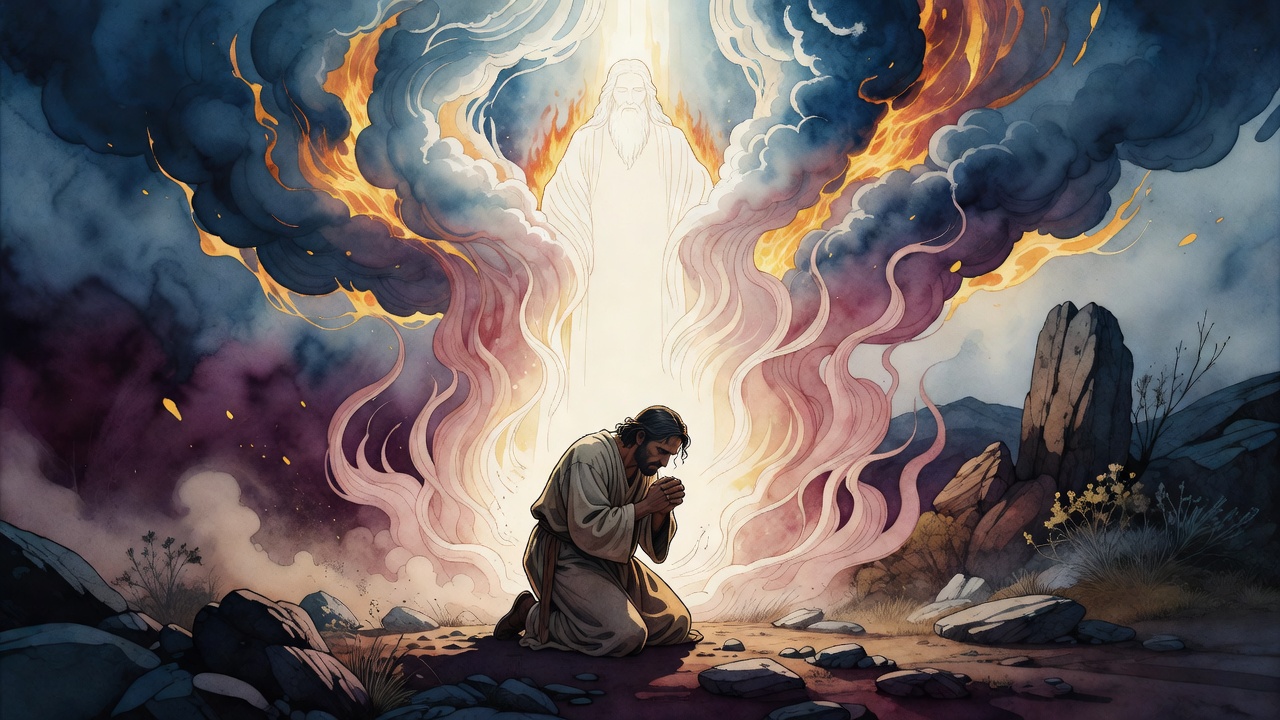
God told Jacob at Bethel: I will bring you back, not one promise will fail. Then Jacob spent twenty years in exile praying for what he already had been given.
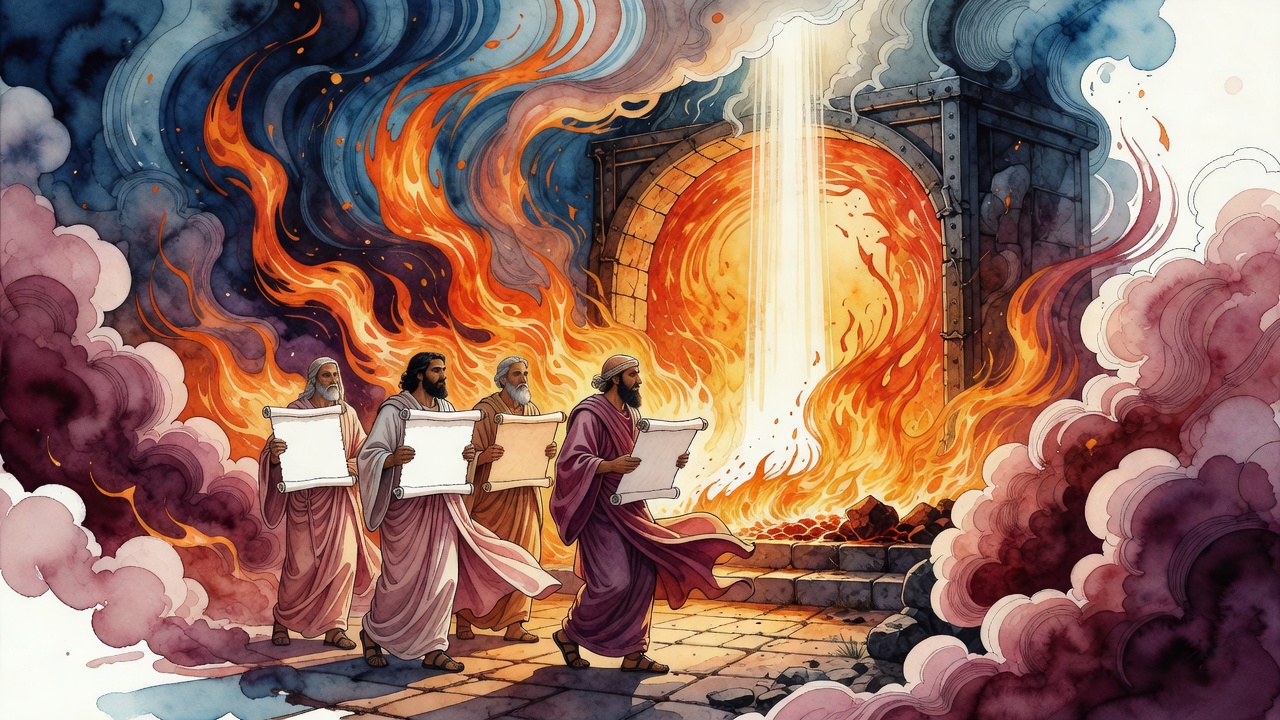
The king gave them three chances to bow. They told him their God might not save them, and that it made no difference to what they were going to do.
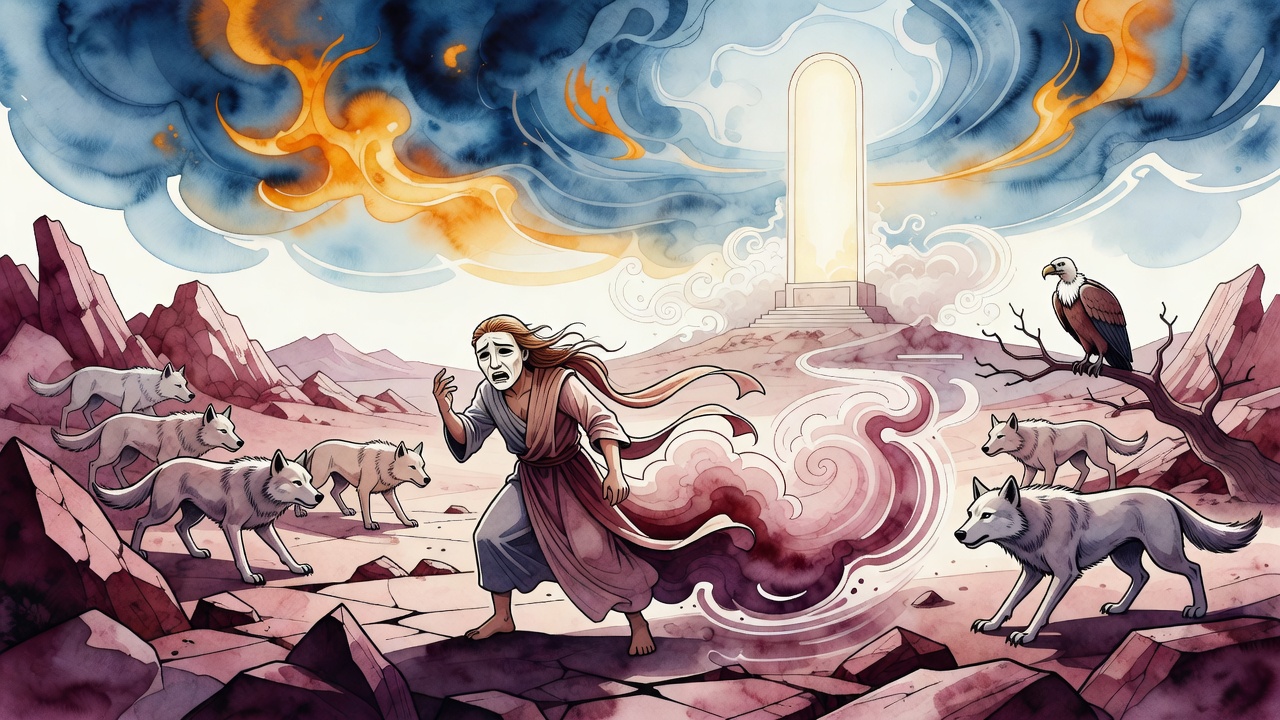
After the murder, Cain faced something harder than punishment. The world itself felt hostile, and the animals waited, and his own guilt pursued him.
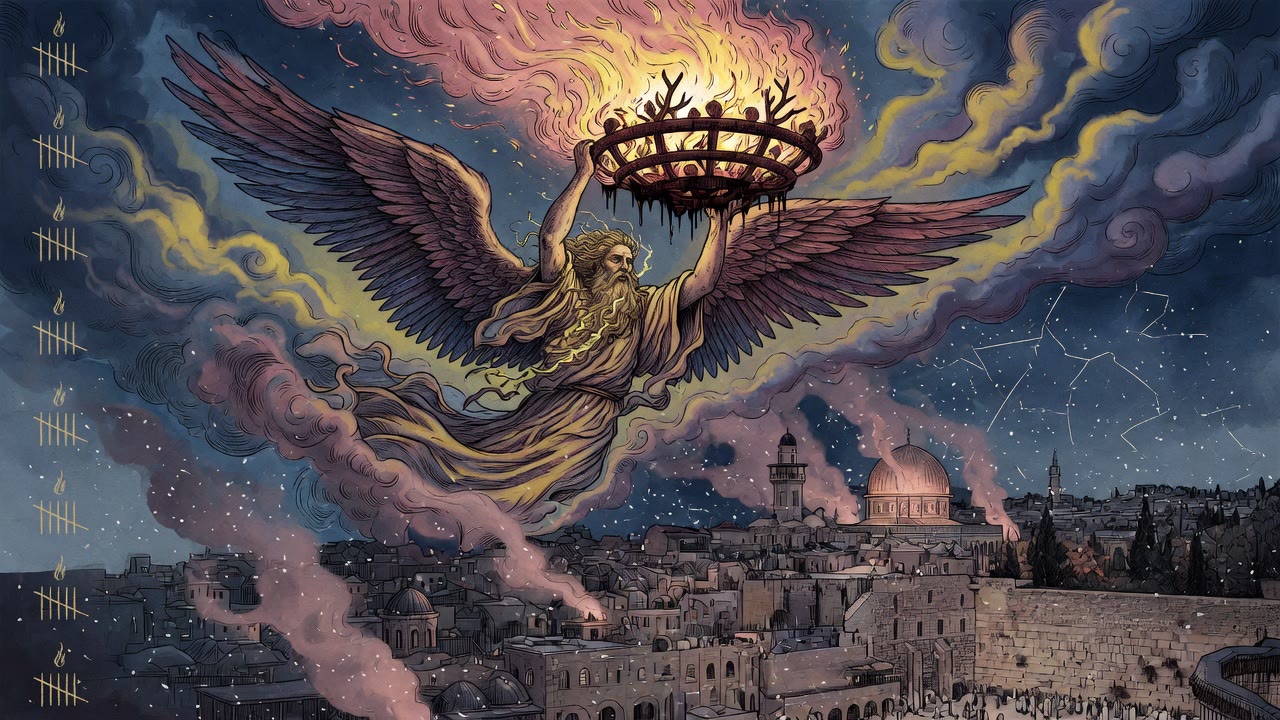
Ezekiel was a priest of a temple that no longer stood, sitting by a canal in the wrong country. The sky came open over Babylon anyway.
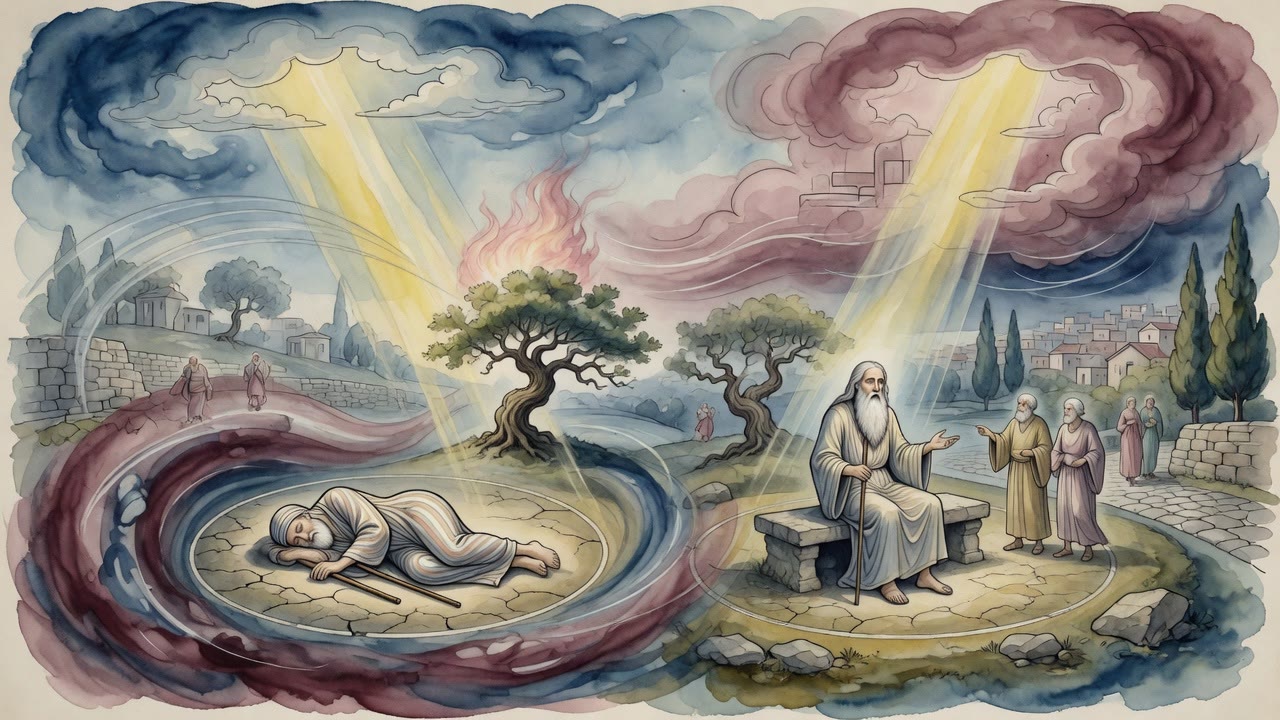
An old man pushed a carob seed into dirt he would never taste. Honi sat under a rock to think. He woke to a study house that used his name like a proverb.
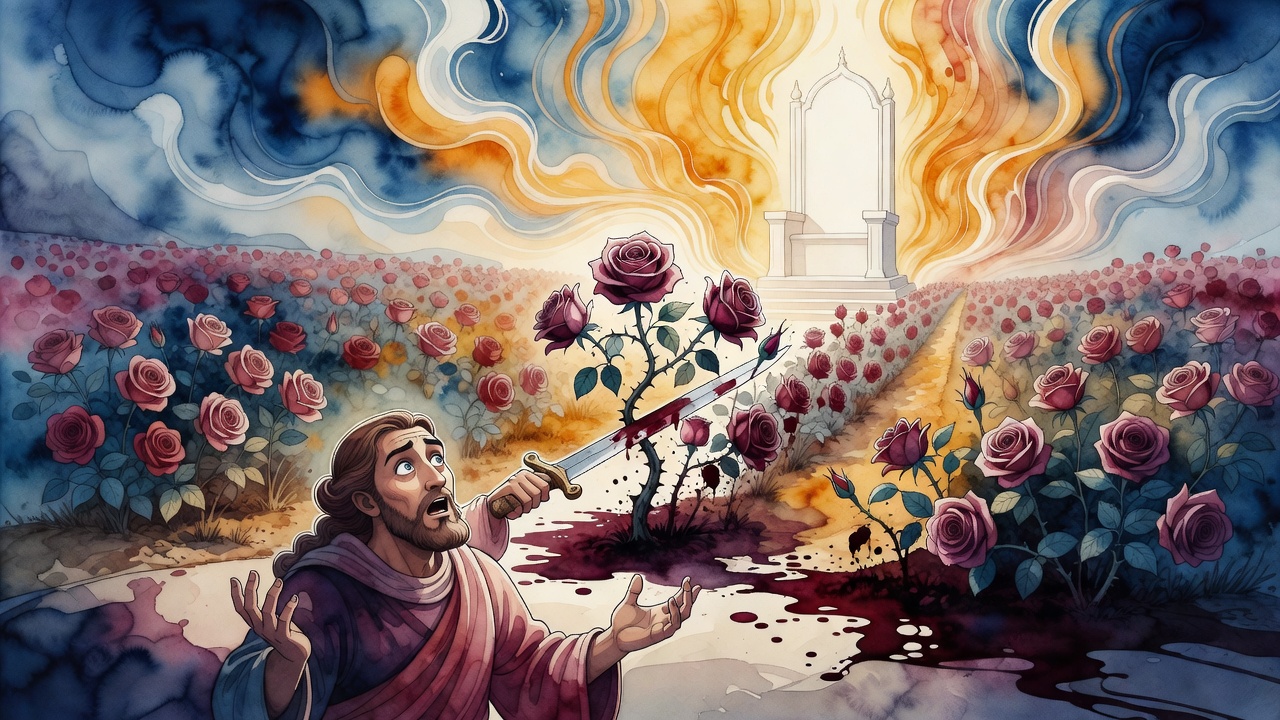
A Persian king dreamed of a rose garden soaked in innocent blood, saw one rose tree survive his blade, and woke to find the heir he could not kill.
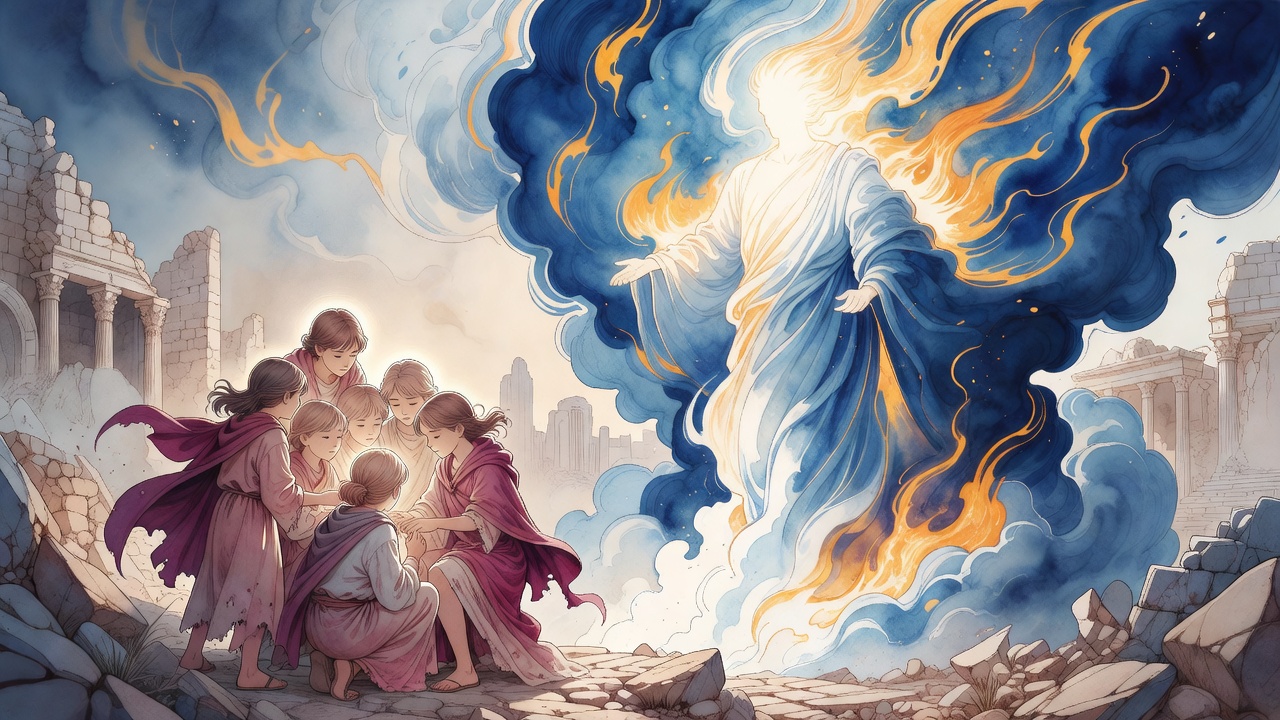
The Sanhedrin marched north. The Temple guard followed. She stayed in the empty courts until the children were driven through the wall.
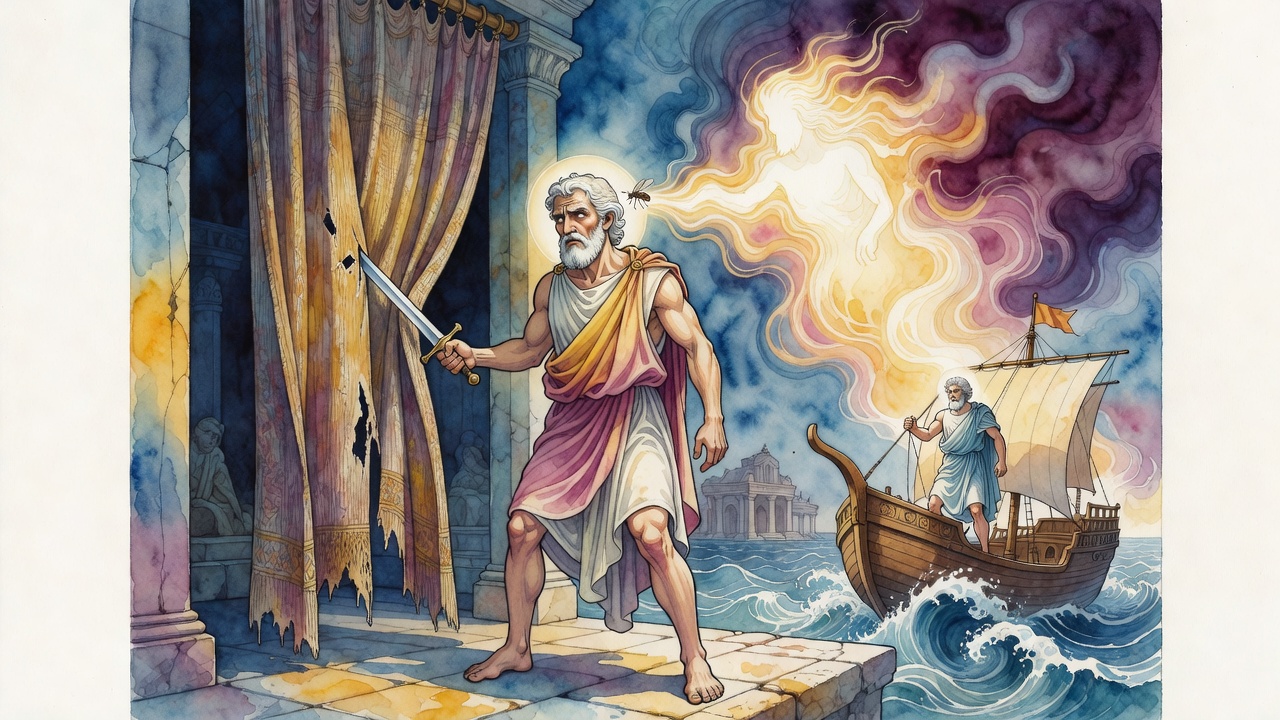
Titus defiled the Holy of Holies, stabbed the curtain, and sailed home victorious, but God sent a gnat into his nose that gnawed at his brain for thirty years.
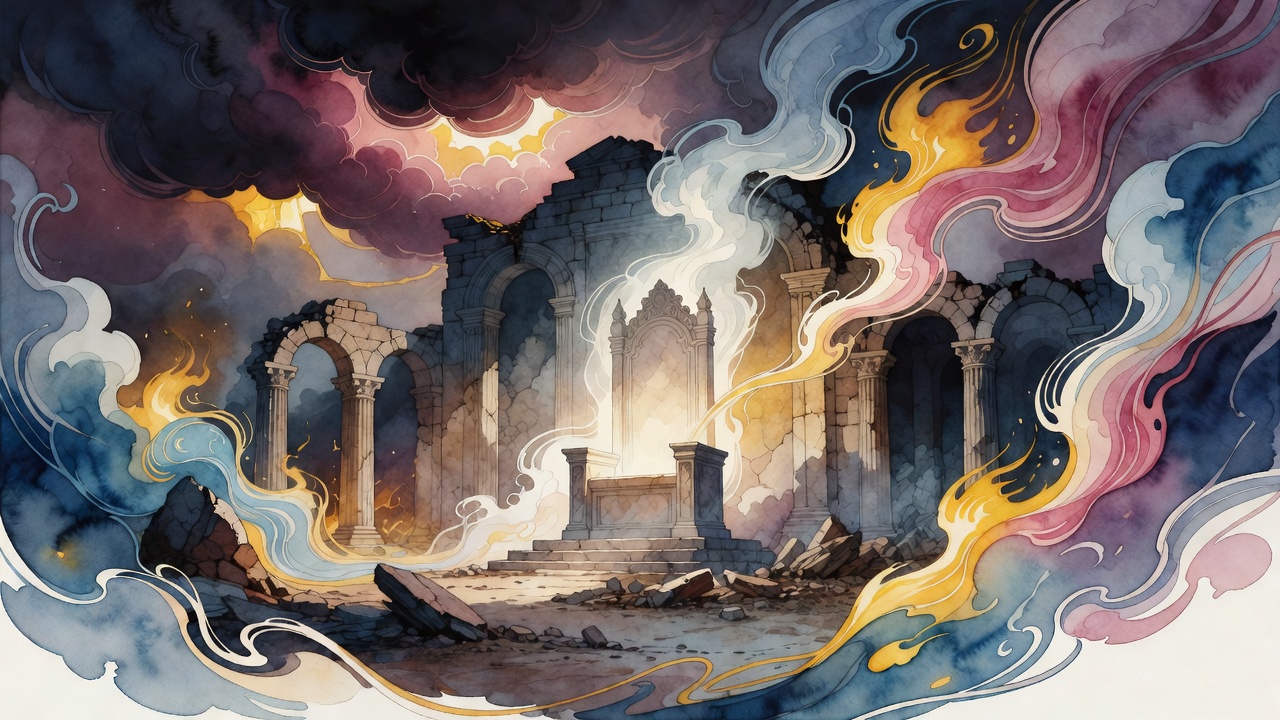
Metatron begged to weep in God's place. God refused him and went where no angel is allowed to enter. The Temple below was already ash.
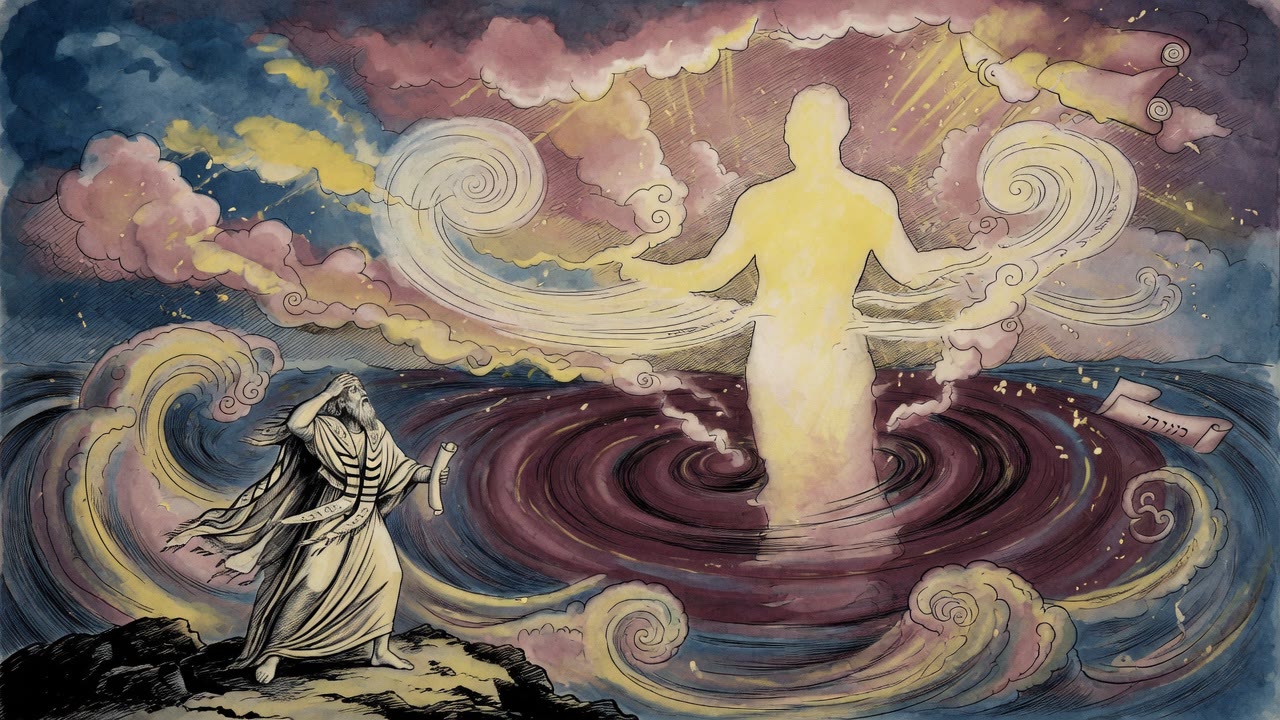
When the exiles returned, Nehemiah's priests dug for the sacred altar fire and found only thick water. He ordered them to pour it anyway.
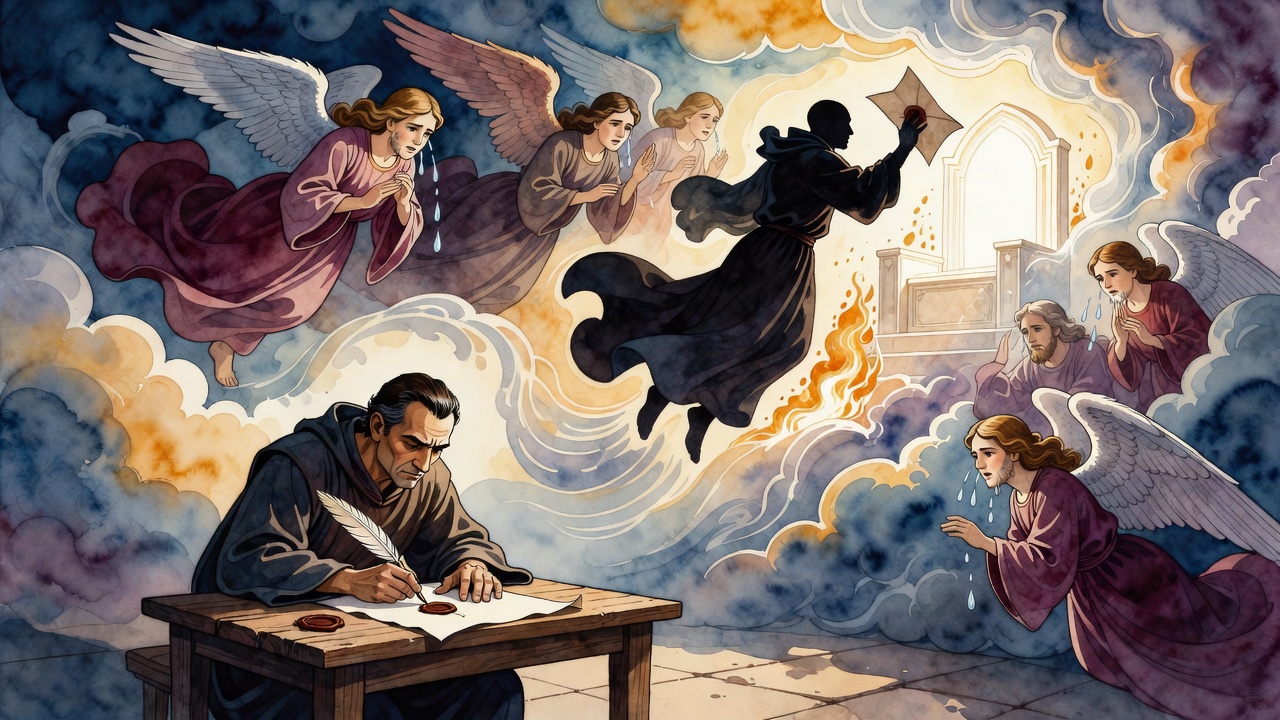
Haman's letter warned that the Jews were an eagle growing new feathers. Mordecai told them to skip Haman's feast. Thousands went anyway.
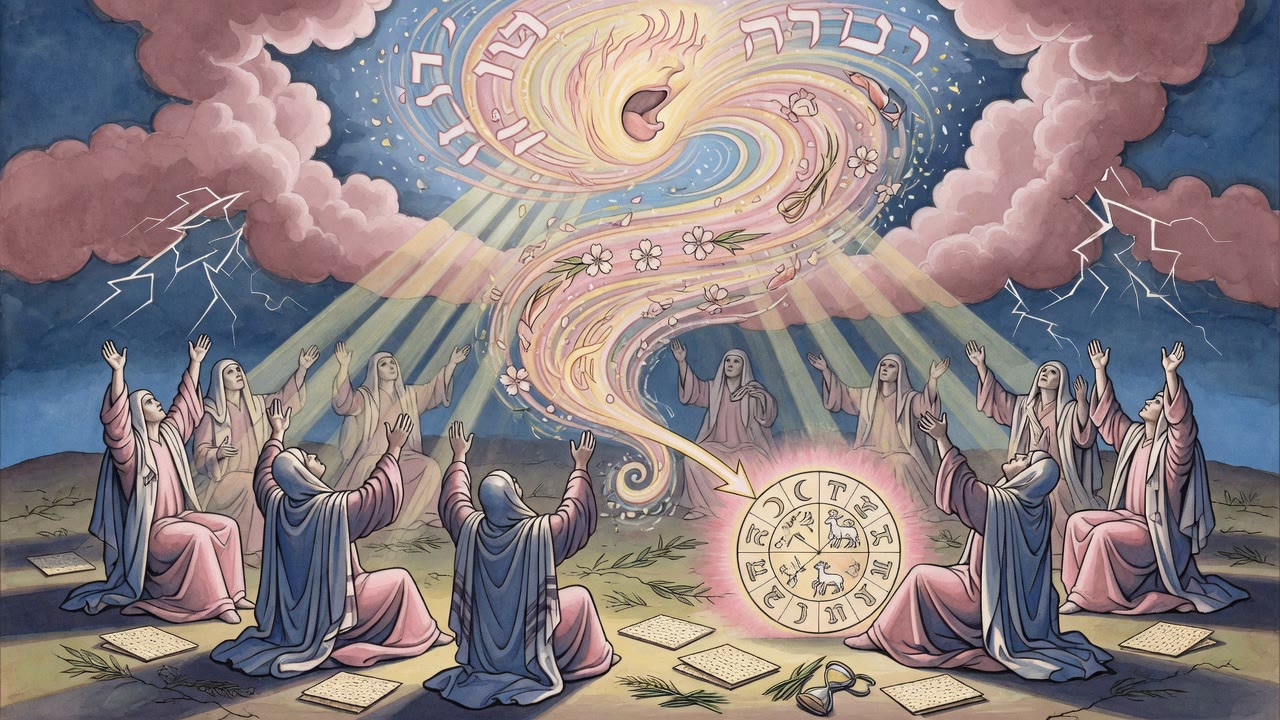
The lot fell on the man who swept the synagogue and lit the lamps. He had a year to reach the far side of a river that throws stones.
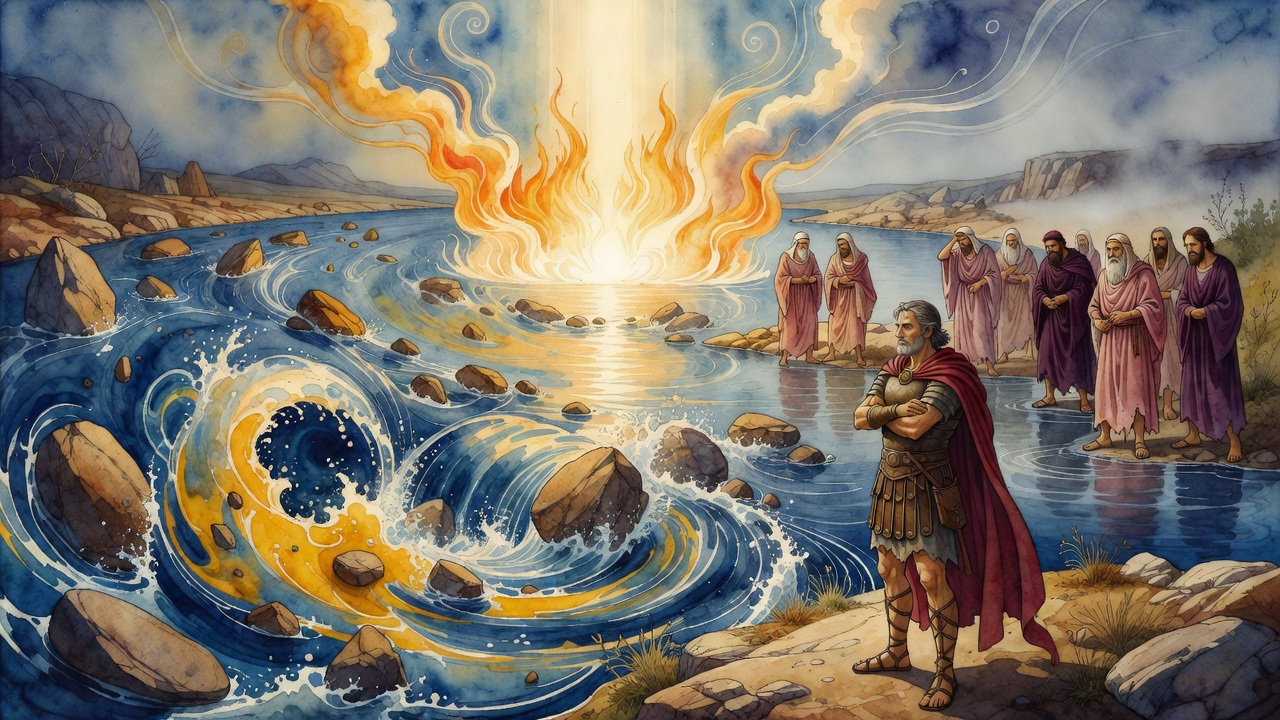
Babylon told the Levites to play the Temple songs for its idols. They cut off their own fingers instead, and that night a cloud came for them.
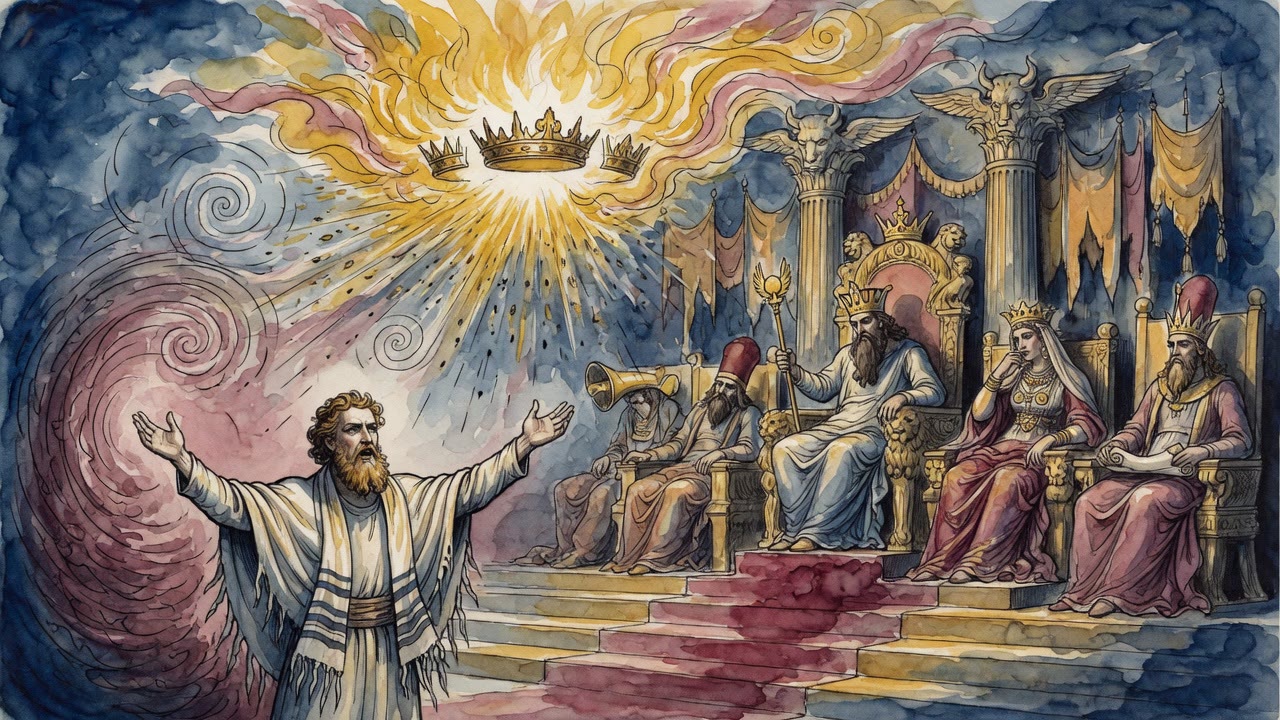
Daniel had grown too old to hold a court together. He walked out to the camp of the exiles, took a man by the hand, and brought him back as his replacement.
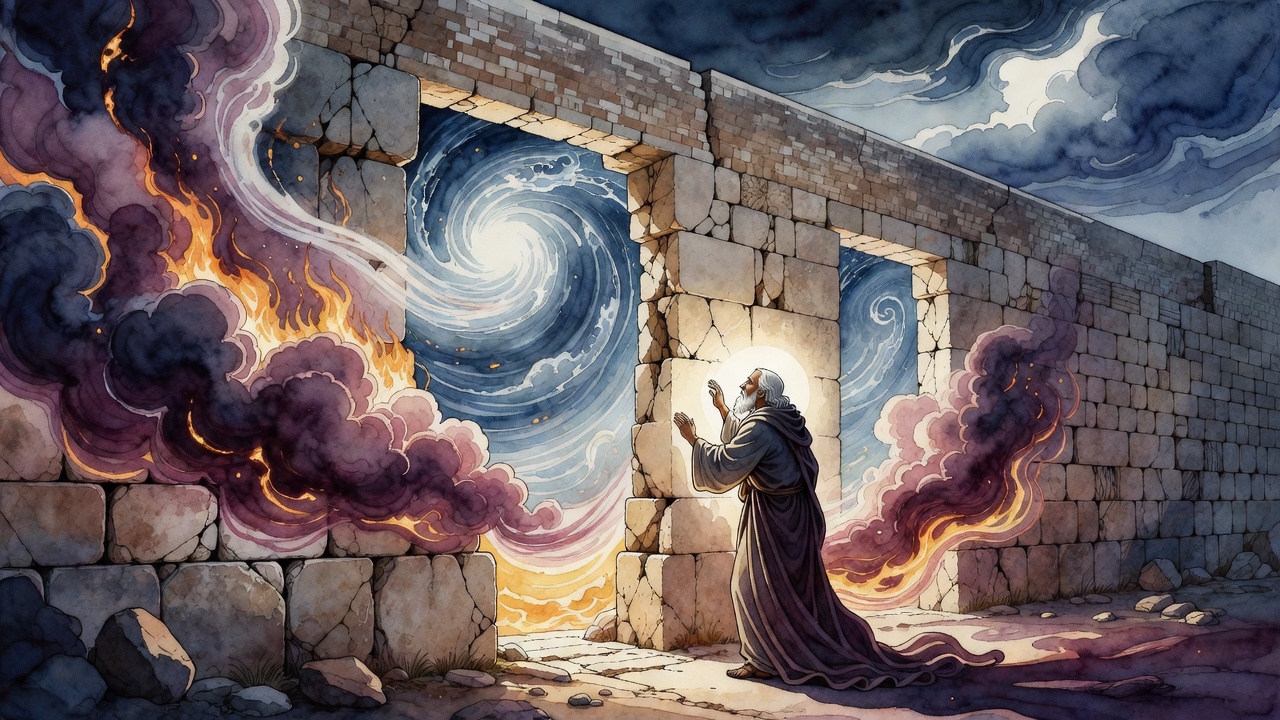
A Safed mystic rises at midnight to mourn the Temple until Jerusalem's stones open and the Shekhinah, the Divine Presence, speaks her grief aloud.
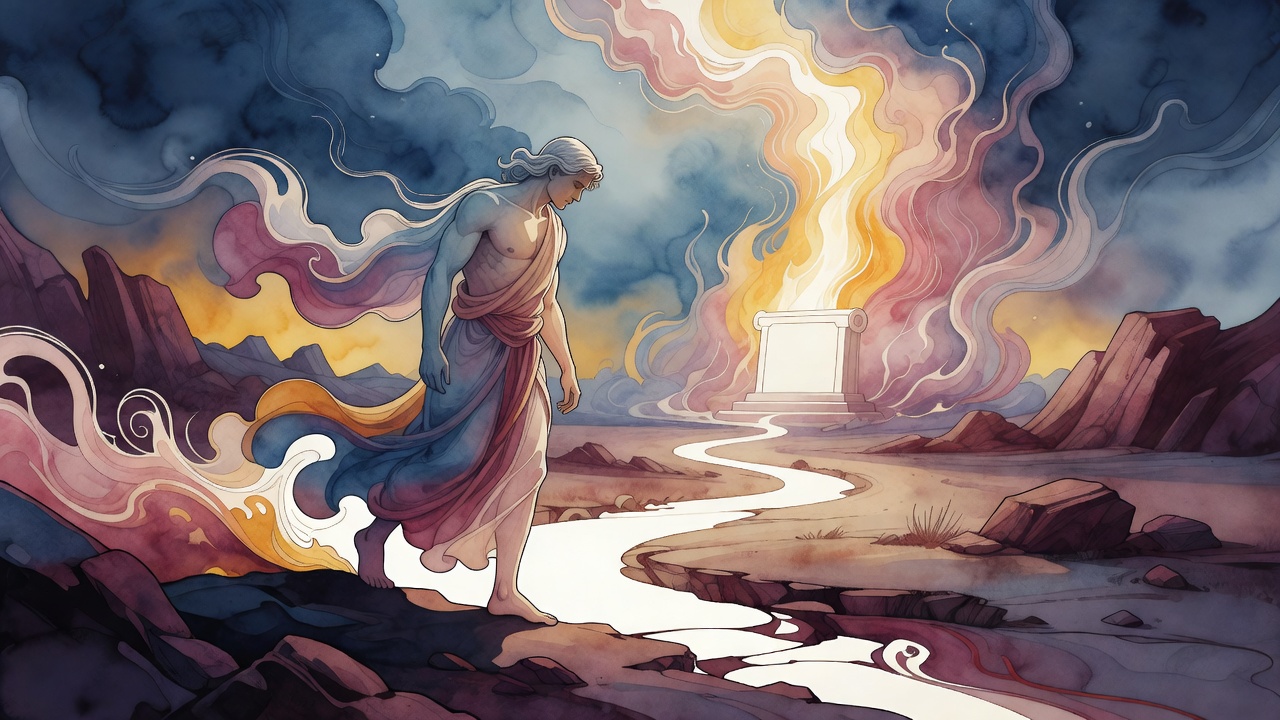
The sword met him east and west. In a country with no sun he walked into the river until the water sat under his chin and stayed there.
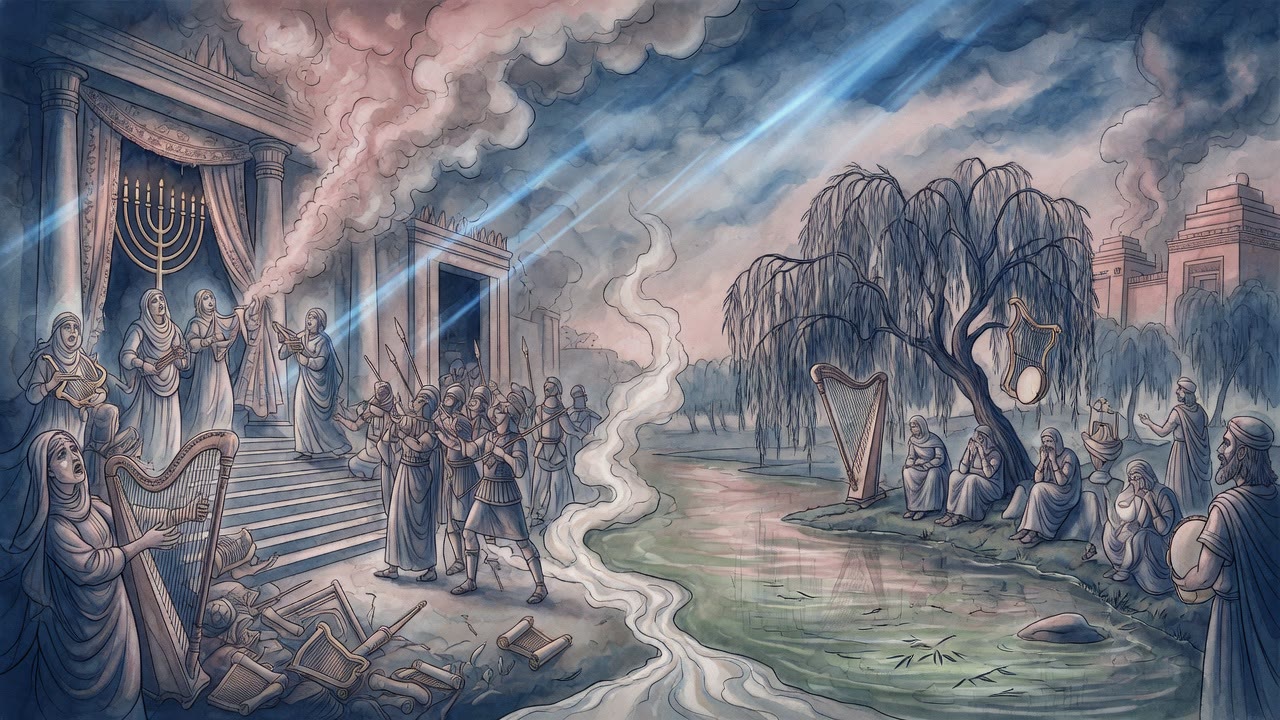
Six hundred thousand singers never finished the verse. The line broke at "and shall cut them off," and the soldiers were already in the court.
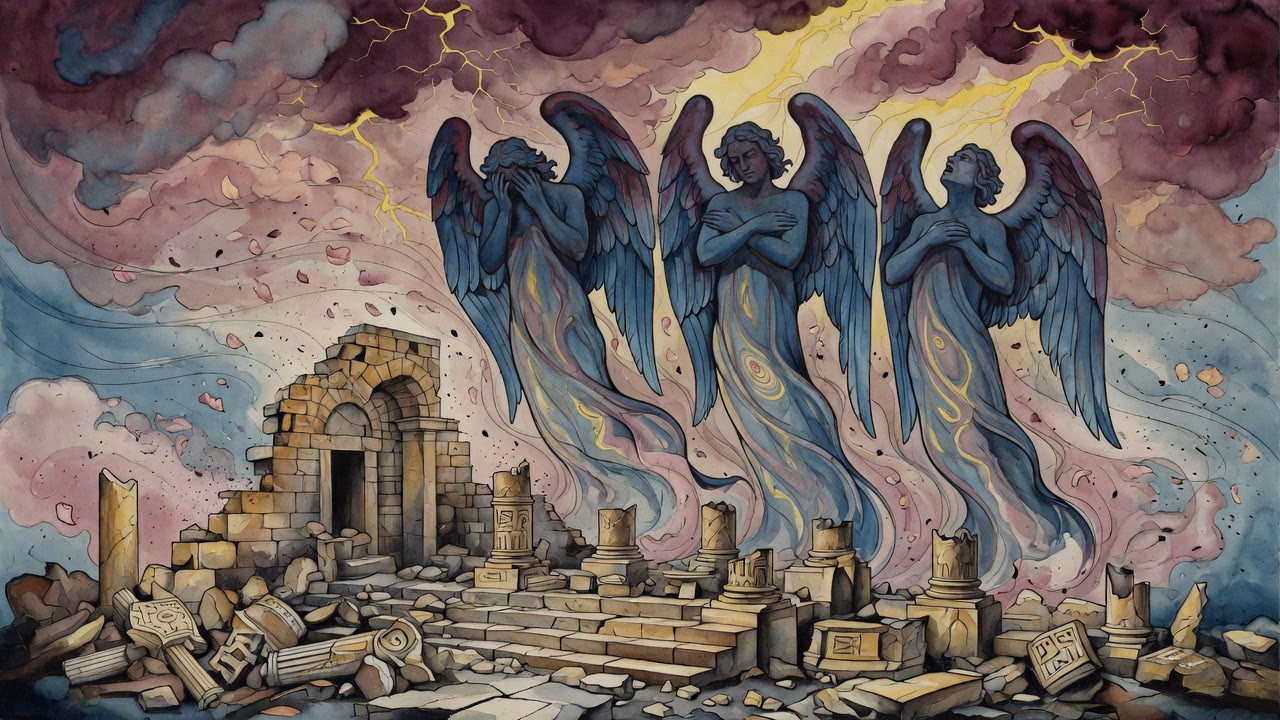
Moses said the word eikha when the people wore him out. Isaiah said it as a warning. Jeremiah said it in the rubble, and it was no longer a question.
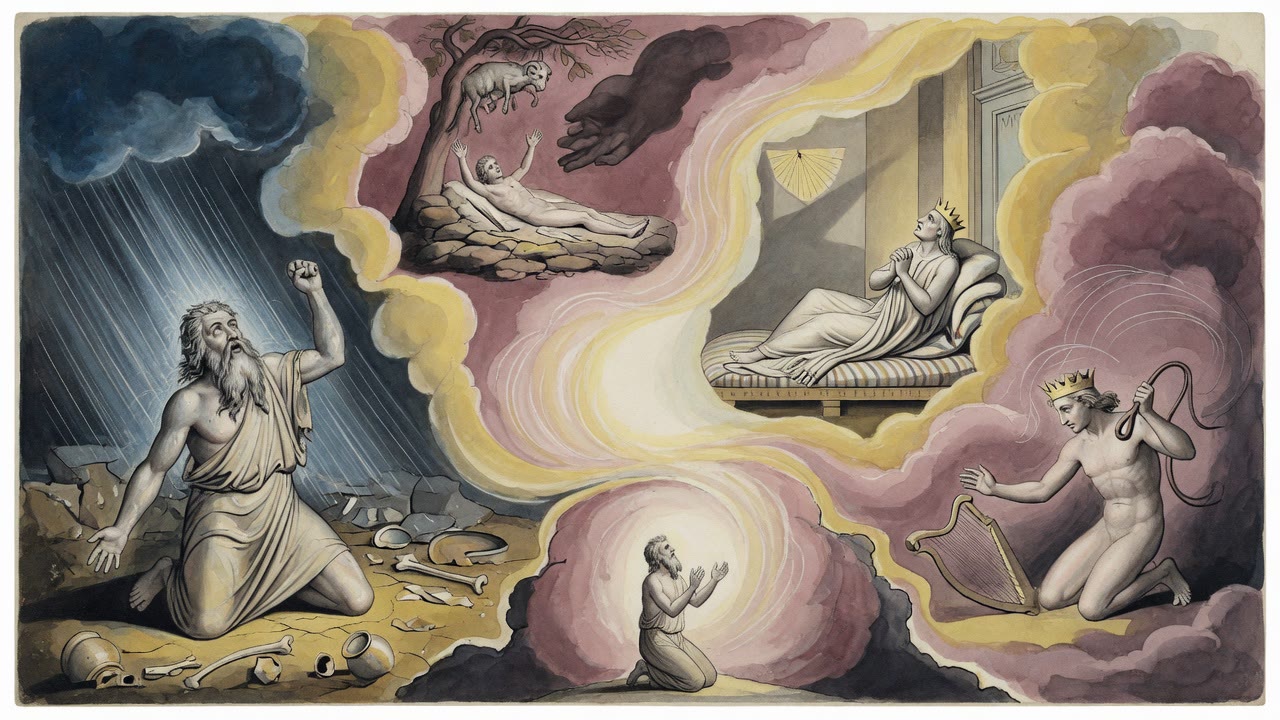
A sage escapes in a coffin, the dew stops blessing the earth, a pig appears on the siege wall, and the Levites hang their harps on Babylonian willows.
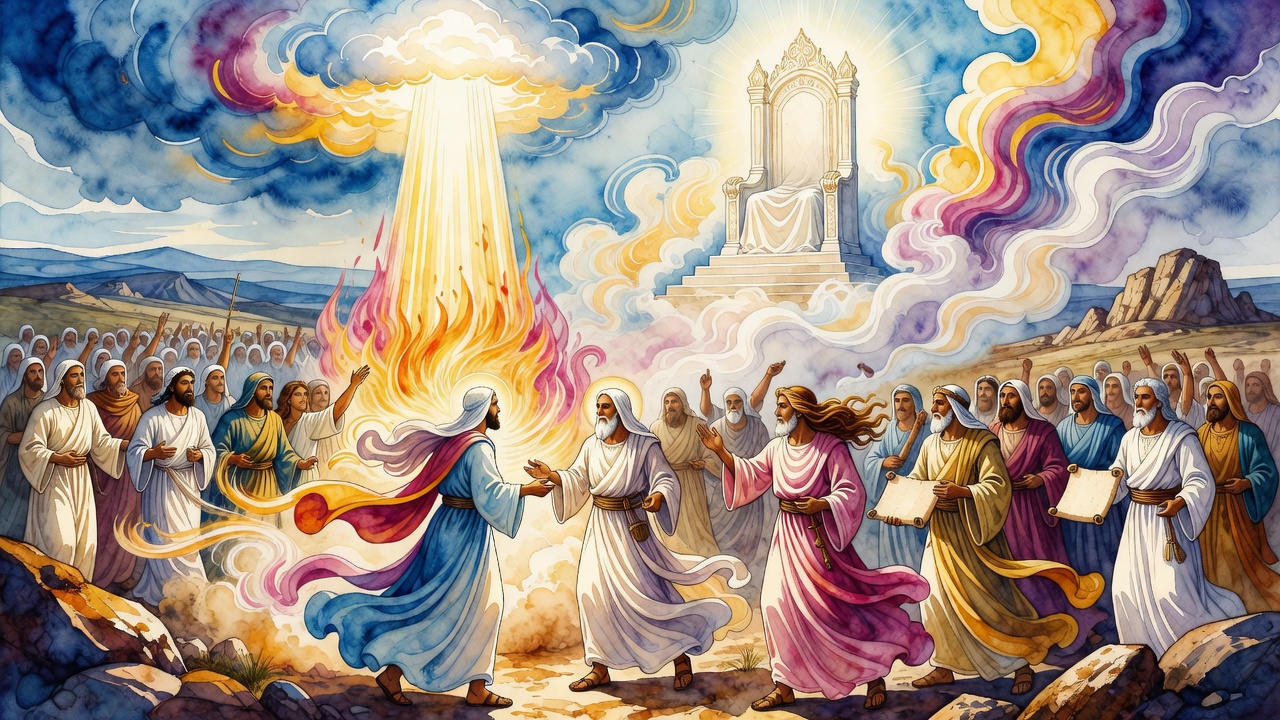
Moses asked for a man who would walk in front of the camp. After the Temple fell, the Presence did not stay in the ruin. She went with them.
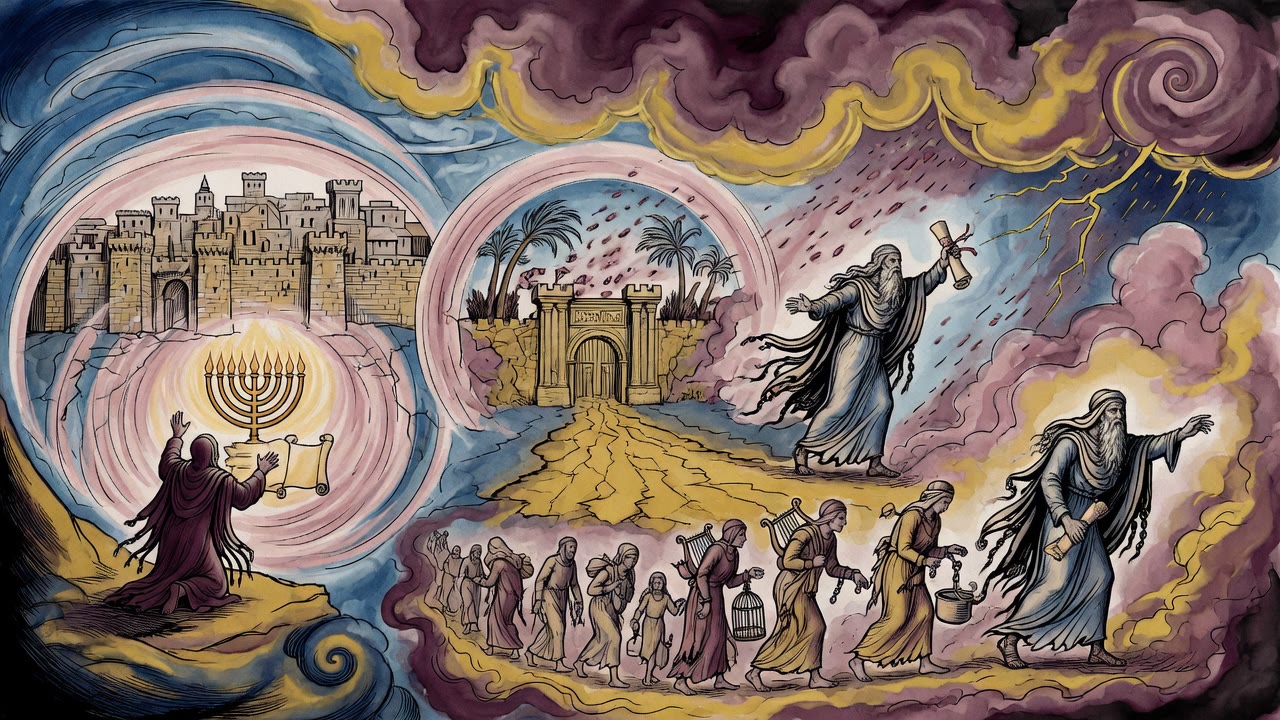
The high priest put on his ephod and walked into the fire. Captives hauled Temple vessels with iron on their necks. Jeremiah found them on the road.
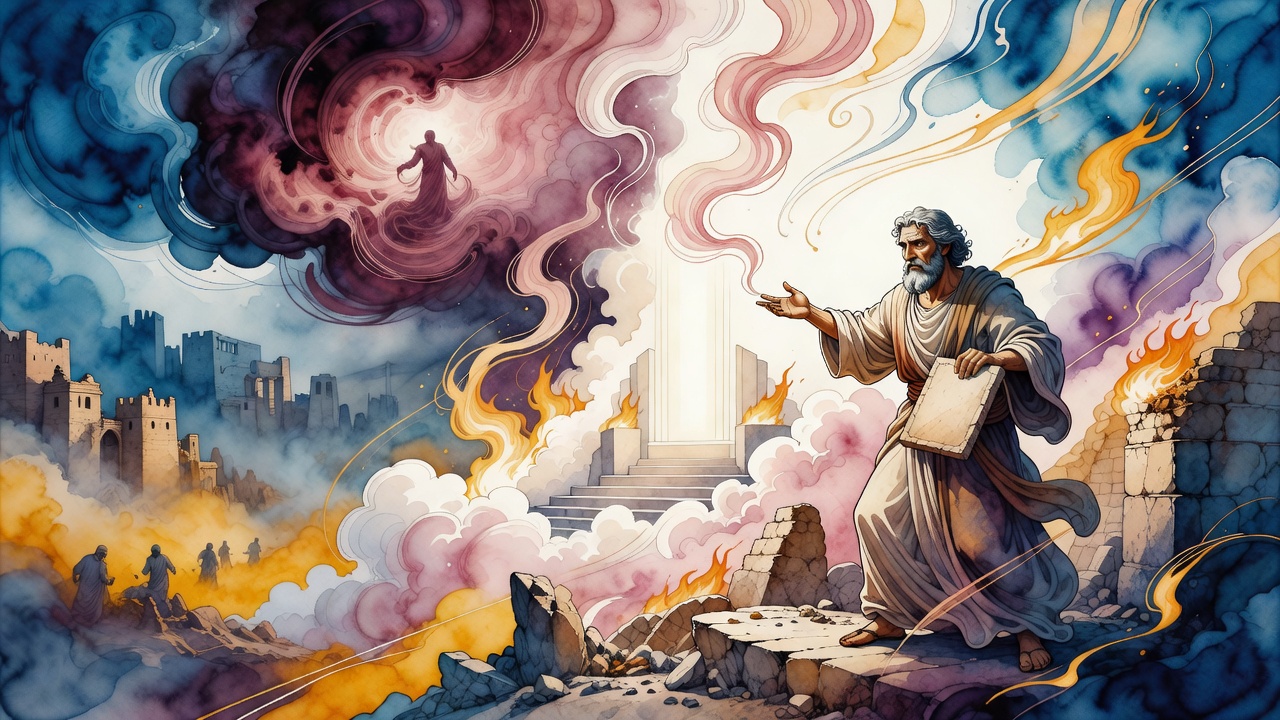
The guards would not let the column stop walking. The first ground the exiles were allowed to sit on was the bank of the Euphrates.
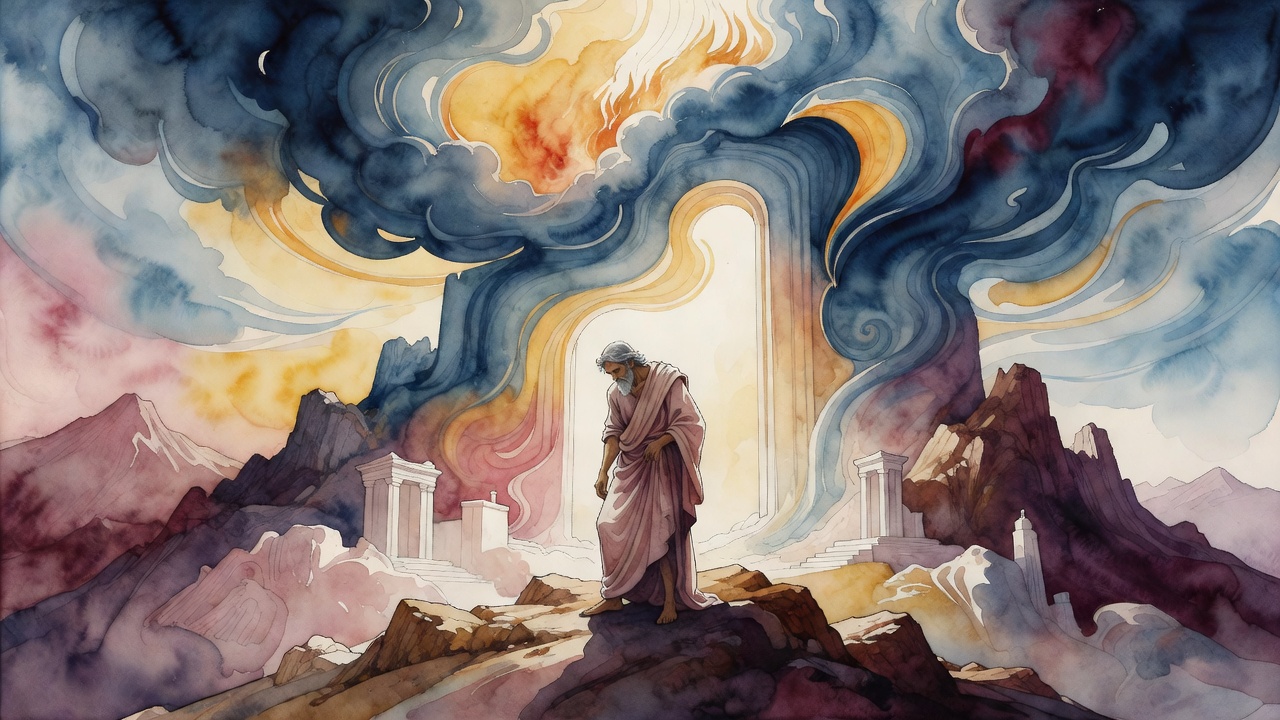
Adam settles on Mount Moriah after Eden because the gate he can no longer enter is close, and the place of return becomes the place of the Temple.
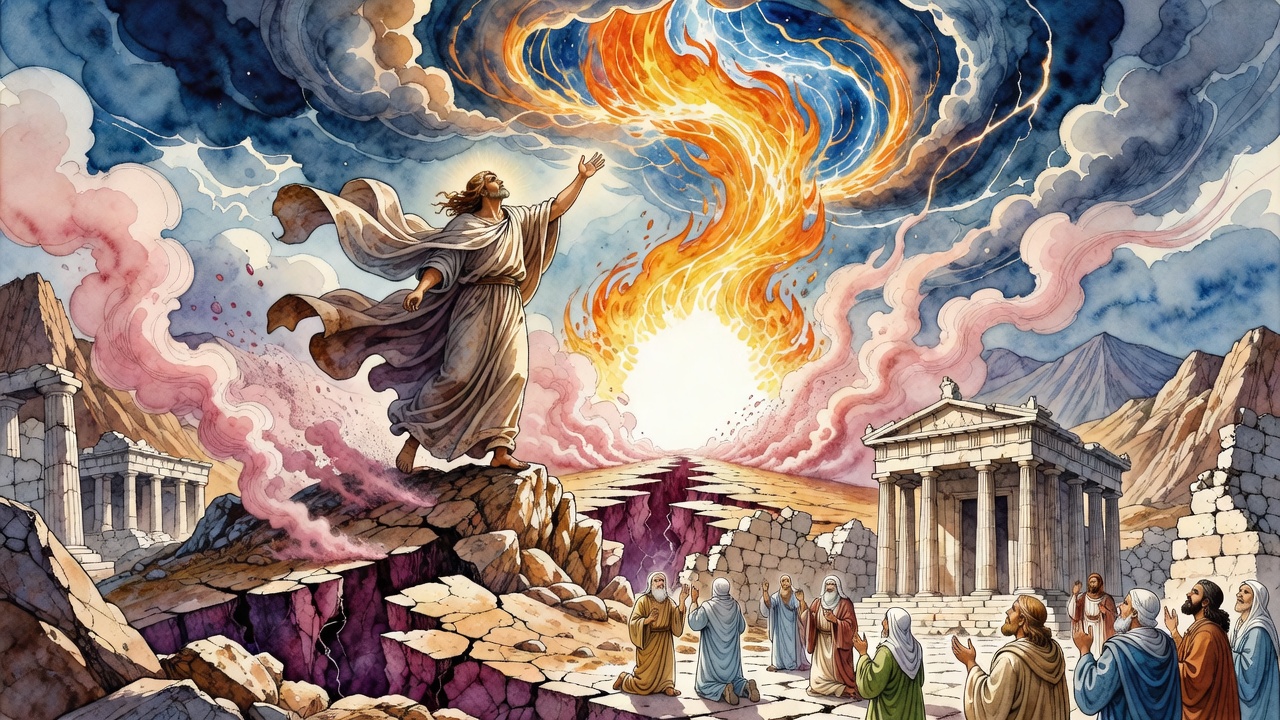
The floor moved under the study house. Rabbi Nehorai blamed unseparated tithes. Elijah told him the real reason, and the real reason was worse.
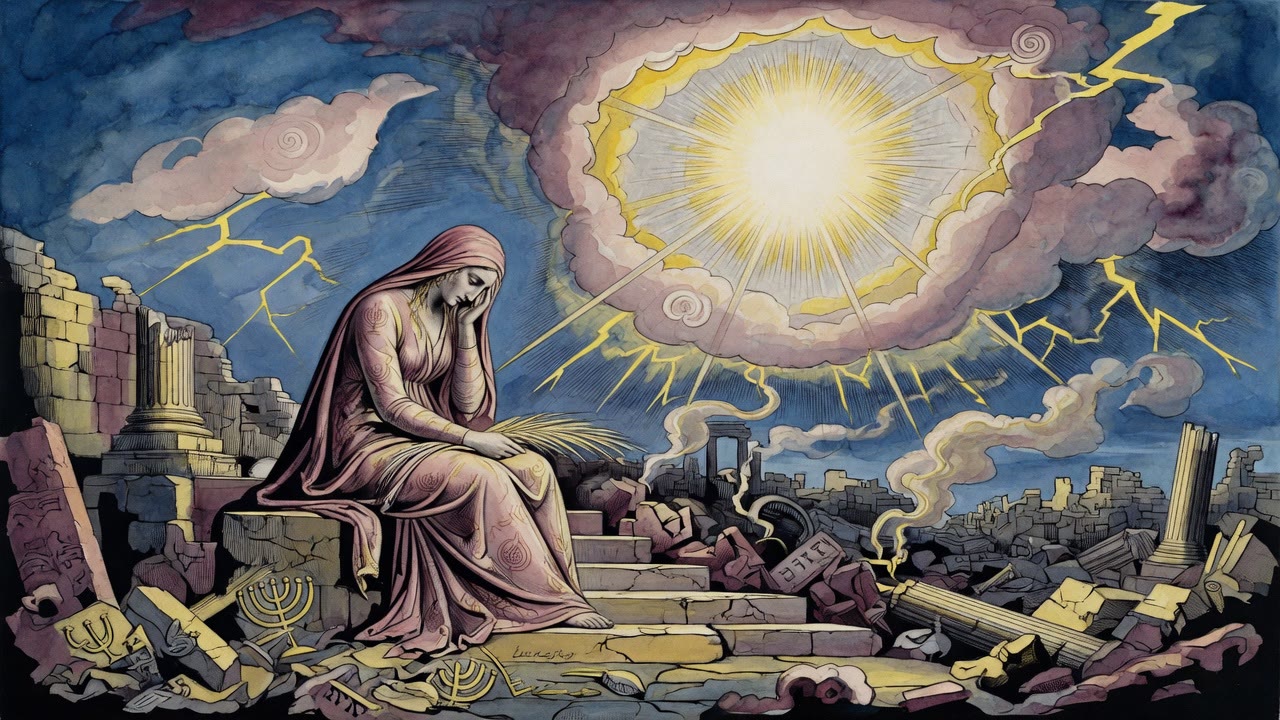
One man swore he would wall the city with water. They called the old angel names, and a stranger's voice said the work was no longer his.
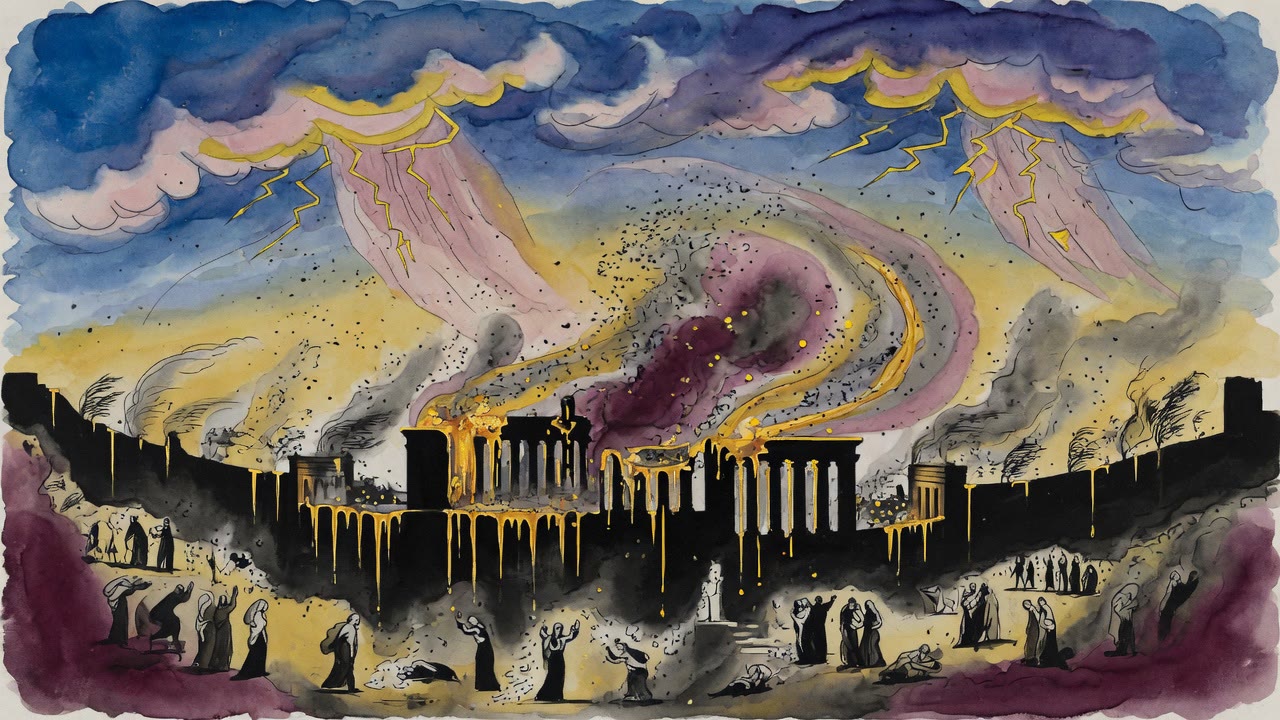
Three times a year the roads filled with dust and song. Then the feet stopped. Priests stood at empty gates with gifts no one came to take.
