1,018 myths · Page 17 of 34
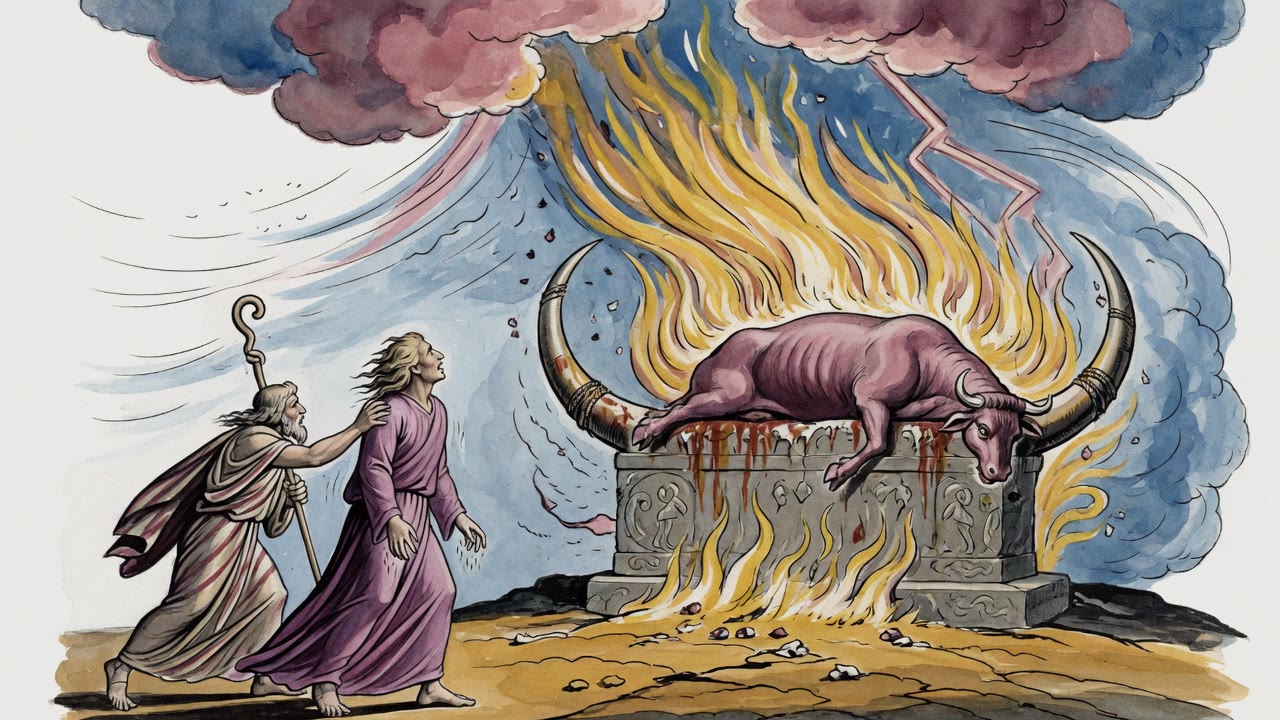
Men broke their own earrings. Aaron cast a plate bearing the Name. A living calf stepped from the flames, and Yom Kippur was born in the repair.
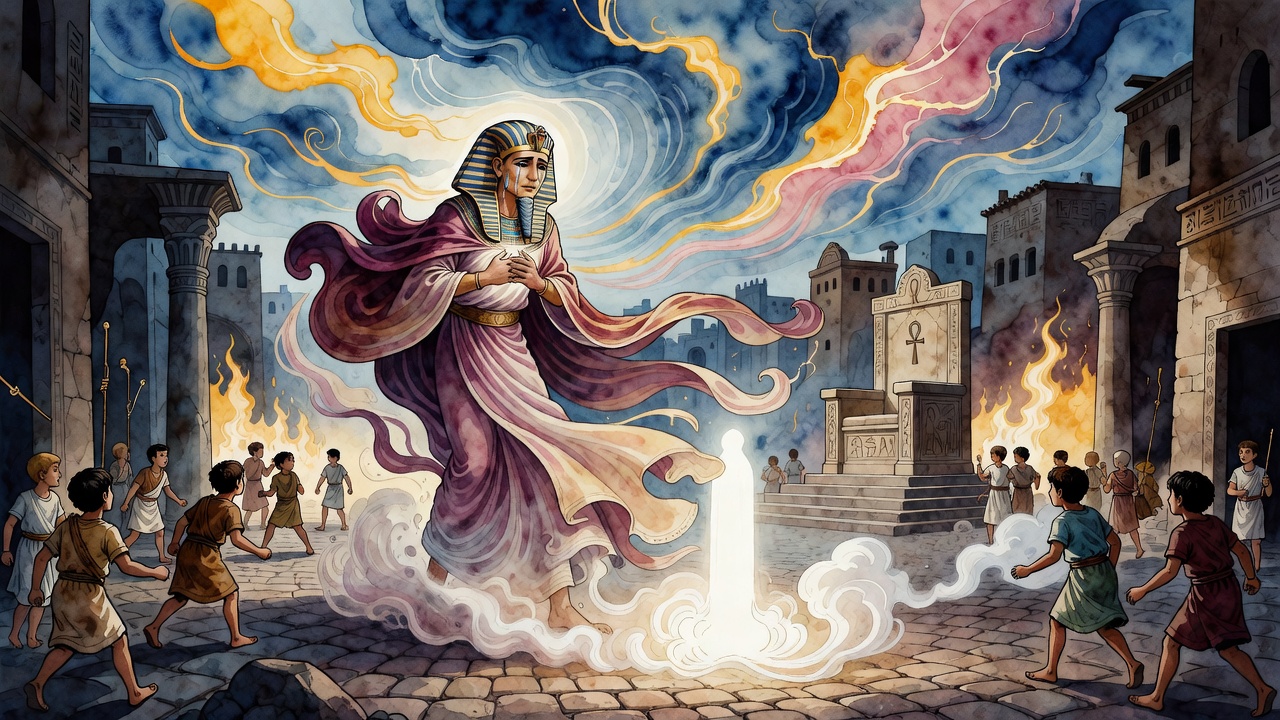
On the night death walked Egypt, Pharaoh wandered the streets weeping for Moses, while Hebrew boys misled the king who no longer knew where his slaves slept.
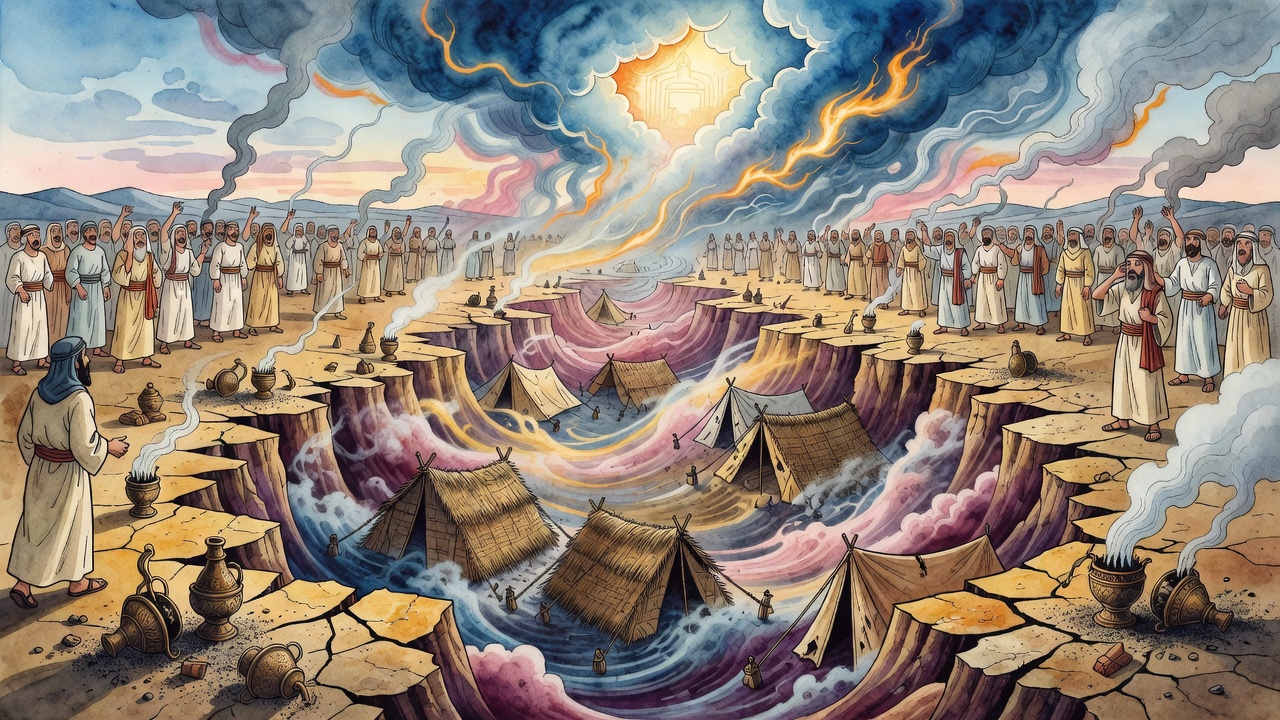
Korah still wore Pharaoh's keys when he came for the altar. Moses gave them the night. By dawn, nobody wanted the priesthood less.
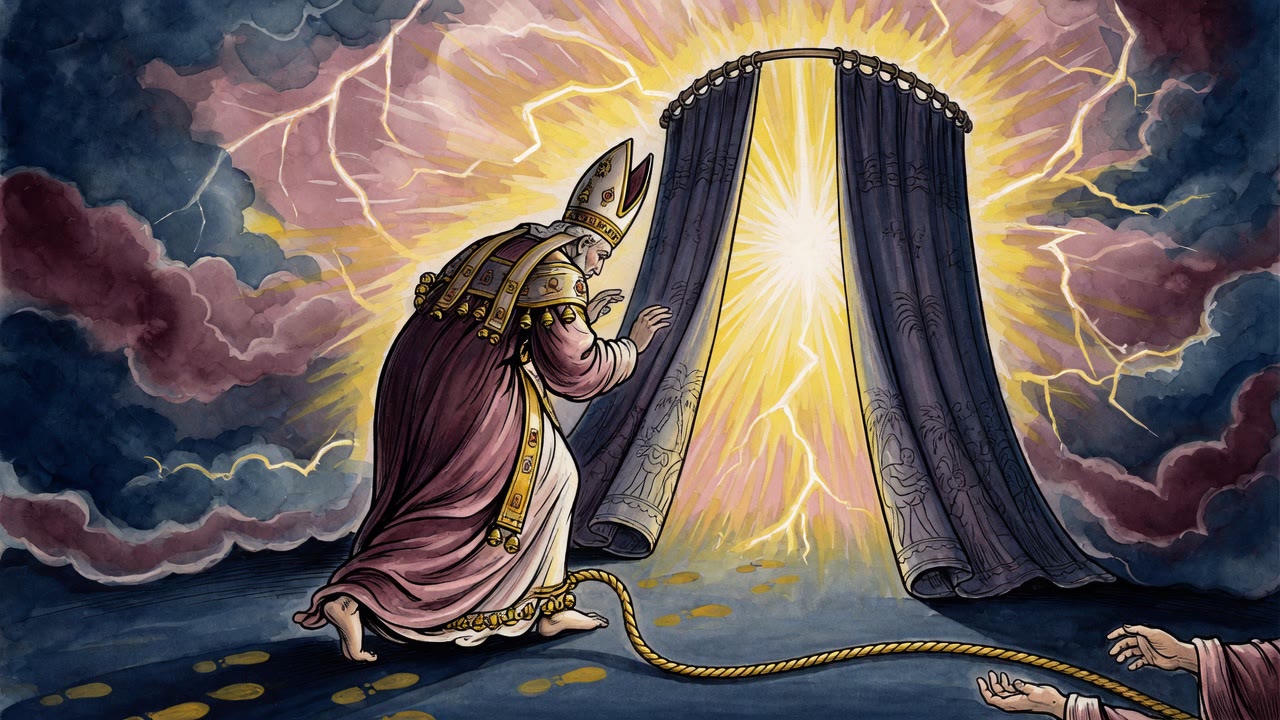
On the eighth day Aaron saw an ox in the altar horns and could not move, until Moses pushed him forward and fire fell that no human hand had kindled.
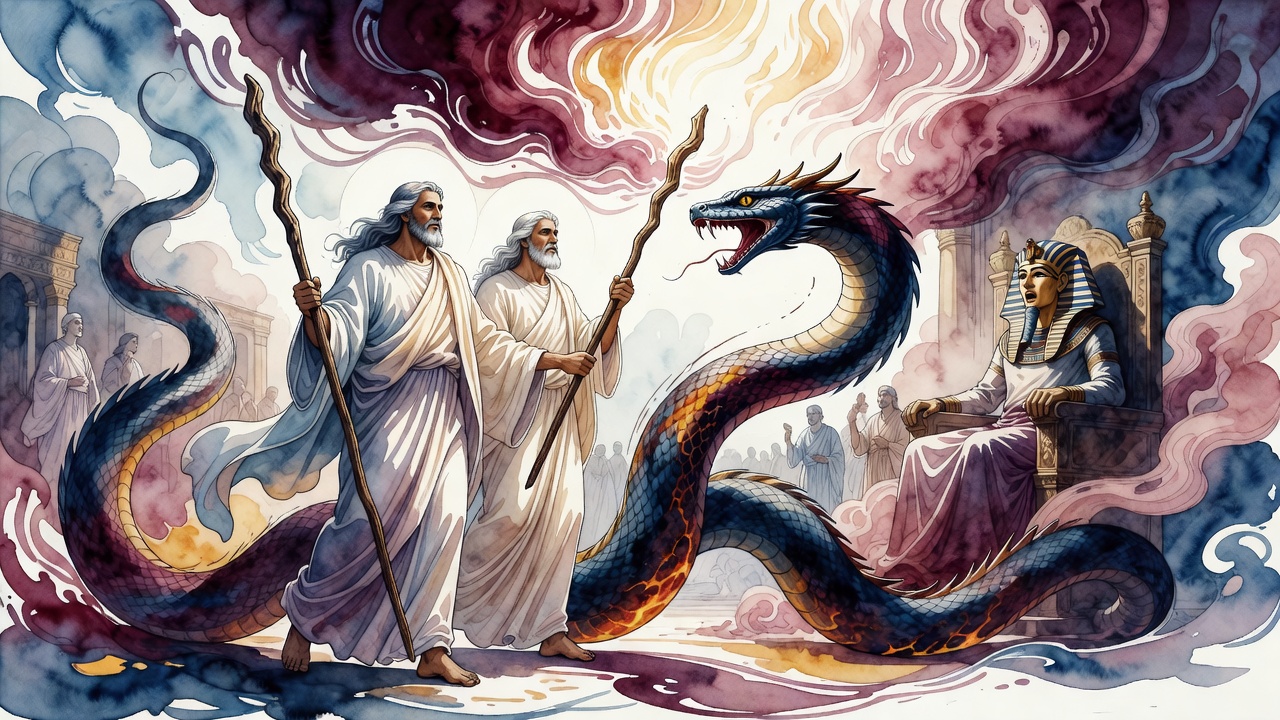
Pharaoh made the two old Hebrews wait while lesser kings finished their bows. Seventy secretaries were writing the empire in seventy languages. Pens stopped.
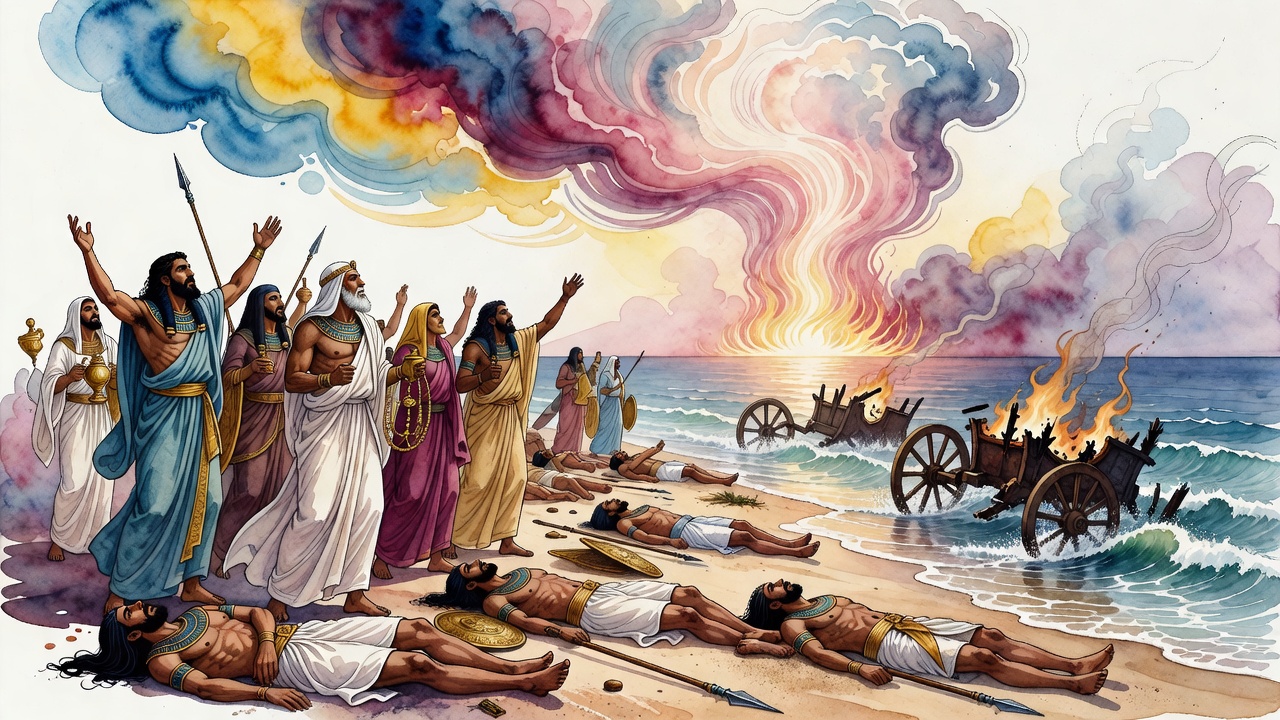
After the tenth plague, Pharaoh forced gold into Hebrew hands and left corpses unburied in his haste. At the sea, fire took the chariot wheels next.
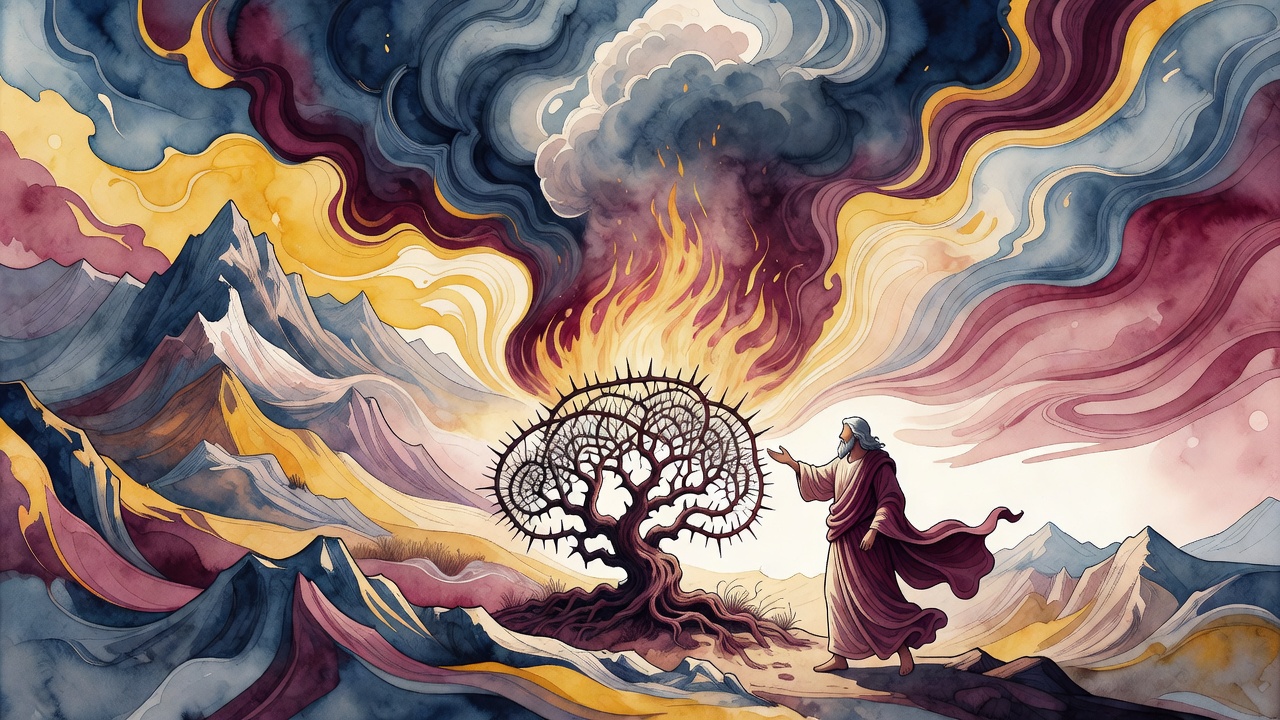
God abandoned the high slopes and settled in a shrub of thorns because Israel was in grief. Moses asked for an oath before he would go down.
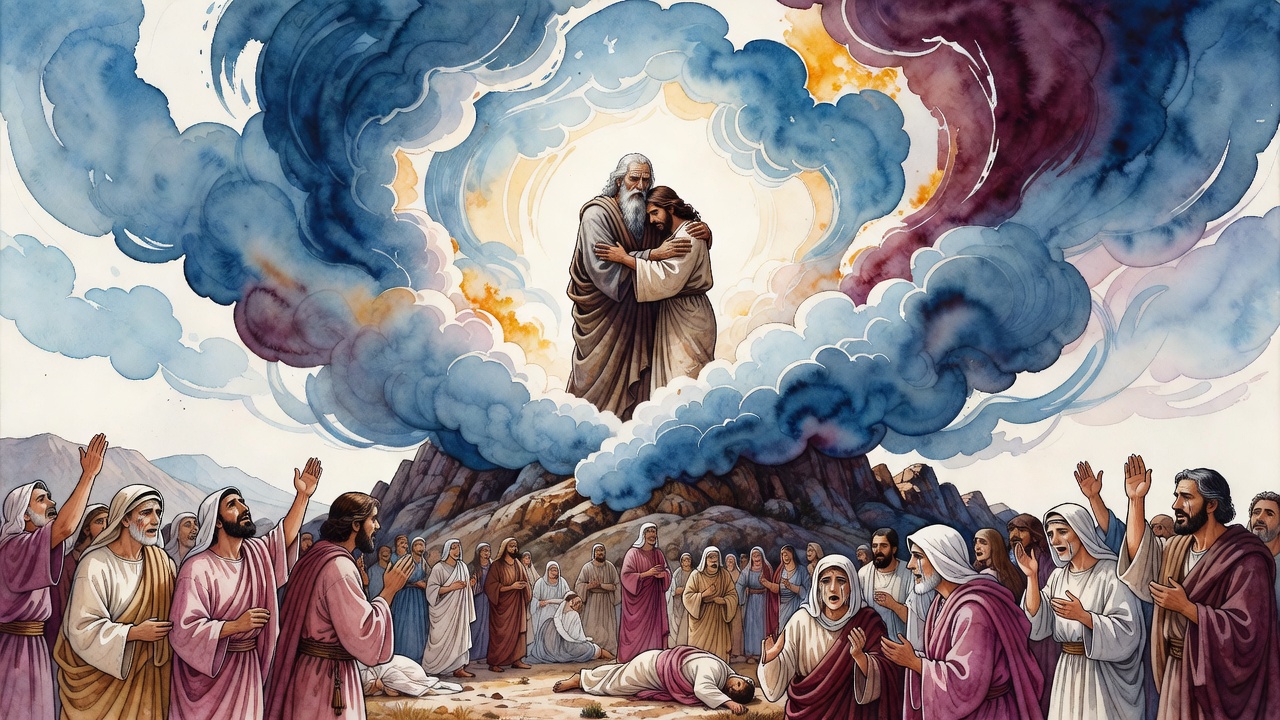
Moses climbed Abarim at a hundred and twenty and looked out at the country he would not enter. He was still speaking to Joshua when the cloud came down.
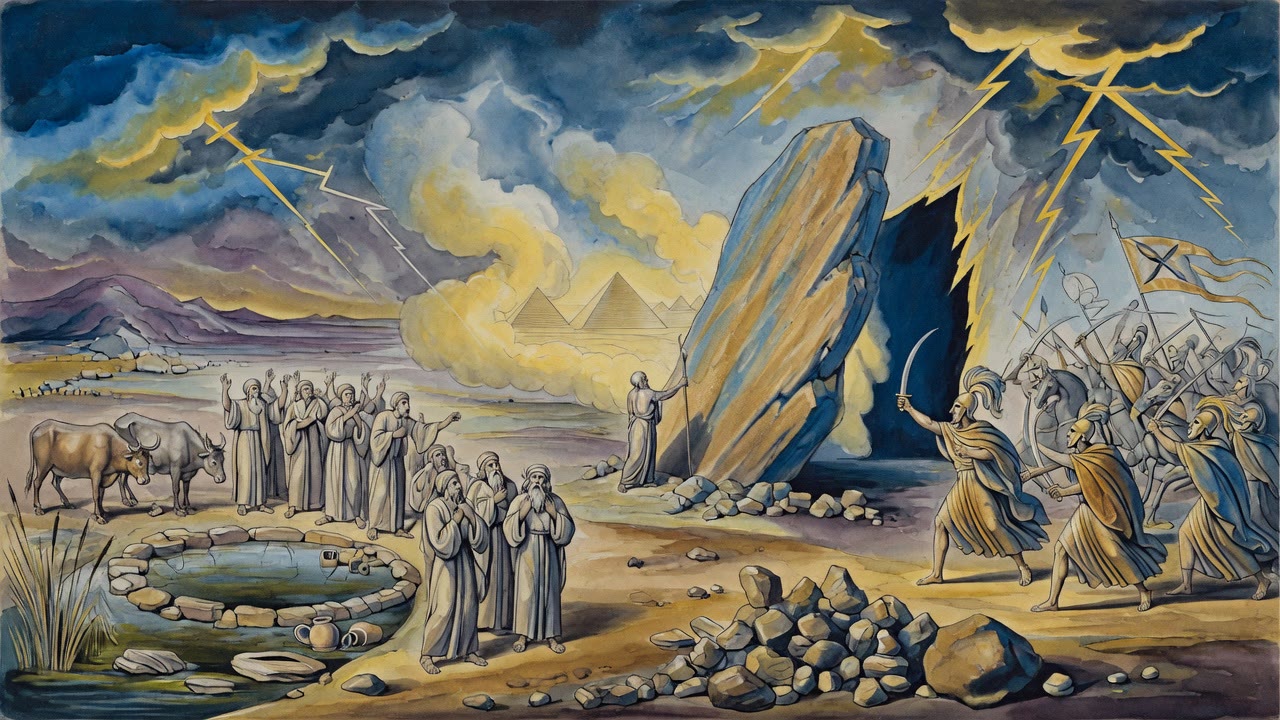
Three months out of Egypt, Israel found water the cattle refused. Doubt opened the door, and Amalek walked through it with swords.
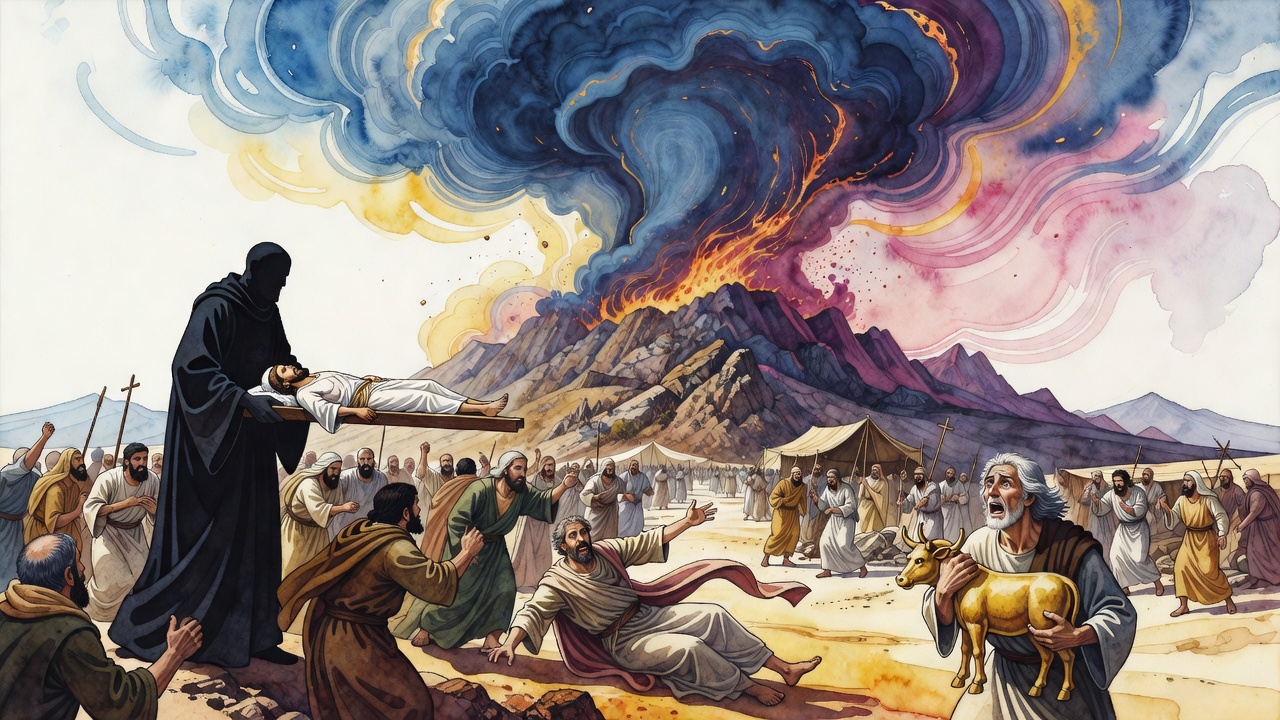
At the sixth hour of the fortieth day, Ha-Satan (the Accuser) painted Moses dead on the mountain. Hur rebuked the mob and fell, and Aaron faced gold with.
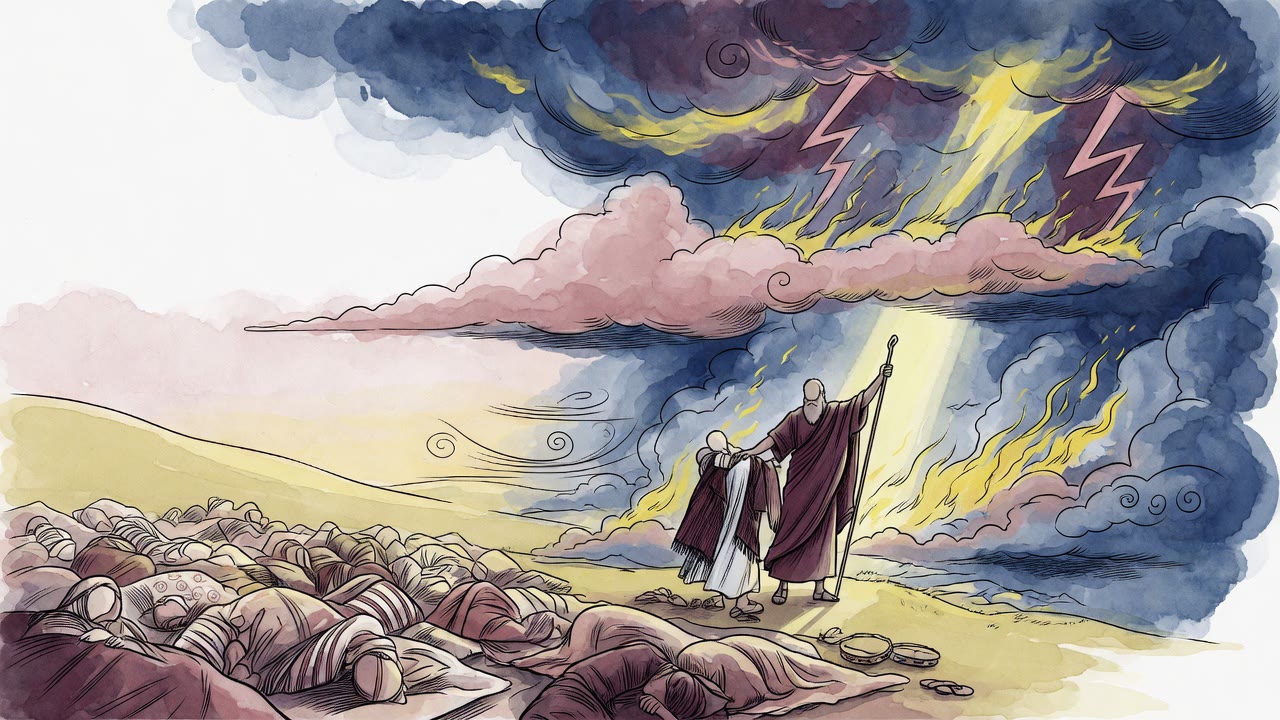
On the morning Torah was given, Israel slept late after a short summer night. Moses woke them as a bridegroom wakes a bride, and heaven walked out to meet them.
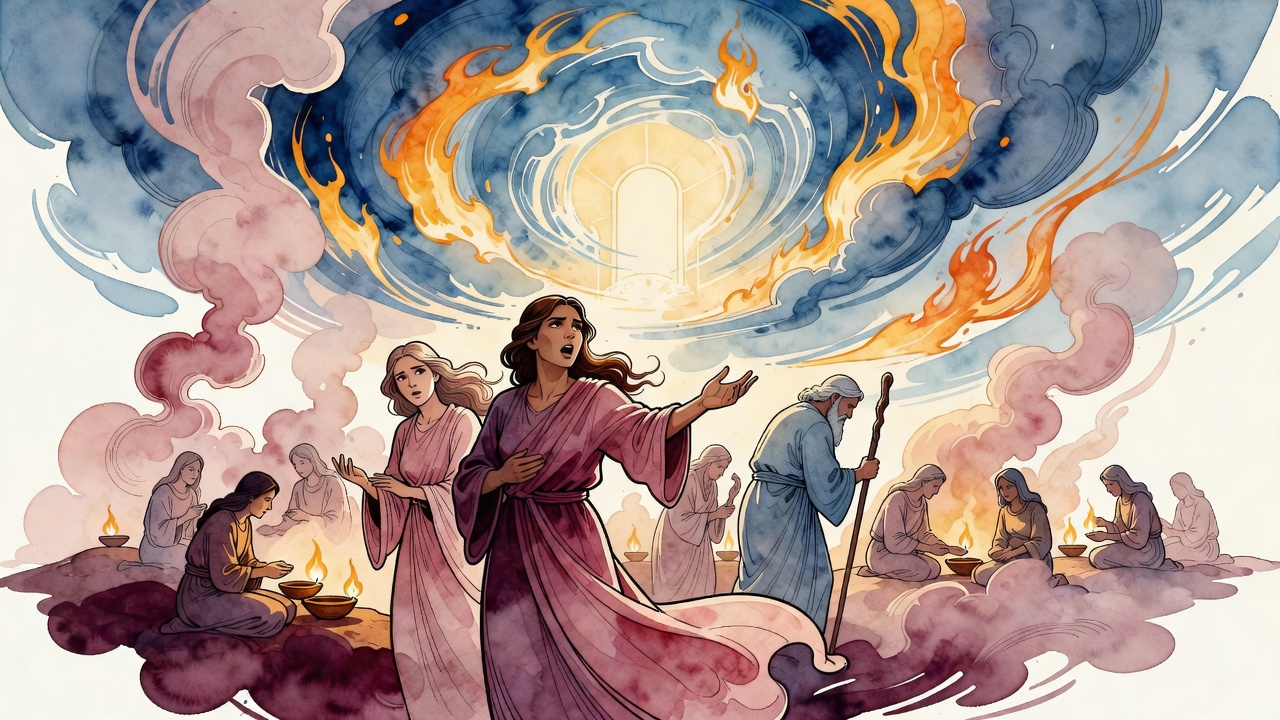
Women lit lamps for new prophets. Zipporah told Miriam to bless the wives with woe. Moses heard the charge and kept his mouth shut.
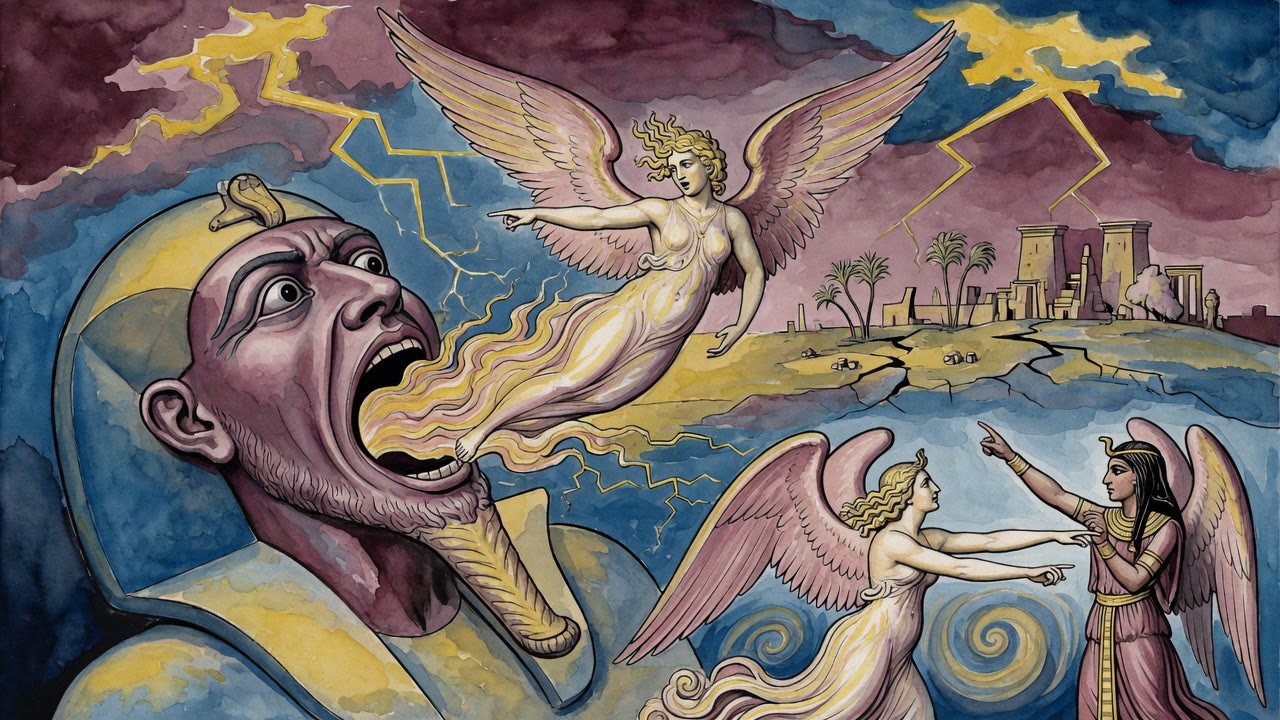
When Hebrew men divorced their wives to spare unborn sons from the Nile, Amram remarried Jochebed in public so despair would not erase Israel.
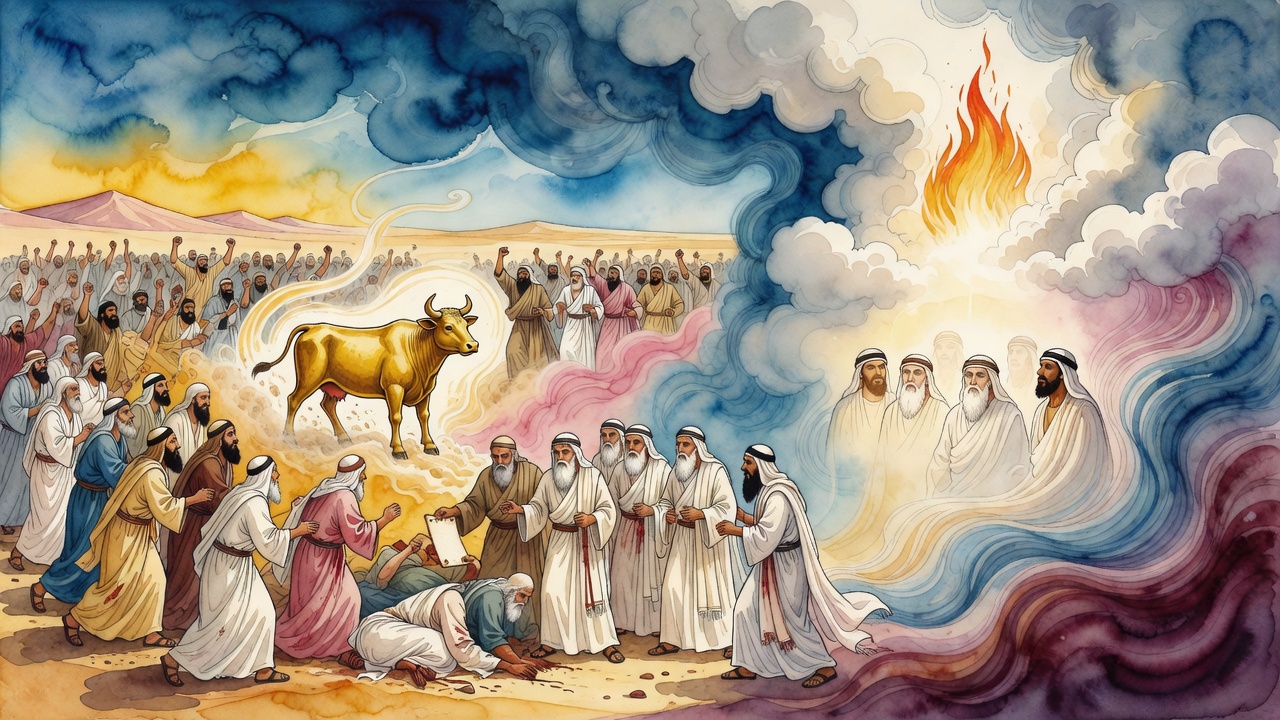
The crowd made the metal bull move and bellow, then told the judges to call it God. The judges said no, and the crowd killed them for it.
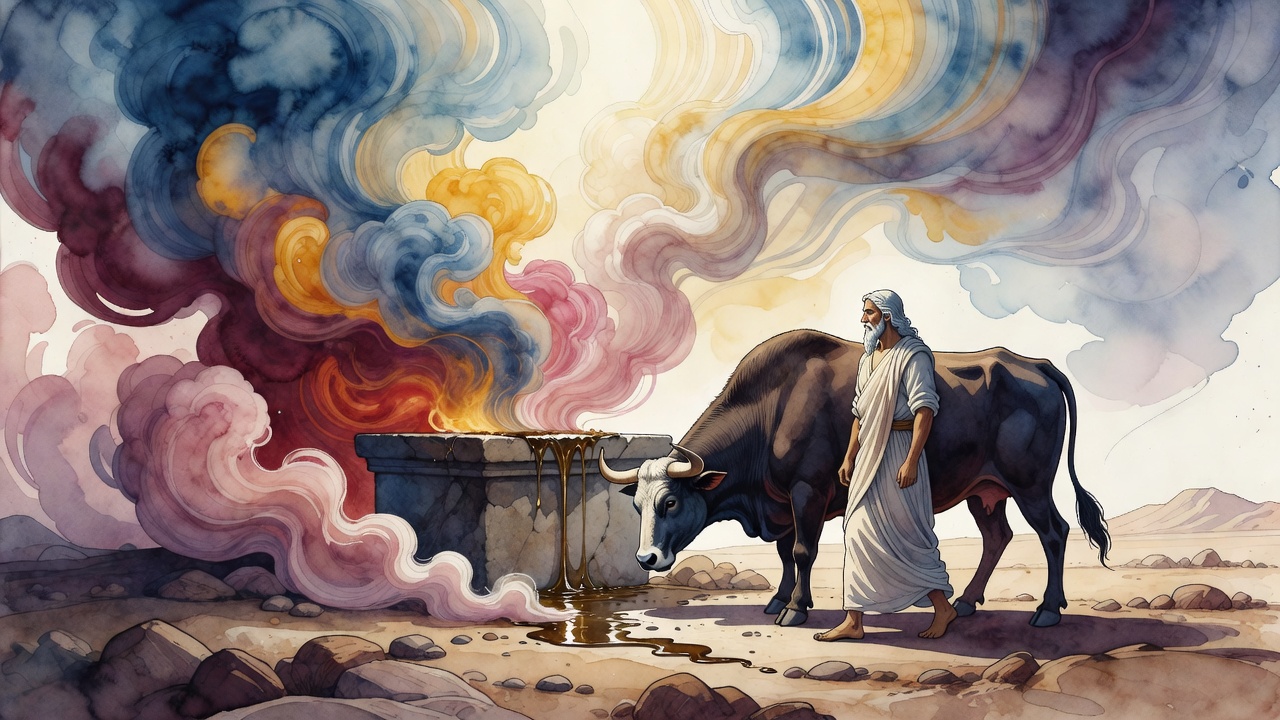
Moses was told to take Aaron, not by the arm, but with speech that turned a heart. Oil, a sin-bullock, and rising smoke finished the hour.
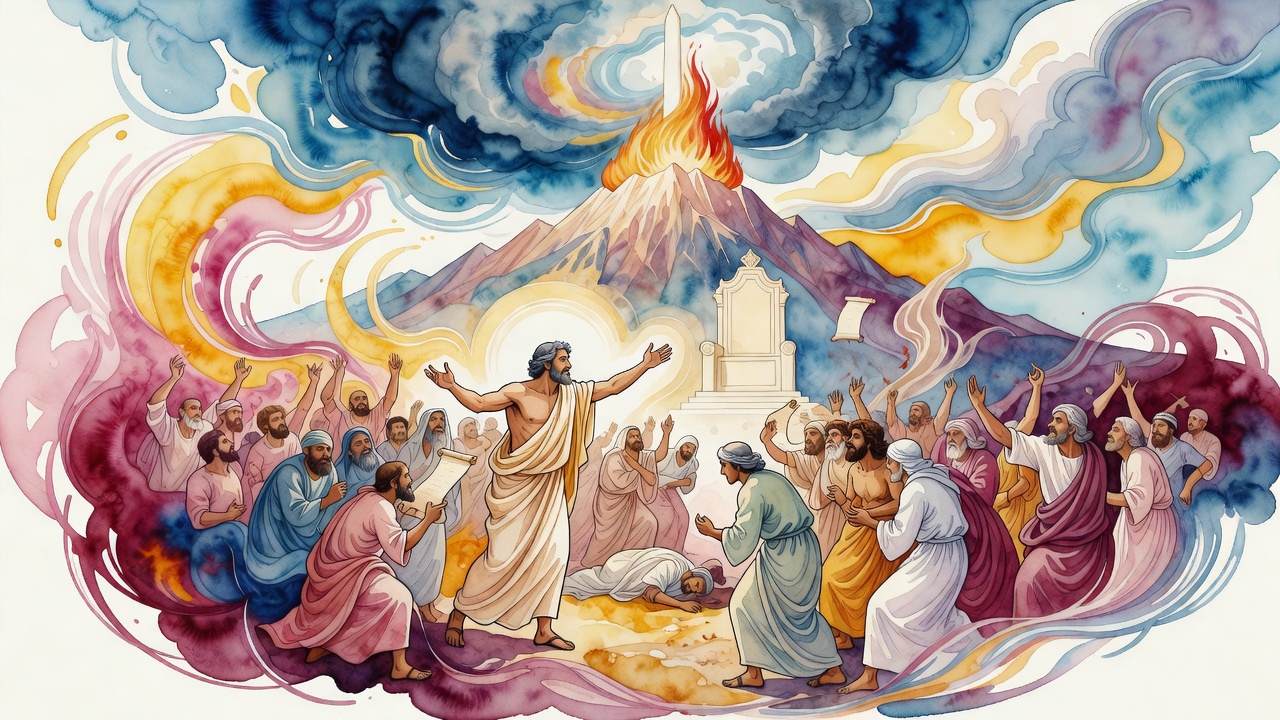
While Moses received Torah above, Hur rebuked the restless camp and was slain. Aaron faced a people who had already killed the man who said no.
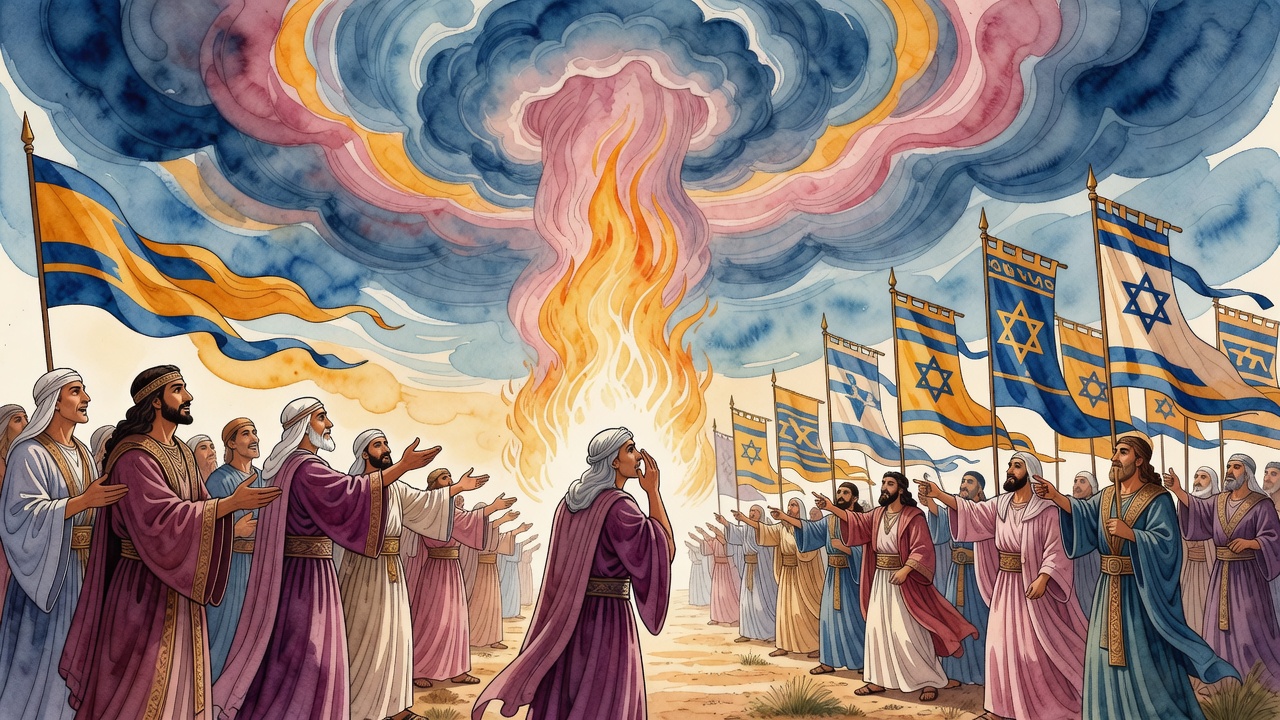
From the ridge the tents looked like one body. Then they sharpened into Judah and Reuben. Bilam could not find a gap for the curse.
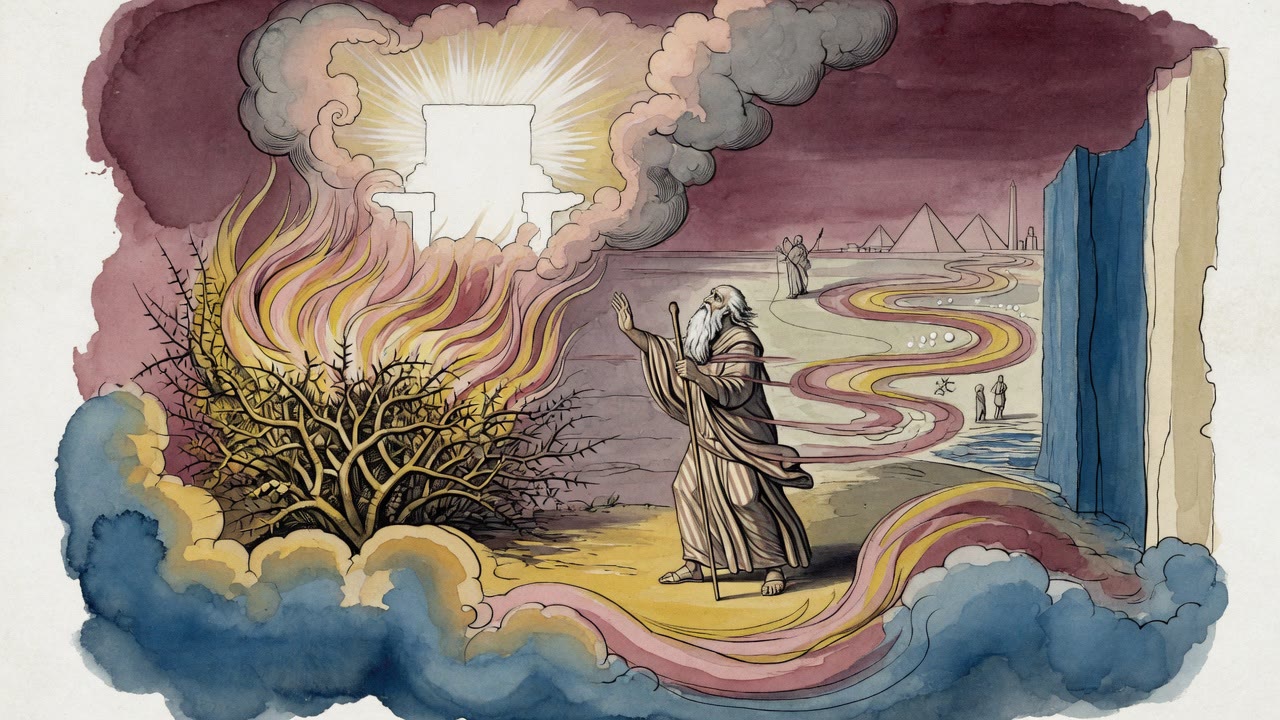
At the bush Moses asked God to send someone else. God sent him anyway, and eighty-year-old Moses walked Egypt into plagues and a split sea.
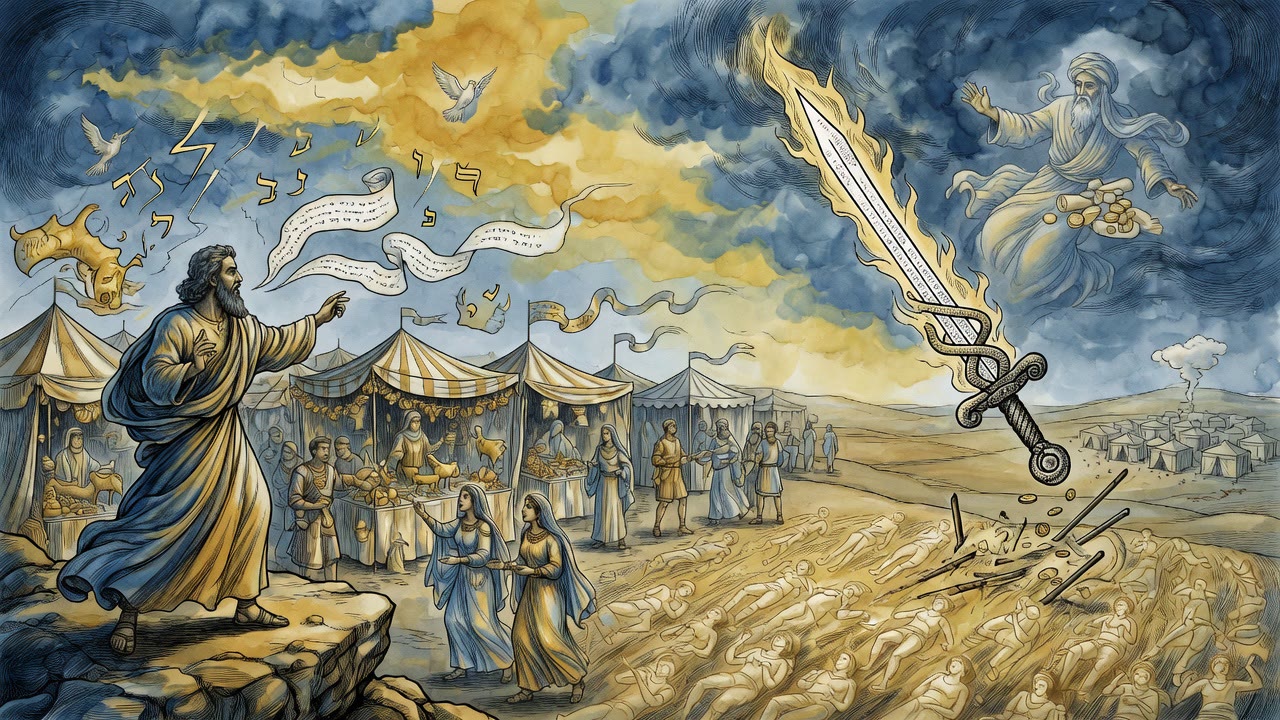
He could not curse them. So he told Midian to paint the daughters' eyes and set booths outside the camp. Twenty-four thousand fell.
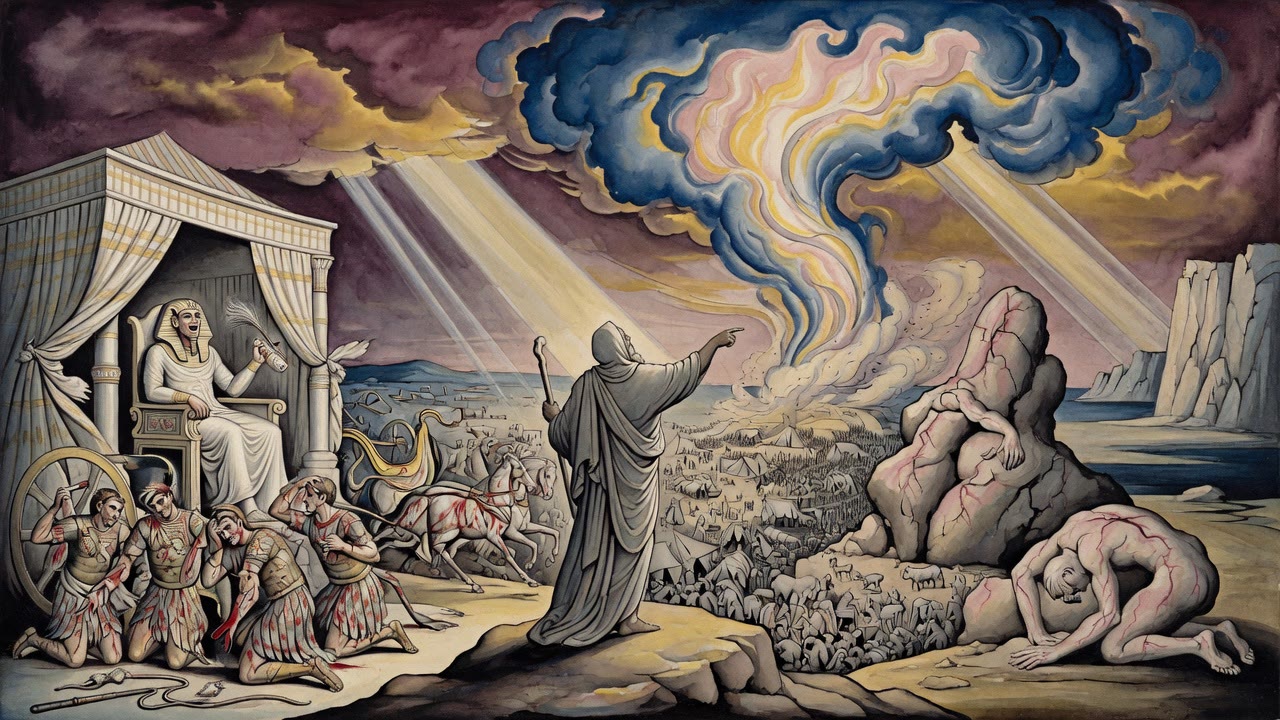
The speech sat in his chest like a stone. He would not throw it while they could call him weak. Cheshbon's walls still stood.
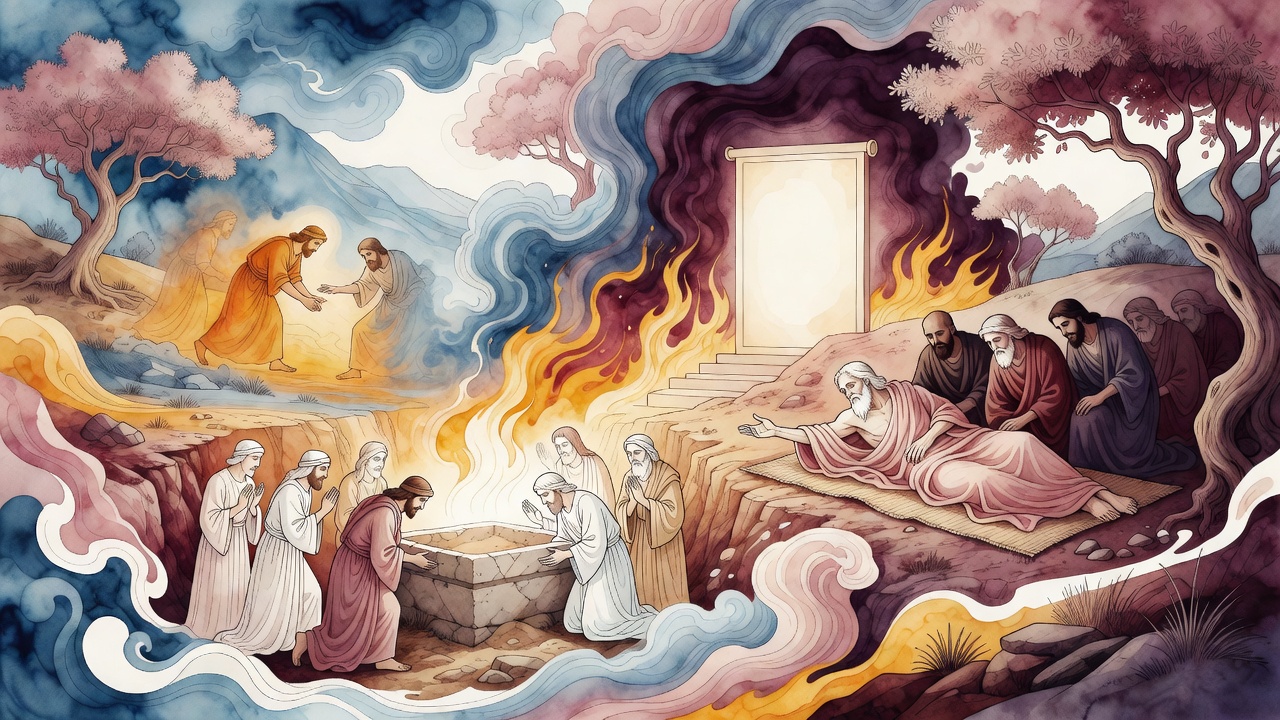
Dying, Jacob ordered Joseph to forgive and shield his brothers. Ages later the tribes buried Joseph in Shechem, the ground that first took him.
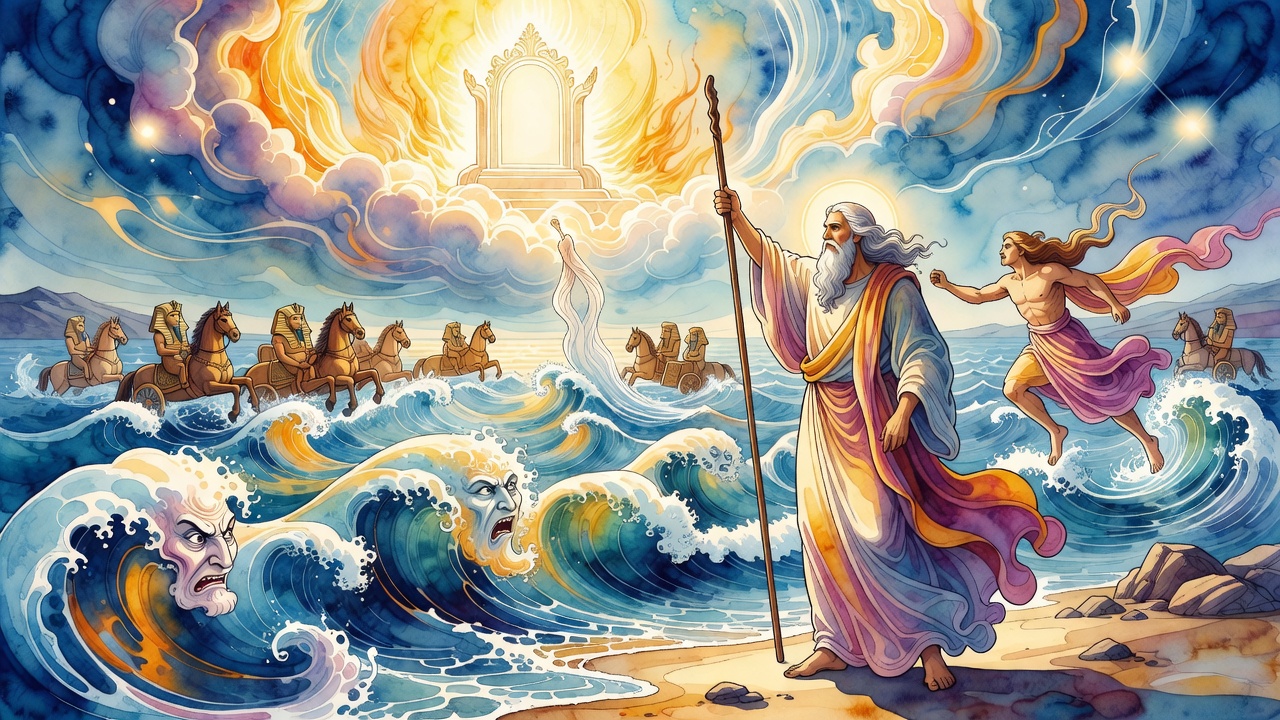
The sea told Moses it was three days older than he was. God called it a rebellious slave. Nahshon walked in until the water reached his nose.
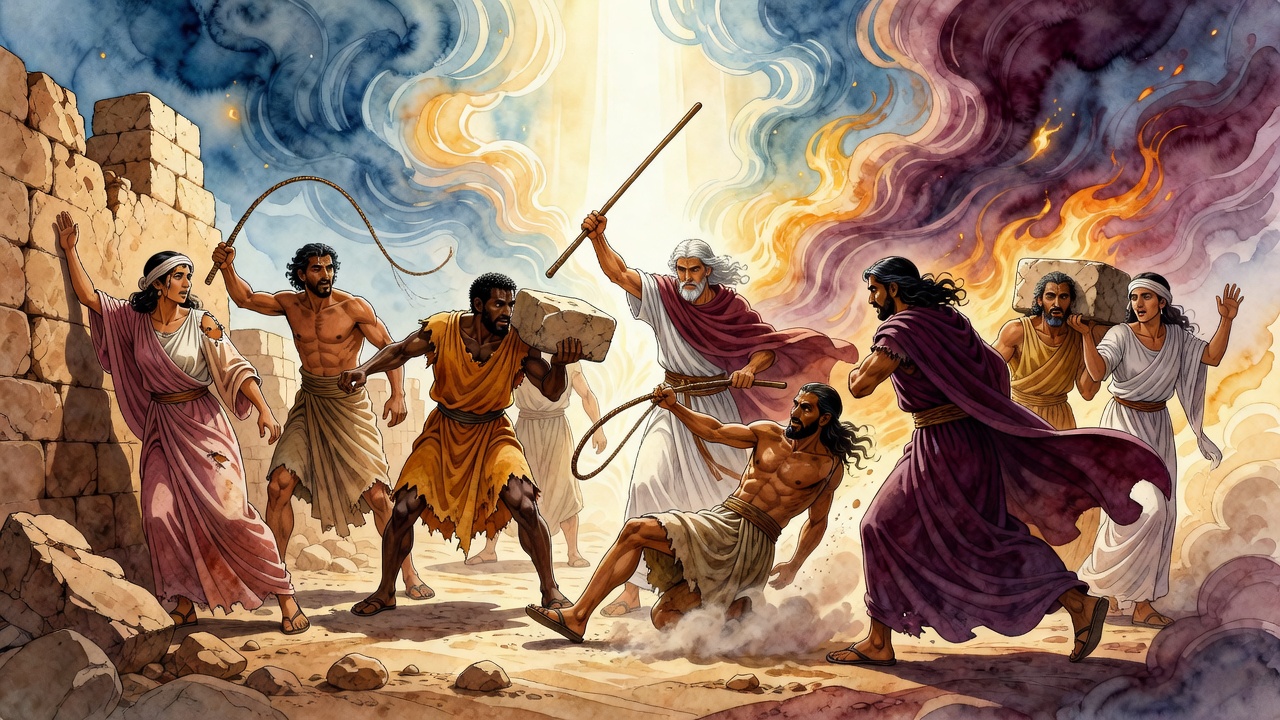
An Egyptian taskmaster forced Shelomith while Dathan was driven to labor, until Moses struck the abuser dead and fled the men he had saved.
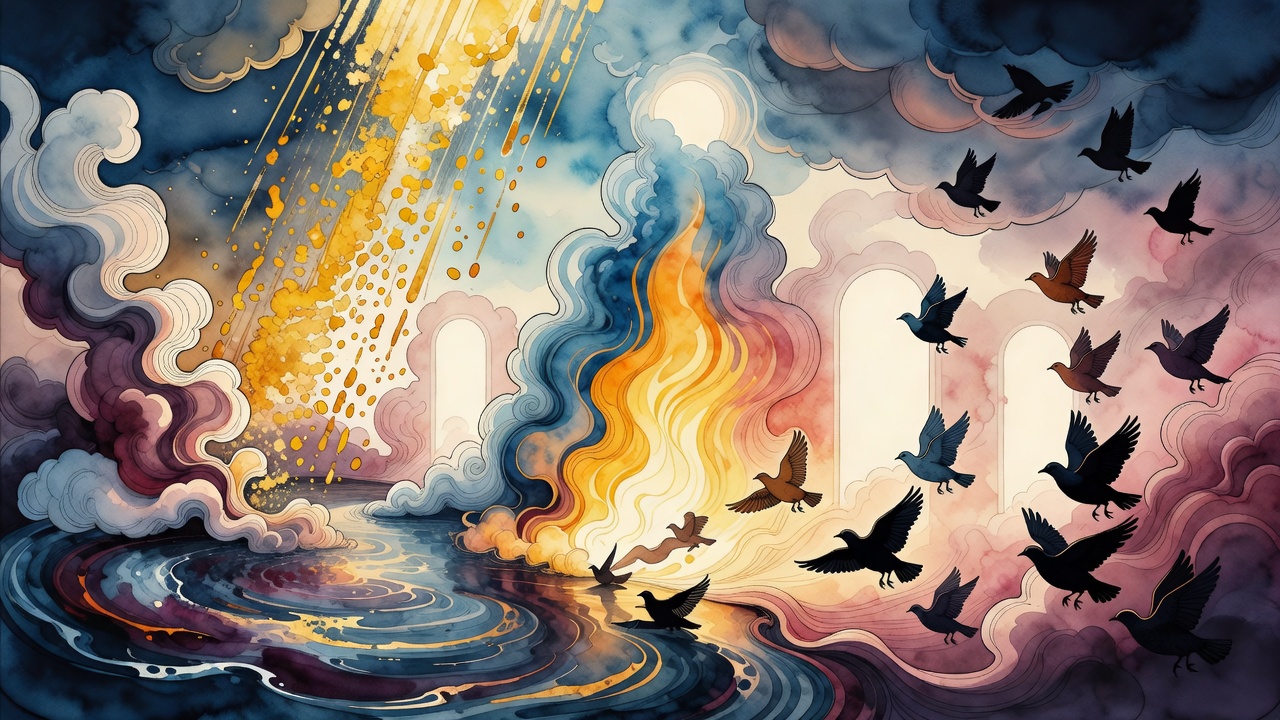
Three days without Torah turned water bitter at Marah, manna fell hot each morning, and quail arrived at night under a darkened face of heaven.
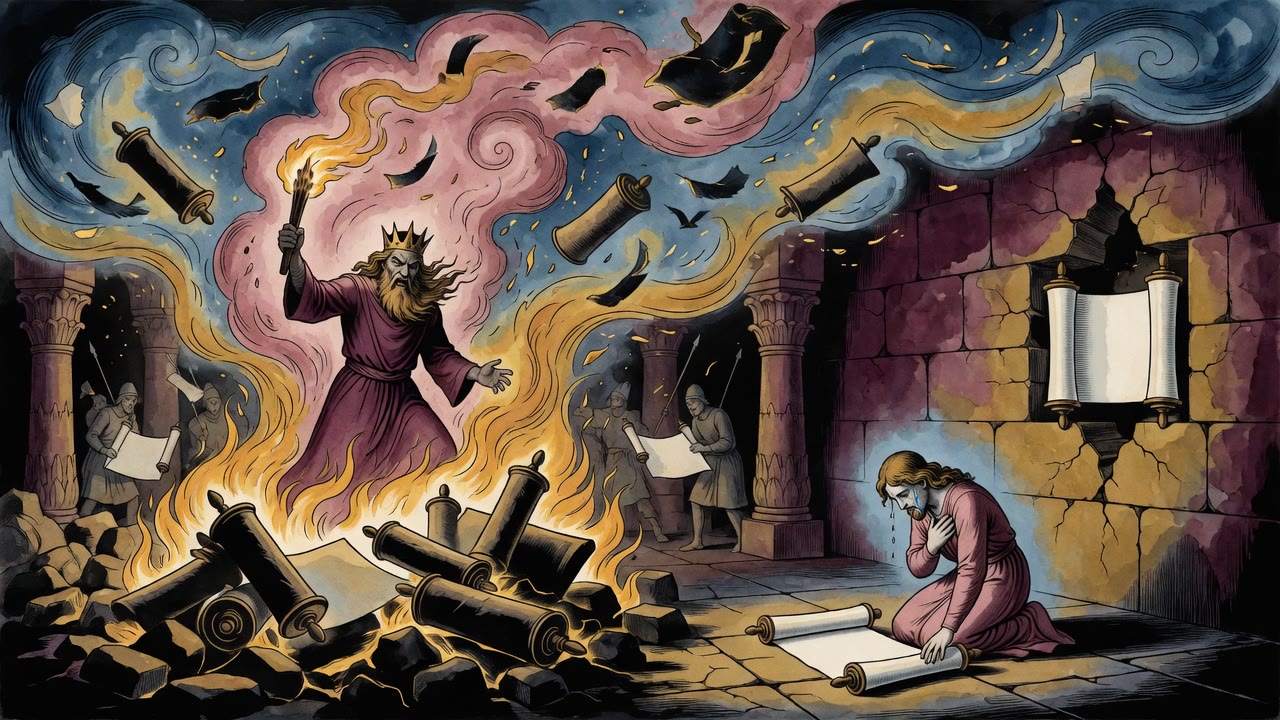
The hangmen opened Jochebed's door and found the room empty. She and Miriam were standing there. God had taken them out of the men's eyes.
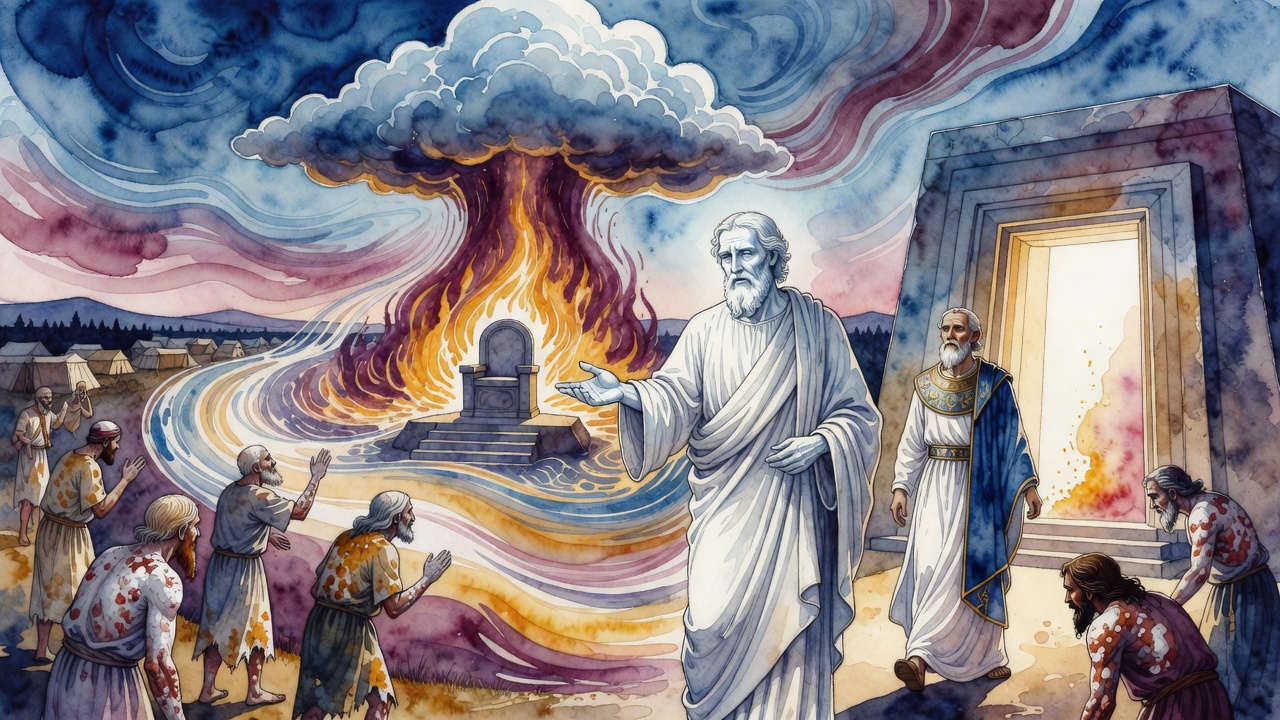
The dancers woke with white skin. They were walked to the edge of the camp, farther than ordinary uncleanness ever sent a body.
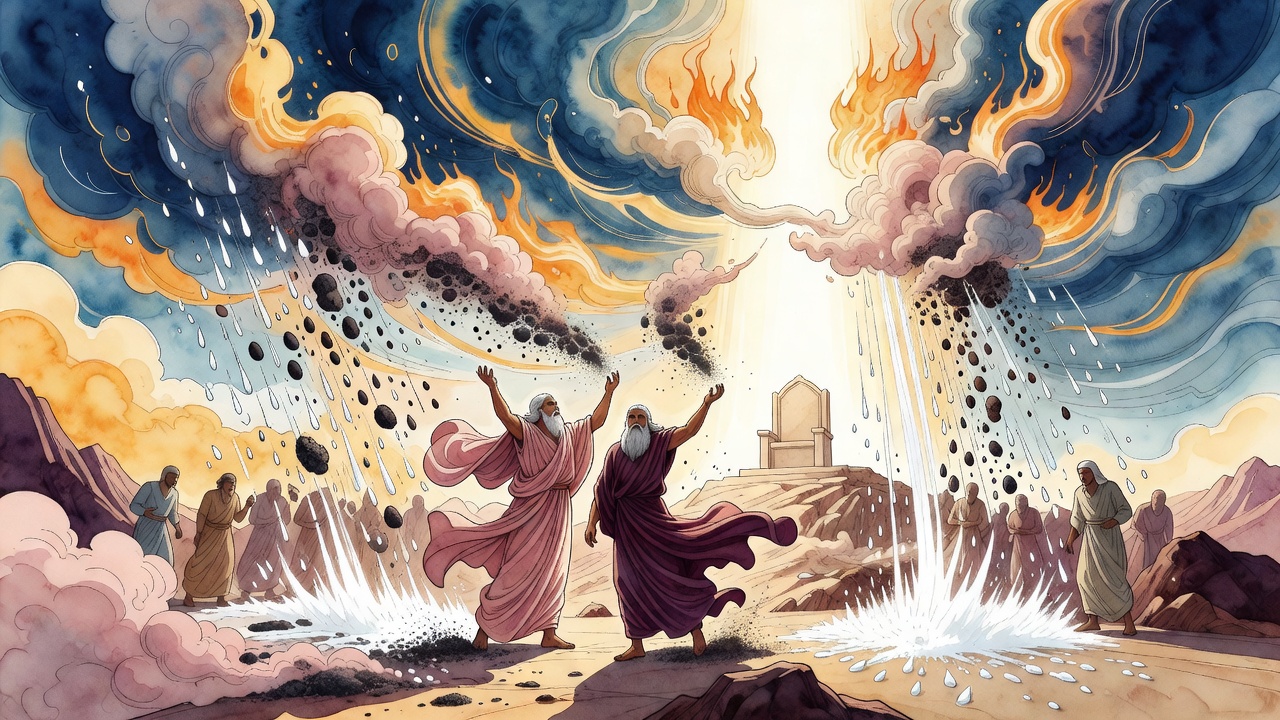
Moses and Aaron each scooped ash from the brick furnace. Moses held both handfuls in one palm and threw them at the sky.
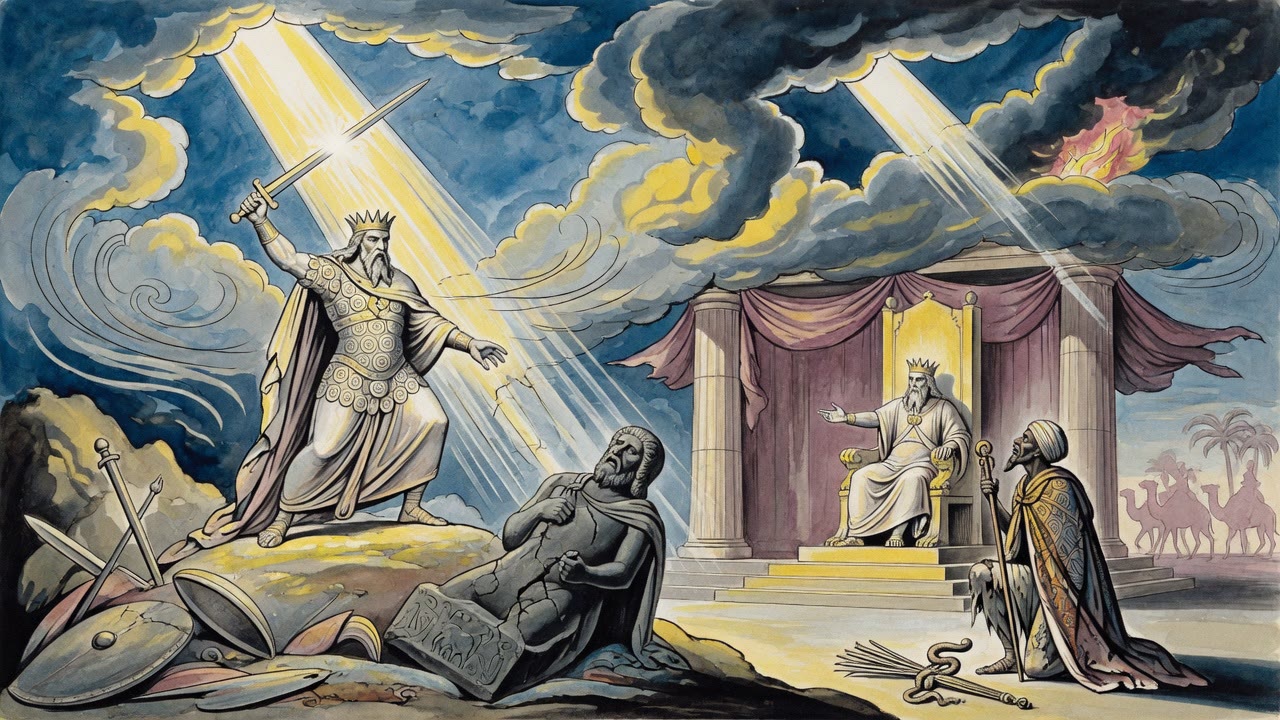
They piled cloaks into a throne outside a locked city. Moses sat. Snakes still held one wall, and Balaam still held the gates.
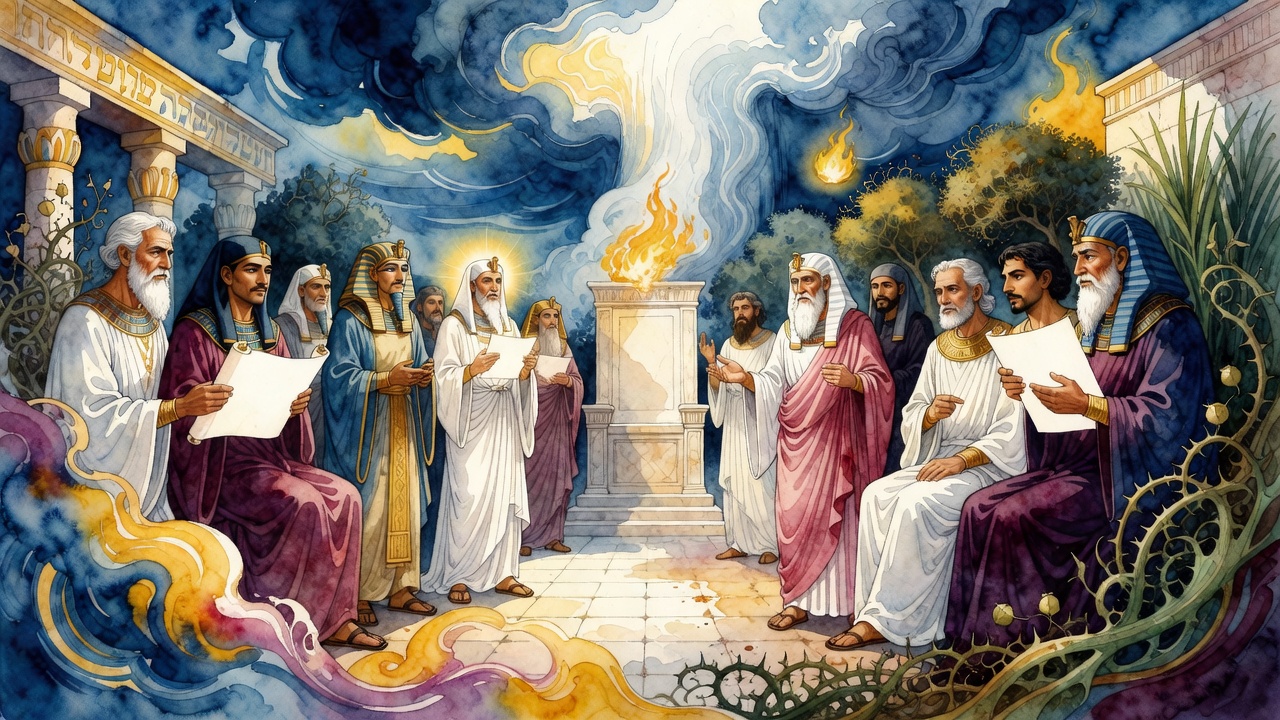
When Israel multiplied like underbrush, Pharaoh asked his counselors for a plan. Job of Uz stepped forward and proposed death for every newborn Hebrew son.
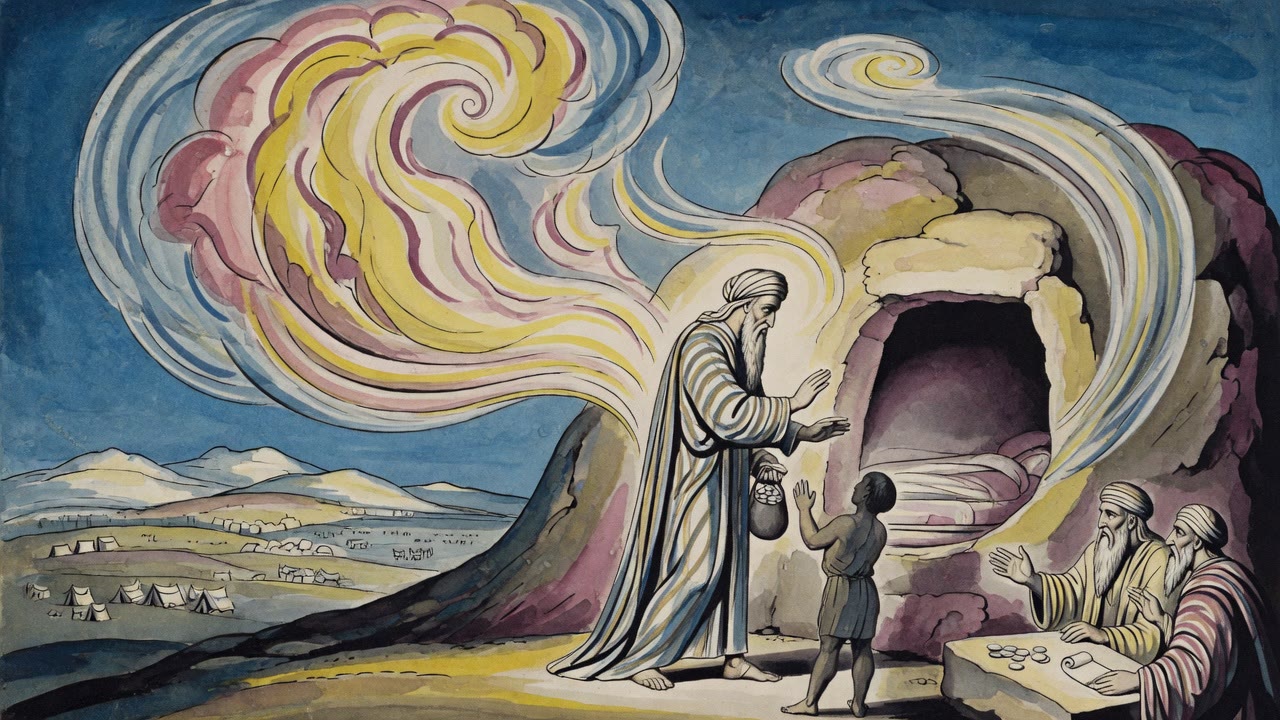
Moses broke under Israel's complaints. God took spirit from him like light from a menorah lamp and set it on seventy elders.
