391 myths · Page 8 of 14
On one mountain two patriarchs were shown the same house in three tenses at once: standing, in ruins, and rebuilt in a time still to come.
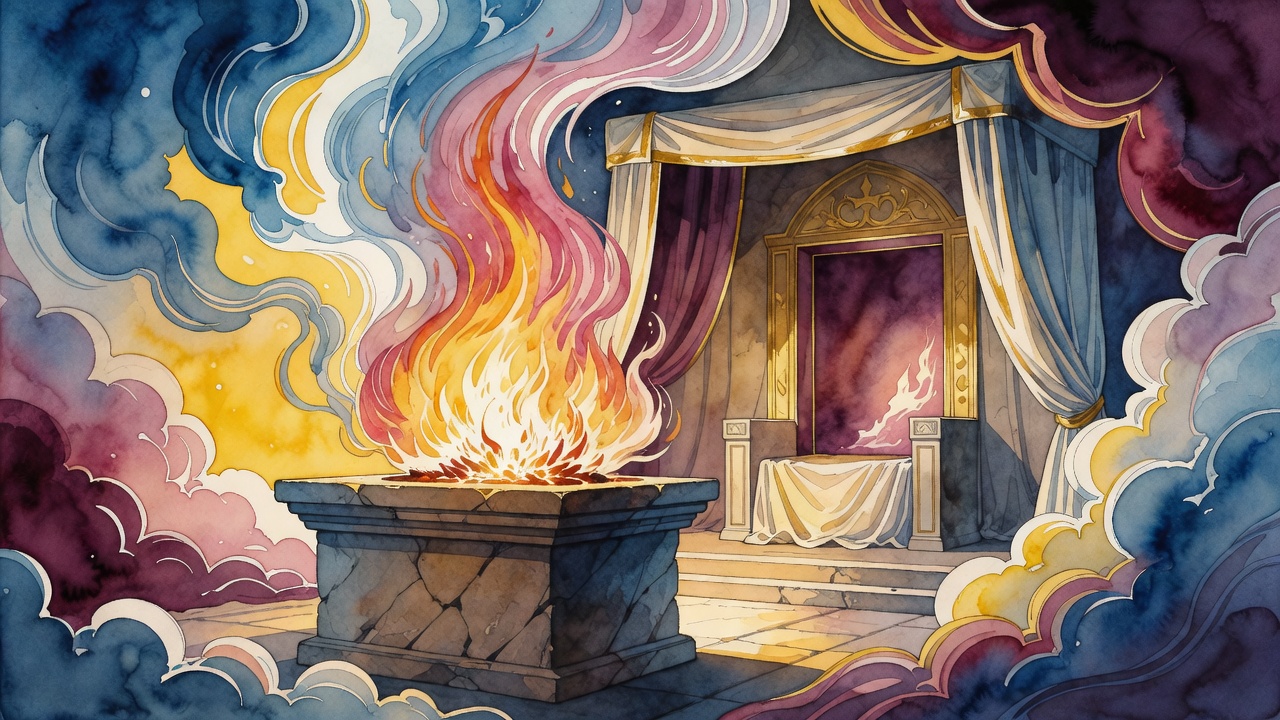
A flame from heaven lodged on Moses's altar and stayed four hundred years. In the same Tabernacle, gold was plated in one place no human eye would ever find it.
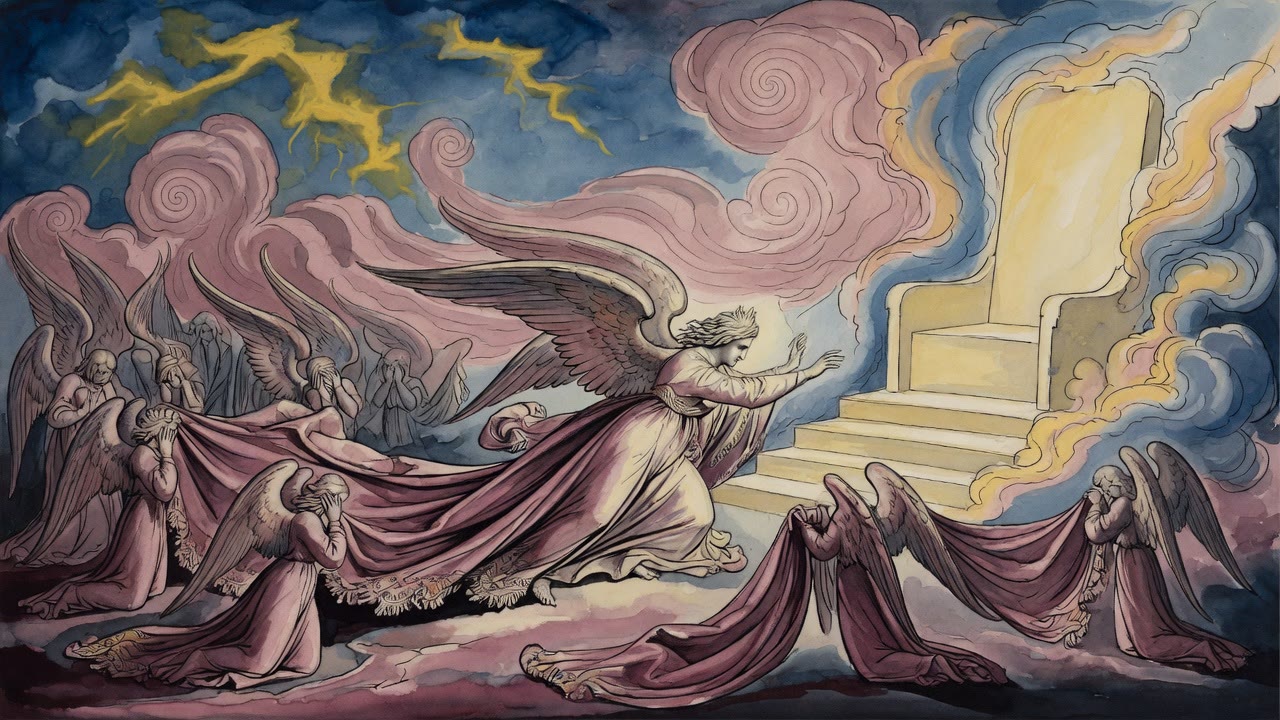
Three hundred priests carried one curtain to be washed. A handbreadth thick, woven on seventy-two strands, the parokhet guarded the holiest room.
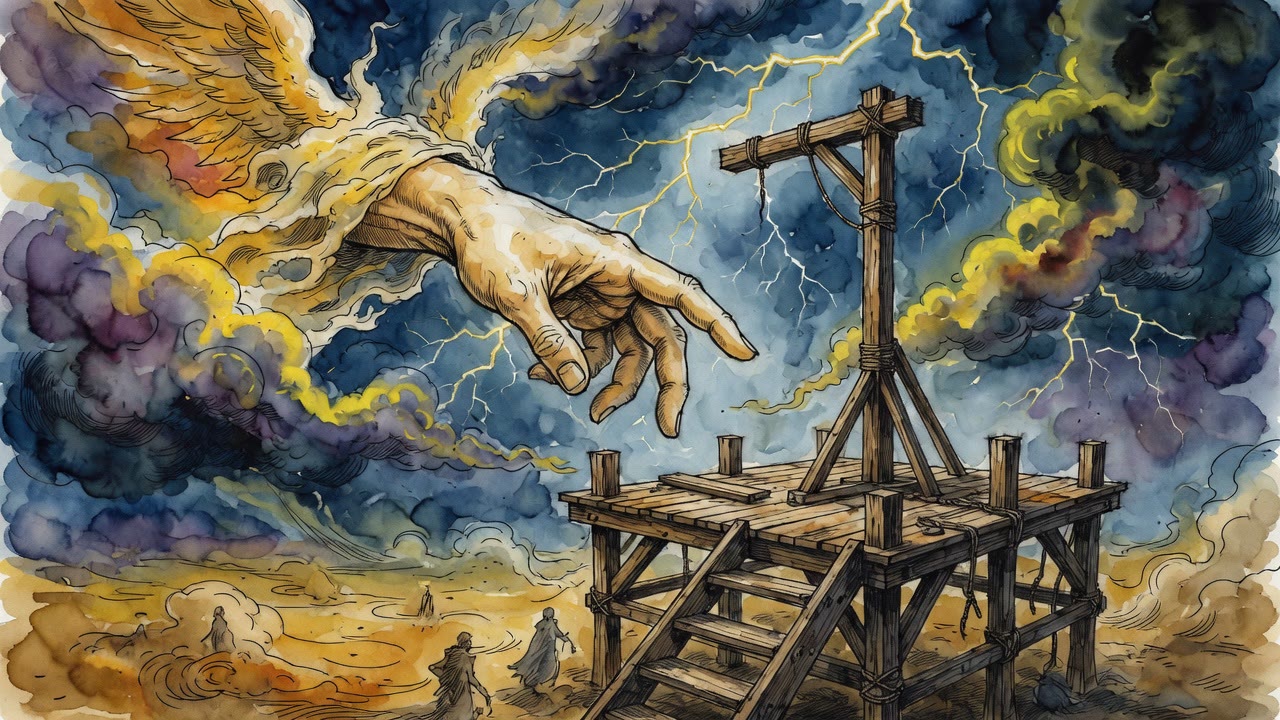
Haman came to the palace at dawn to ask for a hanging. The king spoke first and asked how to honor a favored man, and Haman described a parade for himself.
Hannah left her weaned son under curtains instead of a roof. South of the city, a father walked seven doors toward bronze hands.
In Midrash Panim Acherim, Purim does not begin in a palace. It begins at a Jerusalem construction site Haman had already moved to stop.
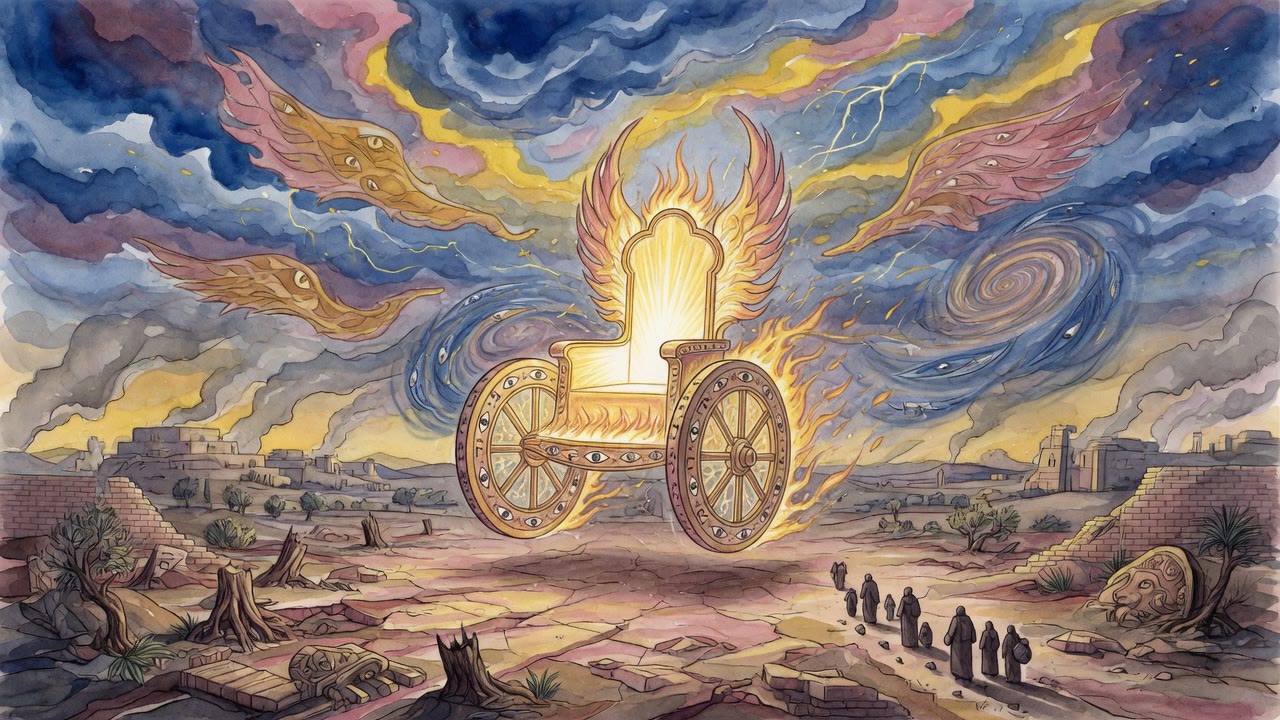
Targum Jonathan counts sixty-four faces and 256 wings on the throne. Ezekiel watches the glory move out through the east gate and waits for it to return.
The builder's son came to the quarry pale as tallow. His thumb would not close. Solomon closed the boy's fingers around a ring cut with the Name.
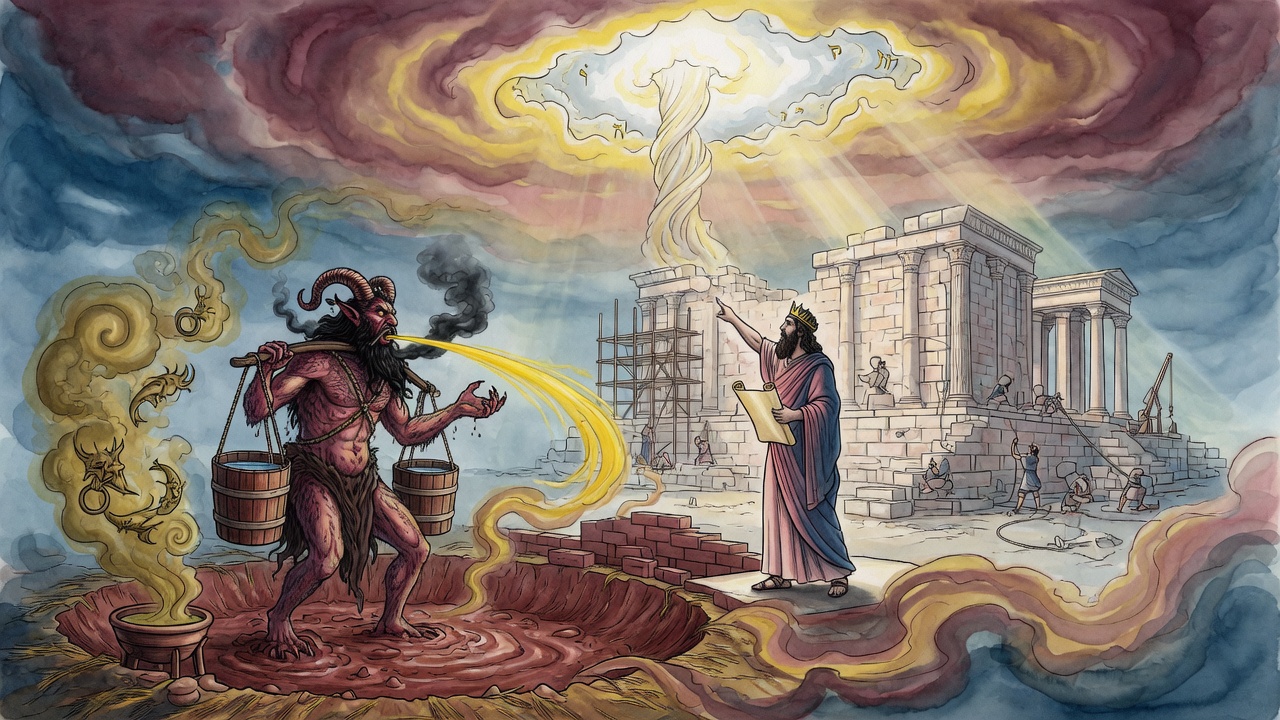
Solomon set Beelzeboul and the powers of darkness to dig his Temple while Benaiah met a queen on the road and shone like the morning star.
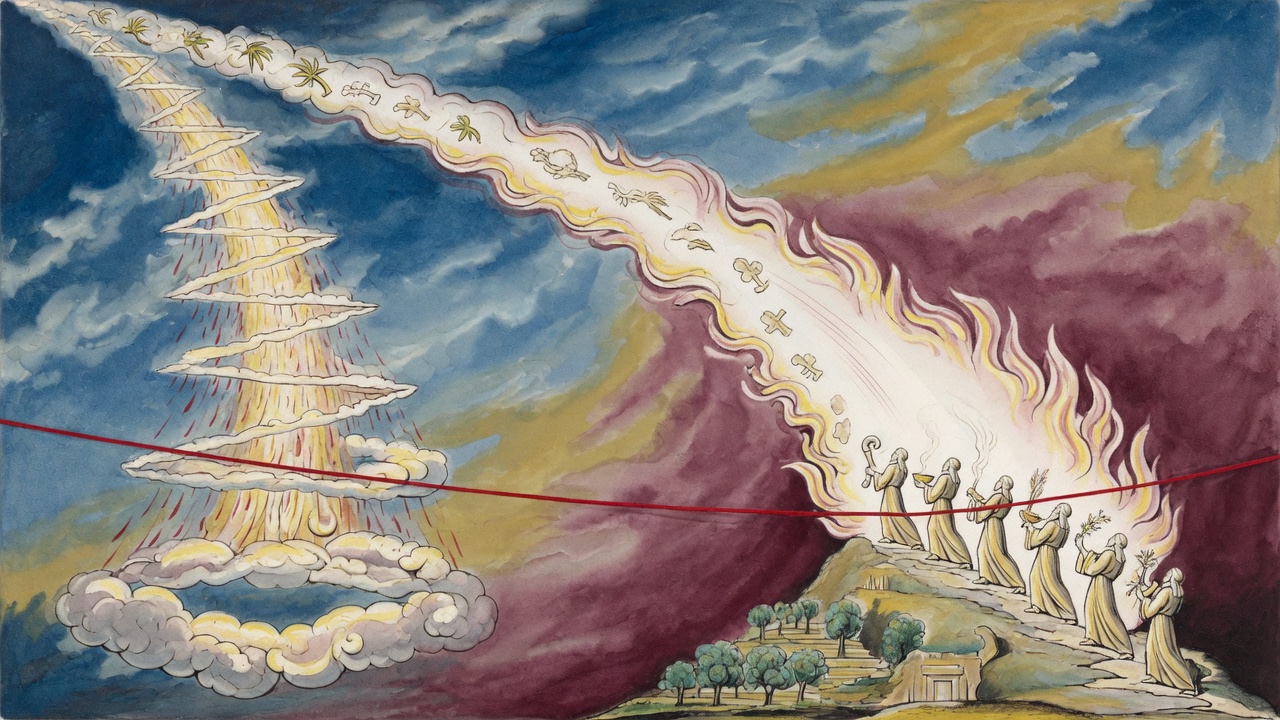
Seven of her sons wore the eight garments of the High Priest. Jerusalem watched them climb the Temple steps, and the sages came to her door to ask why.
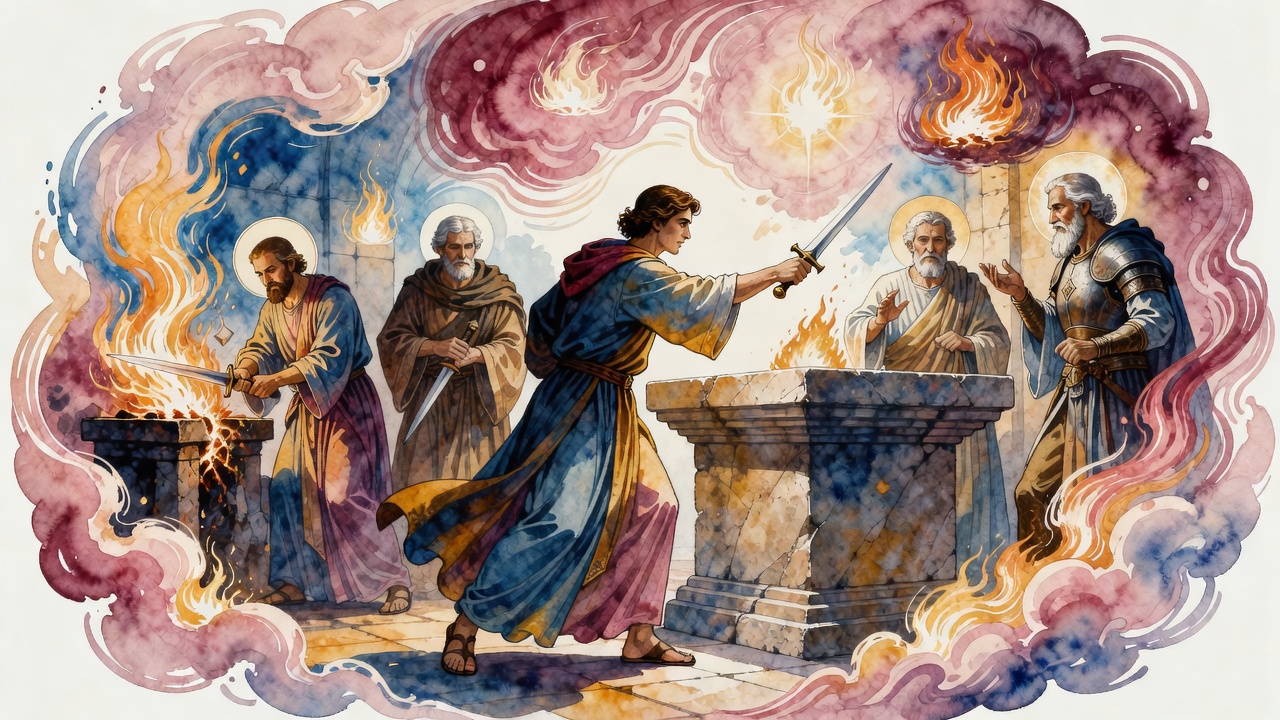
The report reached him and the light went out of his face. Alone in his house he forged a blade two spans long, short enough to vanish under a robe.
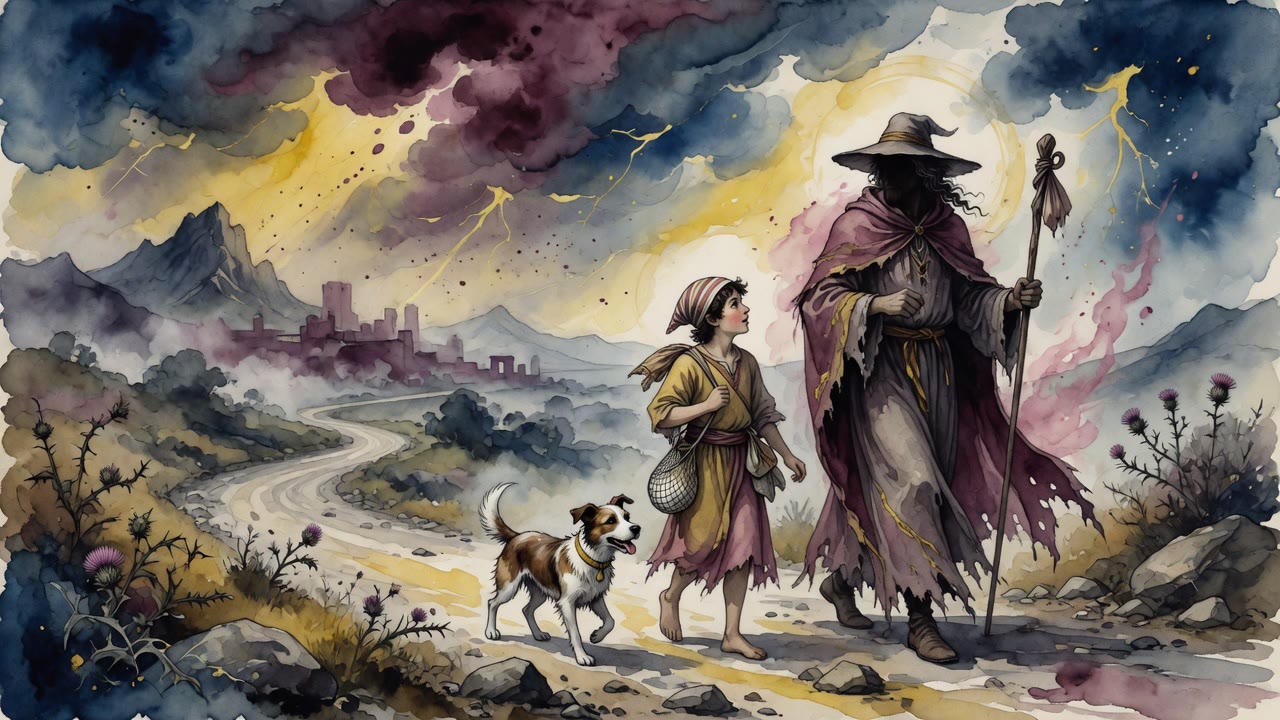
The boy was hidden in the Holy of Holies and lived. Years later his princes called that proof he was a god, and Joash believed them.
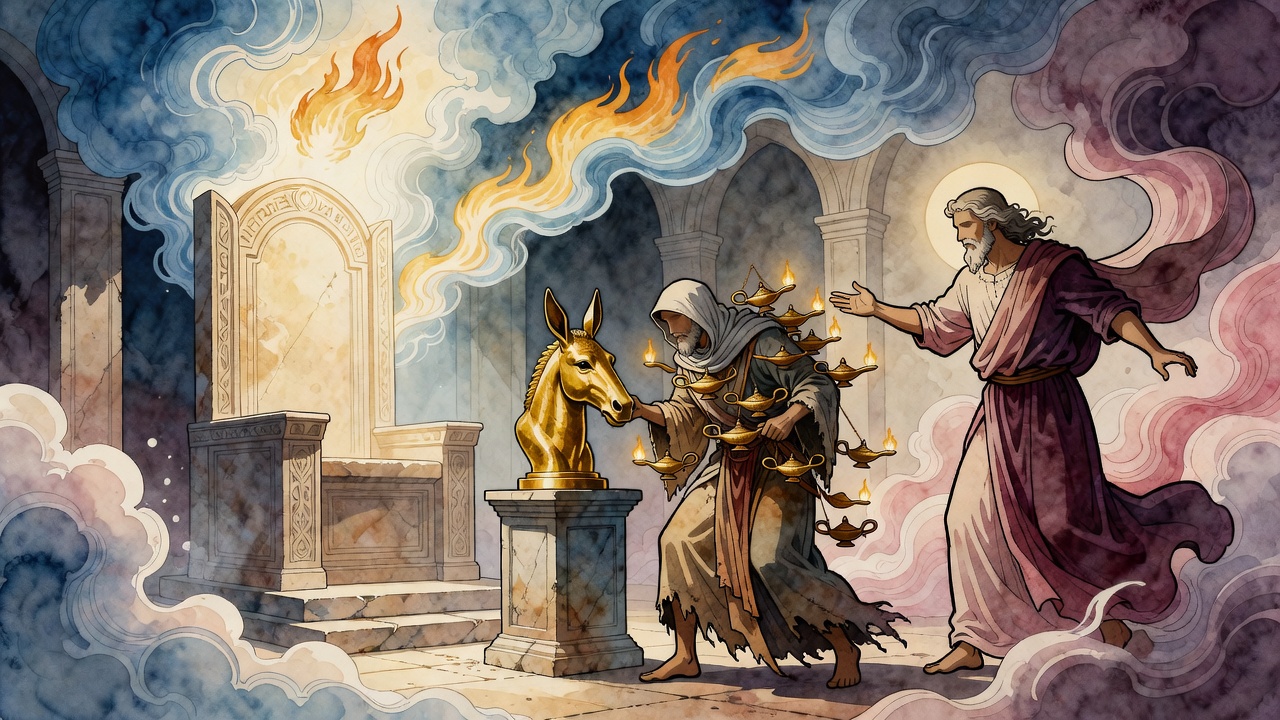
A schemer wrapped himself in lamps to steal a golden ass from the Temple, and Josephus answered by putting the accusers' own gods on trial.
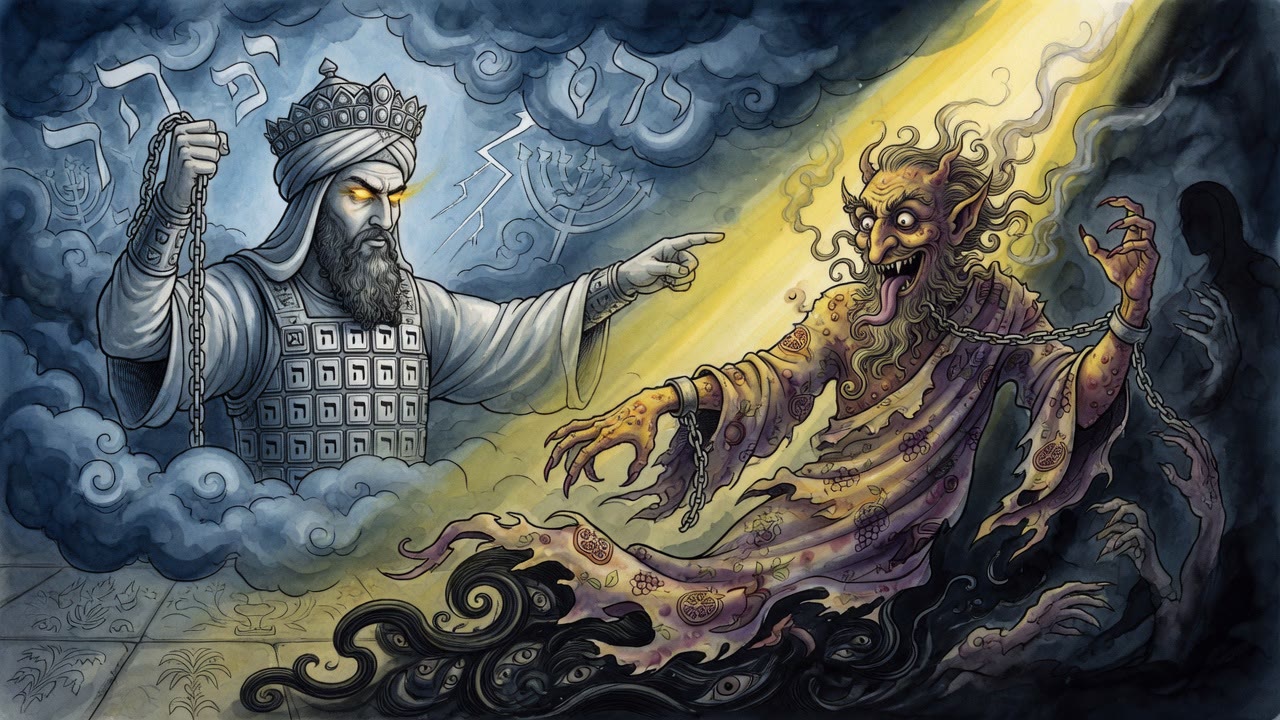
Summoned before Solomon's seal, a restless demon confesses it is what became of the Nephilim, and the wise king binds it to labor on his Temple.
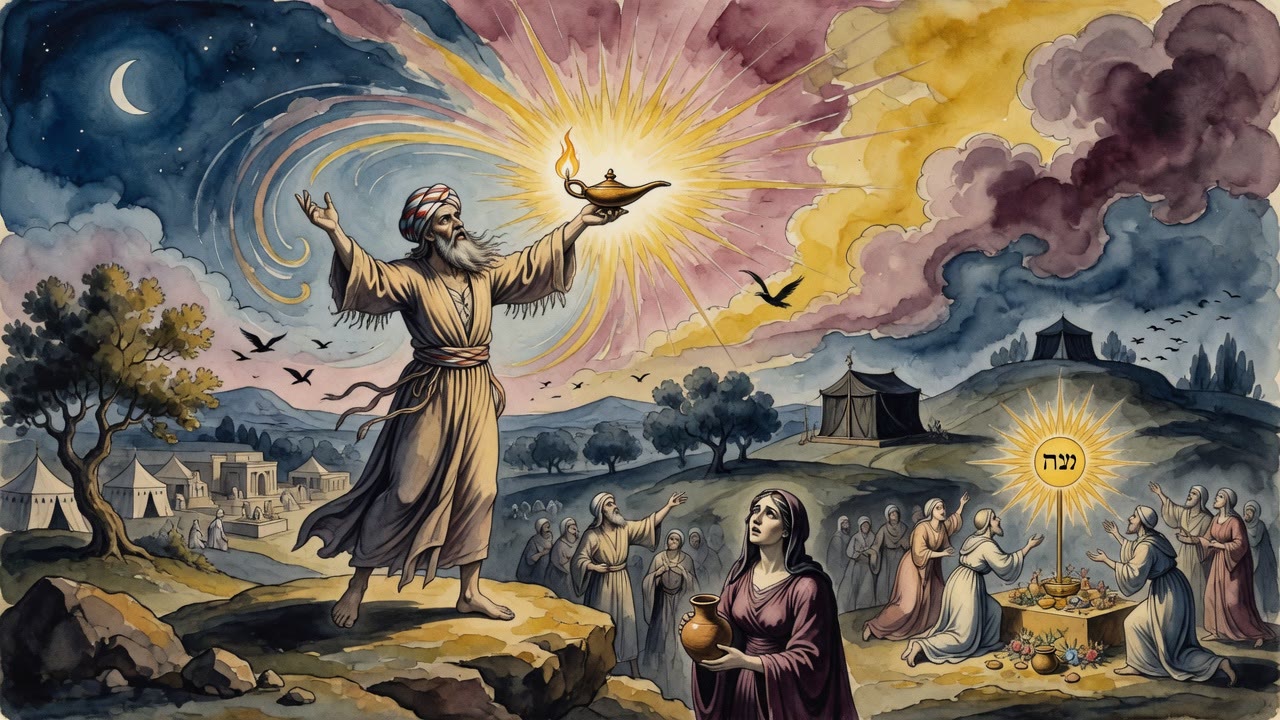
Ahab's daughter married into the house of David, and when her son died she slaughtered the royal seed to seize the throne. One infant escaped.
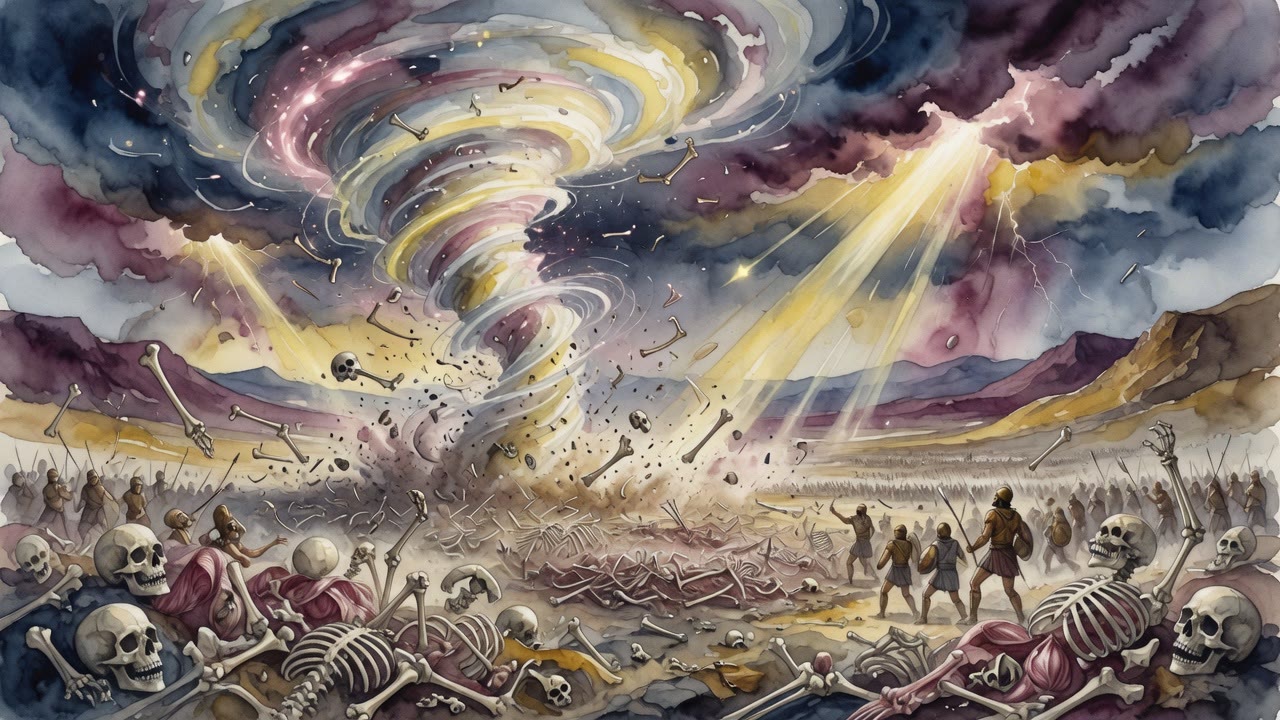
In exile beside a Babylonian canal, Ezekiel is shown a Temple no hand will build, and a river from its threshold that wakes the dead salt sea.
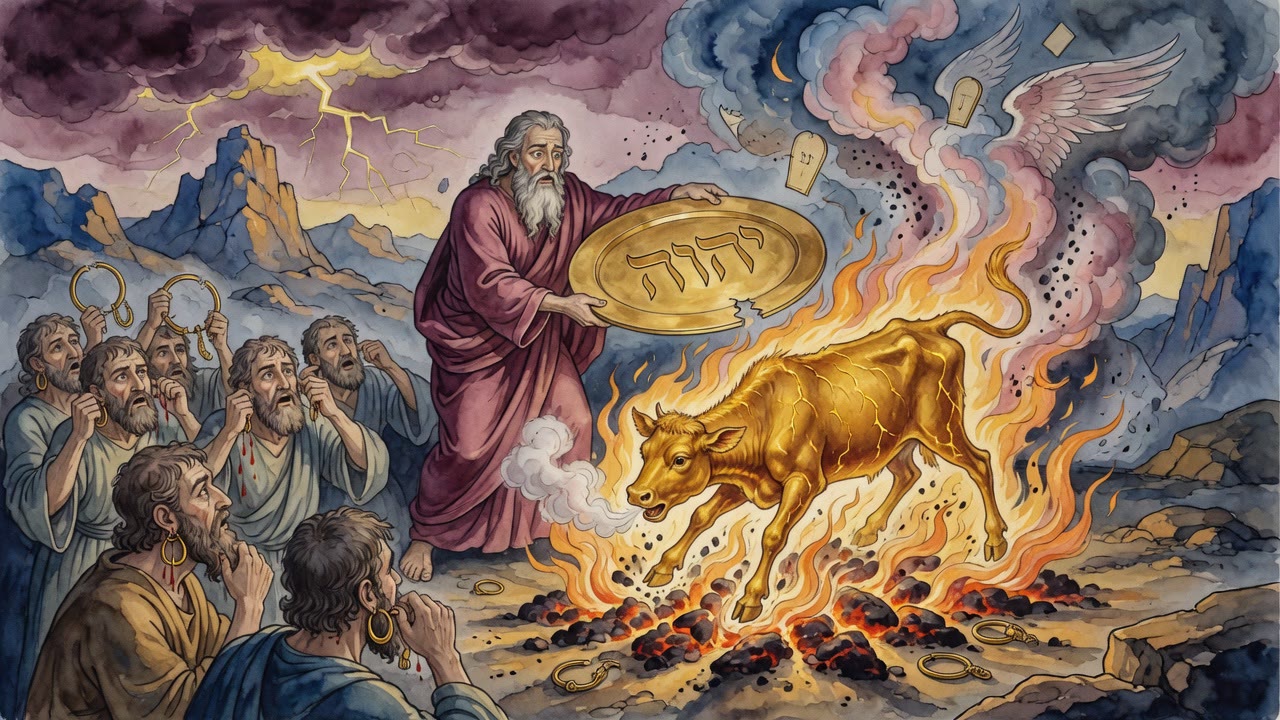
Priests knelt and tied gold around his ankle. He took nine steps into the inner room. Outside, a nation watched the slack line.
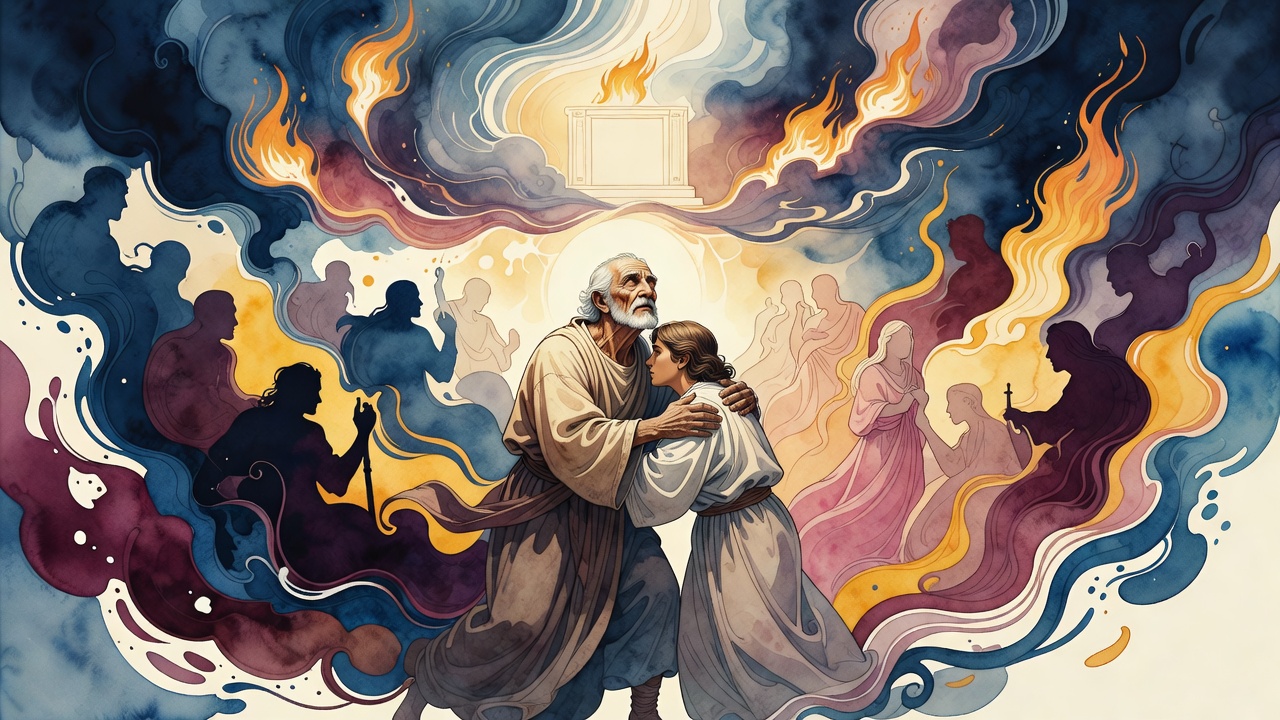
Jacob came in goat skins. Isaac's eyes were dim. The smell that rose off the clothes was not goat. It was a garden he had never walked.
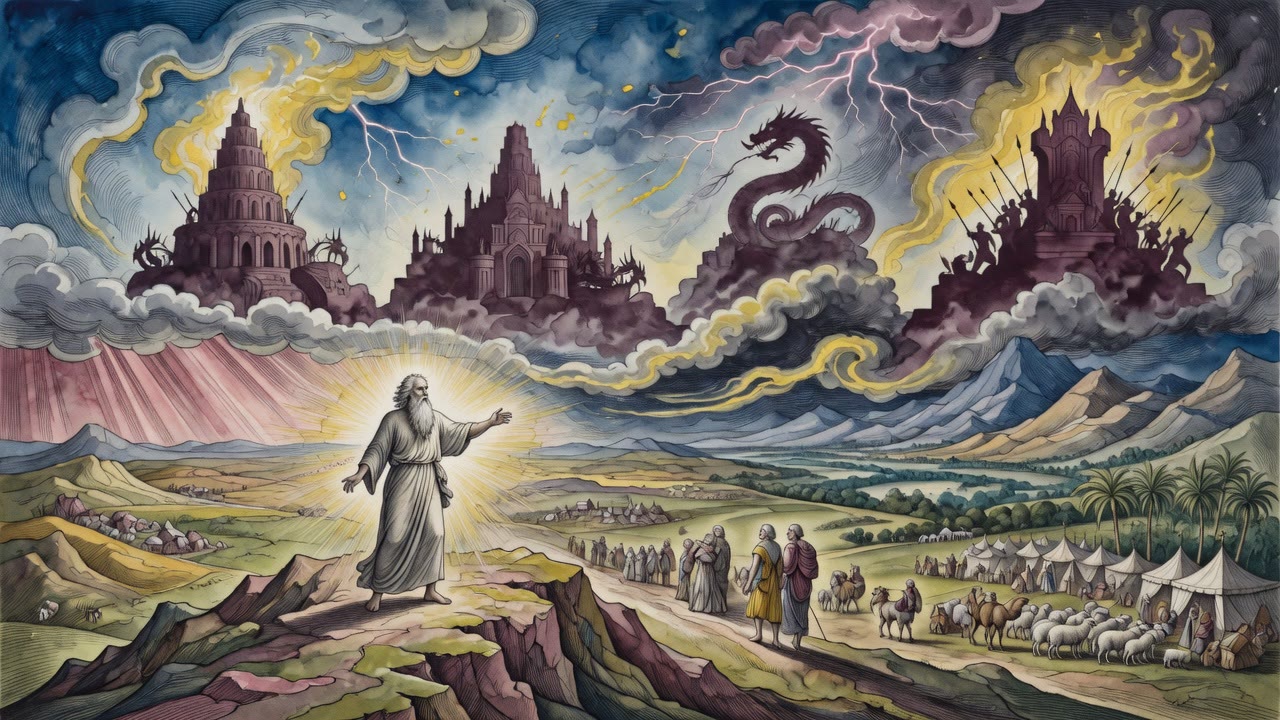
Between the pieces Abraham saw Babylon, Greece, and other powers march through sacrifice. He also learned how study would stand in for a fallen Temple.
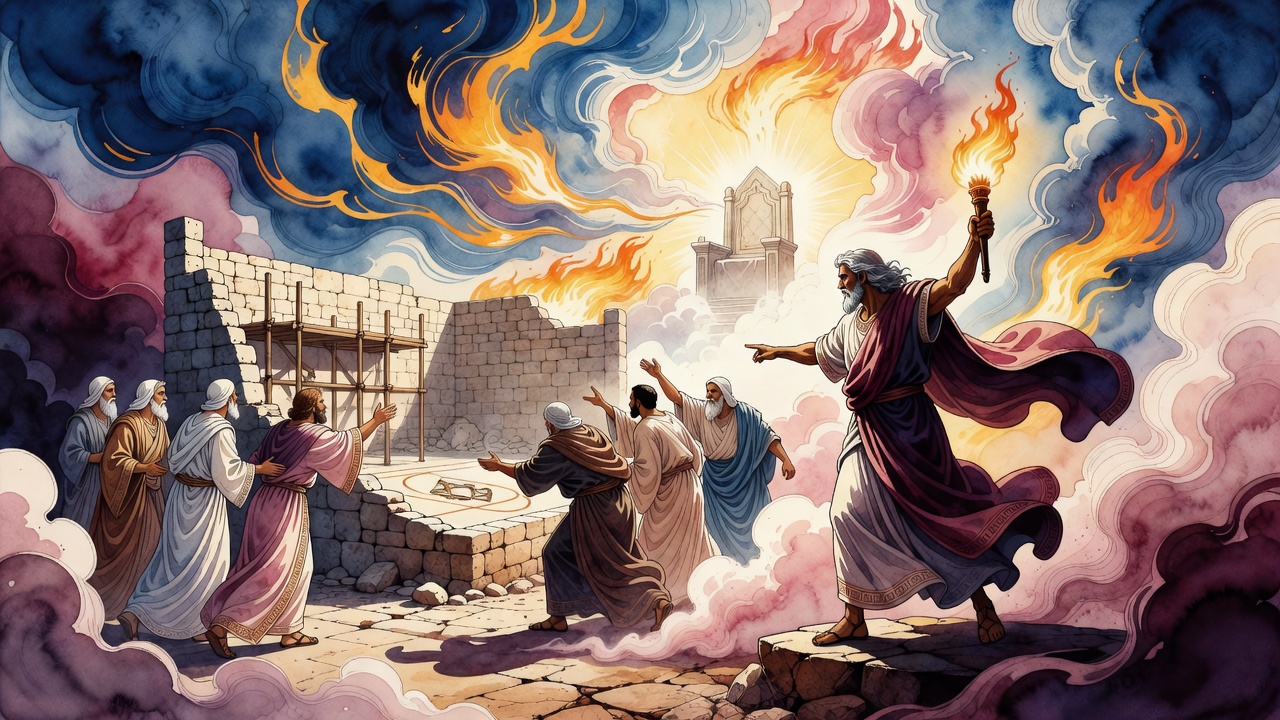
They went to the king for a license to live like the nations. In Jerusalem they cut away the covenant mark and called the gymnasium ease.
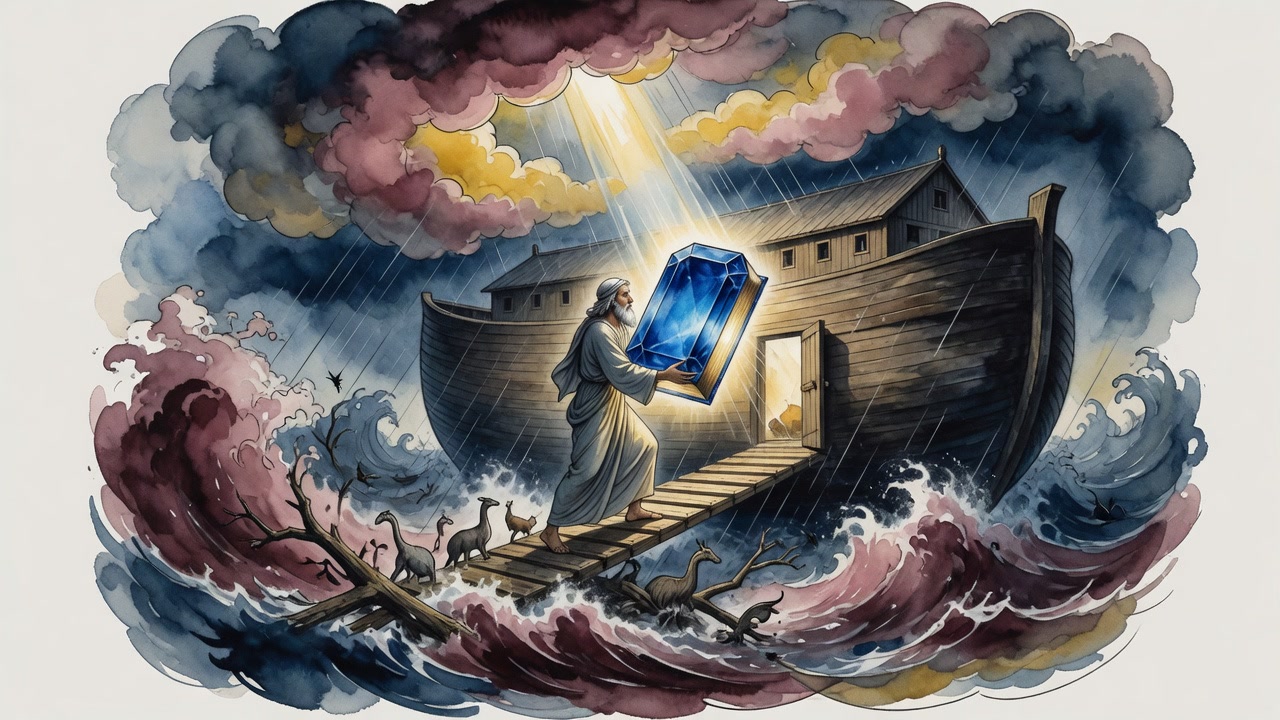
Lot came out of the wagons unchained. The kings' silver followed him like a second army. Abraham would not keep the glory.
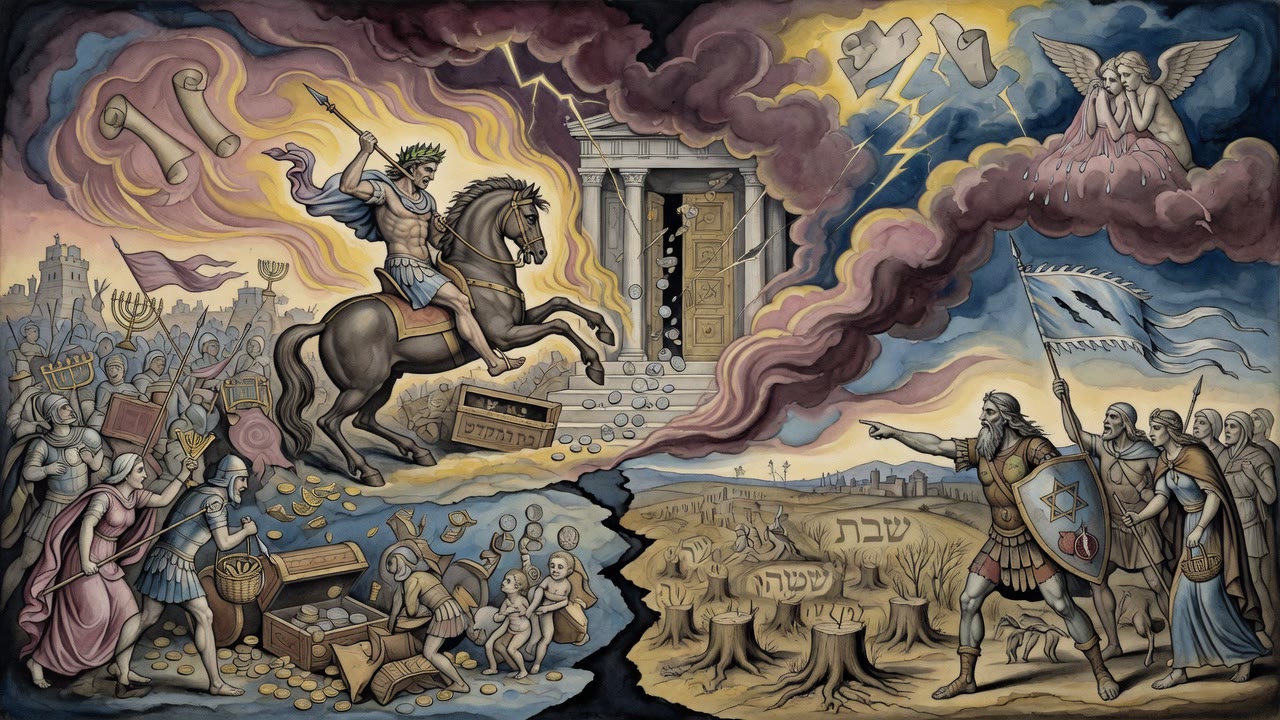
The chests in Antioch were empty. Judas climbed to Zion with the living. In a sabbatical year the barns of Judea held nothing against siege.
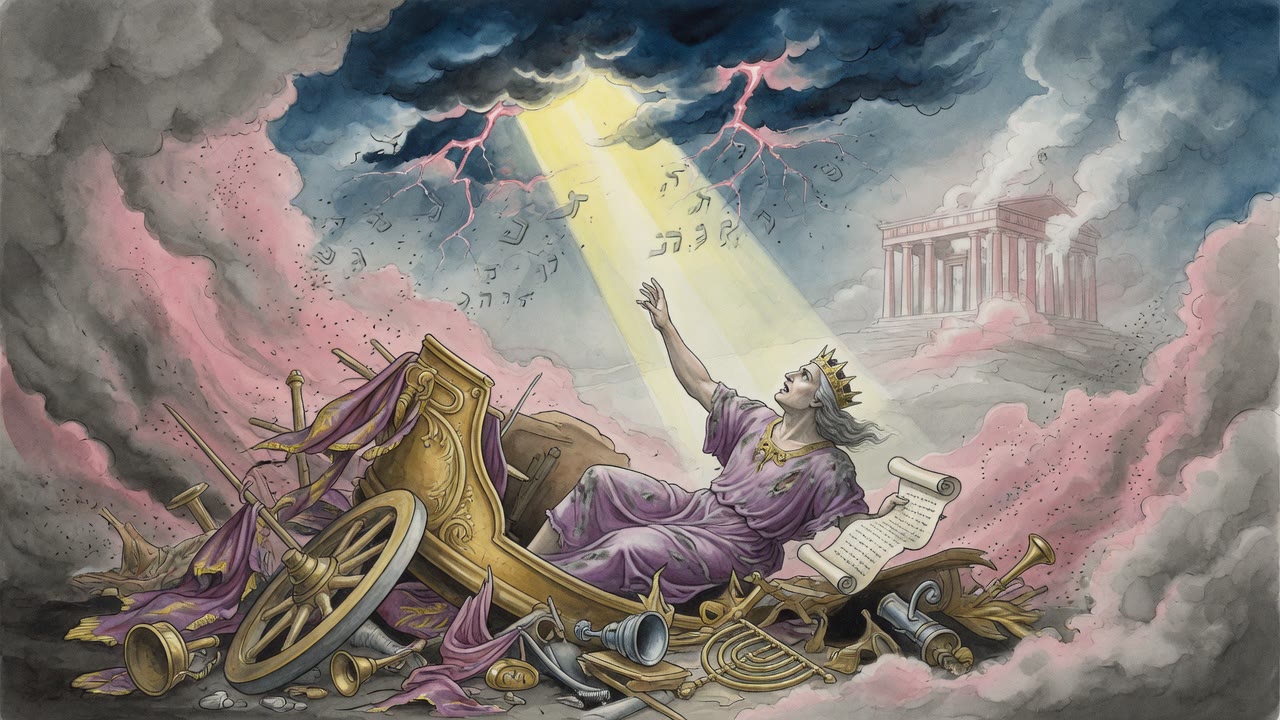
Rumor said the Temple held Alexander's gold shields. Antiochus came to strip it, met battle, and left for Babylon with heaviness in his gut.
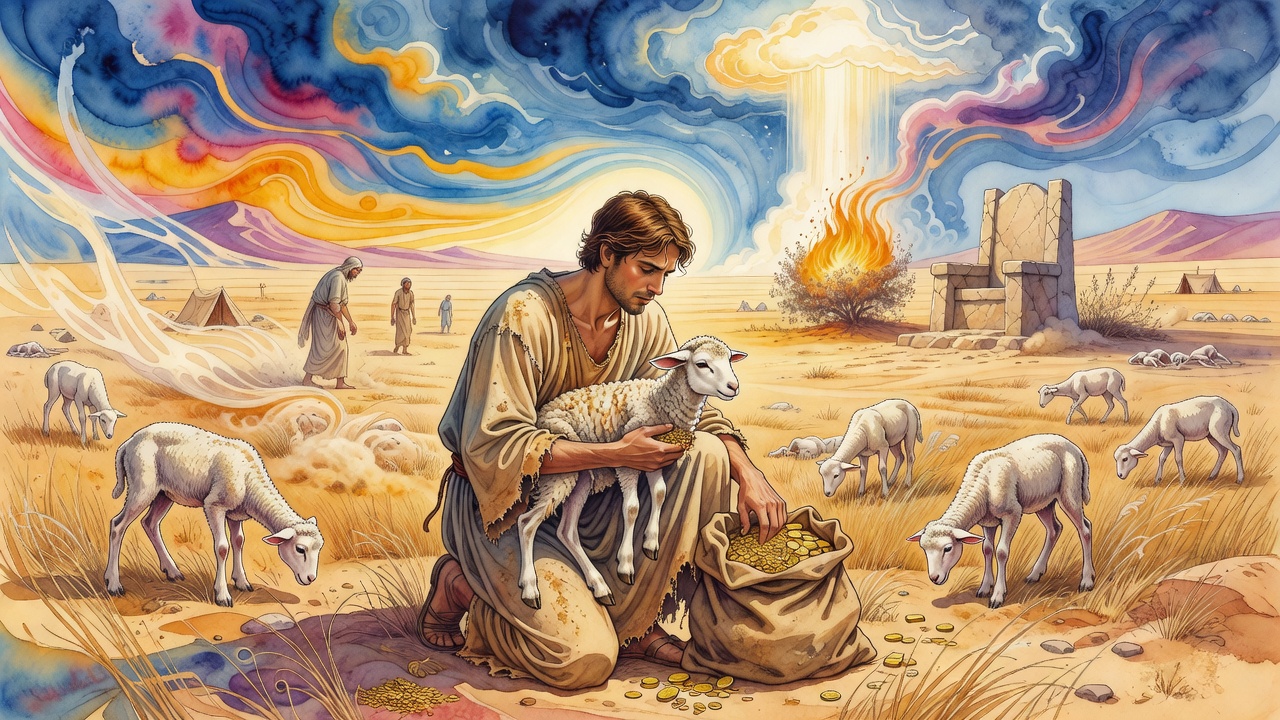
Jesse's outcast son fed lambs the tender grass first. Years later a famine walked Israel, and the Temple gold stayed locked while people starved.
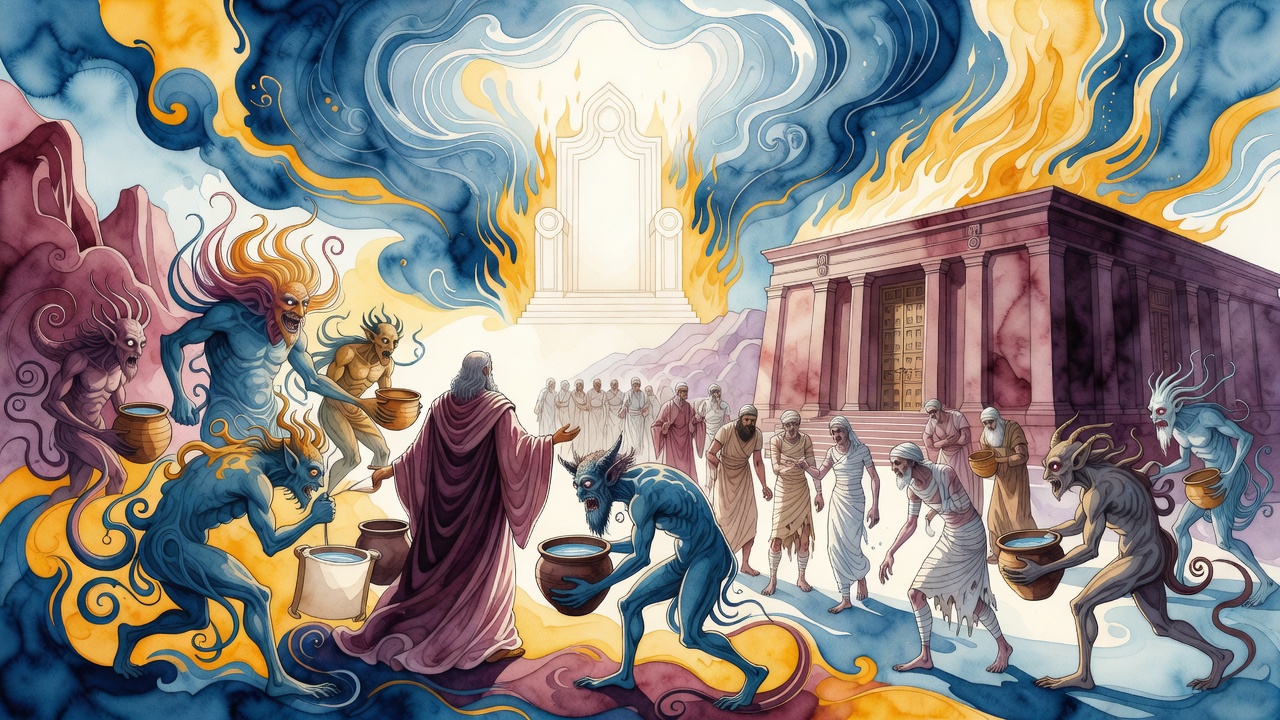
The Temple stood finished and its doors stayed shut for almost a year. The streets laughed at Bath-sheba's son. Then fire fell from heaven.
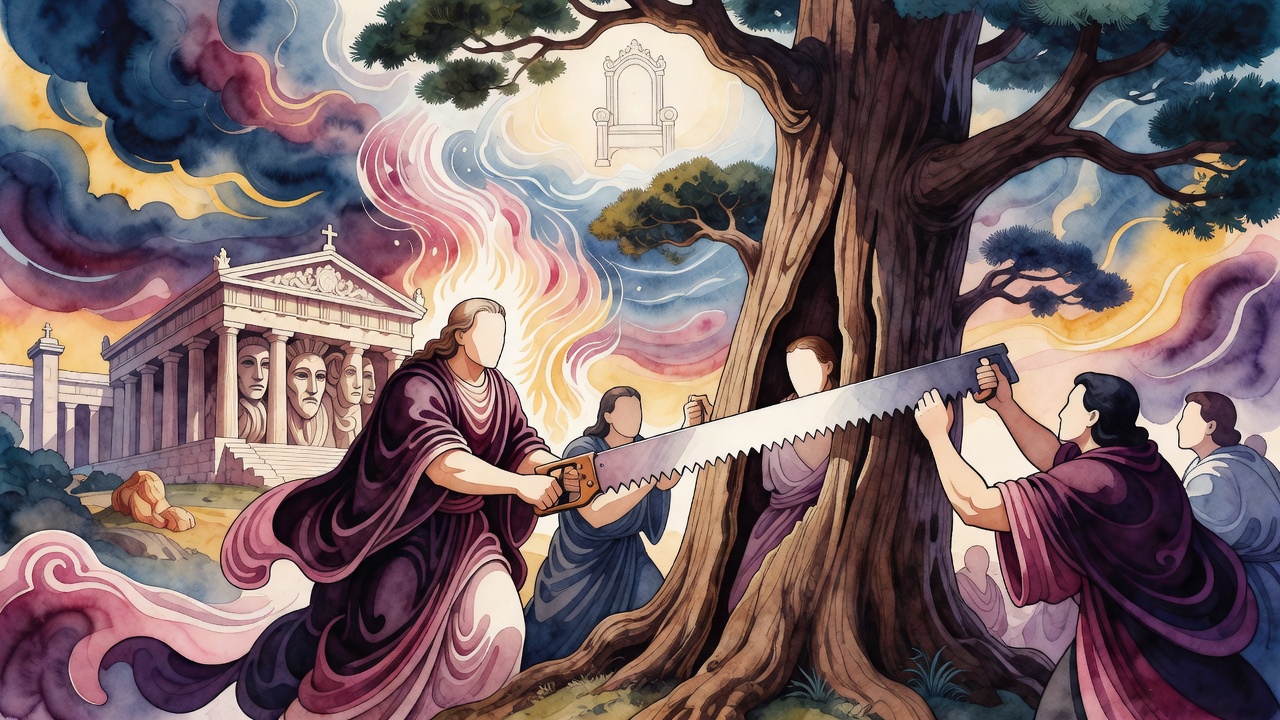
Manasseh filled the Temple with a four-faced idol and chased Isaiah into a tree. They sawed the cedar until the blade reached the prophet's mouth.
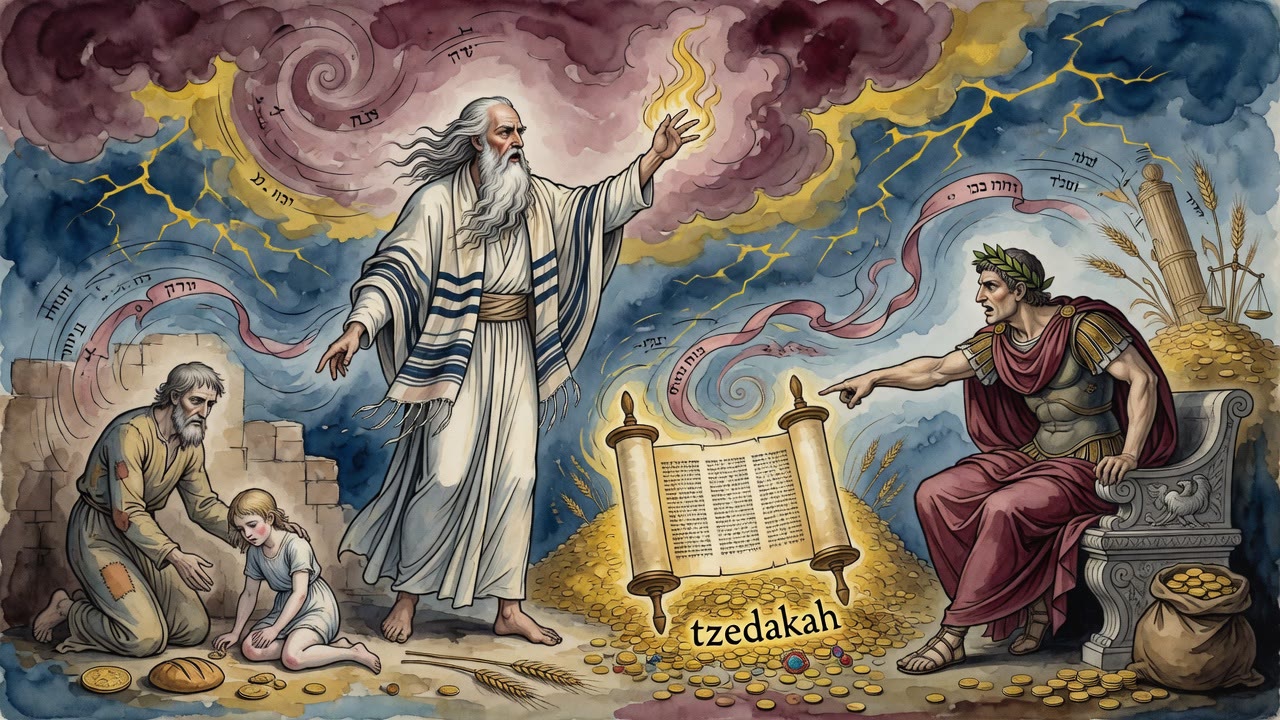
The Assideans saw a priest of Aaron's house and relaxed. He swore they would not be harmed. The army behind him kept its spears.
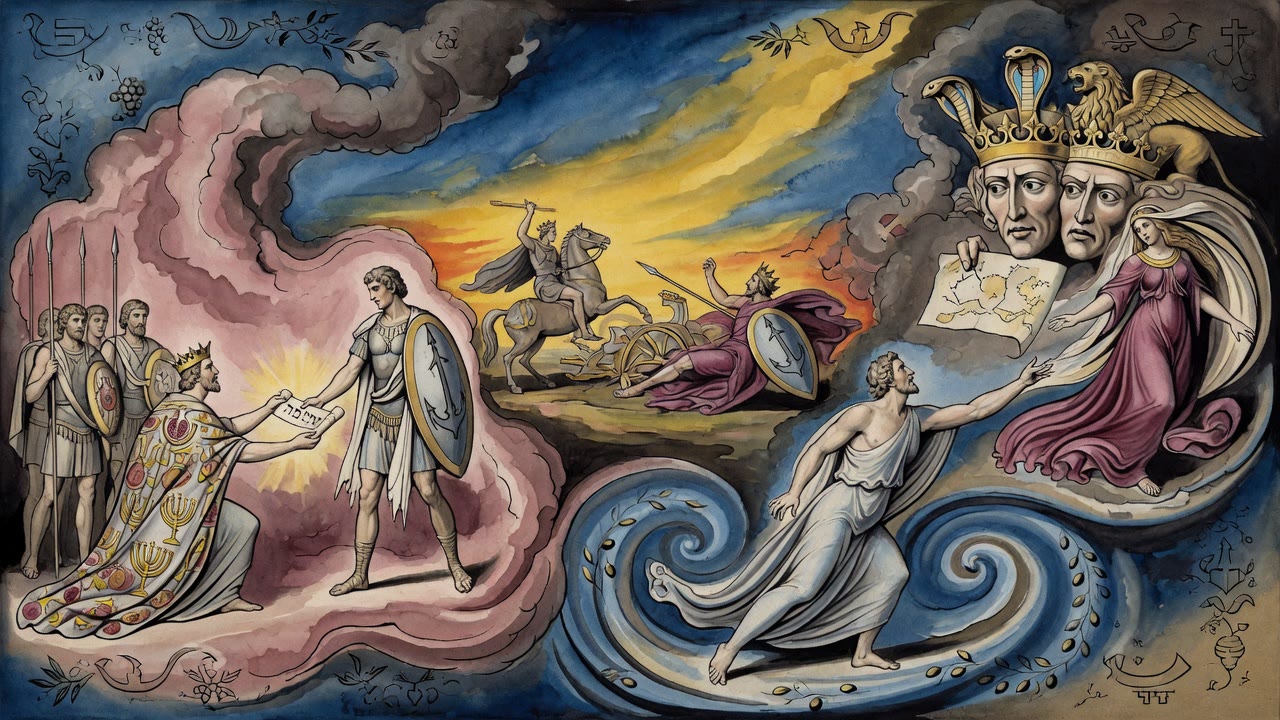
Alcimus locked the chiefs' sons in the tower at Jerusalem. He set tools on the inner wall. His mouth stopped while the stone still stood.
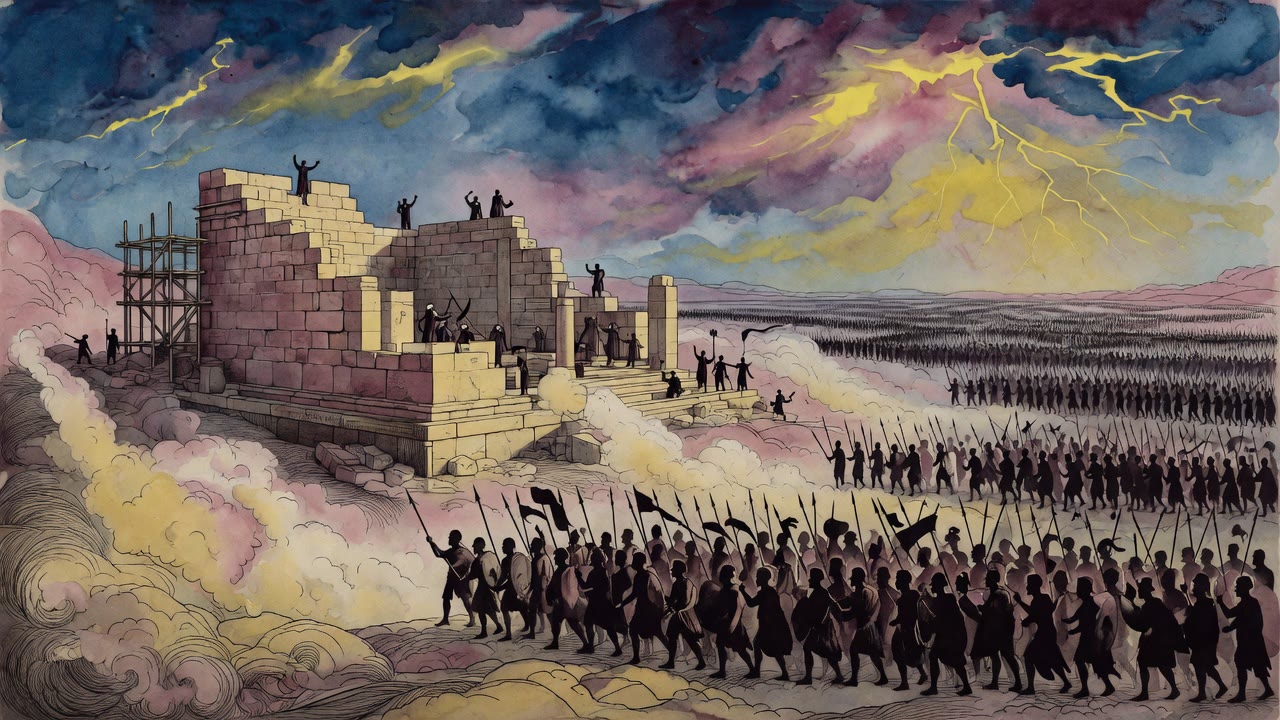
Zerubbabel and Jeshua got the first courses laid before the Cutheans mustered. Then came the friendly invitations to meet Nehemiah in a village.
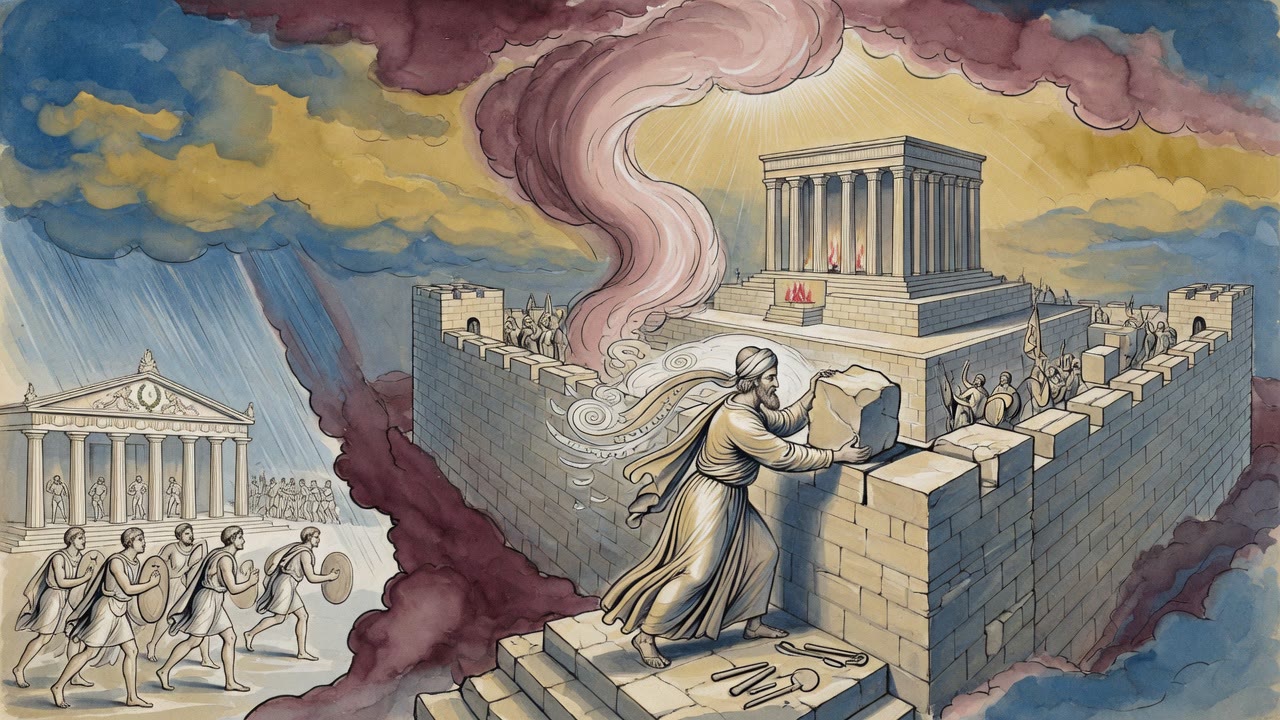
Athenobius came ready to scold a bandit. He found a cupboard of gold plate and a high priest who did not look like a man about to pay.
