367 myths · Page 11 of 13
At the edge of death, Moses faces betrayal, brings his whole life before heaven, and wrestles the Angel of Death until his soul finally lets go.
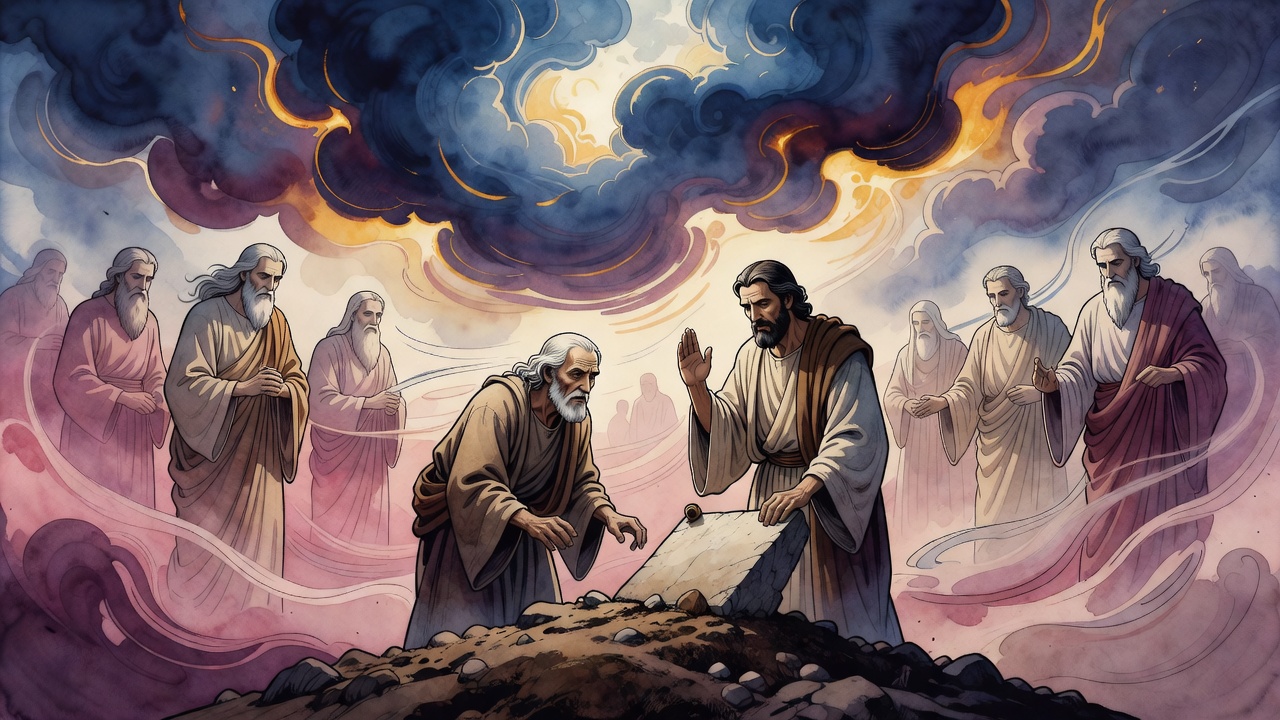
When Moses read the curses of Deuteronomy, the sun went dark and earth trembled. The patriarchs wept from their graves until God spoke to them.
Moses built a case before God that his punishment was harsher than Adam's, though his sin was smaller. God answered every argument. The decree held.
Heaven punishes the angels before the nations, Moses cross-examines God about the land, and even the timing of death bends around the covenant's terms.
Devarim Rabbah links covenant blood and a stumbling prayer leader to one rule: no one in Israel is asked to say the whole blessing alone.
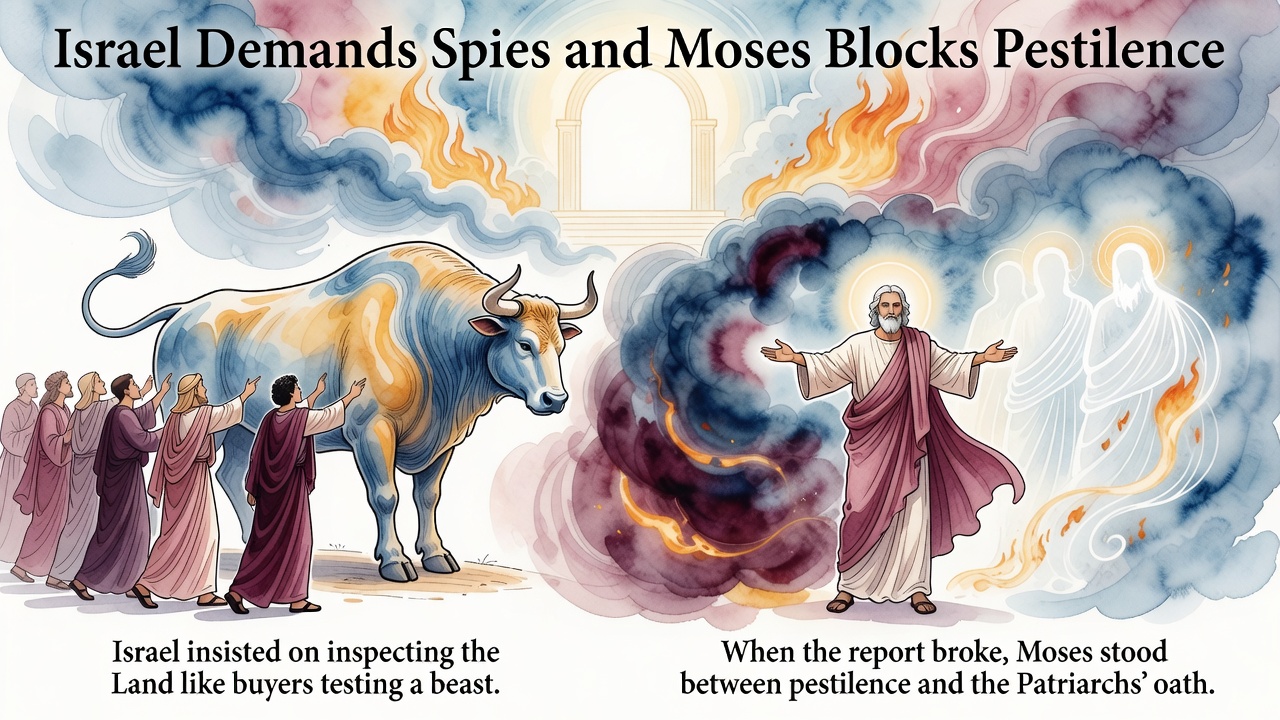
After the Golden Calf, God gave Moses the rule of intercession: when one pours hot, the other pours cold. The rule that saved Israel could not save Moses.
Joshua cast lots to divide Canaan among the twelve tribes. The rabbis said the lots already knew the answer. Jacob had written it four centuries earlier.
When Joshua cast lots to divide Canaan, each lot called its tribe's name and territory. The land had known its borders since creation. The lots confirmed it.
When Abimelech came seeking a covenant, Isaac agreed. But Jubilees records what the Torah omits. That night, Isaac said plainly he had sworn under constraint.
David commanded armies and composed half the Psalms. Then he wrote that he was lonely and afflicted. The rabbis explained what kind of lonely a king can be.
Samuel's father was called a second Abraham. Not for miracles, but for changing his pilgrimage path each year to pull more Israelites toward Shiloh.
When David claimed Jerusalem, he was not discovering a place. Adam had prayed there. Noah had built an altar. Abraham had nearly lost his son there.
King David stood at heaven's threshold with two coins in his hand and refused to pretend he could sit at Abraham's table or in Moses' chair.
Lot chose Sodom and seemed to step out of the covenant. The rabbis found a hidden thread running from his fall all the way to King David.
The rabbis traced a thread from Esau's disqualification through the patriarchs to King David, arguing every rejection along the way was necessary.
Rebekah picks Passover night for Jacob's blessing. Decades later, an angel seizes Jacob's thigh and leaves a prohibition still honored.
The rabbis compared Abraham to a vessel struck by a potter. Ten times the tests hit him hard, and still his faith rang true.
On the night Solomon finished the Temple, Pharaoh's daughter hung stars above his bed. He slept through the morning sacrifice while Israel stood and waited.
Samael agreed to accept every condition placed on him, in exchange for ten great lives. The Yom Kippur scapegoat was always meant for him.
Elijah came daily to Rabbi Judah's school. One morning he was late. His explanation for why the Patriarchs could not pray together still echoes.
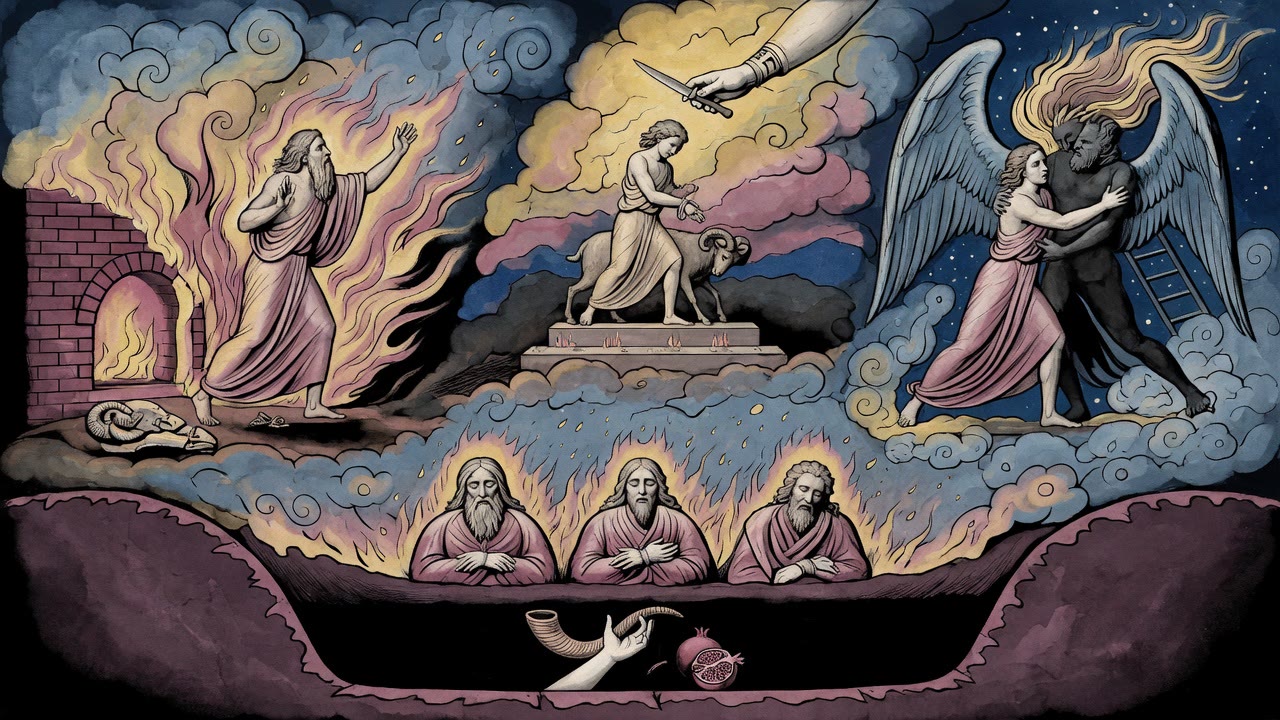
Three men walked out of a furnace. Two priests died inside a sanctuary. And one prophet was taken into the sky without dying at all.
Ben Sira says Elisha was appointed for the time, inscribed before the world broke, sent to heal it with Elijah's doubled spirit.
In the twilight before the first Sabbath, God completed ten things the world would need. One of them was Elijah, made as fire before history began.
Sennacherib marched on Jerusalem with millions of soldiers. His first division drank the Jordan dry. Jerusalem still did not fall.
When Isaiah saw the divine throne and the seraphim singing, he did not sing with them. He spent years believing that silence had cost him everything.
Jeremiah saw Edom fall to small shepherds, but the rabbis said Joseph and Benjamin alone could silence Esau and answer his accusation.
After the Temple fell, God sent Jeremiah to wake the Patriarchs from their graves. Jeremiah lied to them. He feared they would blame him for what had happened.
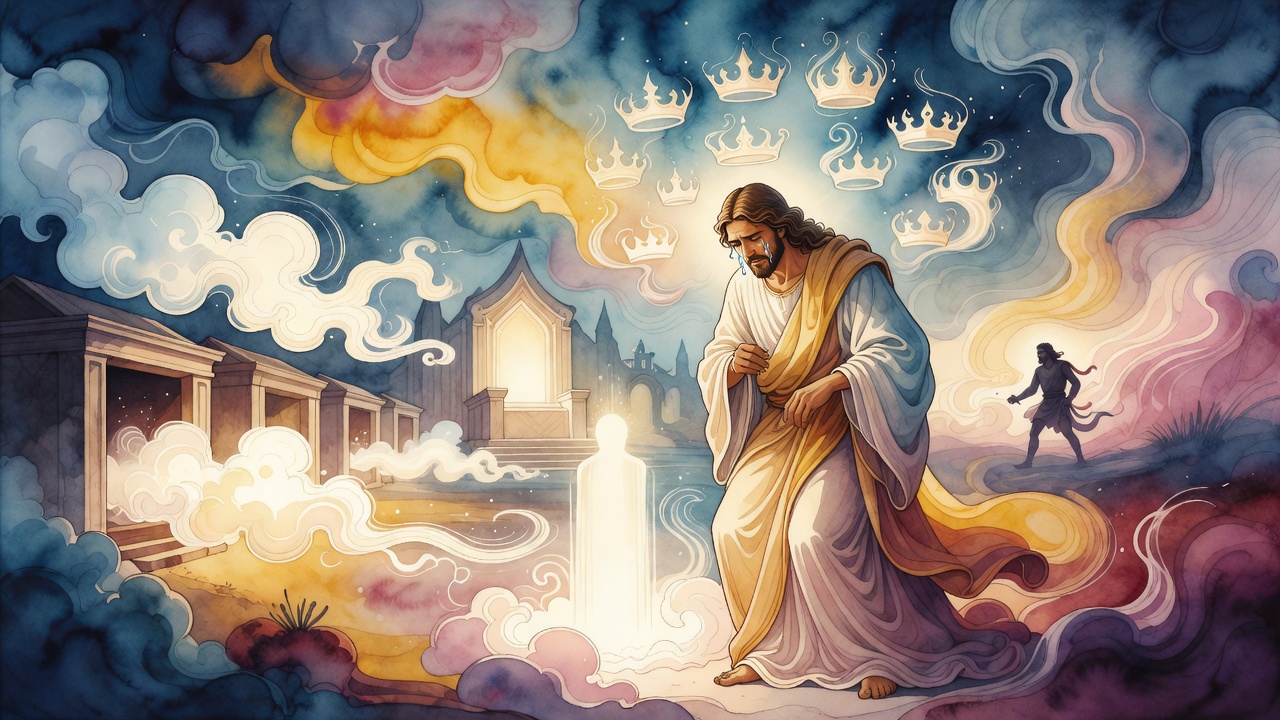
The Temple is burning and the priests have fled. One figure stands in the ruins with no right to be there, refusing to go until God answers him.
After the First Temple fell, Jeremiah was sent to wake Abraham, Isaac, Jacob, and Moses from their rest. He could not make himself tell them the truth.
The sages read the sleeping Jacob as God's throne-chariot, every thirsting bone leaning up while the sun ran its scored track through heaven's gates.