1,018 myths · Page 20 of 34
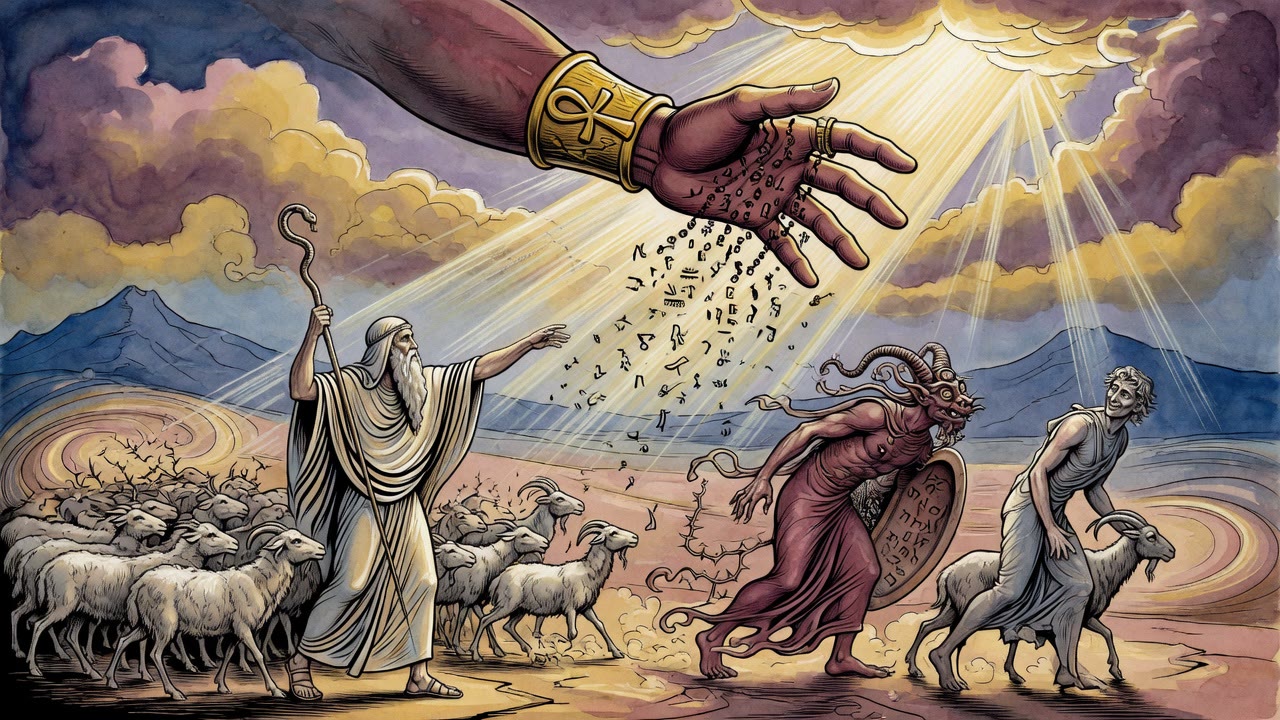
At the sea Moses kindled each phrase and Israel completed it. The Name warred without weapons, and faithfulness turned left hand into right.
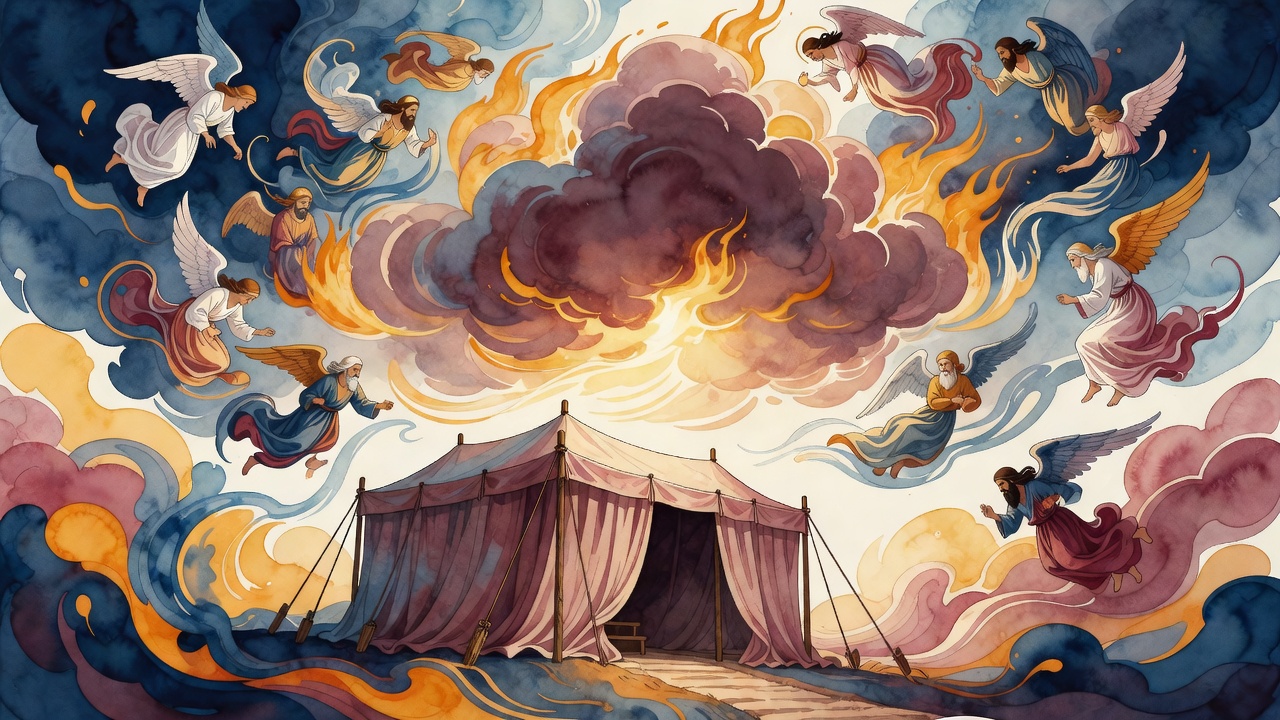
A king told his quarrelsome wife to make herself a royal robe. She sewed for months and never once picked a fight. Then he looked at it and said woe.
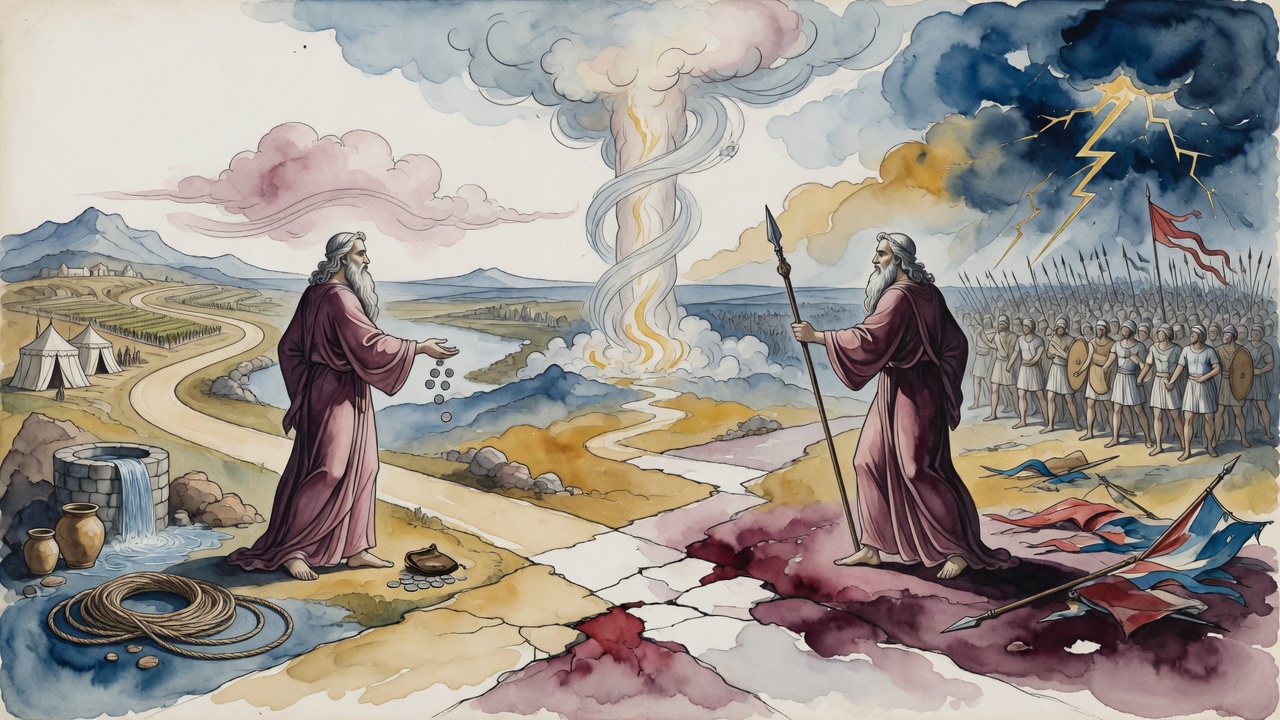
Moses asked Edom for a highway and paid for water he did not need. Against Sihon the same peace became war, and Moses equaled all Israel.
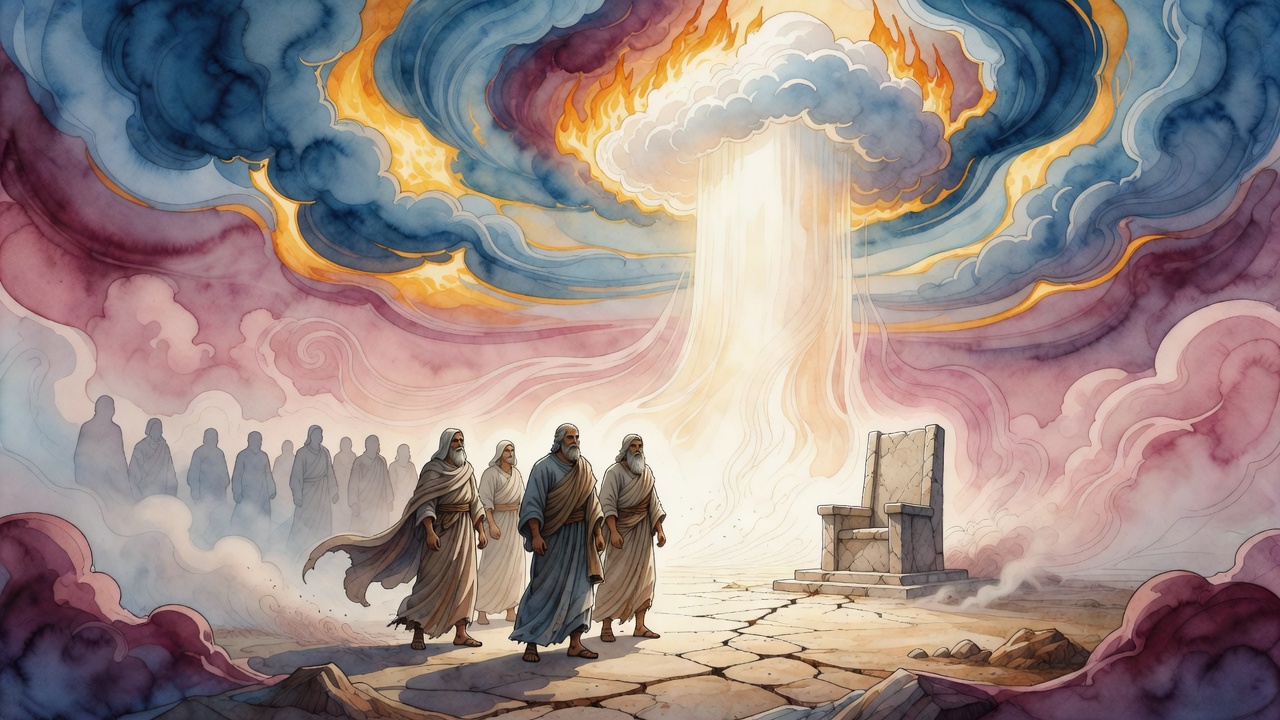
Six families vanished before the lots. God apportioned Canaan to the ones still standing, then retold every stage like a father naming a sick son's road.
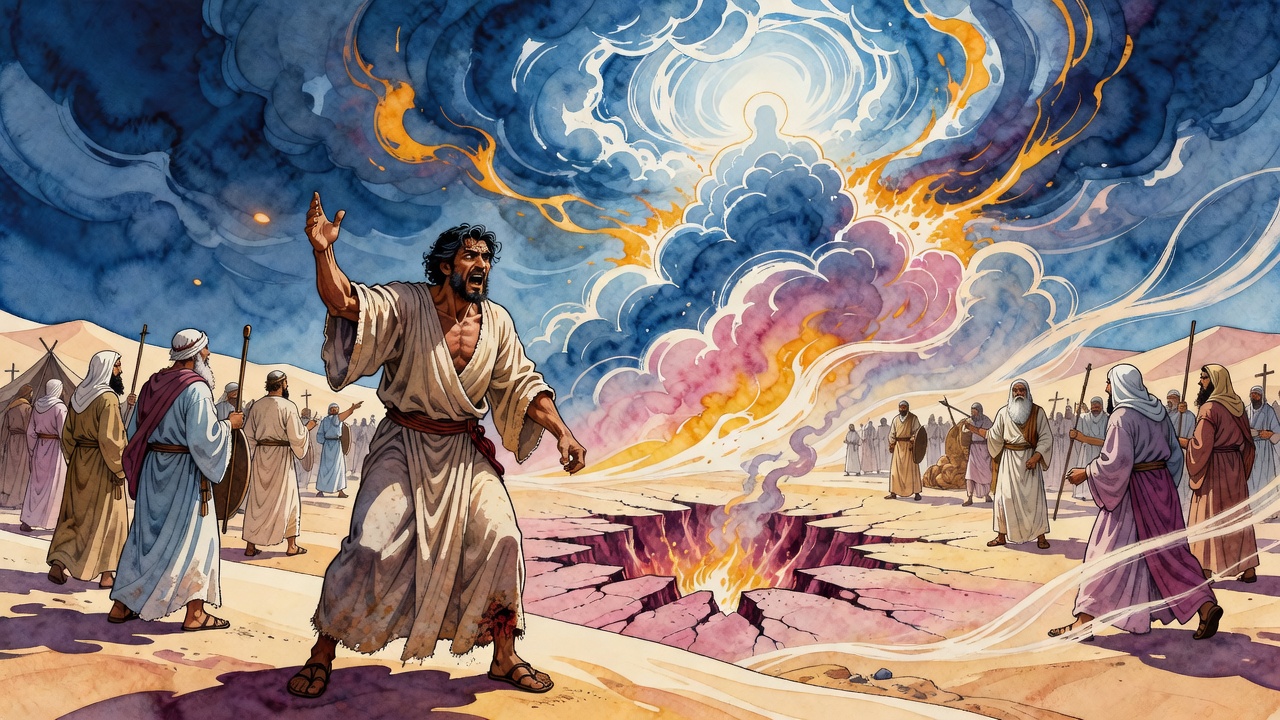
The men of Dan looked at his face and at his father. They closed the gap between their banners and left him holding canvas.
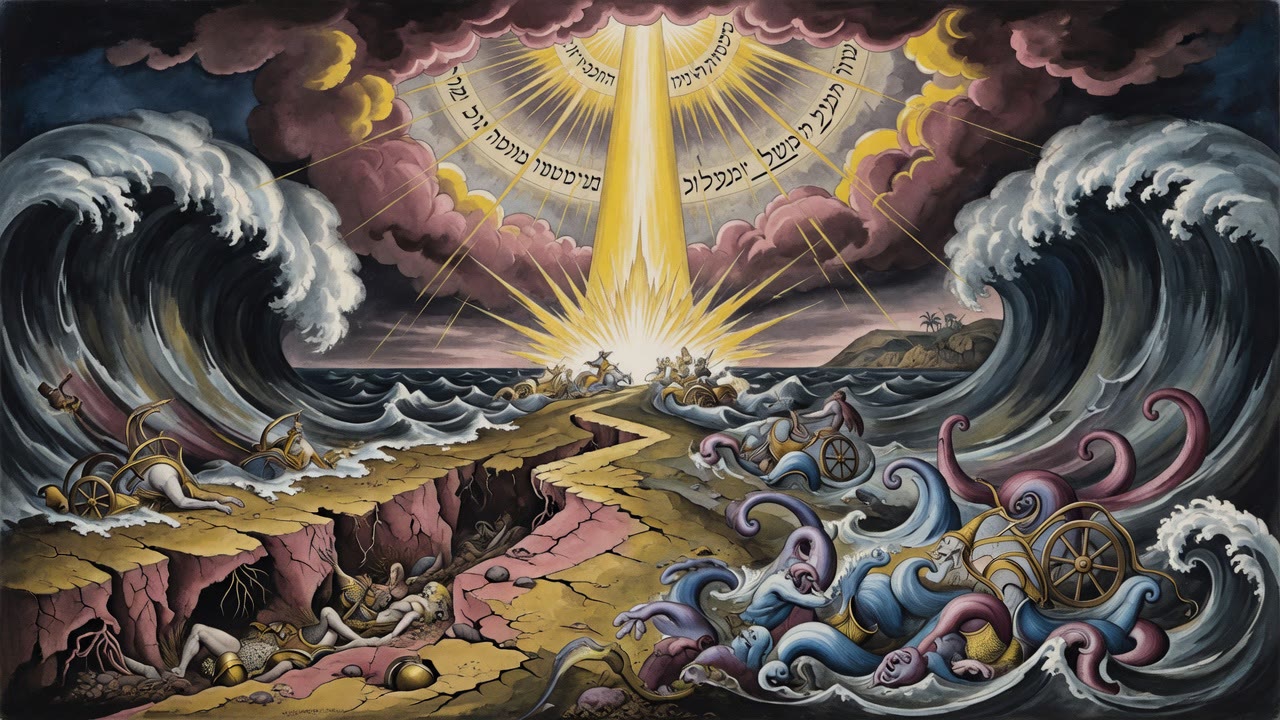
Korah counted Kohath's four sons on his fingers in the tent. The youngest brother's child held the staff. His own hands were empty.
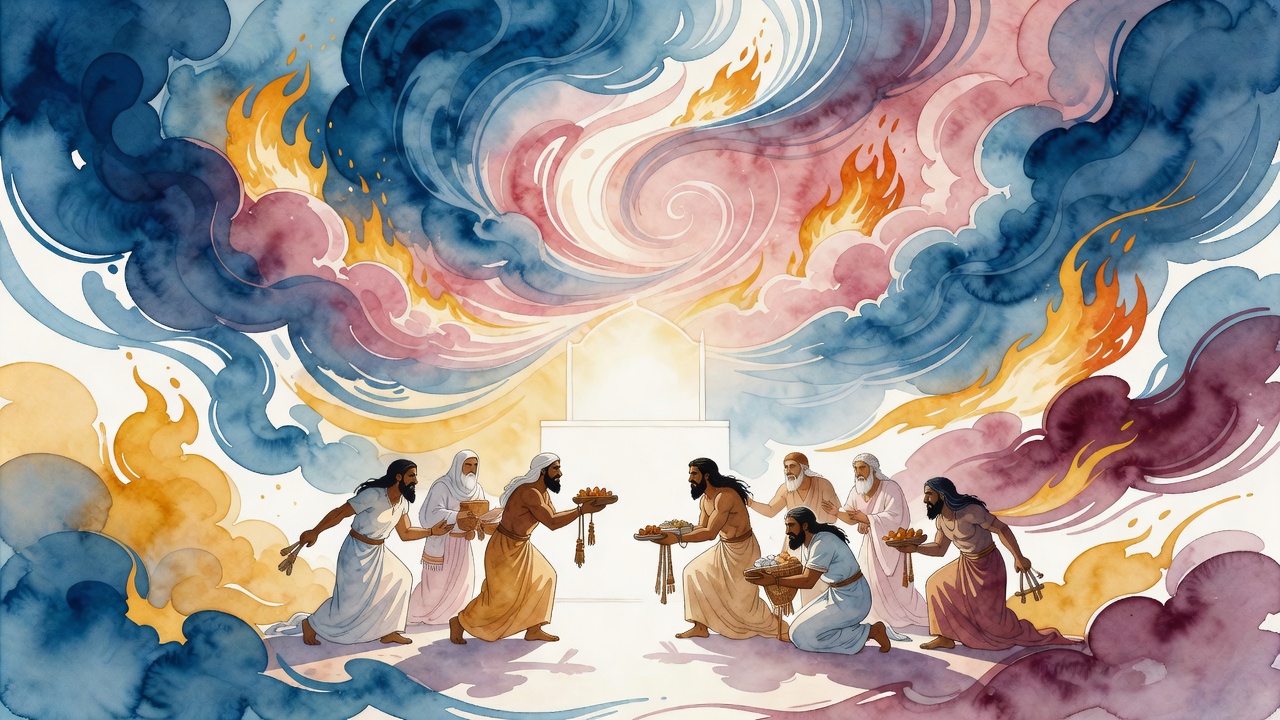
By your lives, God said, I do not need you. Two mornings later Moses had to make the camp stop bringing gold, yarn, and goats' hair.
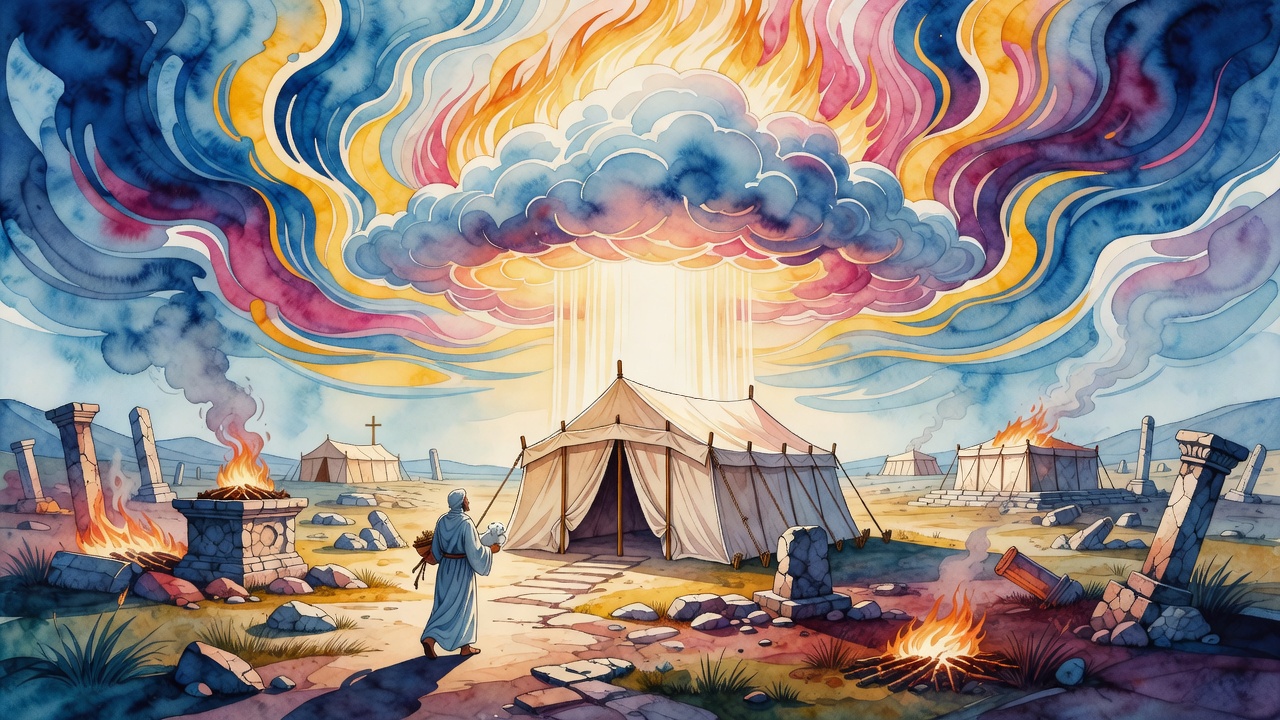
Before the Tabernacle, sacrifice wandered any high place. Once the Tent stood, God demanded one door, then came loaded with blessings like Jacob to Pharaoh.
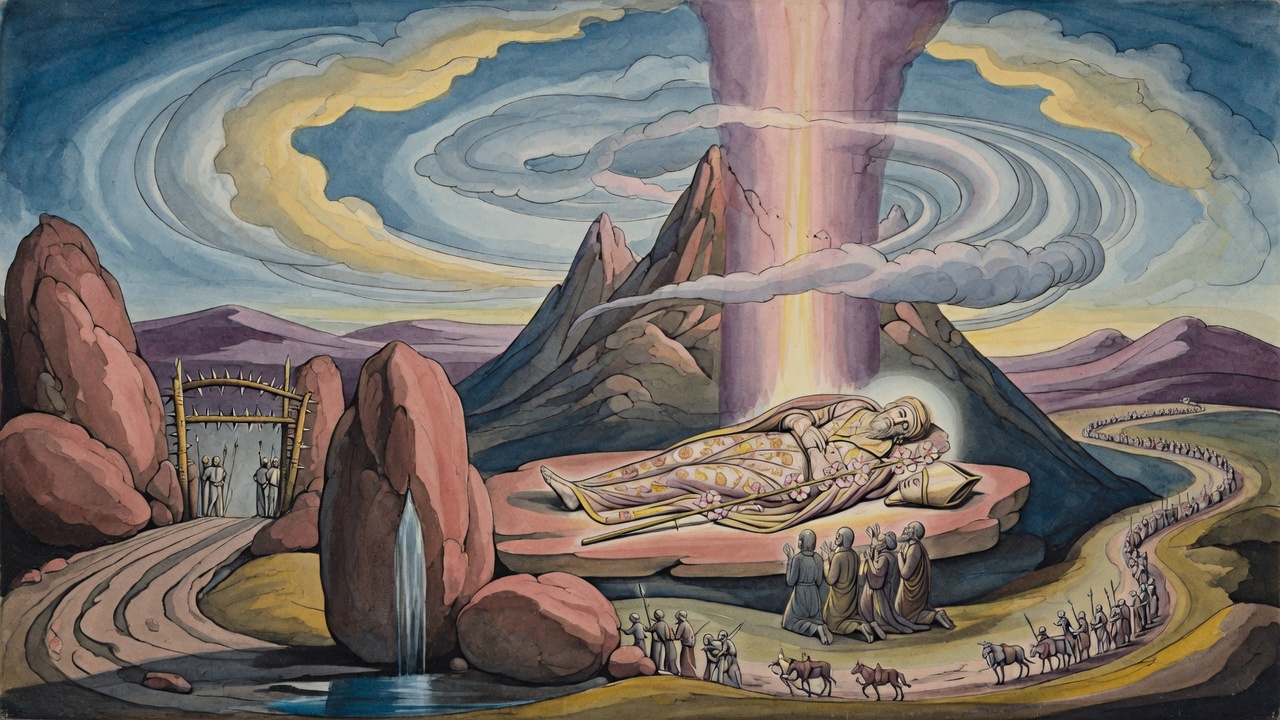
Edom would not open the road. Aaron climbed a mountain like a small apple on a large one. The garments left him while he stood.
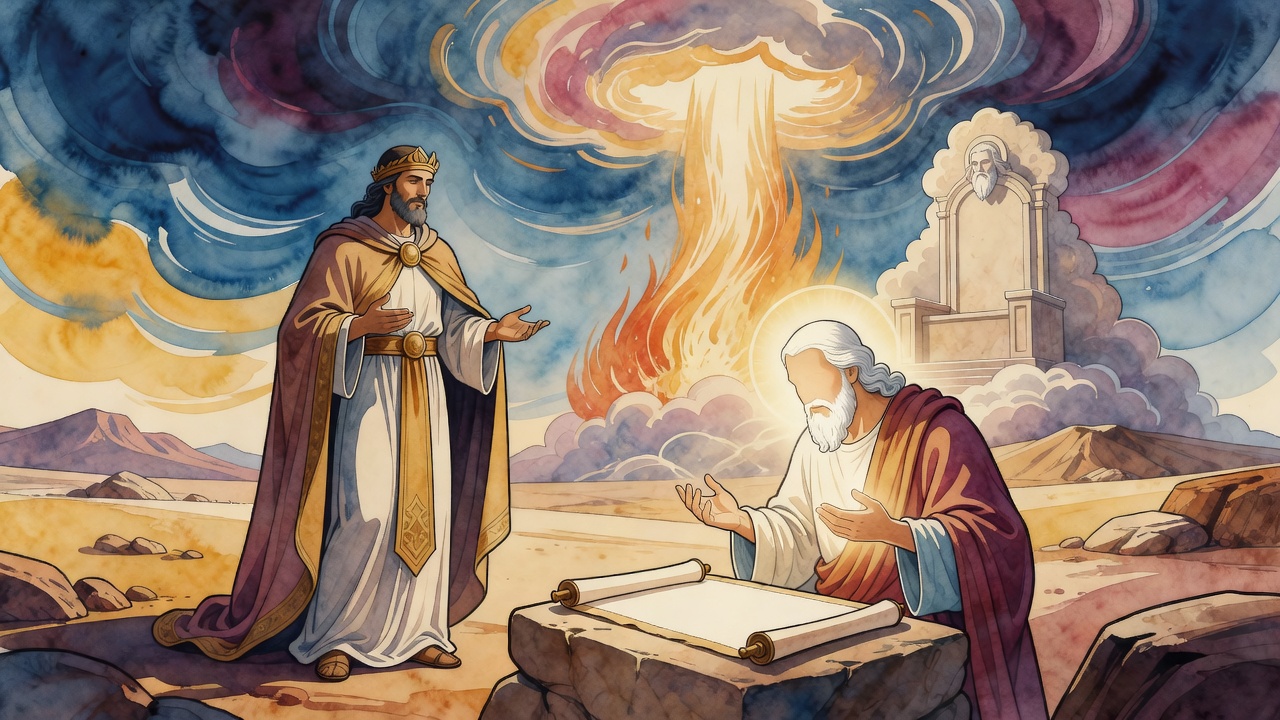
A king kept his daughter hidden from every stranger. One friend saw her face. Moses wrote the betrothal and came down shining.
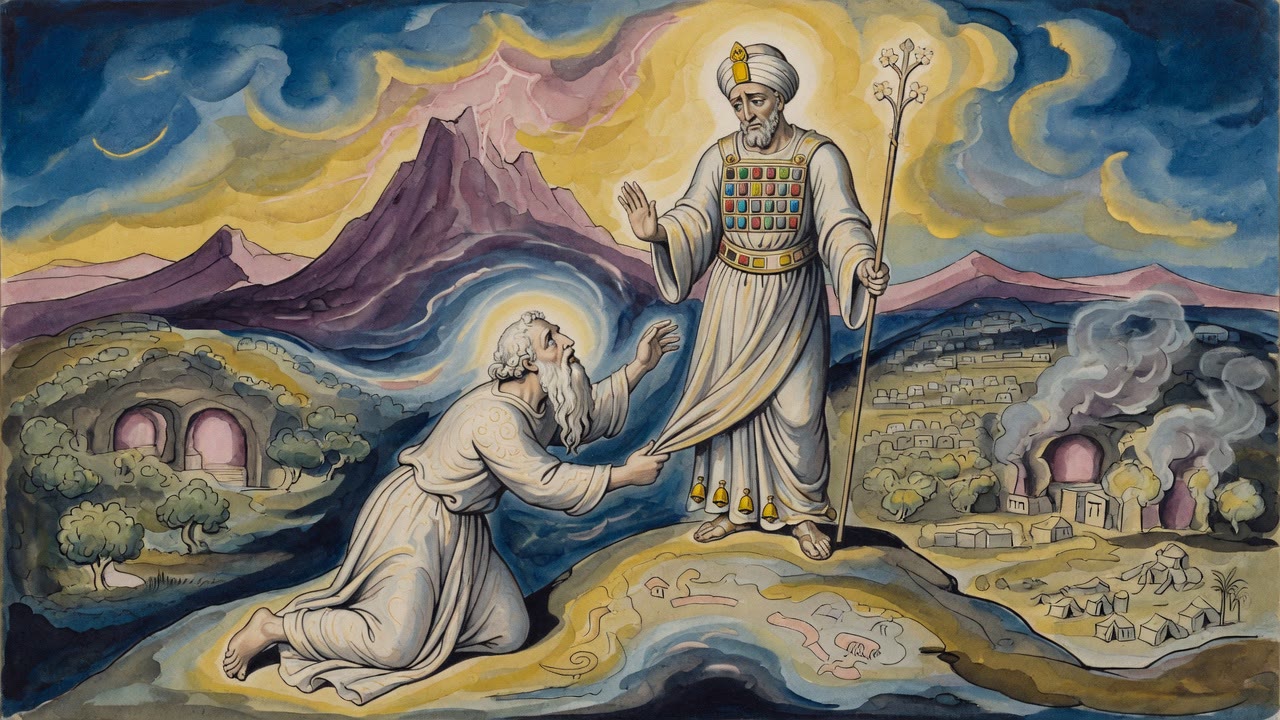
The man who had prayed Aaron out of the fire put his face on a younger priest's sandals and asked for one prayer back.
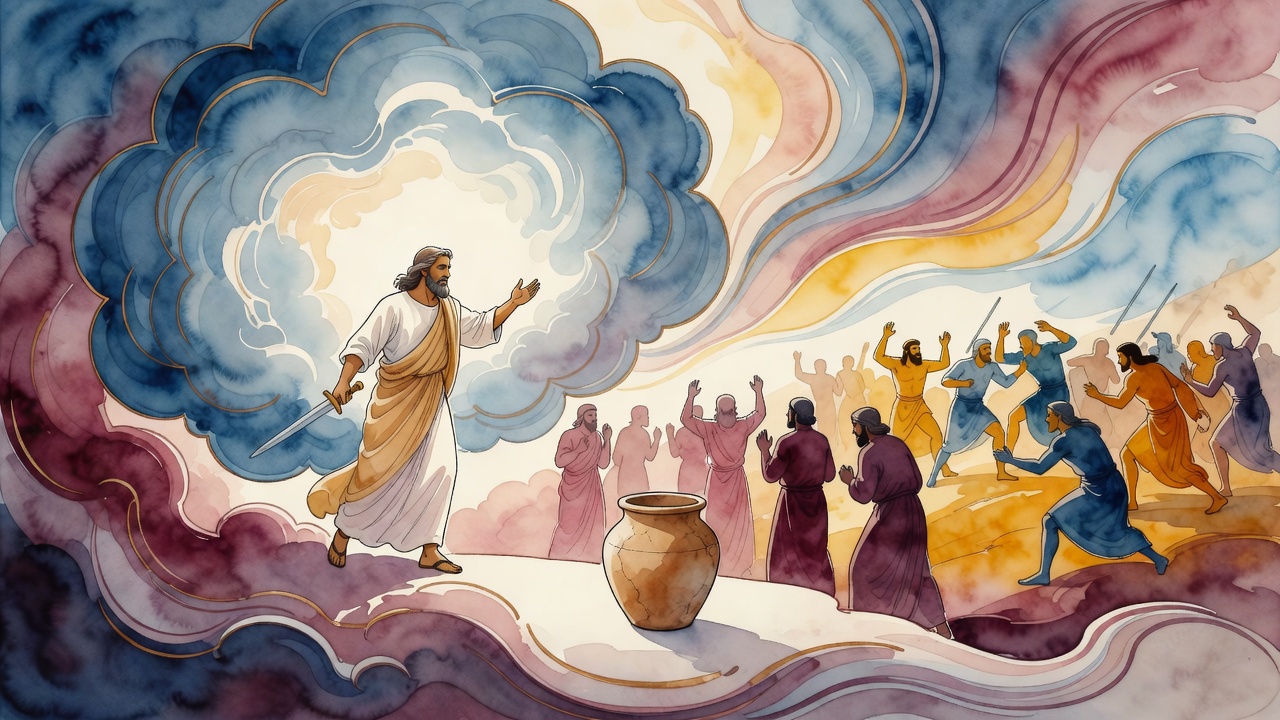
Pharaoh's officers would not chase runaway brickmakers for nothing. He threw open the treasure houses and promised every man an equal share.
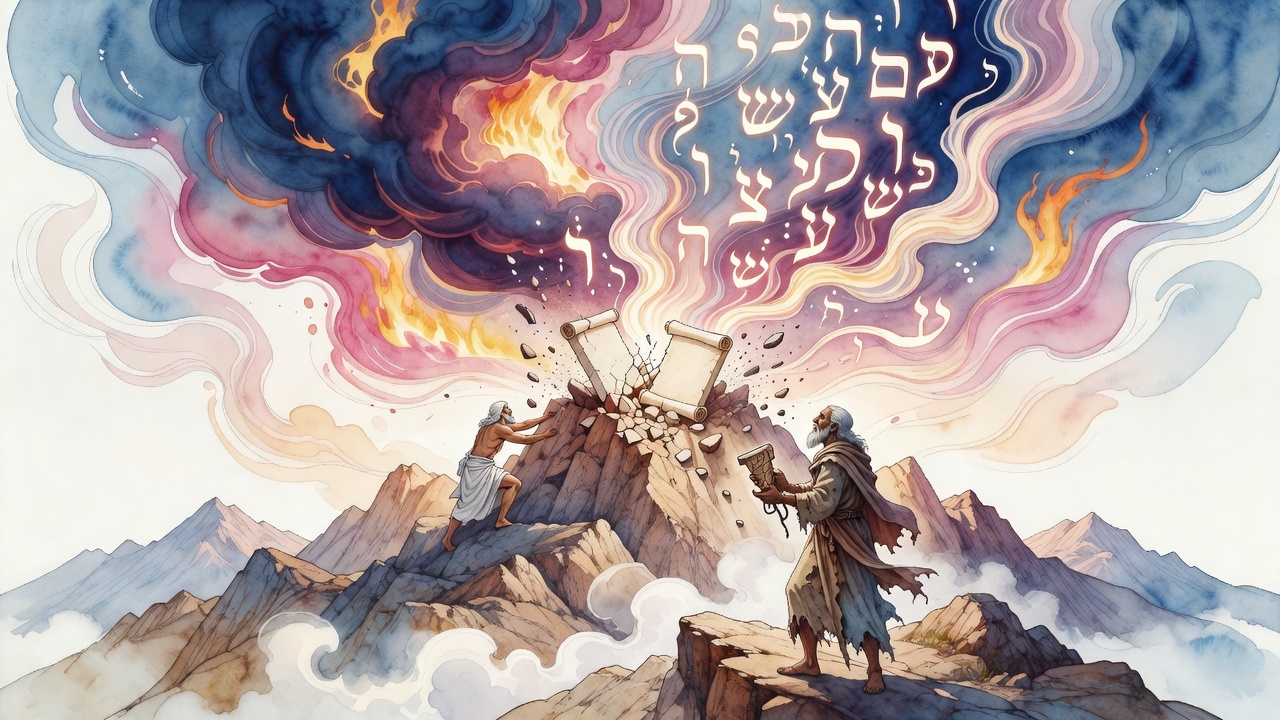
Moses asked how a defiled priest gets clean and heard nothing. Years later God handed him ashes and called it a statute.
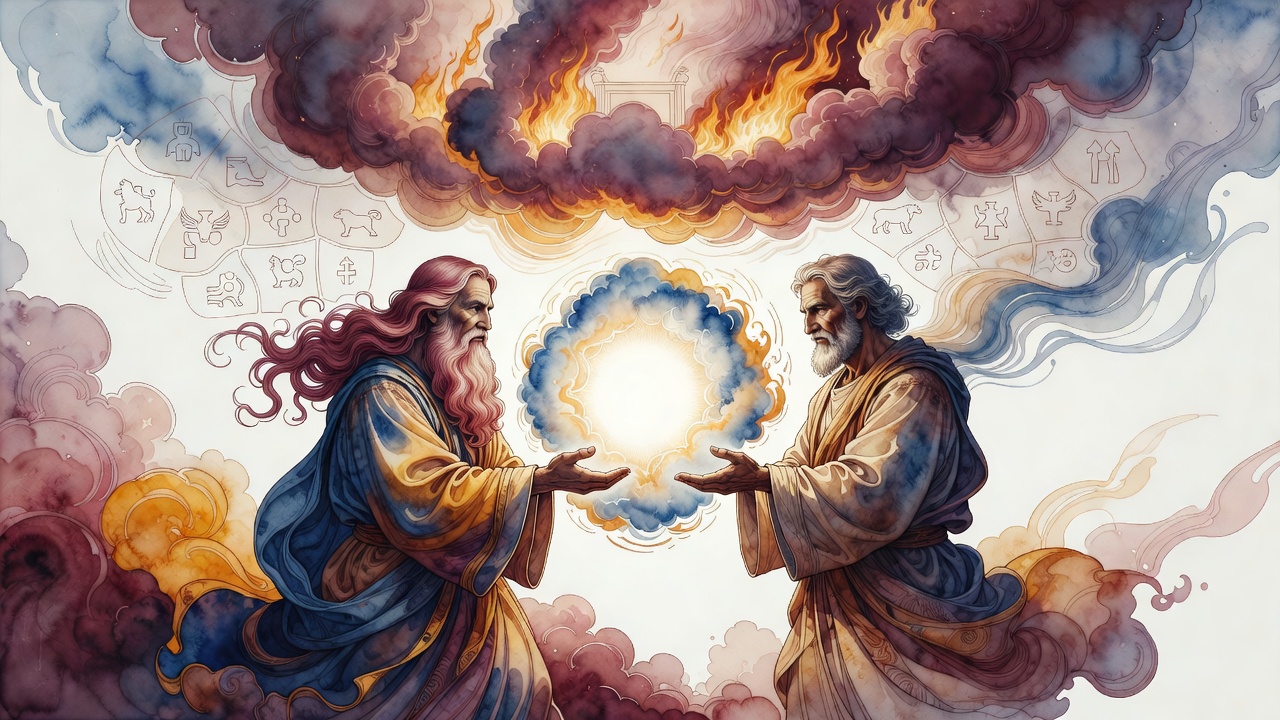
Judah got the lion's strength, Dan the serpent's bite. Judah's soil grows barley and Benjamin's grows wheat, and each tribe eats from the other's field.
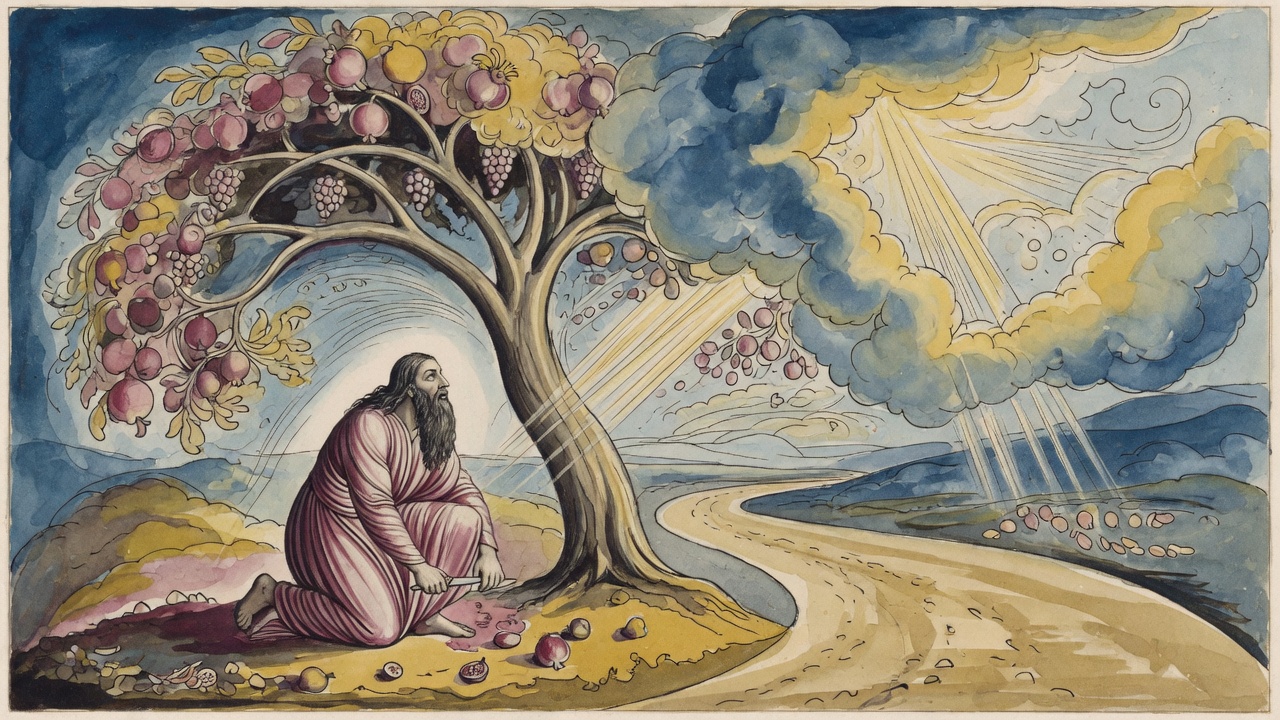
On the road to Egypt, at a lodging, the Lord met Moses and sought to kill him. An angel of mercy began at the crown.
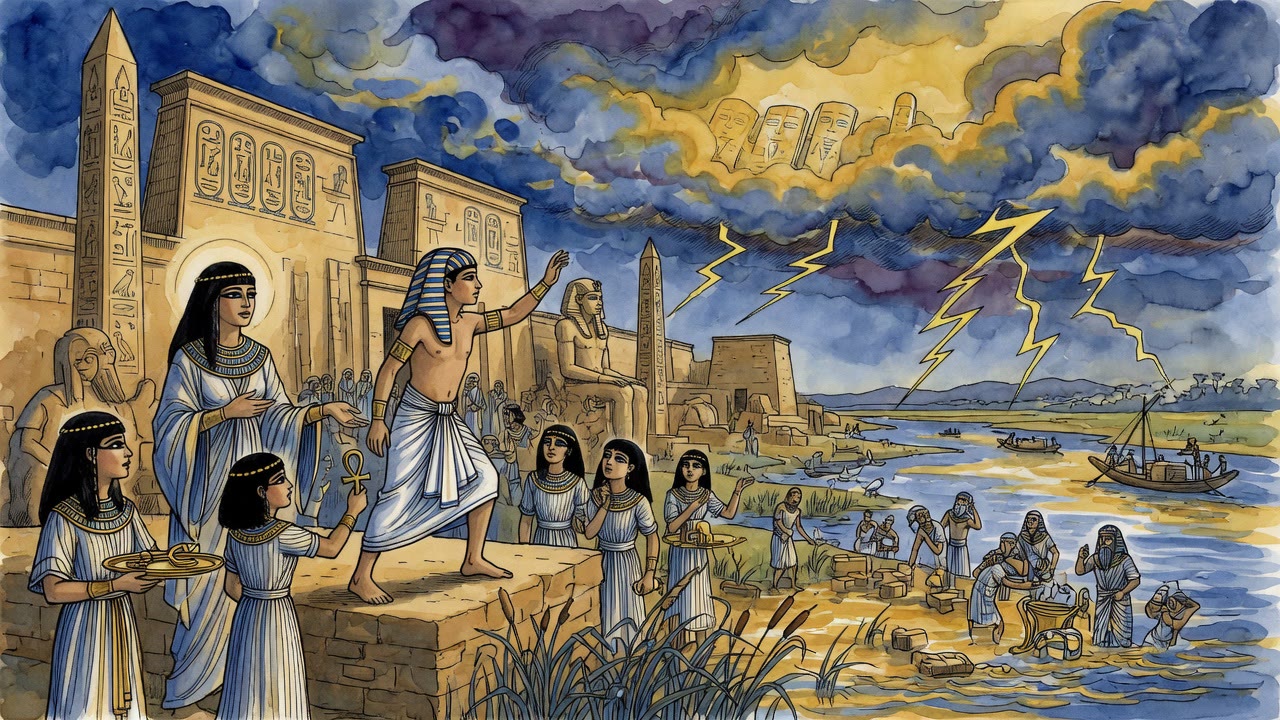
Moses slipped his royal guard and went to arrange the slaves' loads himself, pretending to help Pharaoh. Pharaoh wore a brick mold on his own neck.
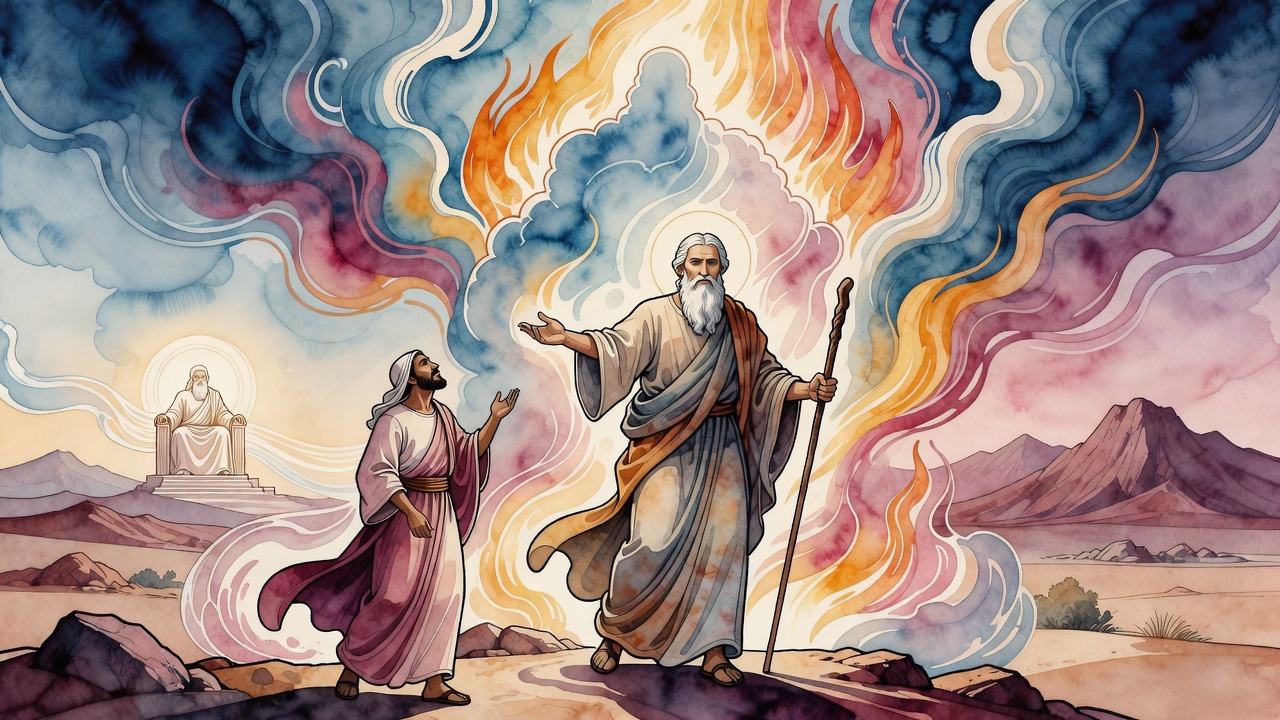
There are two ways to say goodbye in Hebrew. David used one on Avshalom, who never came home. Moses got the other at his father-in-law's door in Midian.
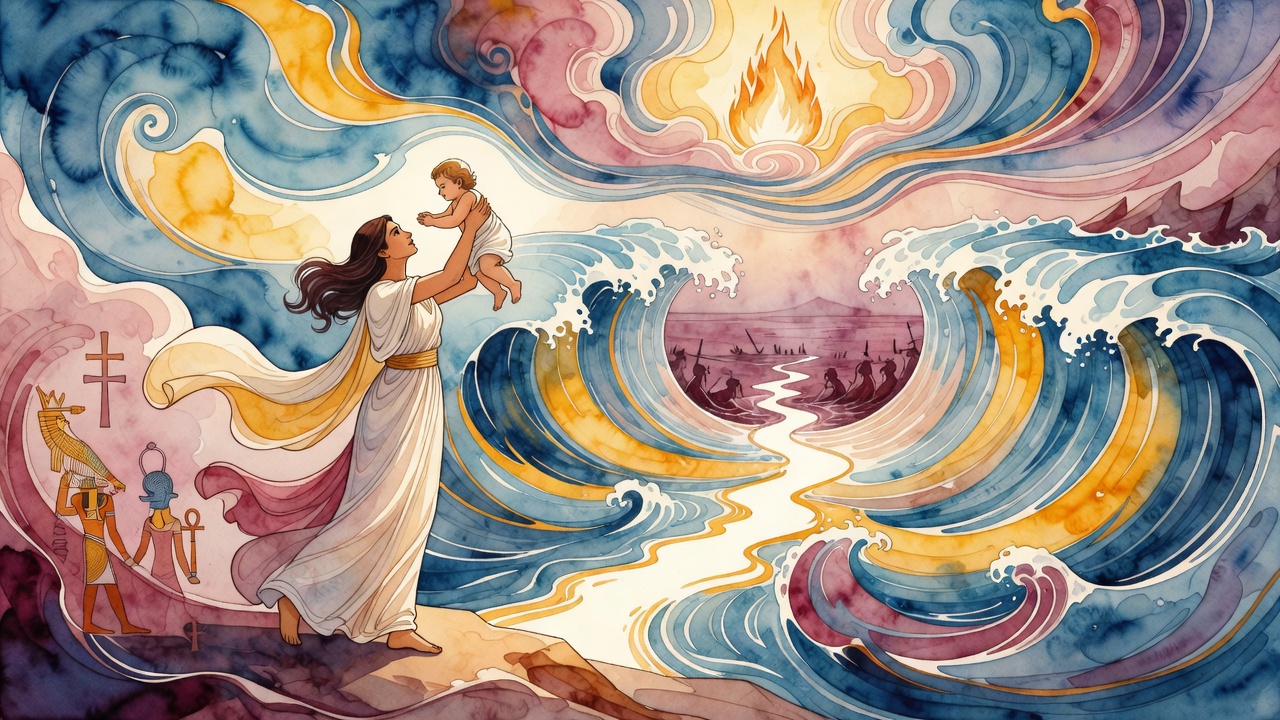
Pharaoh's daughter went down to the Nile to wash off her father's idolatry. Her maidens told her the decree still stood. Gabriel struck them down on the bank.
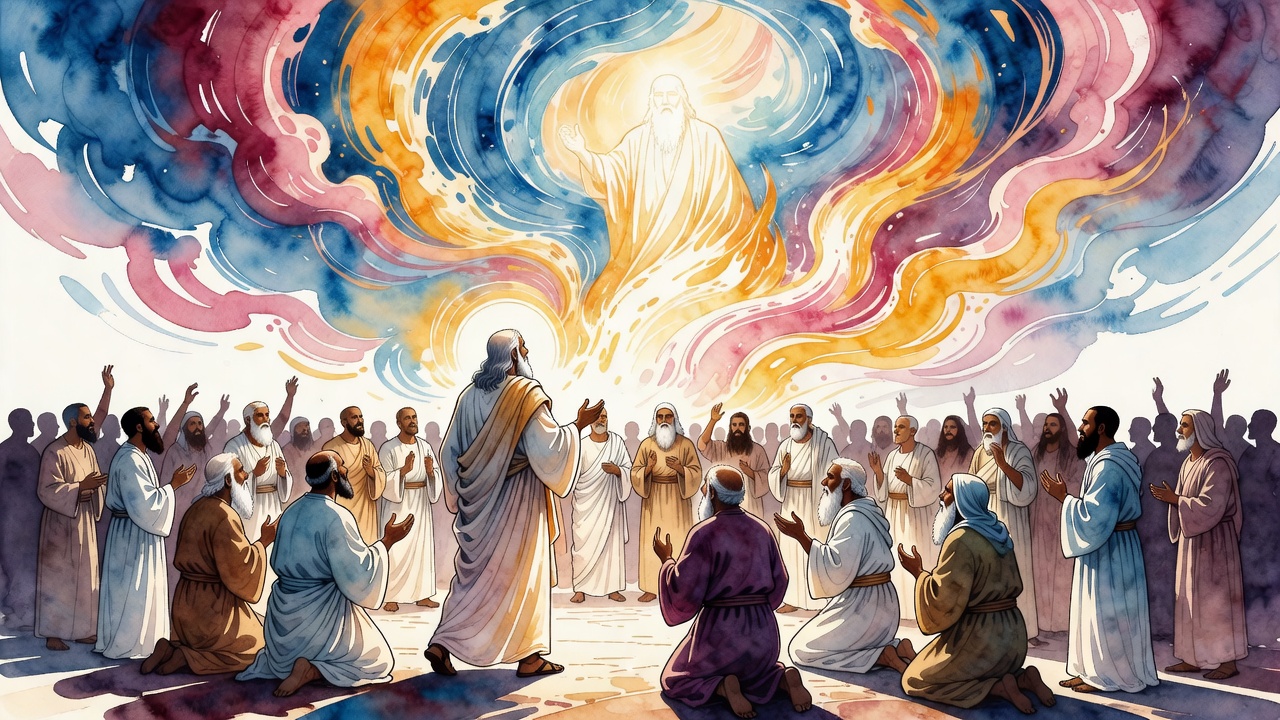
He could have climbed a rock and shouted the terms to the whole camp. The old men heard them first, and he stayed until they understood every word.
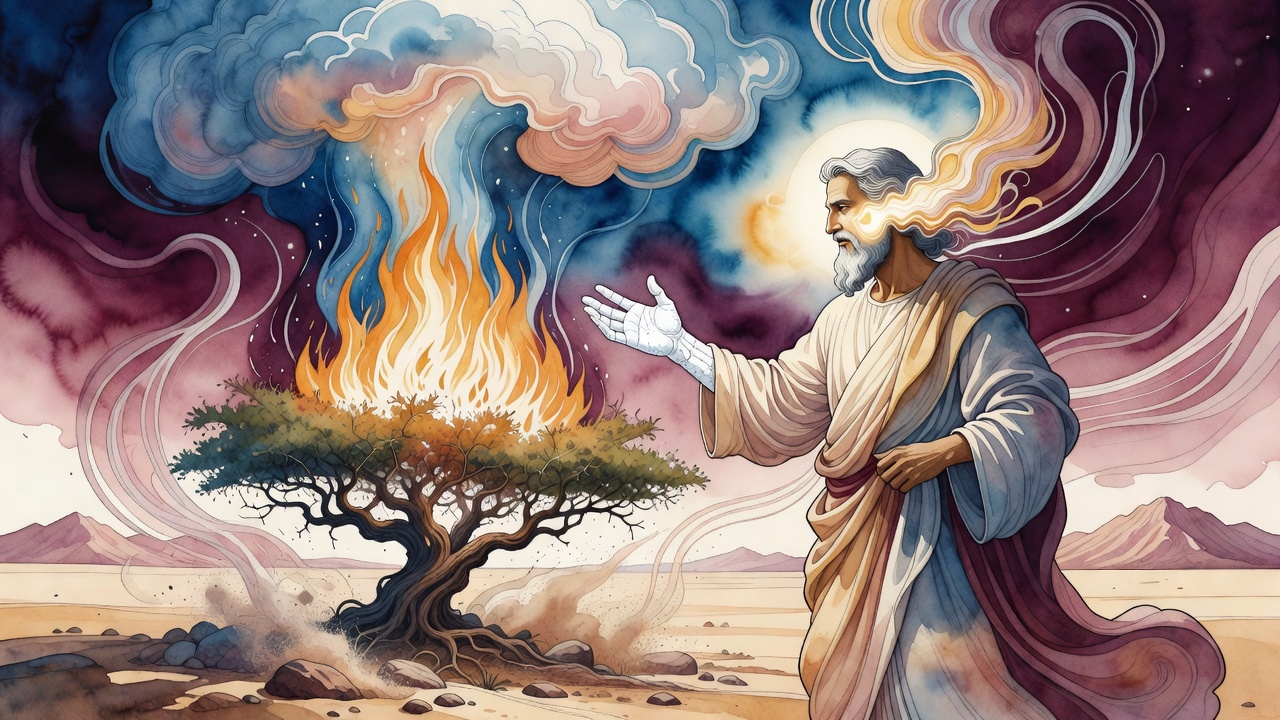
At the bush Moses said Israel would not believe. God put the serpent's leprosy in his hand, then remade his mouth to carry a nation's redemption.
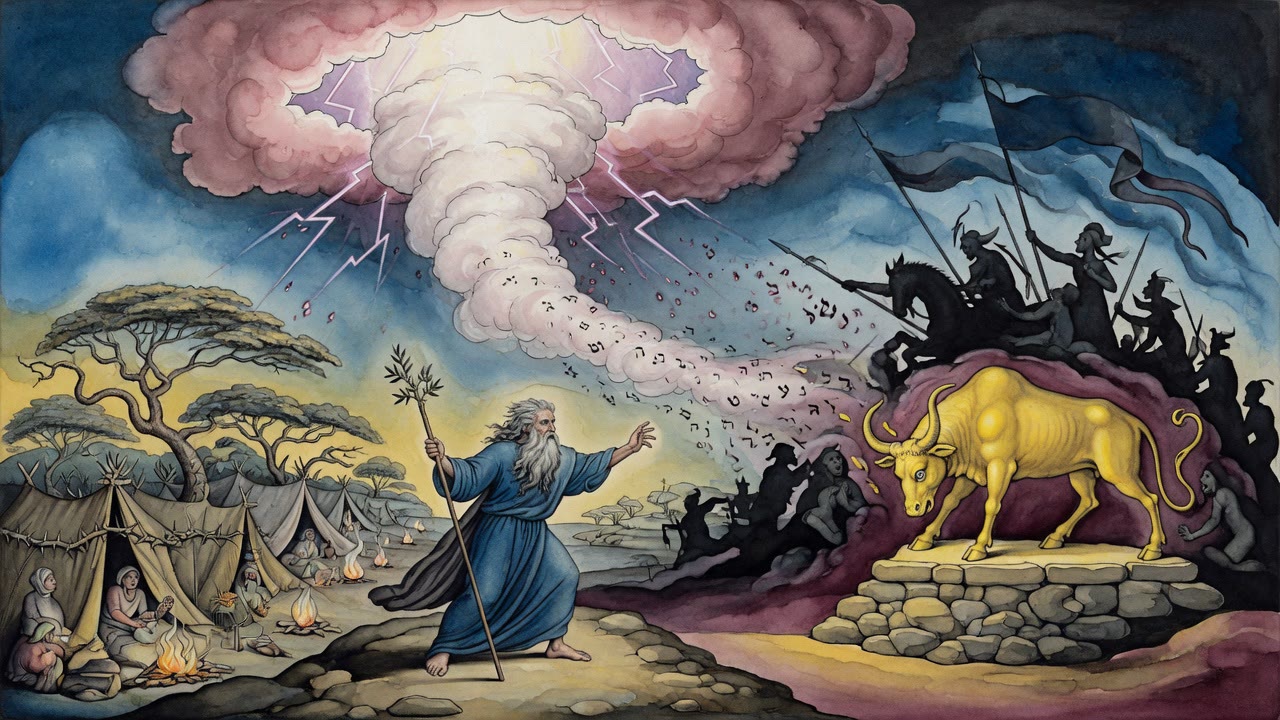
Moses argued the words at Sinai were spoken to him alone, not to them. God kept answering. Moses ended standing like a man thirty days in a sickbed.
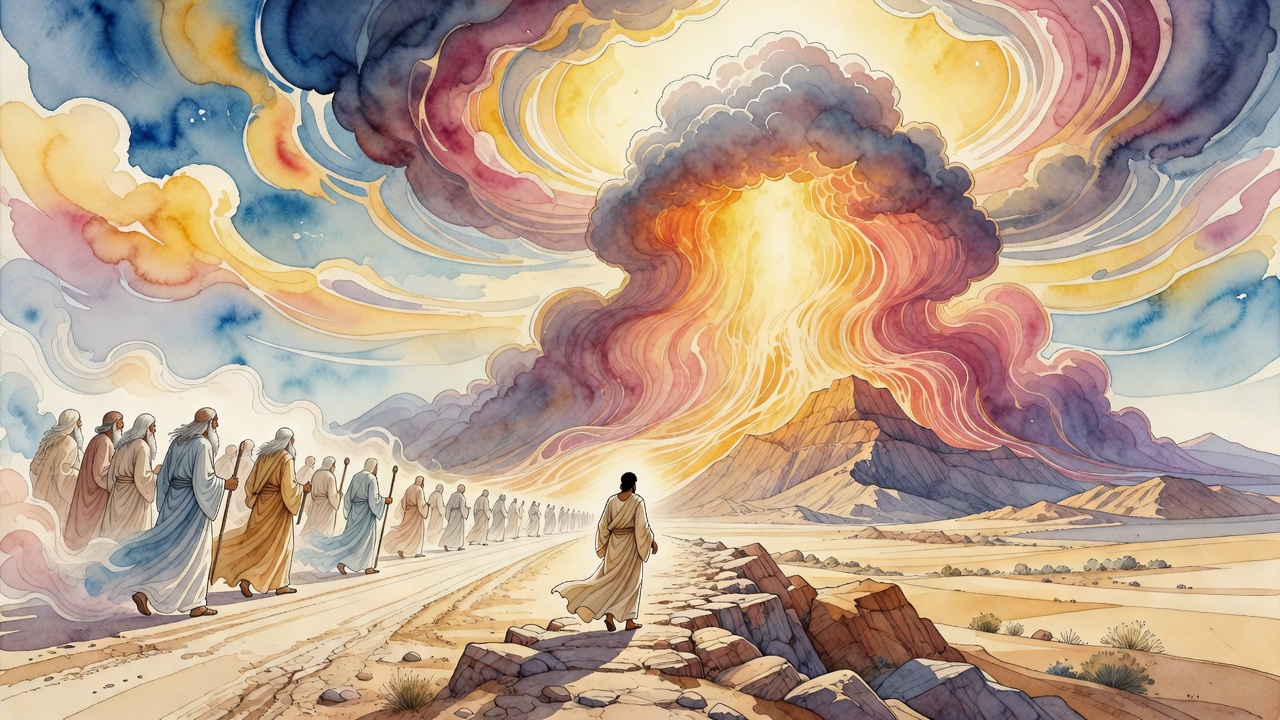
They had agreed to walk with Moses. At Pharaoh's wall the line behind him went quiet, and the two brothers entered alone.
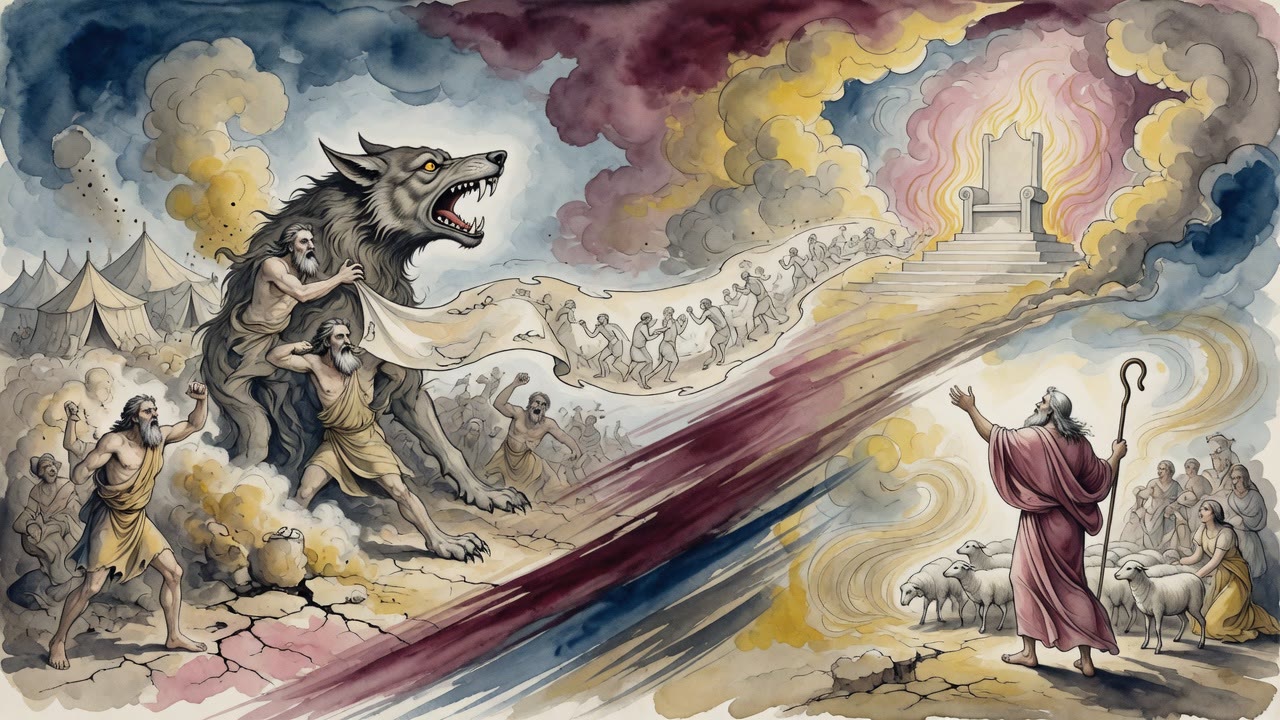
That same afternoon Pharaoh took the straw. Dathan and Abiram stood in Moses's path and cursed him. The lamb was already between wolf and shepherd.
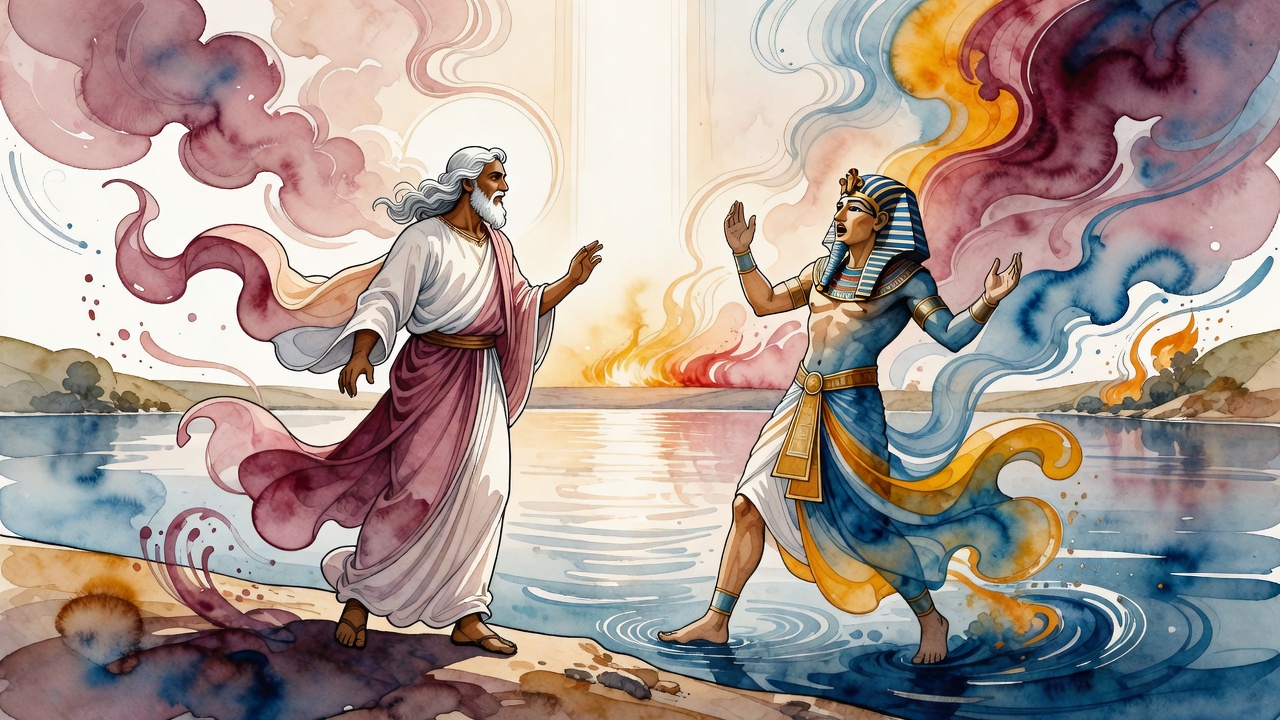
Every dawn Pharaoh slipped alone to the Nile. Moses seized him there and asked if any god must relieve himself.
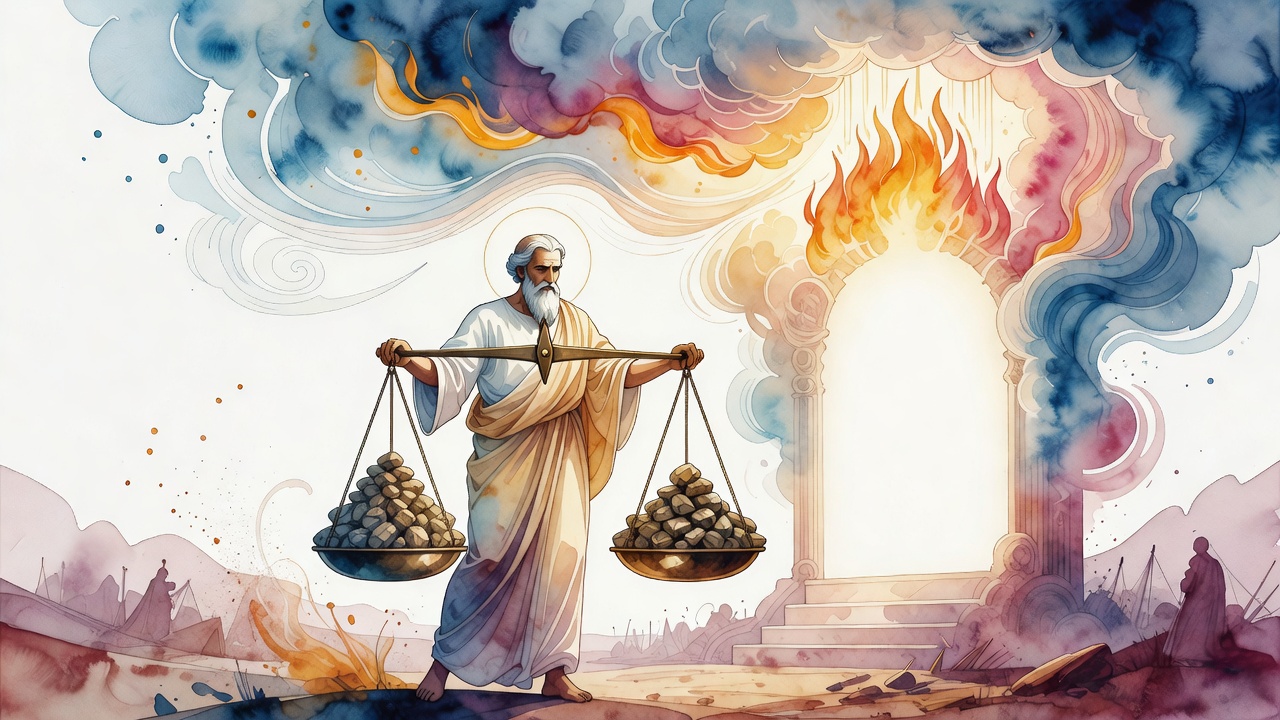
Moses weighed talent, hundred, fifty, thirty for the soul's ransom. God asked a half-shekel, light enough to lift every head that lost its crown.
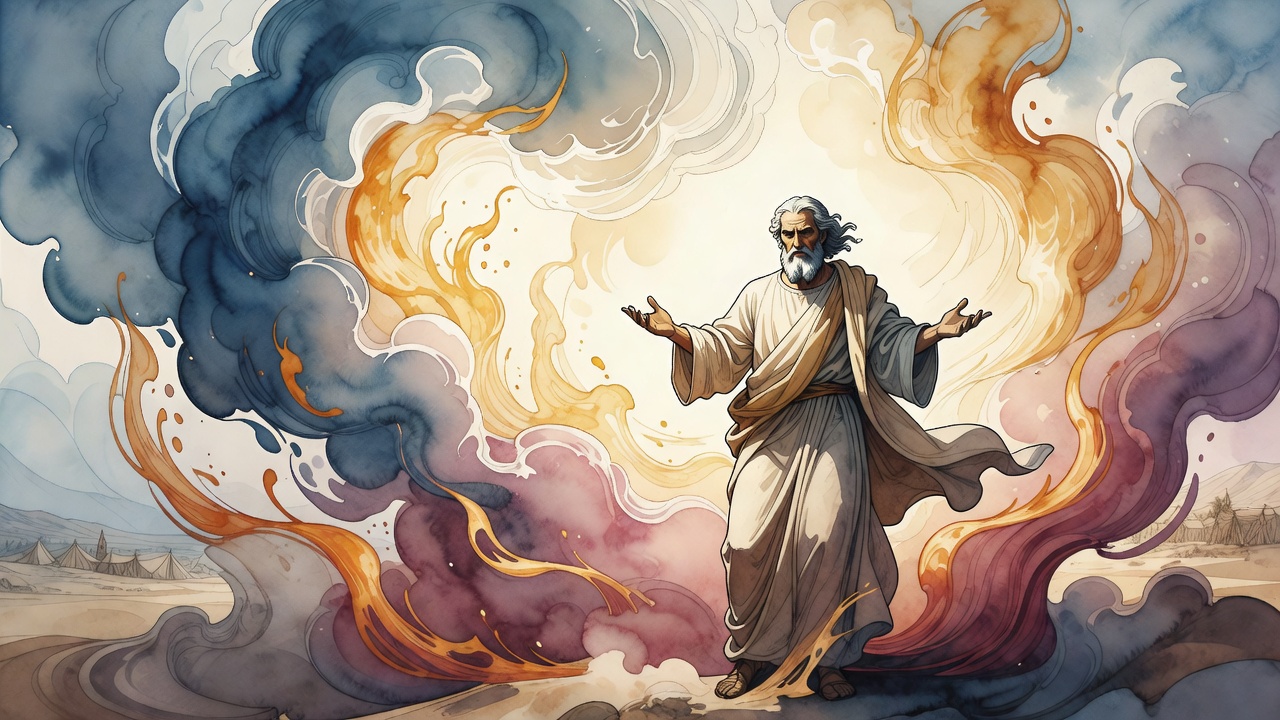
After the calf, Israel gave up ornaments the sages call weapons marked with God's Name. Moses argued for the people by naming three fathers who were dead.
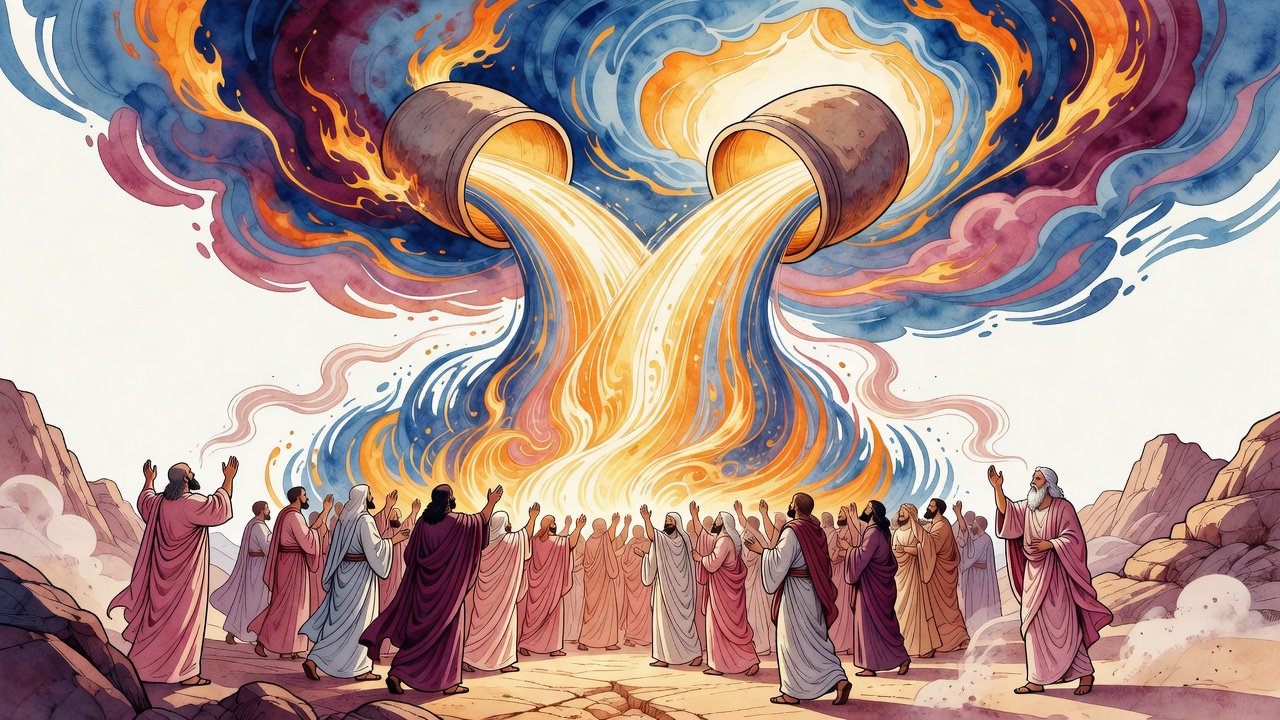
Adam and Noah received only a fragrance of law. At Sinai God tipped the jar and poured every commandment onto Israel.
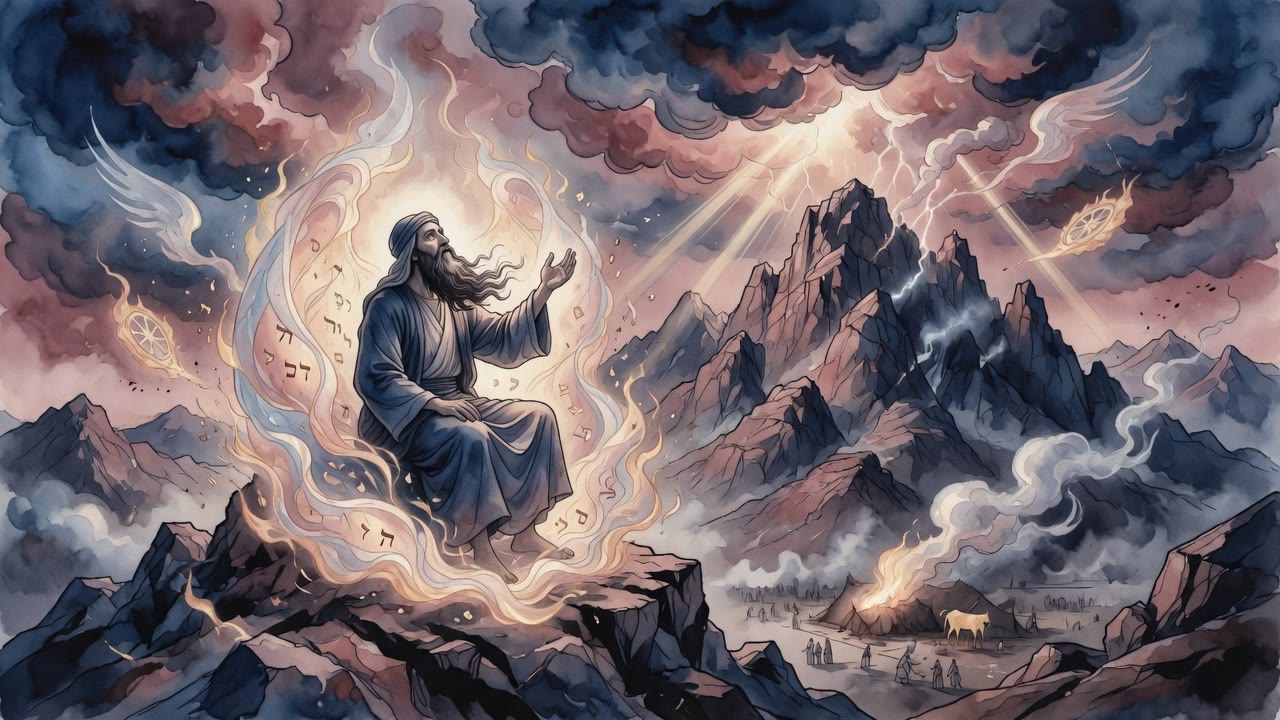
On Sinai Moses ate no bread. The Shekhinah, the Divine Presence, fed him while letters fled the first tablets and he carved the second set.
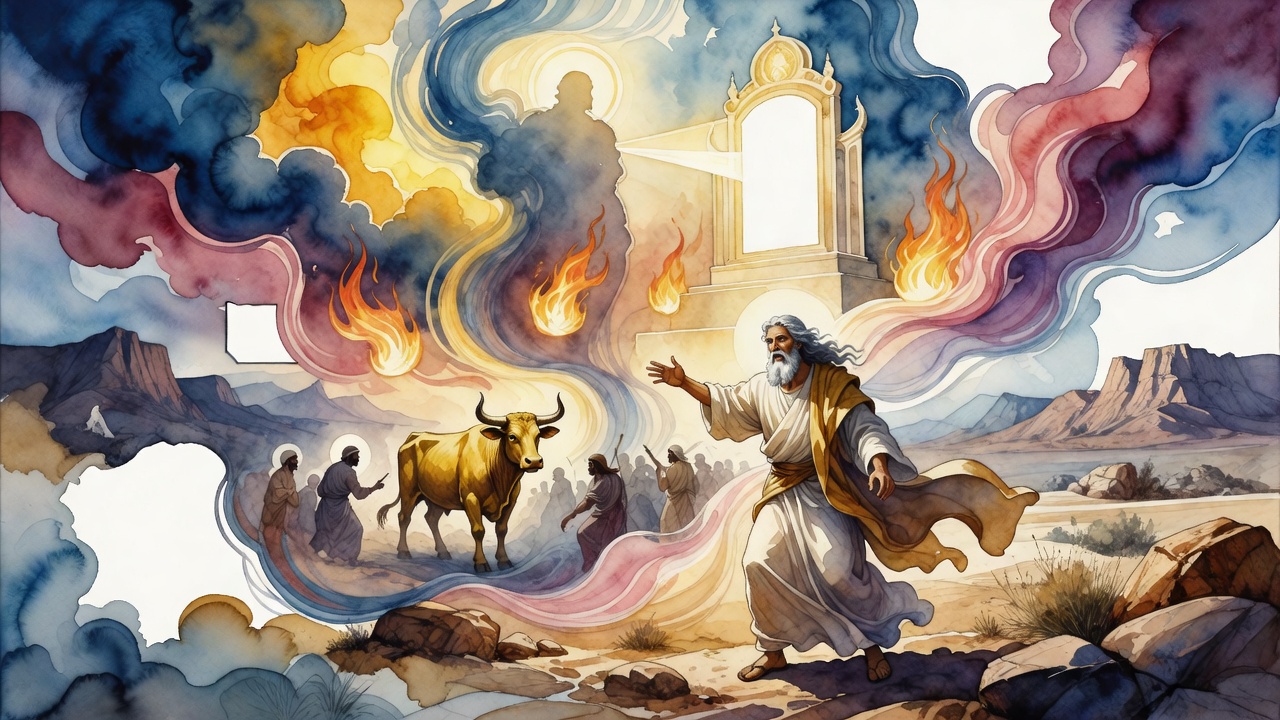
At the calf, Moses seizes a grammar loophole at Sinai. God said Elohekha, singular. Israel stole the ox from the chariot and paid fivefold in the wilderness.
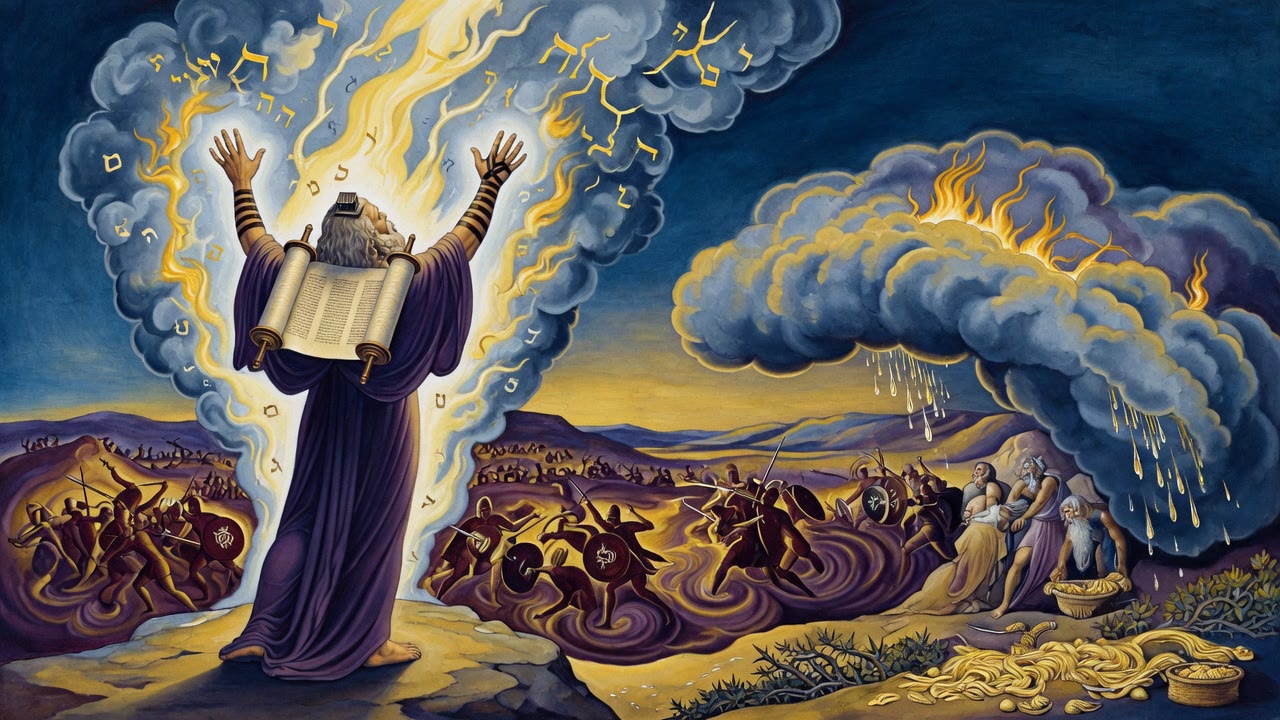
Moses comes down blazing and does not know it. Glory clings from the cave, from the gap between hands on the tablets, and from leftover ink on the pen.
