480 myths · Page 10 of 16
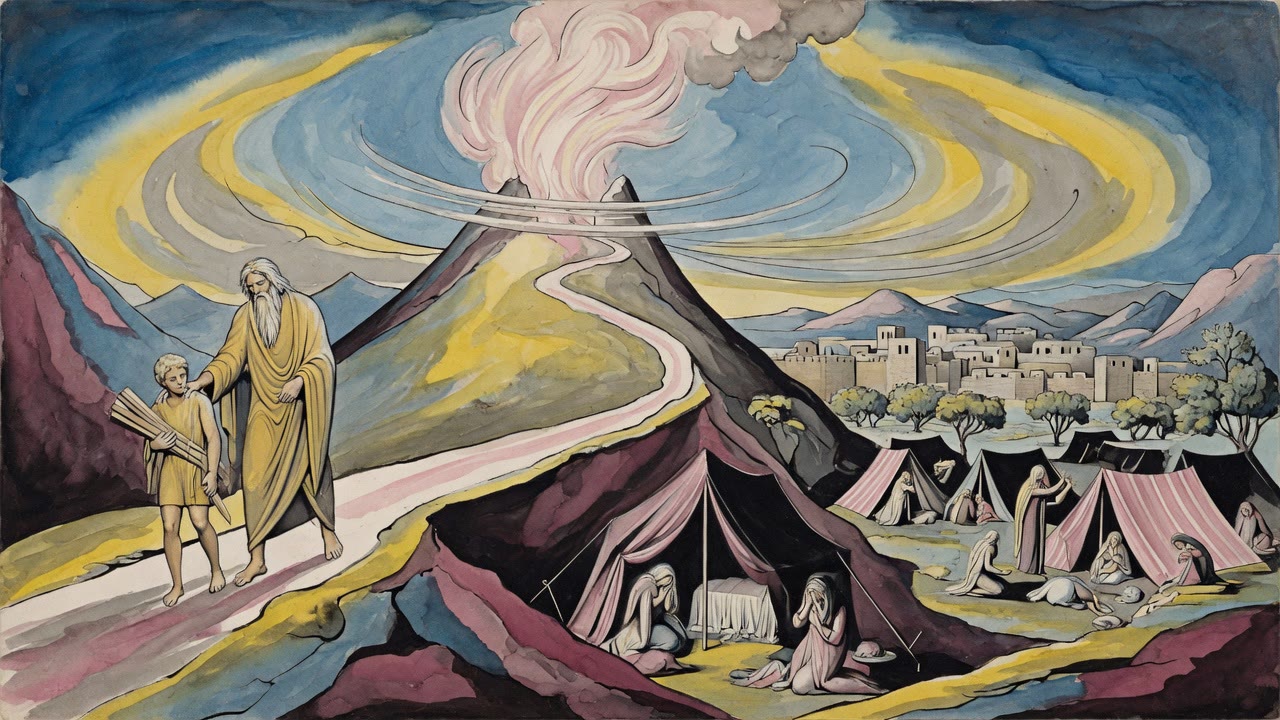
On the day Ephron became chief of Heth, Abraham sealed the Cave of Machpelah with silver, after a covenant that Israel would not seize Jebus by force.
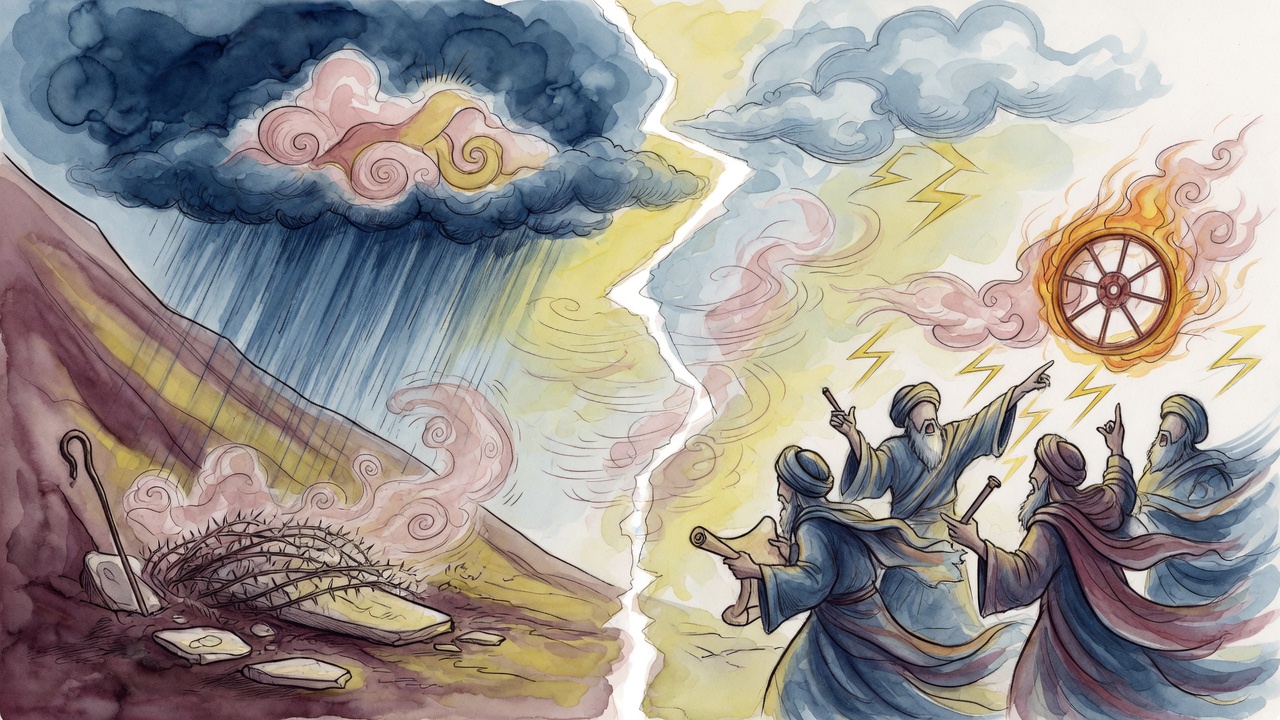
God sealed east, west, and south where sky meets earth, then left the north open. Any pretender claiming divinity would fail the unfinished quarter.
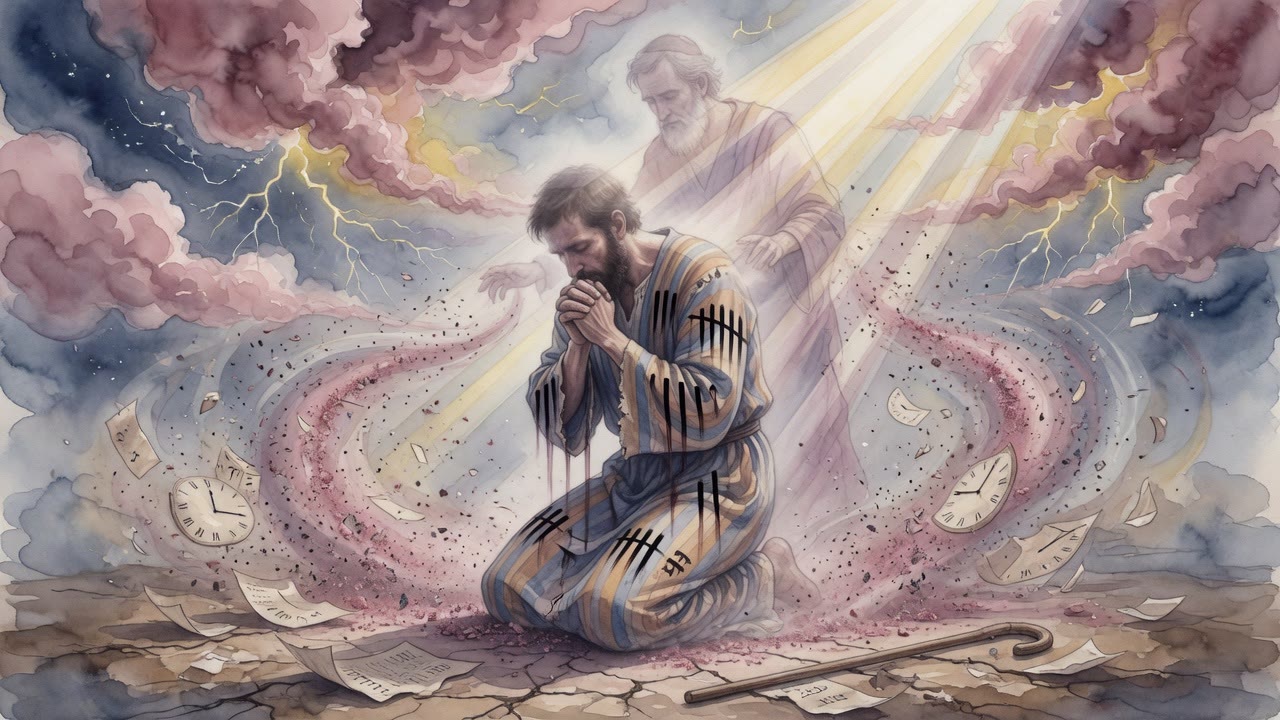
Ten times the brothers called Jacob a servant. Joseph did not correct them. Heaven took ten years. Then he rode to the border.
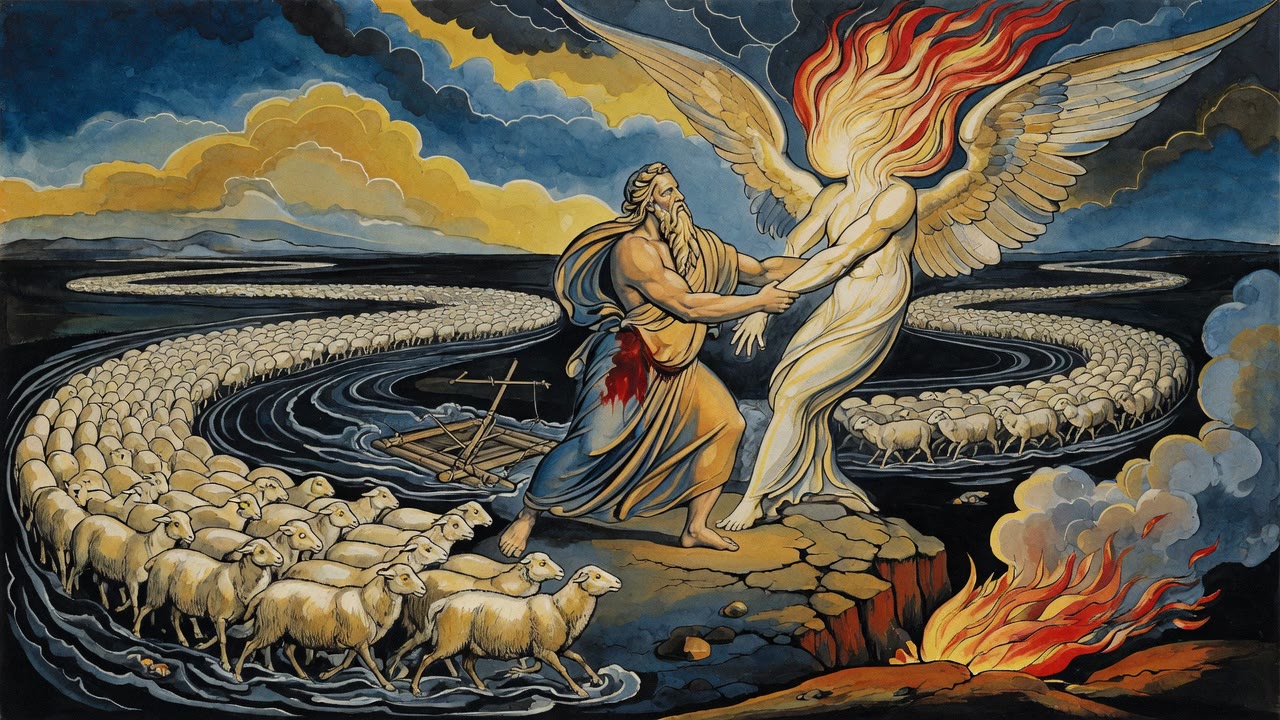
He ferried sheep that would not thin. A finger touched the earth, fire boiled up from the bank, and Jacob told the stranger he was not afraid.
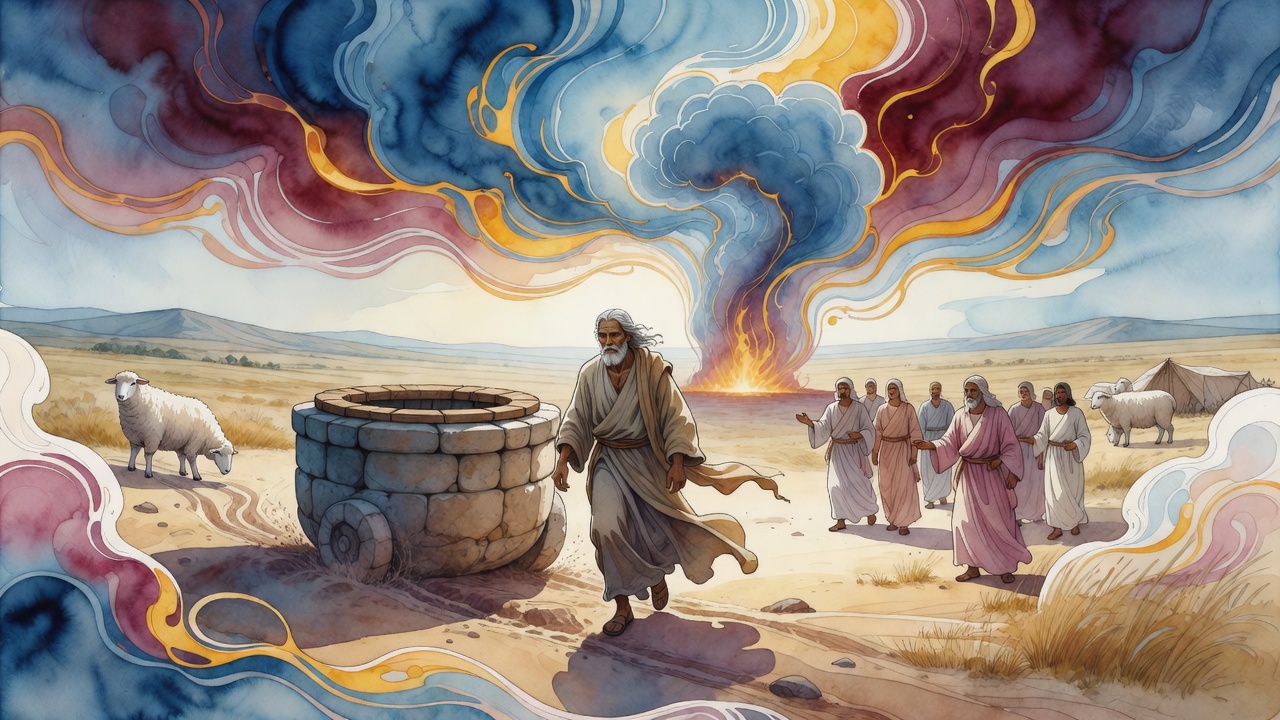
Jacob was seventy-seven when he left Beersheba with Esau's anger behind him. At a well in the east he rolled the heavy stone off alone for Rachel's sheep.
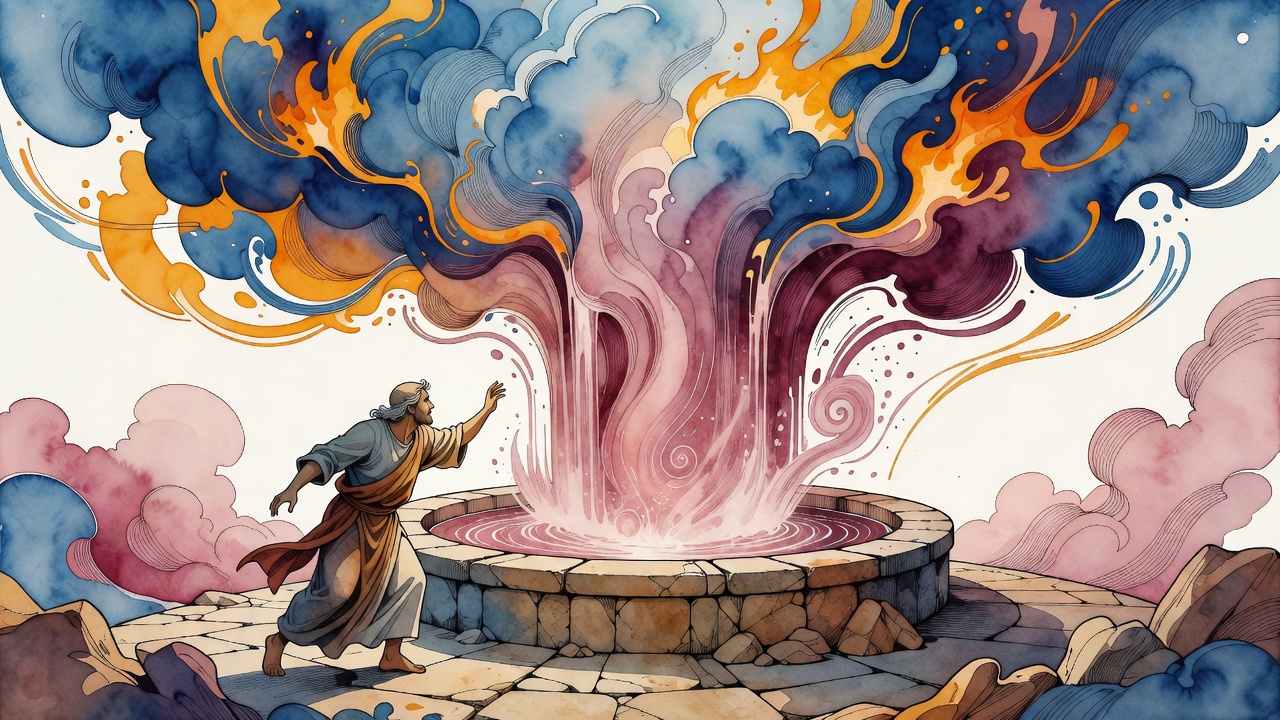
Jacob pressed his face to the stone and asked only for a safe return. The road shortened. At Haran the water climbed the shaft without a rope.
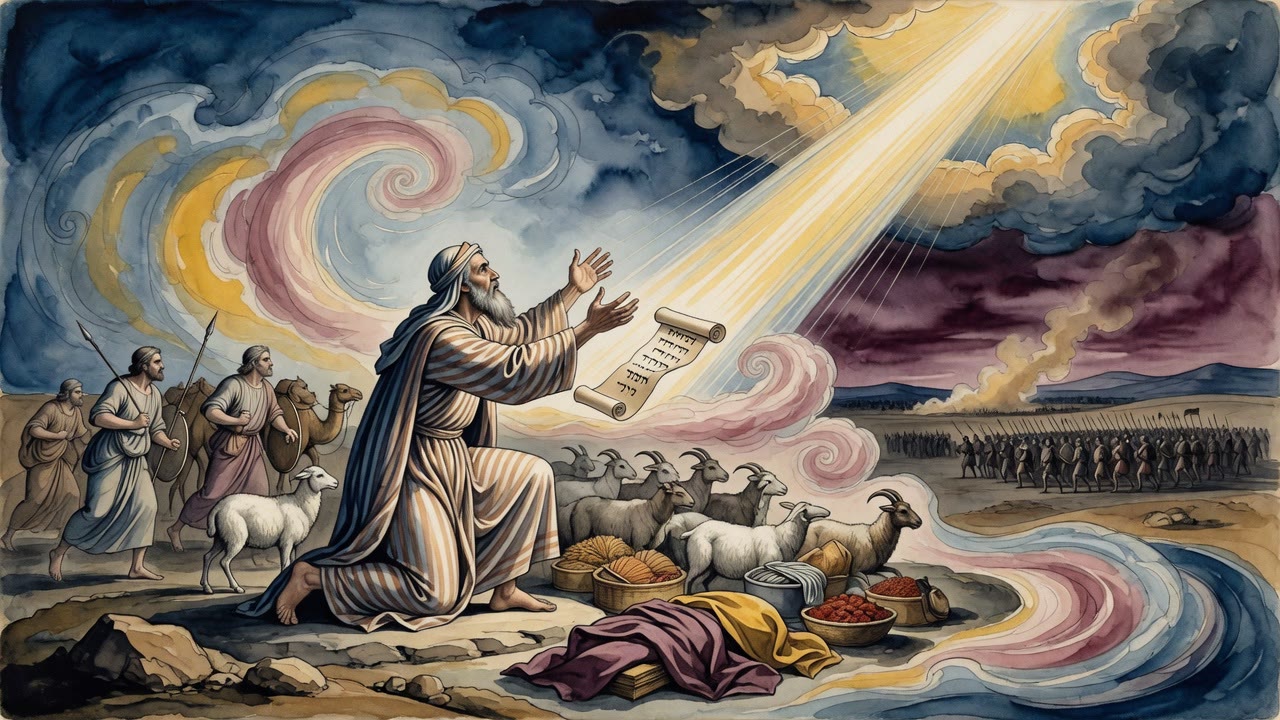
Before Esau's four hundred, Jacob prayed, sent gifts, and readied for war. He cited a future Torah law so God would not kill mothers with sons.
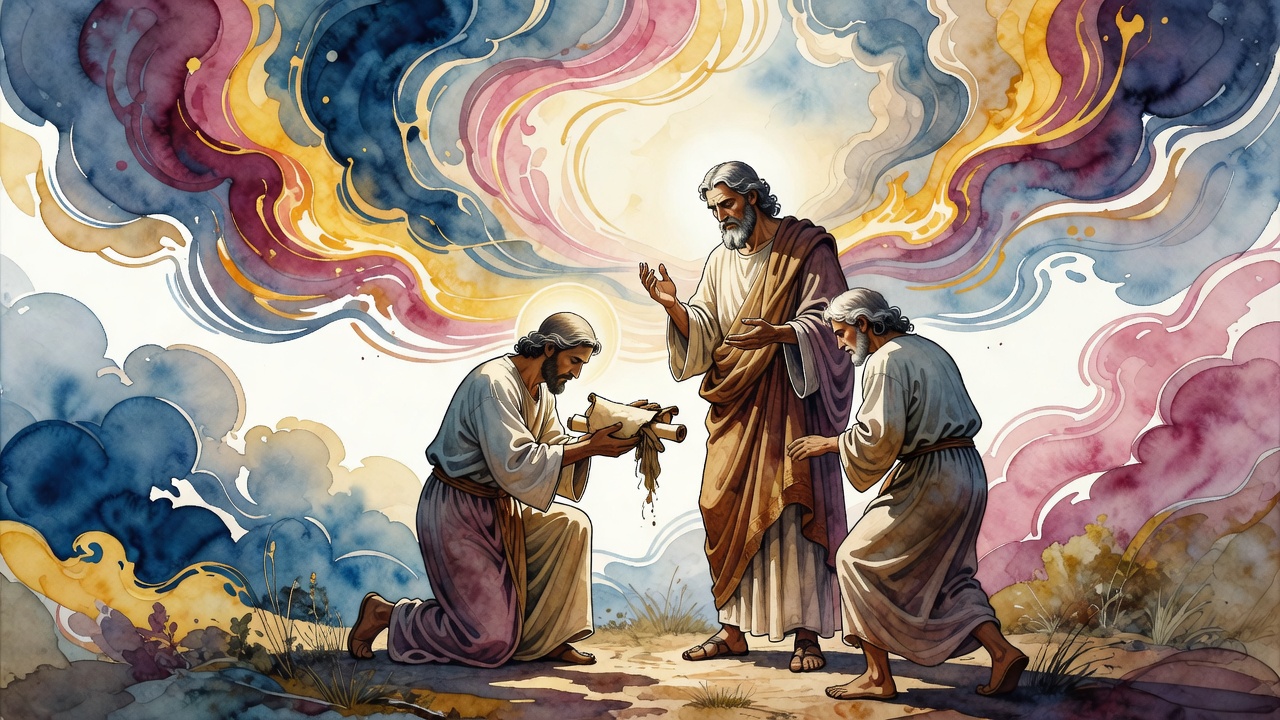
Jacob sent sacred tithes to Esau and named himself servant. Heaven rebuked the profaned gift, then Eliphaz refused to fight his teacher Jacob.
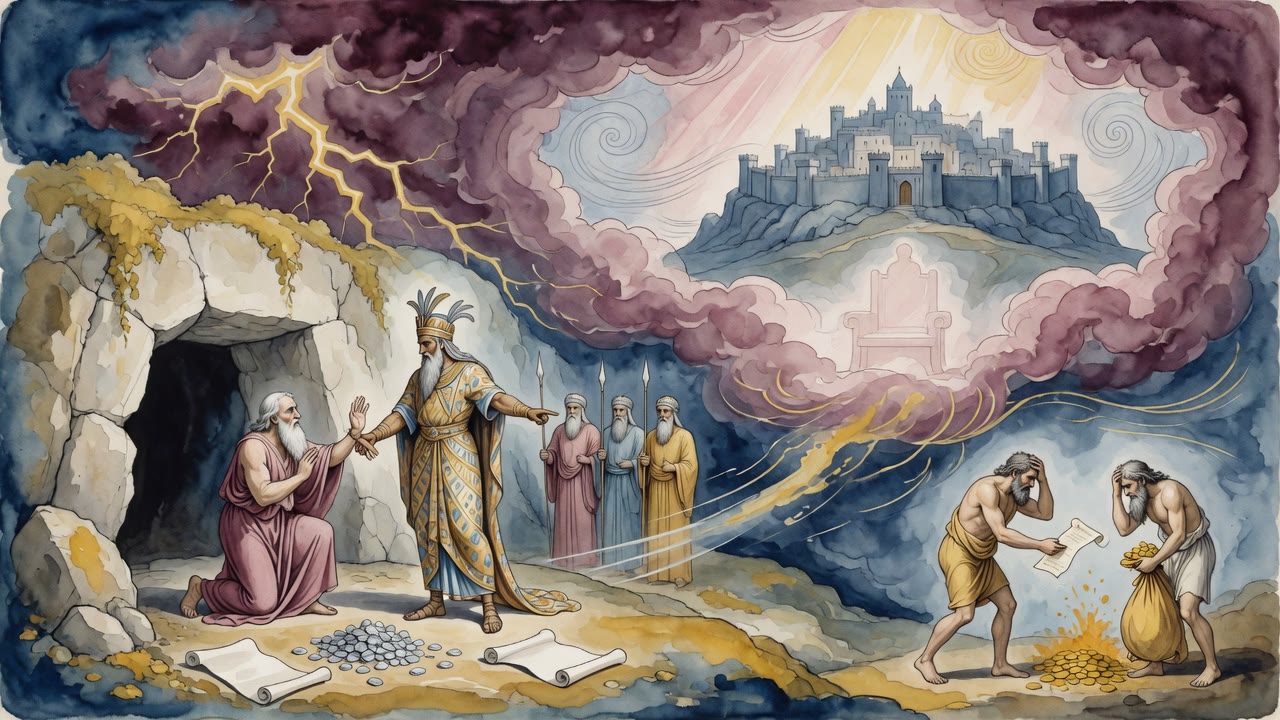
The Jebusites sold Abraham the cave only after he swore his seed would not seize their city. Generations later Esau sold his share for gold.
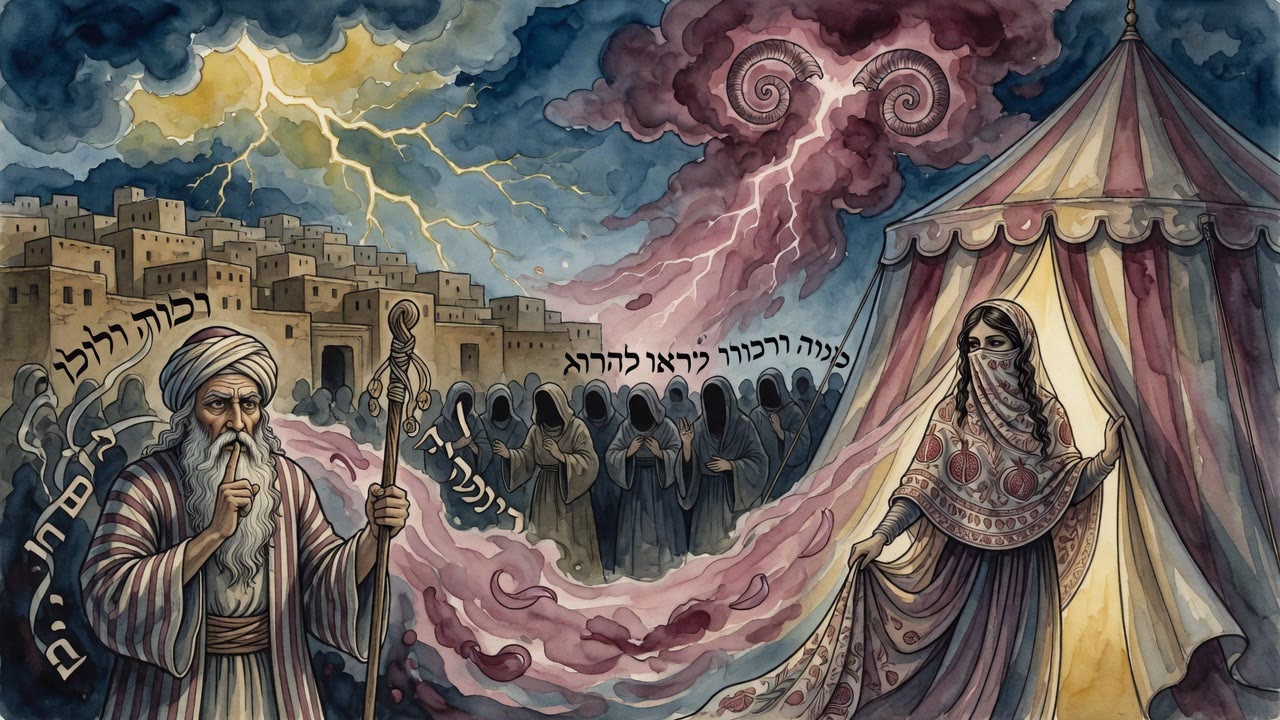
Laban admitted Jacob had filled their wells, then bound Haran by oath to keep silent while Leah entered the tent meant for Rachel.
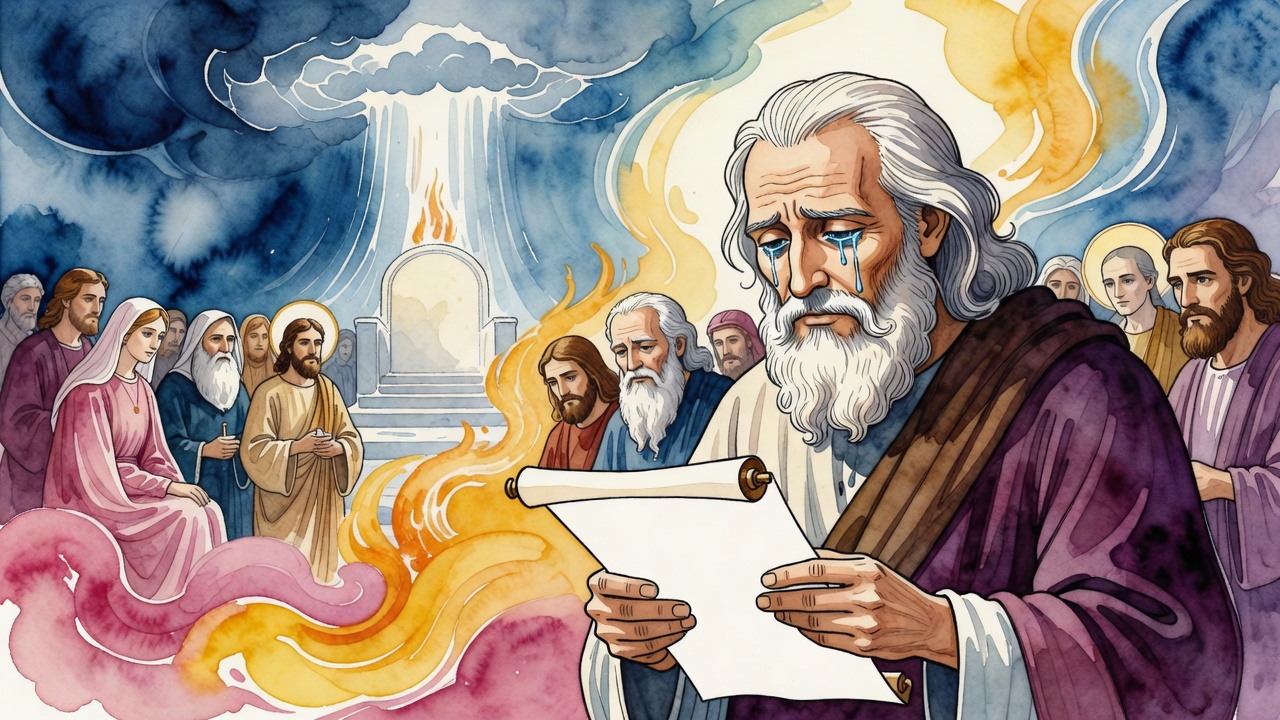
Blind with tears for Joseph, Jacob wrote to Egypt's ruler and prayed for two lost sons, never guessing the viceroy was the first.
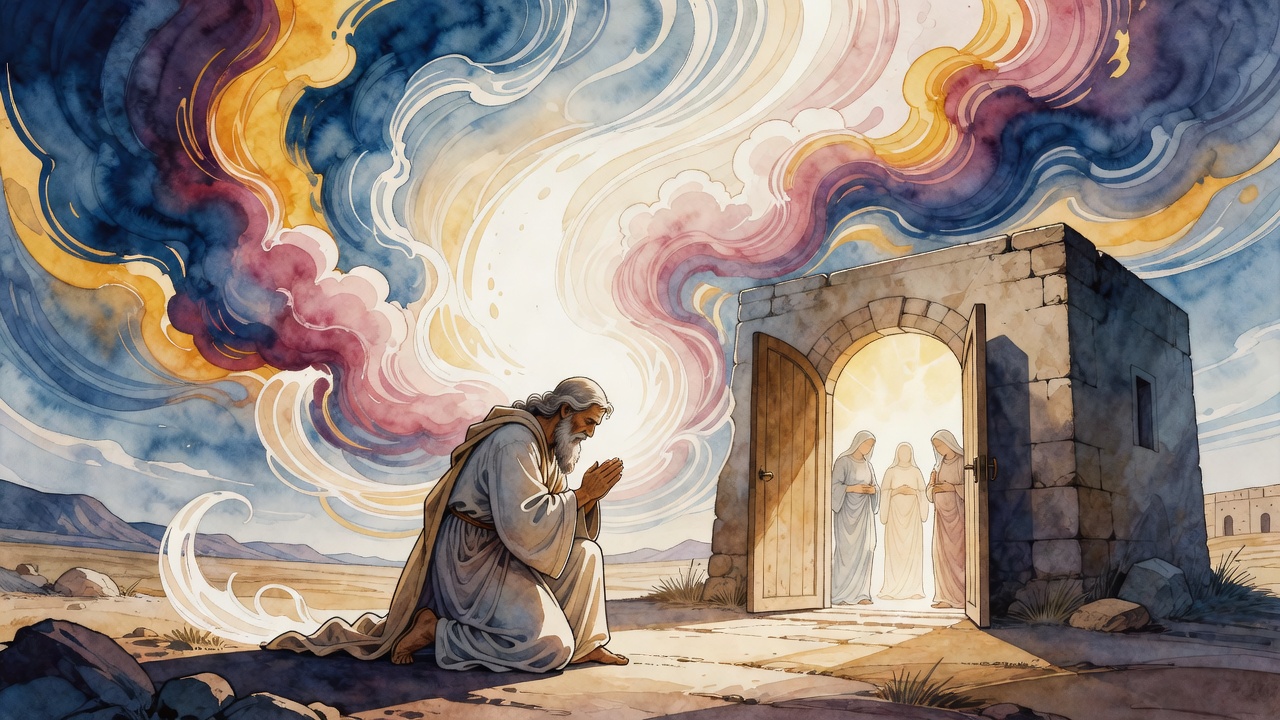
Gerar's king had taken Sarah, and every womb in his house shut. Abraham asked God to let them multiply instead. Abimelech's barren wife bore a child.
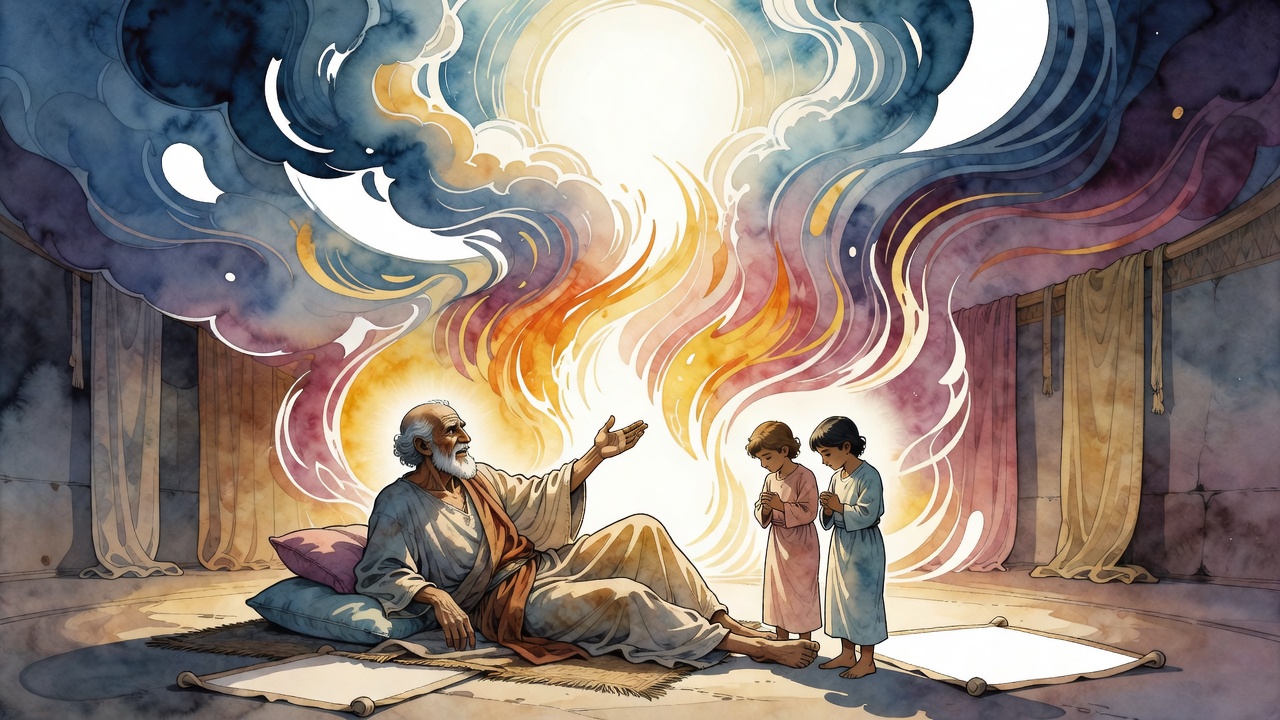
Asenath nursed the dying man and told Joseph to bring his sons for a blessing. Jacob's answer was that in seventeen years the boys had never come.
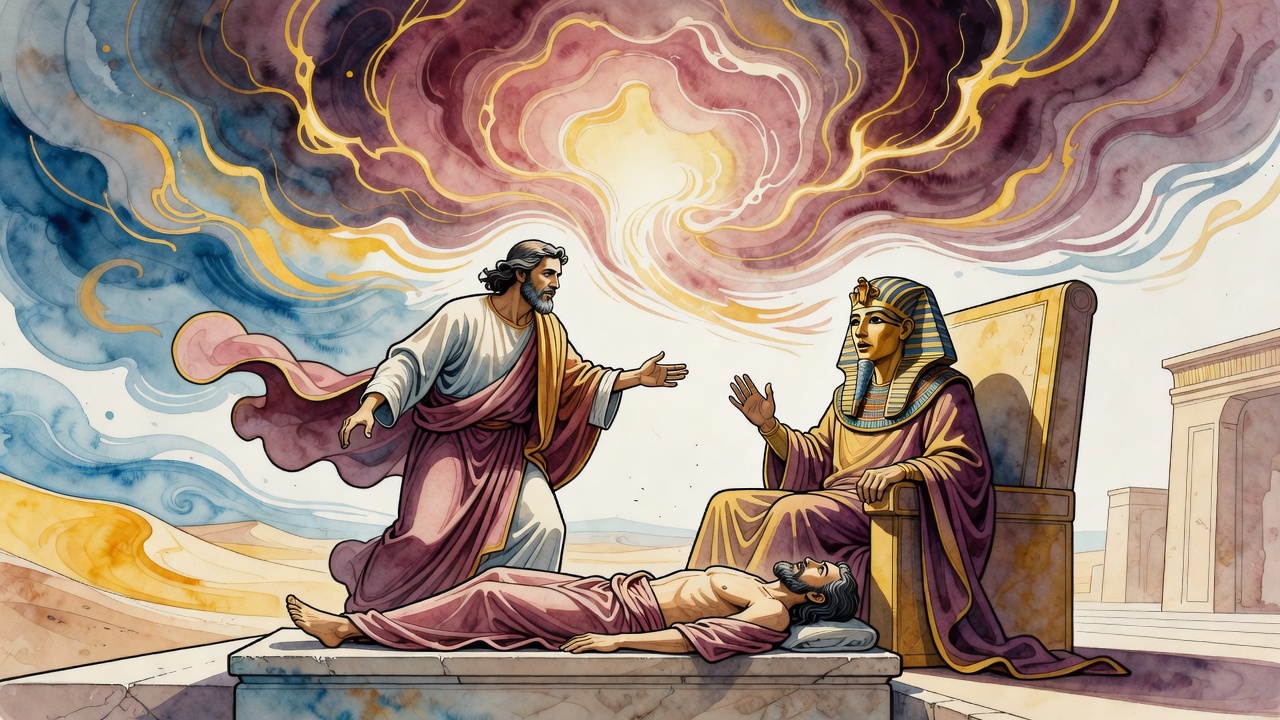
Pharaoh told Joseph to drop the burial vow. Joseph named a second vow, the one that hid the king's missing Hebrew.
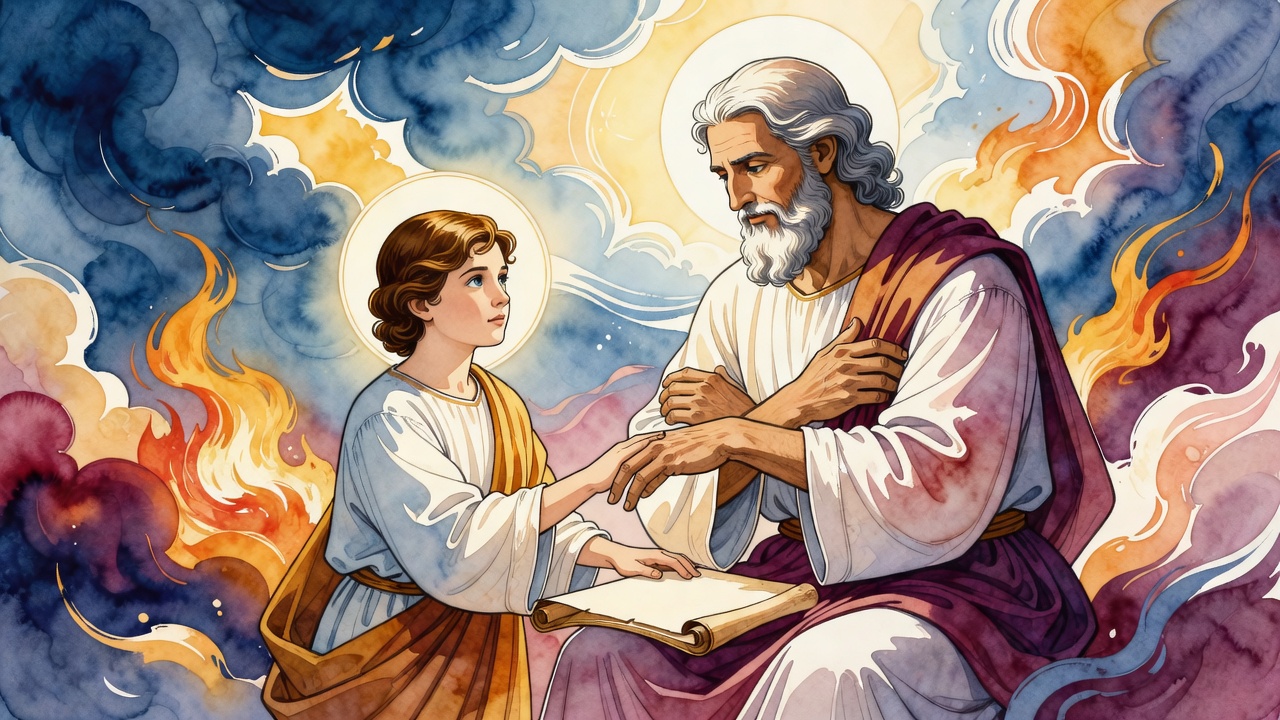
For seventeen years Joseph kept runners on the road so that he would never be alone in a room with his father. His father knew the whole time.
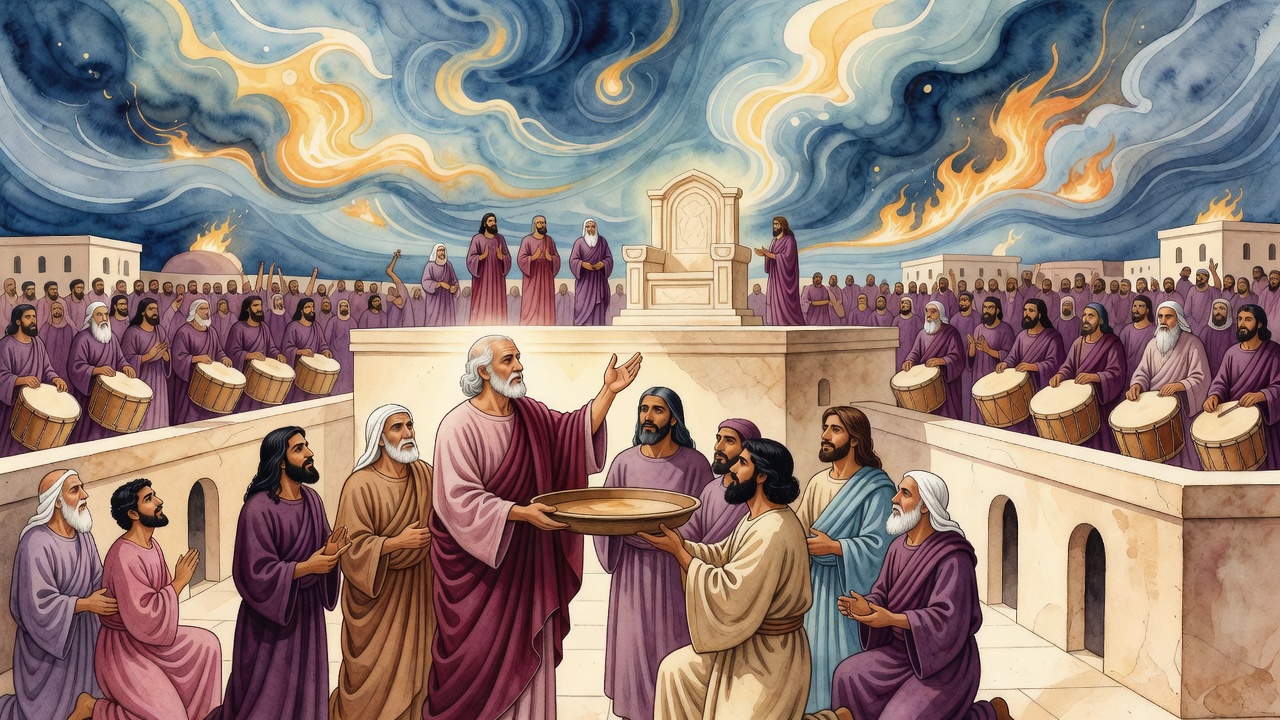
Joseph put a price on empty streets. Nobles pulled on purple. Women climbed the walls with drums while an old shepherd from Canaan came in under the noise.
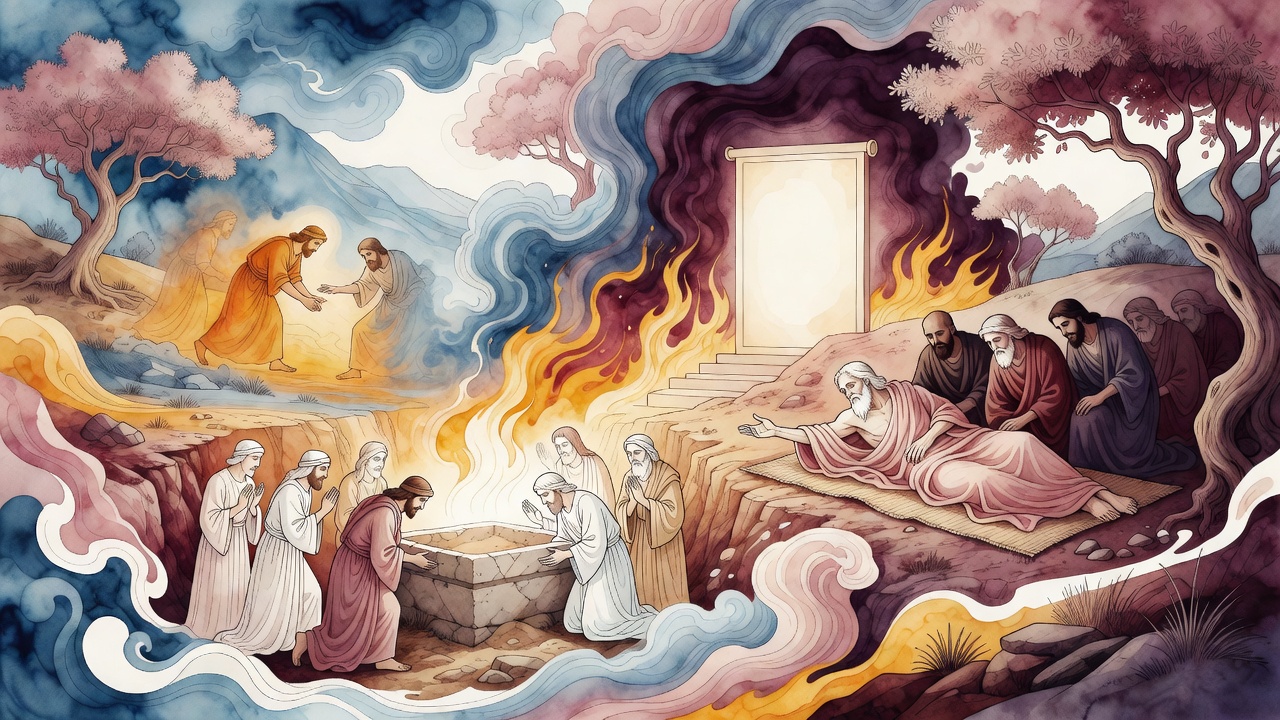
Dying, Jacob ordered Joseph to forgive and shield his brothers. Ages later the tribes buried Joseph in Shechem, the ground that first took him.
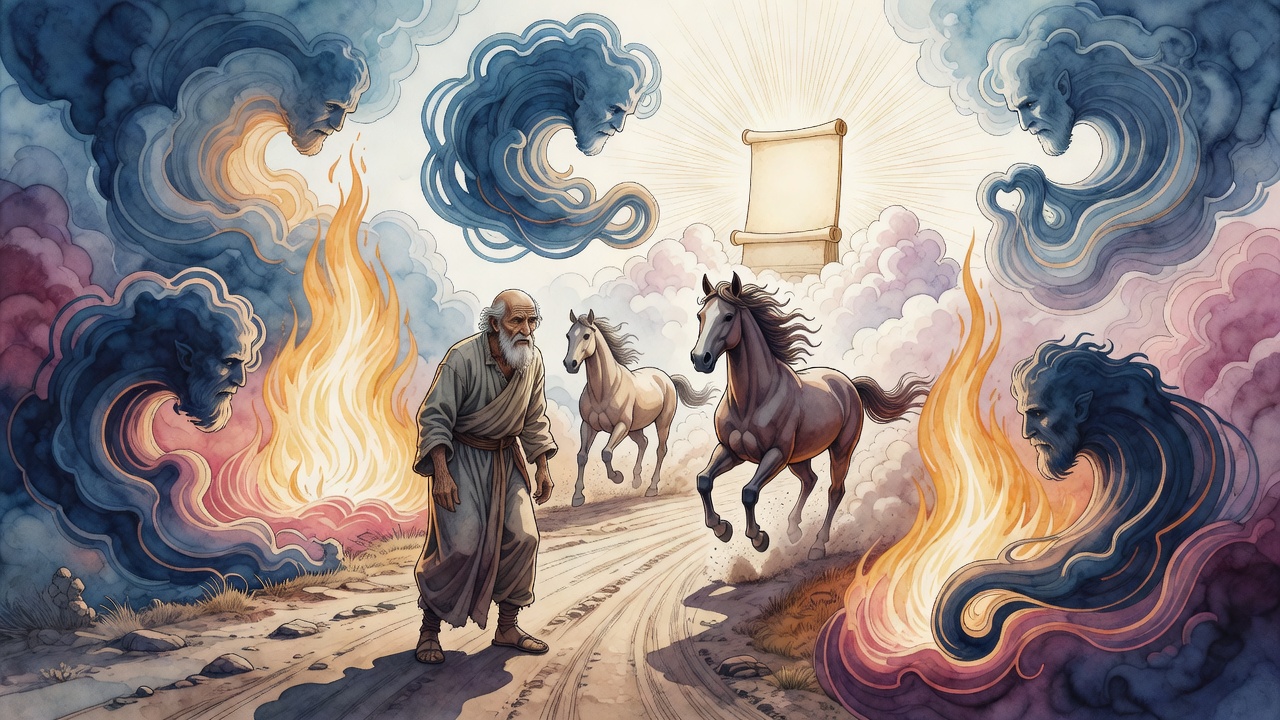
Joseph sent his oldest son first, then the next, each on a horse. From far off Jacob kept mistaking every rider for the son he had lost.
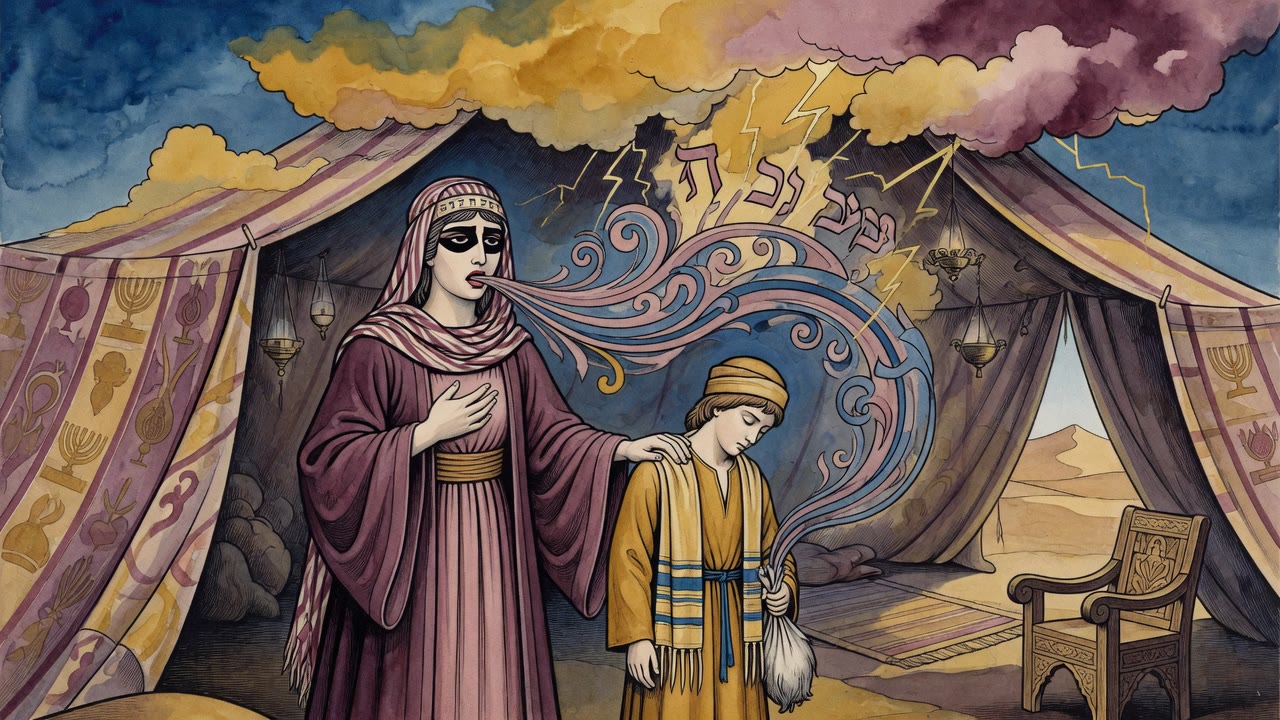
Jacob feared a father's curse more than a brother's rage. Rebecca claimed the curse for herself, dressed her smooth son, and sent him in for the blessing.
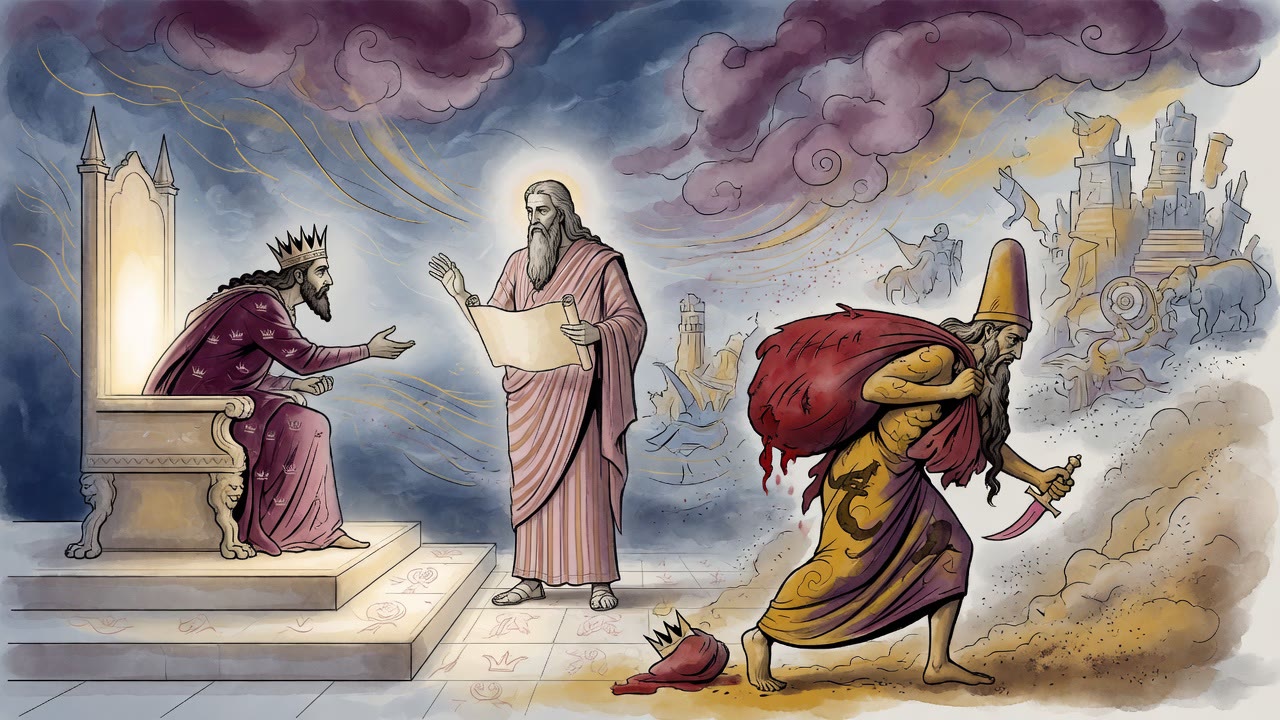
Laban's hands were full of wool. Jacob told Leah and Rachel the dream from heaven. They said they would go wherever he went.
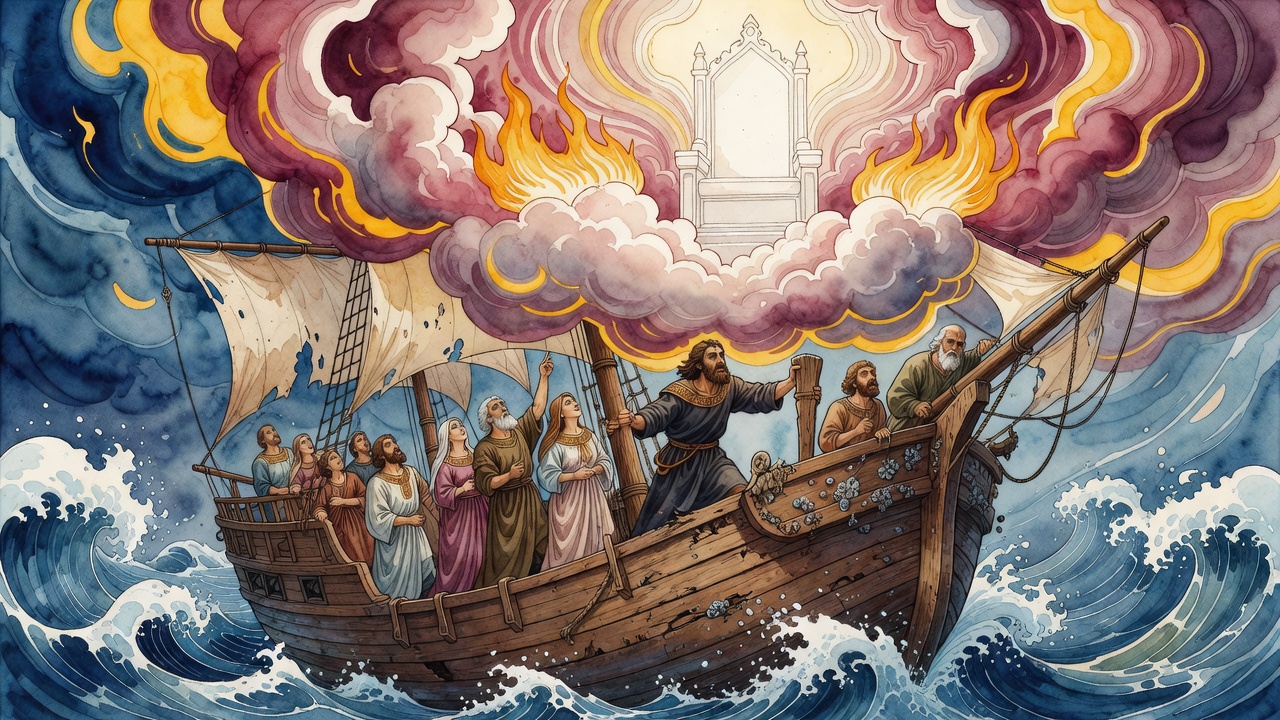
Joseph took both rudders after his father vanished. Judah named the course. After the wreck, only the masts showed above the water.
Joseph sent clothes up from Egypt, a turban among them for his father. Jacob put it on, then slaughtered sacrifices asking whether he should go at all.
Joseph would not walk into Pharaoh's hall in mourning clothes. He sent the king's household ahead, then Seir rode down three days later.
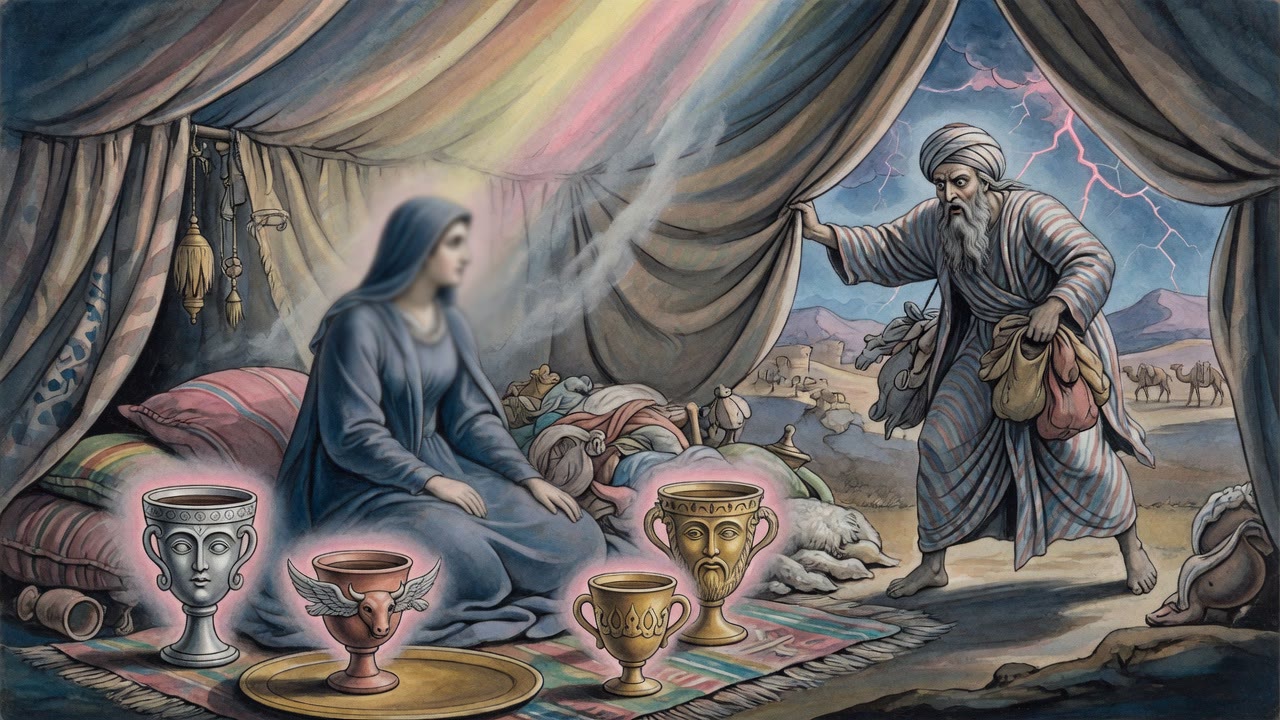
Laban went tent to tent looking for the household gods. Rachel sat still. In her camel's saddle the teraphim had become ordinary cups.
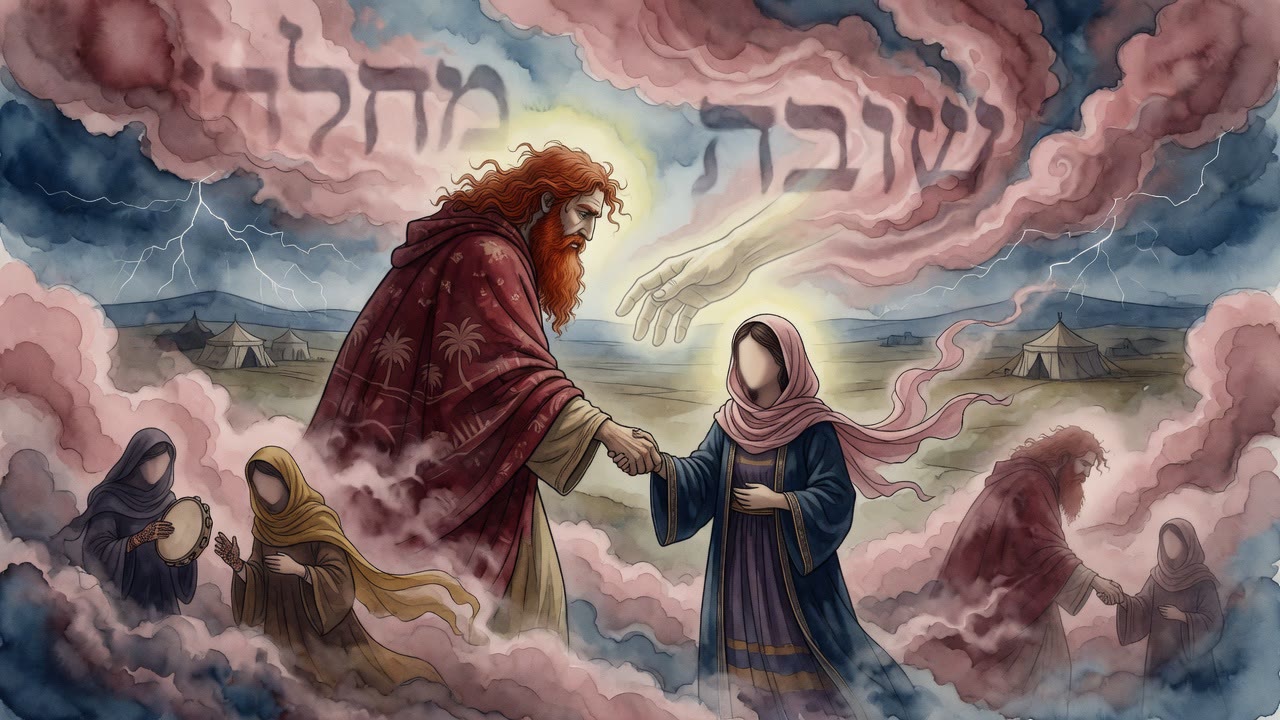
Isaac could not stand the women his son had married out of Canaan. So Esau rode down to Ishmael's camp and came back with a third one.
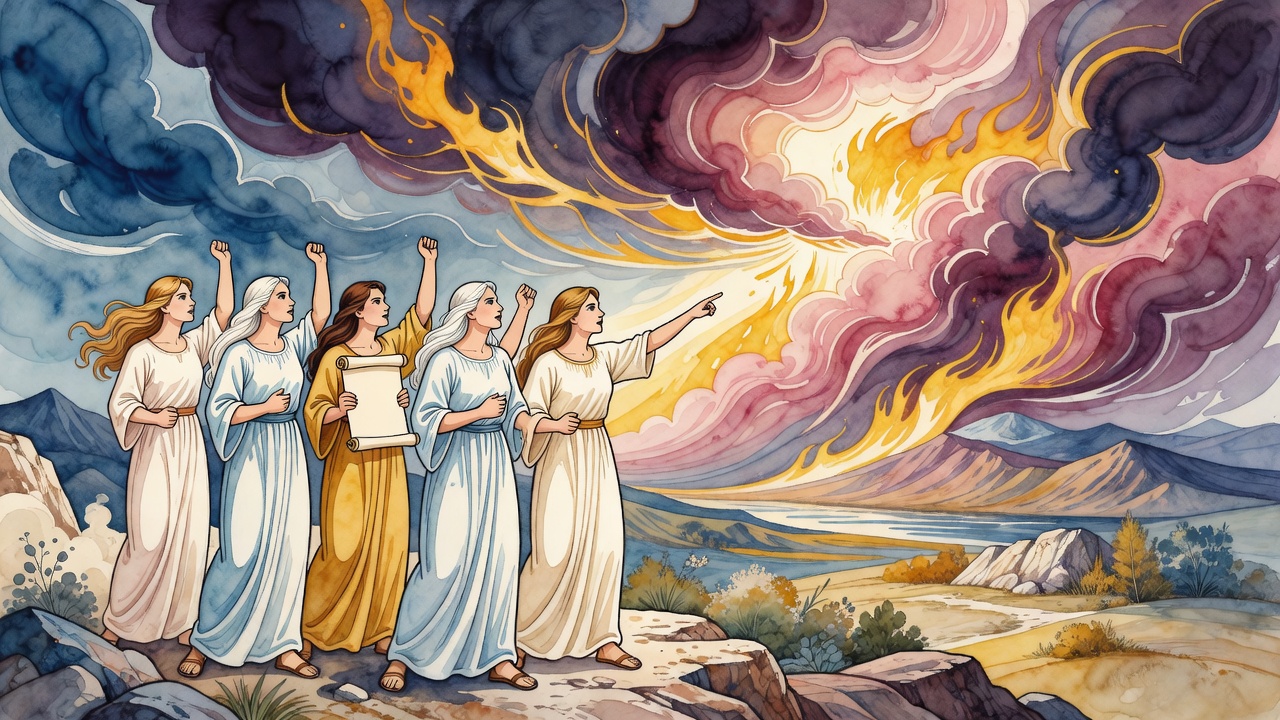
Zelophehad died without sons, his daughters forced a ruling on inheritance, and the women of the Exodus loved the land more than the men.
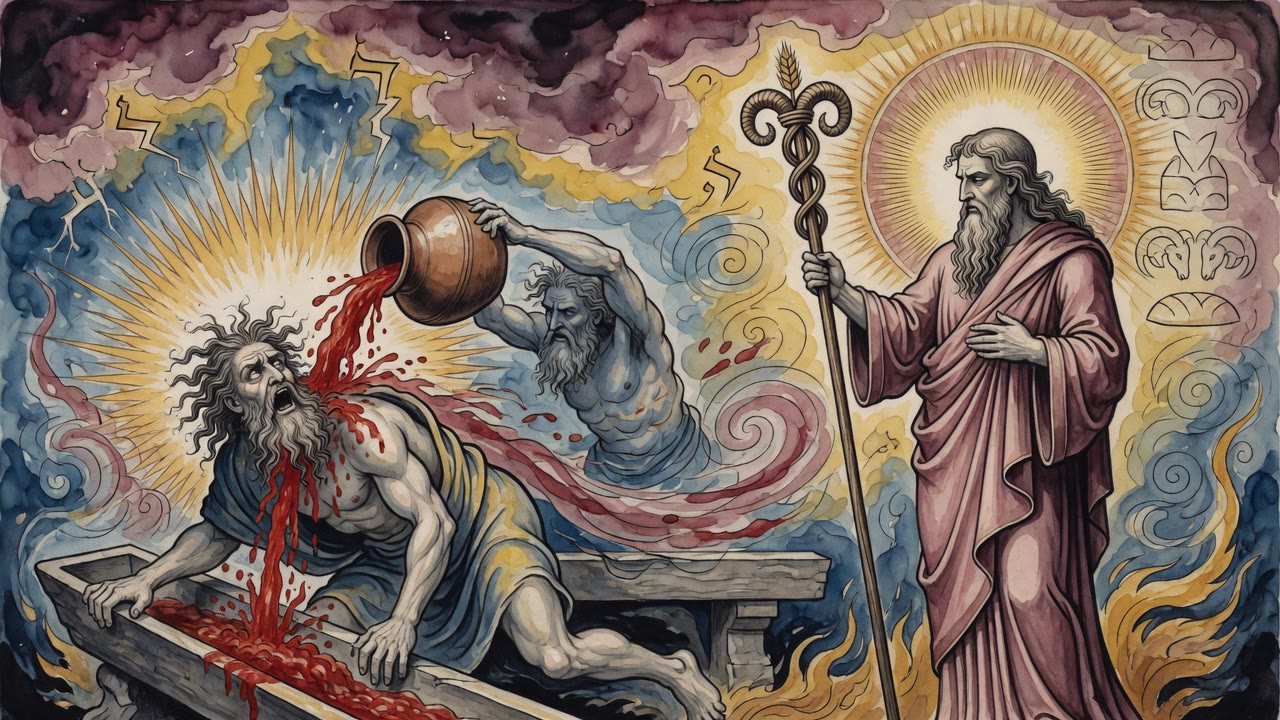
The pit had no water. It had snakes. When they hauled him up, the face Jacob loved had gone white, and the buyers paid shoe money.
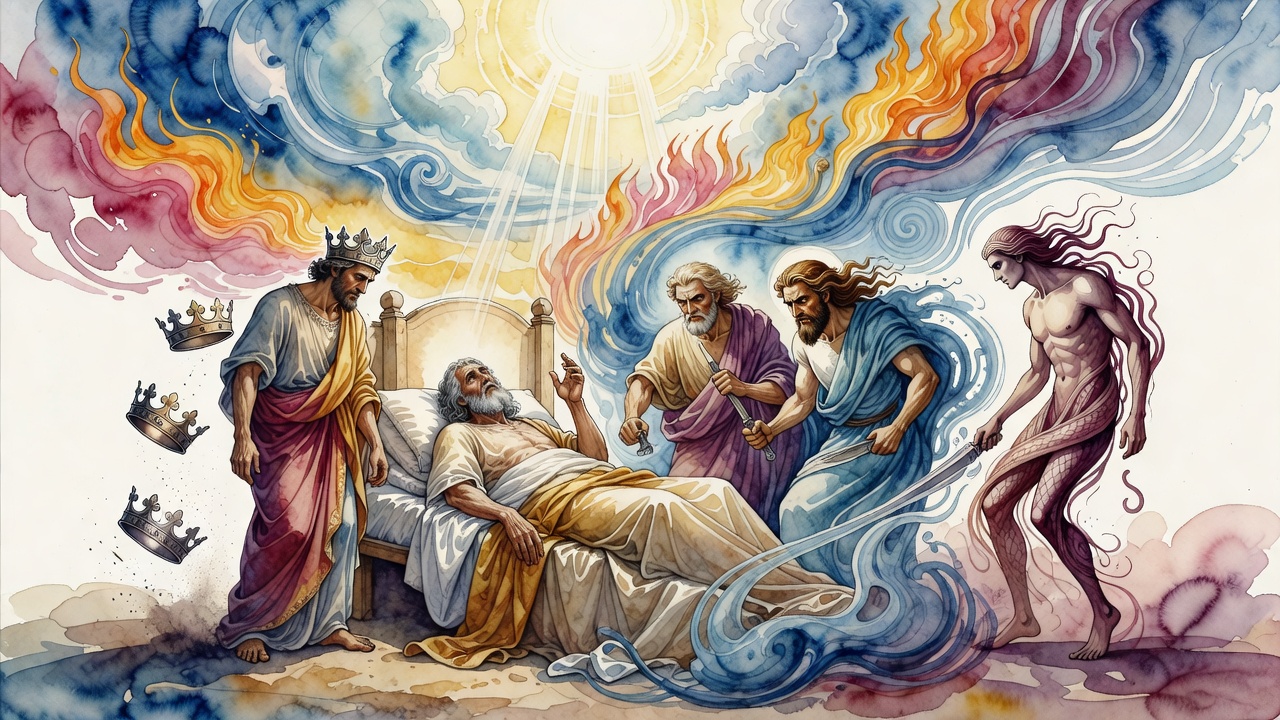
Reuben had three crowns waiting on the bed. Jacob poured them out like water from a flask. The firstborn left with his ears ringing.
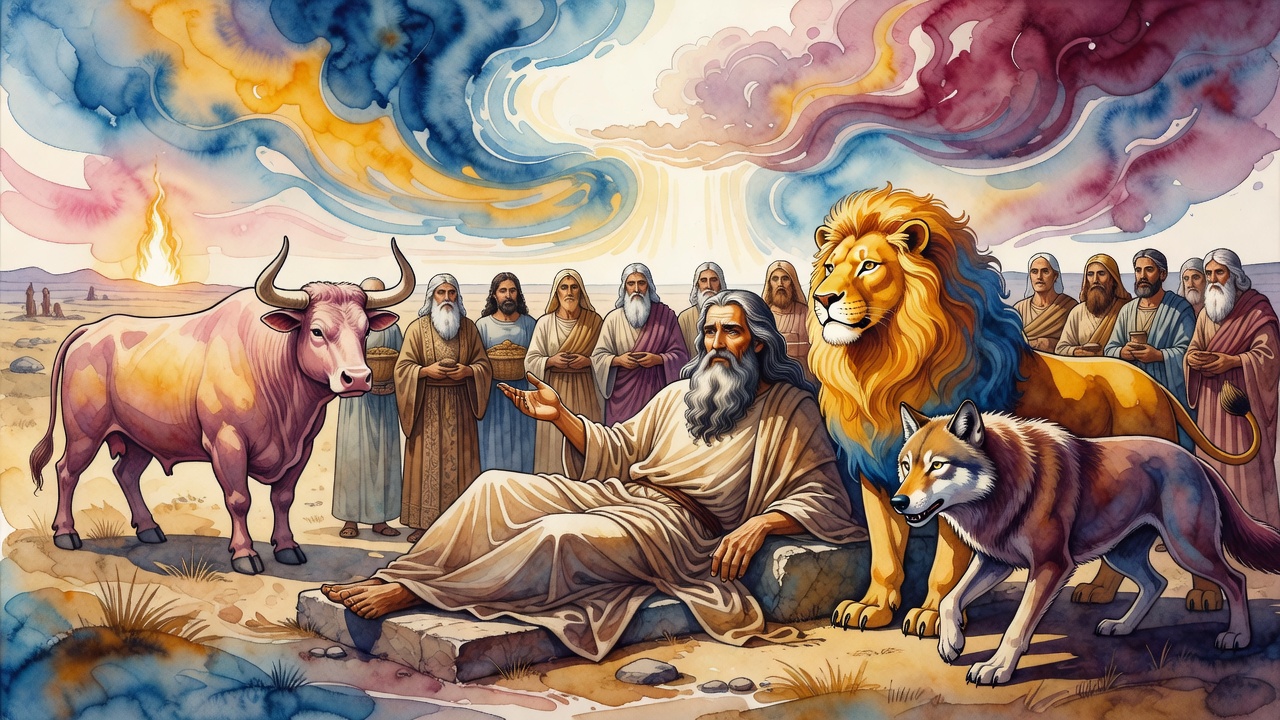
The sons standing in the tent still smelled of flocks. Their father named animals, and the animals were kingdoms that had not been built yet.
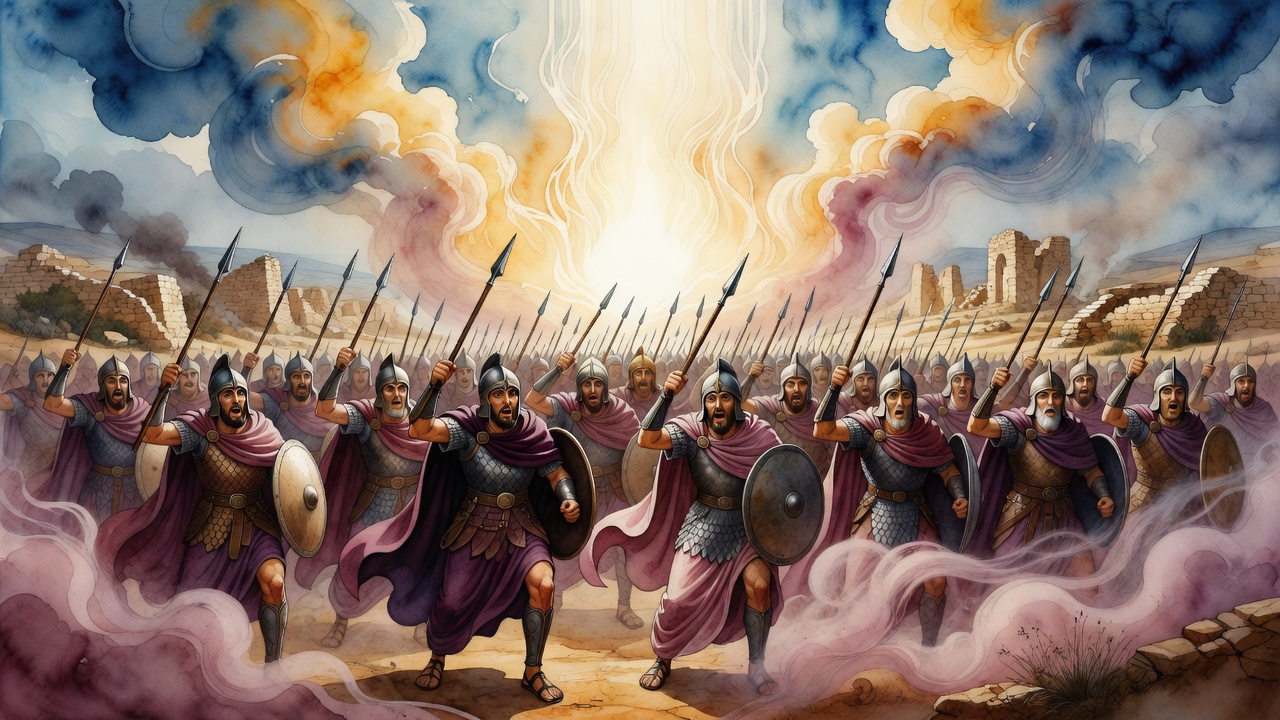
Counselors in the war tents listed every miracle done for Abraham. Kings who had come to avenge Shechem turned their horses around.
