485 myths · Page 6 of 17
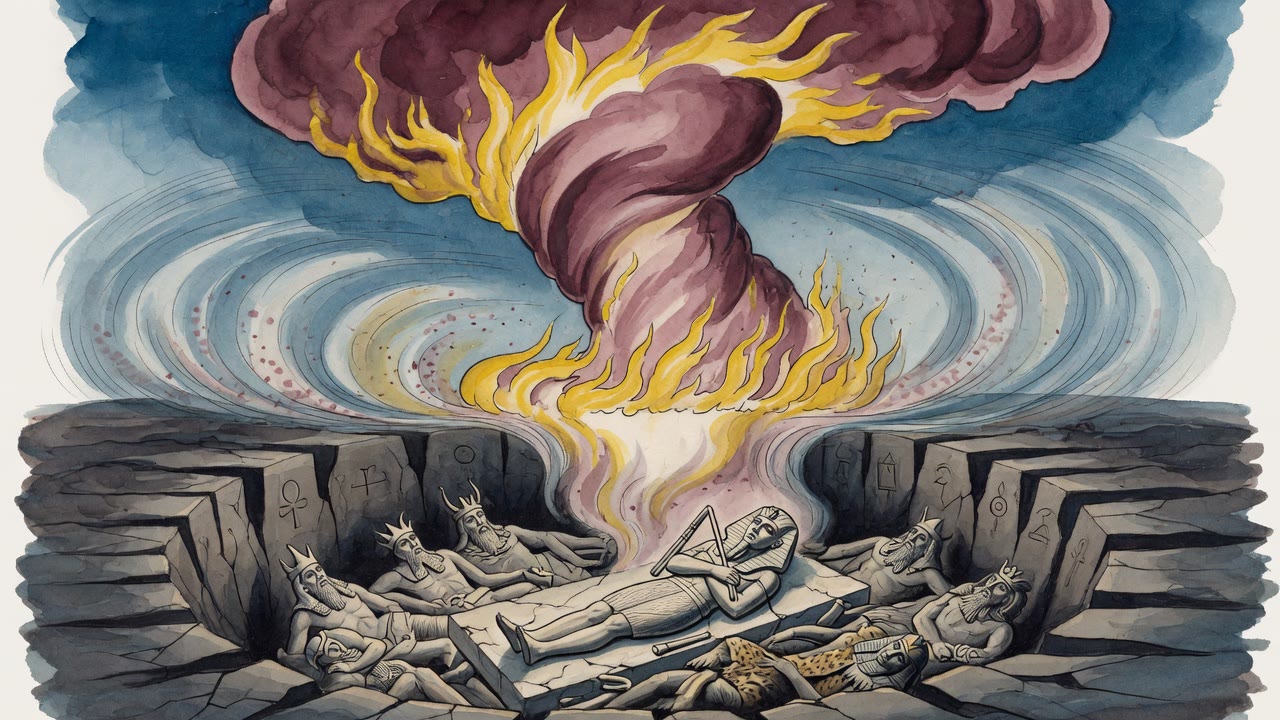
At the Red Sea, Israel and Egypt looked alike to strict justice. God split the water not because Israel was worthy but because an oath outranked merit.
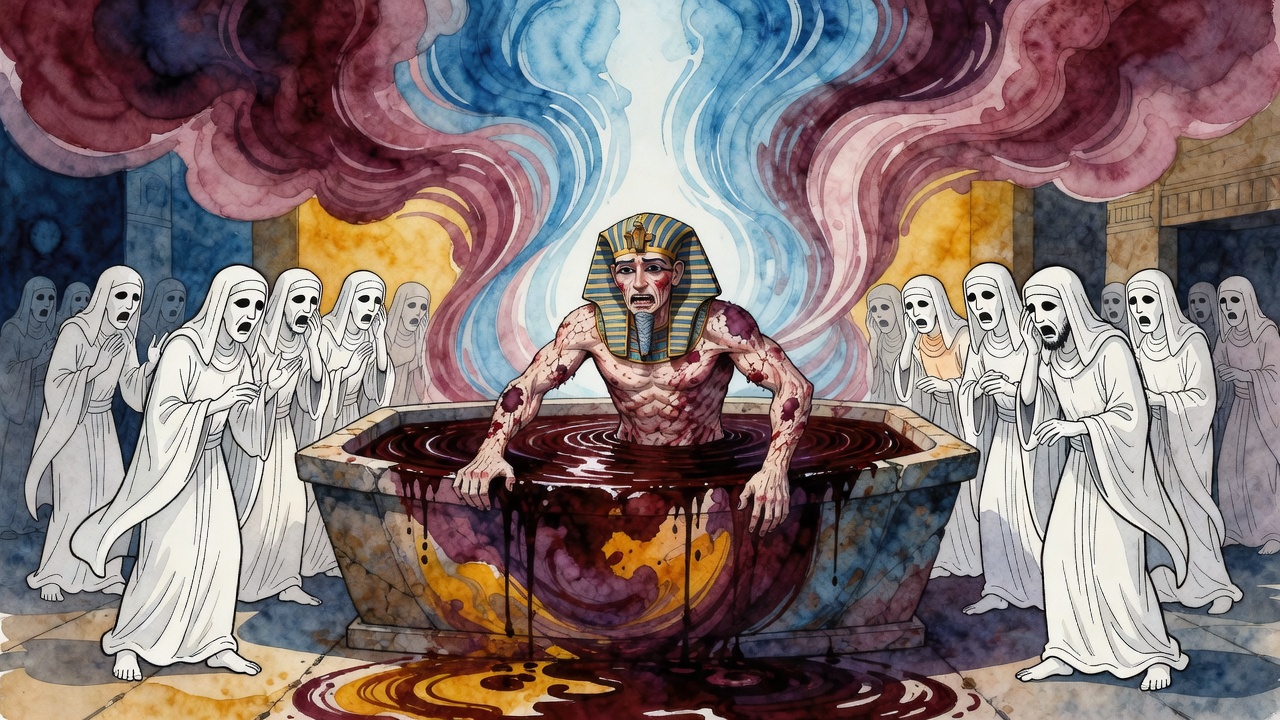
Pharaoh broke out in sores, and his doctors told him to bathe in the blood of Hebrew children. He signed the order for three hundred a day.
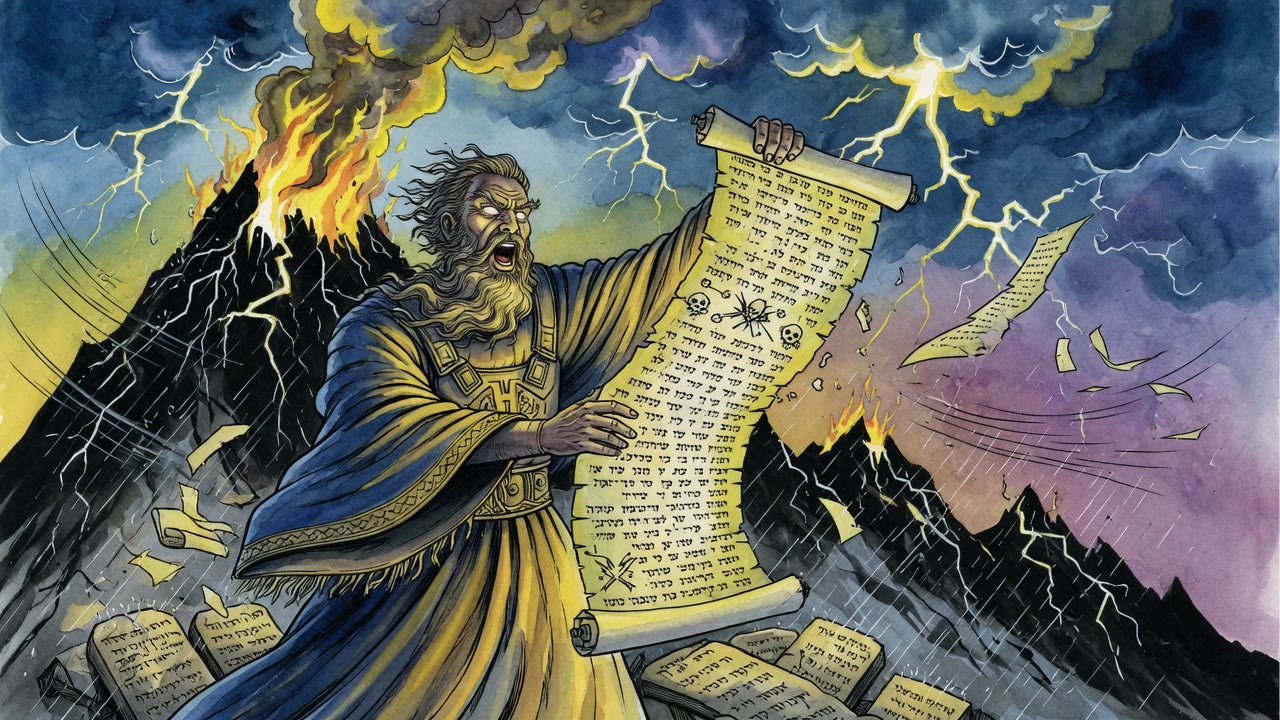
The elders set out with Moses for Pharaoh's court. One by one they found reasons to slow down, and only Moses and Aaron reached the door.
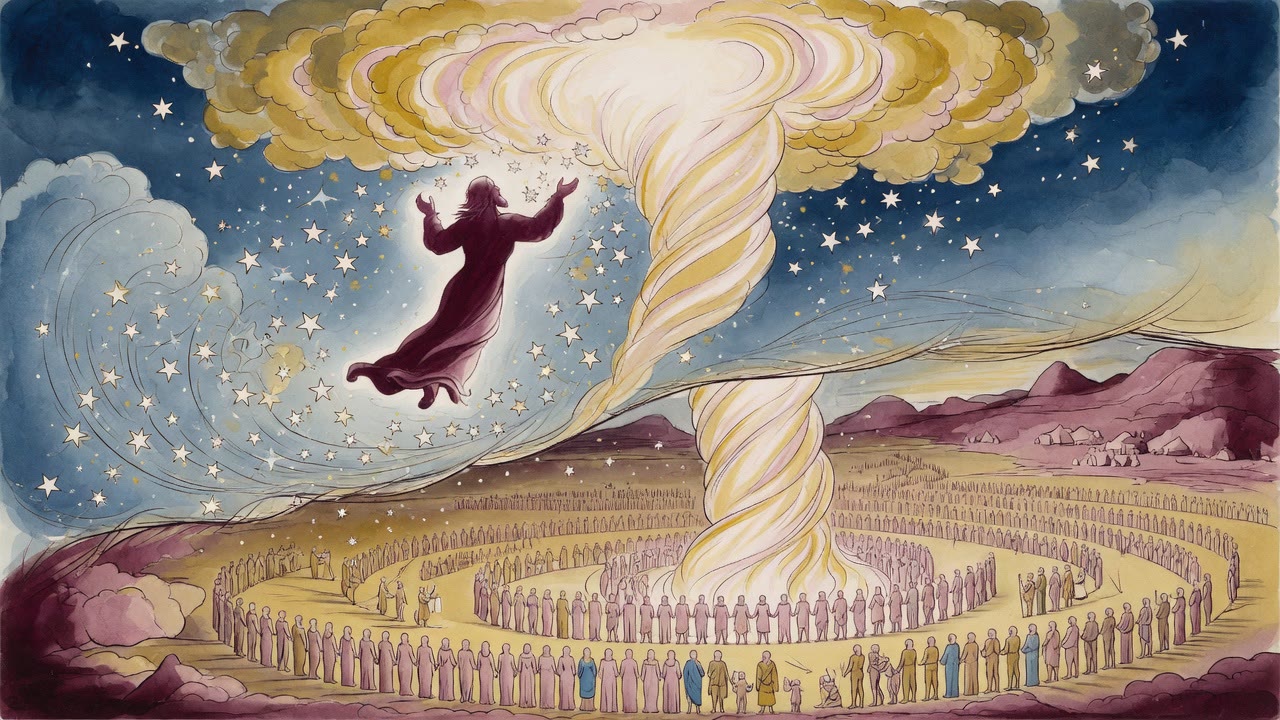
God lifts Abraham above the stars to count them, then the census of the wilderness counts Israel as love made visible in numbers.
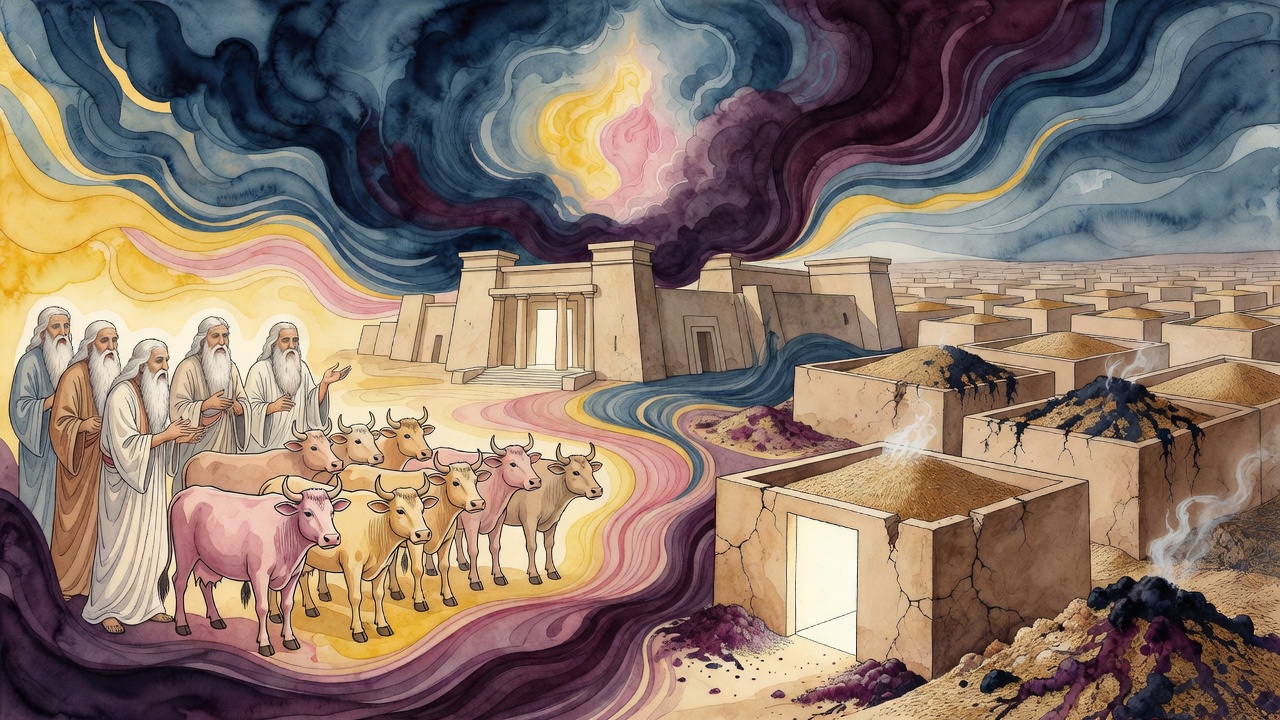
Egypt's wise men misread seven cows as daughters, Pharaoh's firstborn dies the day Joseph is freed, and grain rots in every storehouse except one.
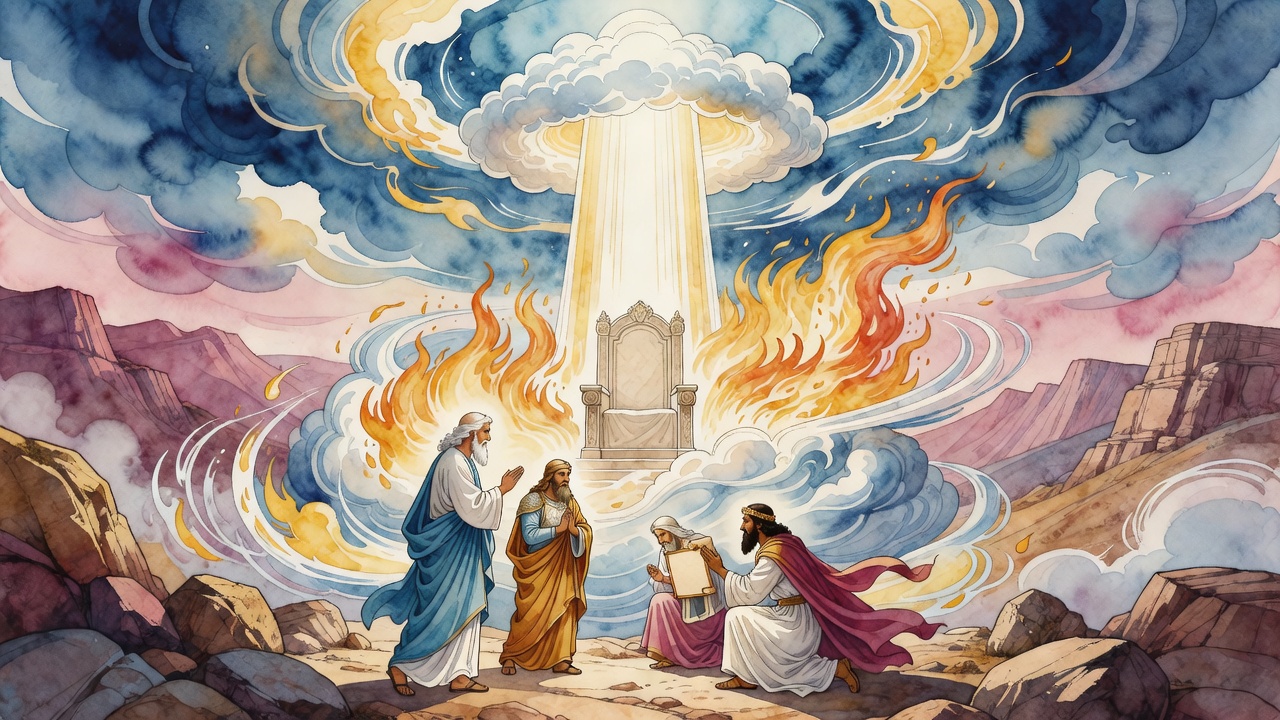
Shemot Rabbah places Moses, David, and Solomon before a God who lifts and lowers like a wheel, then demands that Torah and mercy govern the throne.
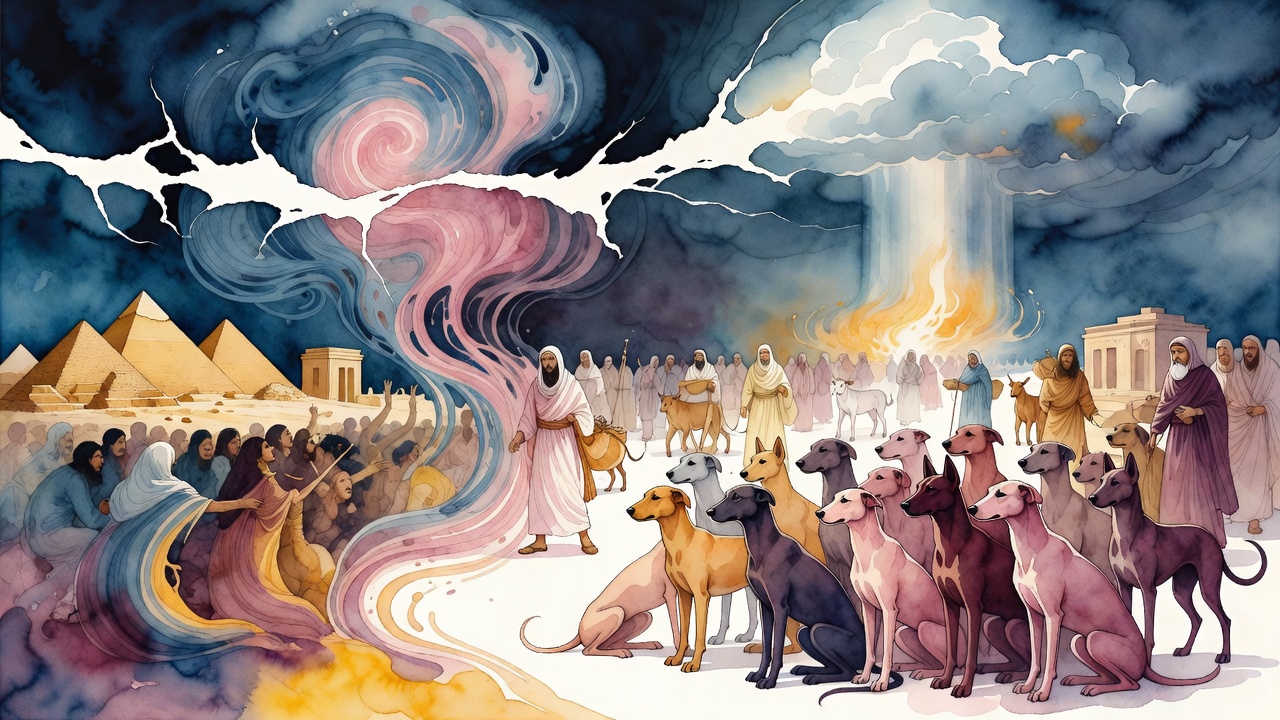
Moses walked out of the throne room burning. He had just told Pharaoh that the king's own servants would come and beg him to leave.
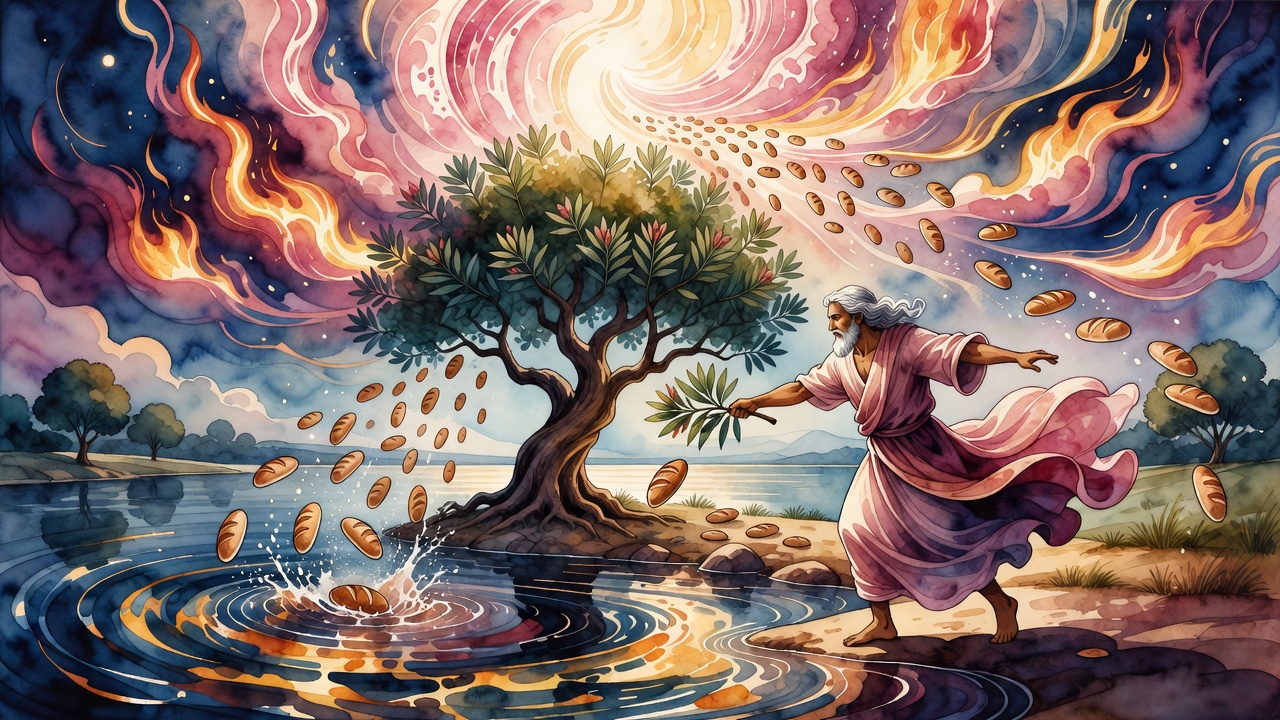
Moses writes God's Name on poisonous oleander and throws it into bitter water. Weeks later, heaven drops bread stored there since the first week of creation.
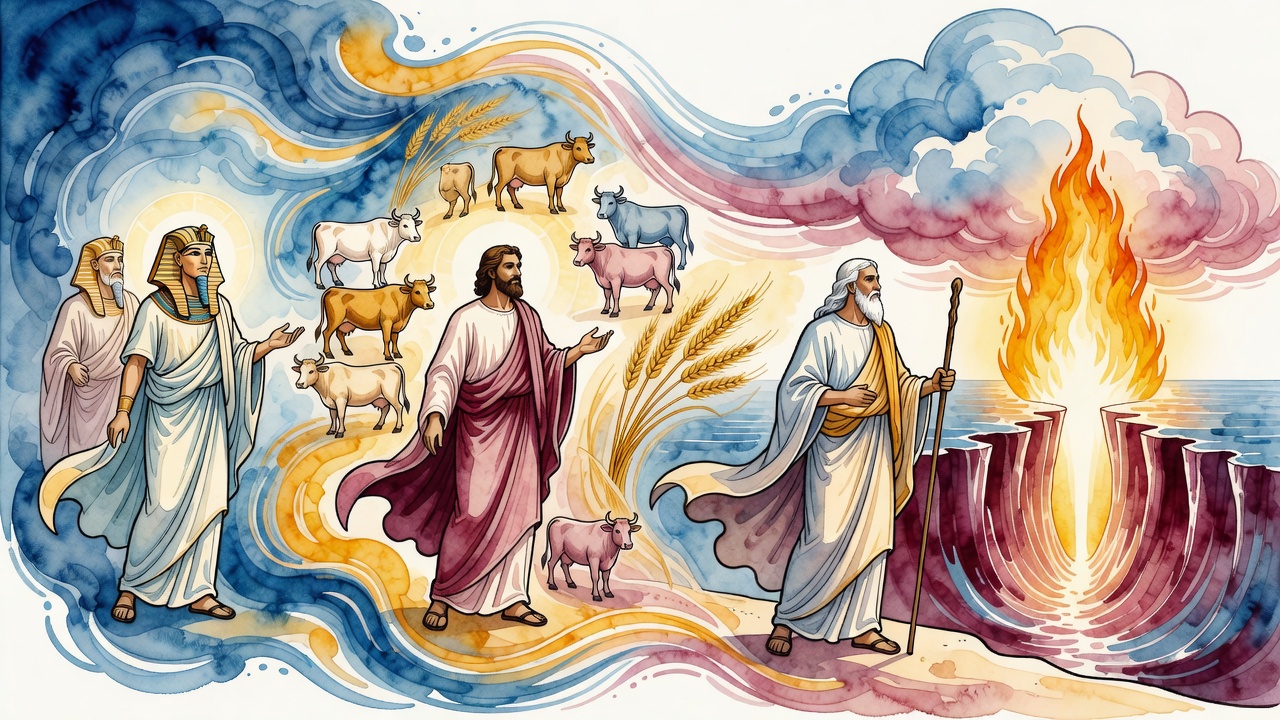
Pharaoh woke from dreams his court could not hold. Joseph named what the night meant. Generations later Moses stood at the sea and the answer came again.
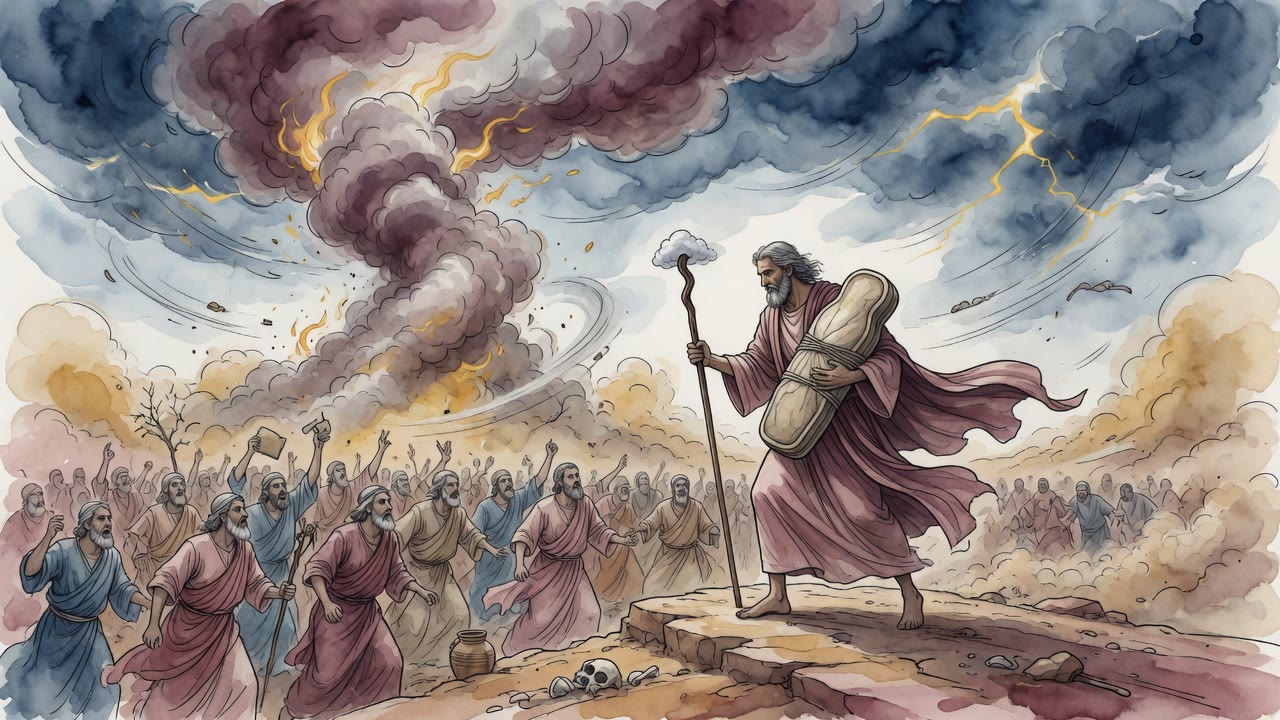
The people wept for meat and called the manna worthless. Moses told God the weight was too heavy and asked to be killed rather than watch it.
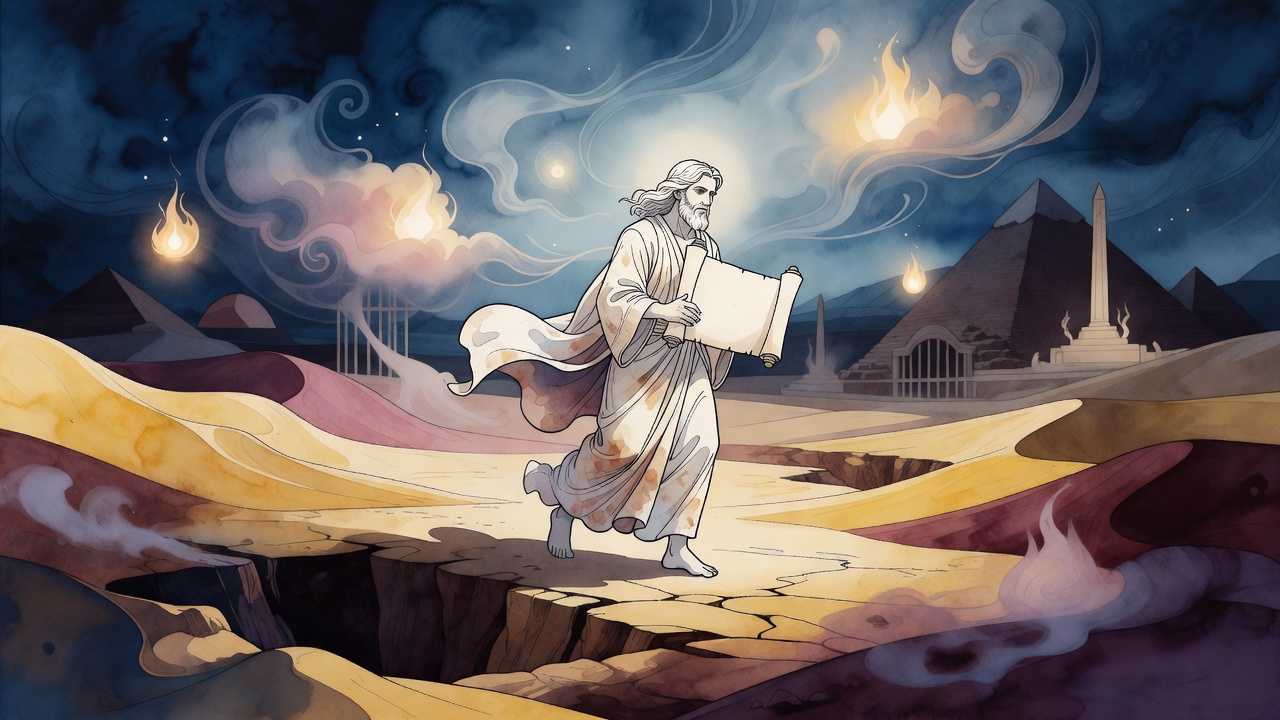
The iron sat under his neck so he would look at her. Joseph kept his eyes on the wall and answered her with a psalm.
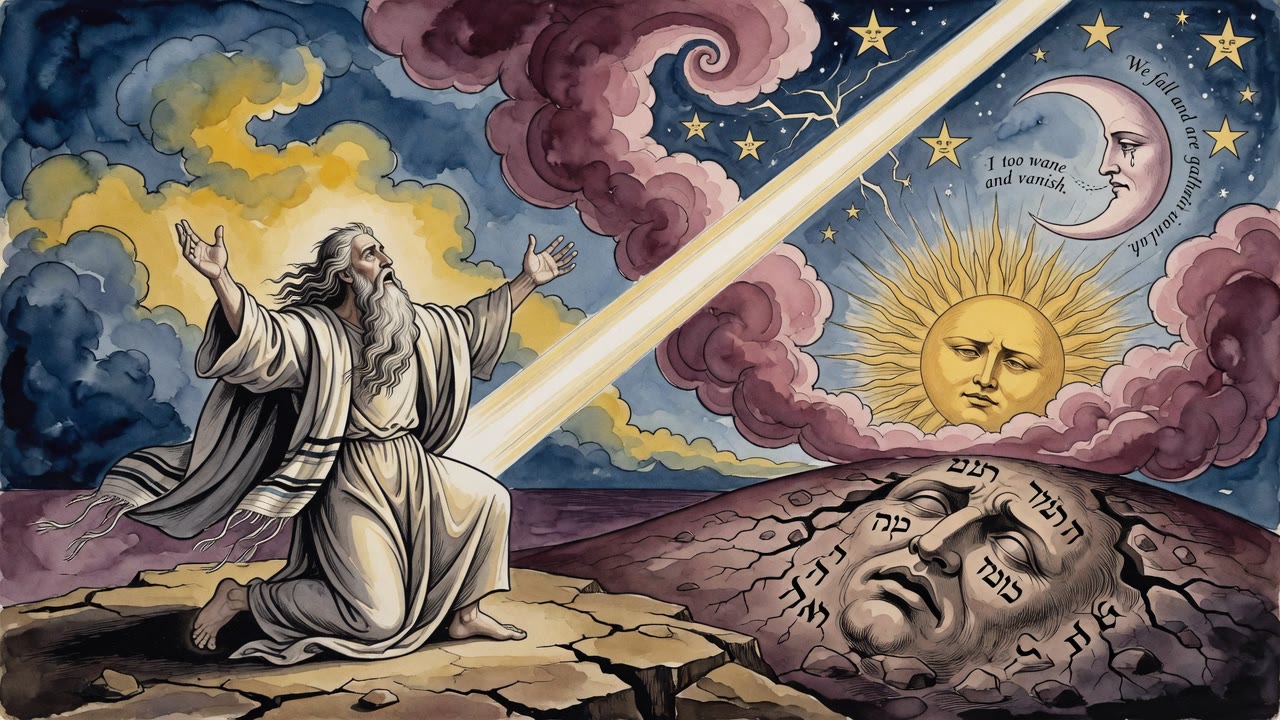
Abraham's tent rushed to serve strangers, Judah learned the cost of a half-finished rescue, and Joseph forced Egypt to promise his bones would leave.
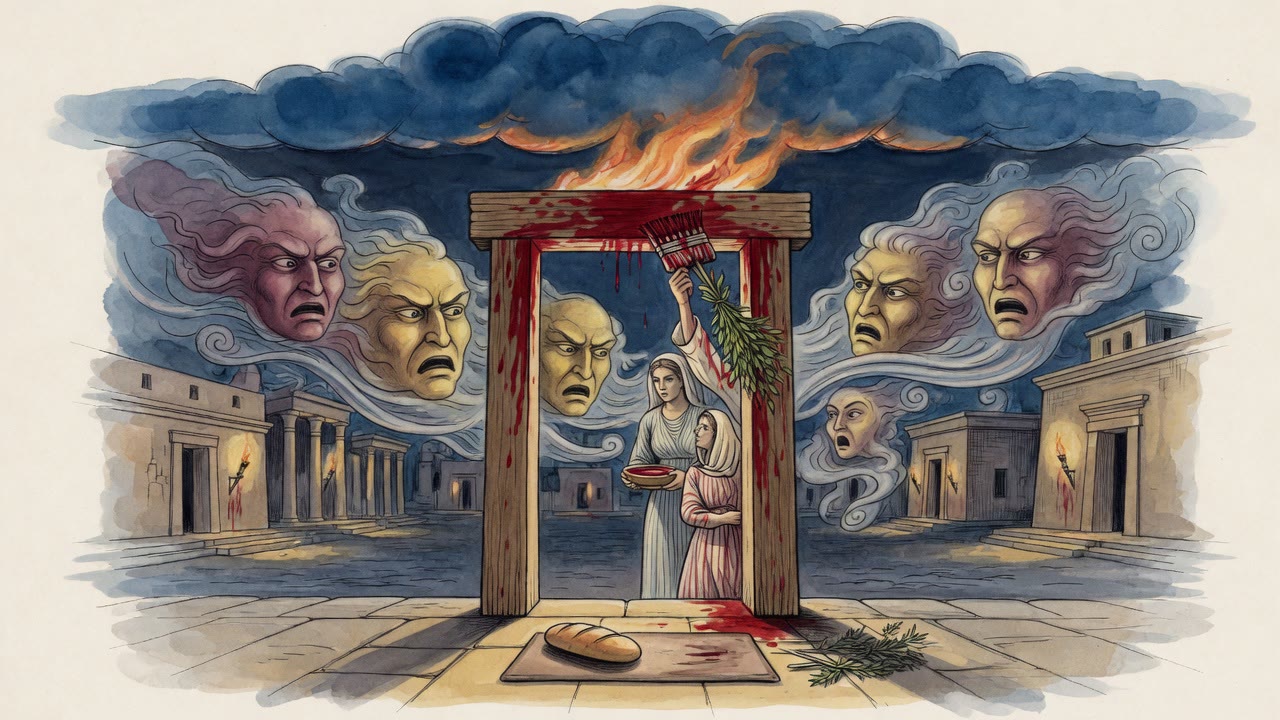
Moses held two fistfuls of soot in one palm and threw them at the sky. Boils covered Egypt. That night a plant no one prized marked the doors.
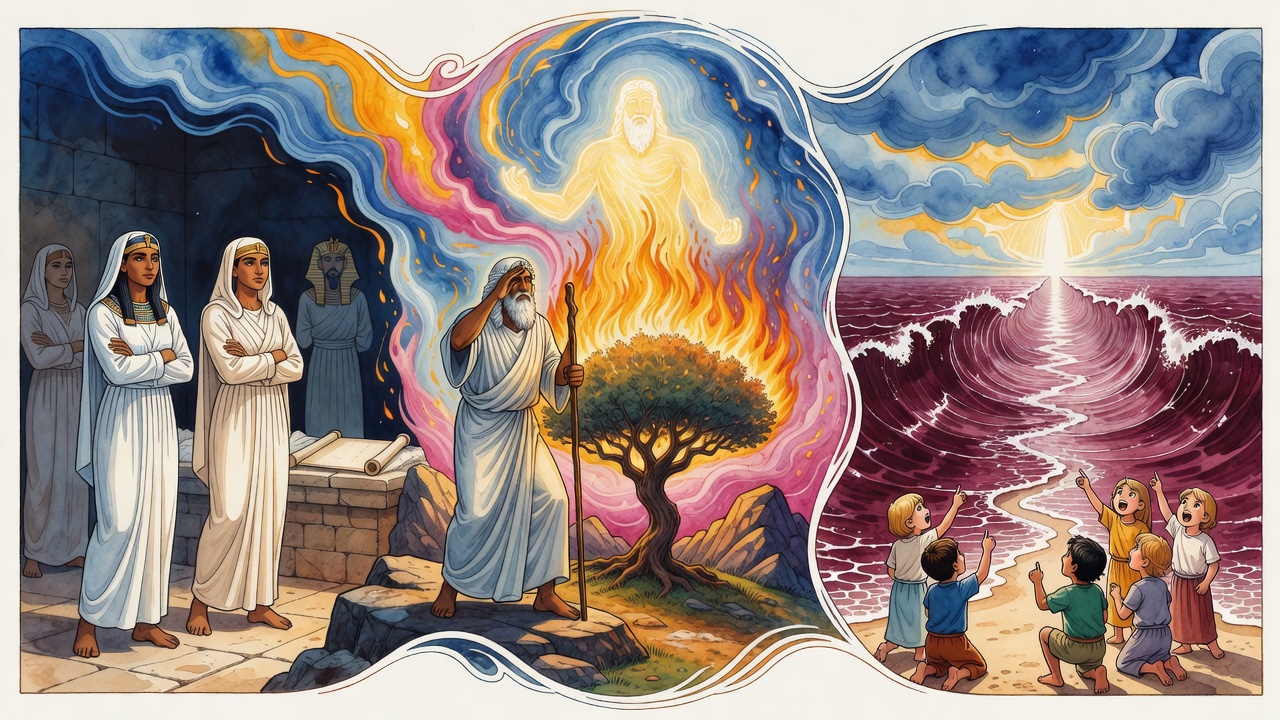
Pharaoh's order reached the birth stool first. Shifra and Puah kept their hands off the boys. A child at the sea later pointed and named God.
Pharaoh's daughter opened the basket and found a crying child. Compassion opened in her too. The Tikkunei Zohar calls that baby the Master of Tears.
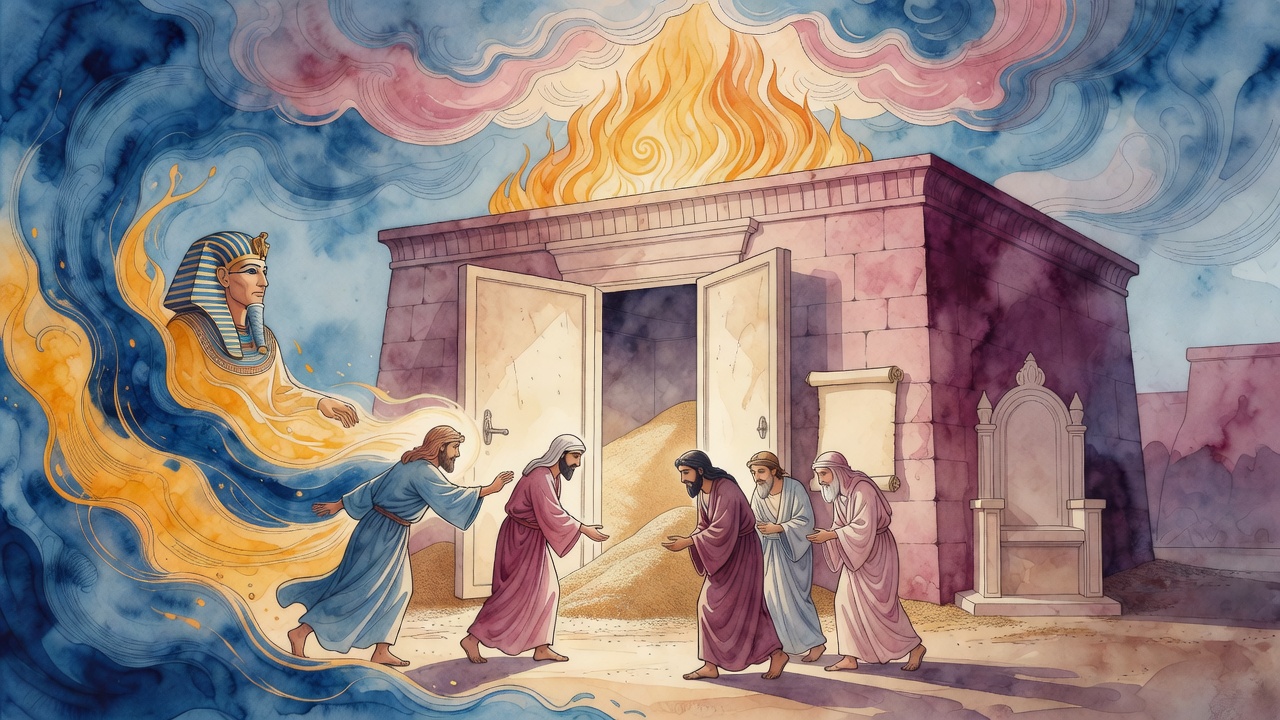
The butler dreamed of a vine in Joseph's cell. Years later the brothers bowed for grain and named the sale with their own mouths.
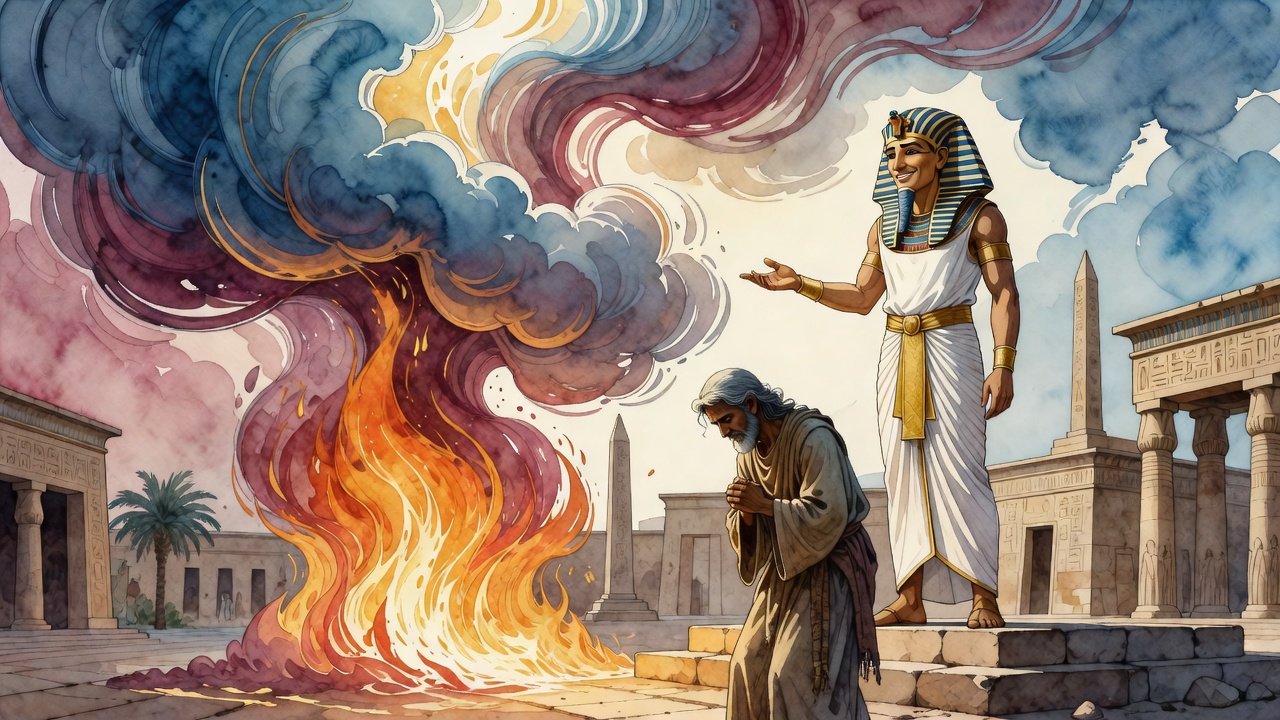
Pharaoh mocks the messenger God sent him. Shemot Rabbah says that insult forced God to enter Egypt personally rather than let His emissary be disgraced.
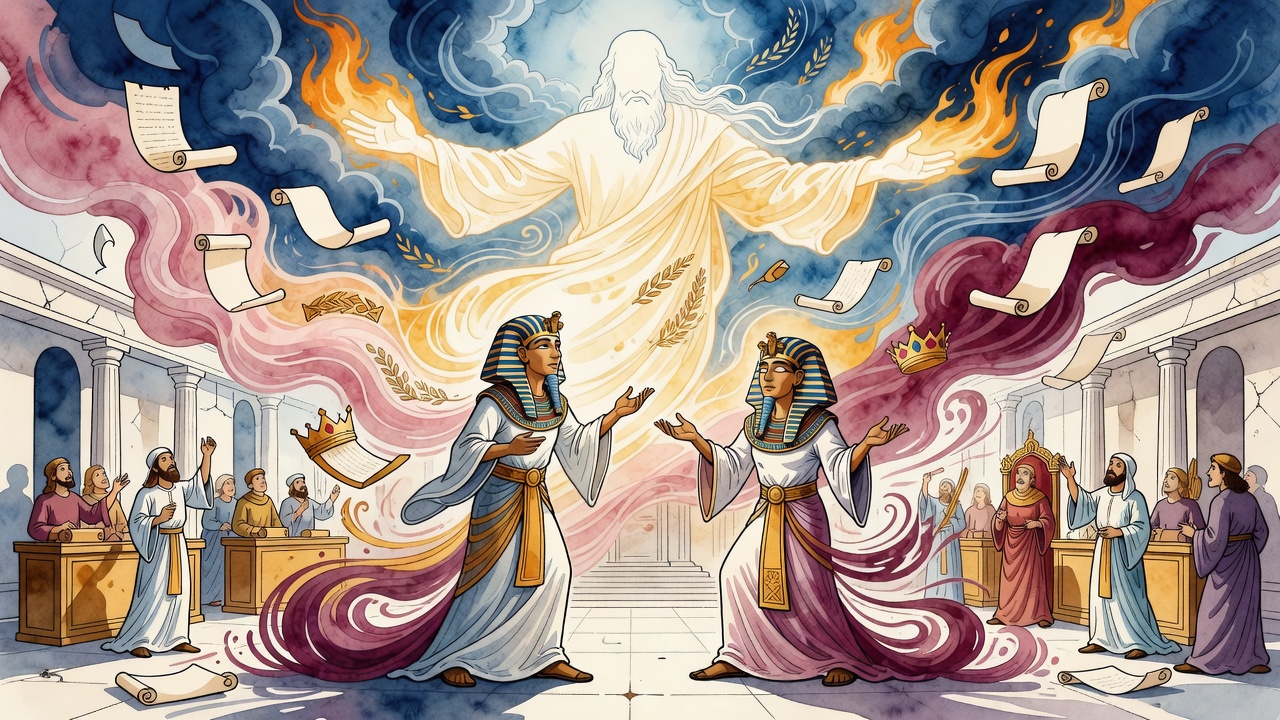
The magicians guessed at seven fat cows until Pharaoh ordered them killed. Hangmen waited. Then a Hebrew cry knocked him off the throne.
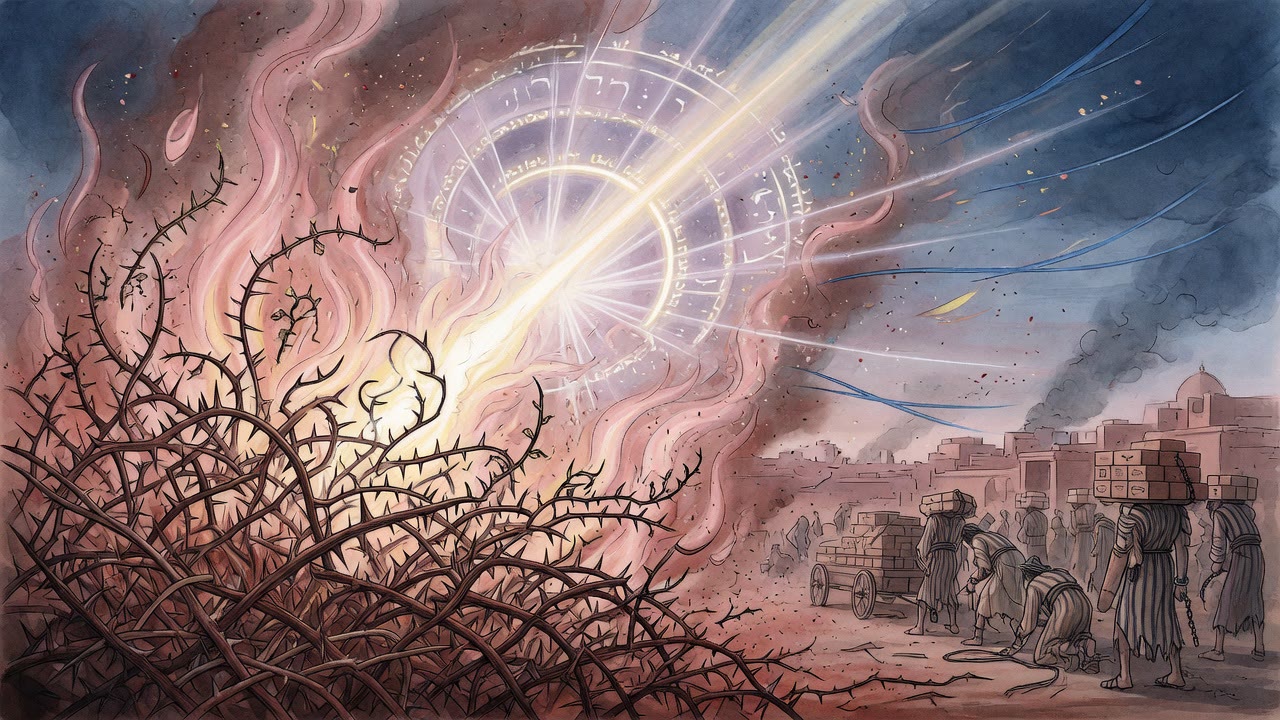
Moses sees fire in a thornbush that does not consume the branches. Shemot Rabbah hears God choosing to stand inside Israel's suffering before speaking.
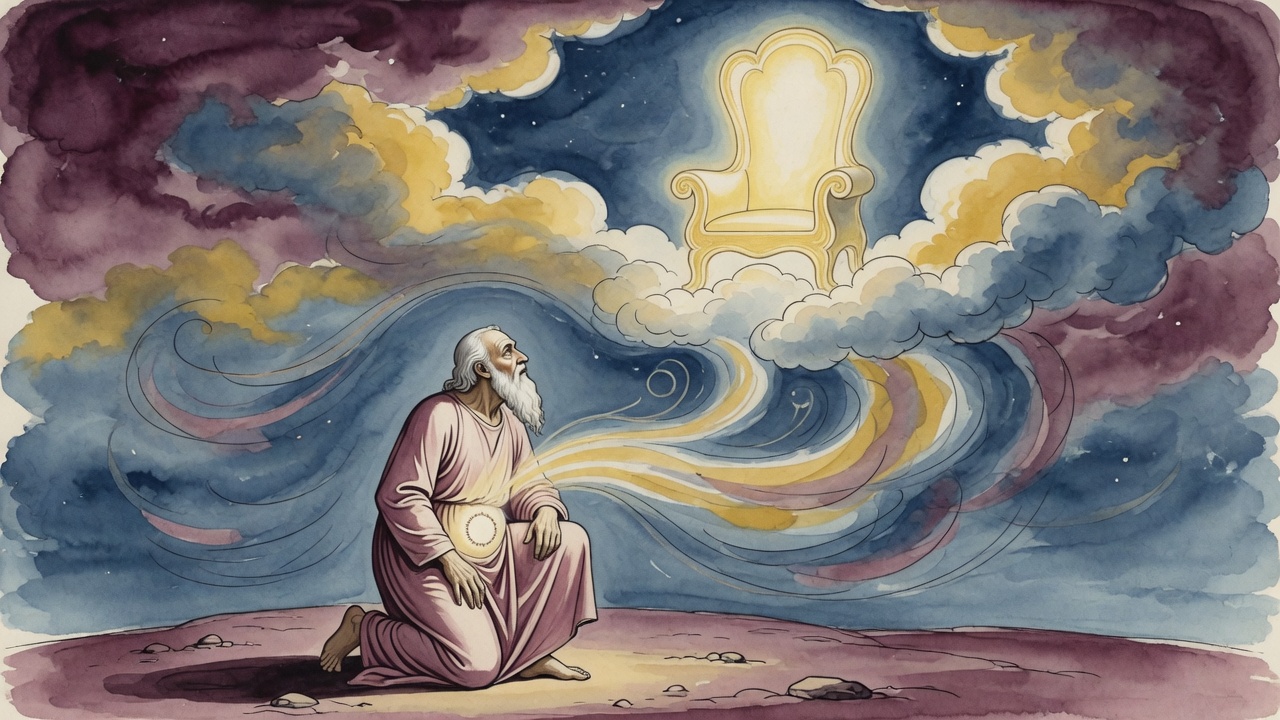
God appeared to Abraham and used a name meaning enough. Enough for the foreskin to have existed until now. At ninety-nine, the body became the covenant's seal.
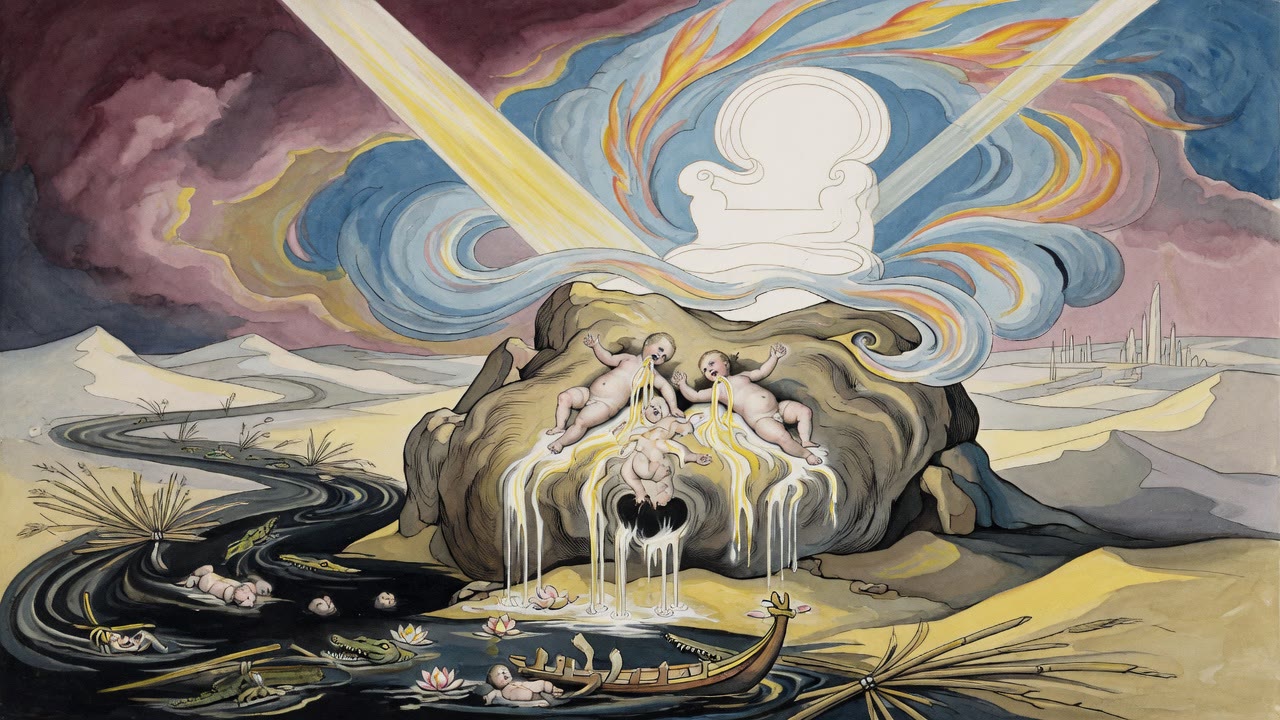
The Nile festival emptied Potiphar's house. Joseph stayed to work the accounts. His garment tore free in her hand on the way to the door.
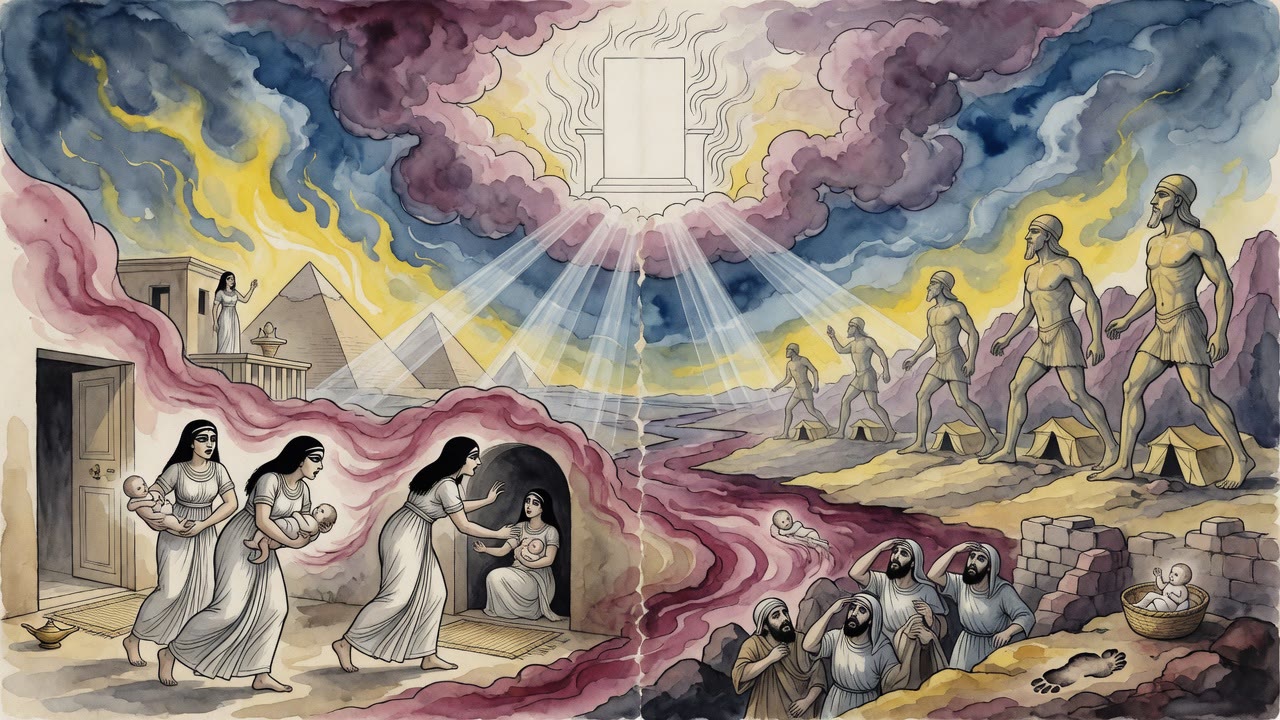
Egyptian women carried their own infants into Hebrew houses. A hidden baby heard another child and cried back from the floor.
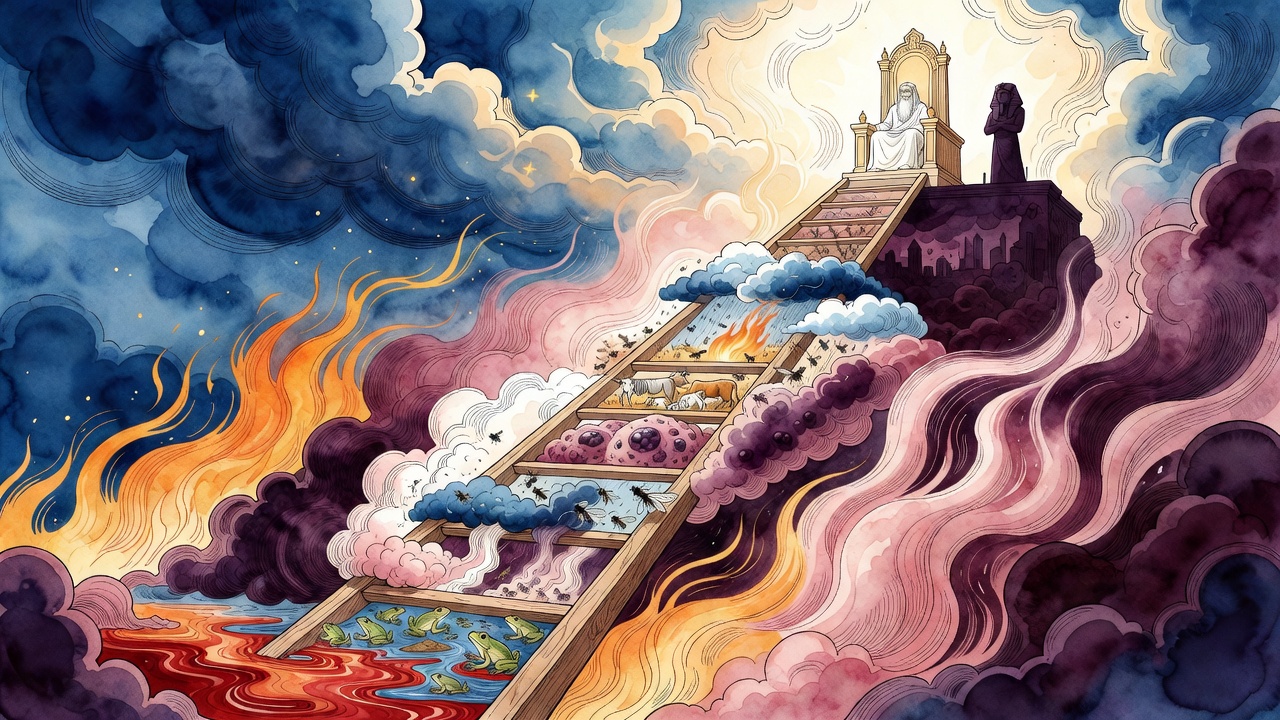
Judah stood in an Egyptian throne room and reminded the man on the chair what happened to the last Pharaoh who kept a woman of this family.
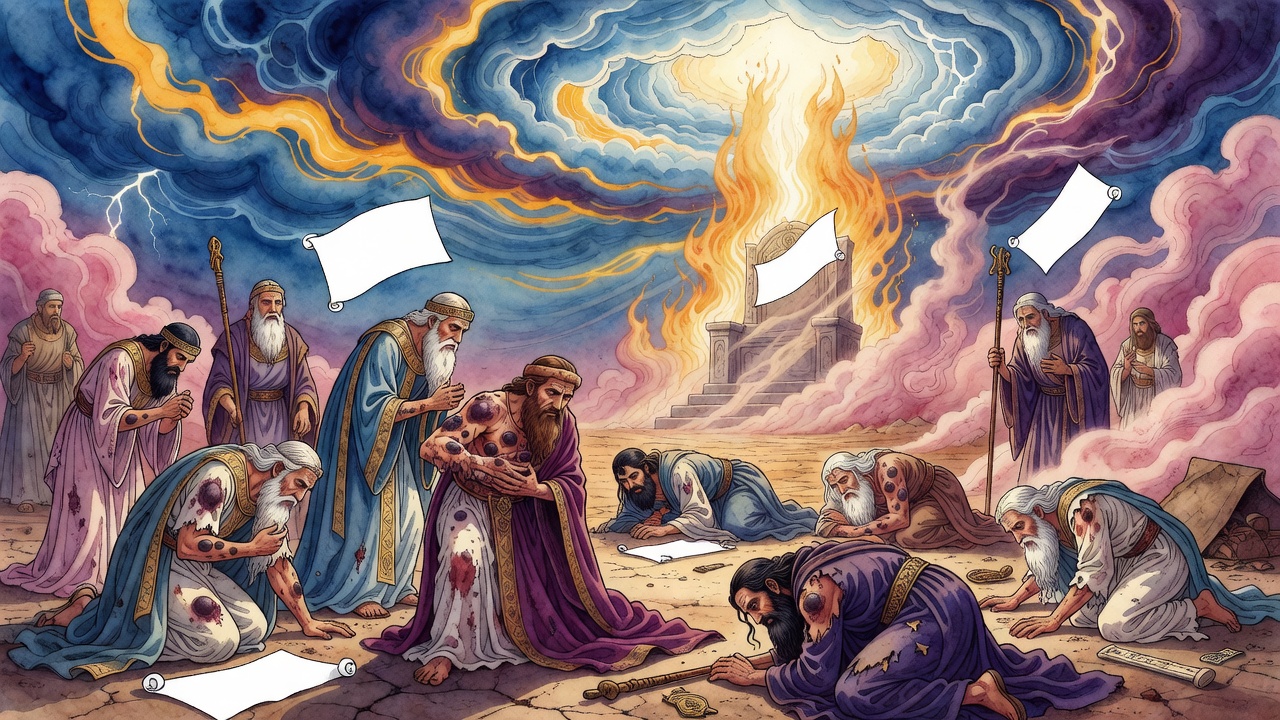
Balaam's sons copied the blood and the frogs. Dust would not become lice for them. When the boils came they could not even stand in the hall.
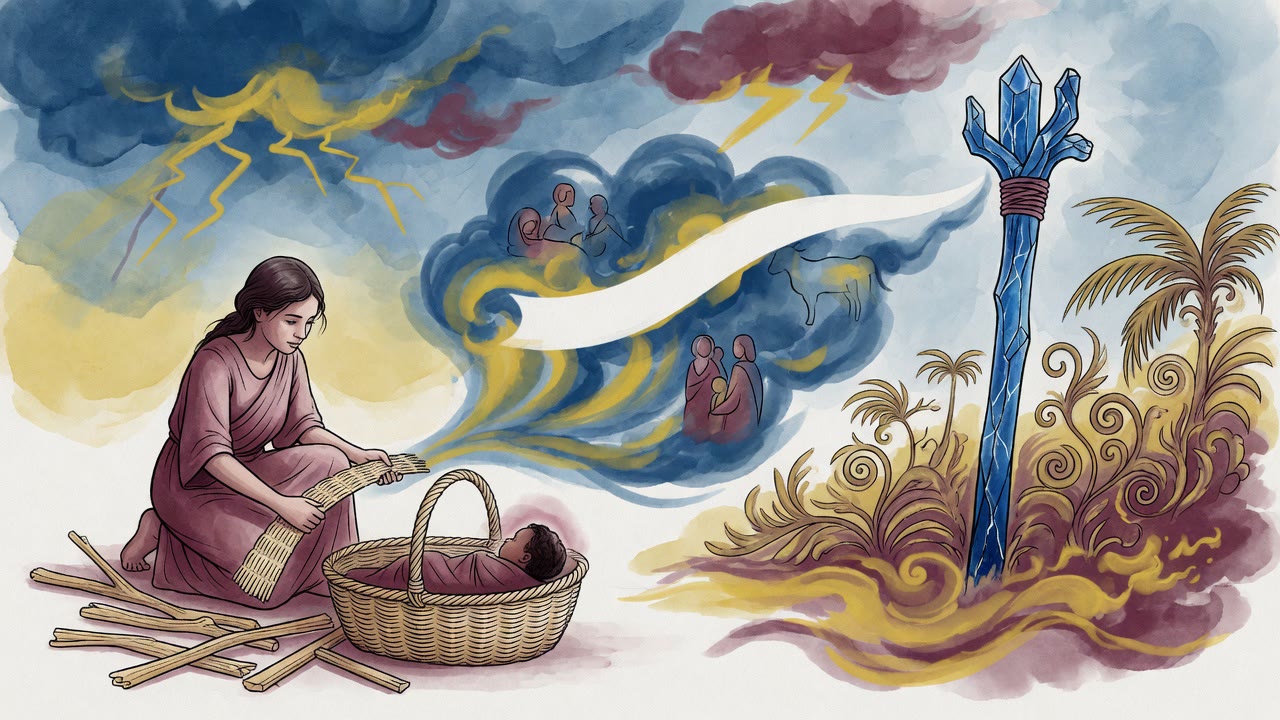
A mother chooses wicker over wood for her son's basket. A staff cut from sapphire waits in a garden. A calf law turns out to be about a people.
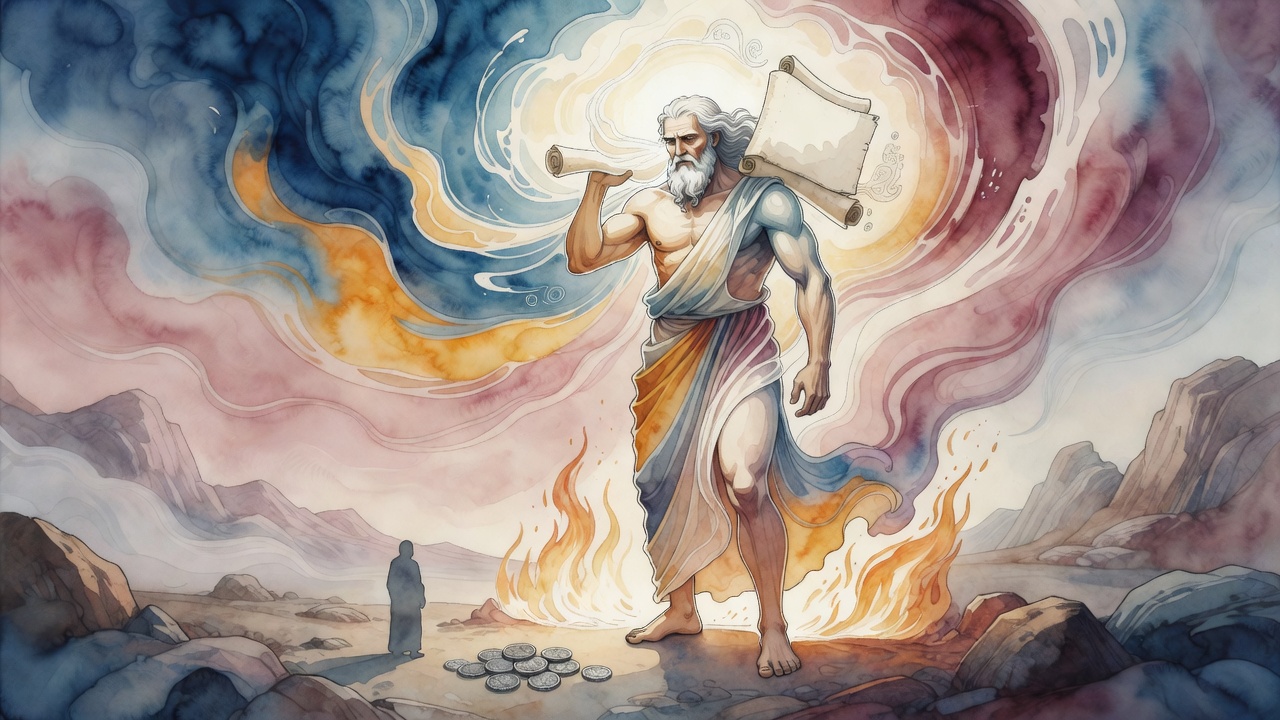
Moses refused to weigh the Tabernacle silver unless another man stood in the room and wrote the numbers down beside him.
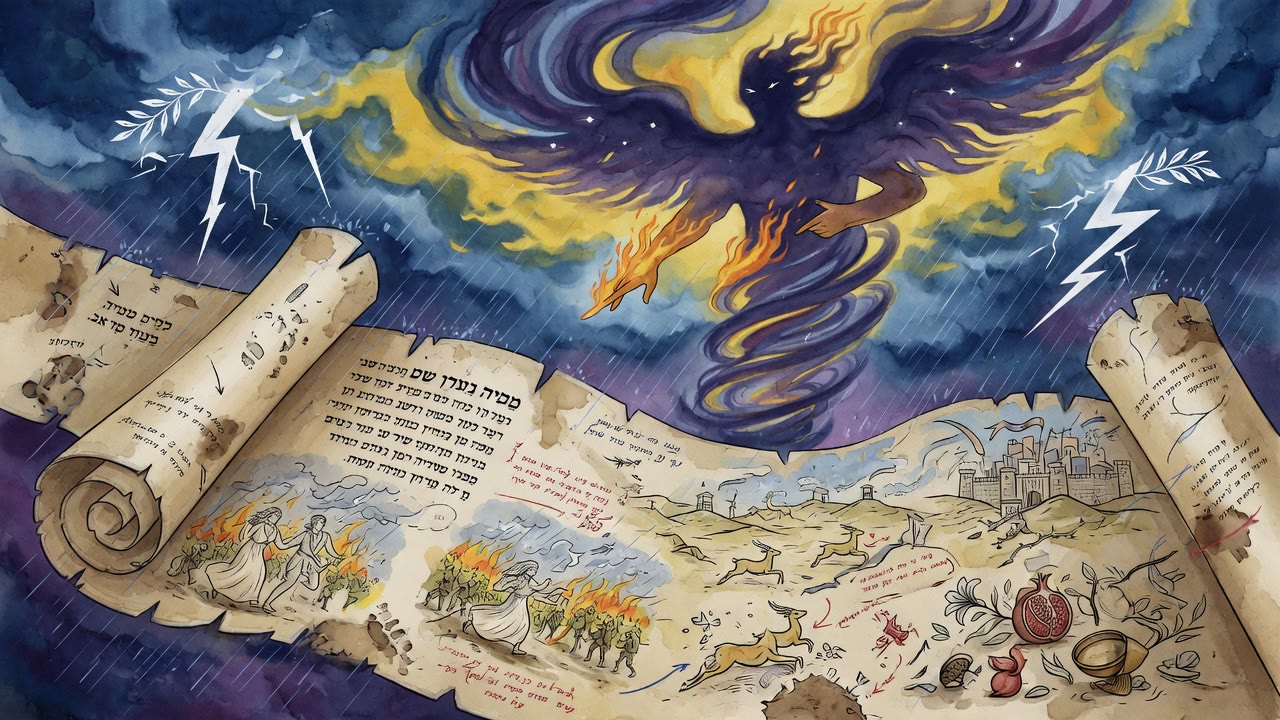
A betrothed girl was owed a year to gather her oils. Israel's forearms were still white with clay when the word came that they were leaving that night.
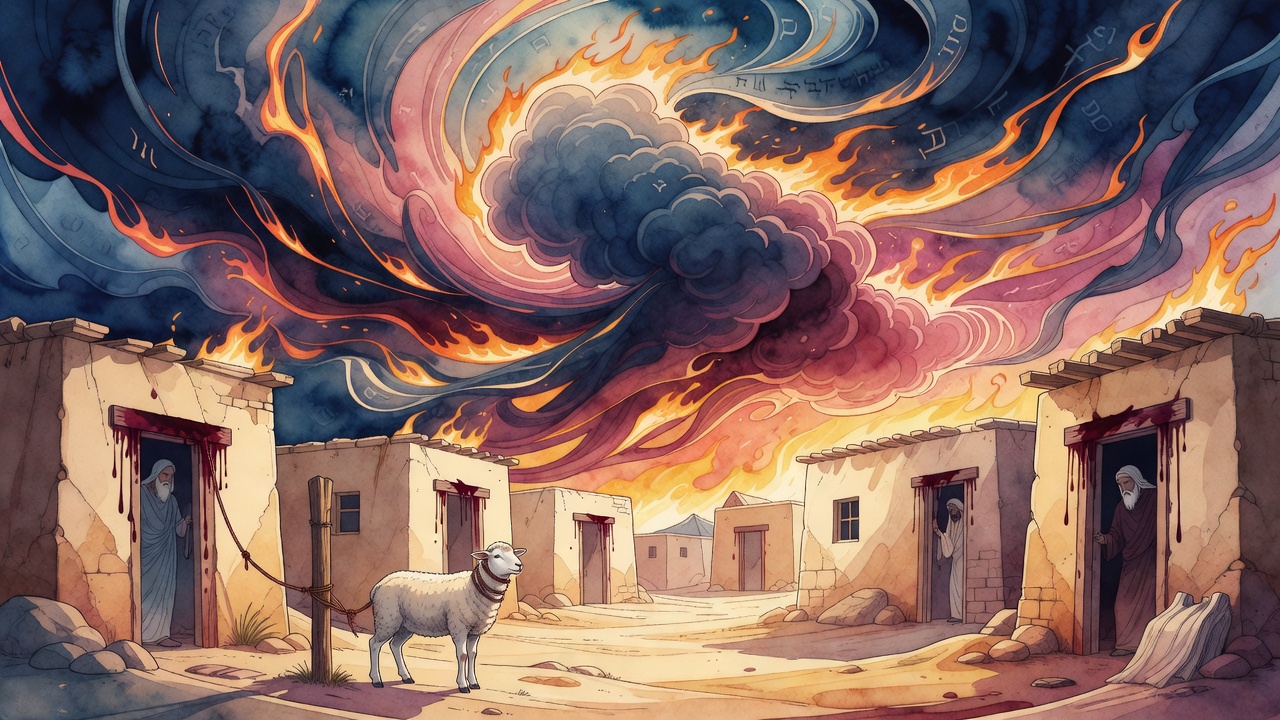
They tied the lamb in the yard for four days. Every Egyptian neighbor could see it. That night God came in person and leapt.
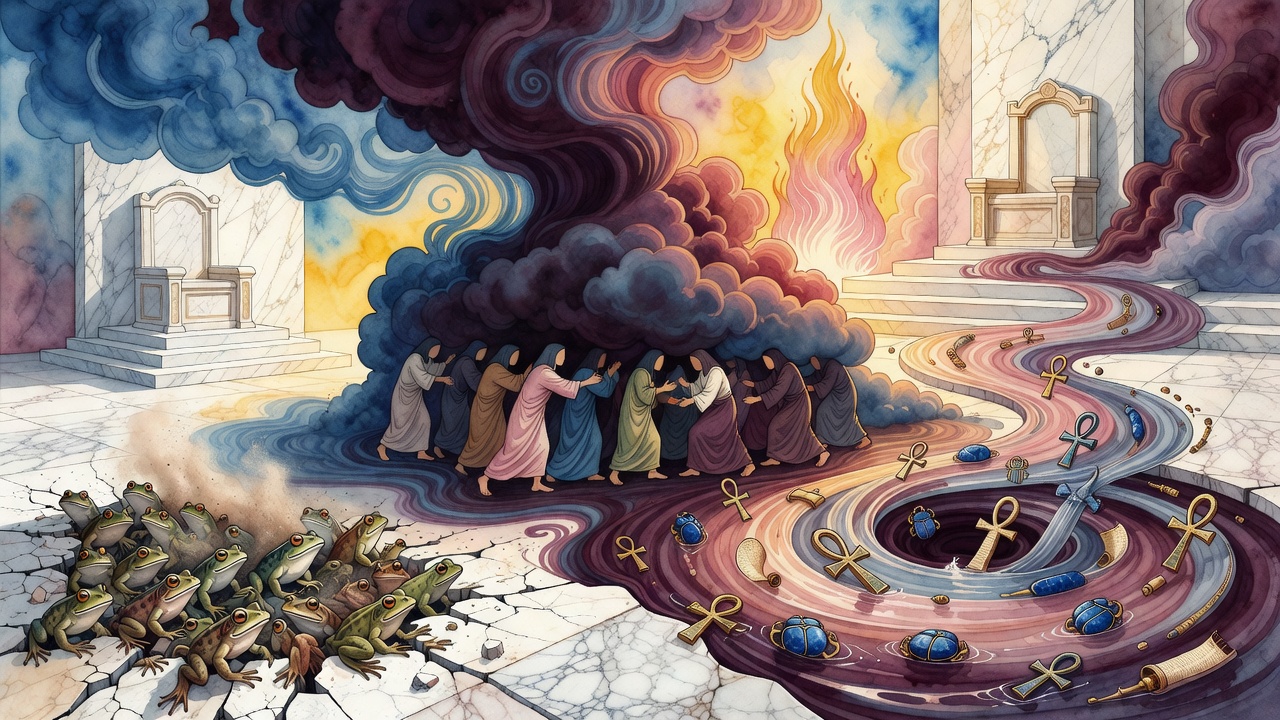
One frog whistled, and the marble floors split. Pharaoh watched a scratch on his palace wall until the hail came down and cut the trees.
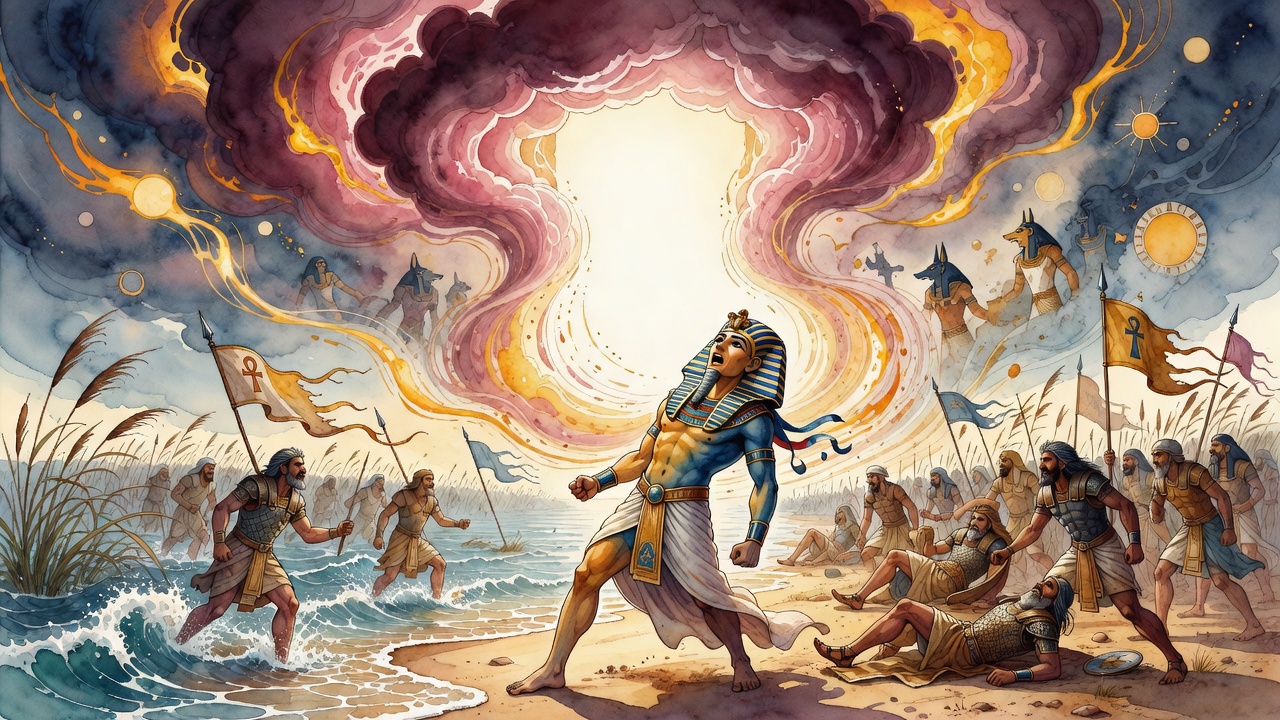
At the Sea of Reeds, Pharaoh's mouth was forced to confess, his army lost its banners, and the nations heard that Egypt's gods had been judged.
