1,018 myths · Page 13 of 34
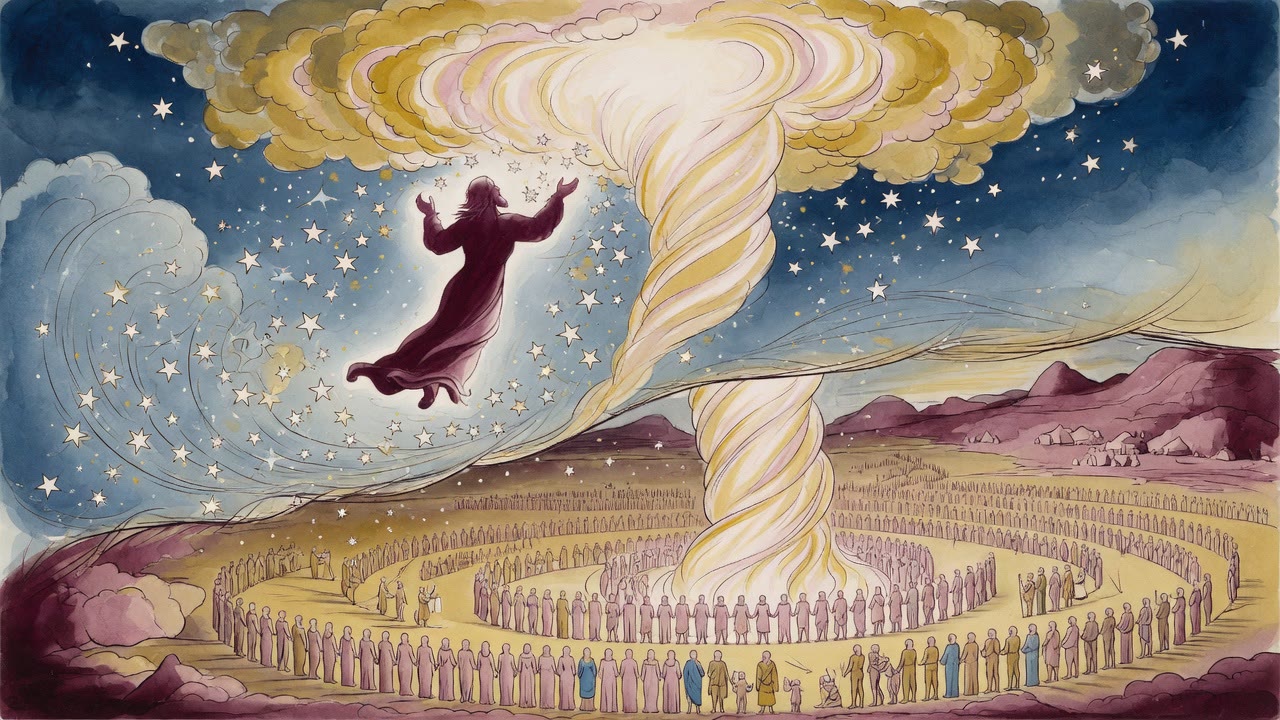
God lifts Abraham above the stars to count them, then the census of the wilderness counts Israel as love made visible in numbers.
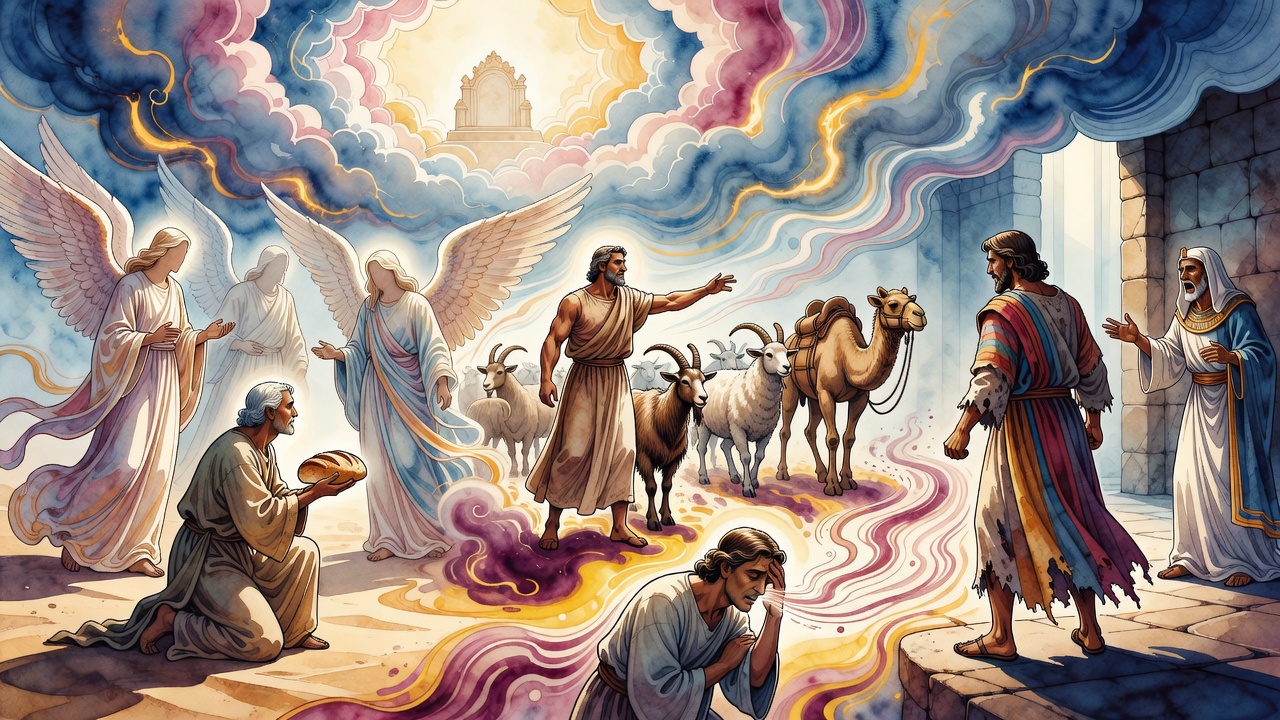
Joseph read the butler's dream correctly and asked him for one favor, a word to Pharaoh. The butler walked free and forgot him for two years.
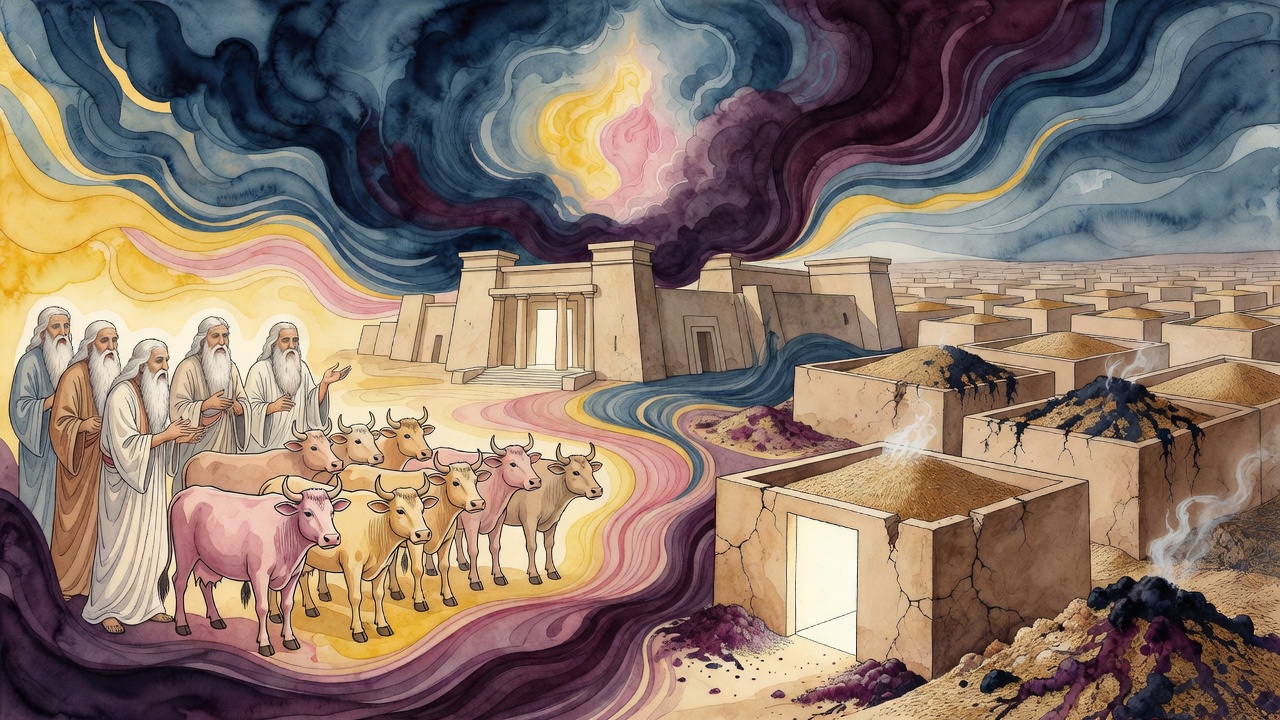
Egypt's wise men misread seven cows as daughters, Pharaoh's firstborn dies the day Joseph is freed, and grain rots in every storehouse except one.
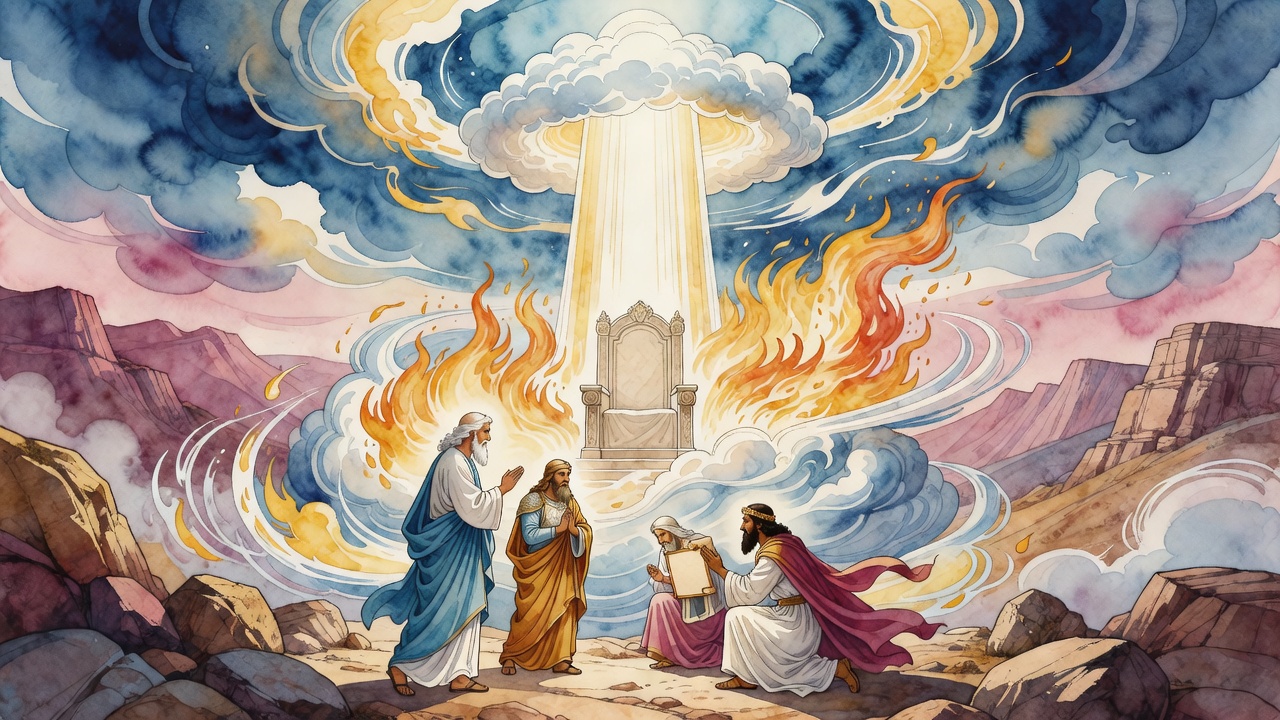
Shemot Rabbah places Moses, David, and Solomon before a God who lifts and lowers like a wheel, then demands that Torah and mercy govern the throne.
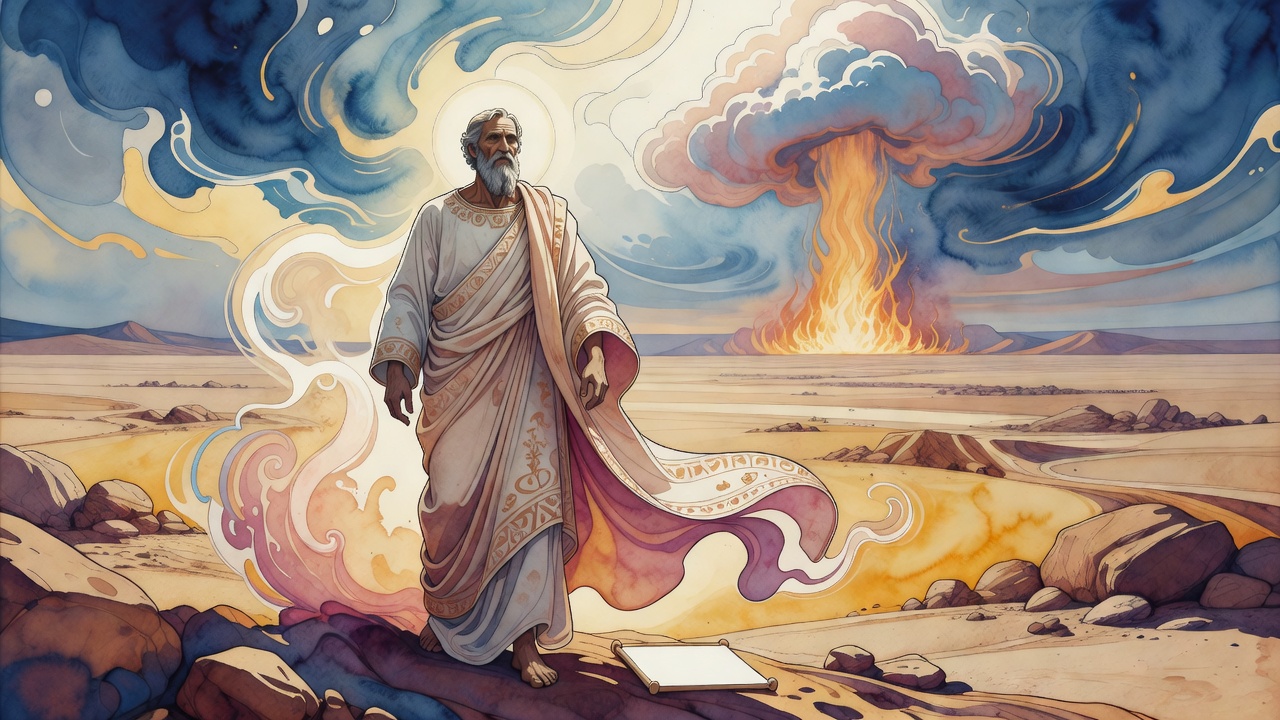
A boy born in the sand still wore the same tunic at the Jordan. The cloud had rubbed it white for forty years, like a snail's shell.
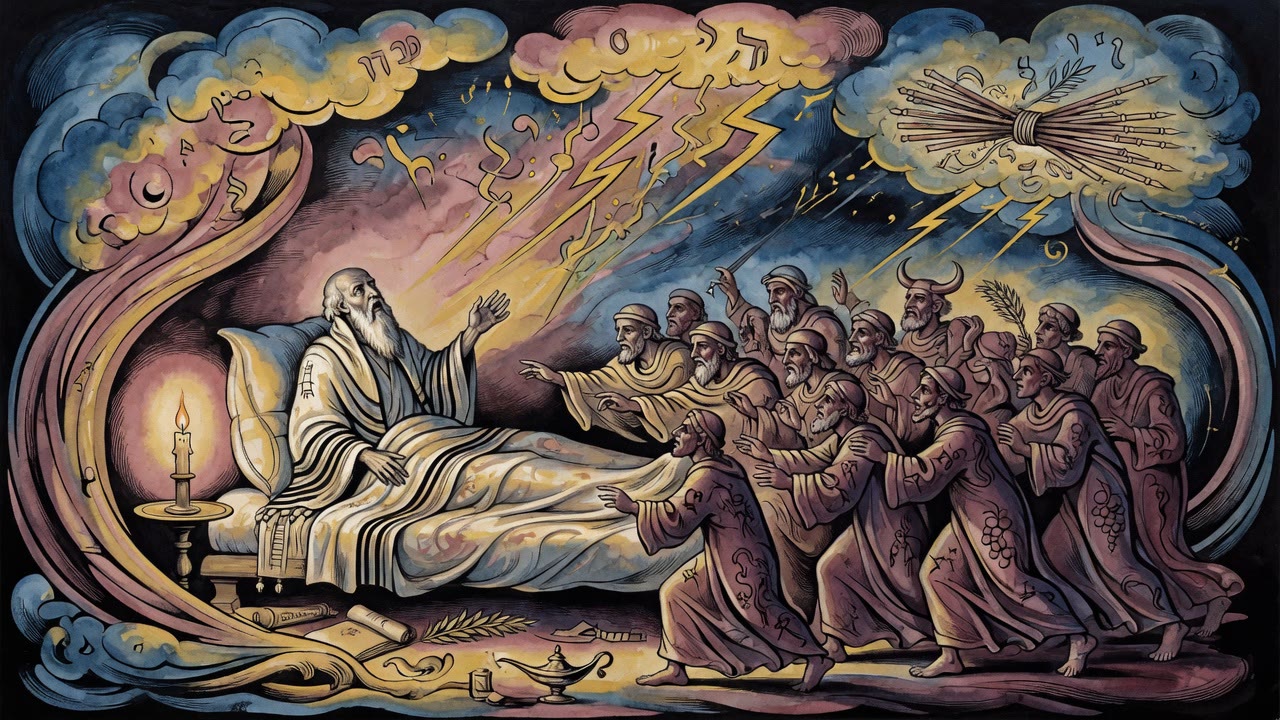
His wife looked at the ring and told him to suck it. Thirty days of mourning would cancel the edict. He died with the Shema in his mouth.
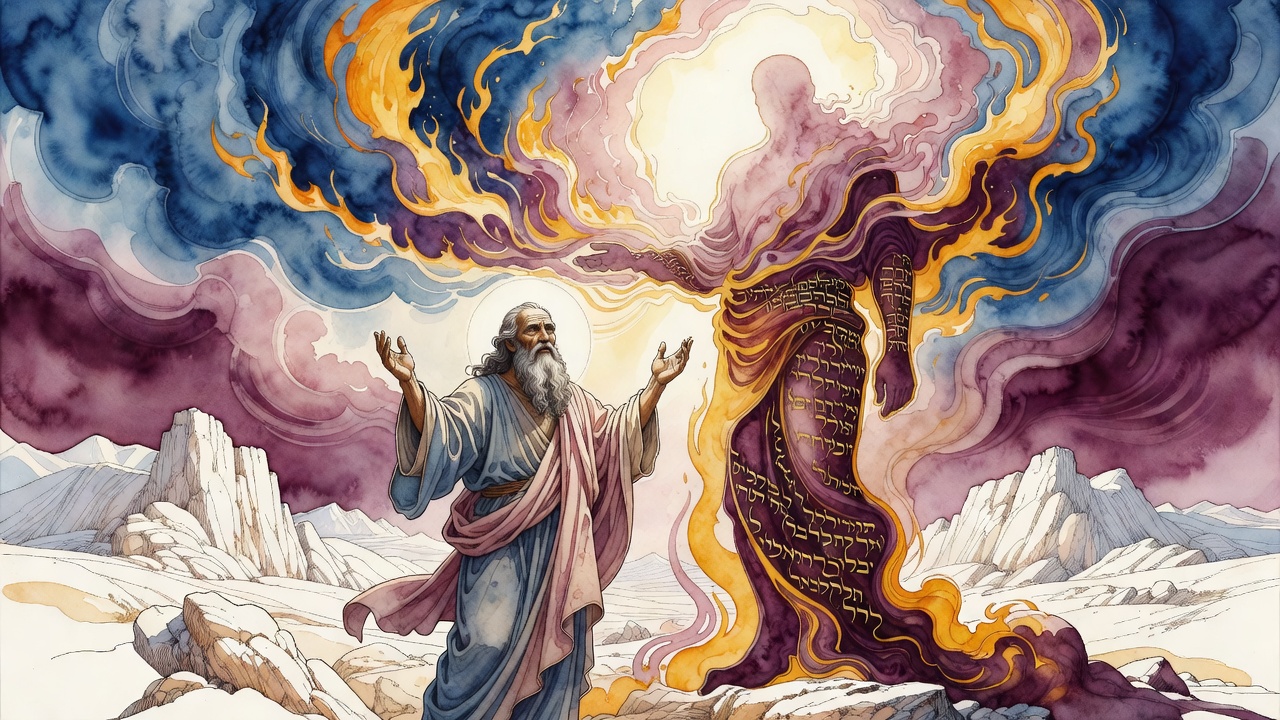
Moses blessed Israel at the edge of his life, and Devarim Rabbah says he was not standing alone. Torah stood beside him, and God stood beside Torah.
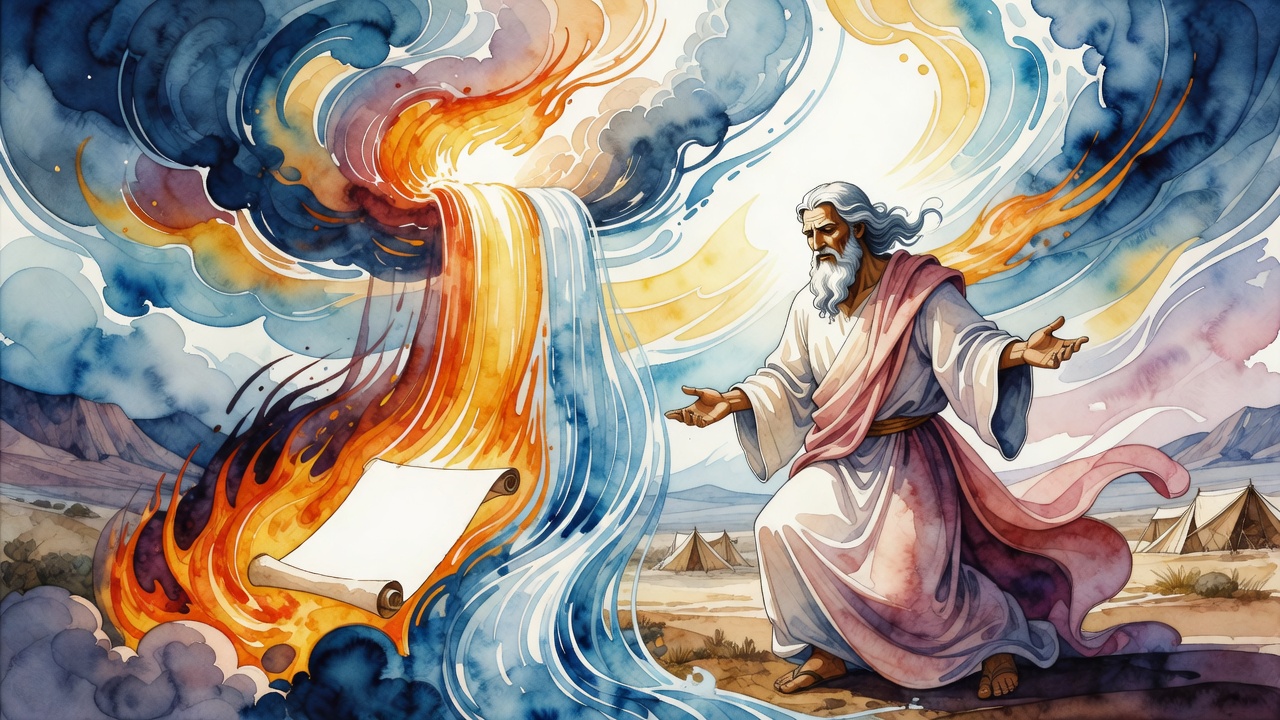
Moses named seventy-seven living men and could not find three more. He asked the dead patriarchs to stand in the breach.
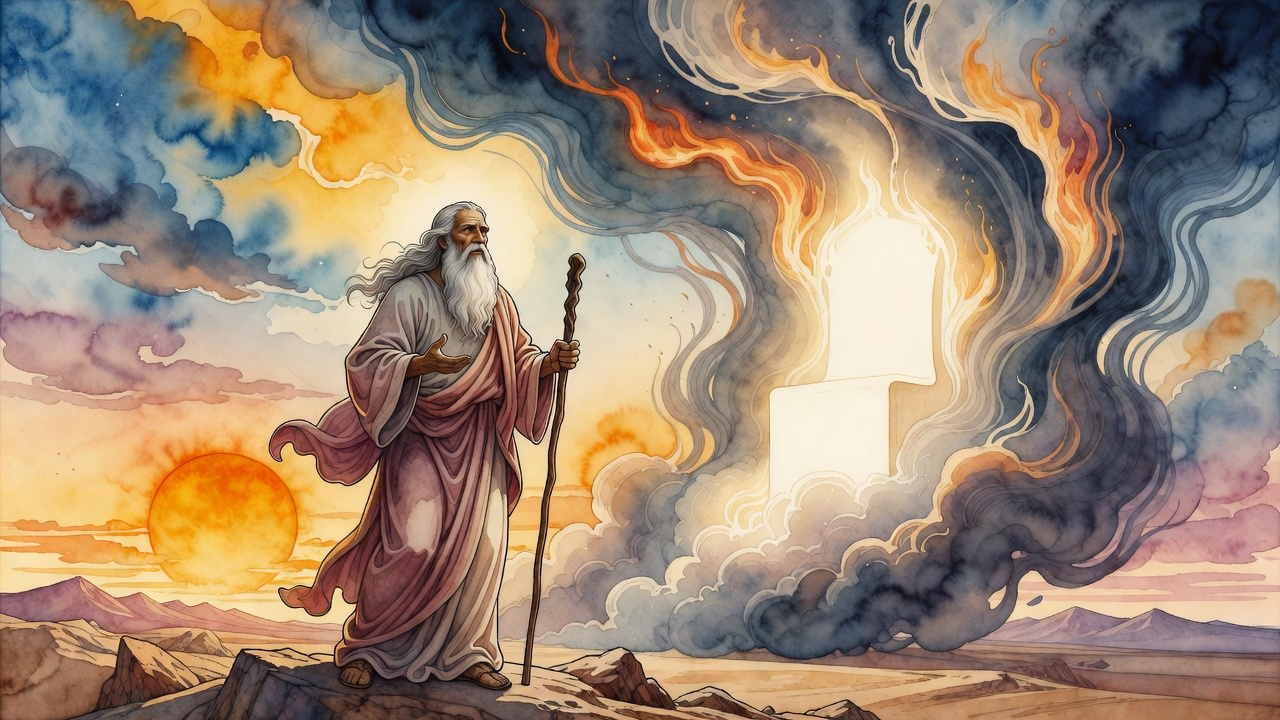
When Moses's final day arrived, Devarim Rabbah says the sun refused to set and the day itself filed a complaint before God about being forced to end.
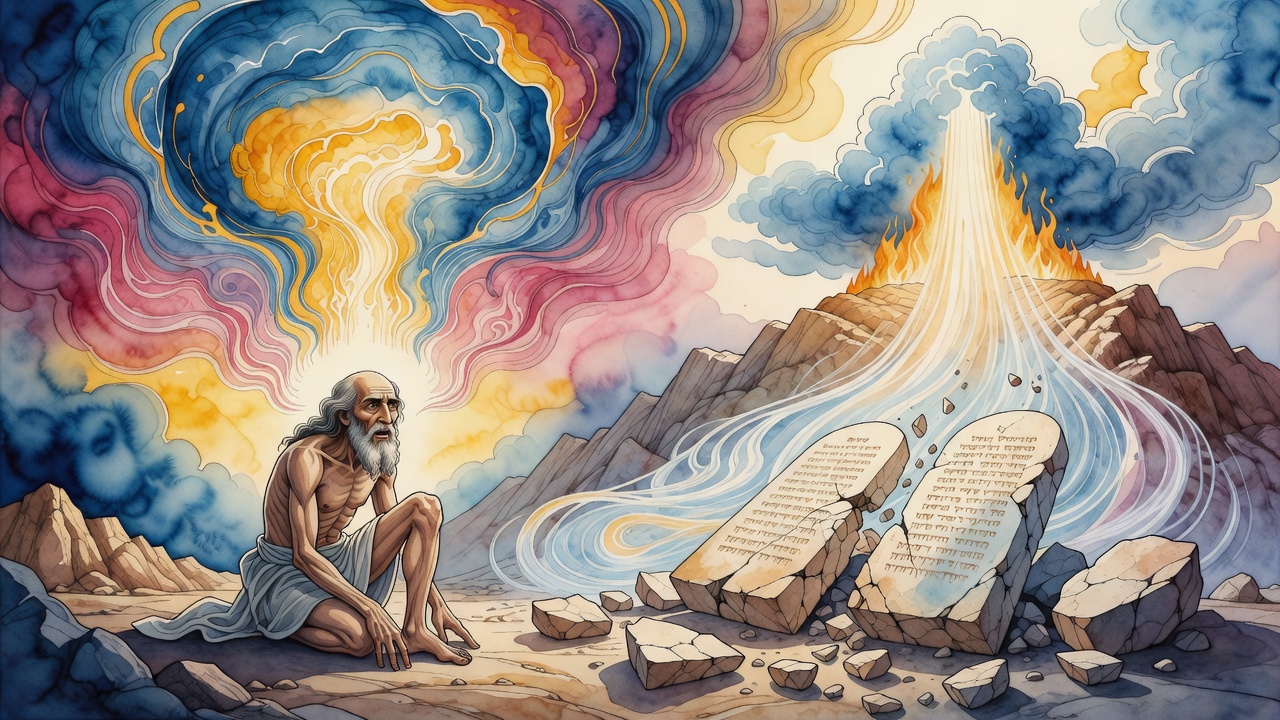
For forty days the young king ate nothing, and wisdom came down to him. At Sinai it went the other way. The letters lifted off the broken stone.
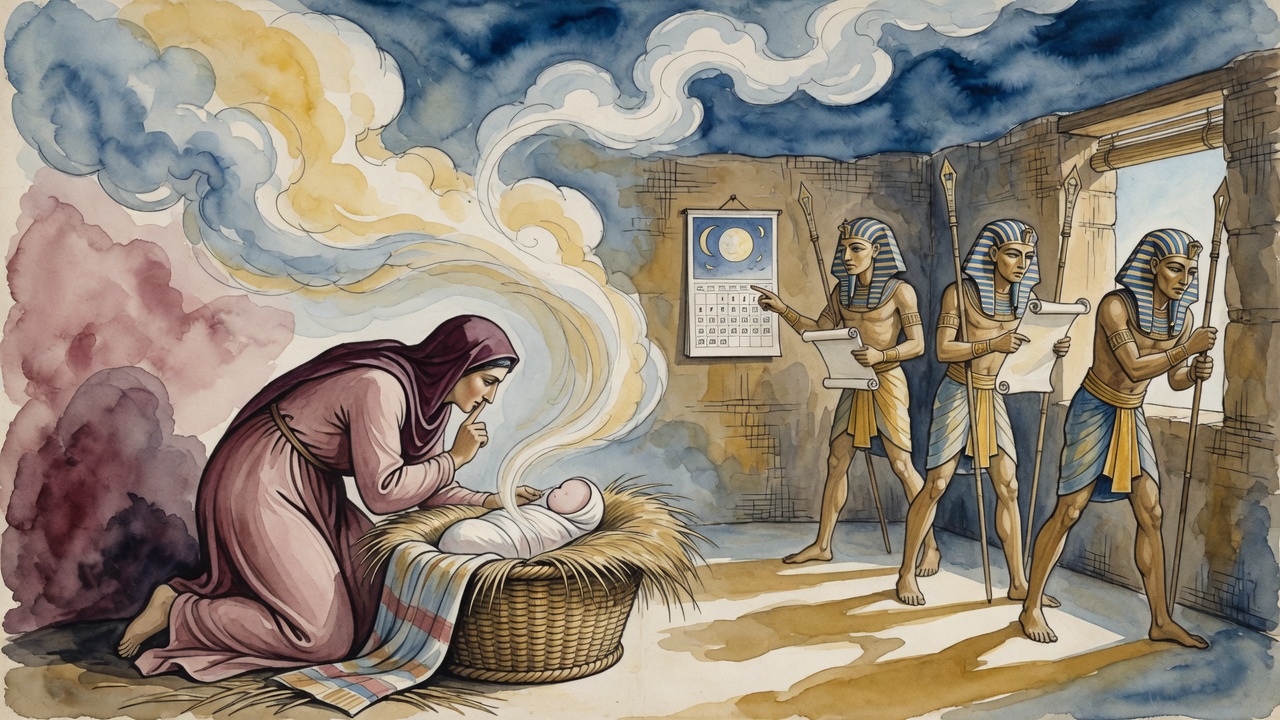
The watchers came on the month the ledger named. They found a daughter, a small son, and no baby. The infant was already on the river.
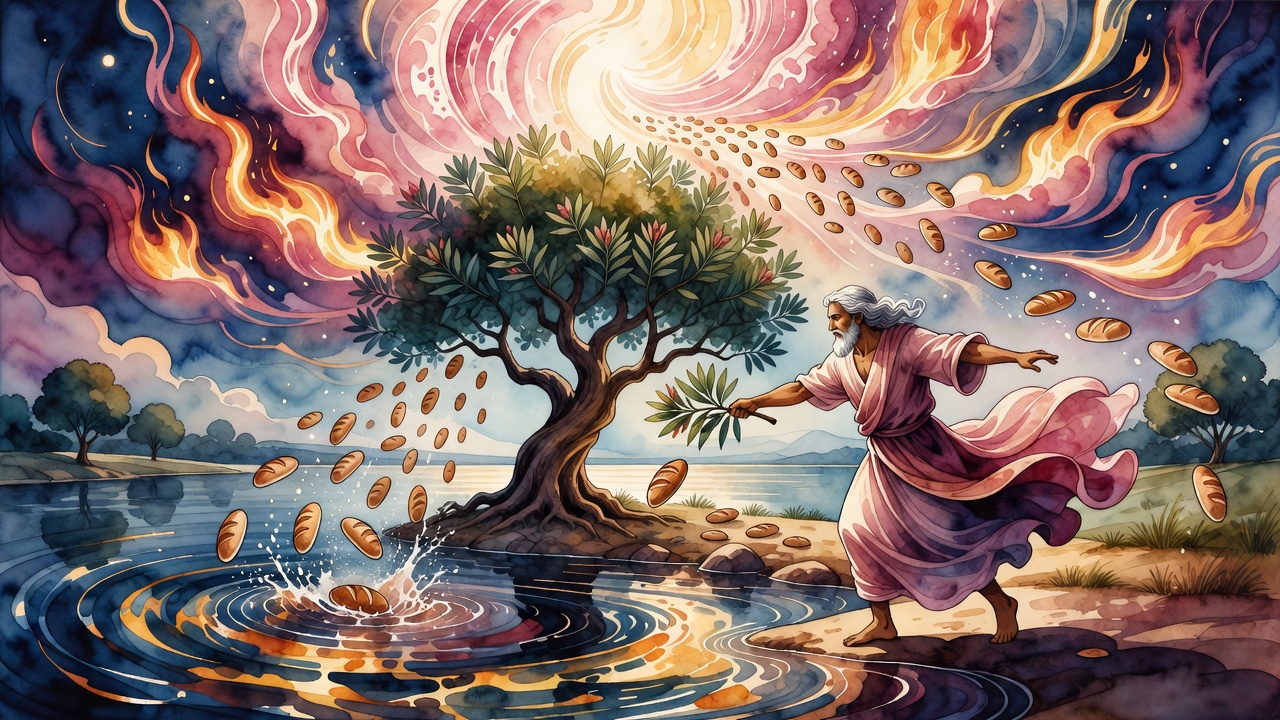
Moses writes God's Name on poisonous oleander and throws it into bitter water. Weeks later, heaven drops bread stored there since the first week of creation.
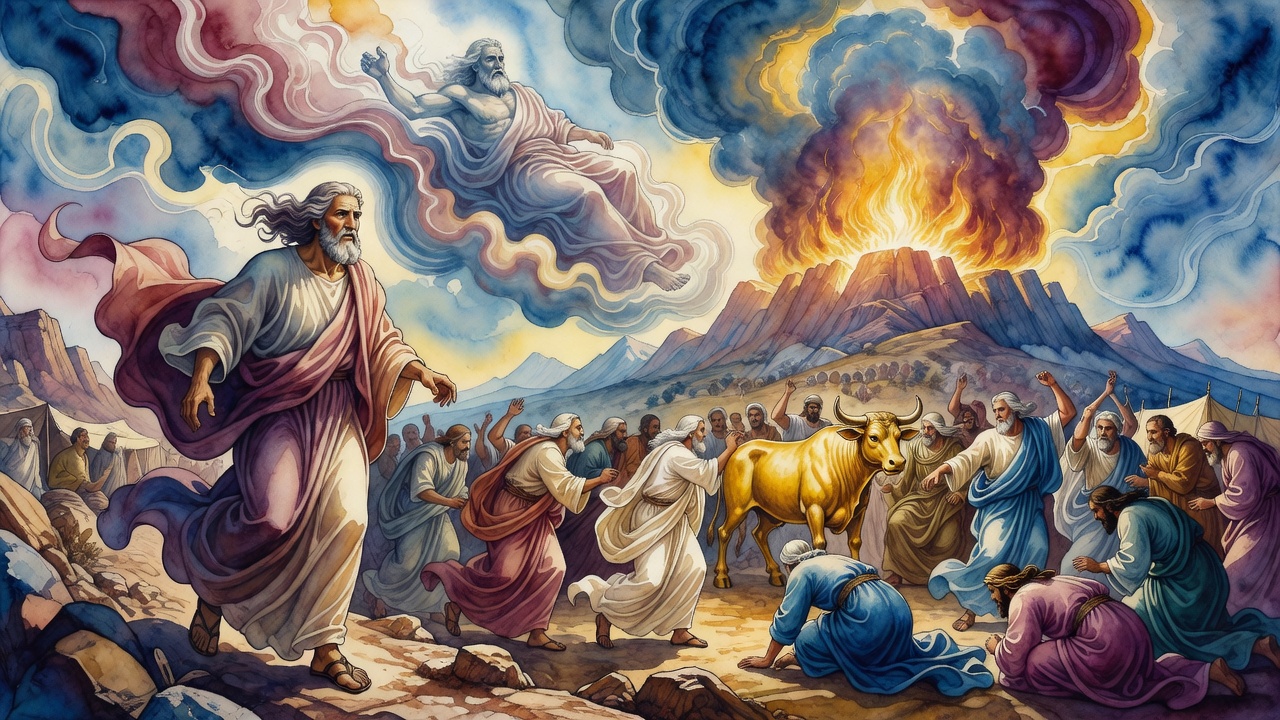
Joshua called it war. Moses listened longer and heard merriment. Then he came around the ridge and saw the calf, and the Accuser dancing in front of it.
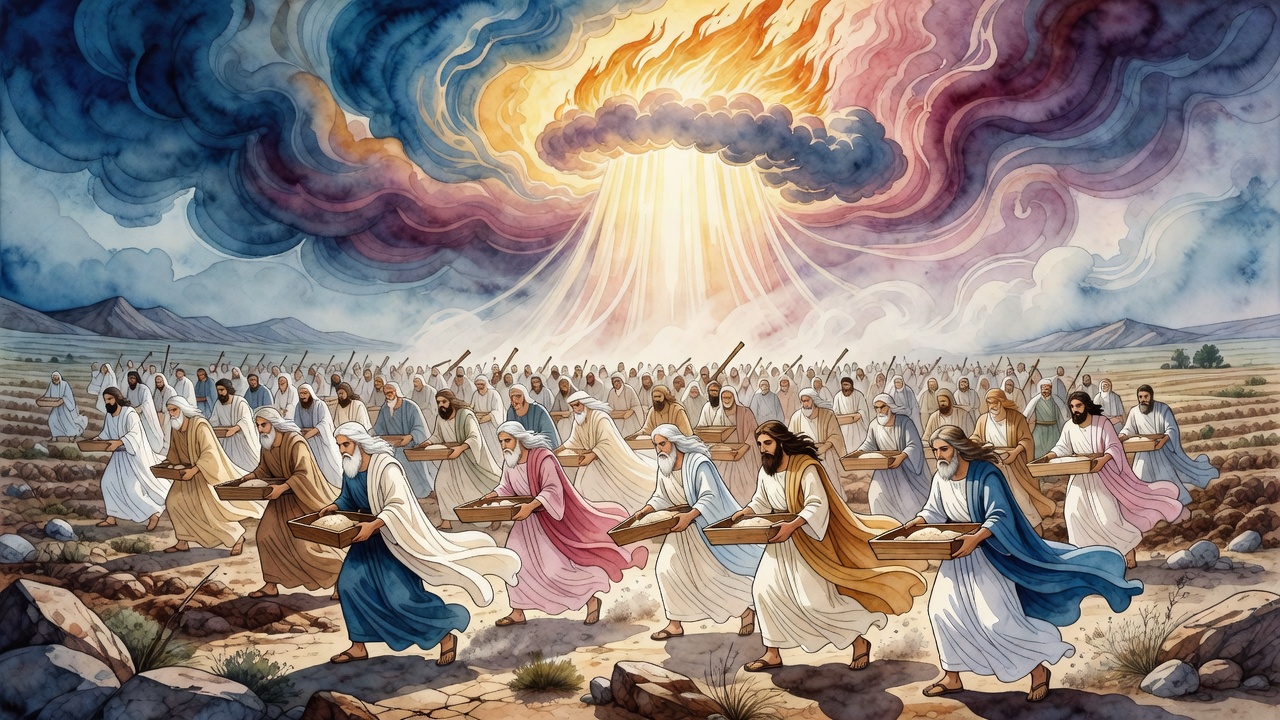
Israel leaves Egypt with kneading troughs but no food planned, and God remembers that trust as the love of a bride following into untilled land.
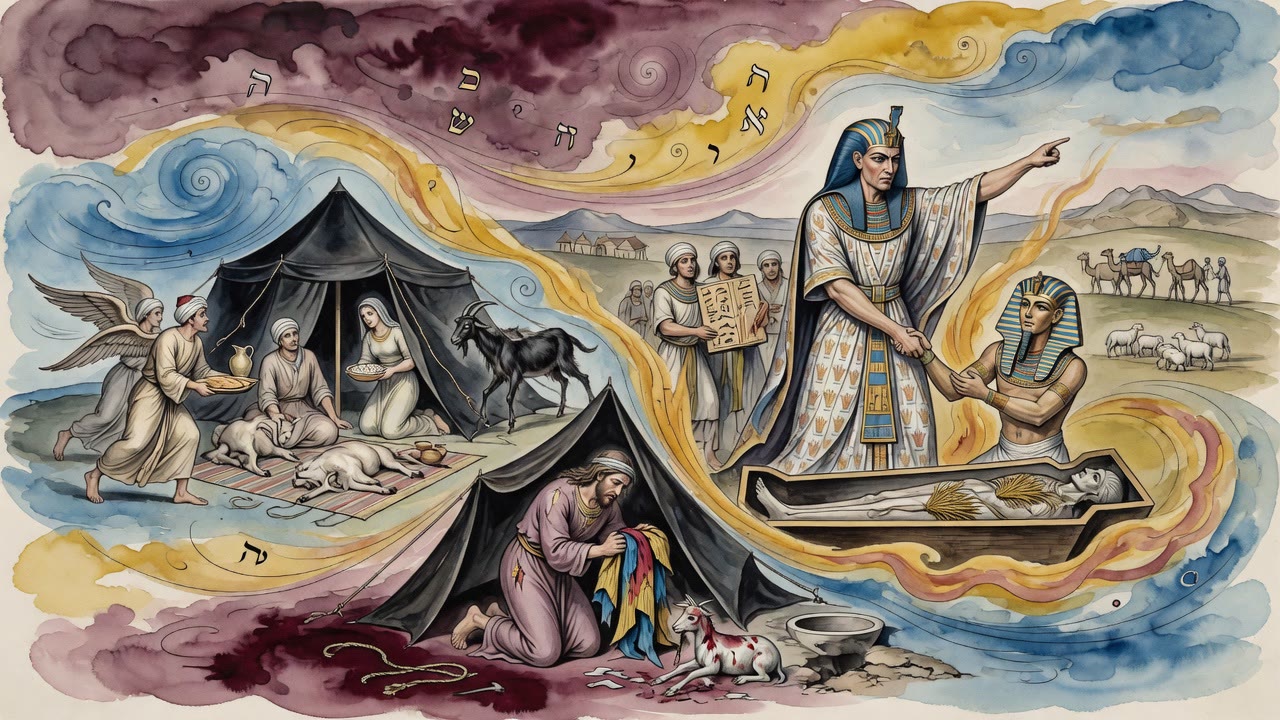
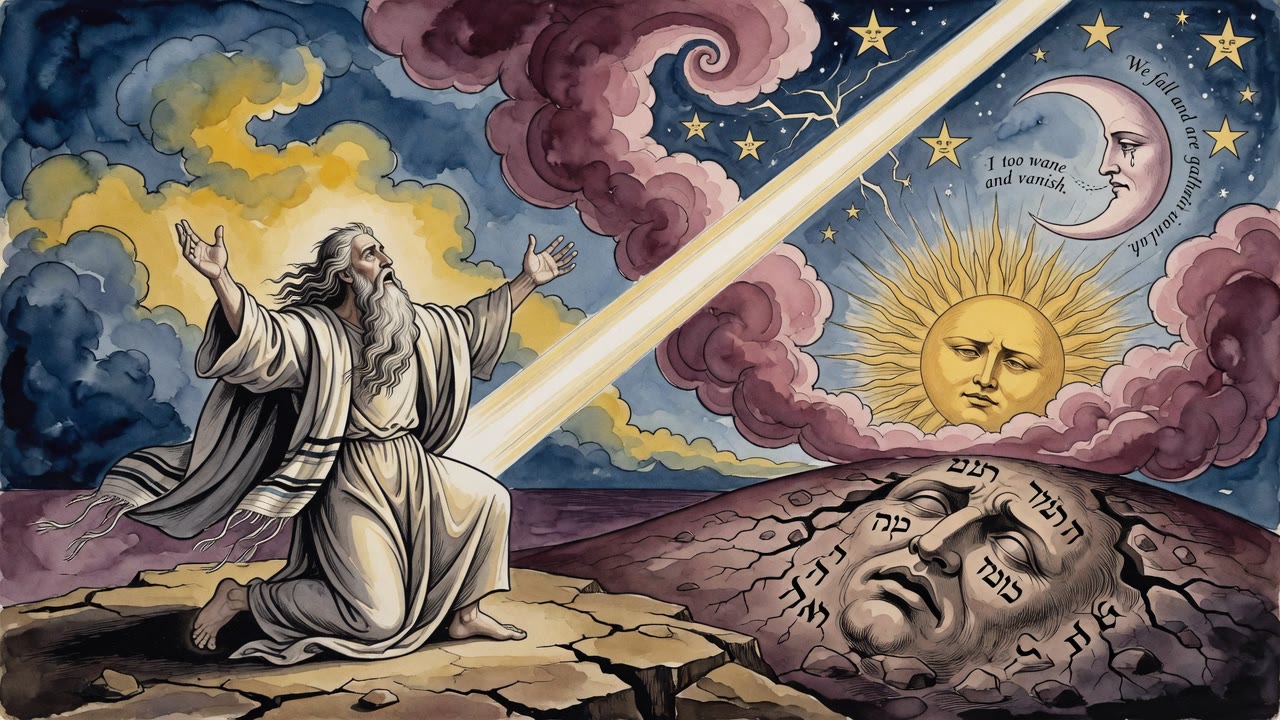
Moses turns to earth, sun, moon, and stars to plead for mercy, but each answers that it too must die, and creation cannot hold back God's decree.
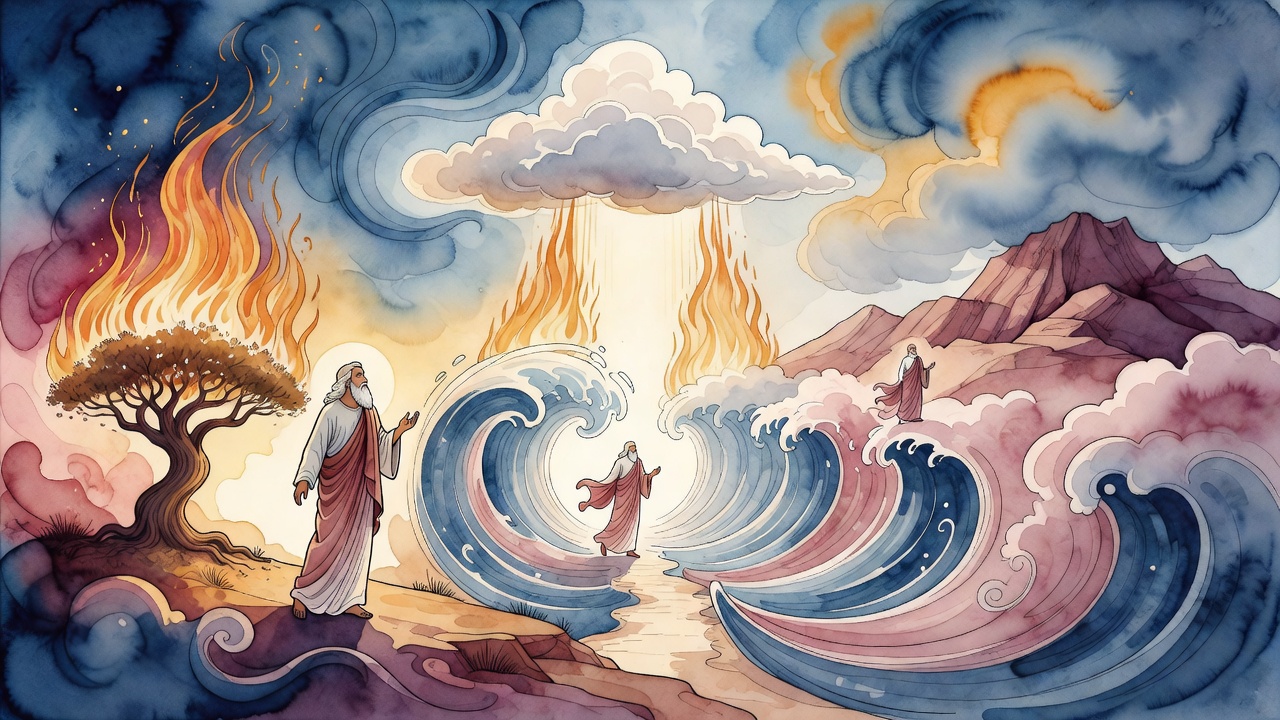
Moses ran out of Egypt with a dead taskmaster behind him and stopped at a well in Midian. Shepherds were driving women off it. He drew the water himself.
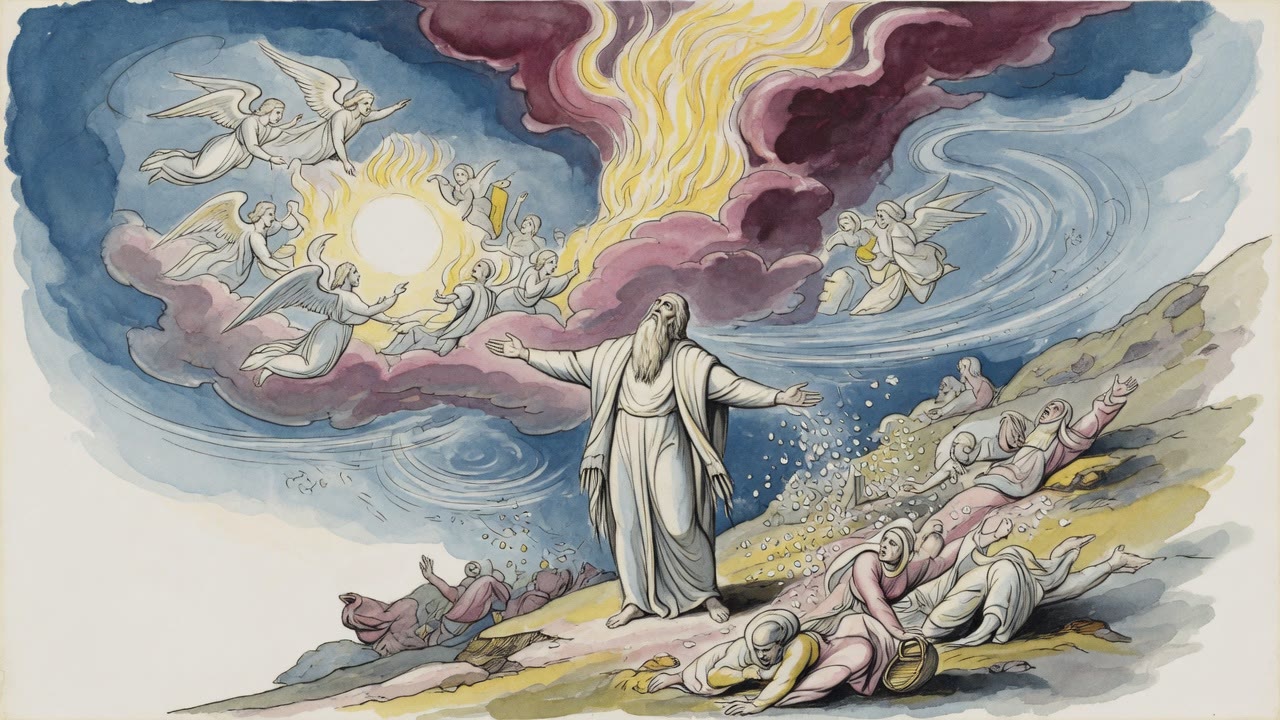
The tablets were still warm in his hands when he saw the calf. He broke them. Below the mountain, Israel was already dancing.
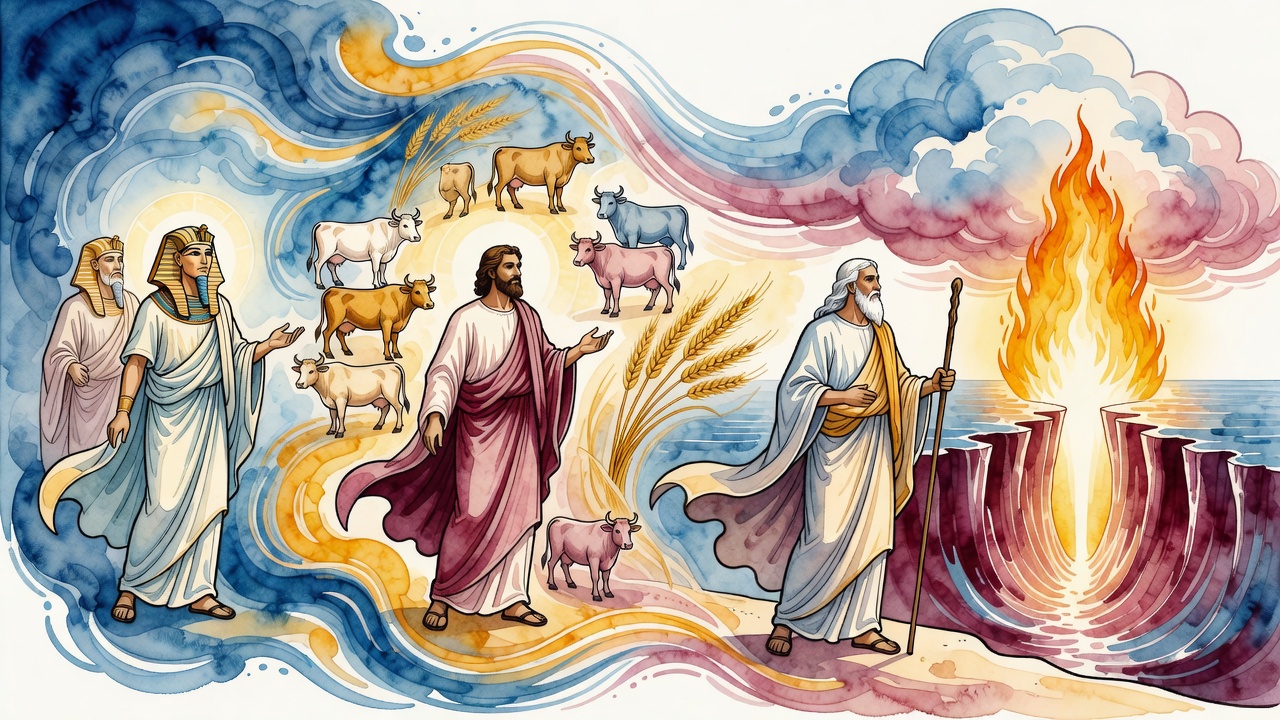
Pharaoh woke from dreams his court could not hold. Joseph named what the night meant. Generations later Moses stood at the sea and the answer came again.
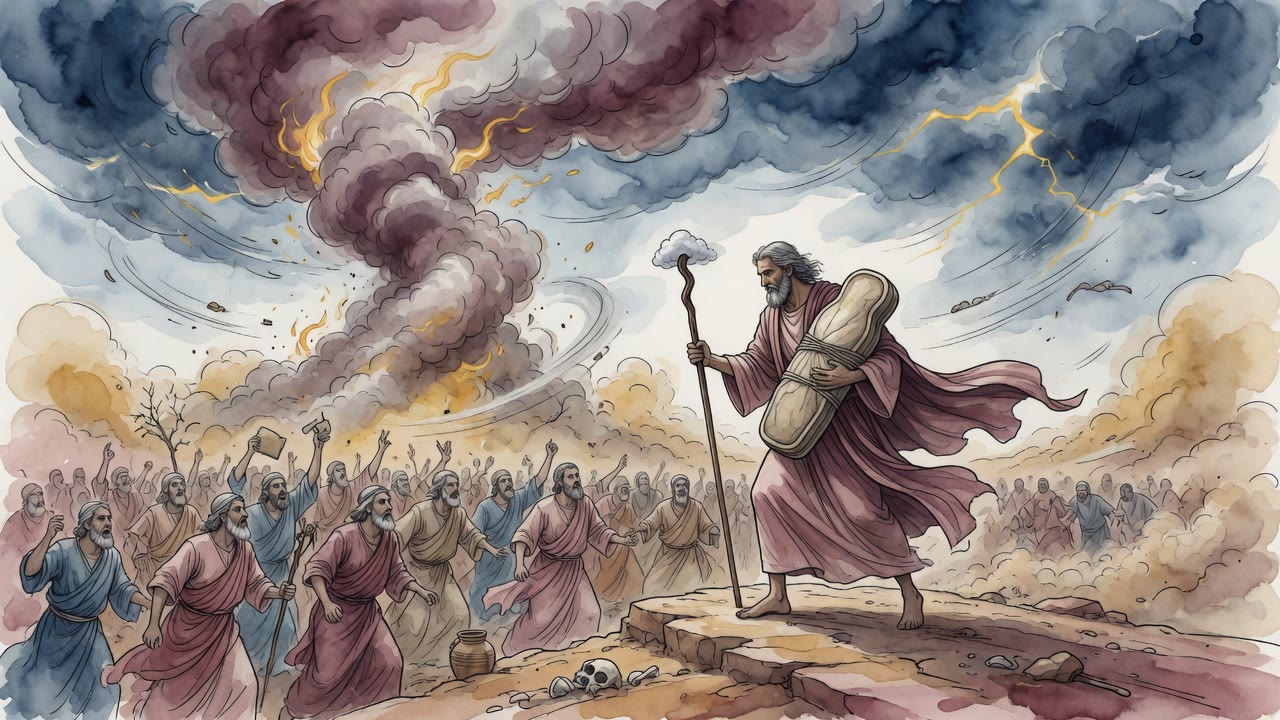
The people wept for meat and called the manna worthless. Moses told God the weight was too heavy and asked to be killed rather than watch it.
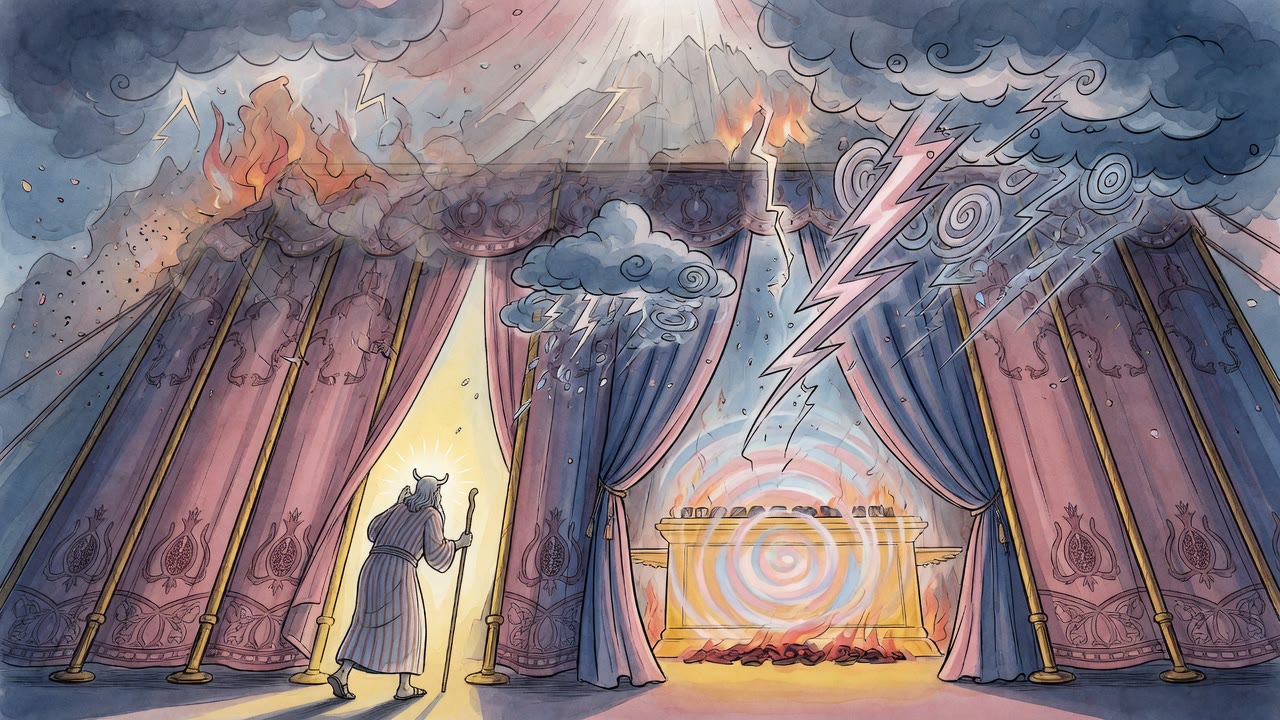
Moses enters the Mishkan and hears the divine voice pressed through holy space, from Sinai's thunder down to the Temple's last fire.
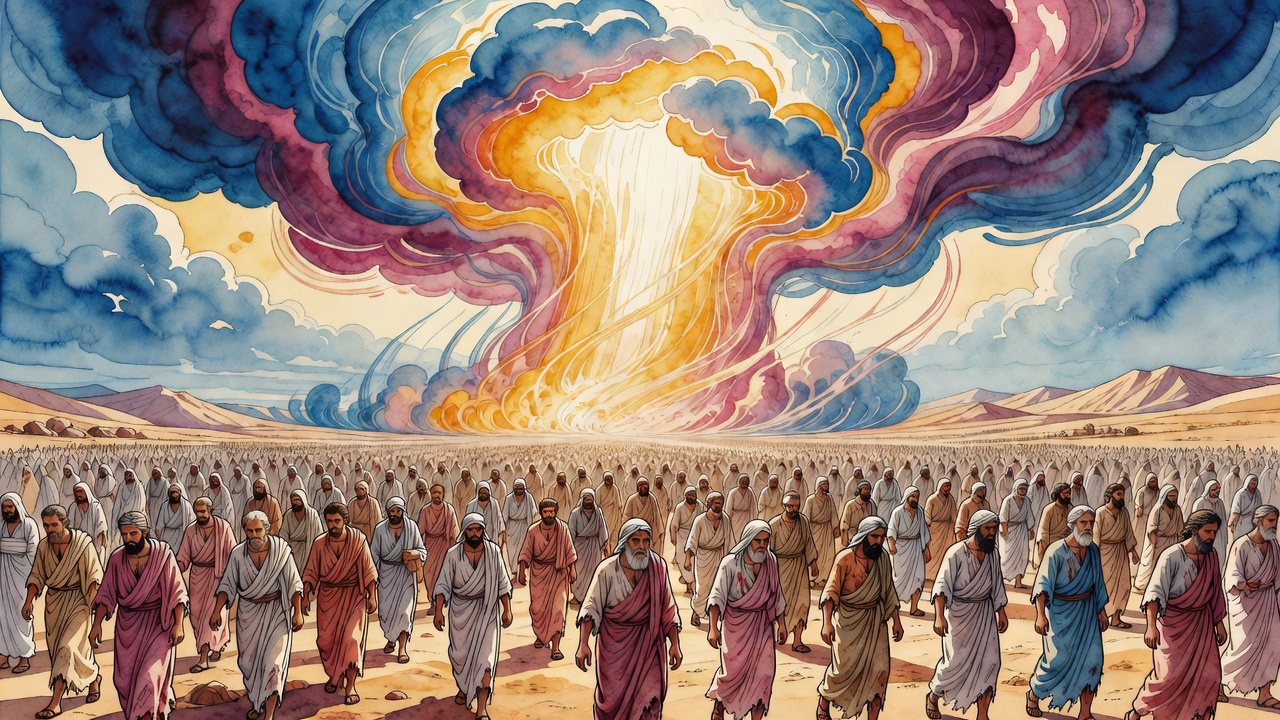
The nations watching in the wilderness said these children had Egyptian fathers. God told Moses to count them house by house and settle the question.
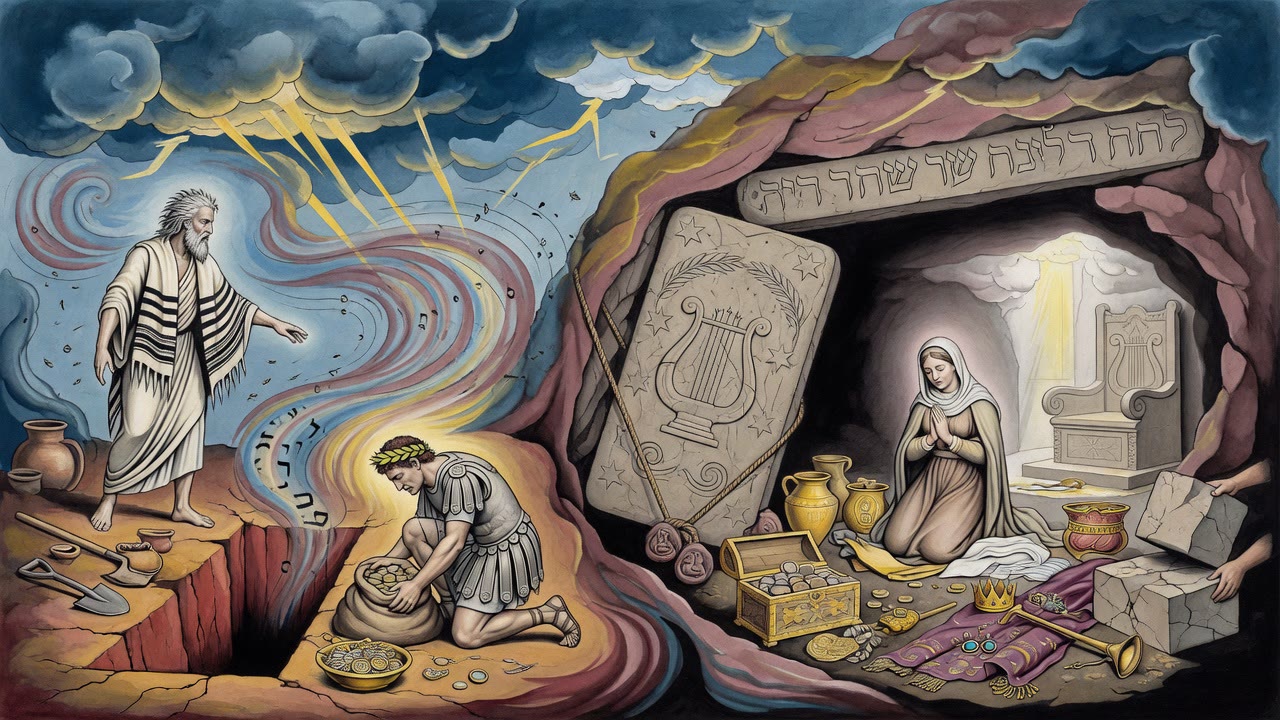
A woman drank dust and ink at the tent door to prove she was faithful. The same bitter water had already gone down the throat of a whole nation.
Abraham's tent rushed to serve strangers, Judah learned the cost of a half-finished rescue, and Joseph forced Egypt to promise his bones would leave.
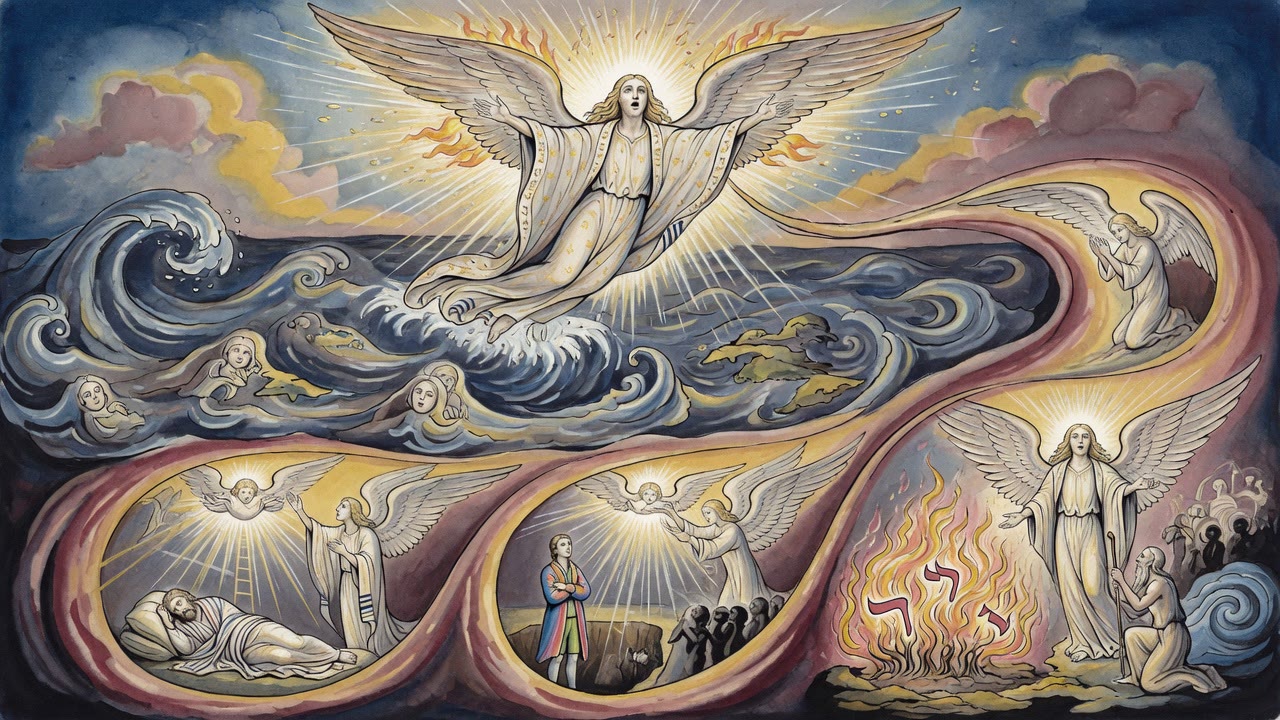
On the second day the lower waters wept and would not split. The sky was three fingers thick. An angel sang about Sinai, and the waters went quiet.
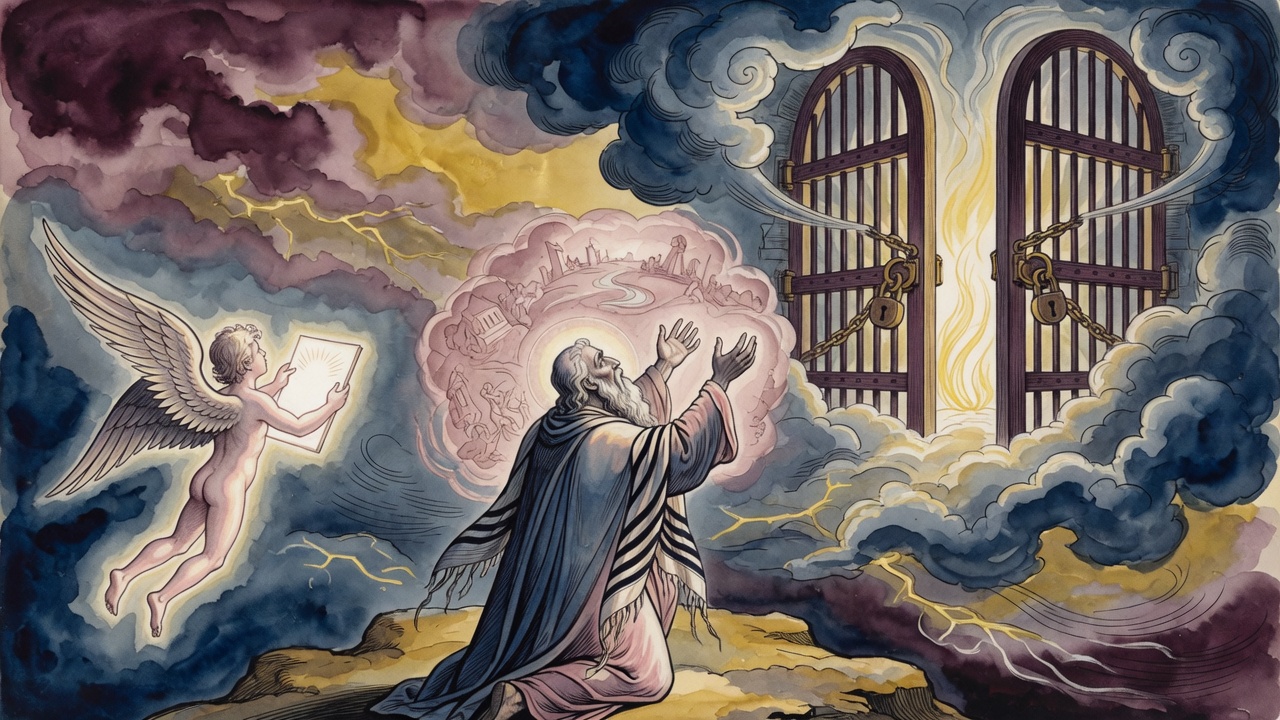
A boy stole God's name and grew wings; Moses saw the future and begged God to stop; and heaven locked every gate so his final prayer could not pass through.
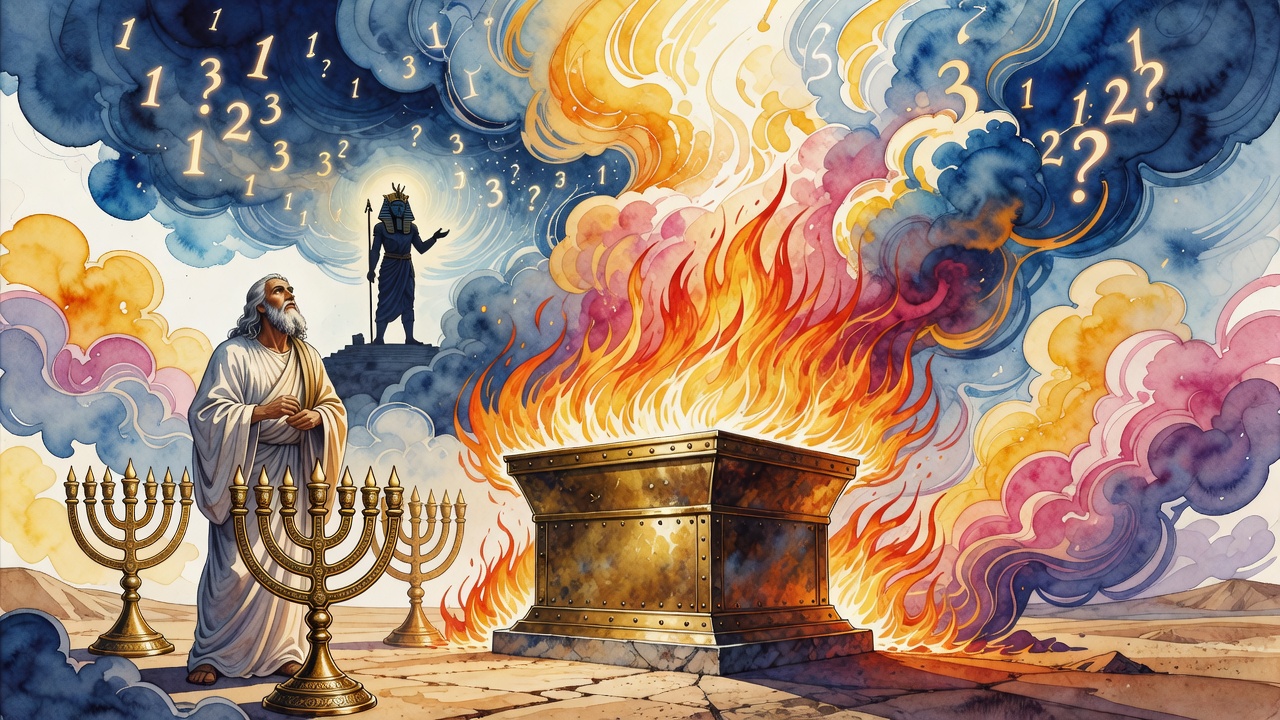
Pharaoh asked how many cities God had conquered; Moses forgot the menorah (the lampstand) three times; and the brass altar stood in constant fire without ever.
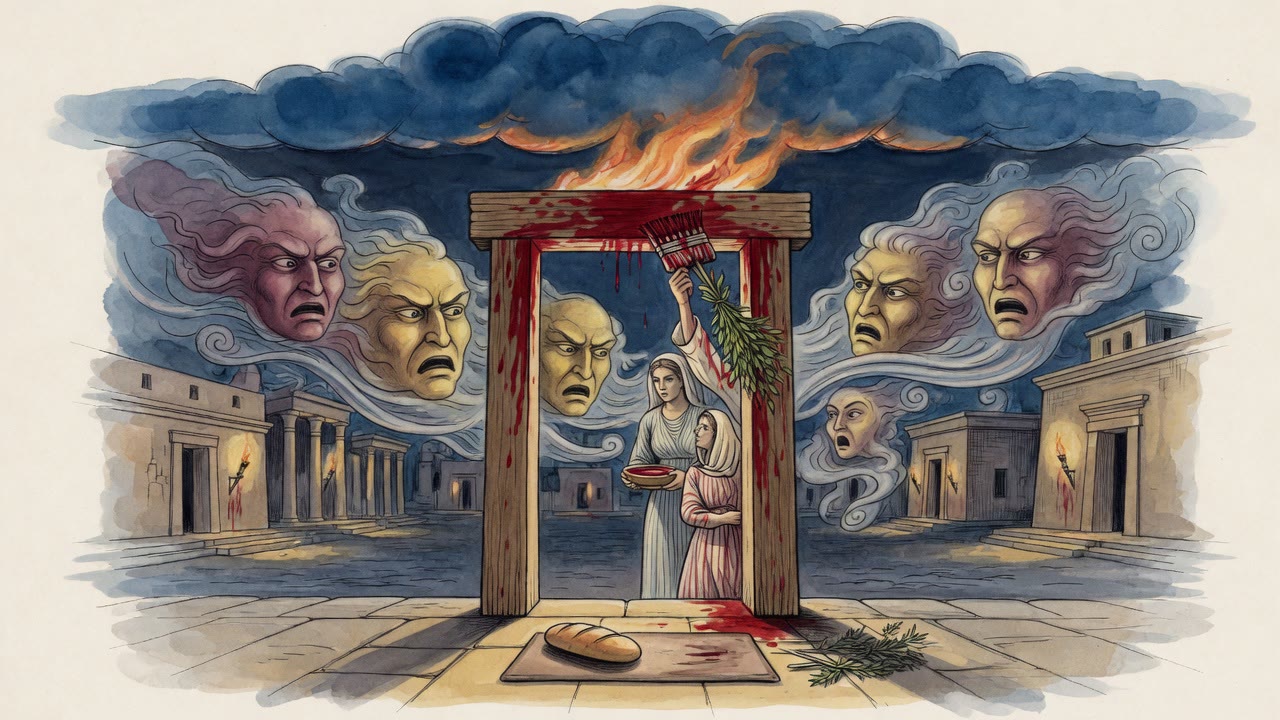
Moses held two fistfuls of soot in one palm and threw them at the sky. Boils covered Egypt. That night a plant no one prized marked the doors.
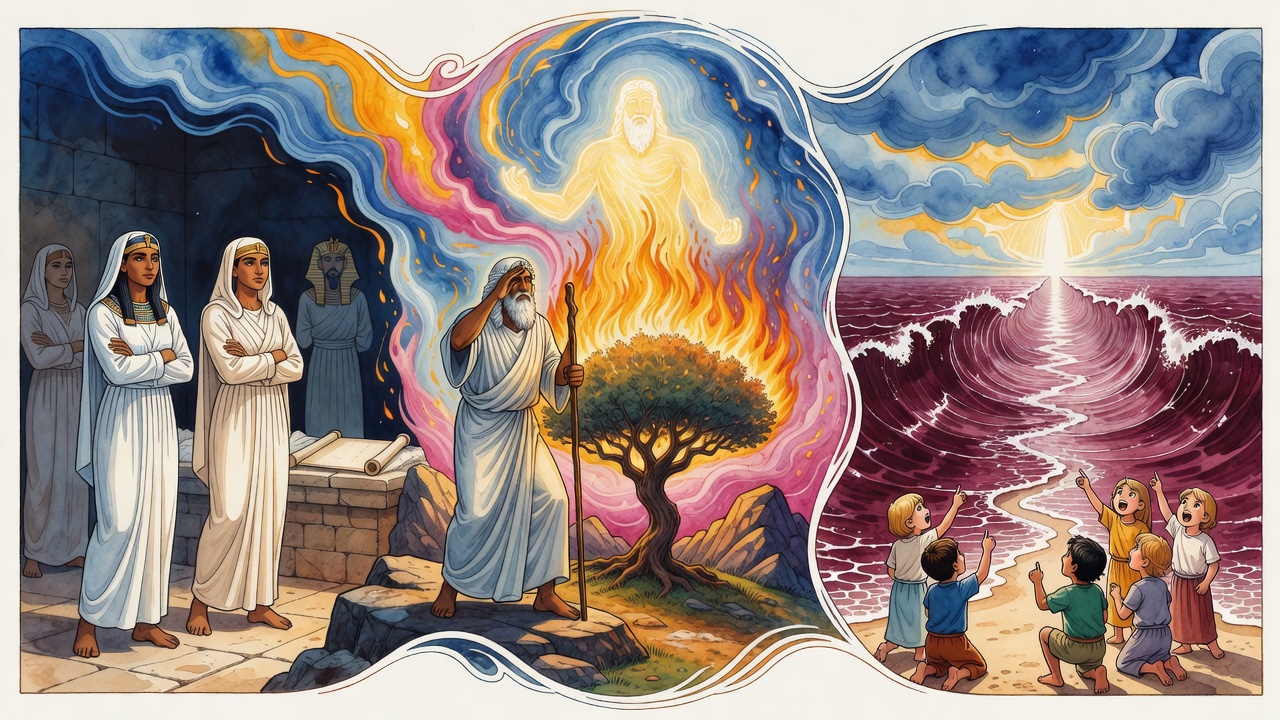
Pharaoh's order reached the birth stool first. Shifra and Puah kept their hands off the boys. A child at the sea later pointed and named God.
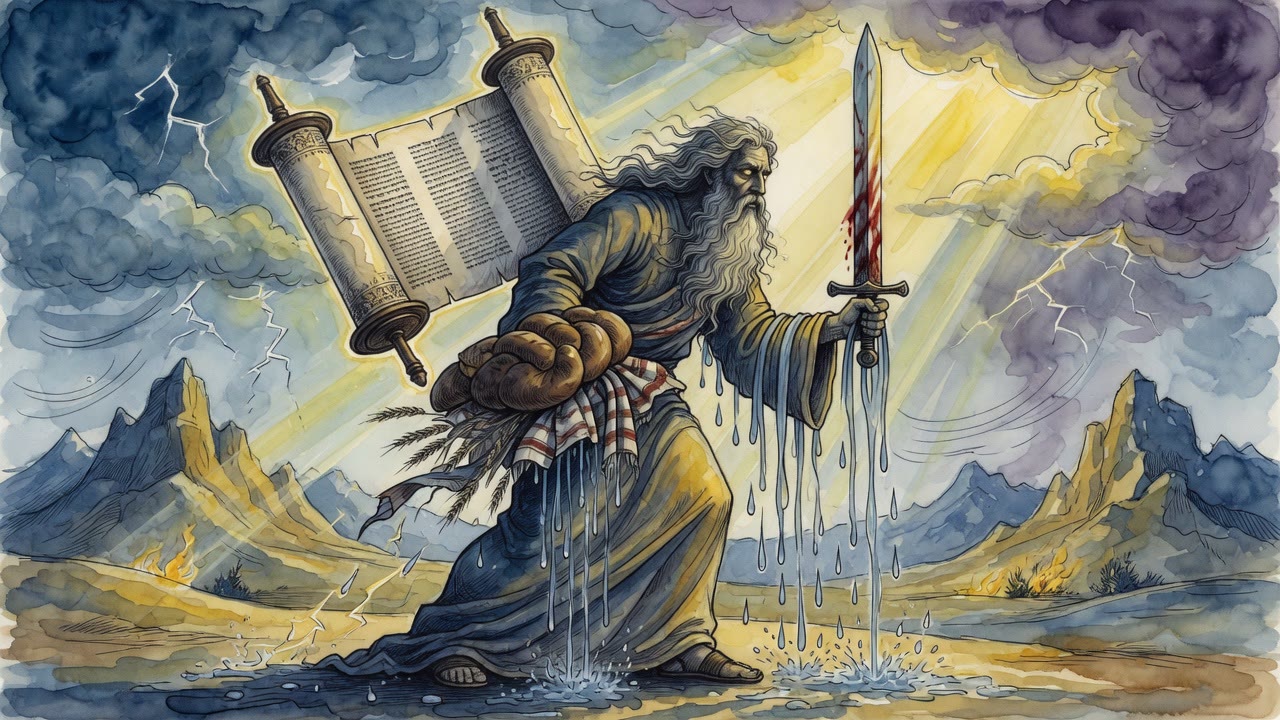
Pharaoh's daughter opened the basket and found a crying child. Compassion opened in her too. The Tikkunei Zohar calls that baby the Master of Tears.
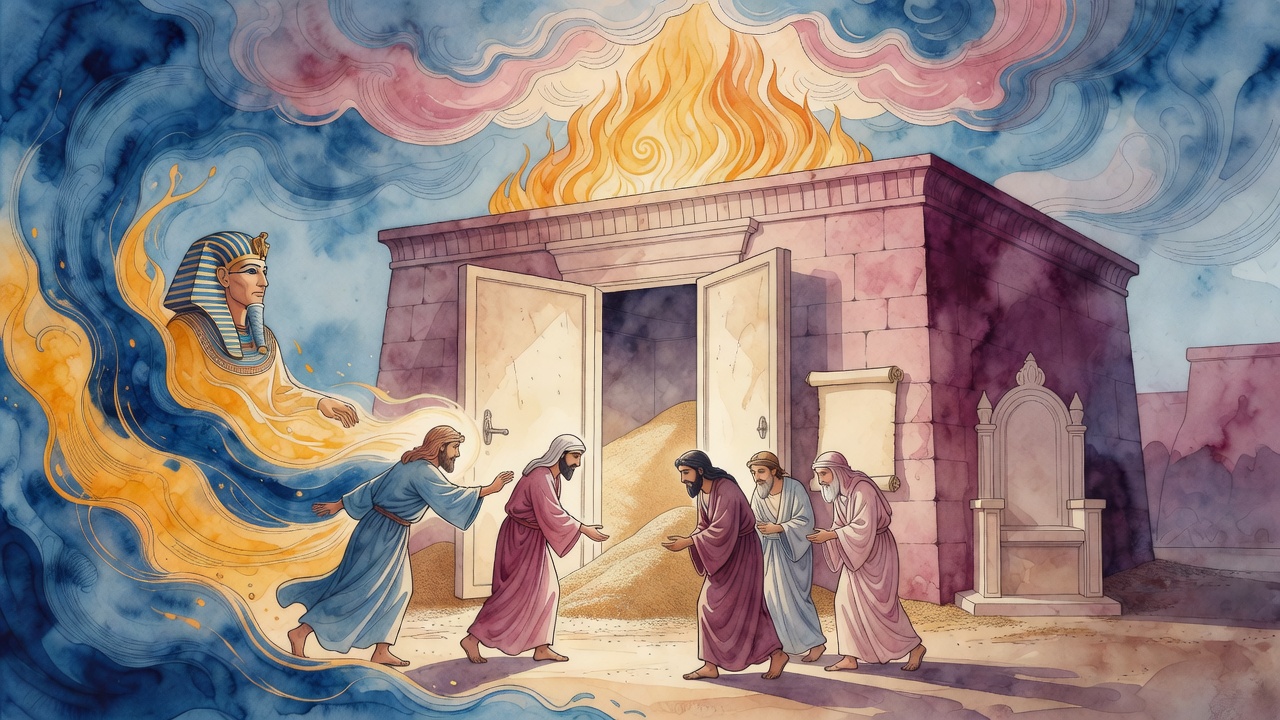
The butler dreamed of a vine in Joseph's cell. Years later the brothers bowed for grain and named the sale with their own mouths.
