92 myths · Page 2 of 4
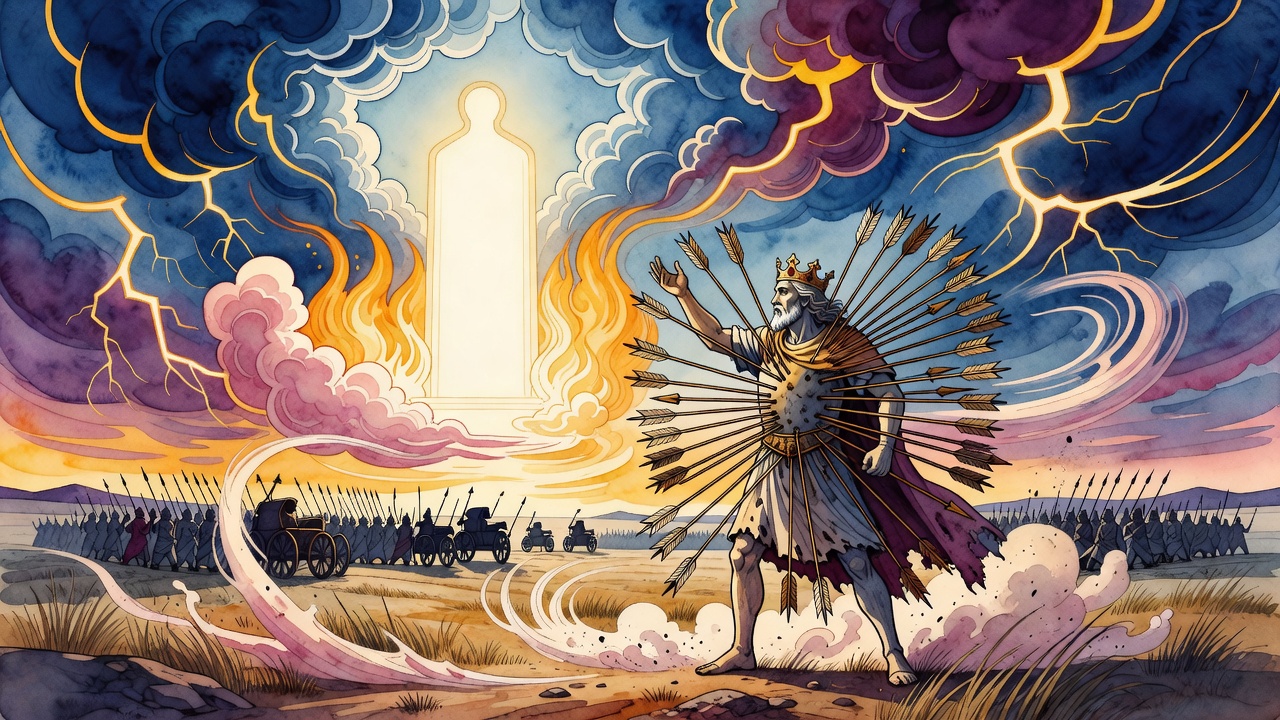
Pharaoh warned Josiah to step aside and let the Egyptian army pass. Josiah quoted Moses and refused. He was struck by three hundred arrows before nightfall.
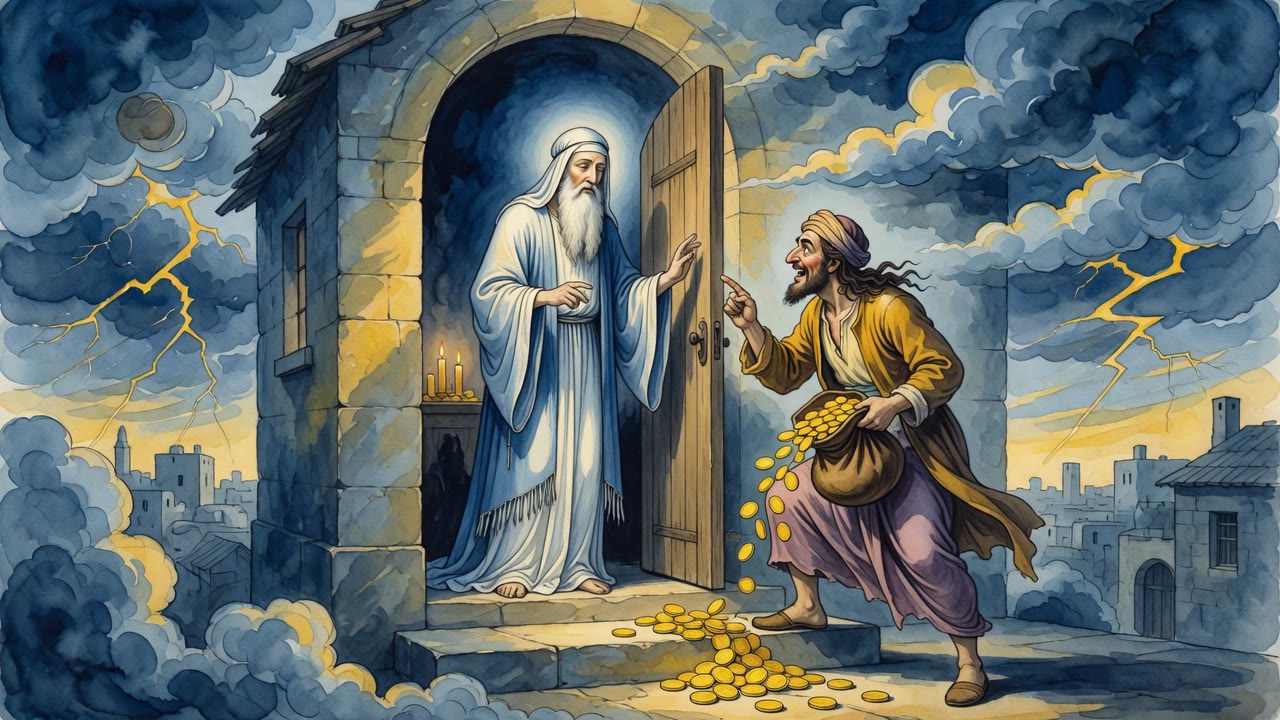
Ahasuerus did not lose Vashti because he hated her. He lost her because the men were comparing women and he wanted the room to admire him.
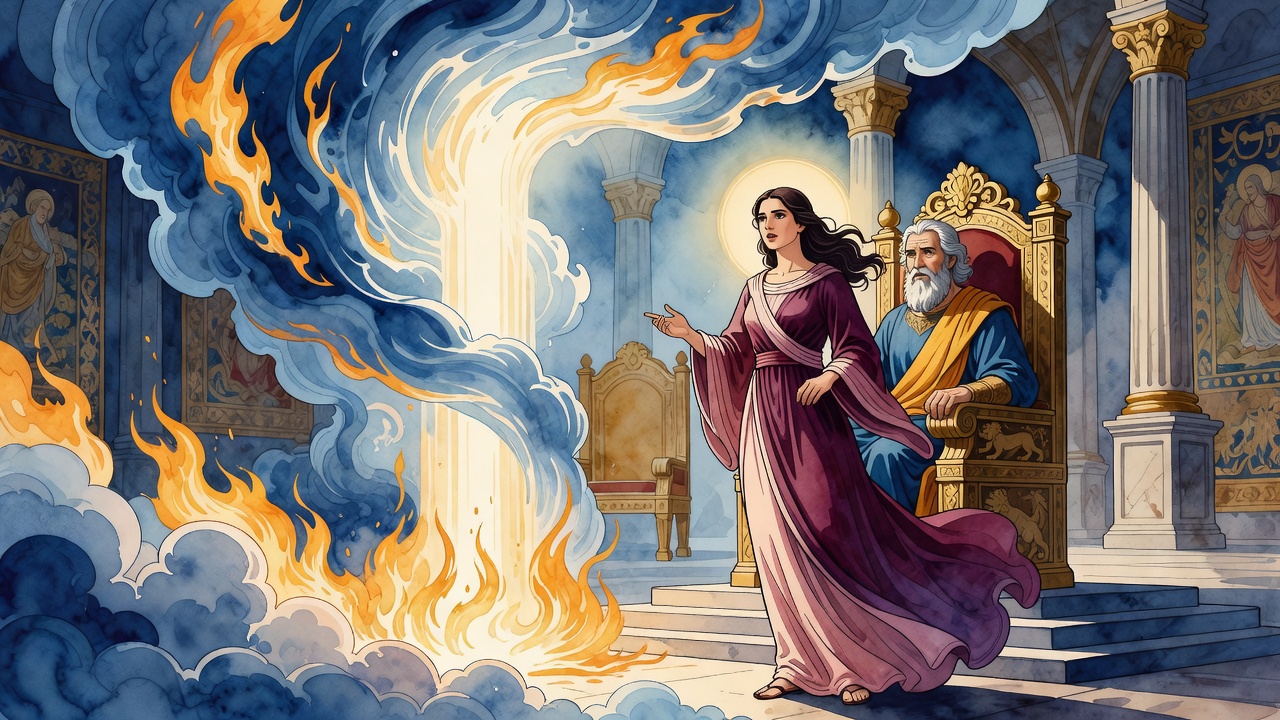
The king asked whose daughter she was and got nothing, again. When she finally answered him, she used the same breath to ask about Vashti.
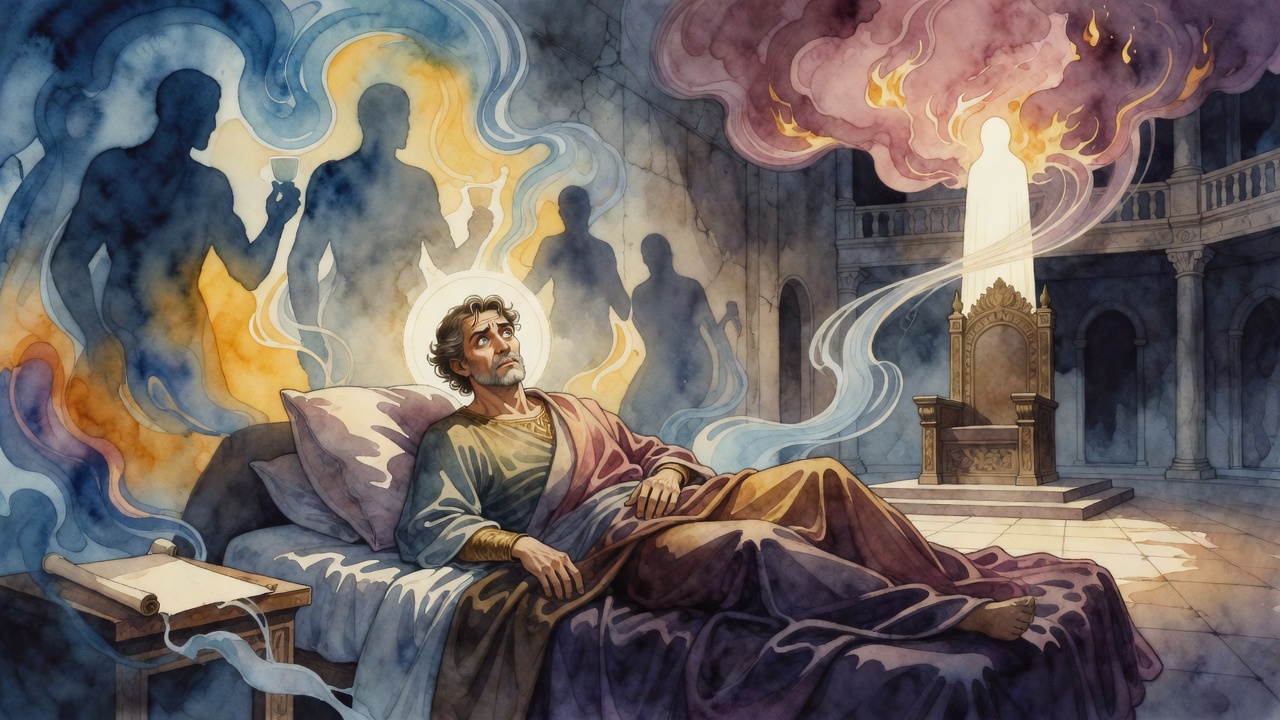
The king lay awake convinced he was being poisoned. When that fear passed, a worse one took its place. His paranoia would save the Jewish people.
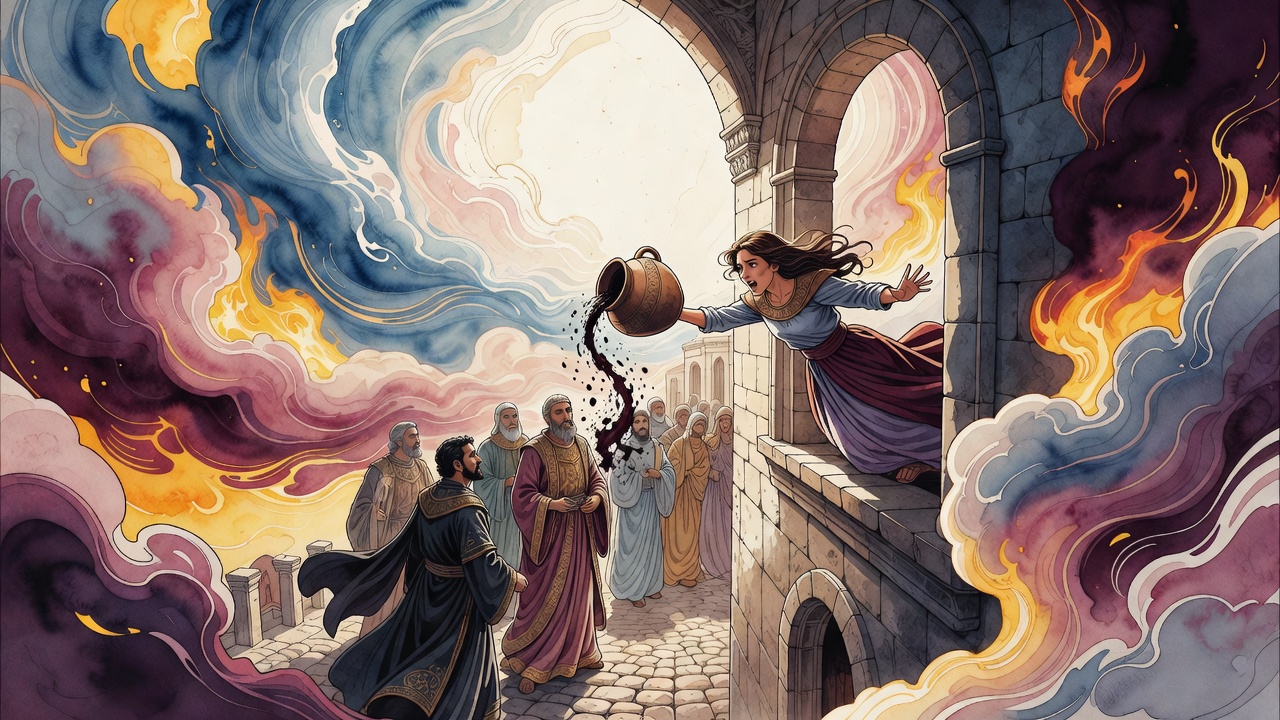
Filth ran into Haman's eyes before he found the window. His daughter was still holding the empty pot over Shushan's street.
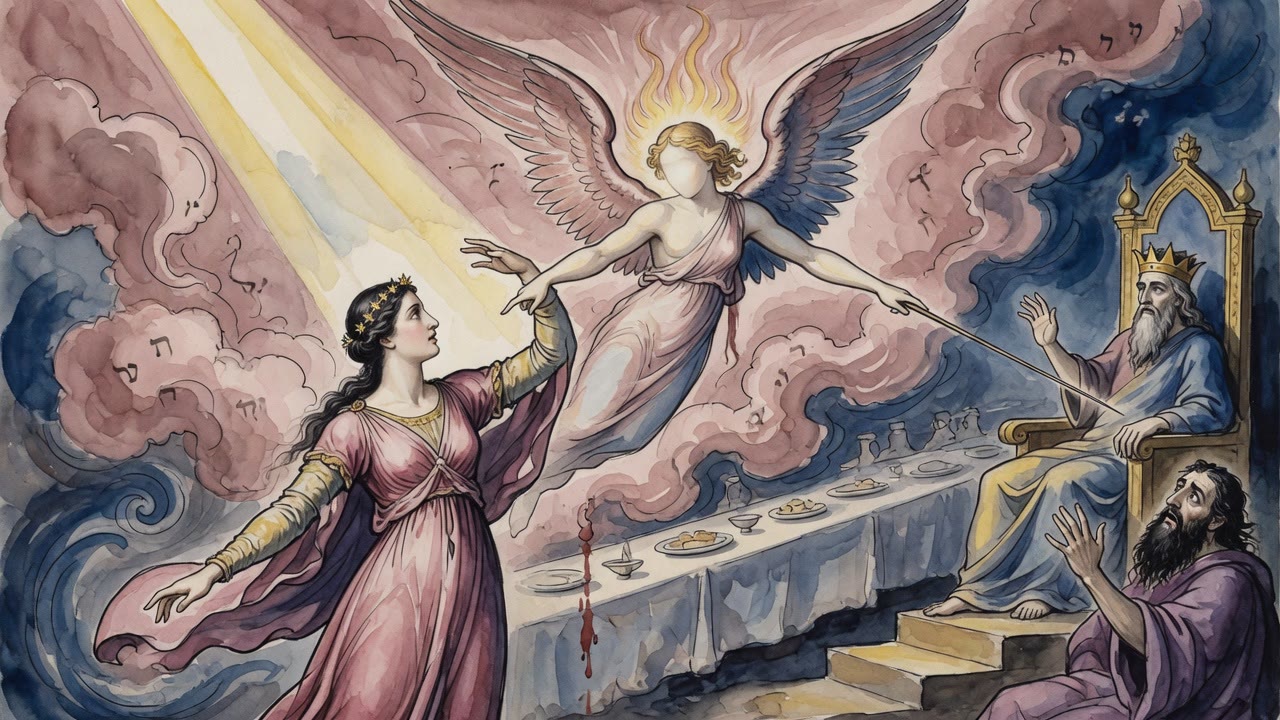
Her arm swung toward the king. An angel turned Esther's finger until it found Haman, the man her mouth was already naming.
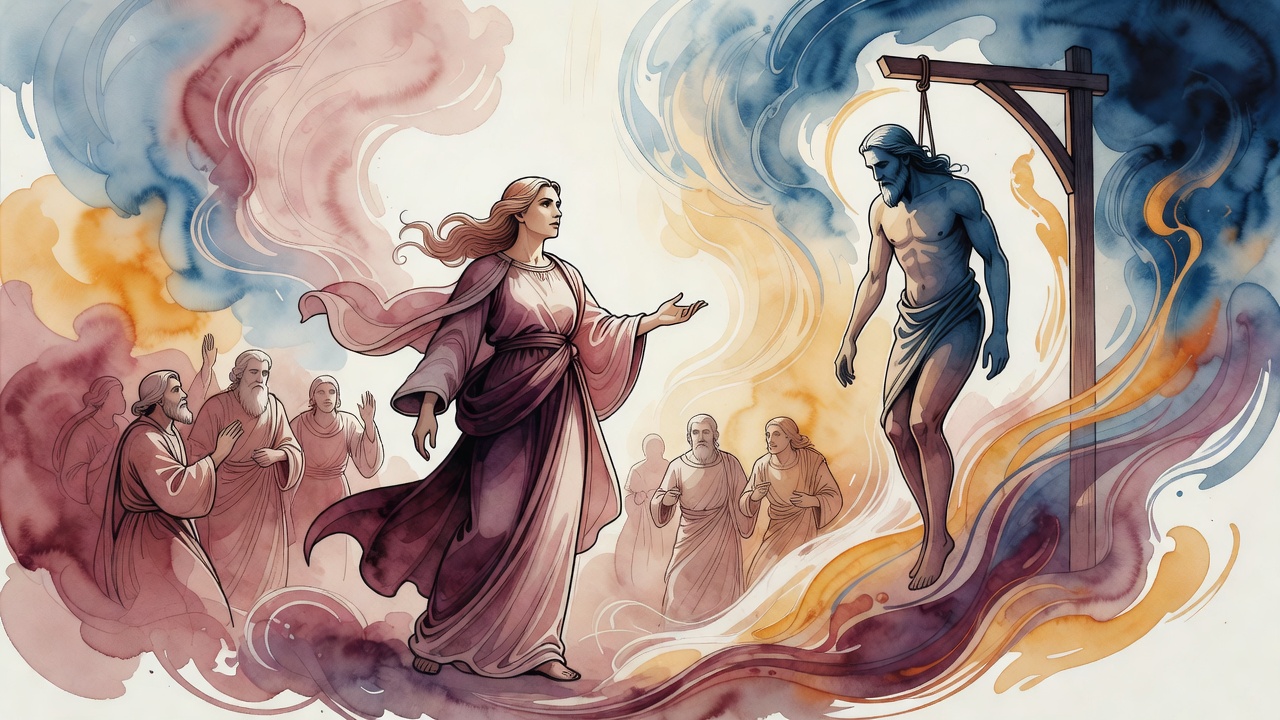
Haman and his ten sons hung on the timber he had cut for Mordecai. Night was coming. Esther told the court the bodies would stay.
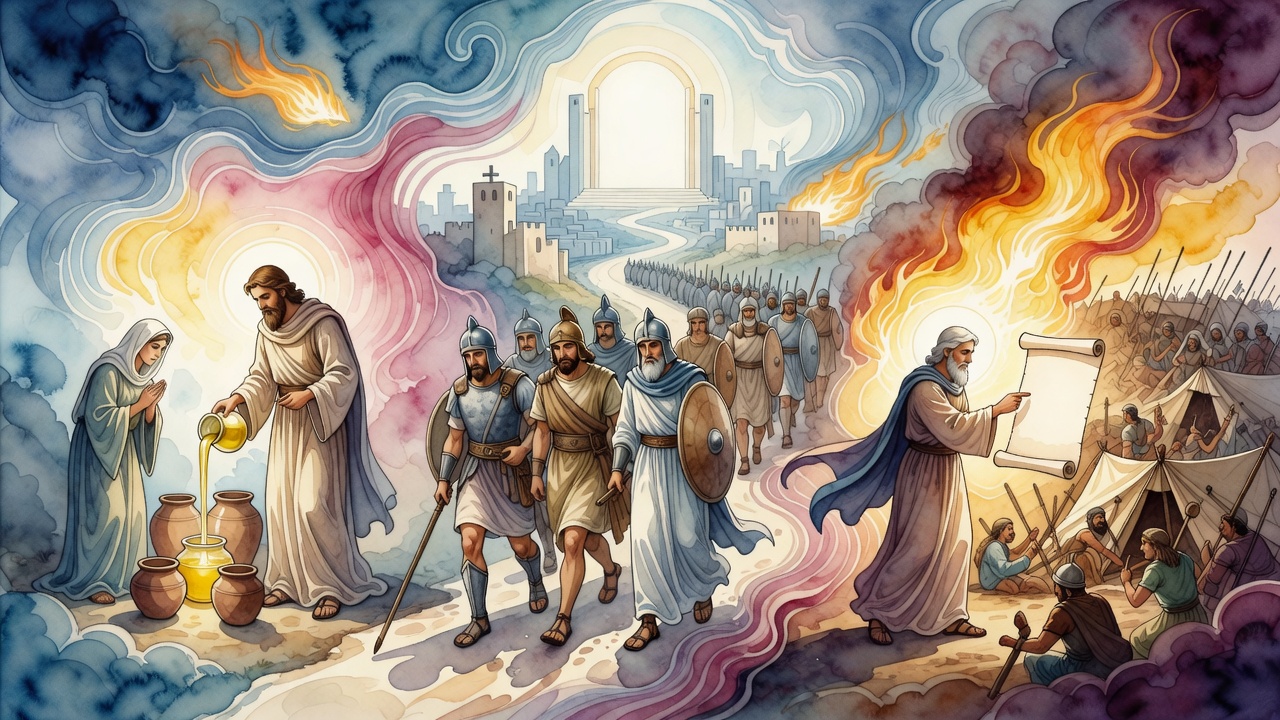
Samaria starved until a donkey's head cost eighty pieces of silver. Elisha named cheap flour for tomorrow. The officer who laughed died in the gate.
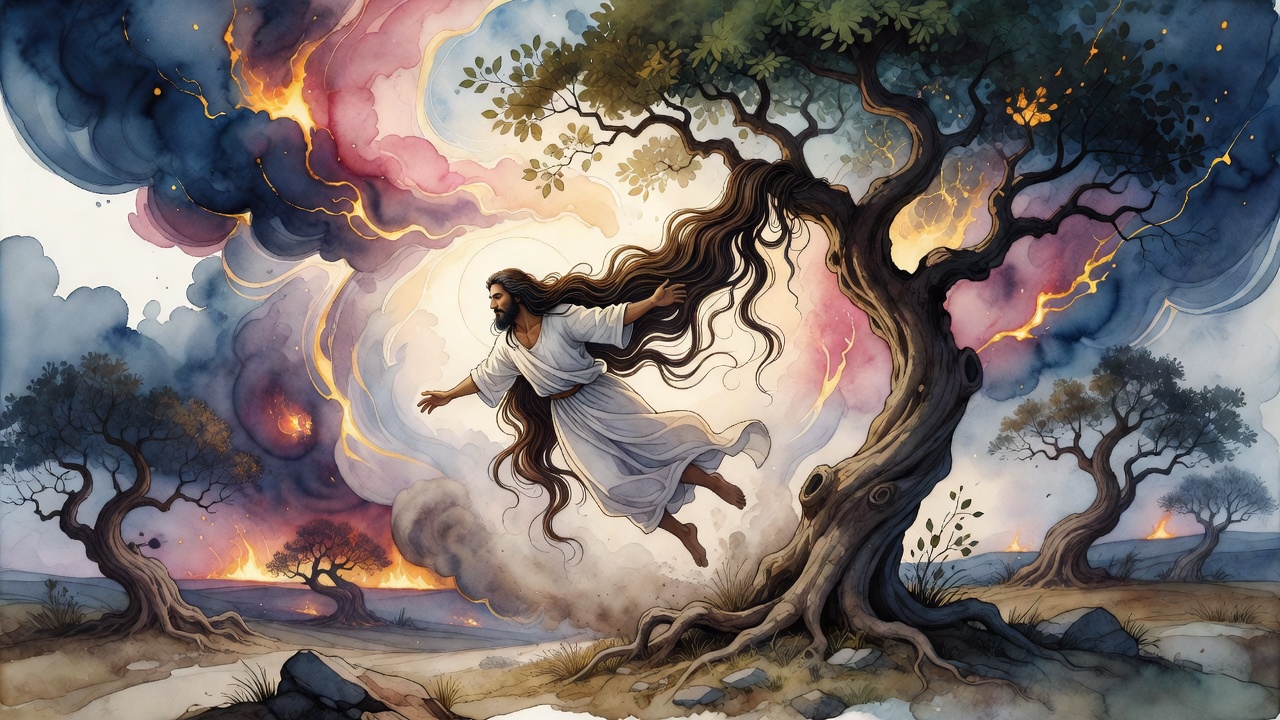
The Mekhilta records that Absalom cut and weighed his hair every Shabbat eve. That same hair caught in a tree and held him there for Joab.
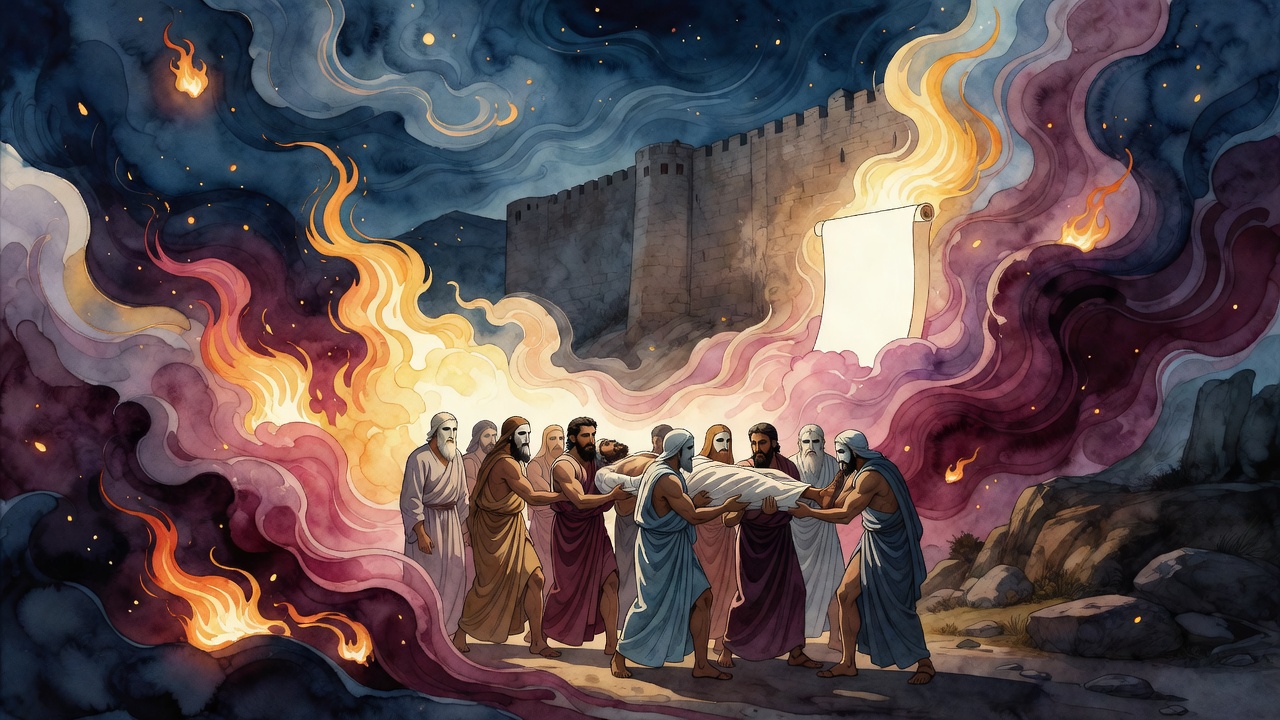
The men of Jabesh-Gilead still had their right eyes because of Saul. When his body went up on the wall at Beth-shan, they came for it.
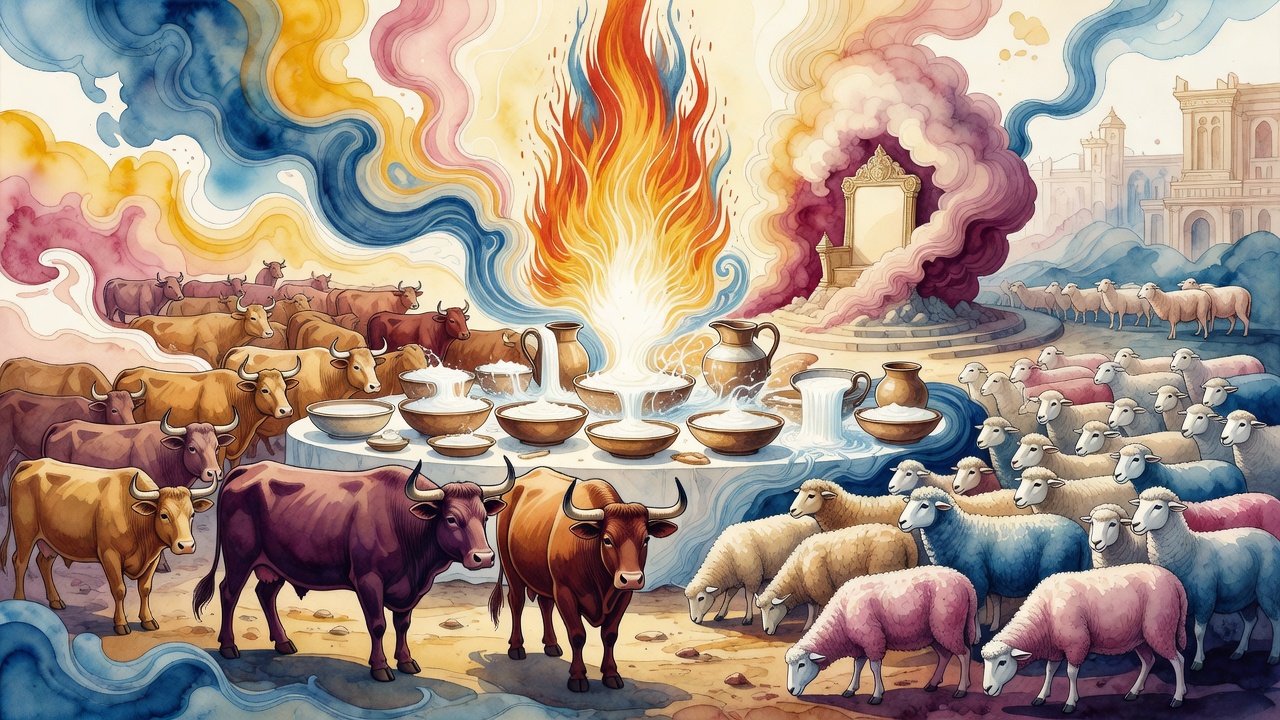
Ten fattened oxen, twenty more off the grass, a hundred sheep. That was one ordinary day, and a thousand women cooked all of it.
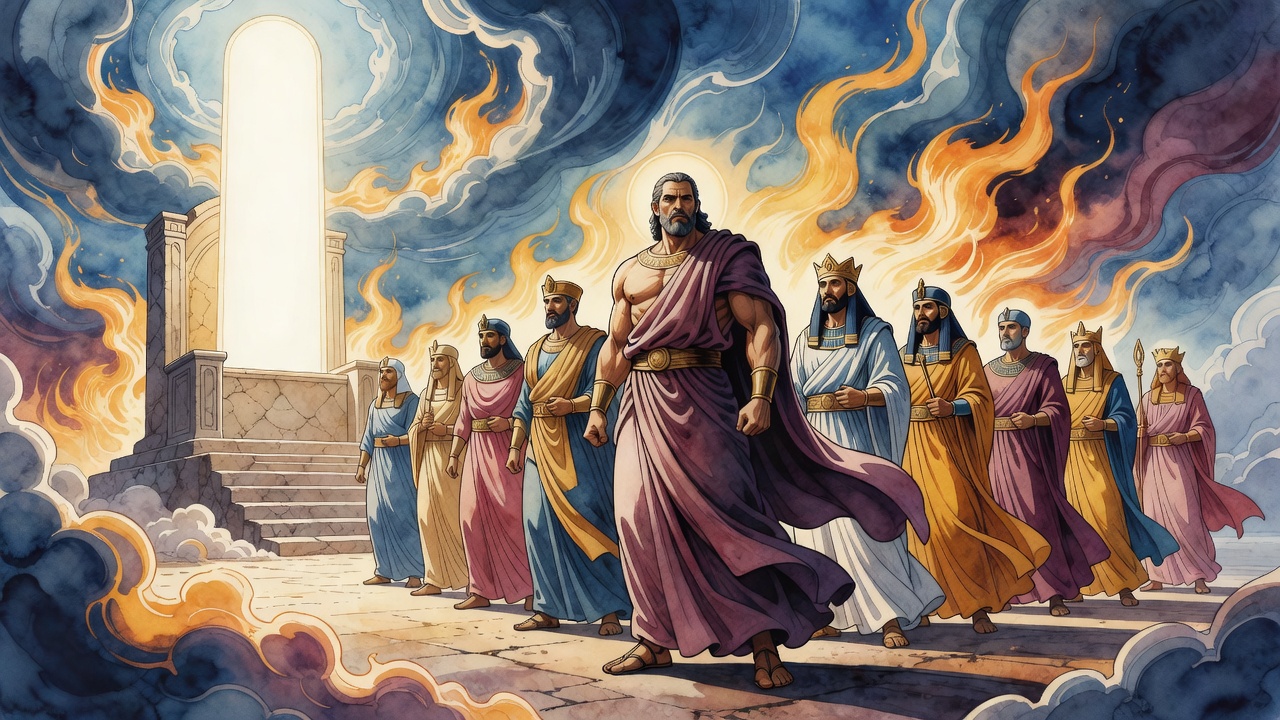
Ham stole the clothes God had sewn for Adam and hid them on the ark. Two generations later a twenty-year-old boy put them on and went out hunting.
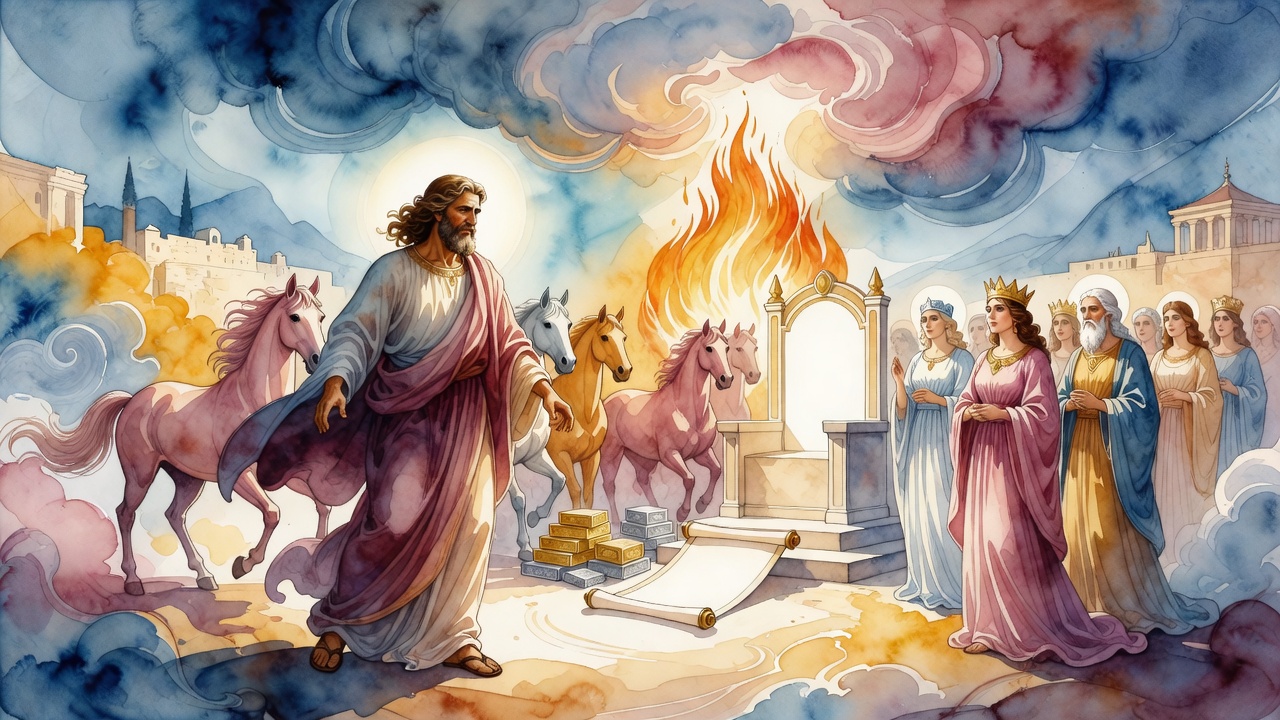
The Torah gave kings three specific prohibitions. Solomon knew all three and violated all three. His reasoning was brilliant. His reasoning was wrong.
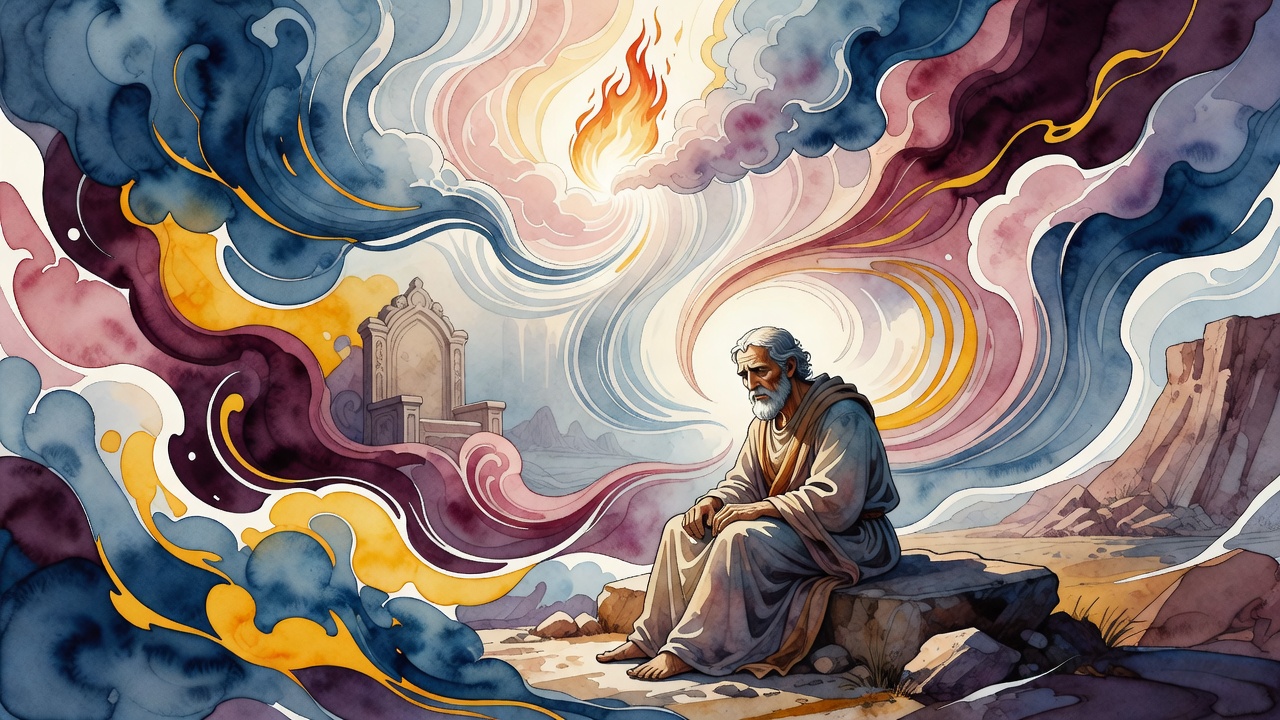
Samuel mourned for Saul until the day Samuel himself died. He had made the king and he watched what the king became. The grief was his own making.
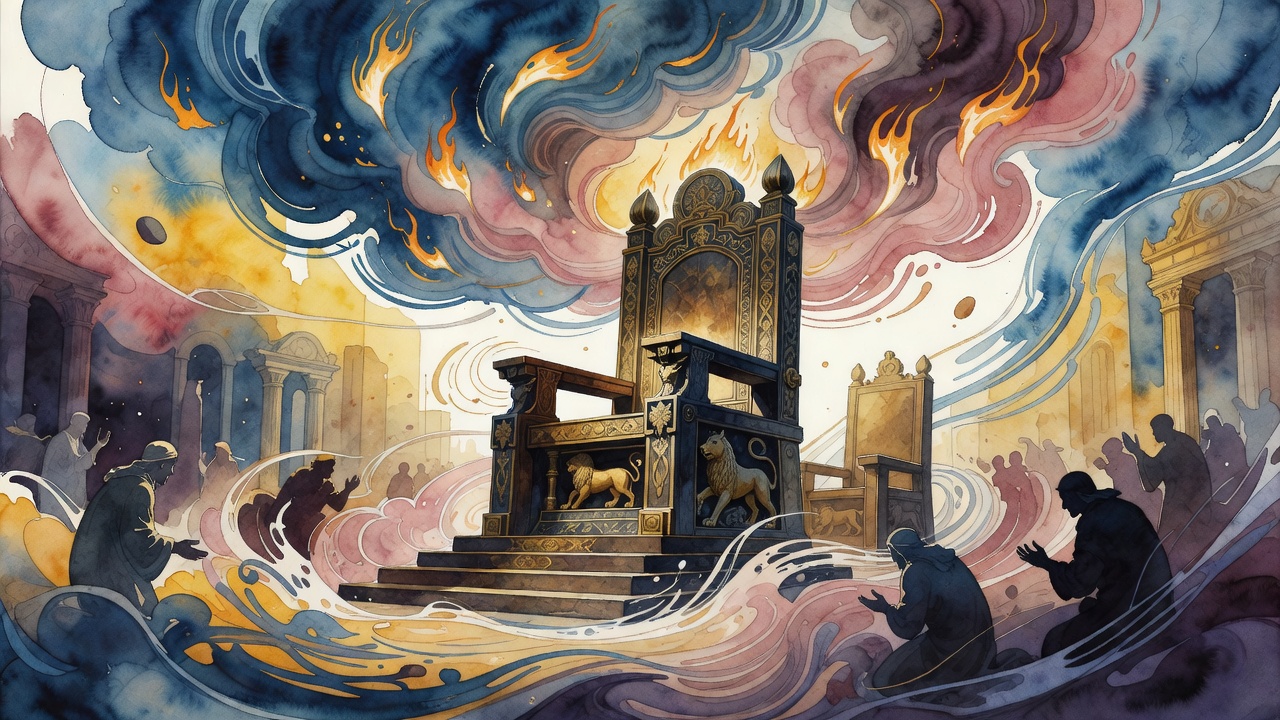
Solomon's legendary throne was not just a seat of power. It moved, tested every visitor, and punished rulers who lied before it.
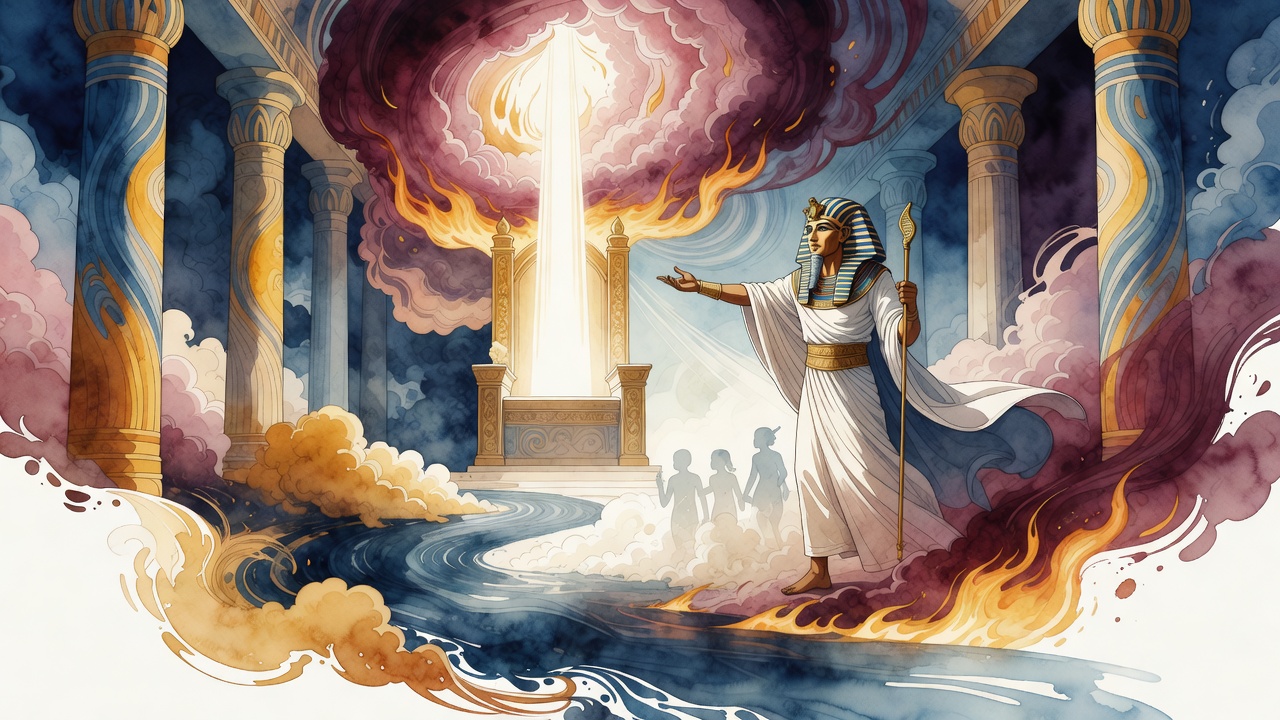
Pharaoh told Egypt he was a god who felt no human needs. Every morning he went down to the Nile alone to keep it up. One morning Moses was standing there.
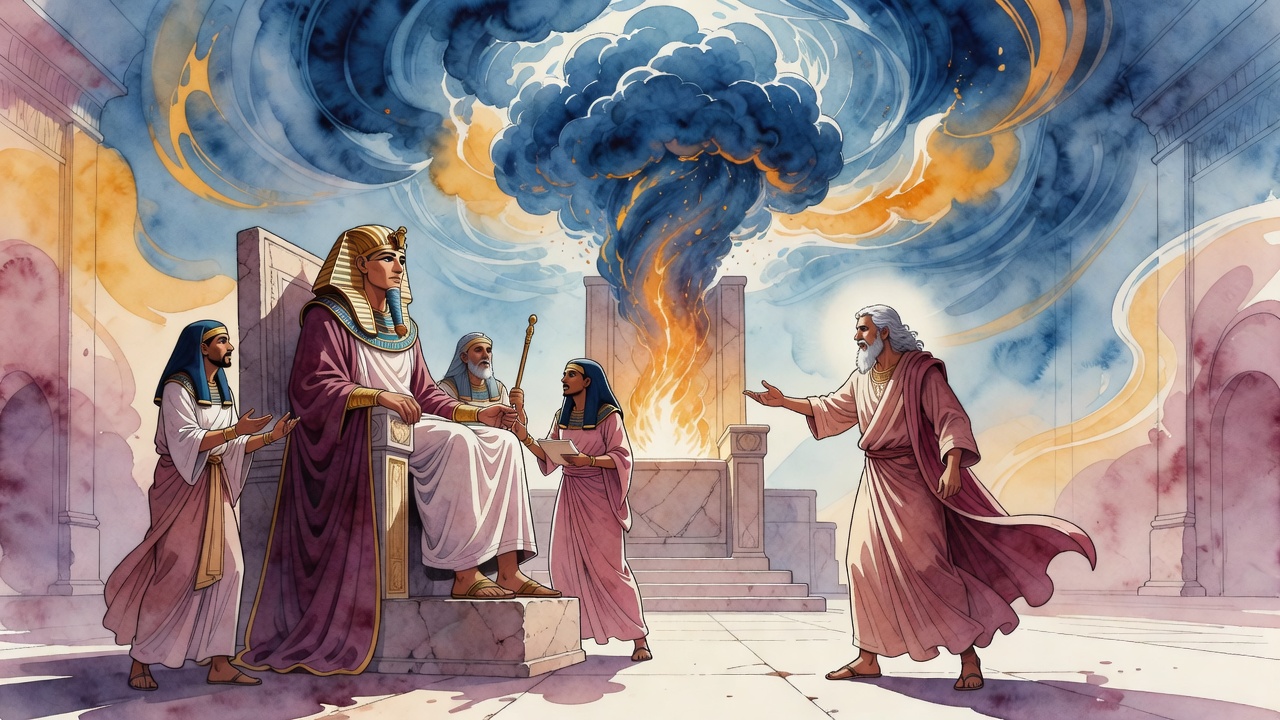
Three men were asked how to deal with the Hebrews. One gave the murderous answer, one shrugged, and one argued and left Egypt that day with a stolen staff.
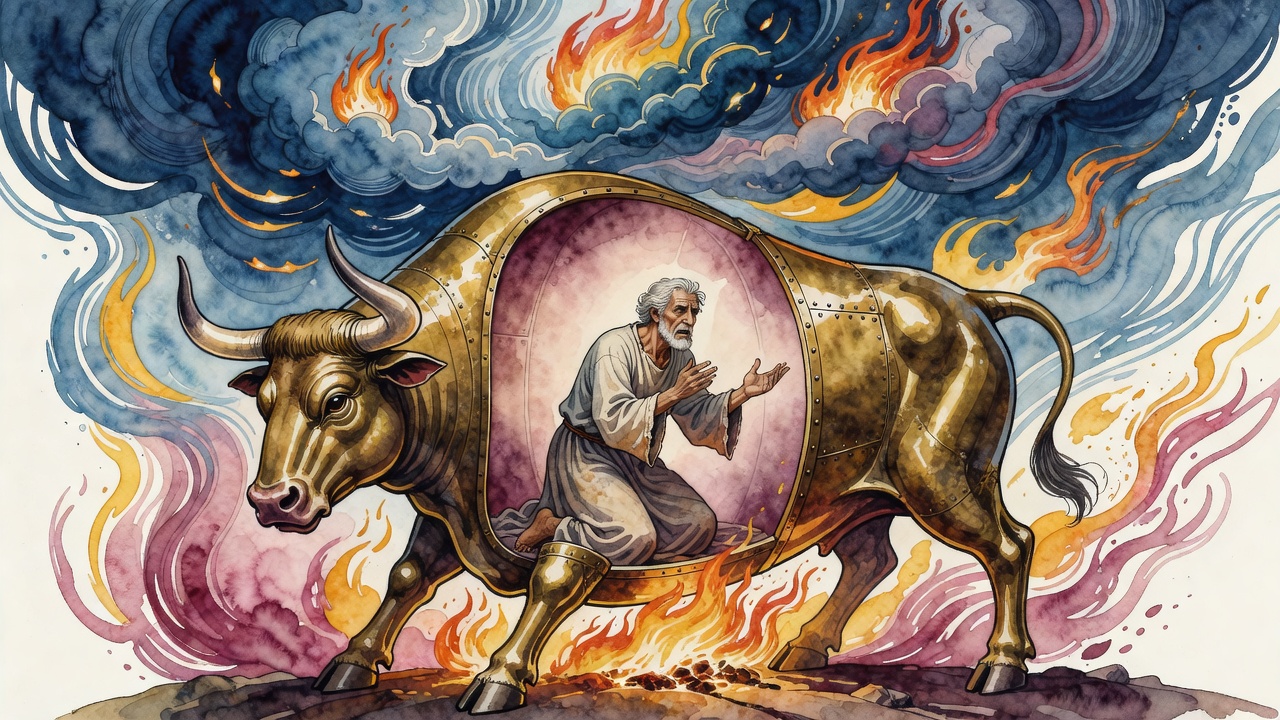
Manasseh had spent a lifetime closing every door back to God. Sealed inside a heated brass bull by his captors, he found the one door still open.
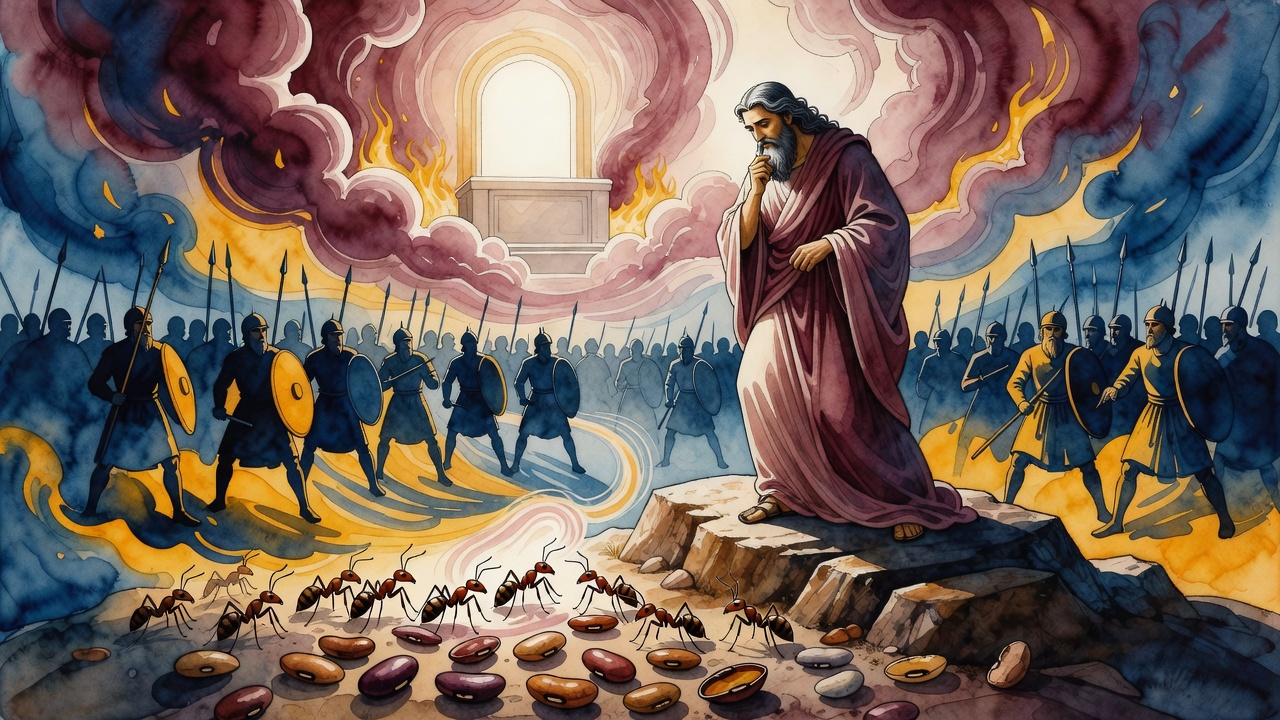
The king who speaks every language hears an ant warn her colony before his army crushes them and learns his glory looks like danger from the ground.
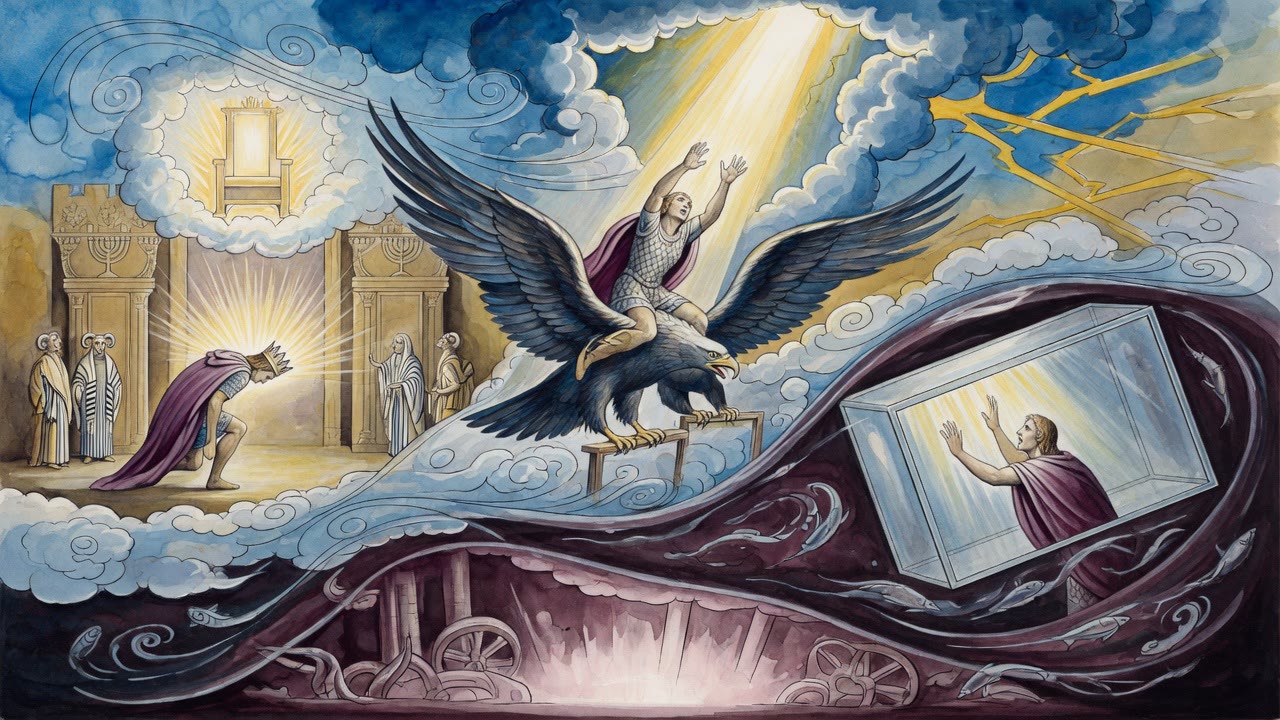
Jaddua would not break his oath to Darius. Alexander marched up from Gaza to punish him. He bowed to the Name cut in gold on the priest's mitre.
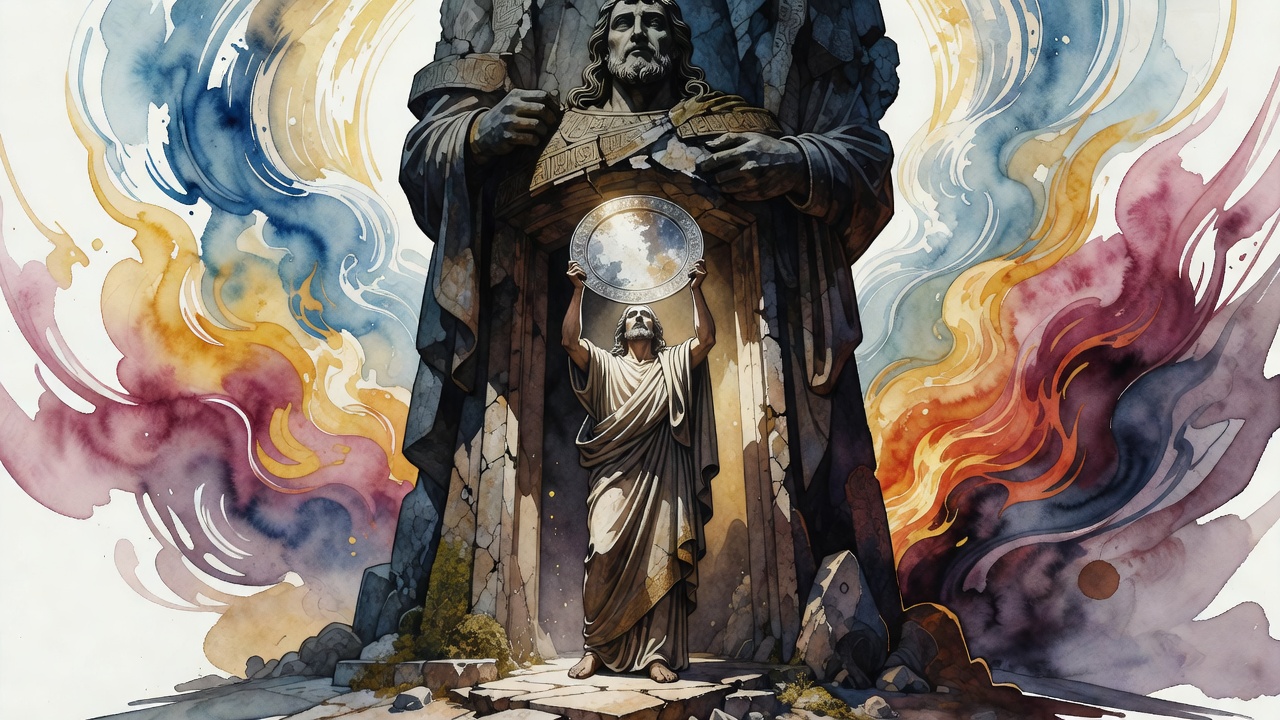
Solomon finds a silver plate deep in a statue that speaks of Shadad ben Ad, who ruled a thousand thousand kingdoms and vanished at a touch.
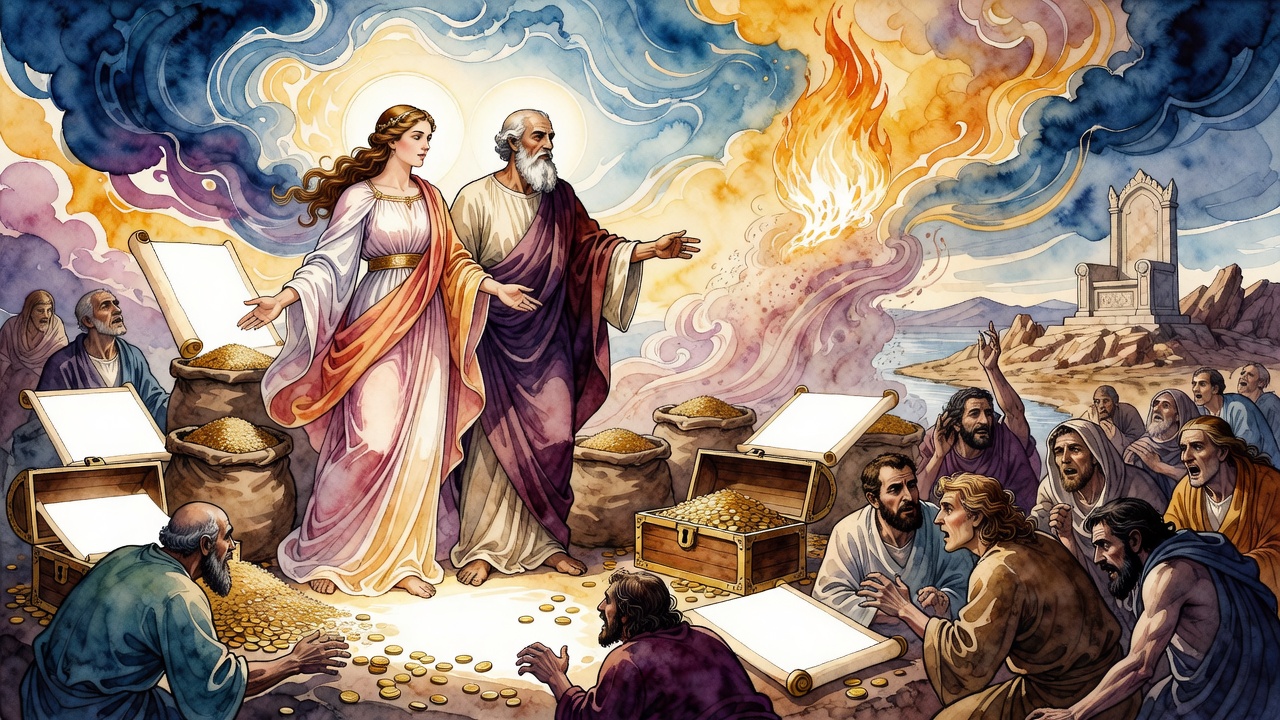
The king of Adiabene fell asleep with his hand on his wife's pregnant belly, and a voice told him to move it. The son she was carrying was named Izates.
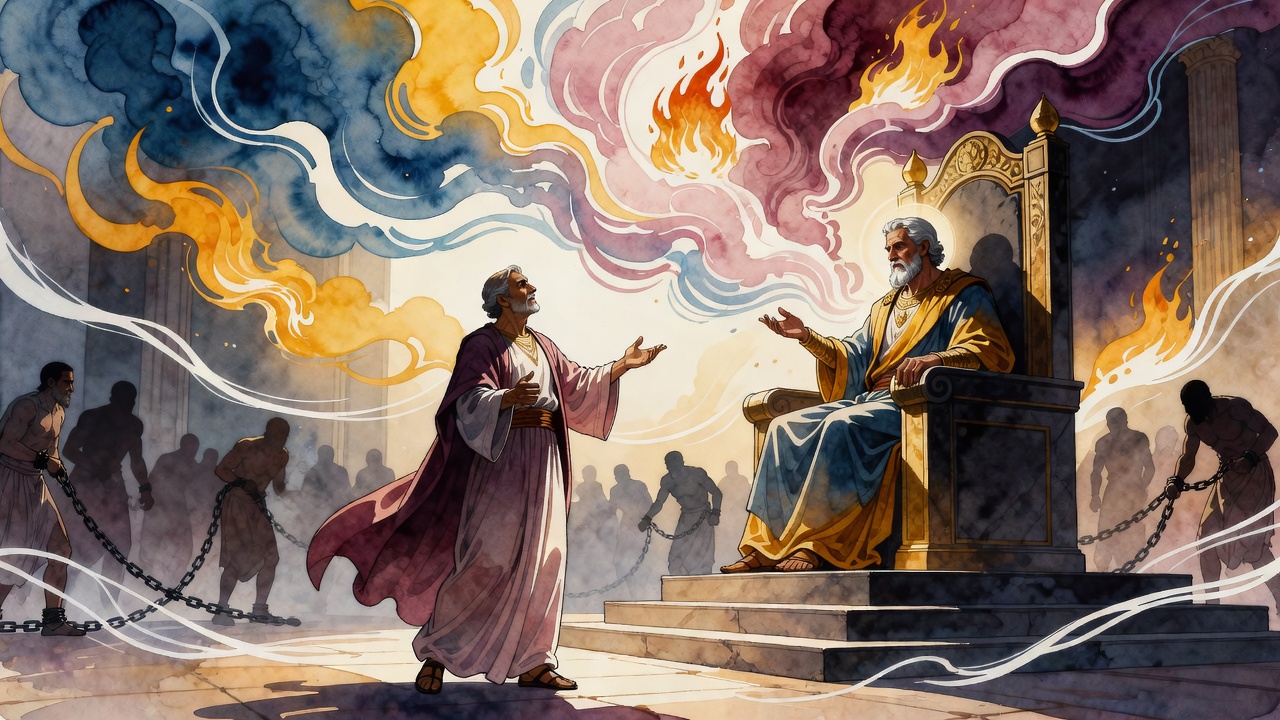
A Jewish courtier tells Ptolemy that asking for the Torah while owning Jewish slaves is a contradiction no library can absorb. The king pays to free them.
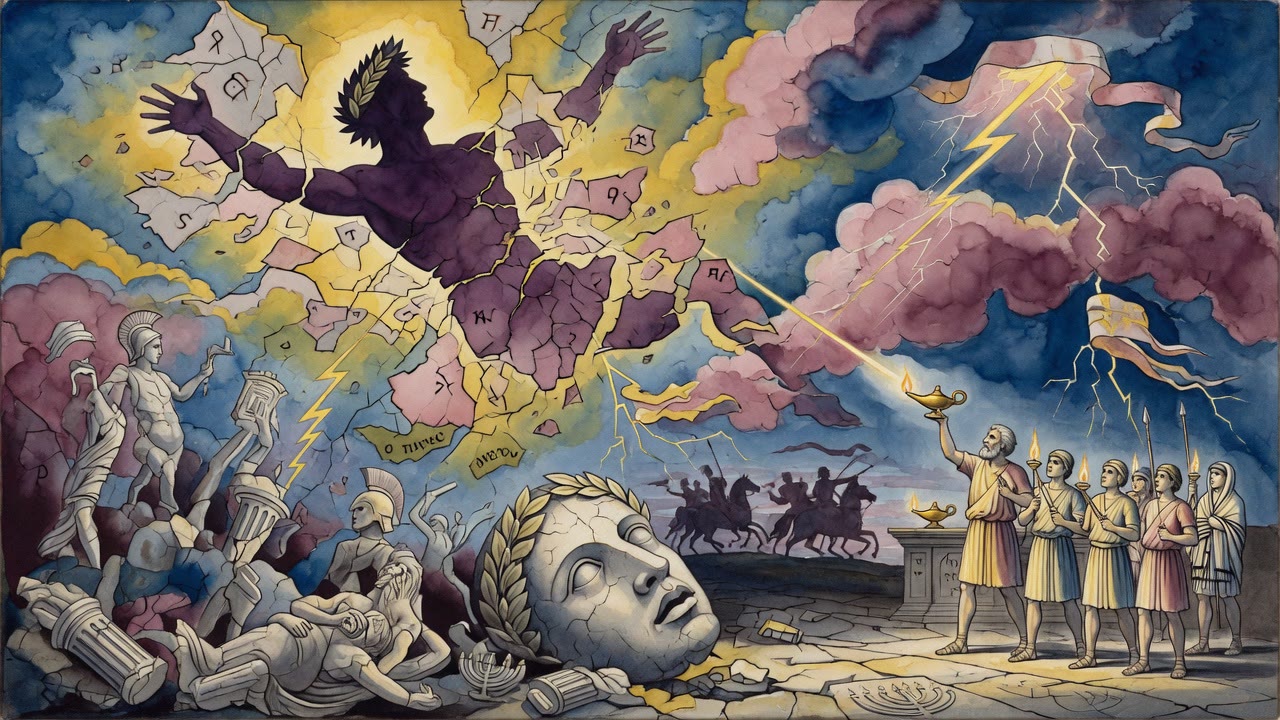
Judah was already in the ground. Jonathan was gone. Simon put his shoulder under what was left of the house of Mattathias and did not step back.
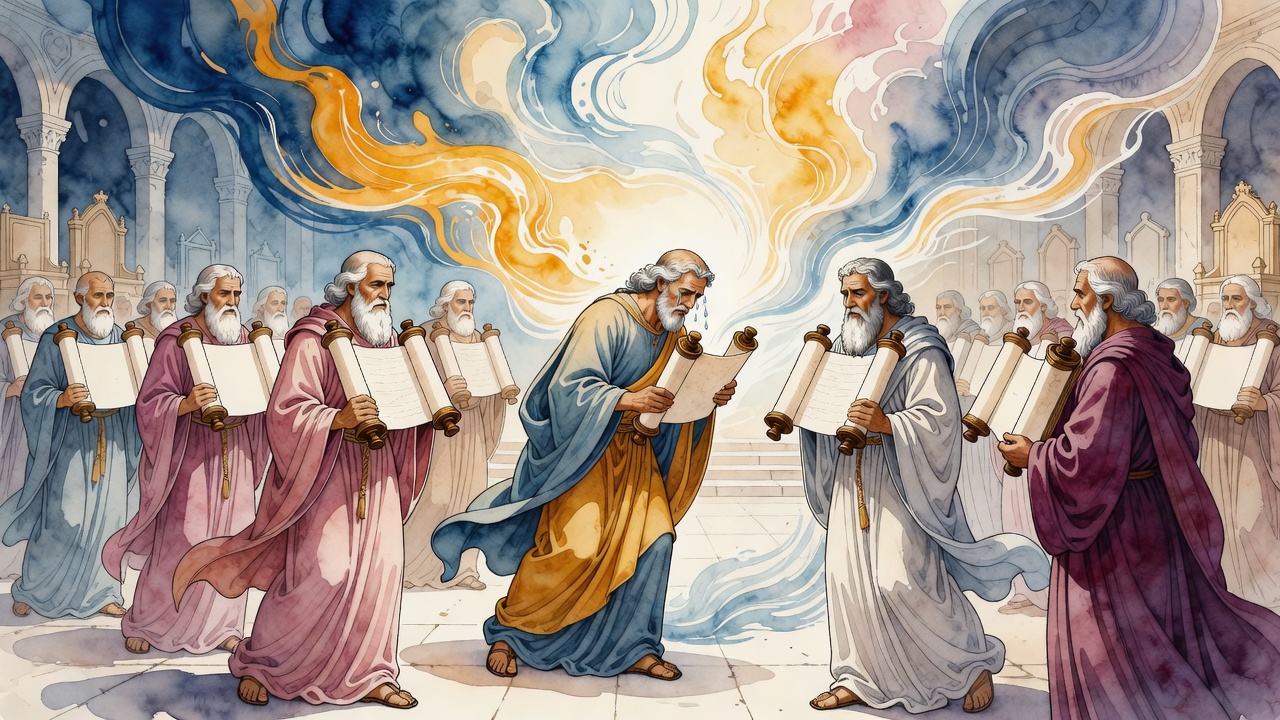
Seventy-two elders carried the Torah from Jerusalem into the Greek king's hall. He asked why no king before him had ever been given this book.
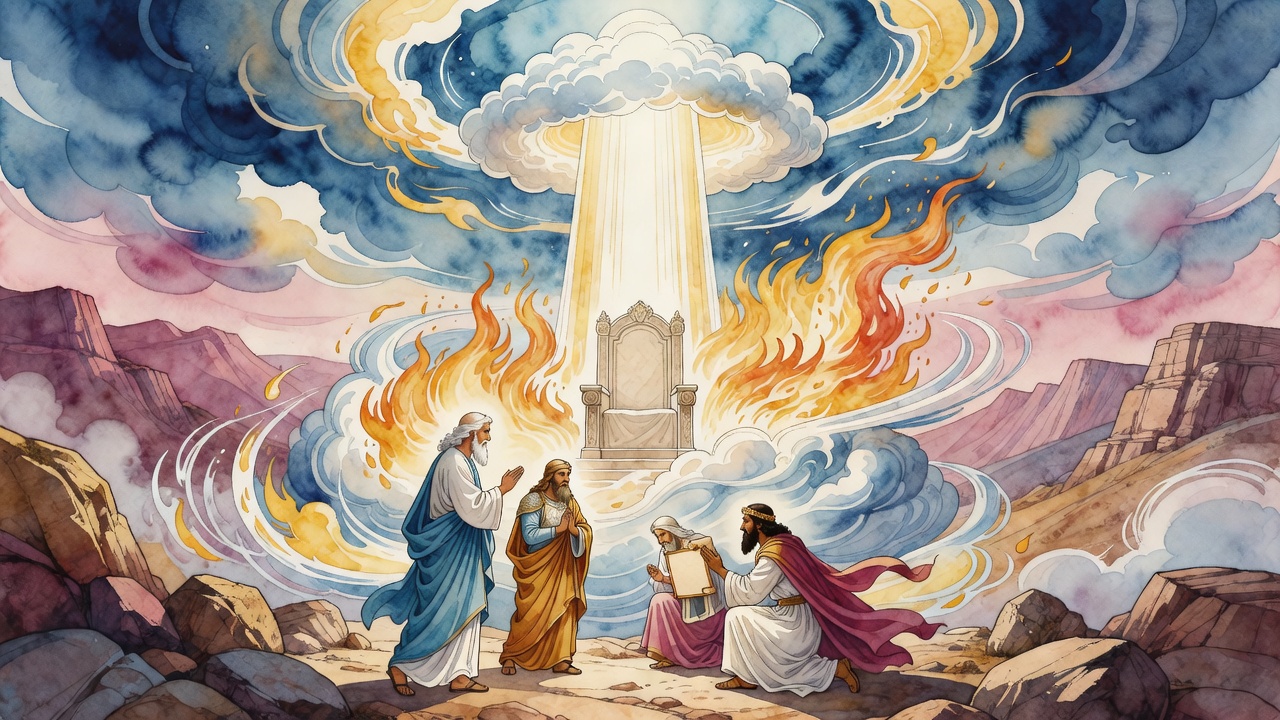
Shemot Rabbah places Moses, David, and Solomon before a God who lifts and lowers like a wheel, then demands that Torah and mercy govern the throne.
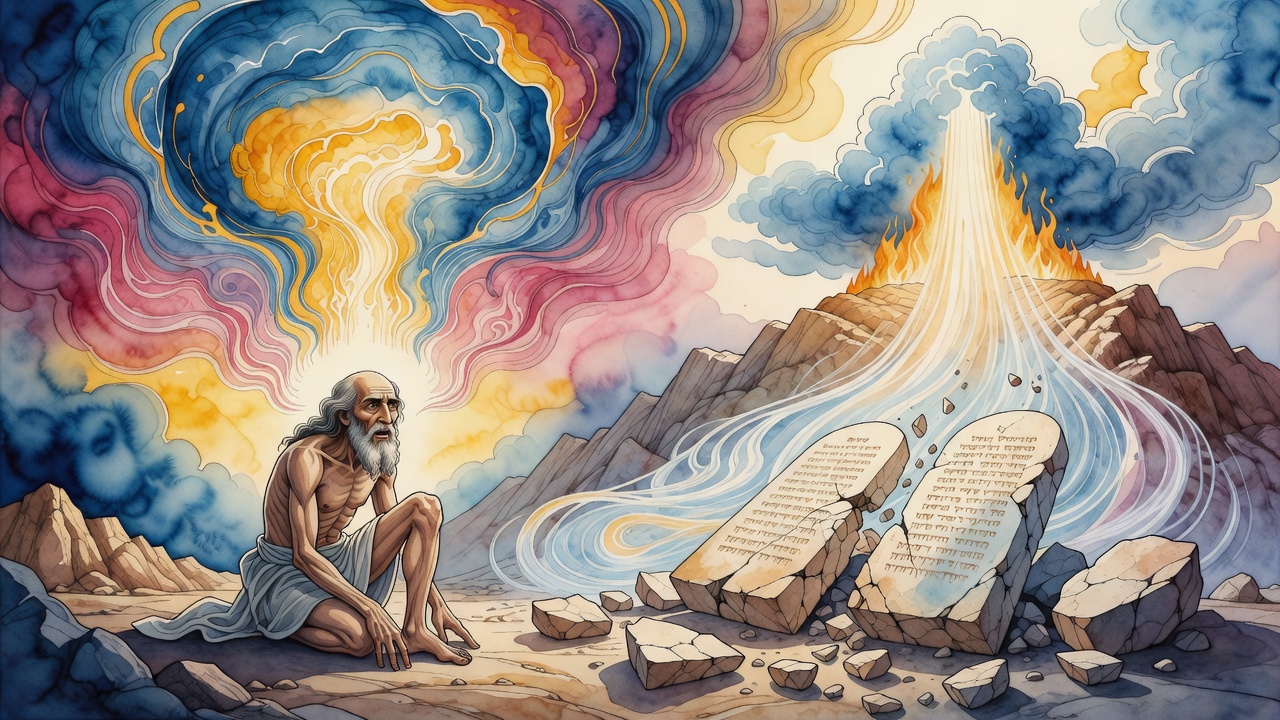
For forty days the young king ate nothing, and wisdom came down to him. At Sinai it went the other way. The letters lifted off the broken stone.
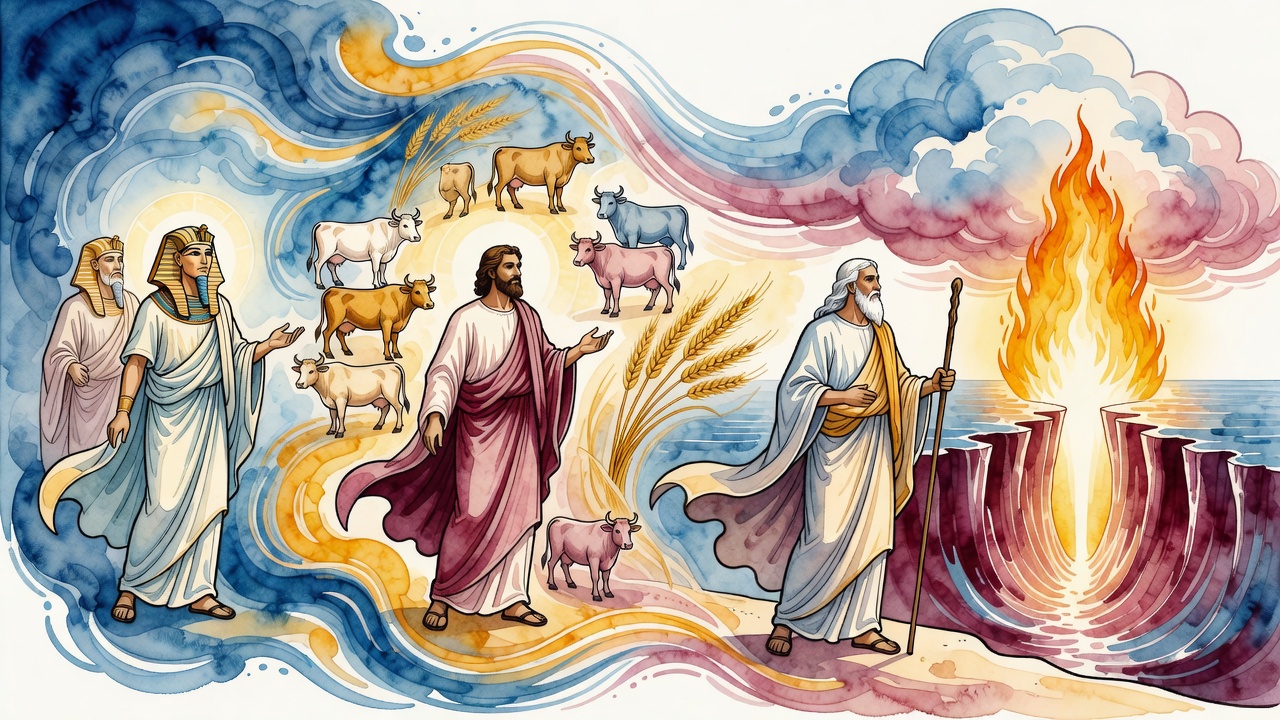
Pharaoh woke from dreams his court could not hold. Joseph named what the night meant. Generations later Moses stood at the sea and the answer came again.
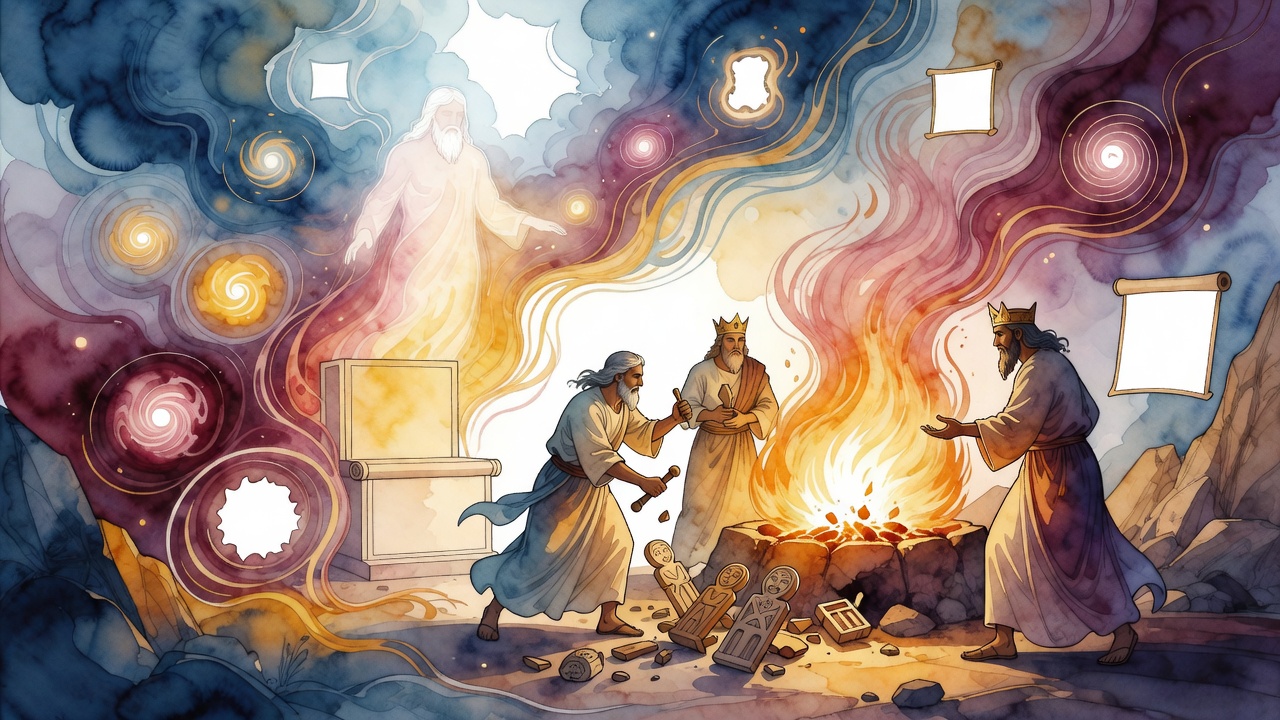
Abraham smashed idols and Nimrod lit the furnace. A king tried to pay him for a war fought free. God named ten nations his heirs would inherit in two eras.
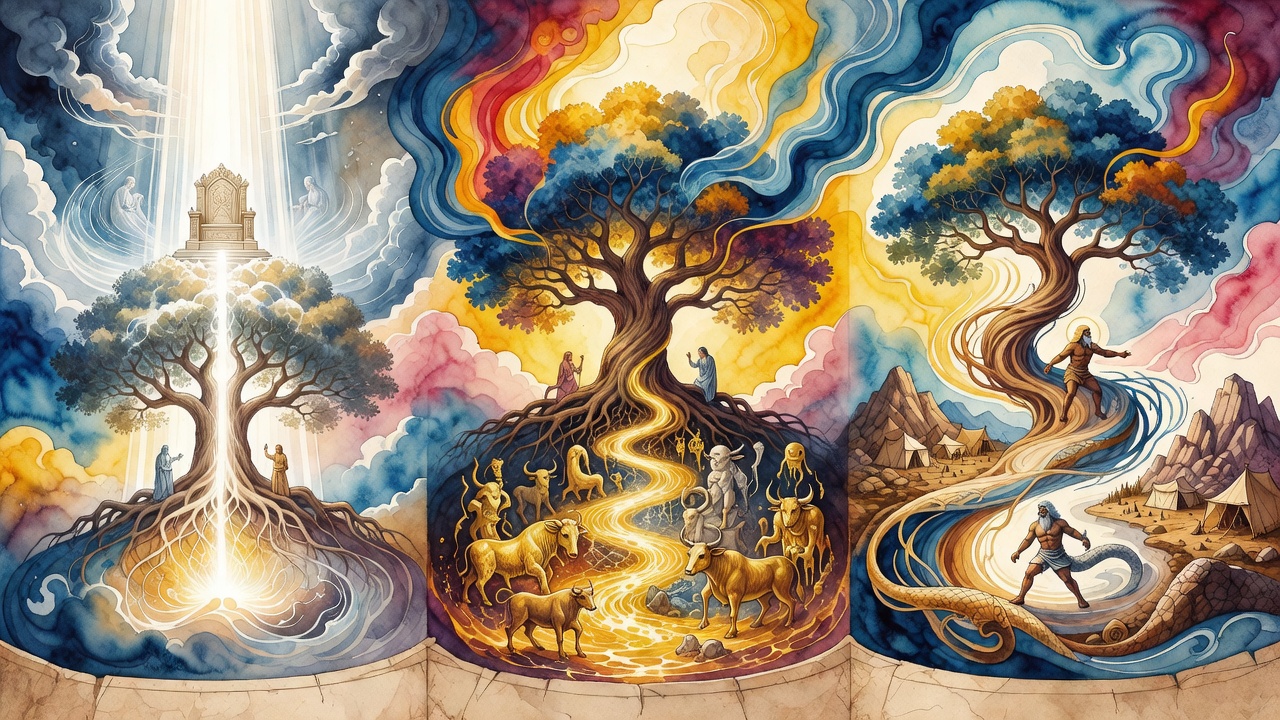
He was naming his sons one at a time from the bed. At Dan he described a man who fights alone and wins, and then he broke off to pray.
