123 myths · Page 4 of 5
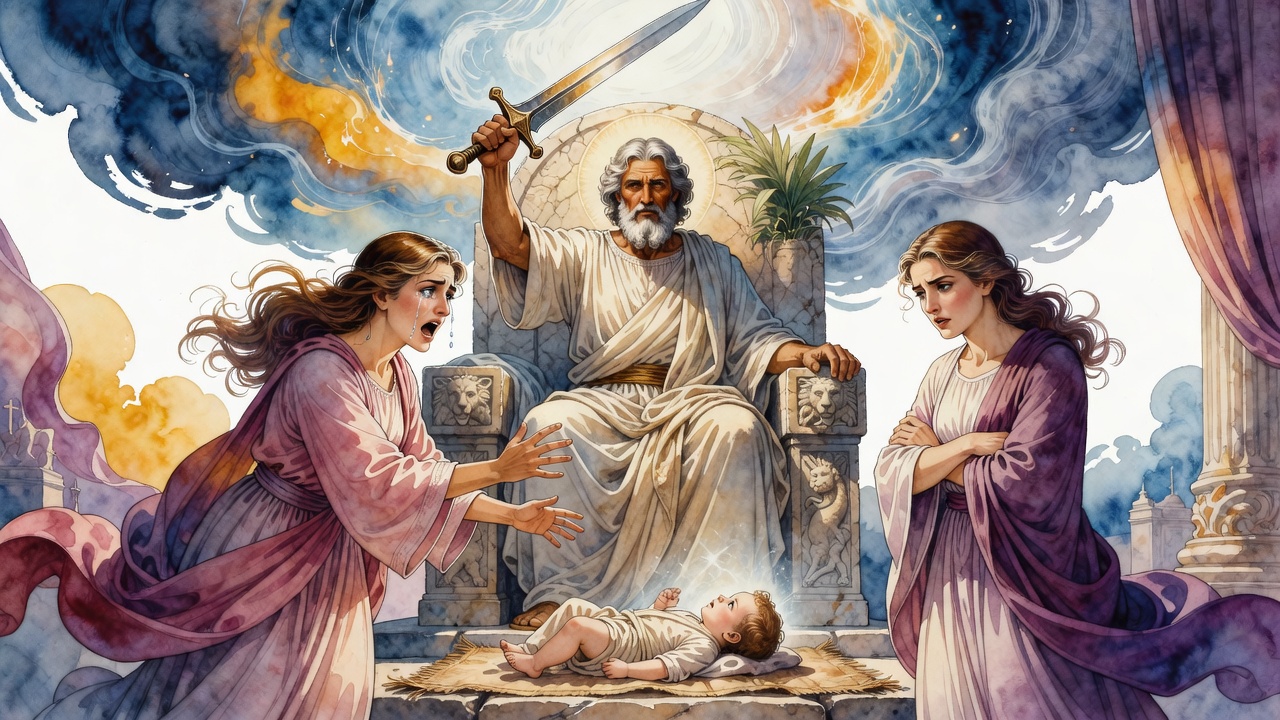
Two women claim one living infant before Solomon's throne. He calls for a sword to split the child, and the true mothers cry stops the blade.
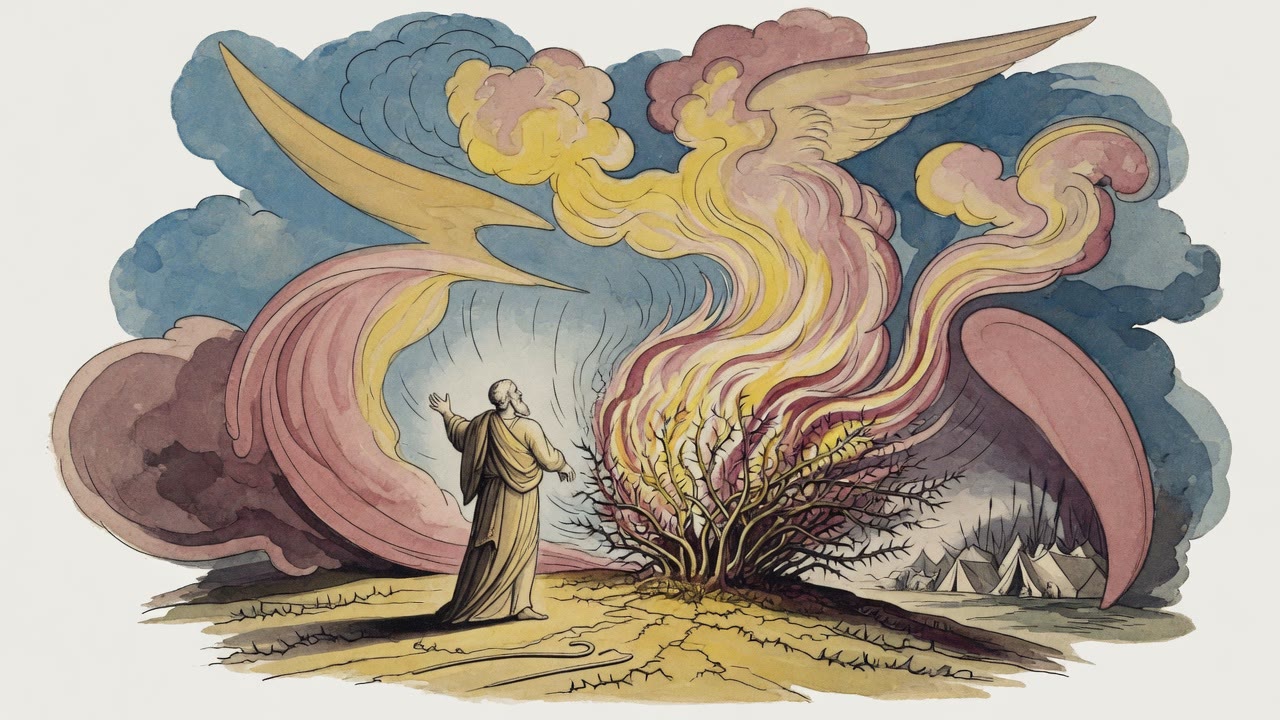
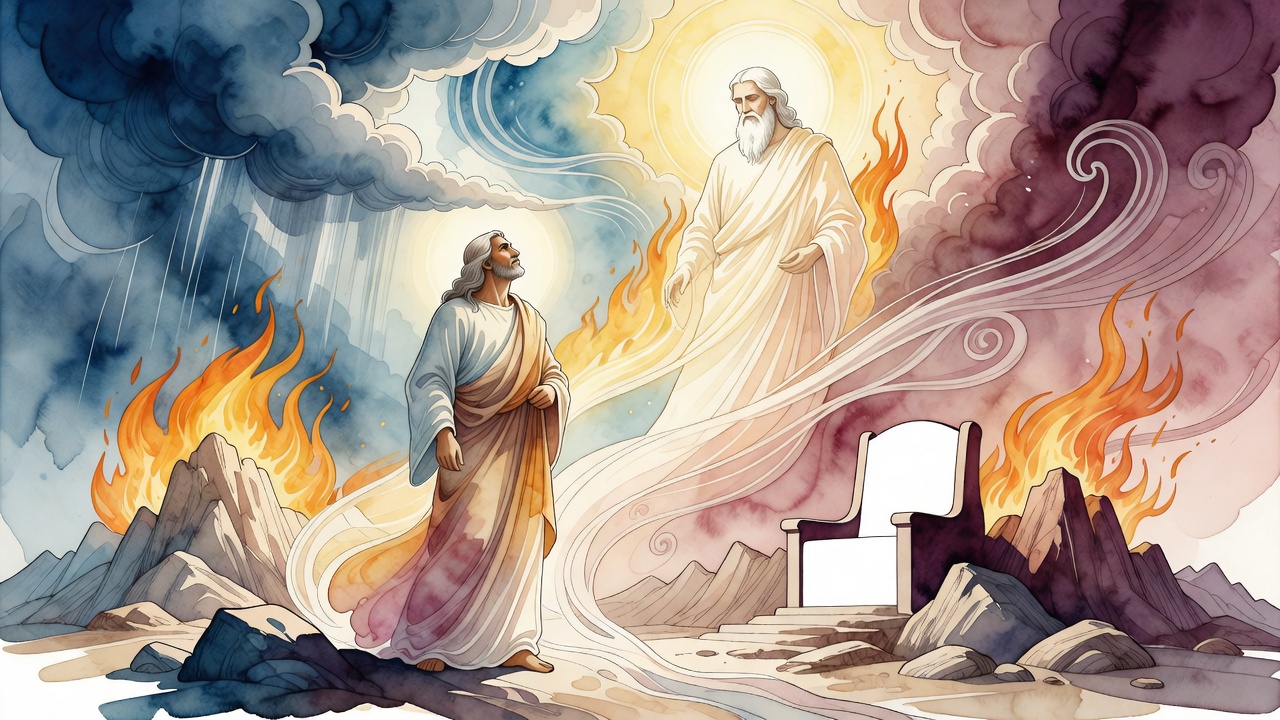
The bush burned and made no ash. Moses wanted a name he could carry into Egypt. What he got was a future he had to keep behind his teeth.
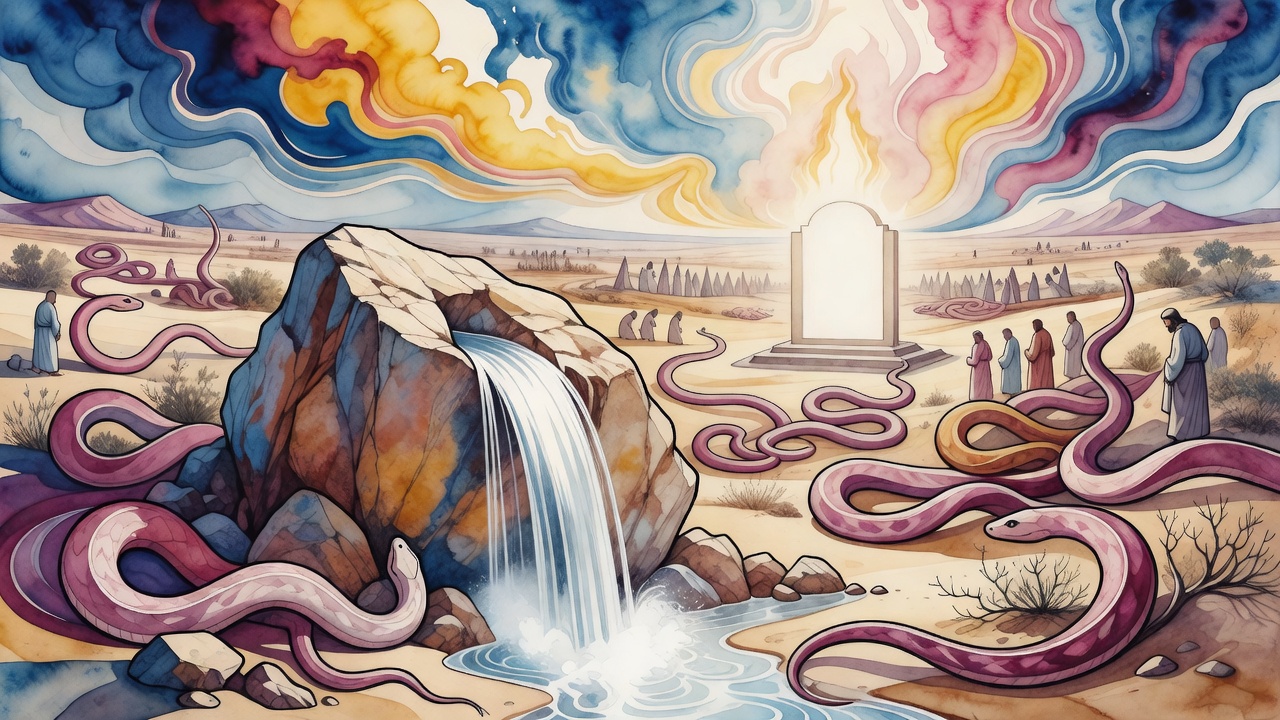
The letters of one word Moses spoke add up to 852, the years Israel was given on its land. The exile came at 850, two years early.
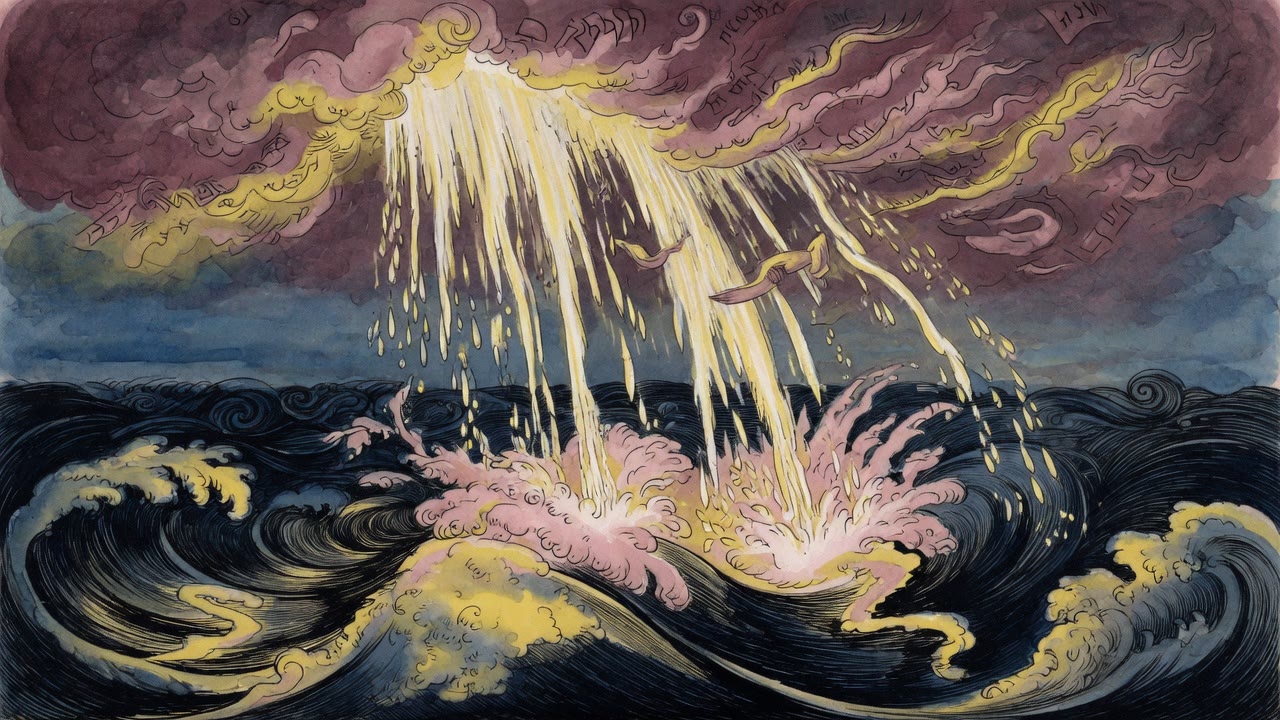
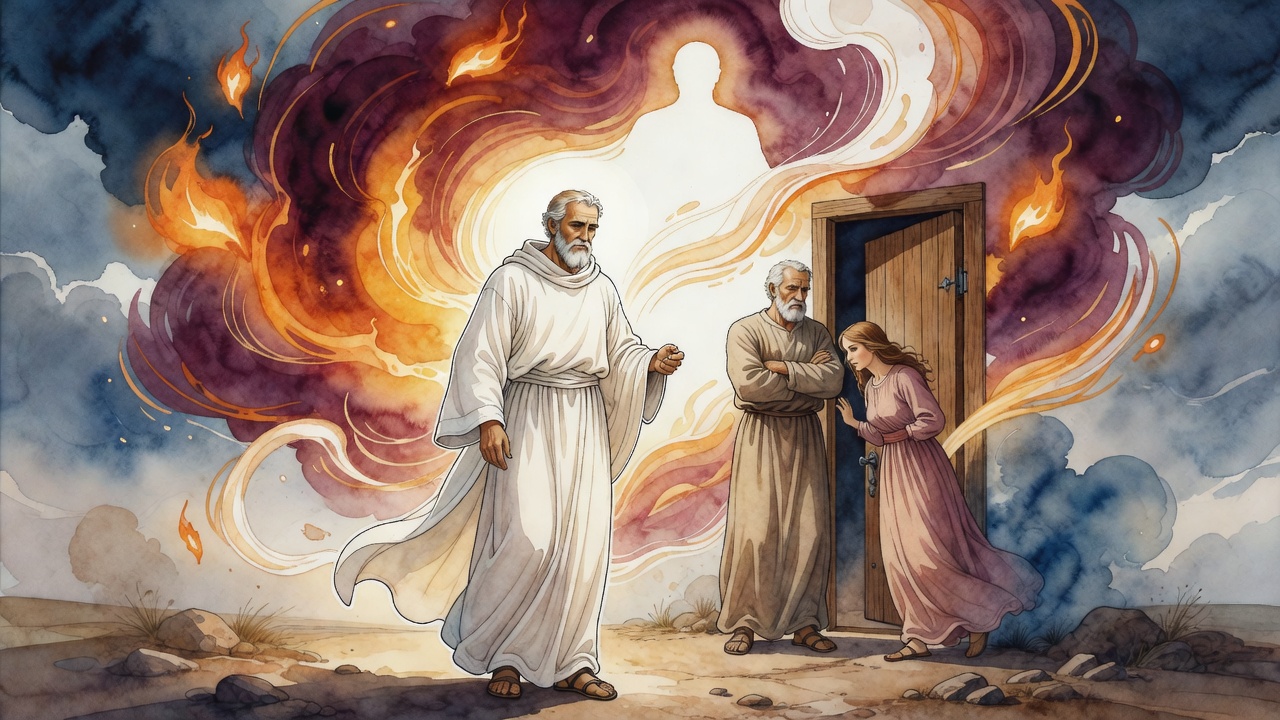
The road shook under Rav Katina. He mocked the necromancer in the doorway. From inside the house, the man called his name twice.
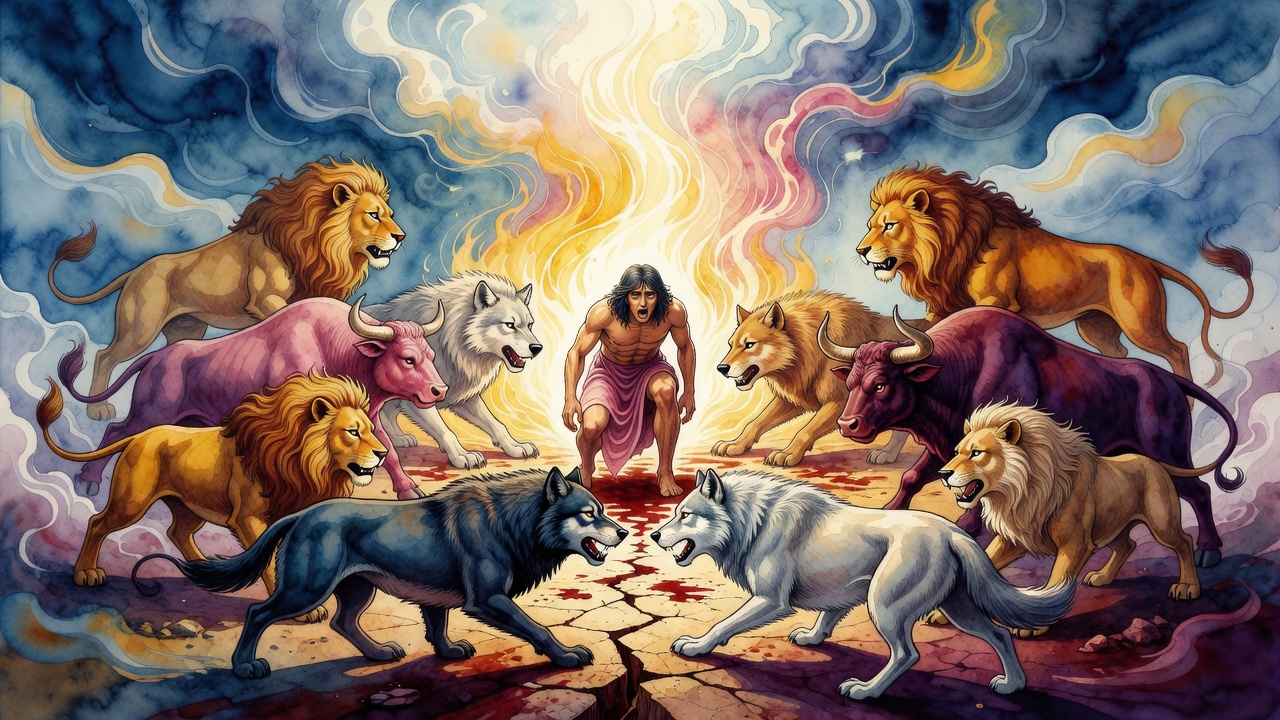
Cain backed toward a rock with his brother's blood on his hands. The animals wanted a verdict. God put a leash on the world instead.
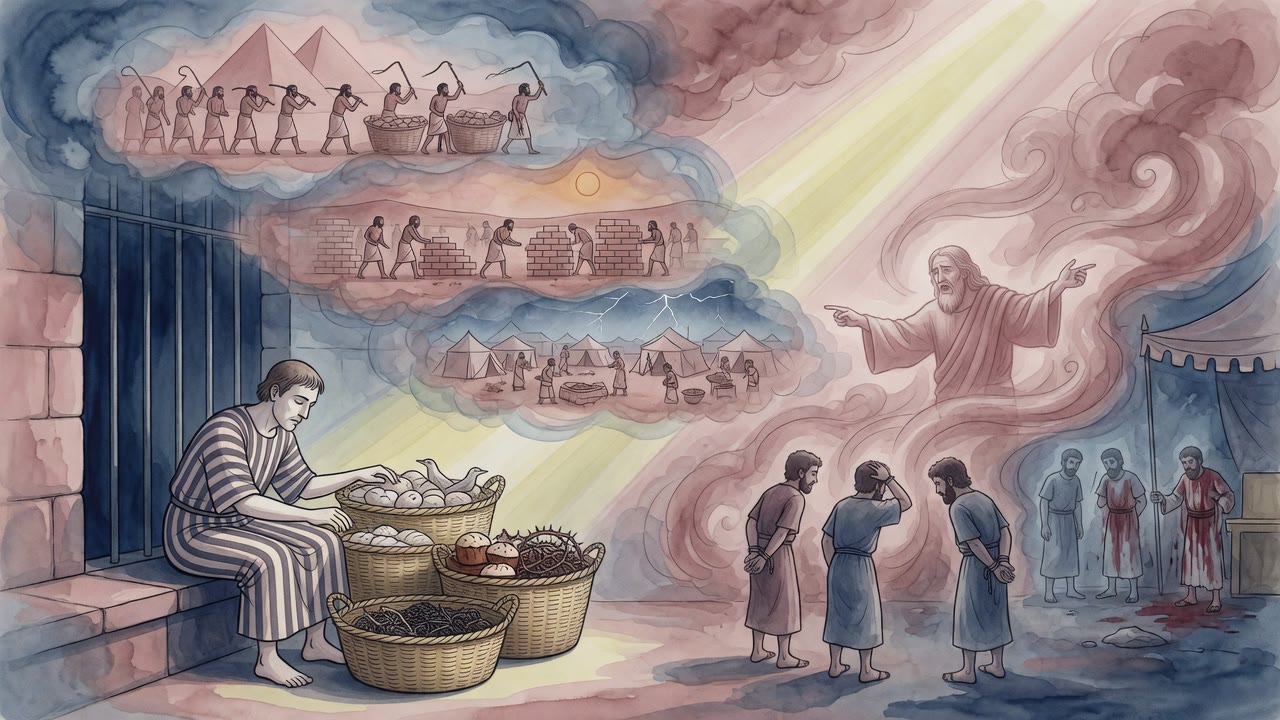
The cupbearer had Joseph's name in his mouth. Then the thought emptied, and two years of prison held until a king woke sweating.
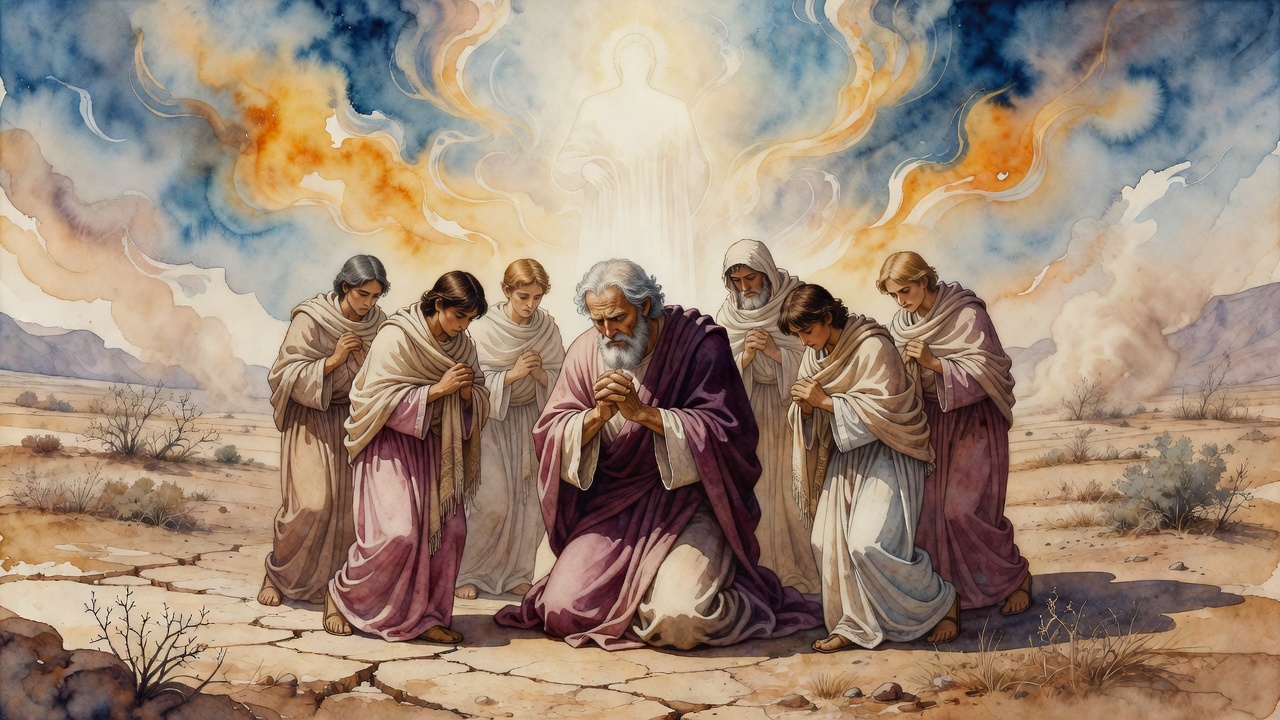
Famine presses Canaan. Jacob will not send Benjamin naked into Egypt. He wraps the boys in prayer first, and warns them to walk small under foreign eyes.
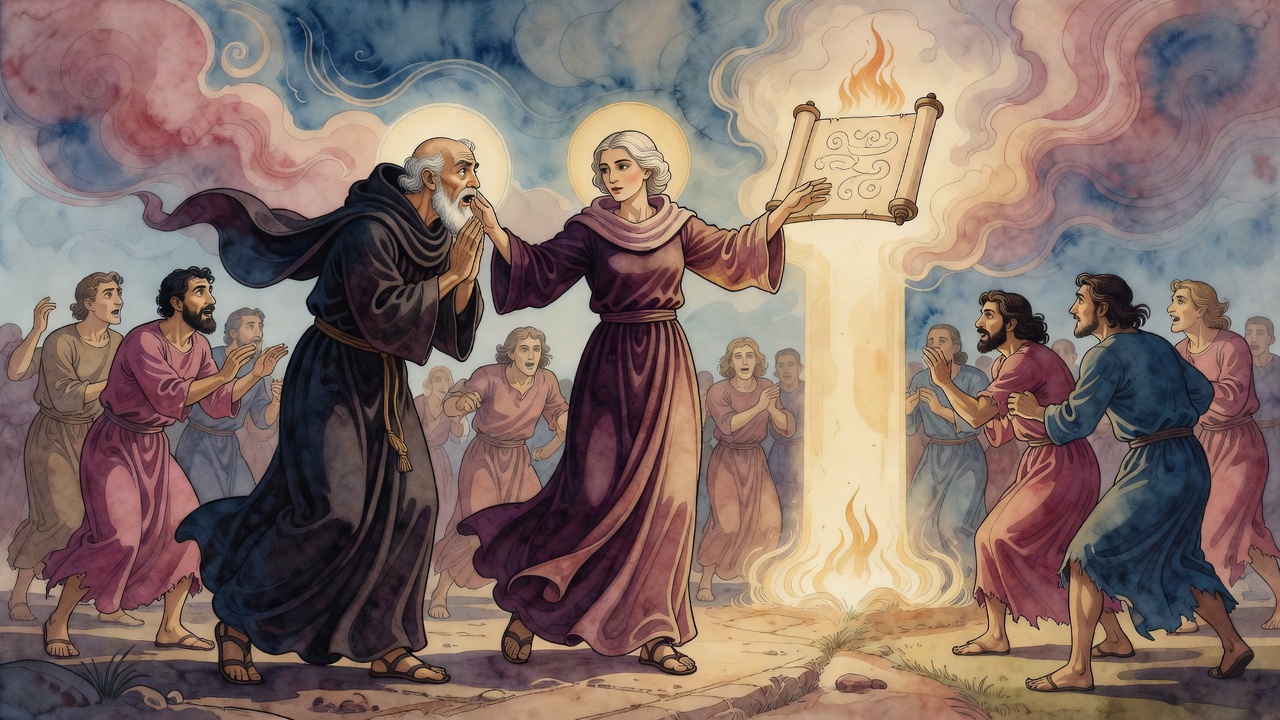
Hooligans bait Rabbi Meir until he prays for their deaths. Beruria stops his mouth mid-curse, flips one word in a psalm, and forces mercy to finish the verse.
The protest sat on Abraham's tongue beside the knife. He swallowed it. Isaac's children would need that silence in Tishrei.
Her husband locked the door unless she spat in Rabbi Meir's face. Meir asked for seven doses, as if his eye were sick.
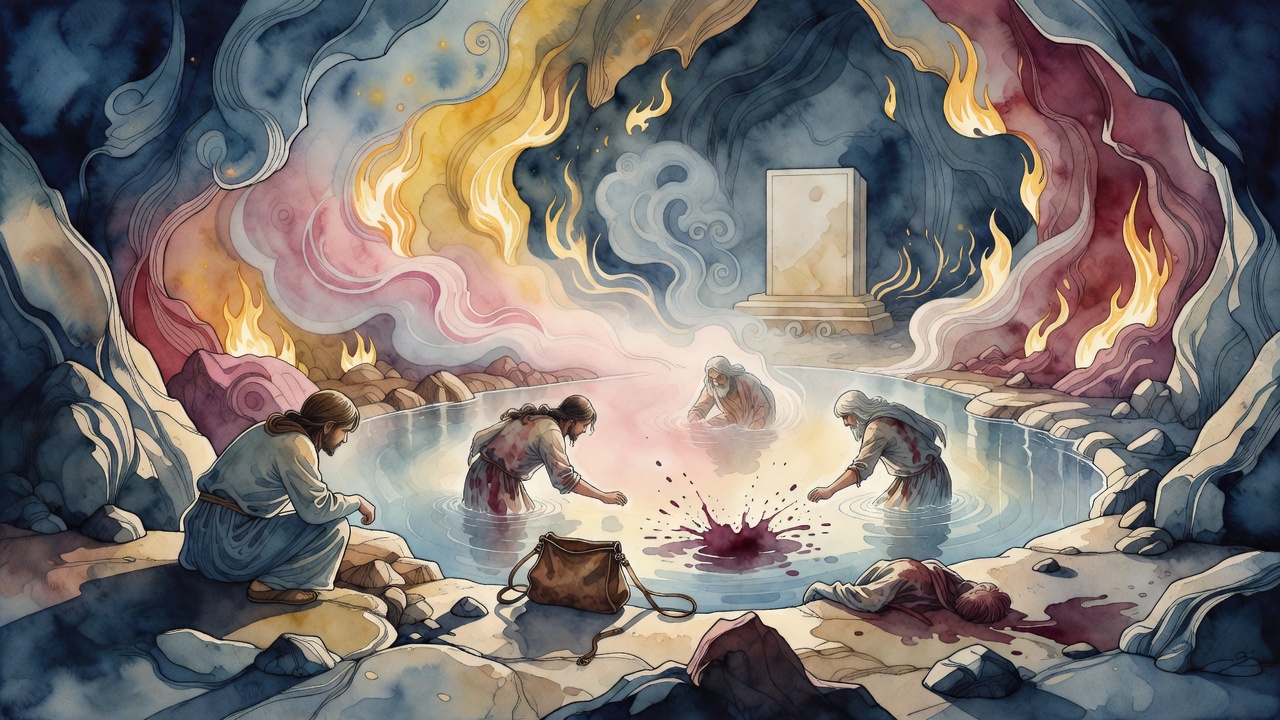
A traveler hid in a mountain cave and watched three strangers cycle through a pool until a purse, a theft, and a killing demanded a dream.
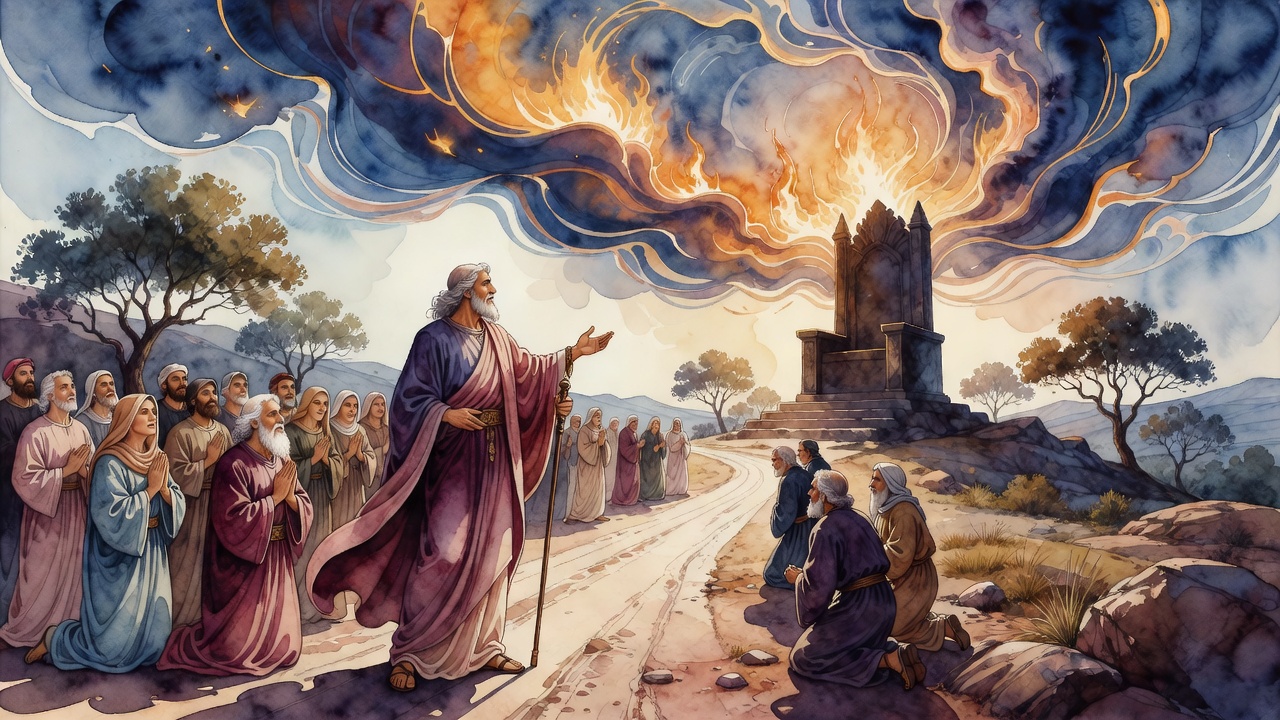
A king forgave a province's taxes in stages as crowds met him on the road, mapping Rosh Hashanah to Yom Kippur so Sukkot could open as a true first day.
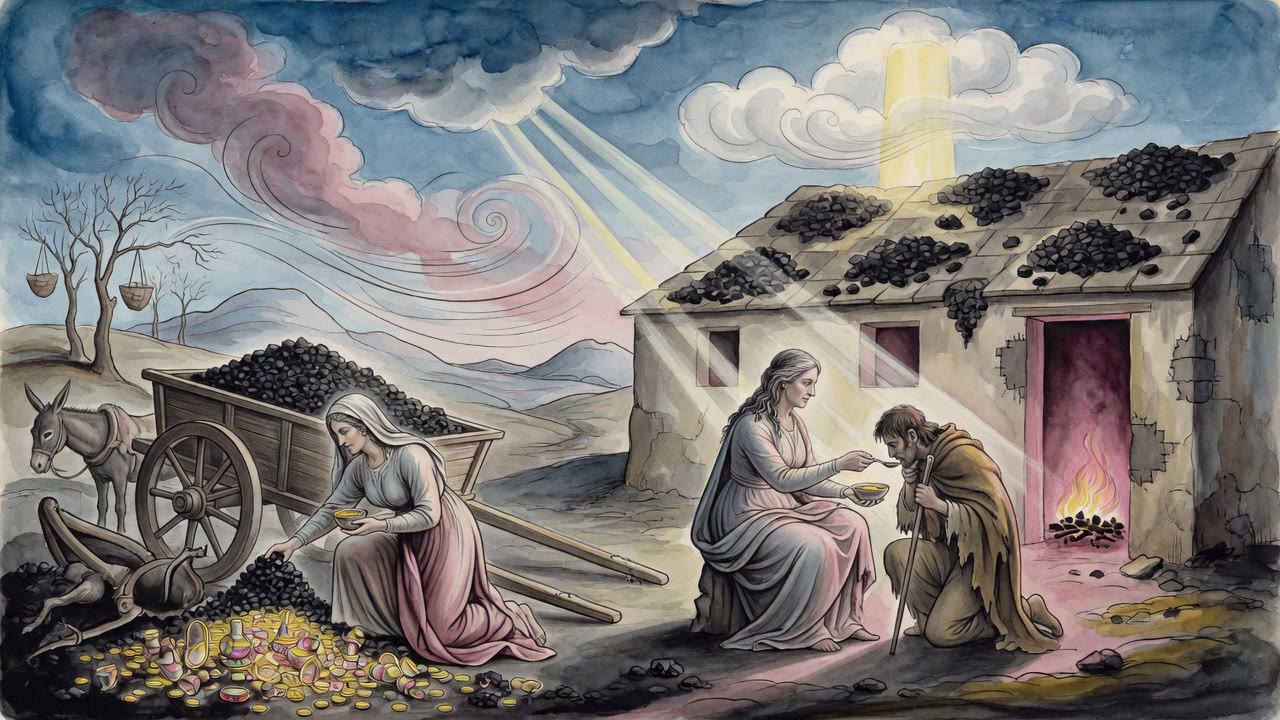
Abandoned for bearing only daughters, a wife unloads a cart of coals, finds treasure beneath, and years later feeds the husband who left her.
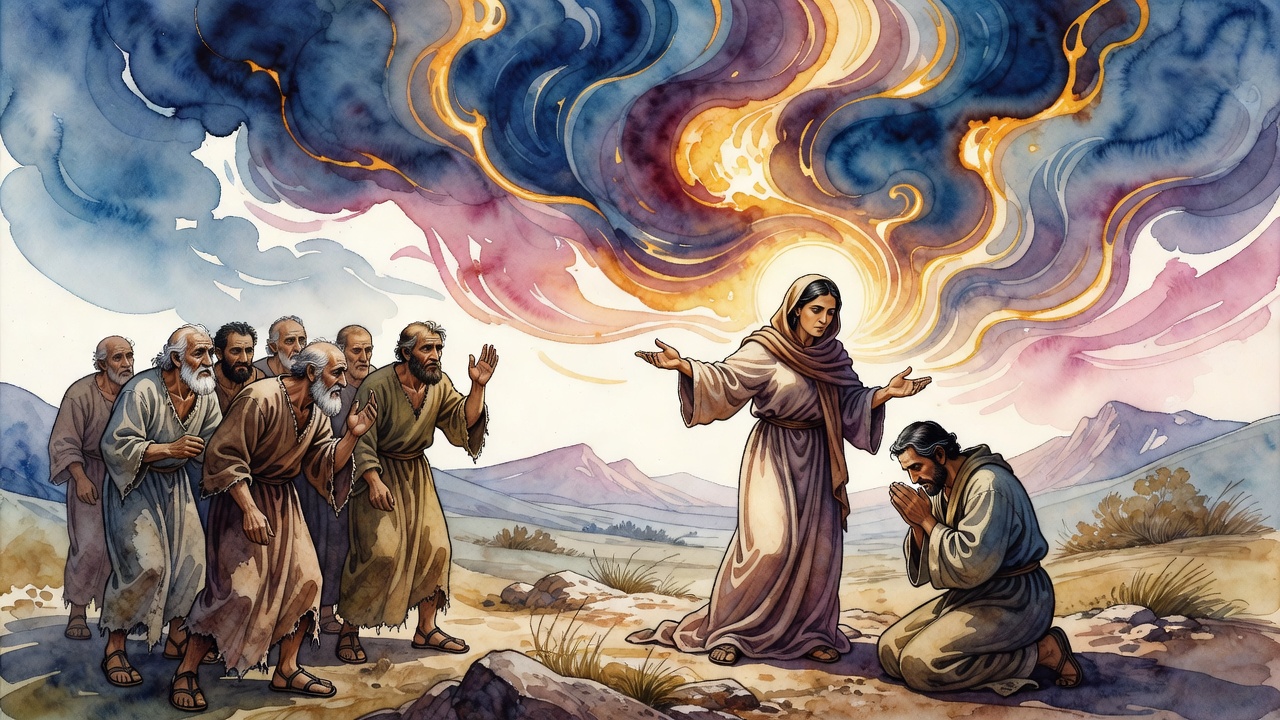
Rabbi Zeira befriended lawless neighbors until his death, then they asked who would plead for them, while Beruria taught Meir to pray for sinners to change.
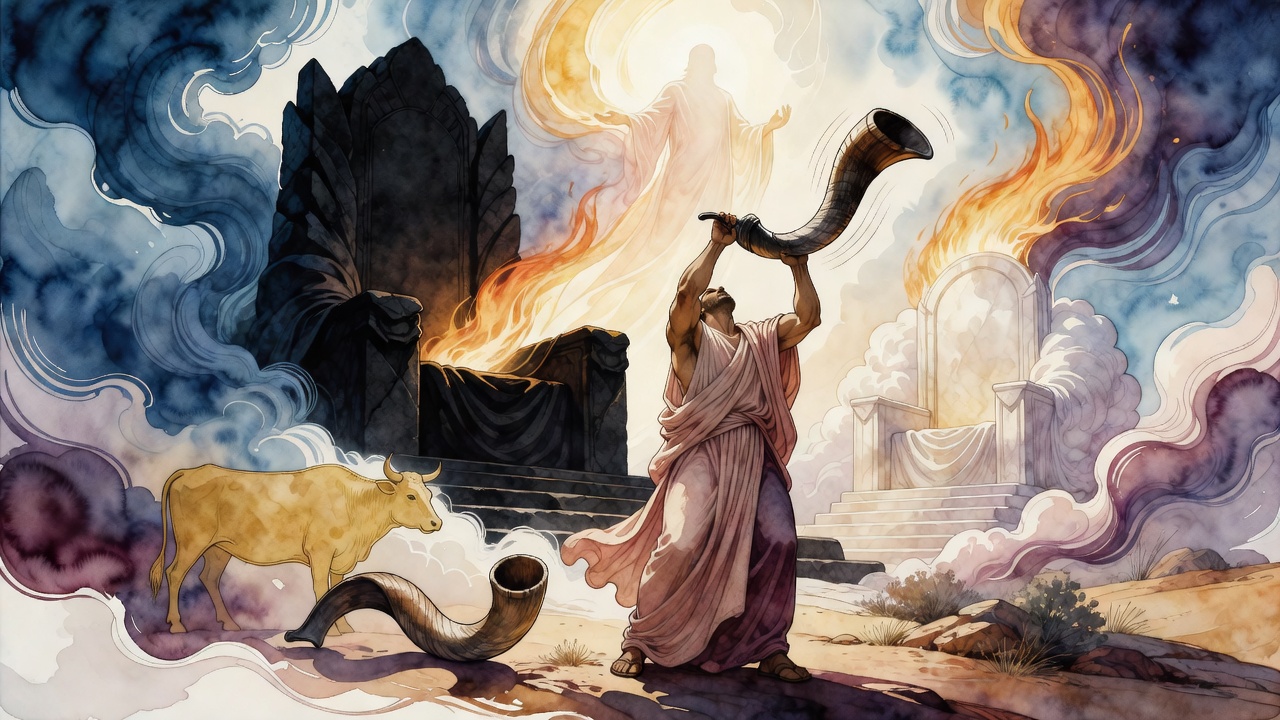
Israel lifts a ram's horn and God rises from the throne of justice to the throne of mercy, while a cow's horn stays silent so the golden calf will not speak.
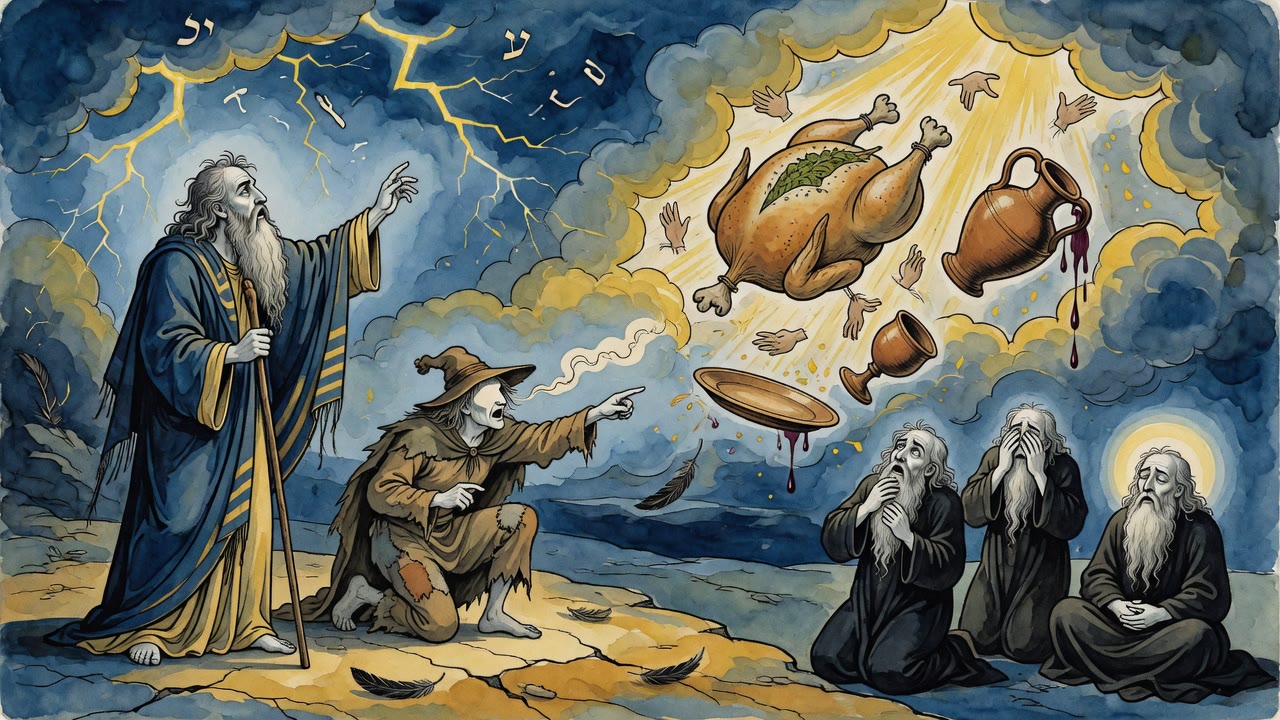
The beggar named stuffed fowl and old wine. Rava called it a burden. Then a sister he had not seen in thirteen years walked in carrying both.
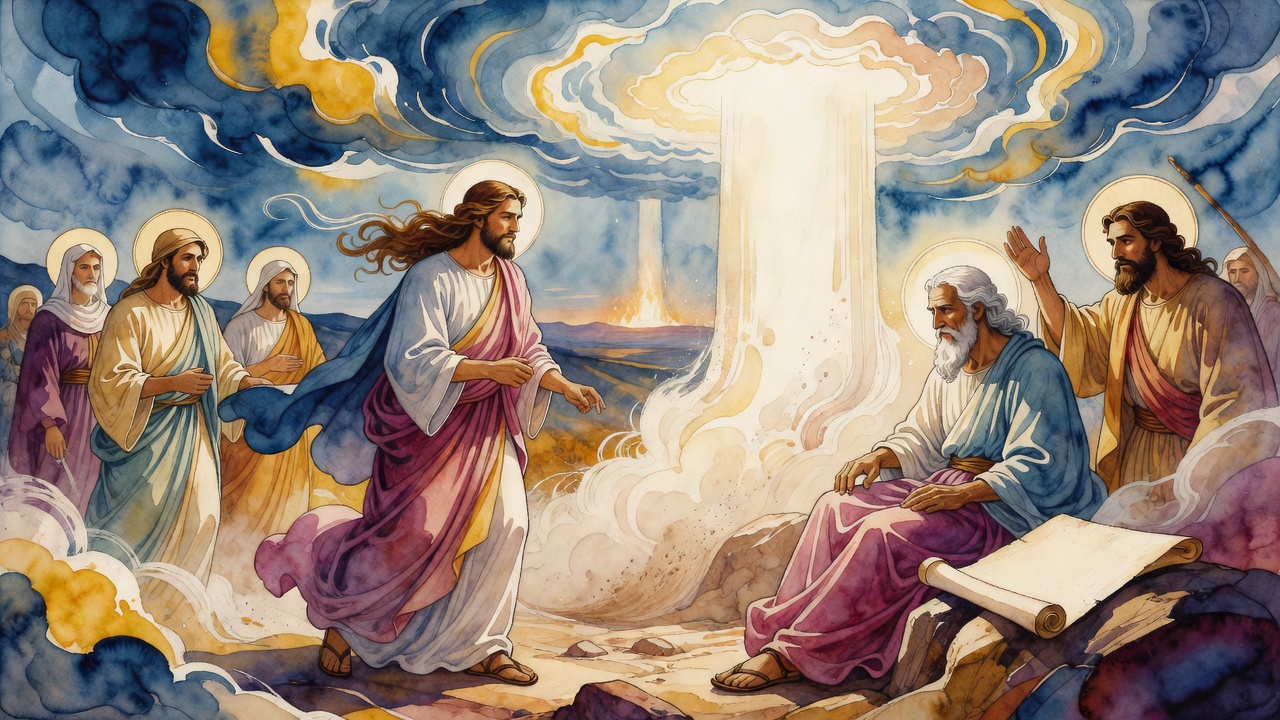
Dust rose on the road and Jacob sorted his camp by love. Maidservants and their children in front. Rachel and Joseph at the very back, farthest from Esau.
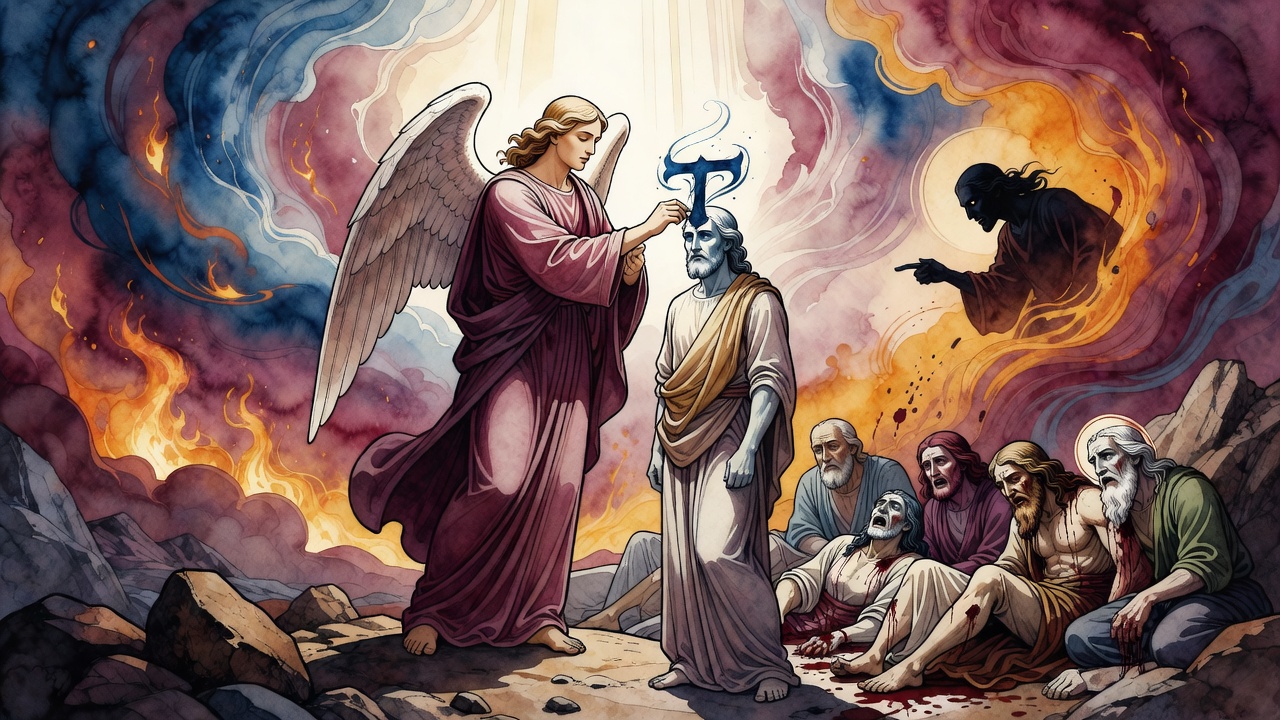
Gabriel inked a taw on the righteous and blood on the wicked. The Accuser argued the ink-marked had failed to protest.
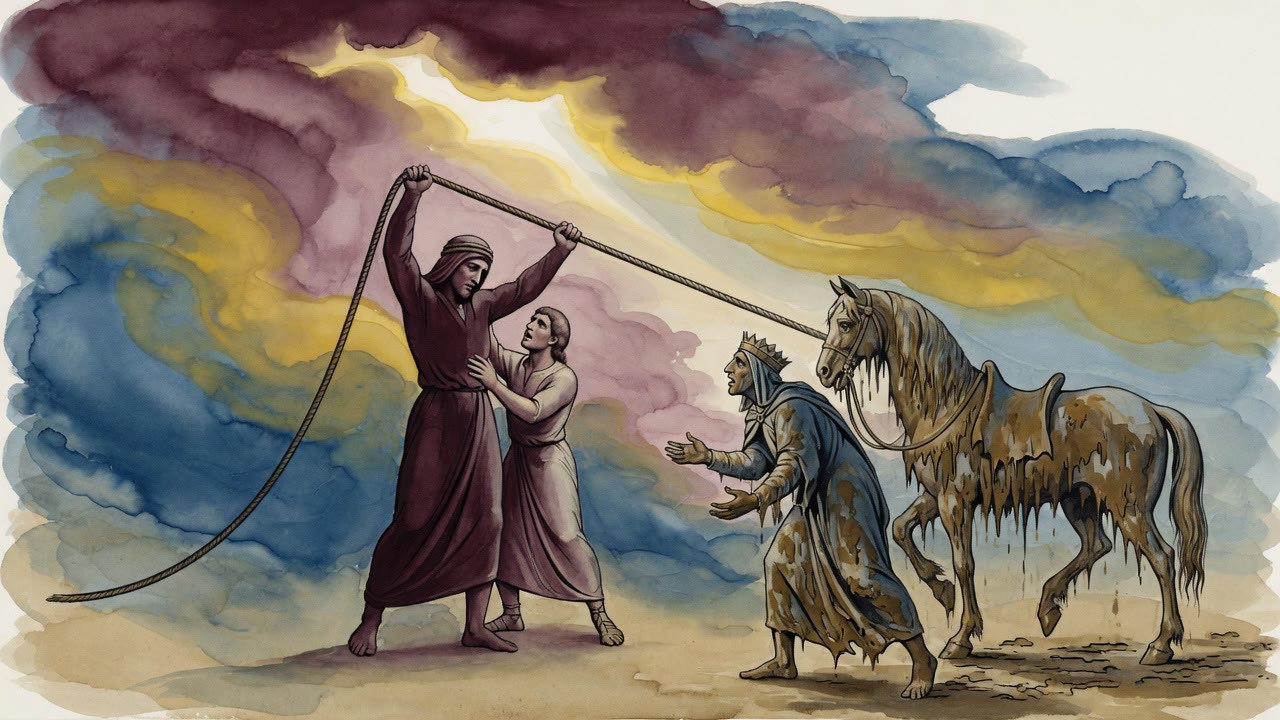
One friend stood under the rope for another. A horseman arrived mud-covered, and a king asked to be their third.
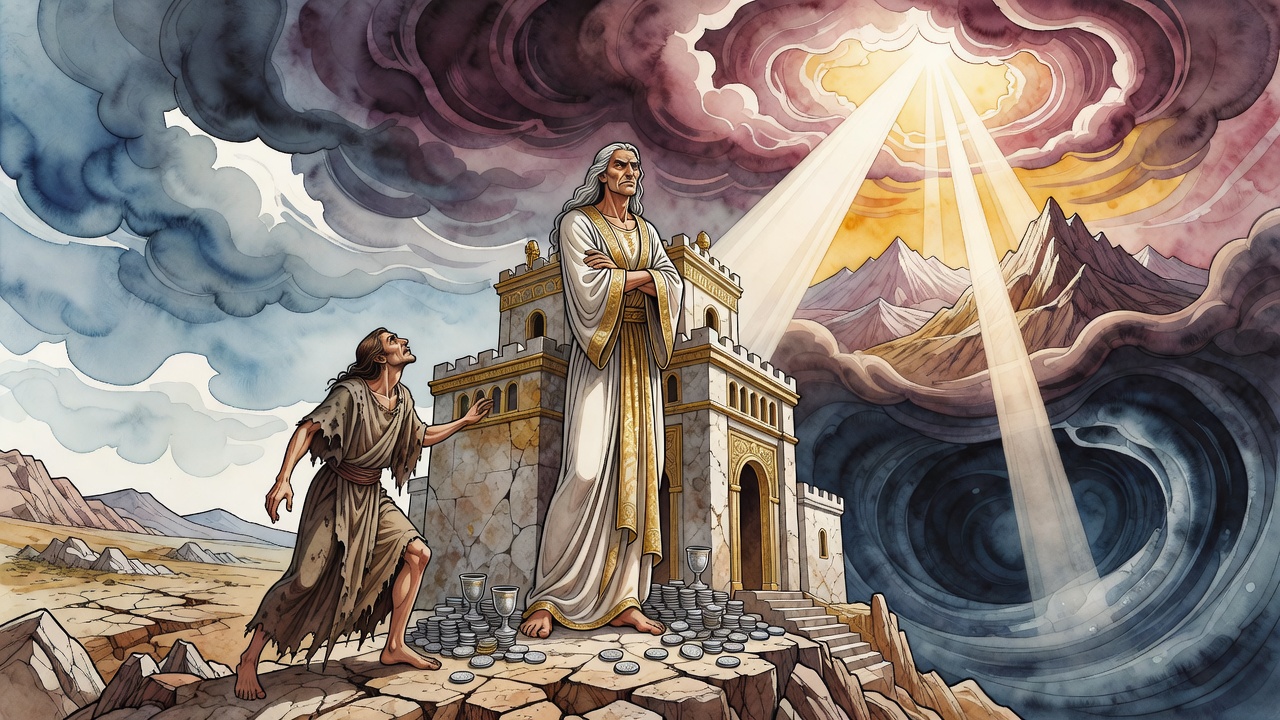
In Pahu the floors shone and servants walked softly. Hadar looked at the chests of gold and asked what they were even for.
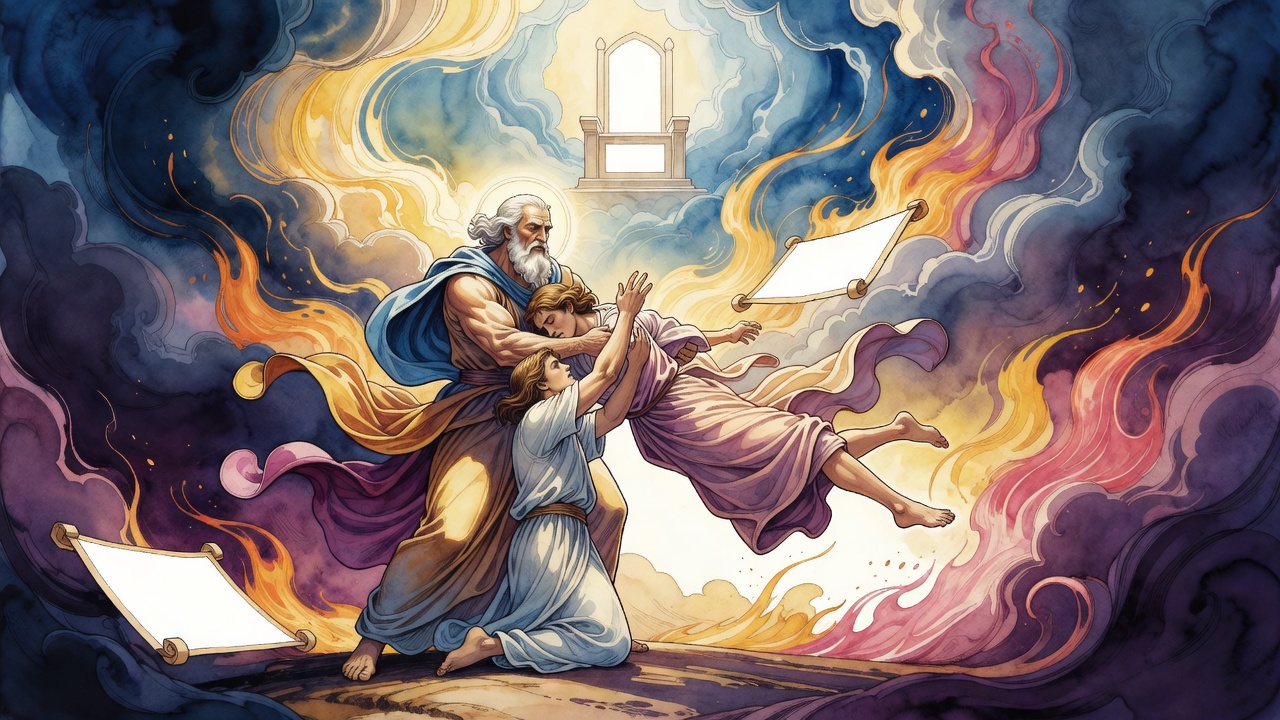
The boy would not stop weeping, so the king lifted him higher. One mess on the royal robe, and the child hit the floor.
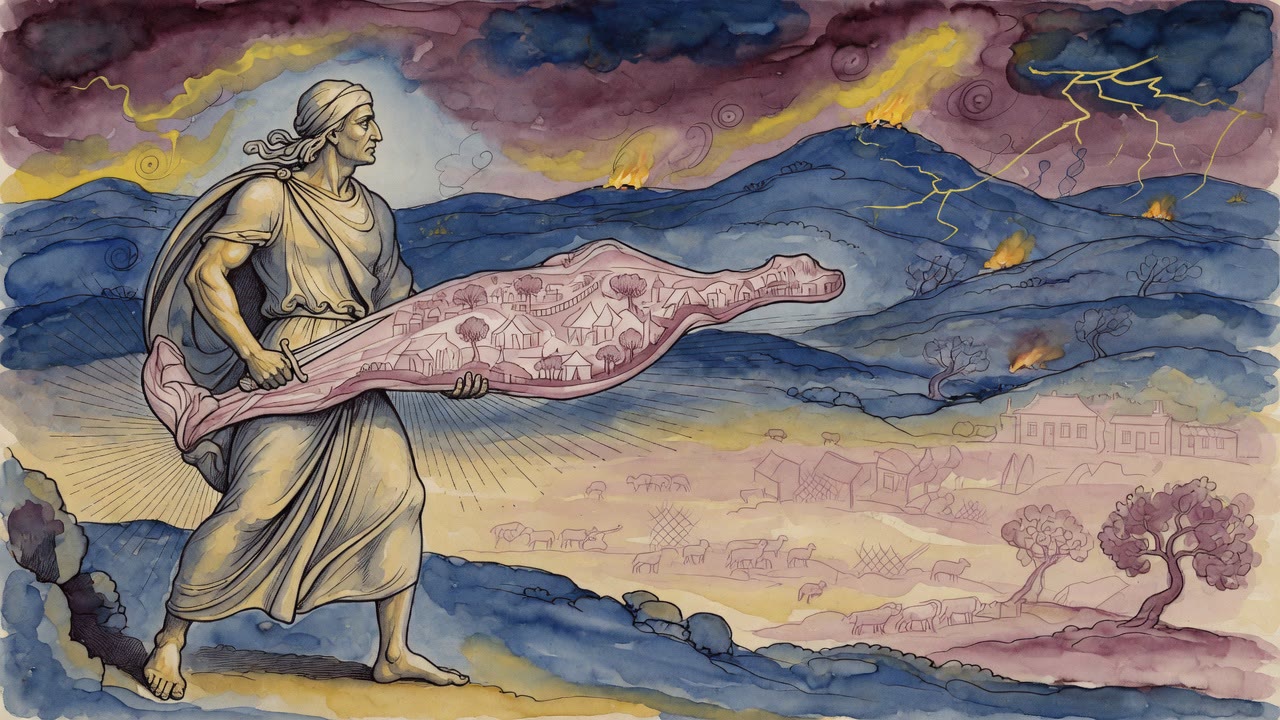
The servants stood outside a locked door for so long that they were embarrassed. They fetched the key, and their king was on the floor of the cool room.
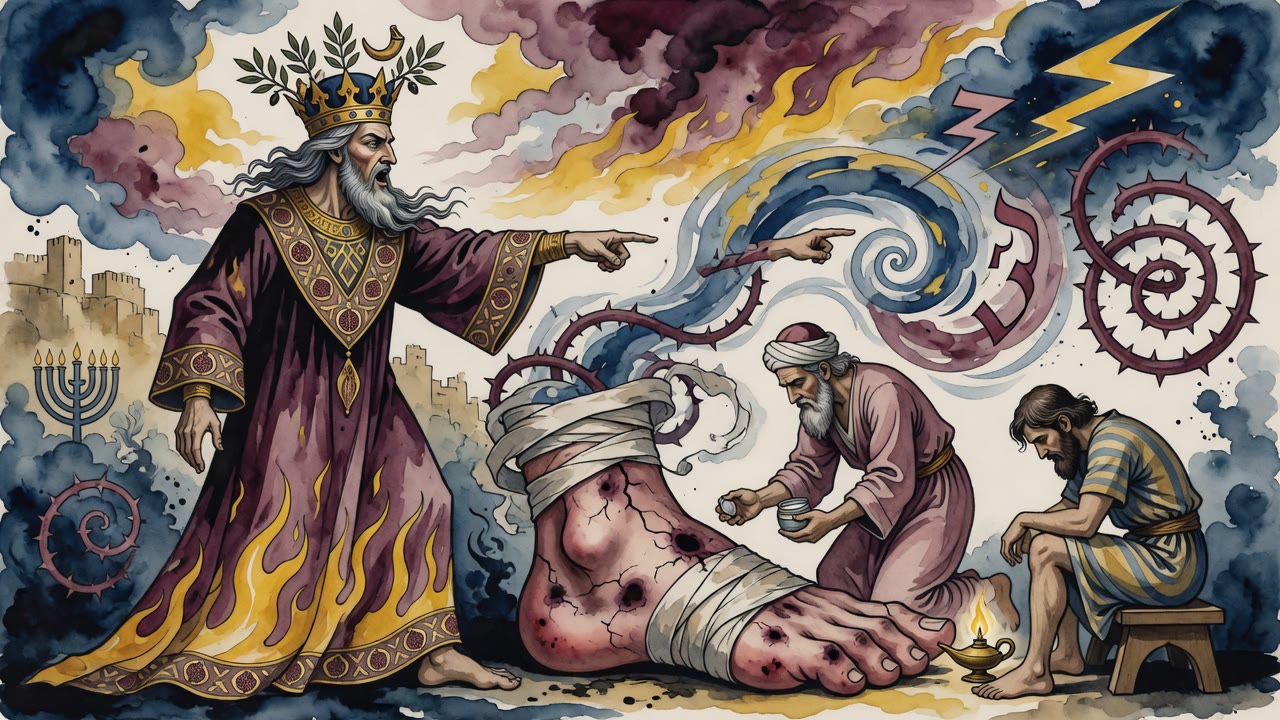
A king orders a physician to heal his servant's foot, and the midrash names that order as the shape of love's affliction for Israel.
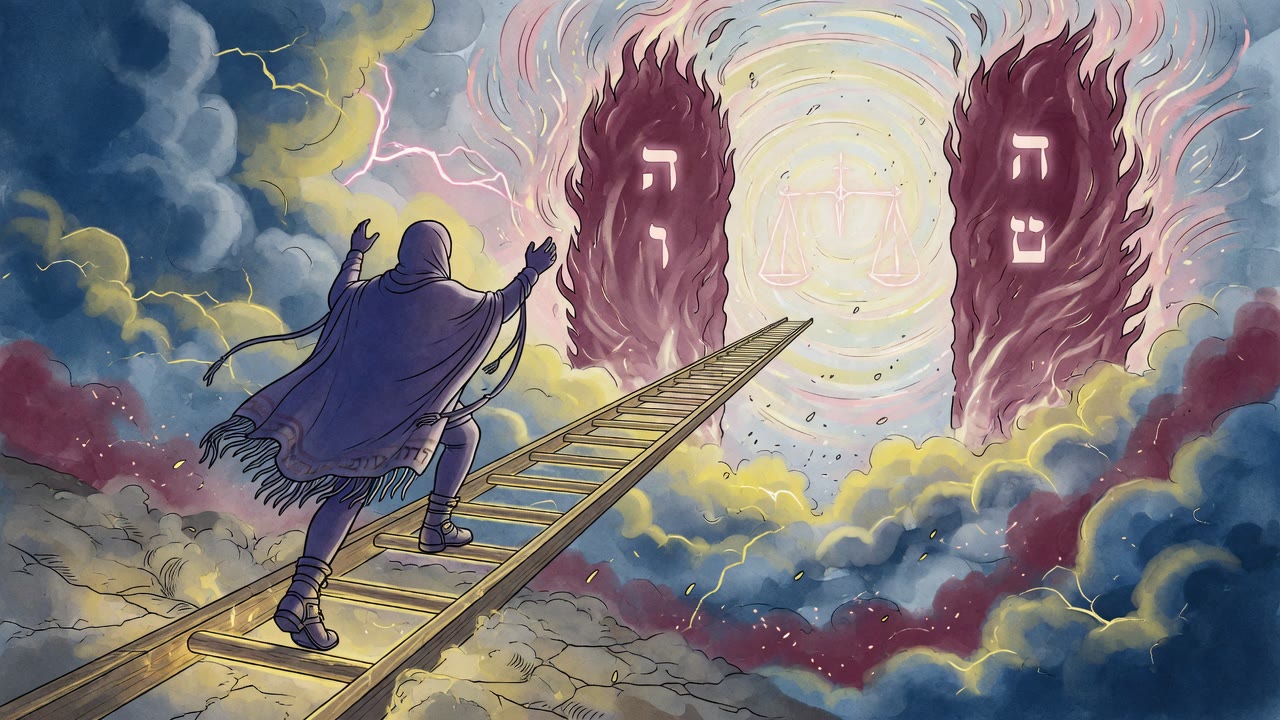
The shofar (a ram's horn) still rang in their bones when the congregation rose for the standing prayer. The mystics counted every small shift of weight as a.
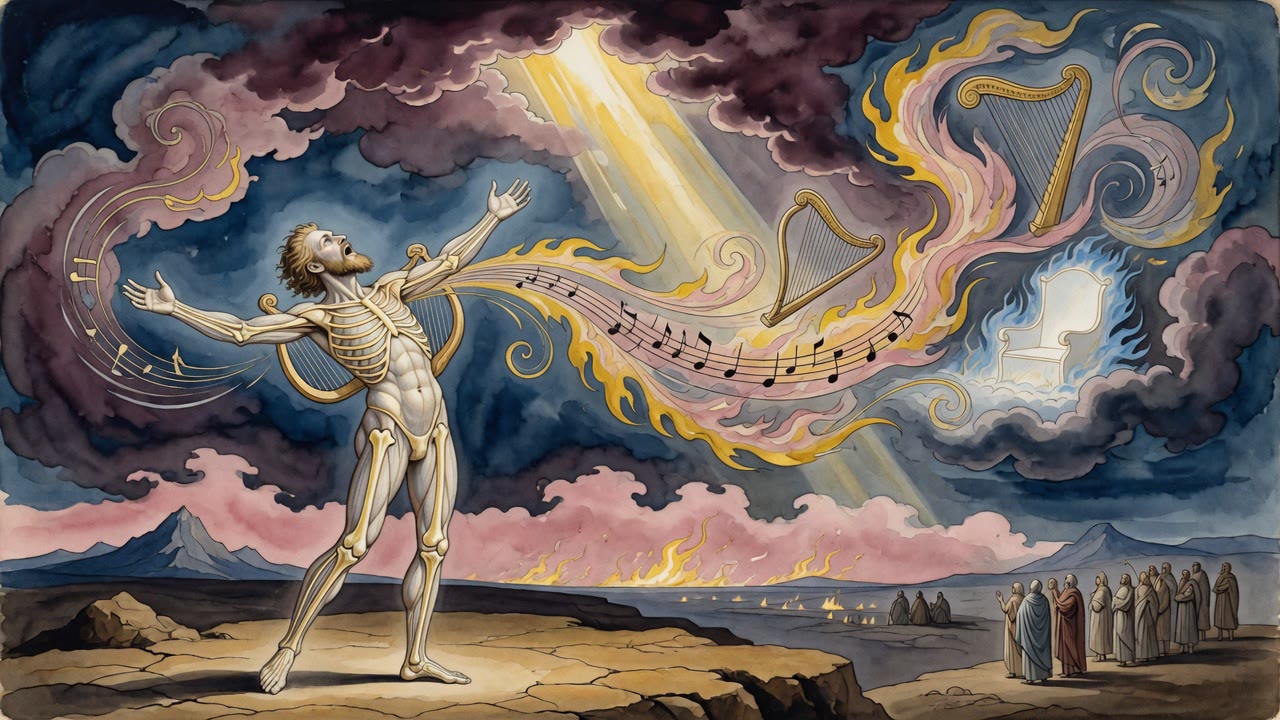
King David asked God to plead his cause against oppressors while admitting his own faults. Strength came when judgment, not flattery, answered him.
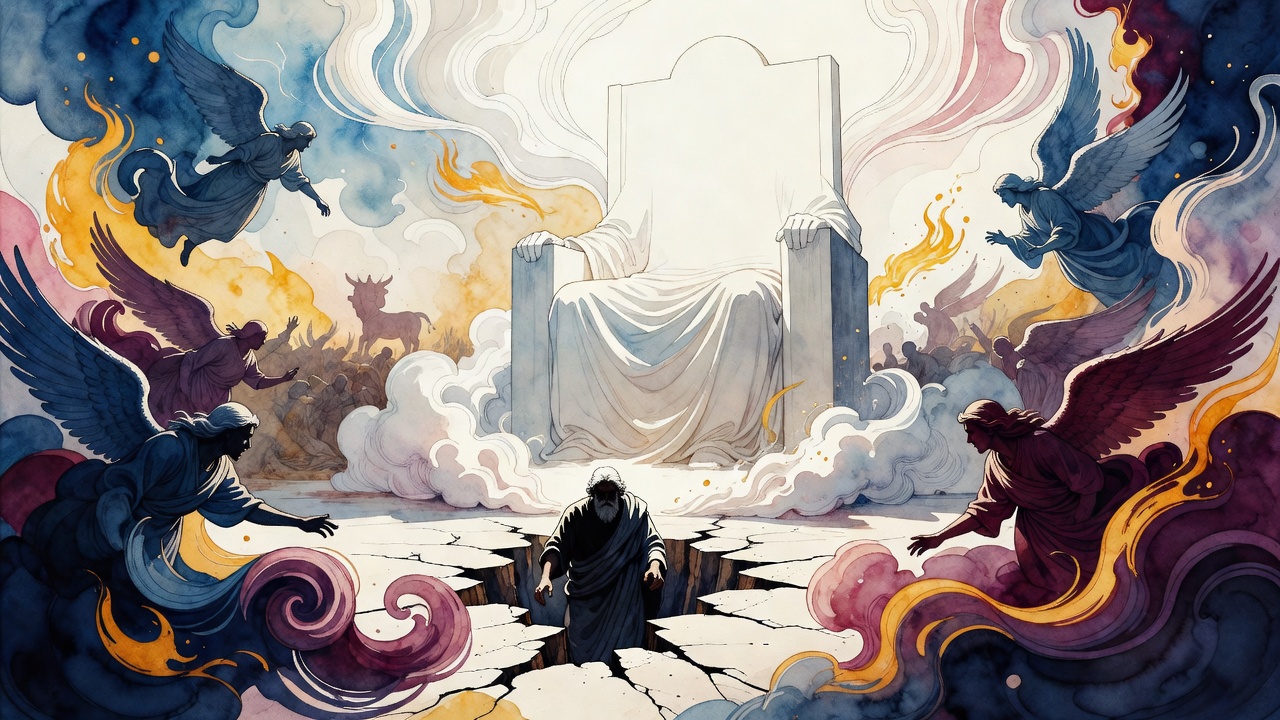
Night poured into his eyes on the mountain. Angels moved to kill him. He seized the Throne, and a cloud closed over his back.
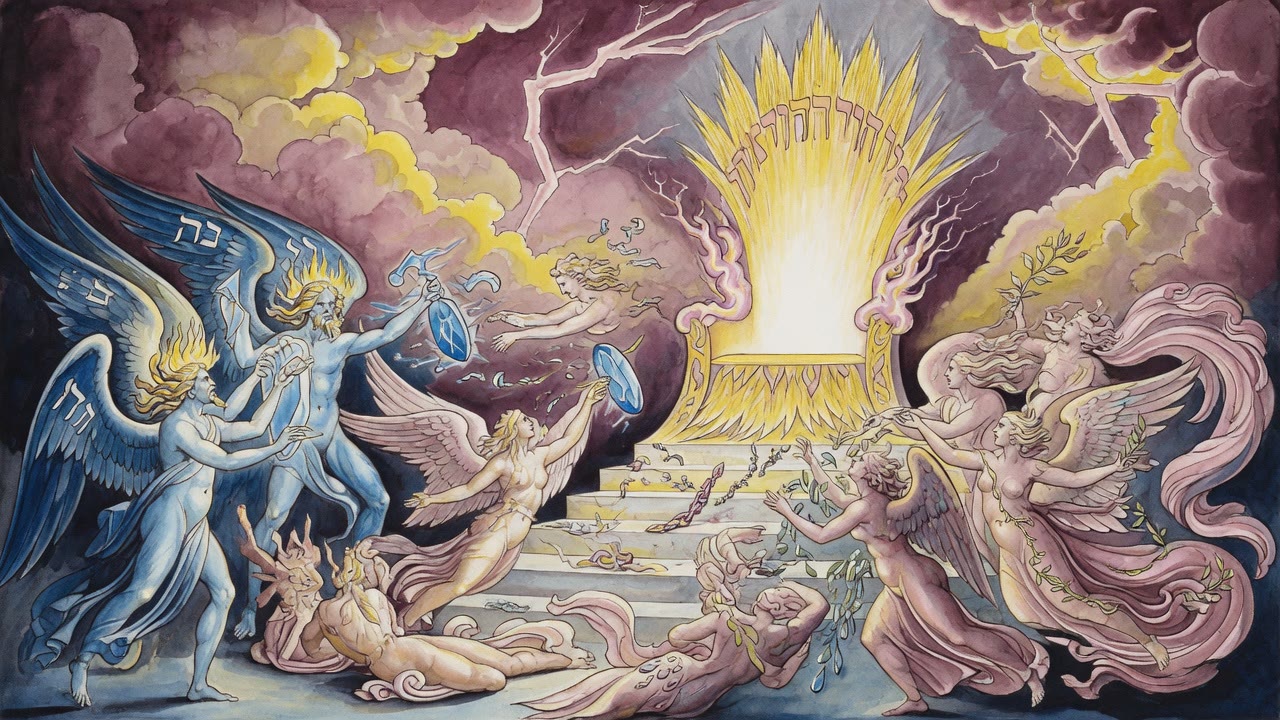
A soul reached the high throne. Hosts on the right cried for life. Hosts on the left cried for death. The King did not move.
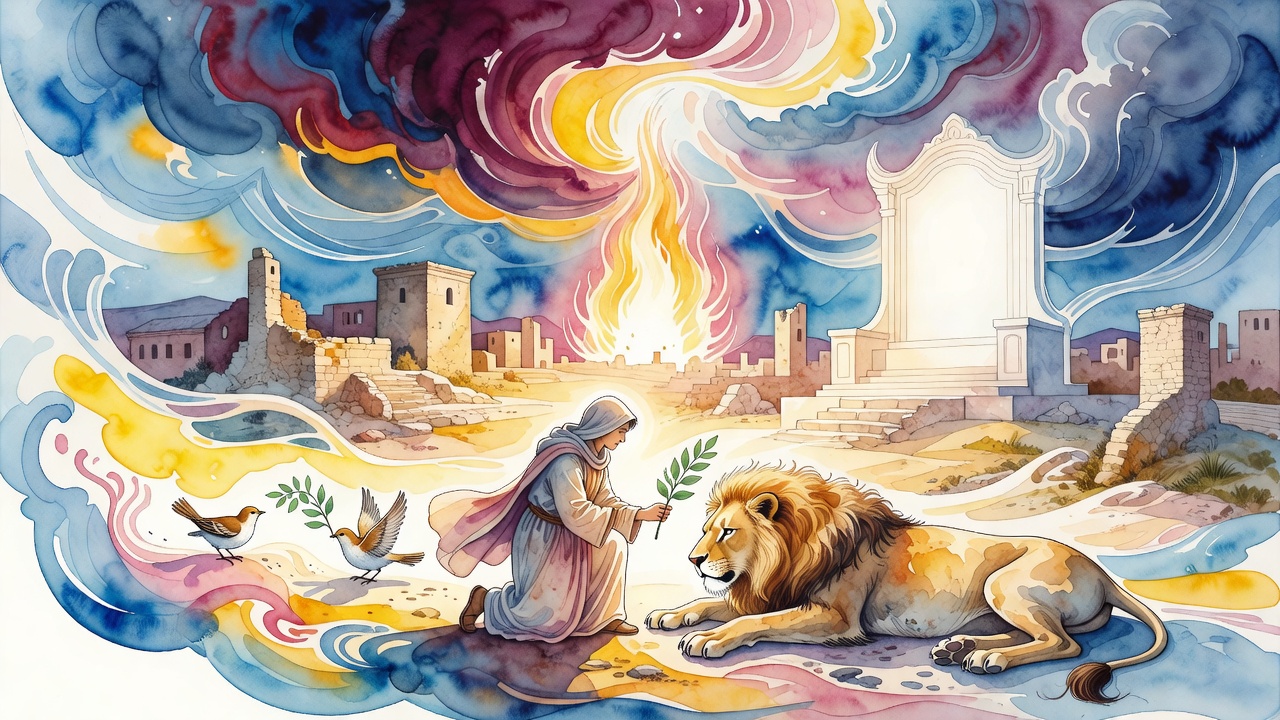
The traveler pressed a green sprig to a dead lion's mouth at Tyre. Breath came back. Then the jaws closed on the man who had woken them.
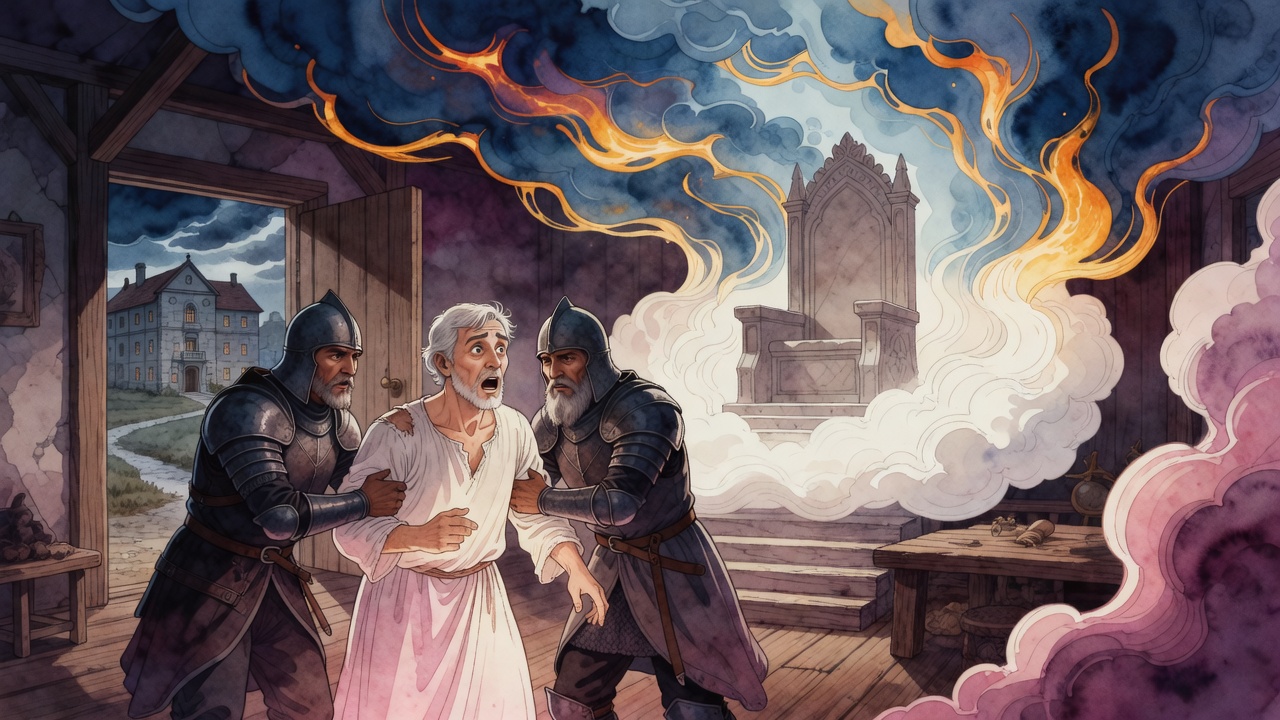
Guards seized a night innkeeper by mistake. He claimed the king's house, then confessed trust, and the king set him free.
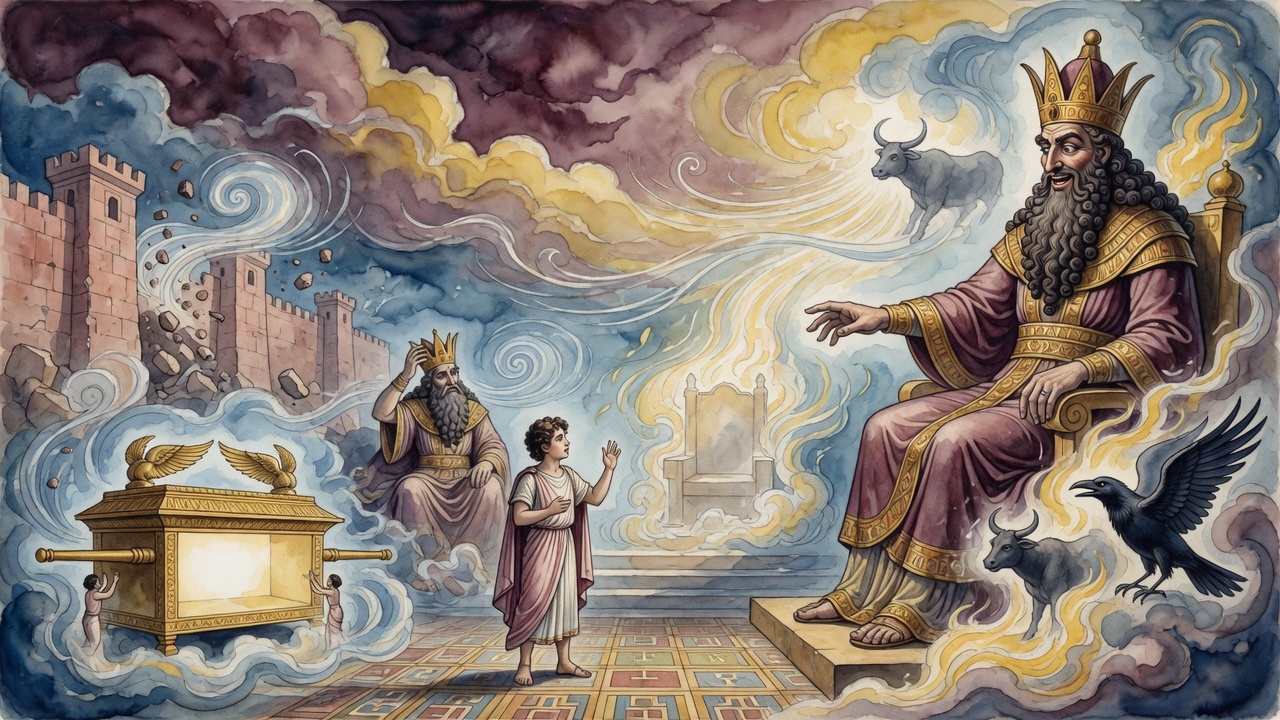
A beggar left the yard with one small coin and never asked again. In later towns people still spat on pennies and whispered Job's name.
