480 myths · Page 15 of 16
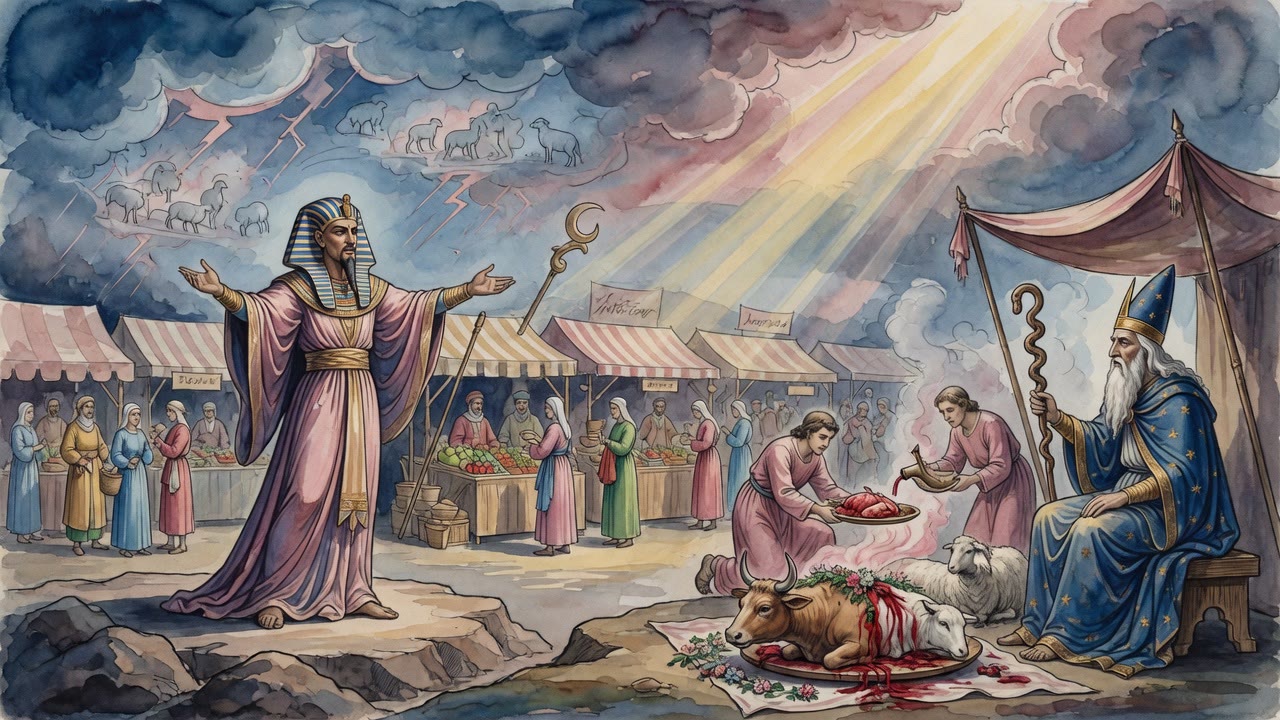
Moab's elders cast lots and swear Balaam will come. God flips every reading, seals the seer's eye, and forces blessing from a mouth hired to curse Jacob.
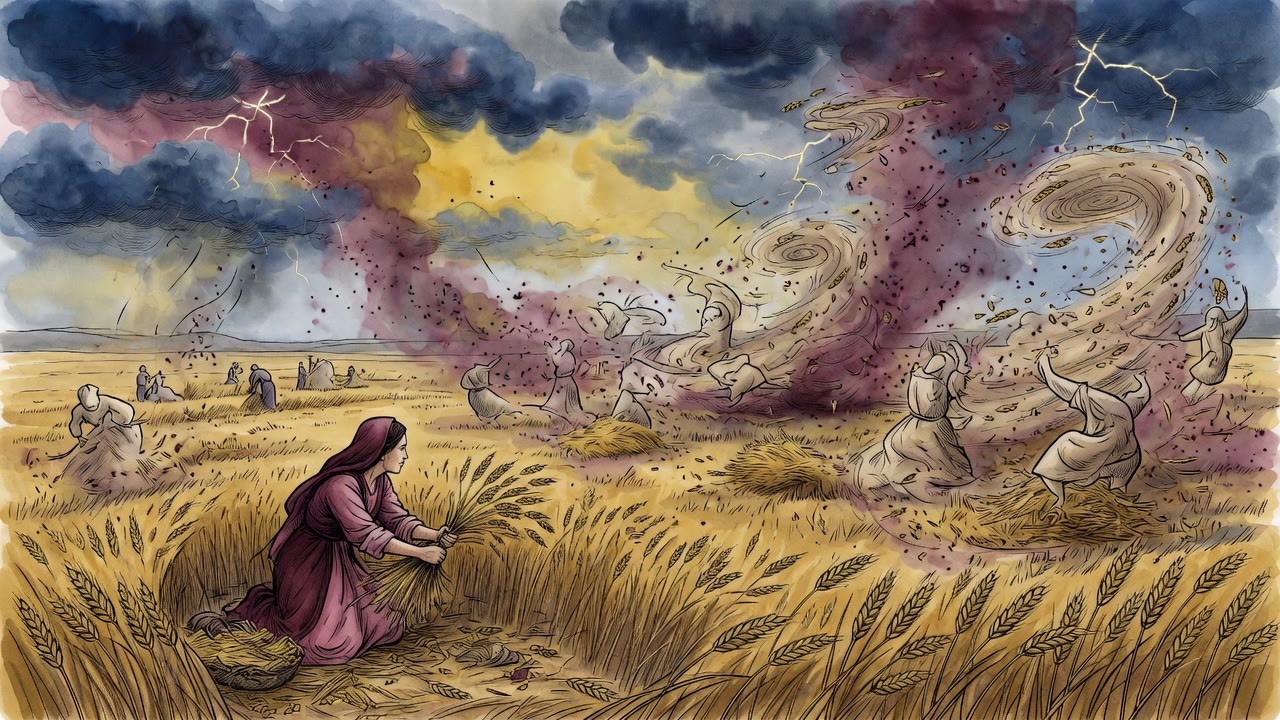
Stubble shouted that the field was sown for it alone. Straw answered. Chaff claimed the glory. The wheat said wait for the floor.
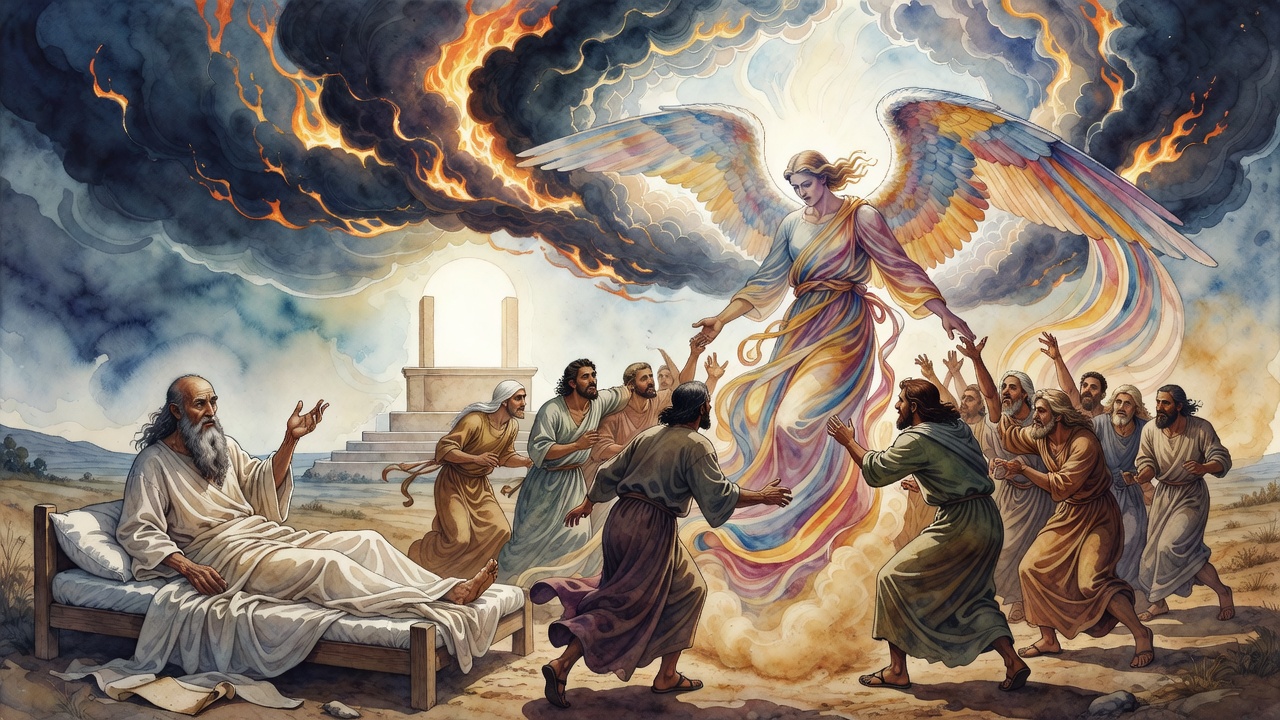
Jacob called for his sons and the corridors stayed empty. Twelve grown men, and not one of them in the room where he was dying.
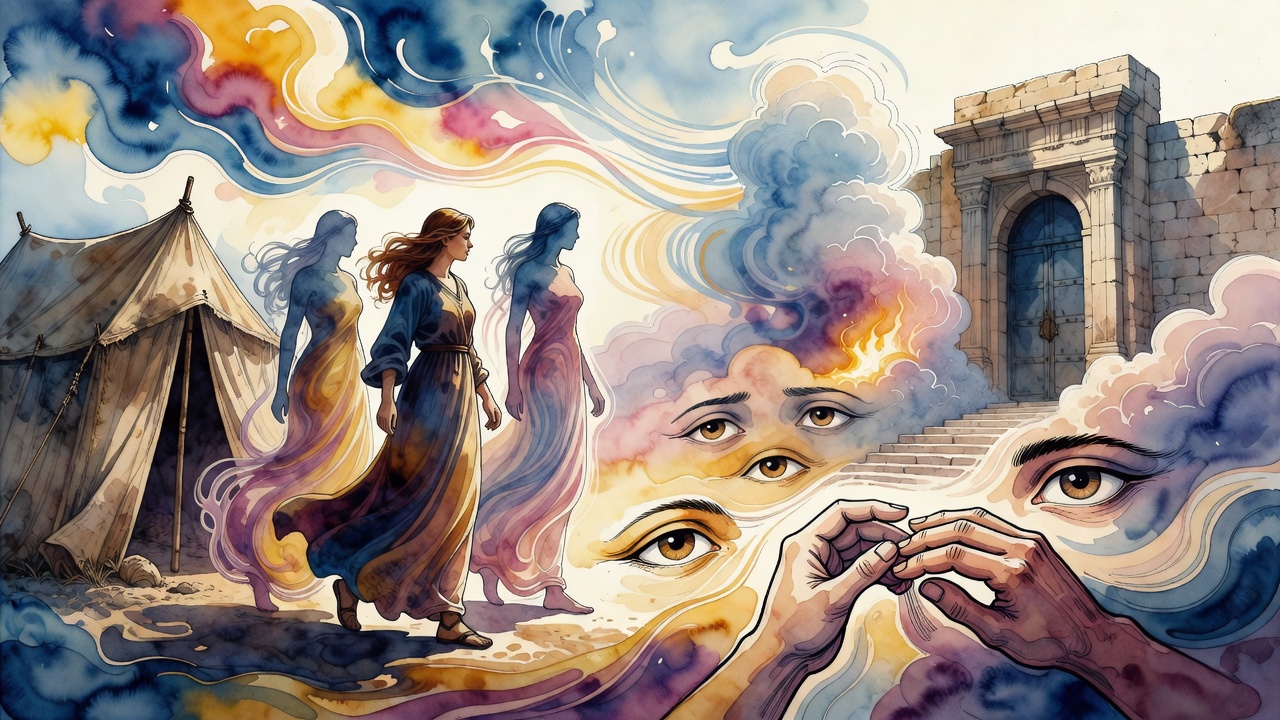
No one stopped her at the tent flap. The light outside was ordinary and the daughters of the land stood clustered near the city gate.
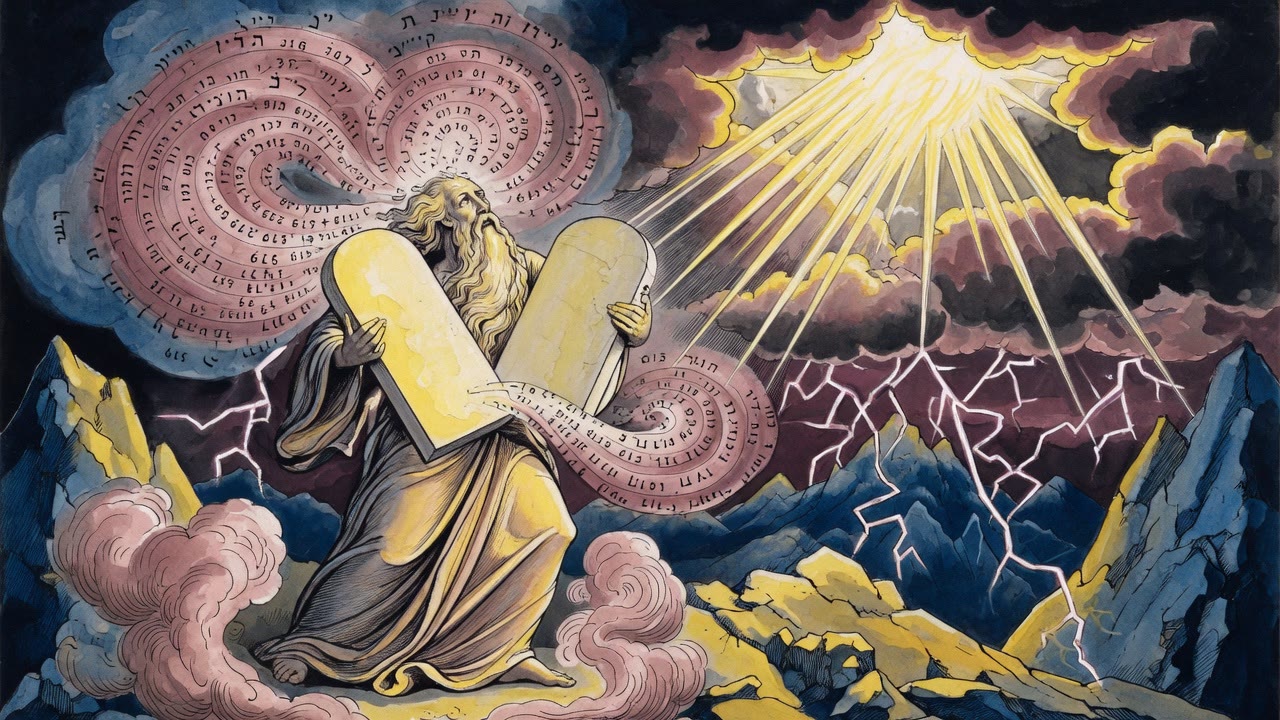
Jacob went down to Egypt with saplings in his baggage. He set them in foreign soil so his children would have timber ready for the day of building.
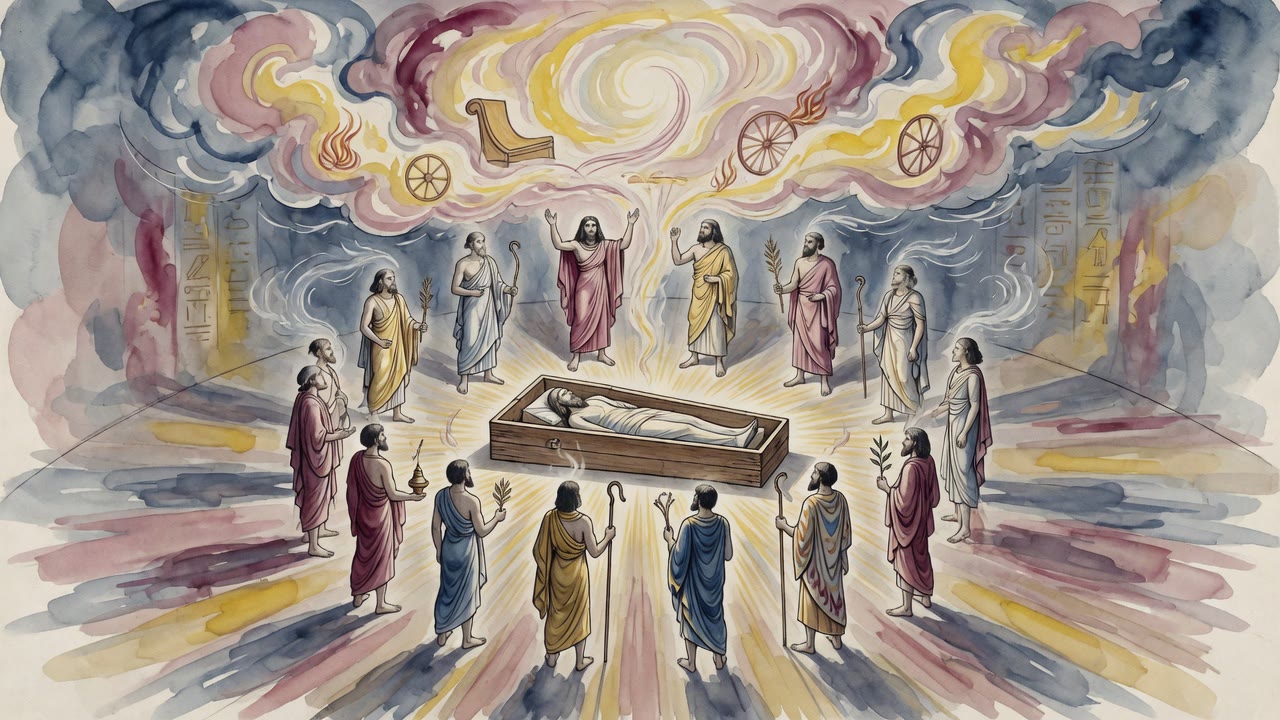
Dying in Egypt, Jacob places twelve sons around his coffin like a map. Later the same order rings the Tabernacle, and Moses camps at the door to make peace.
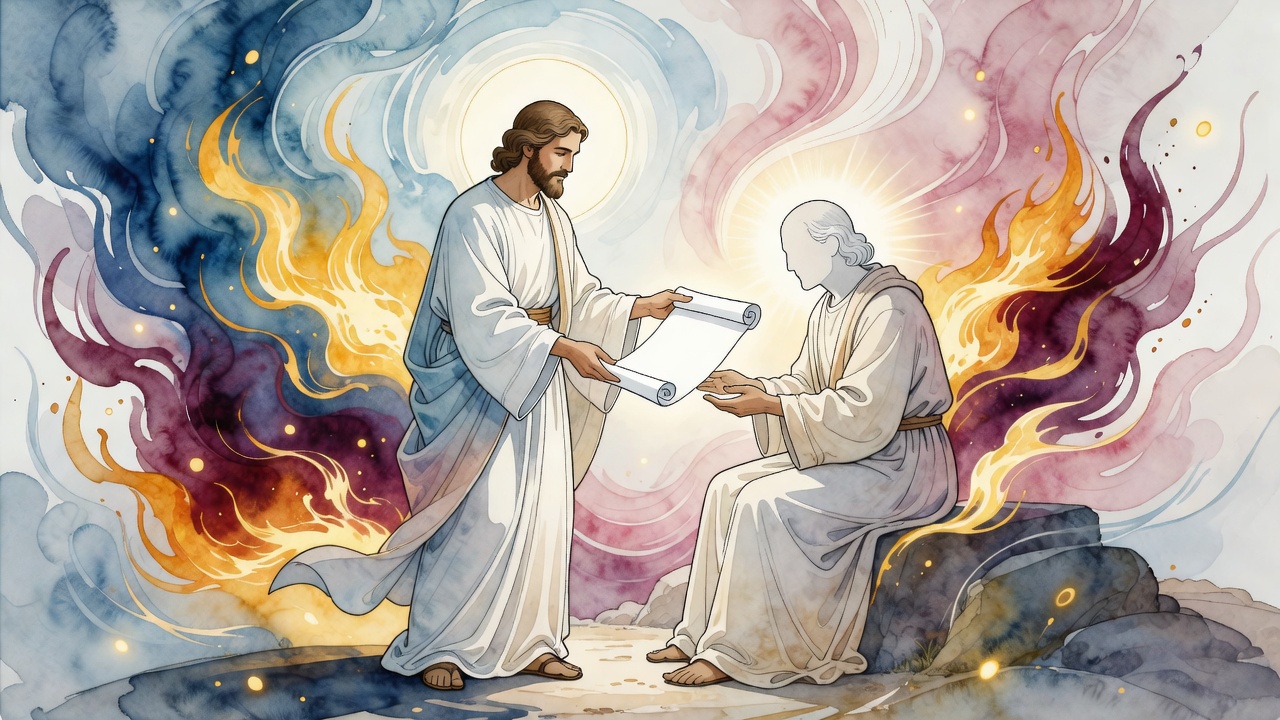
Jacob could not make out the boys at his bed. Joseph put a marriage contract in his hands. The old man's fingers followed lines he could not see.
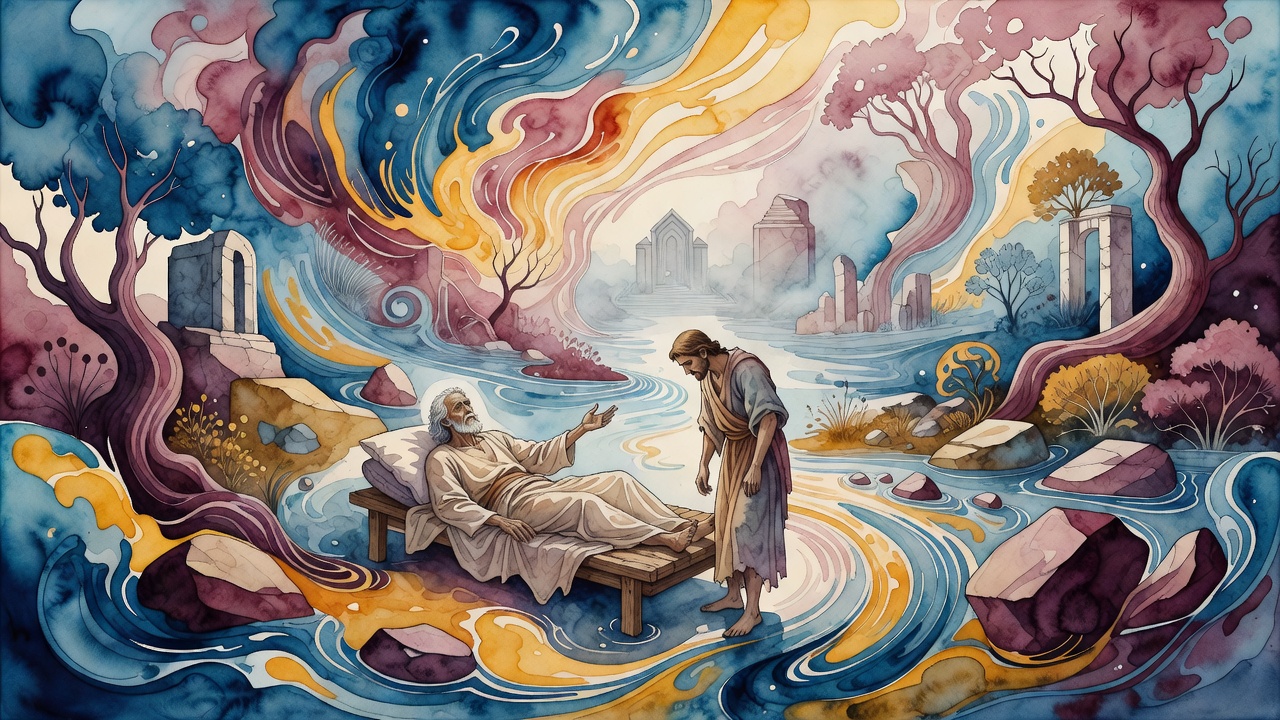
Reuben stood at the bed waiting for a curse. His father named a little garden the flood had drowned, and still called him my son.
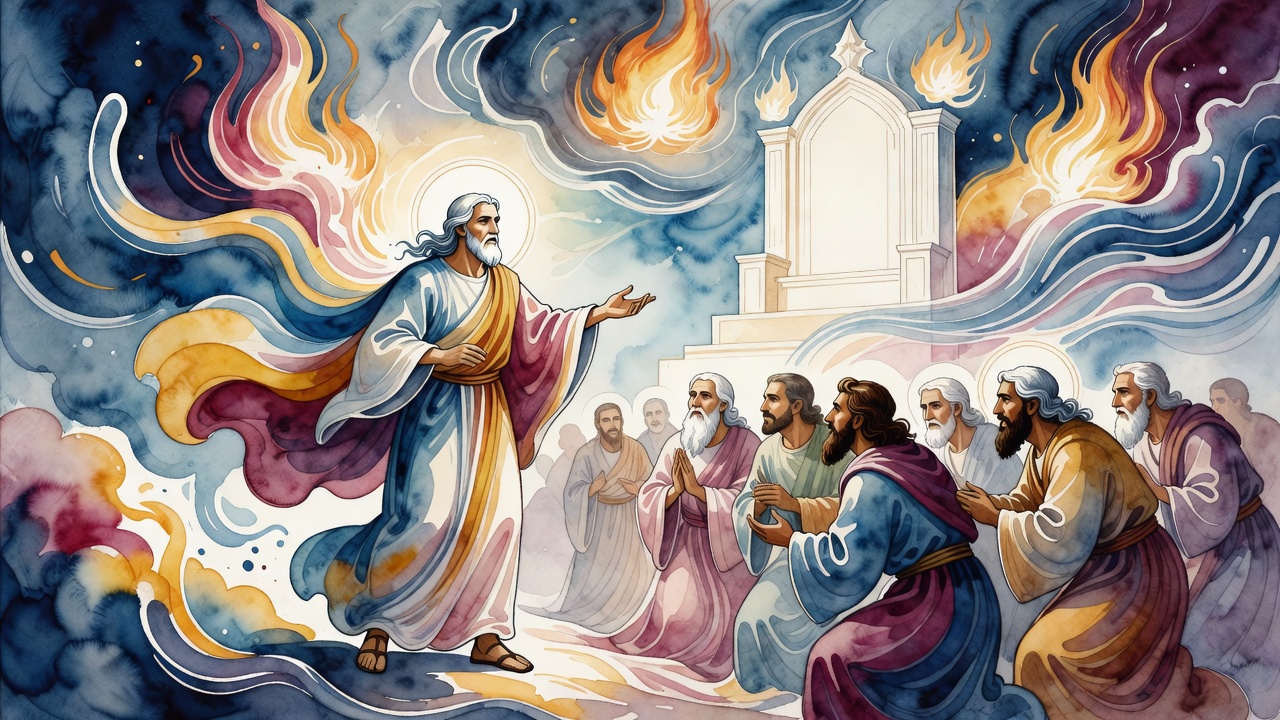
They asked on Shabbat whether to run from Rome. He would not say flee. He named Jacob, Moses, and David, and left them to hear it.
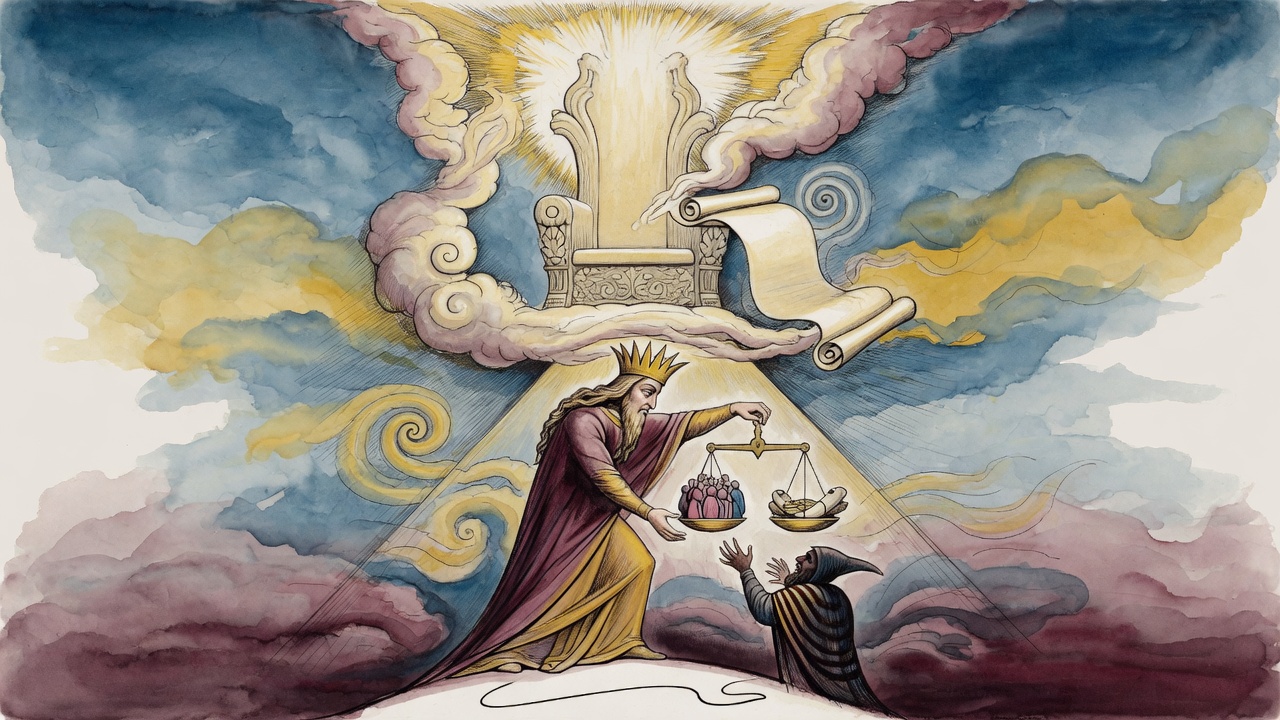
Four men received portents. Jacob and Moses missed theirs. David and Mordecai felt theirs. Mordecai paces the harem courtyard, waiting for the blow.
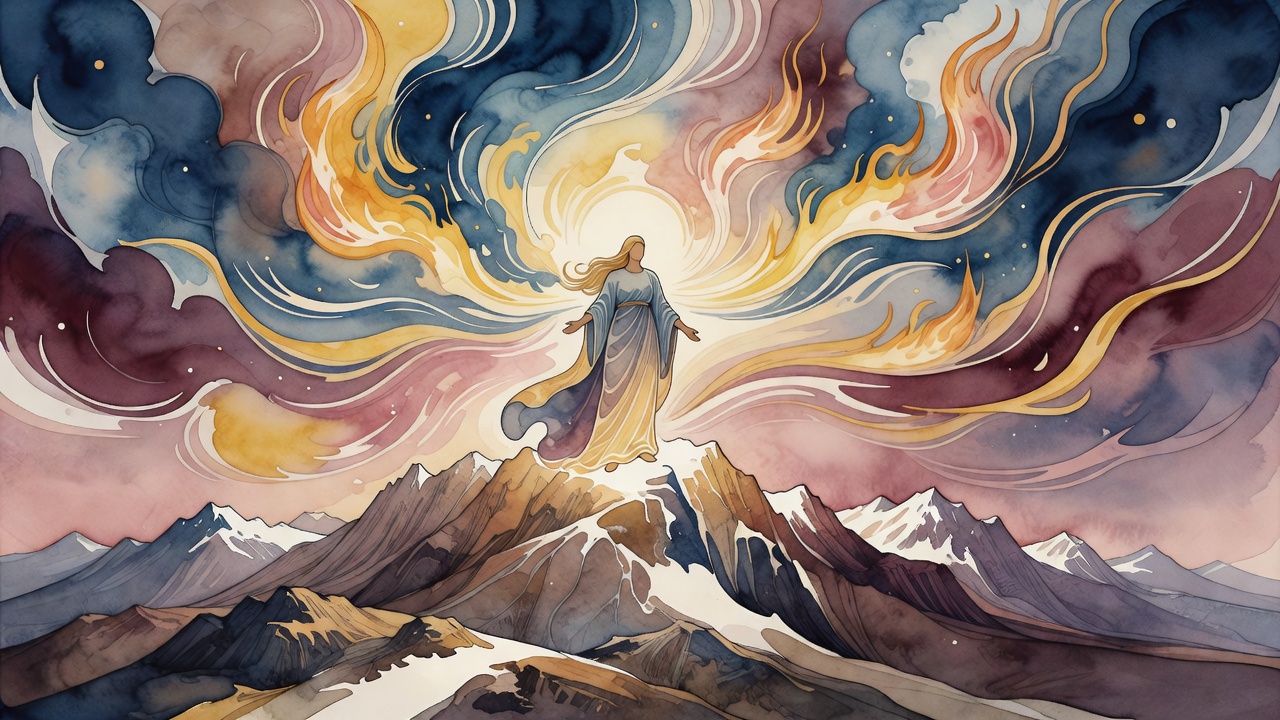
Forty-nine nights they counted, and children asked if today was the day. On the fiftieth morning the air on the mountain grew heavy.
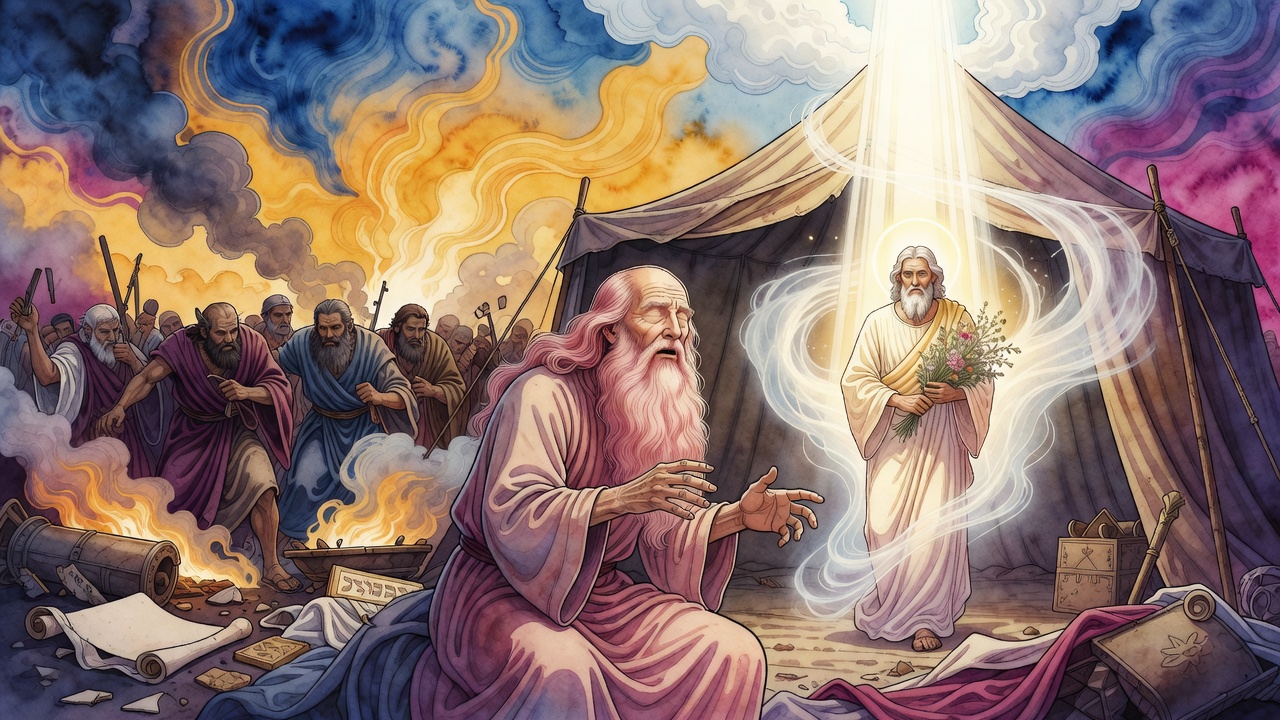
Blind Isaac held his hands above the wool and would not set them down. He had just watched a man walk out of the Temple with the lampstand.
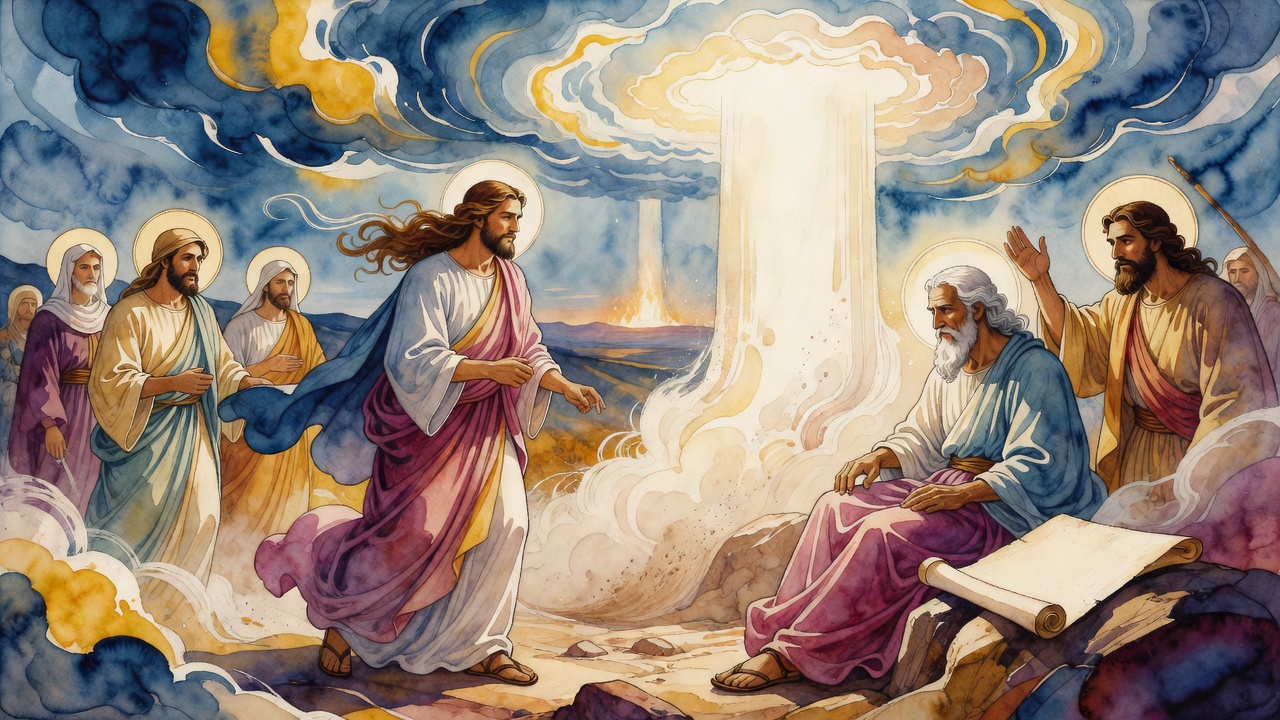
Dust rose on the road and Jacob sorted his camp by love. Maidservants and their children in front. Rachel and Joseph at the very back, farthest from Esau.
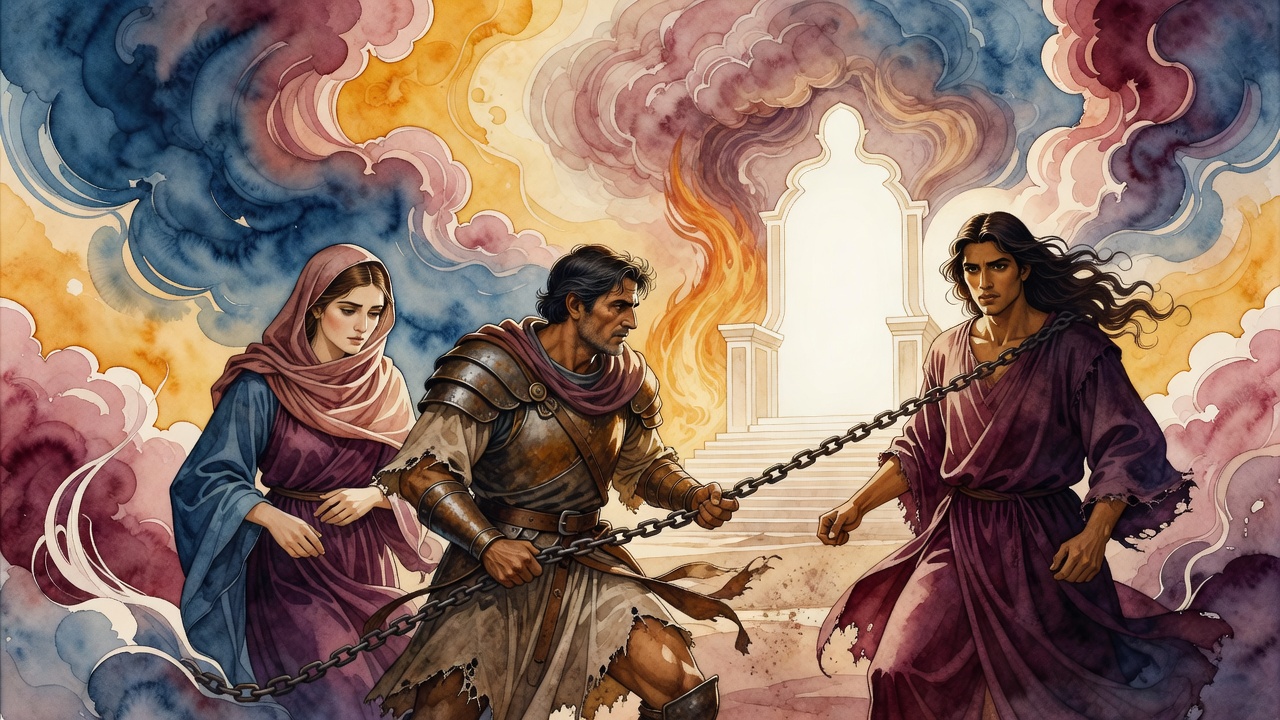
Maacah was the daughter of Talmai, king of Geshur, and David wanted her while he was out at war. Her son was Absalom, who split the kingdom in two.
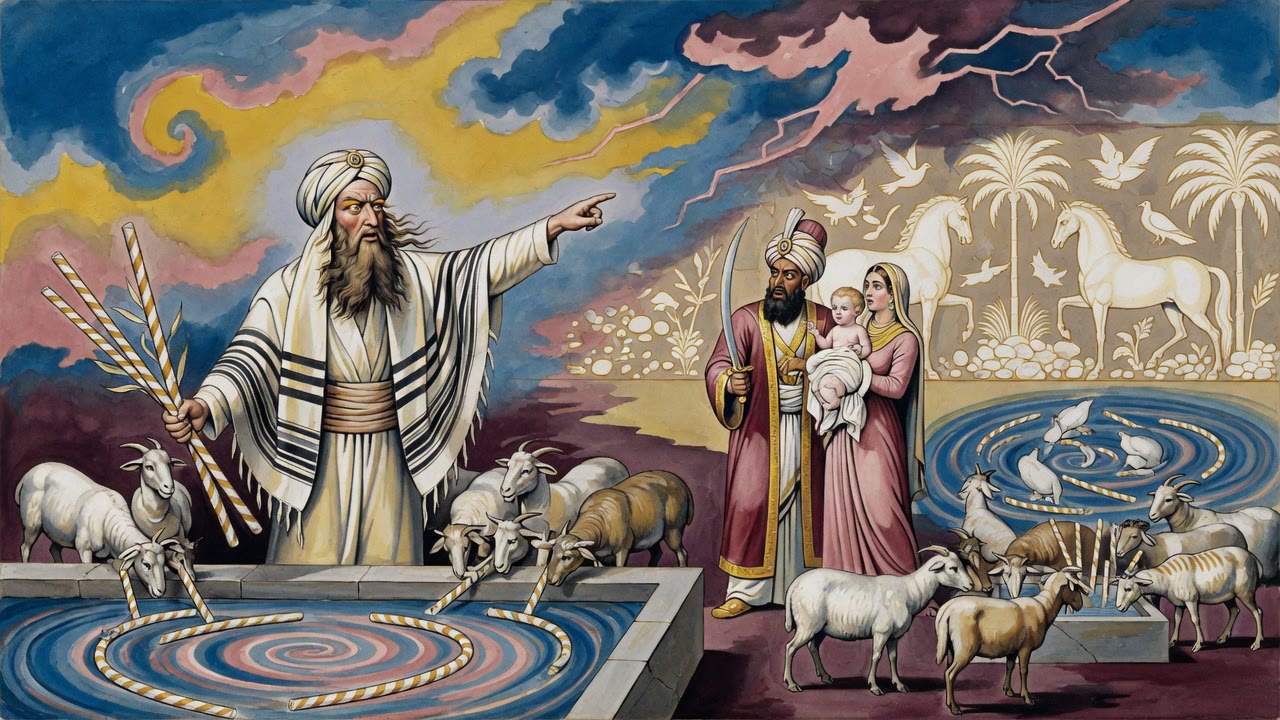
An Arabian king nearly killed his wife for bearing a white son. Rabbi Akiva pointed to white images in the house and to Jacob's flocks at the troughs.
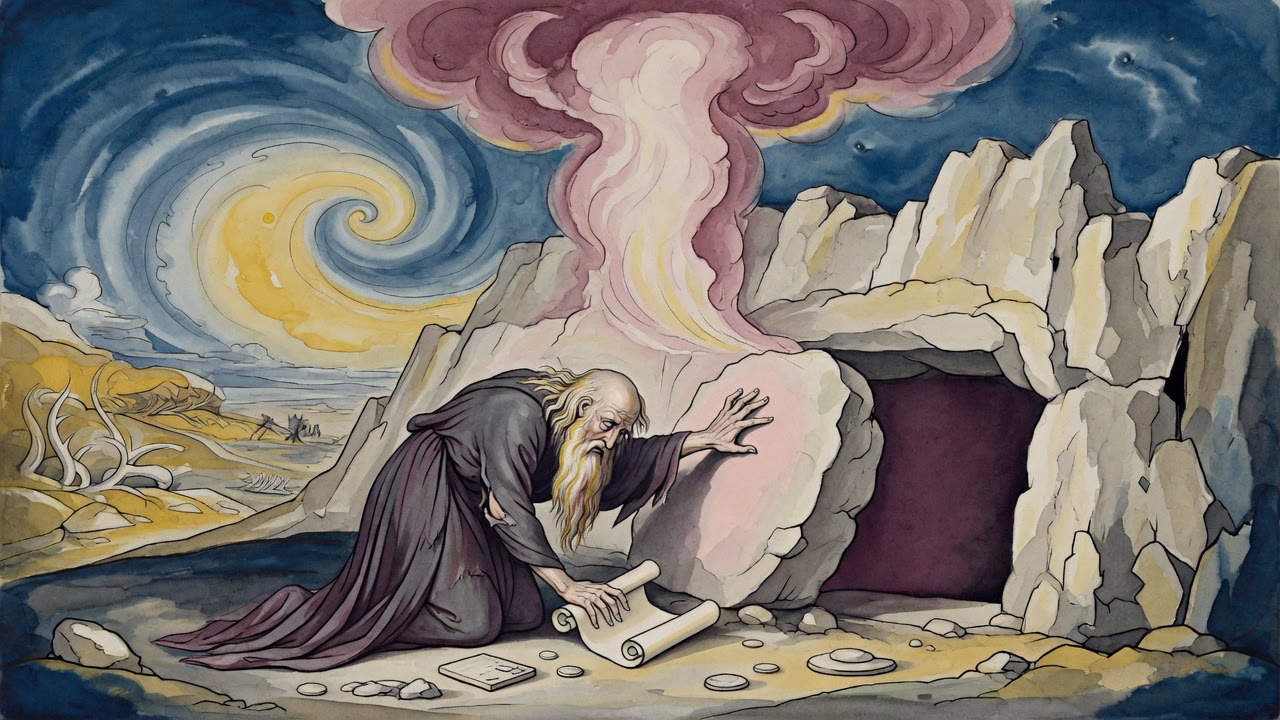
Sarah was in the cave. Abraham set the last stone and the years arrived. The first land he bought in the promise was her grave.
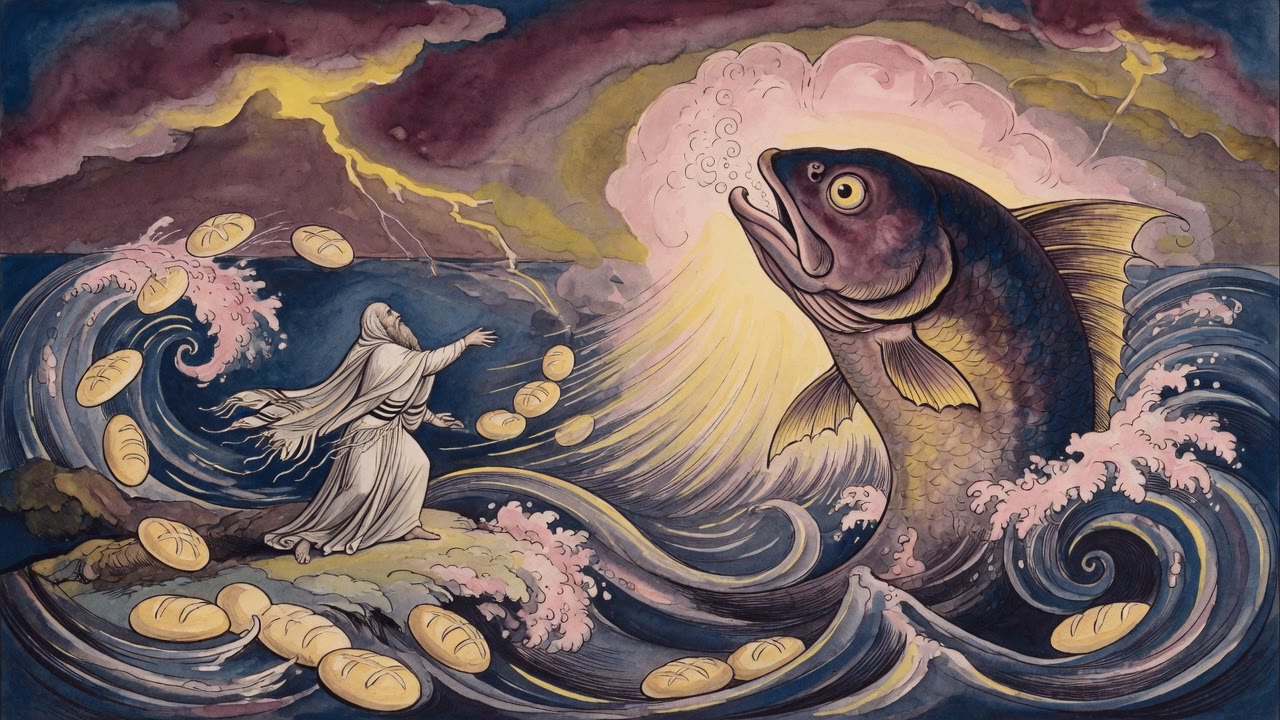
The cups were still full when the father climbed the attic stairs. He came back and asked the guests to finish eating before they buried his son.
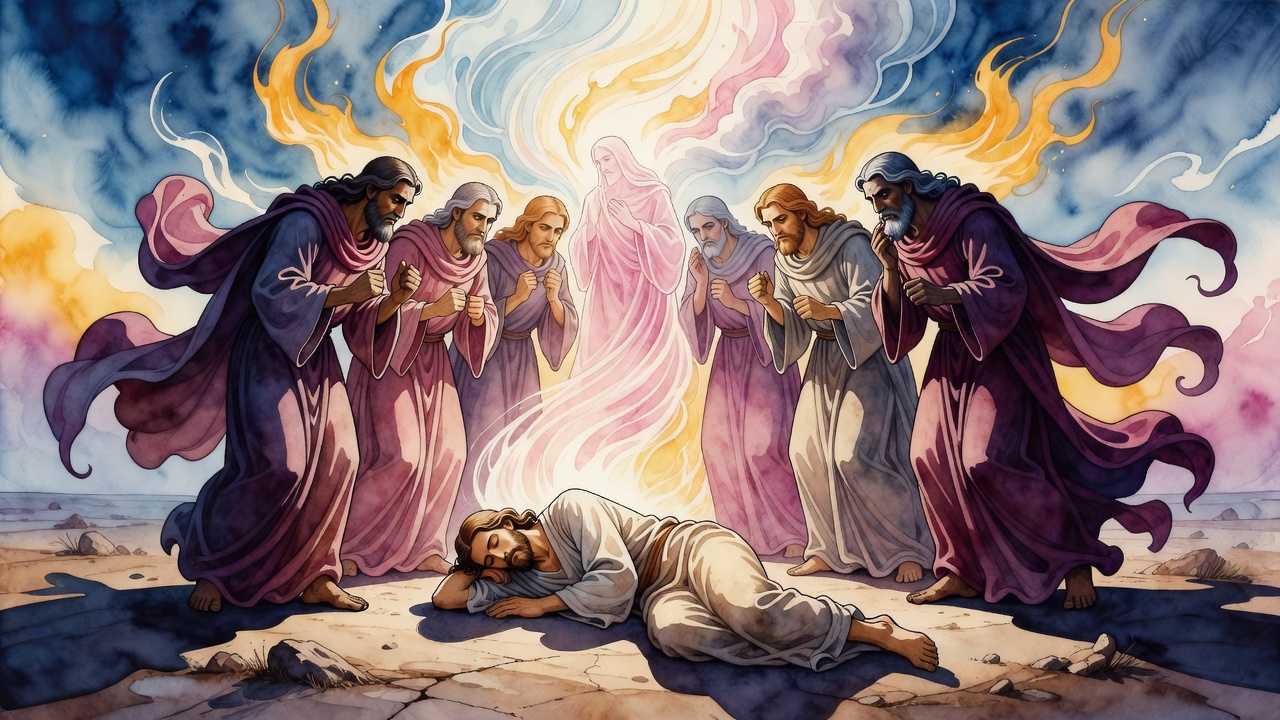
Jacob slept on bare ground while the guardian princes of the nations plotted above him, and God stepped between them and His favorite.
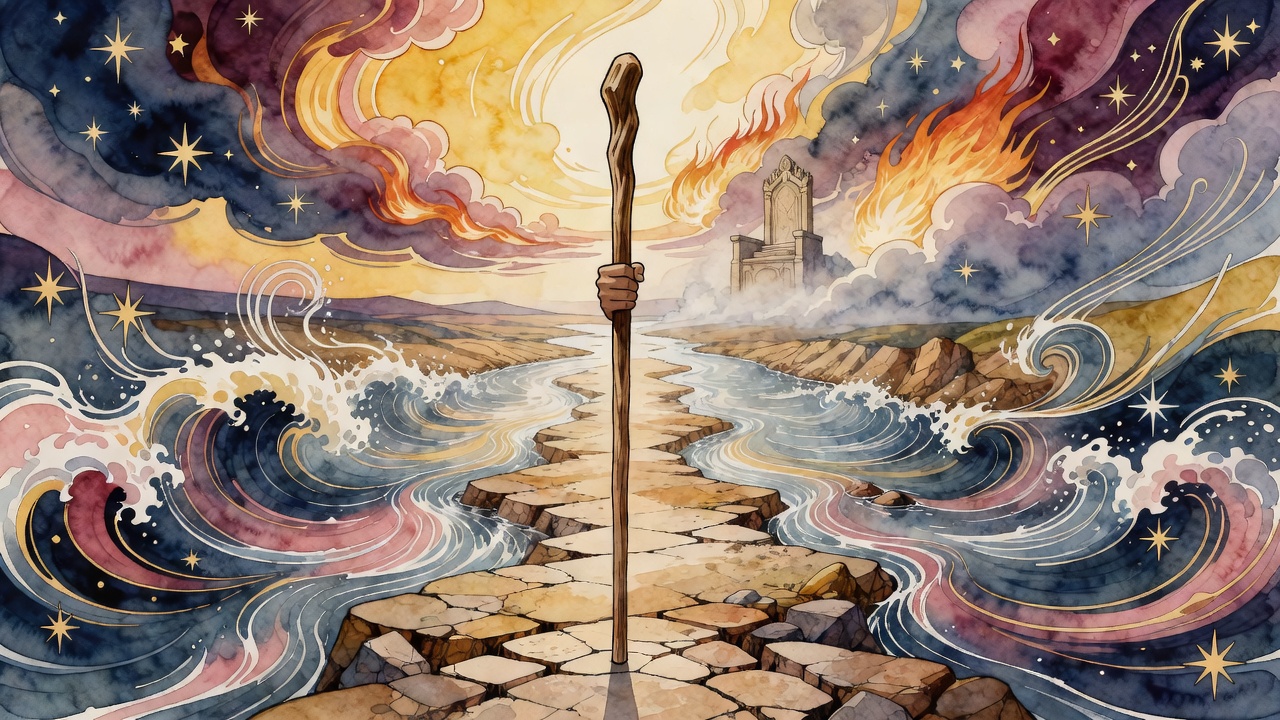
Centuries after Jacob crossed with only a staff, the Jordan flees for his children, and Exodus still calls them by name like stars.
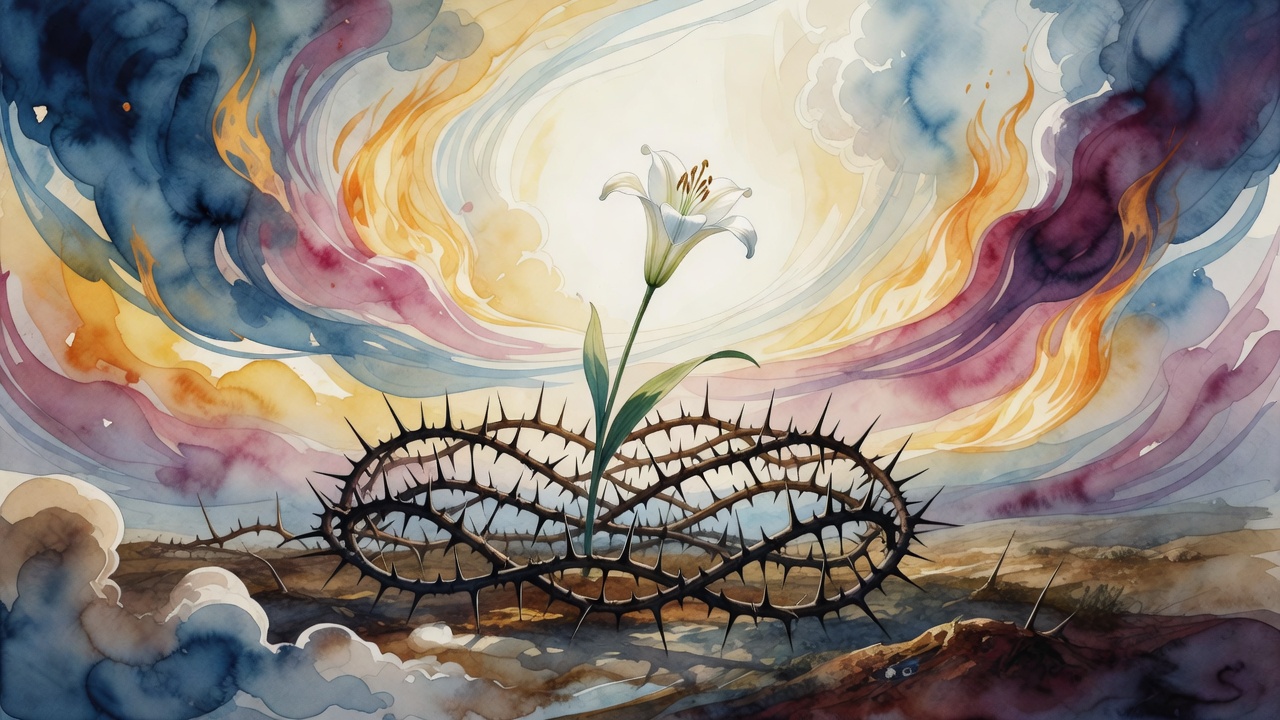
The north wind bent the flower until the thorns bit the stem. The stalk still pointed up. A tax collector's knock did the same work.
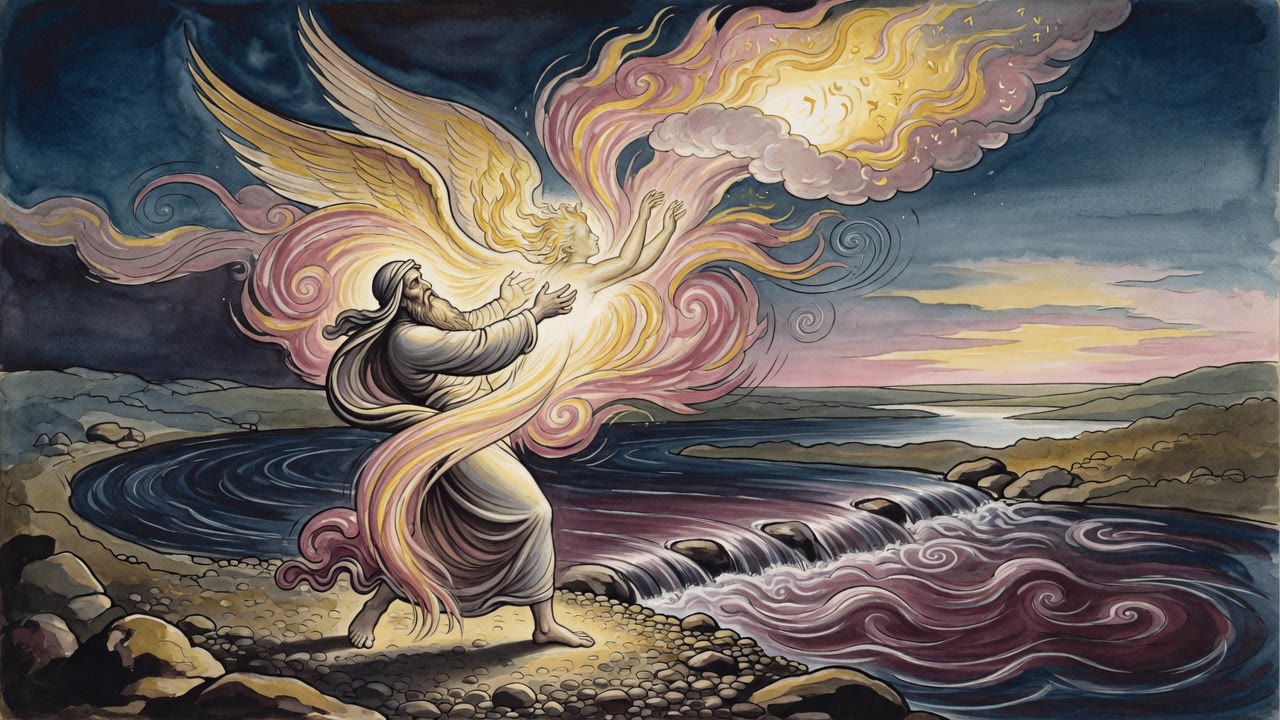
Alone by the ford at night, Jacob held an angel until dawn, and the struggle itself bound the Divine Presence close enough to found the evening prayer.
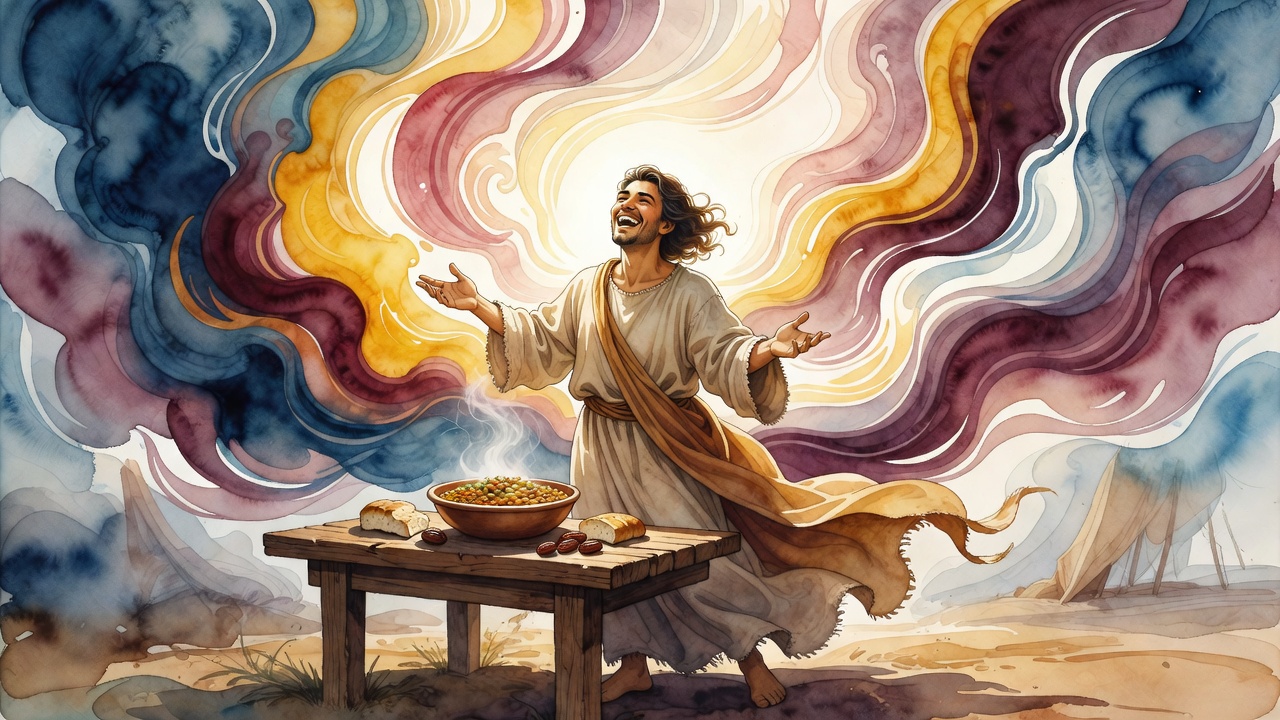
Rebekah sent the plate first. She knew the Presence would not sit on a sour heart, and Esau was still out in the field with his bow.
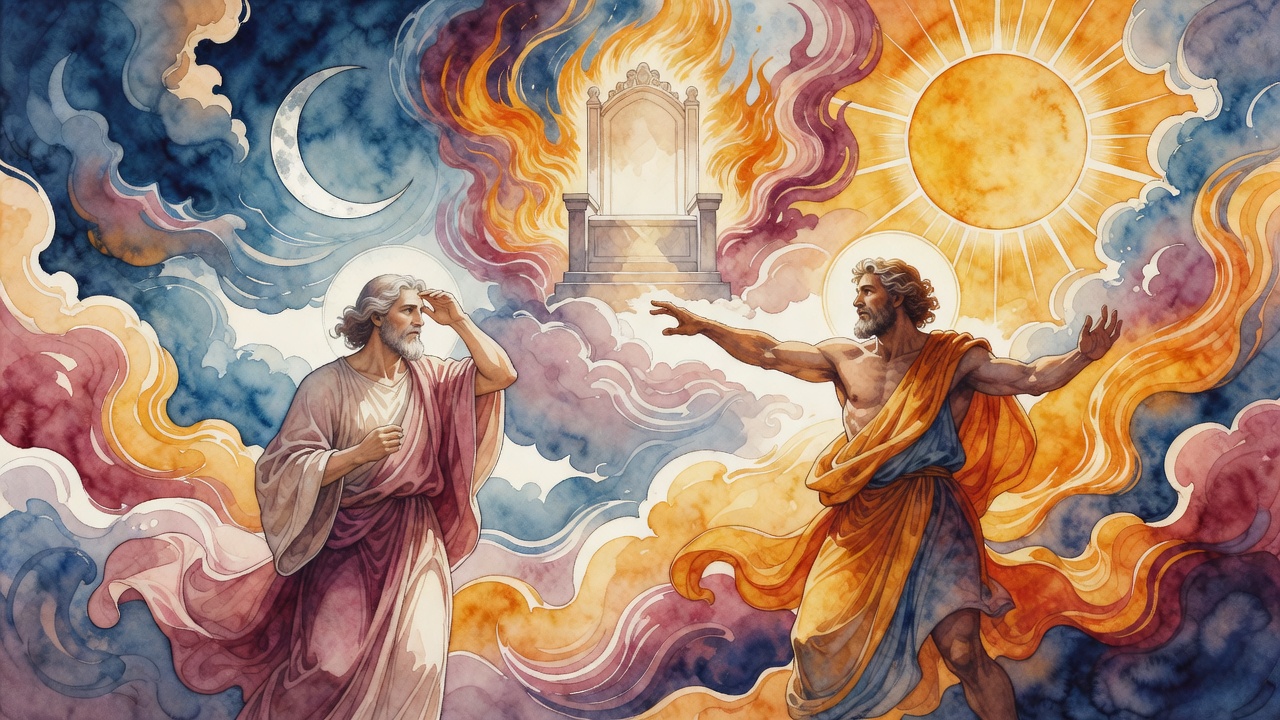
Moses tipped his head back over Egypt and found no moon. A finger came out of the dark and pointed at a hairline of light.
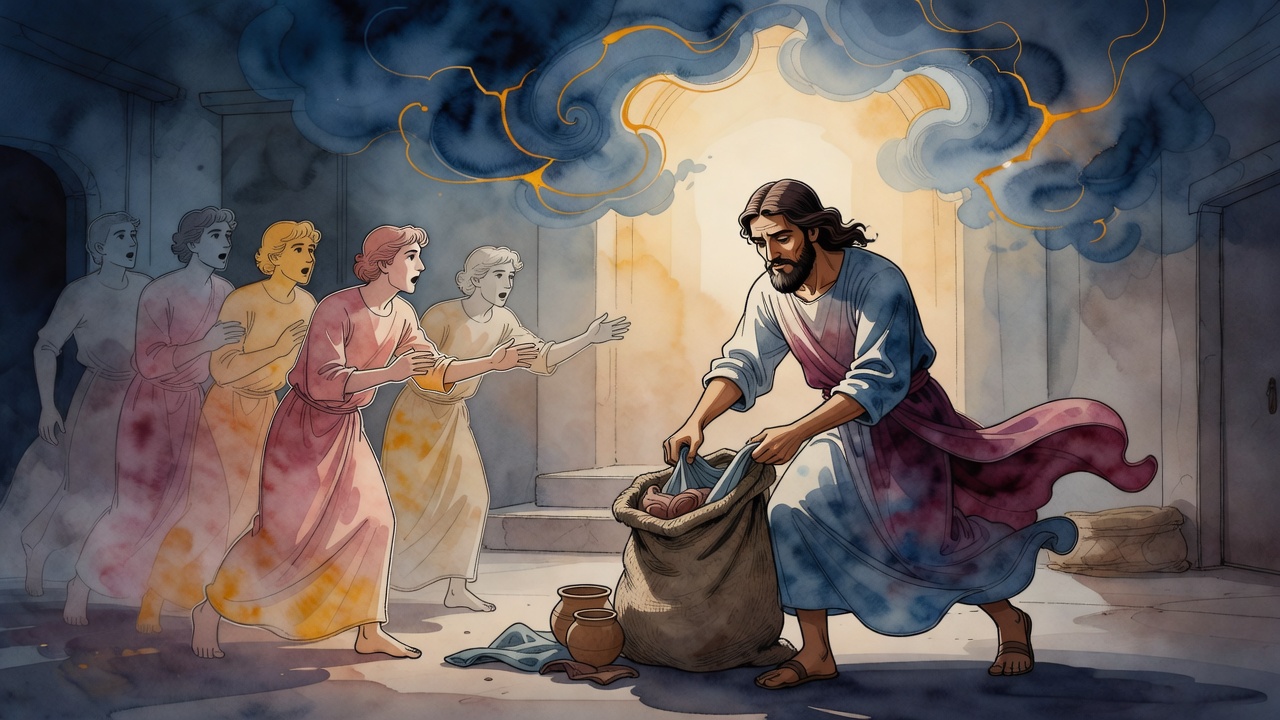
Laban's sons call Jacob a thief of their inheritance. He does not wait for hands to follow words. He packs while the house still sleeps.
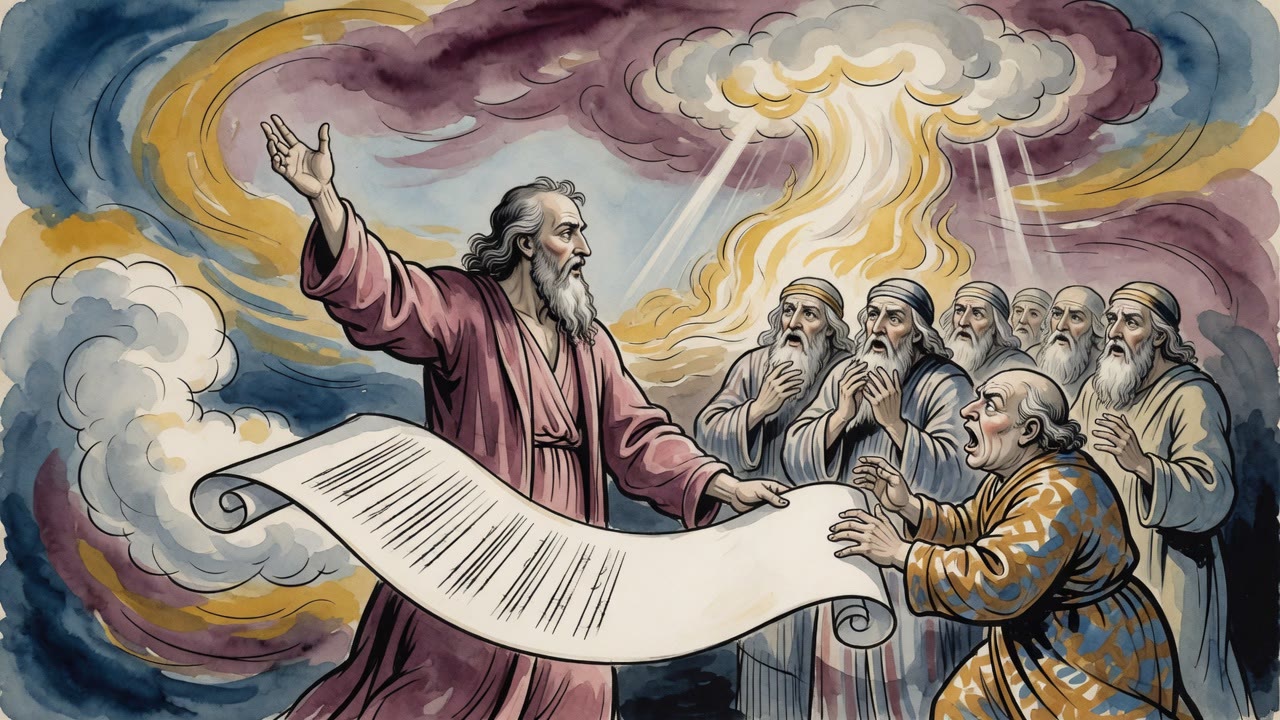
Laban tore through four tents looking for his household gods. Rachel sat on the camel saddle and told him she could not rise.
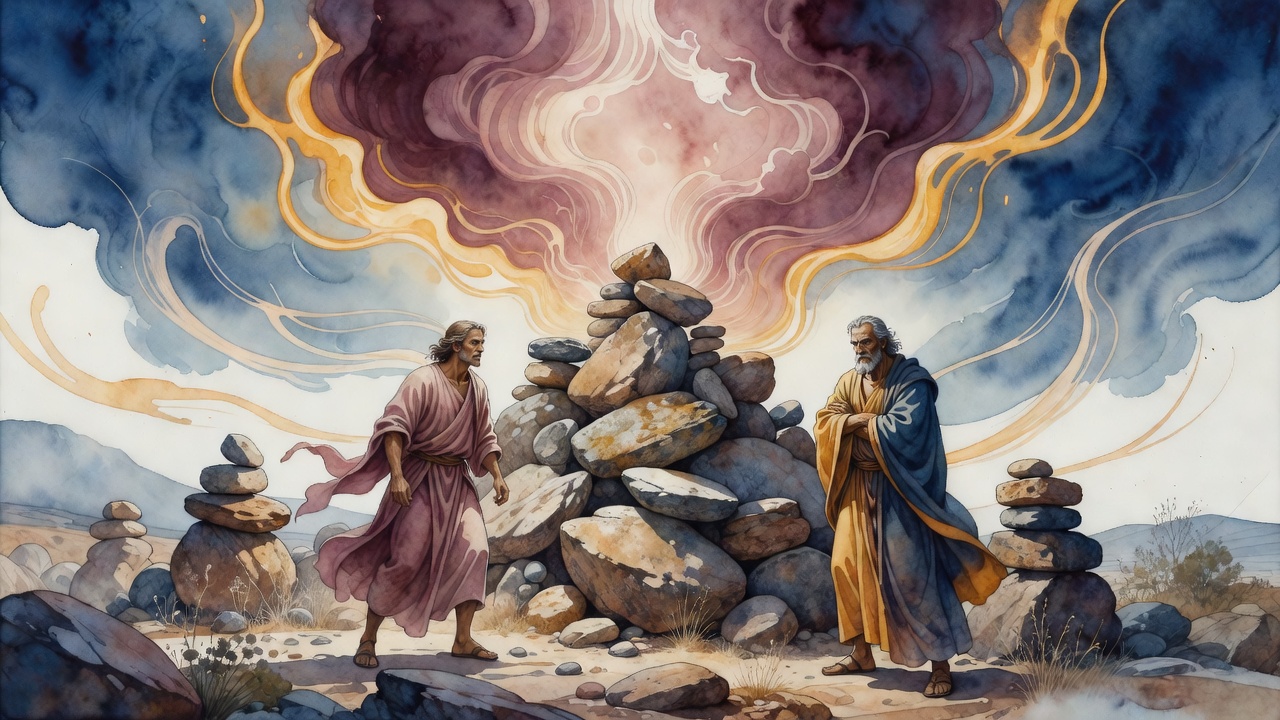
After twenty years they did not embrace. They stacked rocks until the line could speak, and each swore not to cross it for harm.
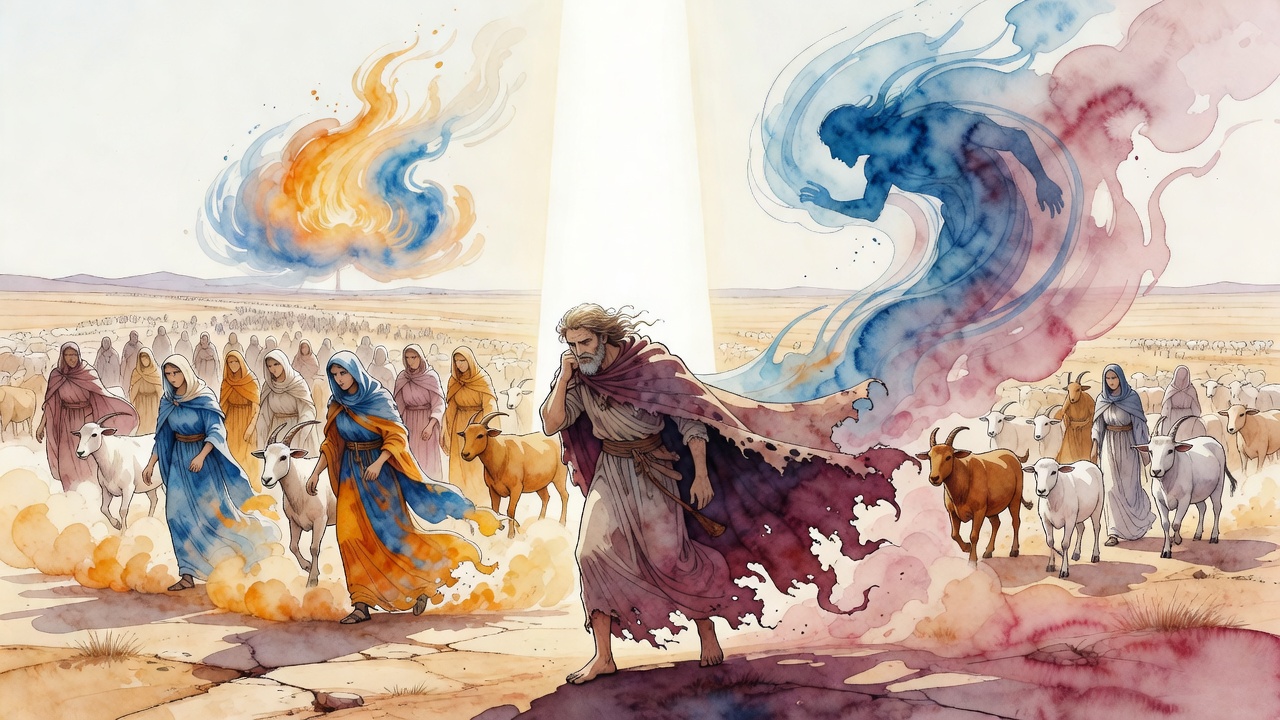
Esau packed wives, herds, and shame and left Canaan though no army chased him. The midrash hears the wicked fleeing a pursuer only they can see.
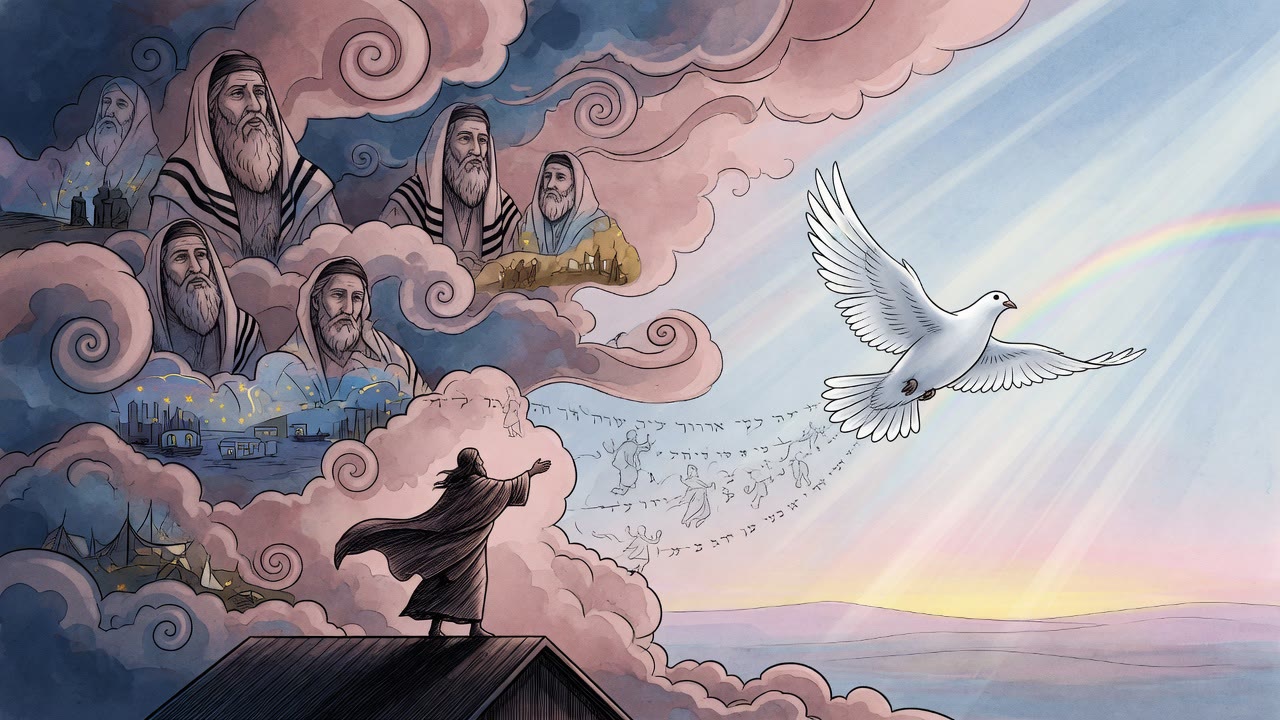
The crowd wanted a stumble. He asked what redeems a firstborn donkey. Rabbi Meir named a lamb and let the verse stand in the open.
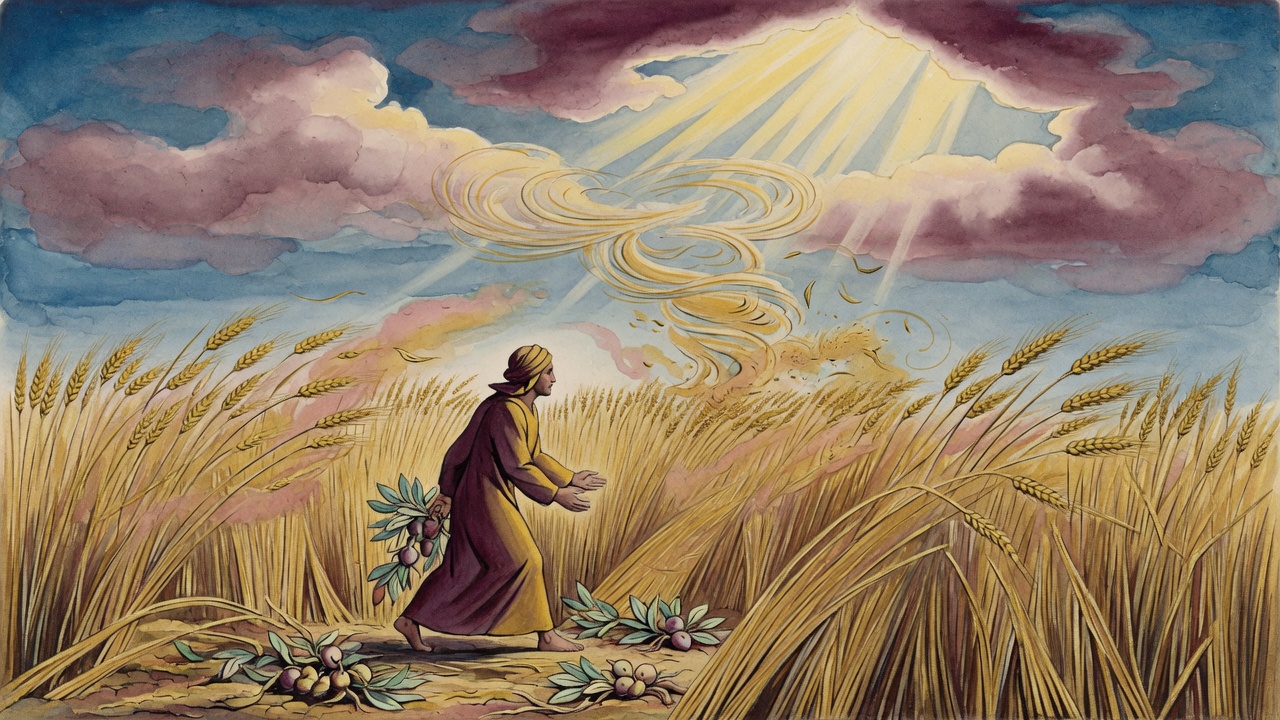
The owners were gone and the grain stood unwatched. Reuben was hungry enough to take a sheaf. He tied mandrakes to the donkey and left the gold standing.
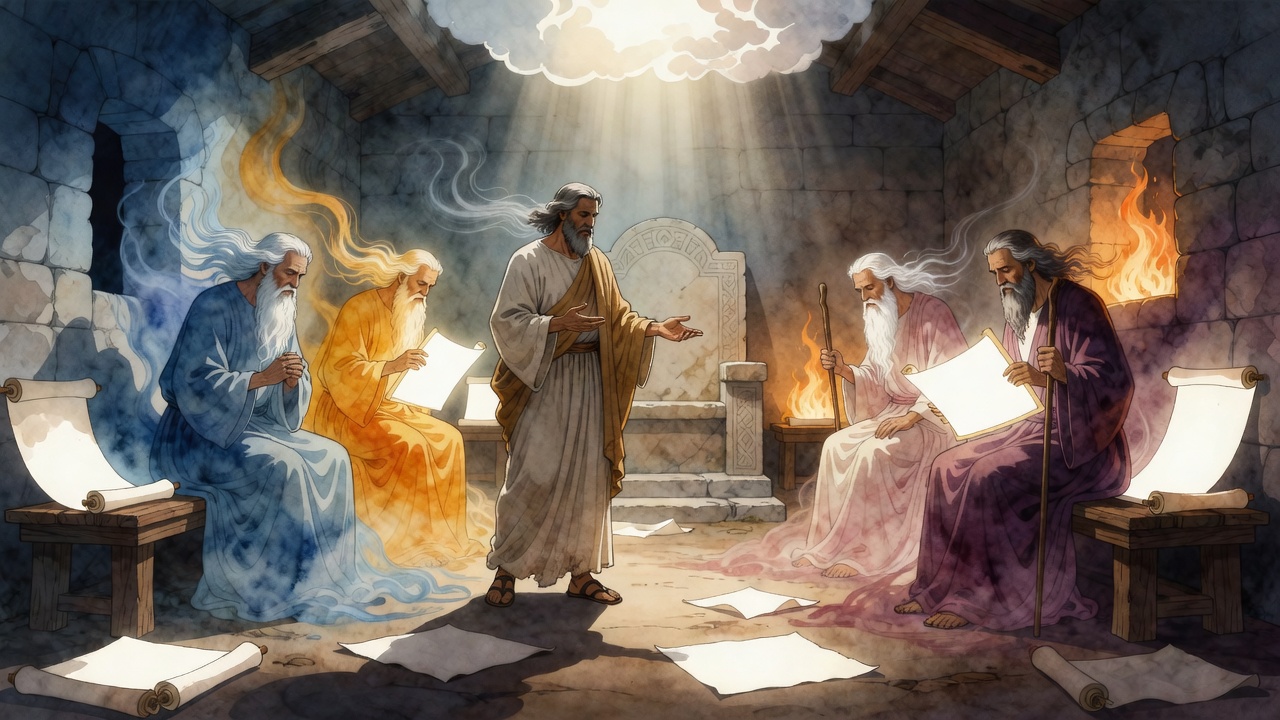
Elijah came late to Rabbi Judah's study house. He had been washing Abraham's hands, then Isaac's, then Jacob's, never all three at once.
