480 myths · Page 14 of 16
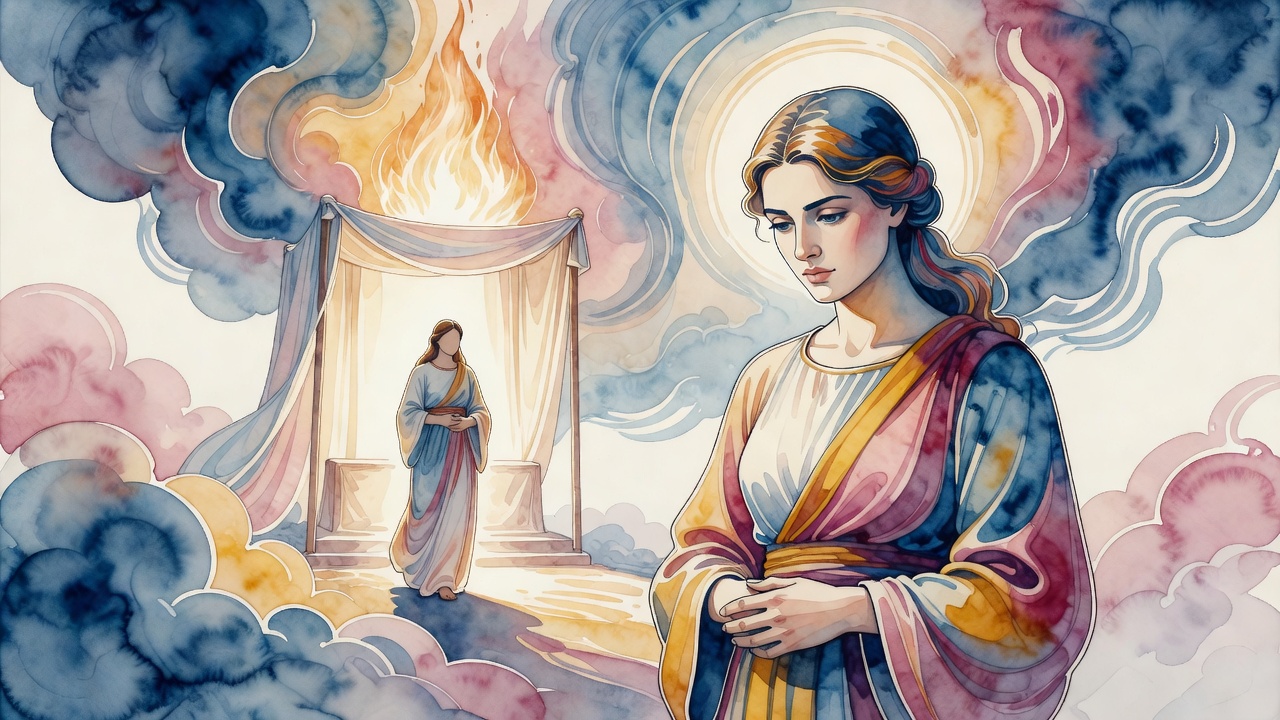
Rachel hears Leah led to her wedding canopy and keeps the secret signs silent. Heaven later opens her womb for that mercy.
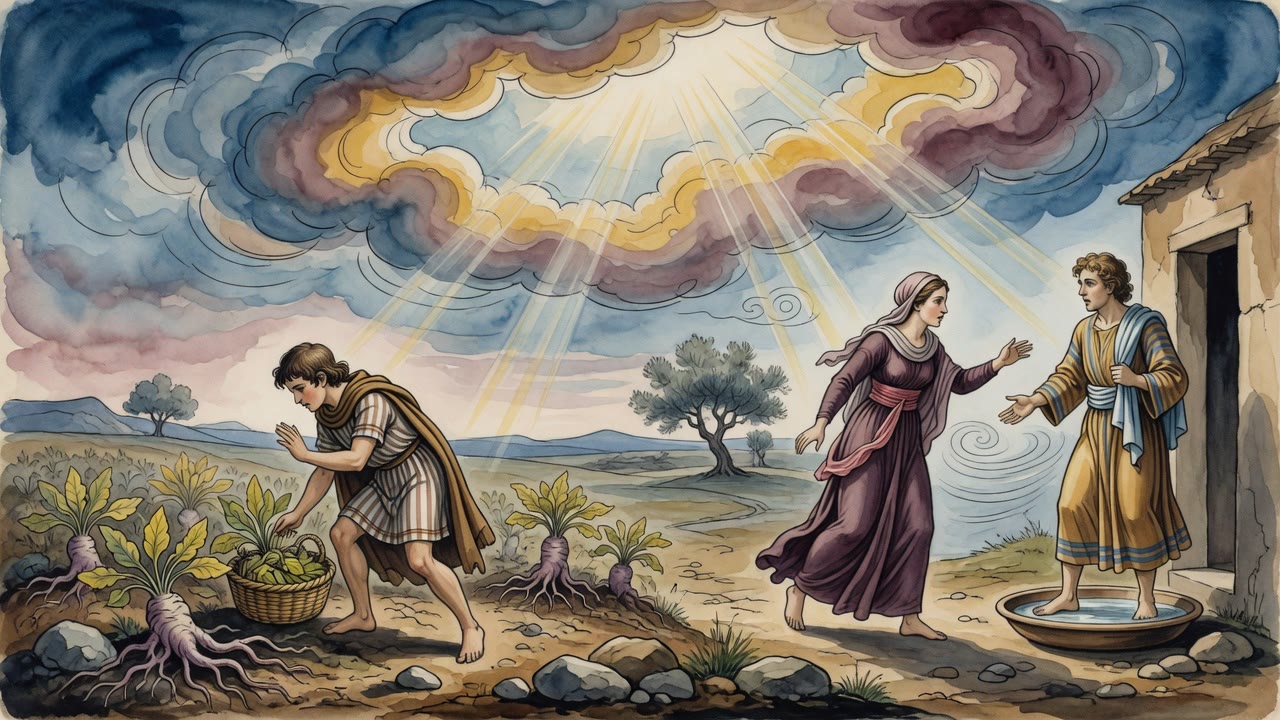
Reuben came in from the fields with flowers he had not tasted. His mother traded them away that same evening for one night with her own husband.
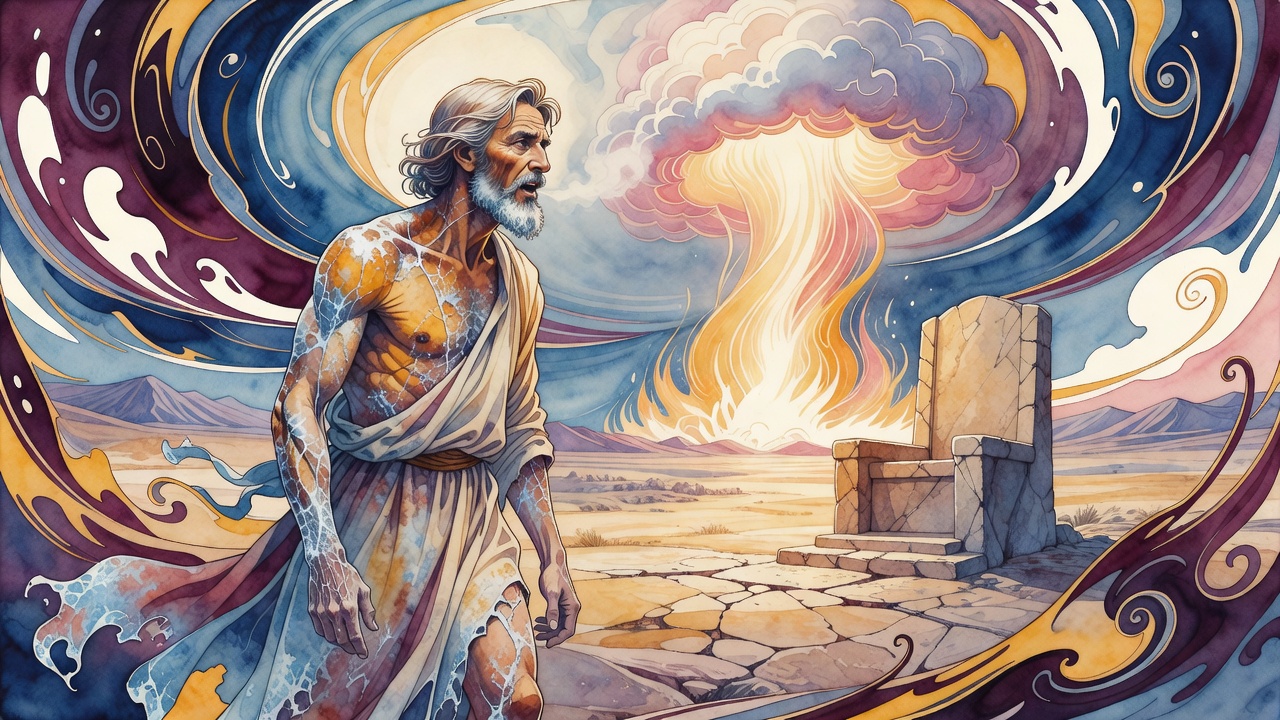
Twenty years under Laban leave Jacob burned by drought and bitten by frost. He absorbs every loss and sings through sleepless nights.
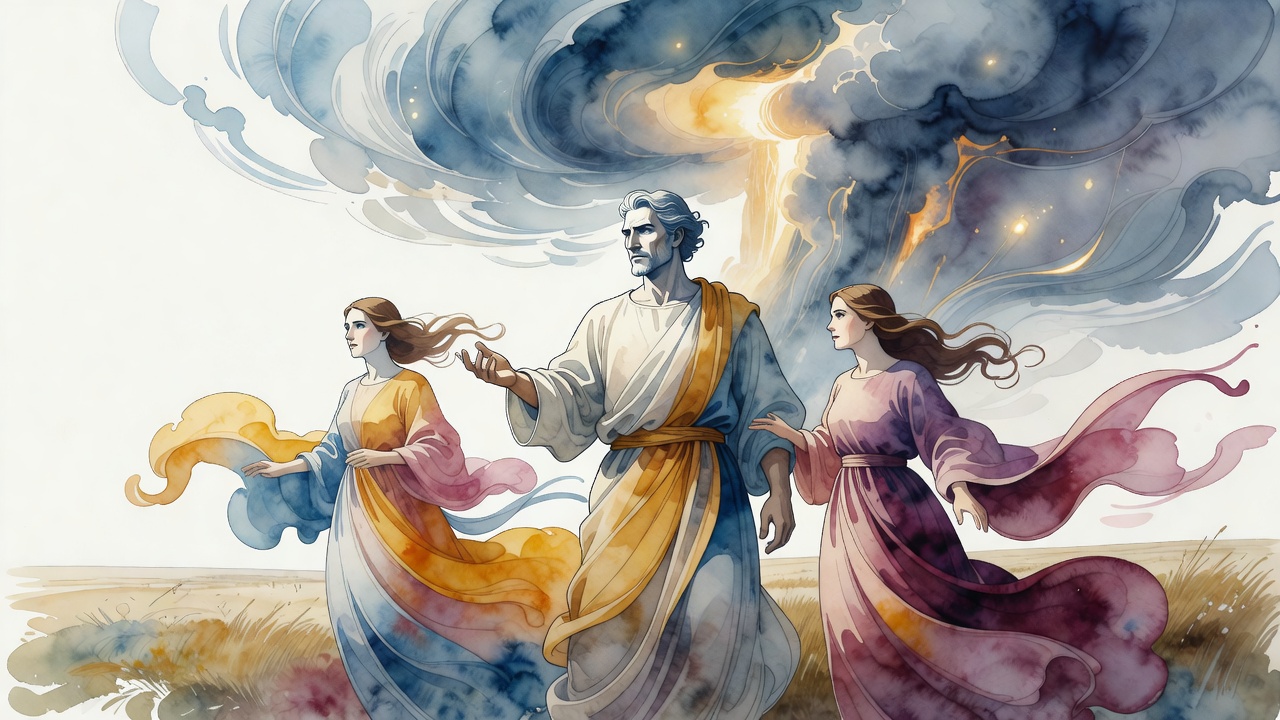
Jacob will not plan flight inside Laban's walls. He calls Rachel and Leah into open wind and shows them a face turned cold.
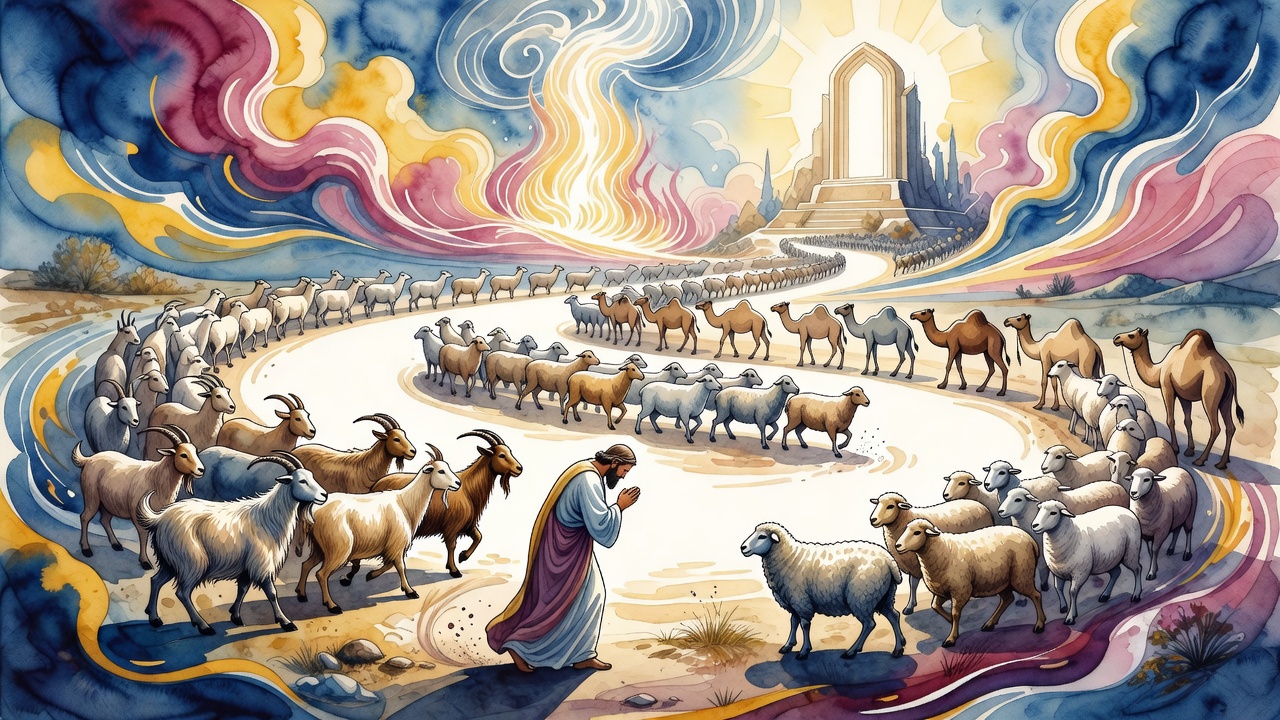
Four hundred men were coming up from Seir. Jacob put the camels in the middle of the gift. Then he locked Dinah in a chest by the ford.
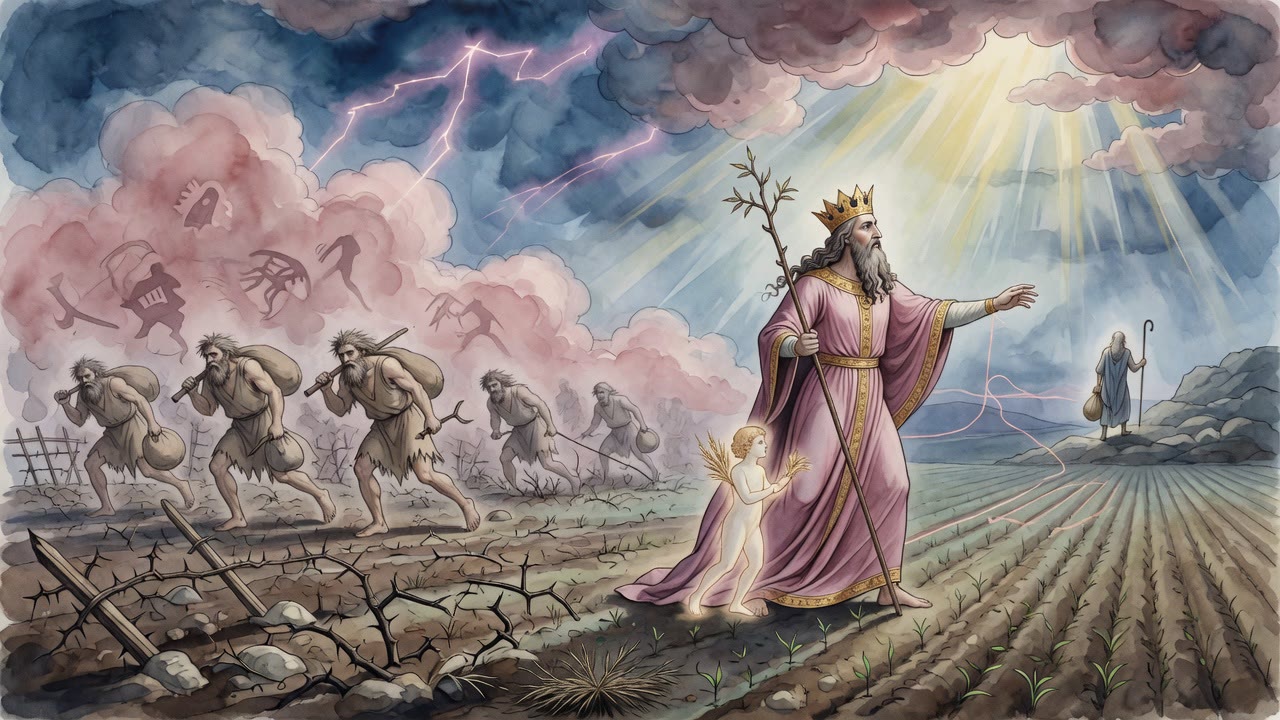
Jacob ferries his family, then turns back for jars worth almost nothing. Alone in the dark a man wrestles him until dawn.
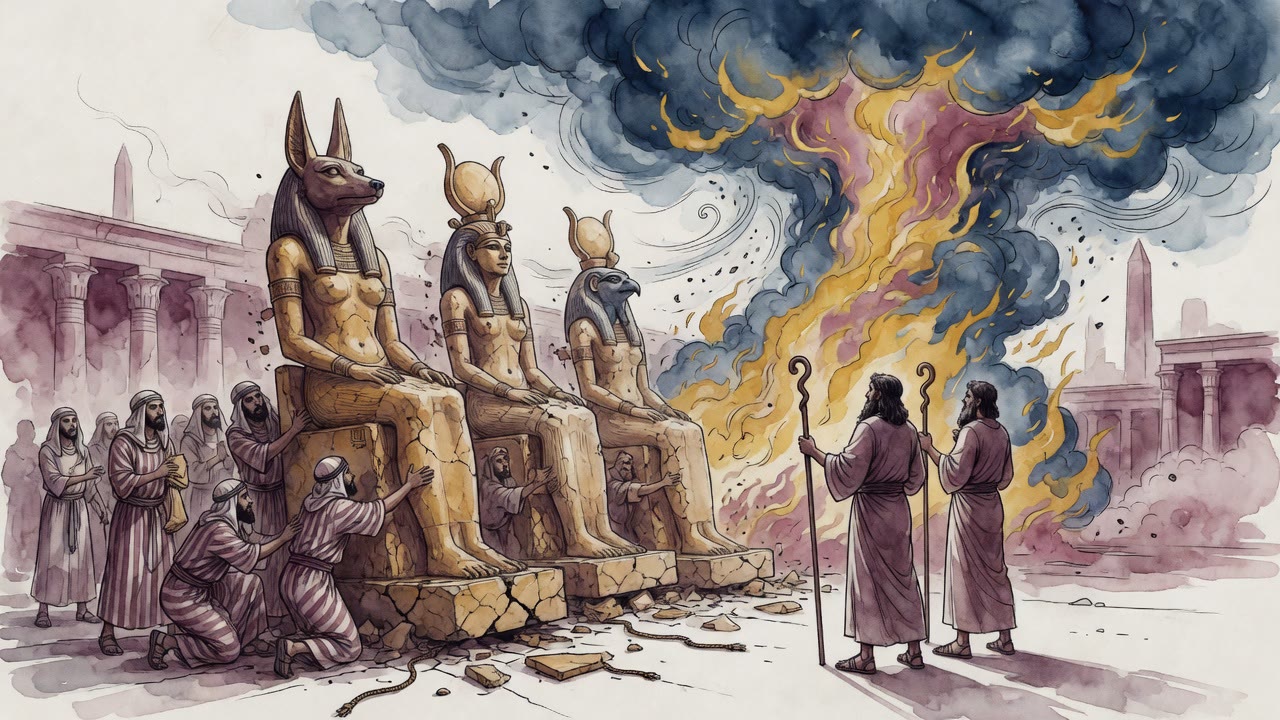
Jacob could recite the rescues in his sleep. Esau, Laban, the Canaanites who chased him. He had not kept a line for Joseph.
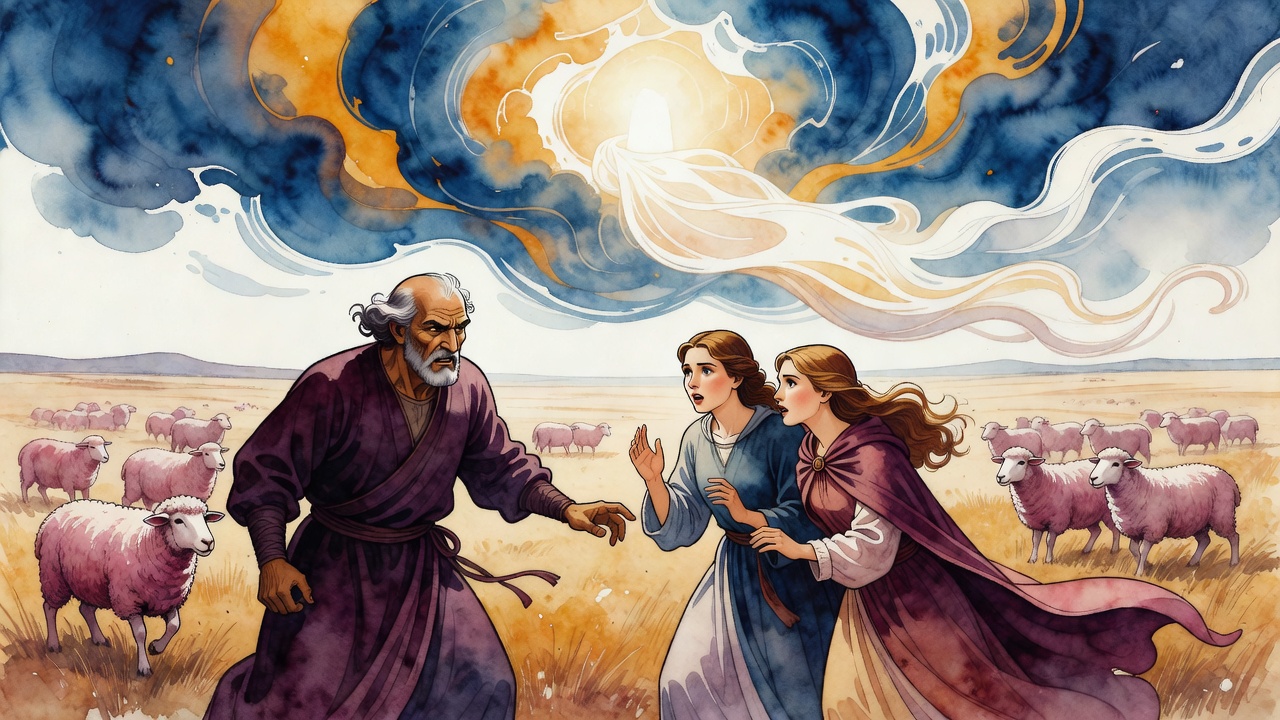
Jacob called Rachel and Leah into the field, not the tent. Their father's eyes had gone flat whenever the flocks came up.
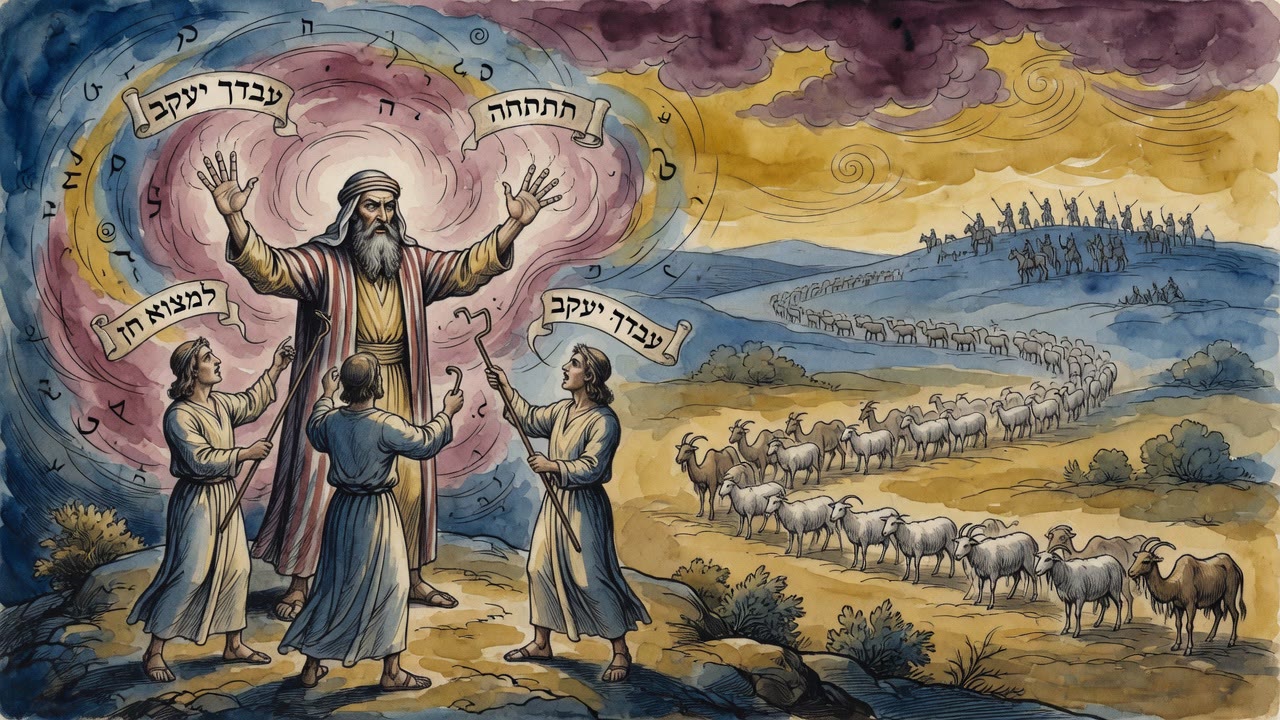
Before four hundred men arrived, Jacob drilled every servant on three answers and set gaps between flocks to cool Esau's anger.
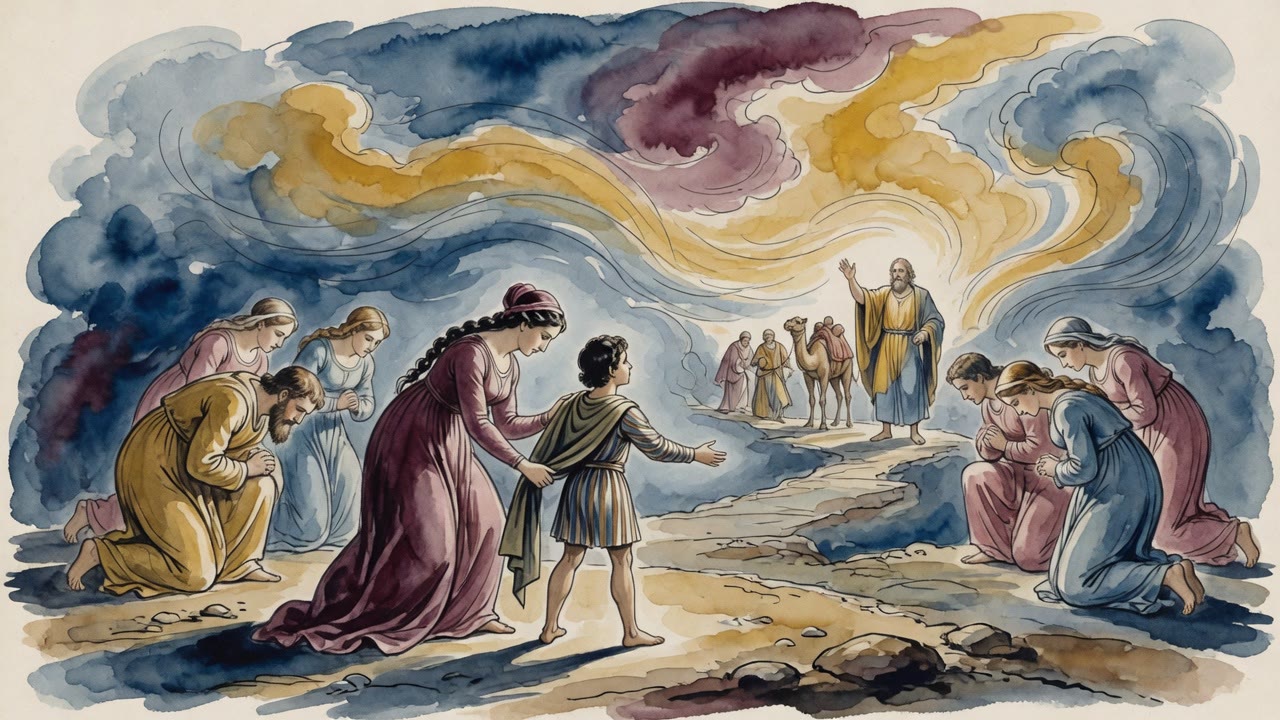
When the family bowed before Esau, Joseph stepped in front of Rachel and used his small body as a shield for his mother.
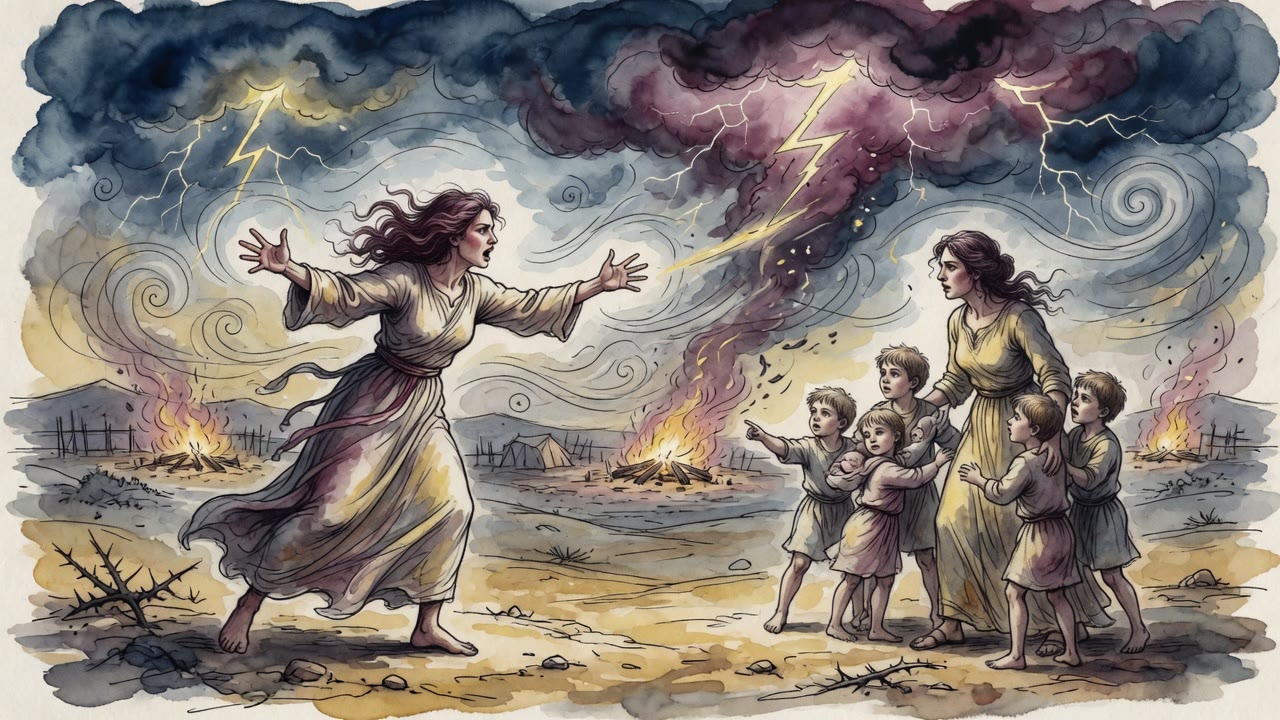
Leah had four sons. Rachel had none. She told Jacob to give her children or she would die, and his anger flared at being asked to do God's work.
Rachel told him her father was cunning. Jacob rolled the stone anyway. Laban ran with the birthright already counted in his head.
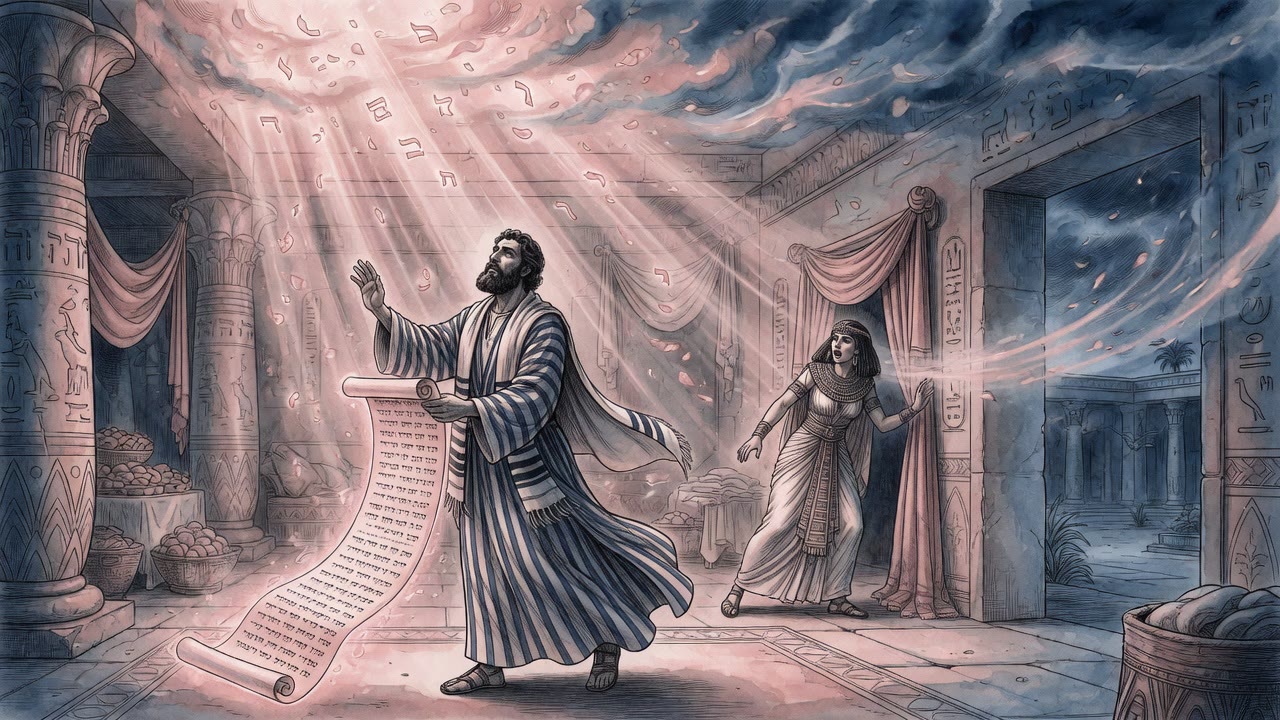
Grain jars, door bolts, accounts, the order of the servants: an Egyptian officer's whole house hung on a slave his brothers had sold.
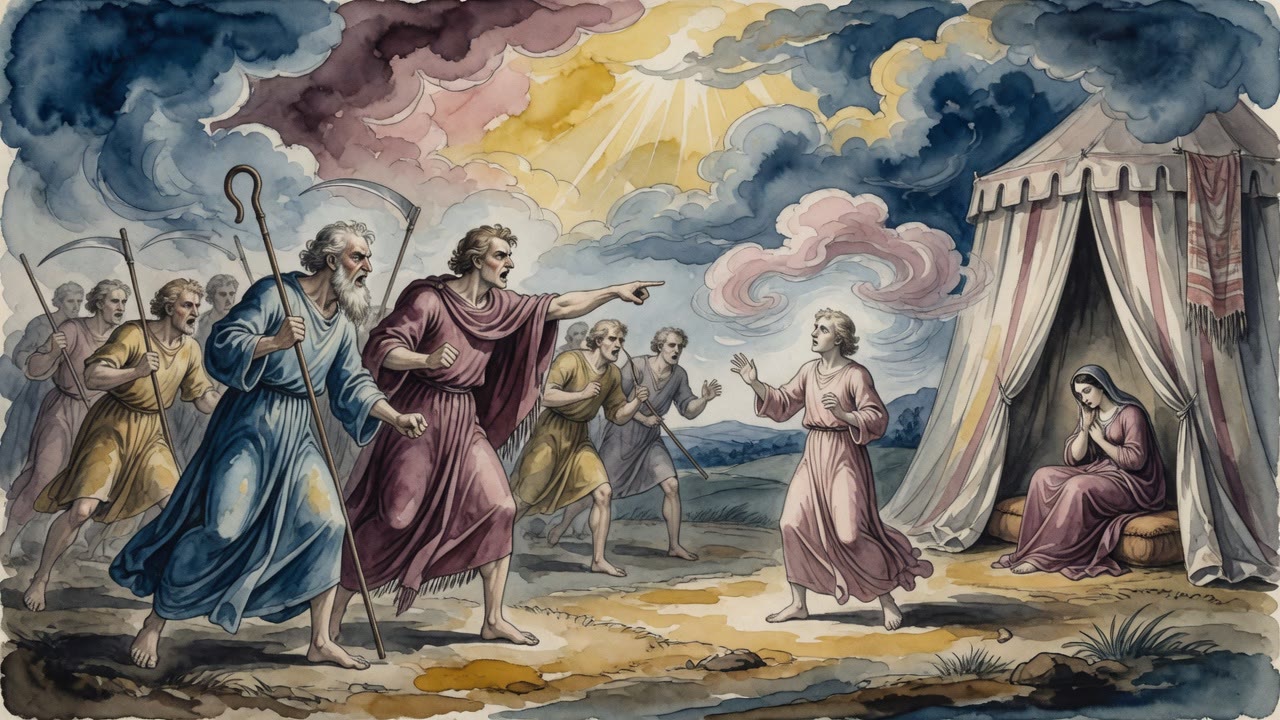
The brothers came in from the field with tools still in hand. Jacob counted tents. They would not let one word settle on Dinah.
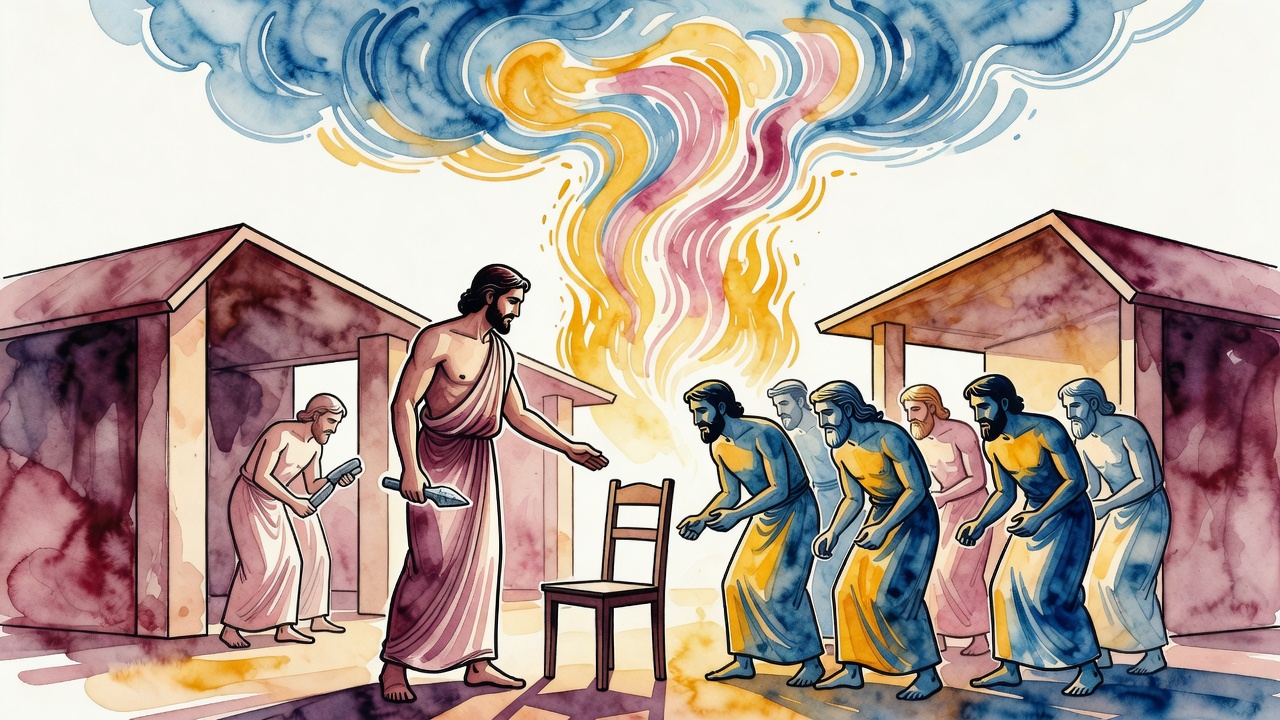
Joseph's brothers invent a grudge from his empty seat. He names their fear, then takes flint himself to circumcise great-grandsons under Egyptian roofs.
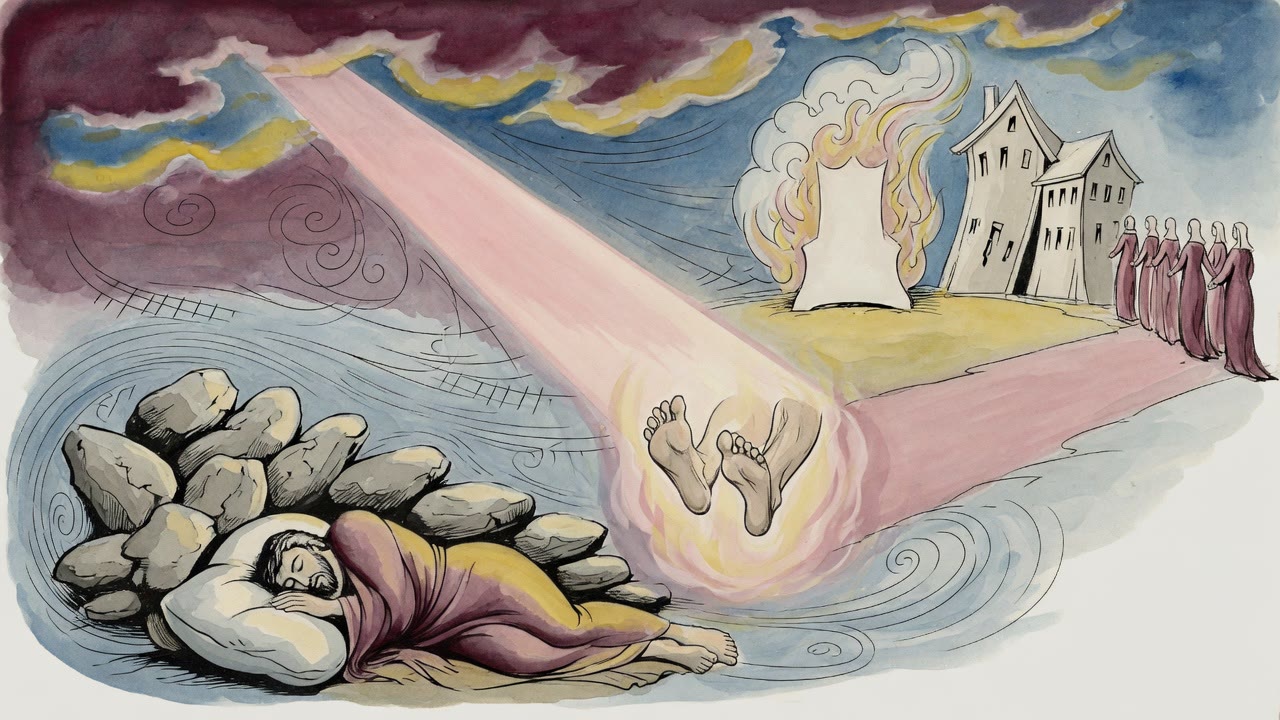
He was running from a brother who had promised to kill him. He lay down on open ground, and the stones under his head began to fight over him.
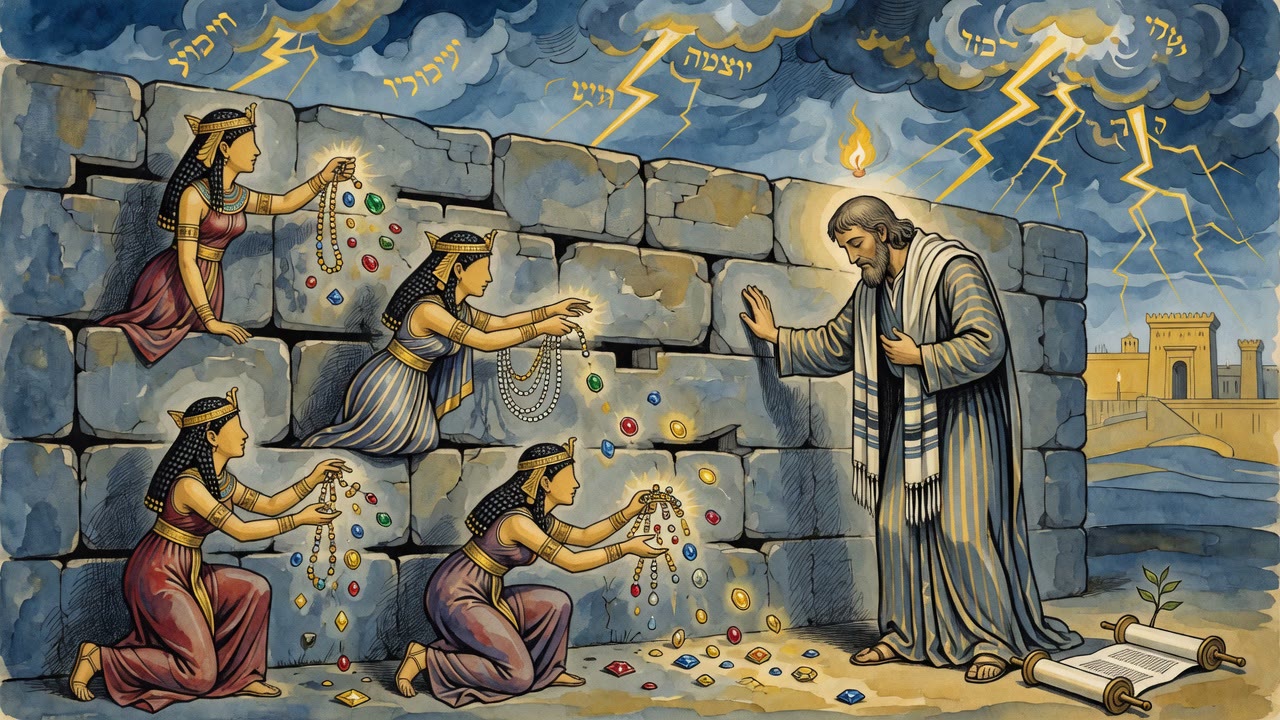
Royal daughters press jewels through wall slits to catch Josephs eye. He keeps his gaze down, and a later Torah law becomes his reward.
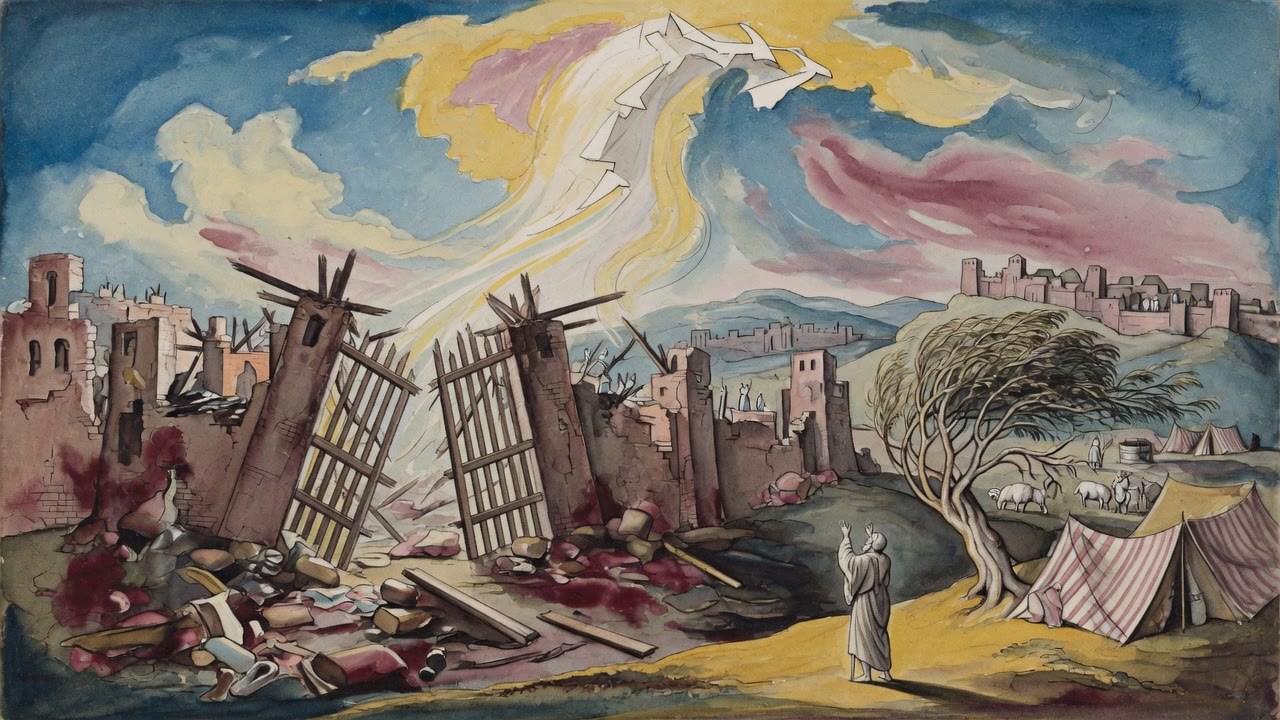
The angels of Aram finished their watch at the border. New faces took the post. Four hundred riders were still coming down the road.
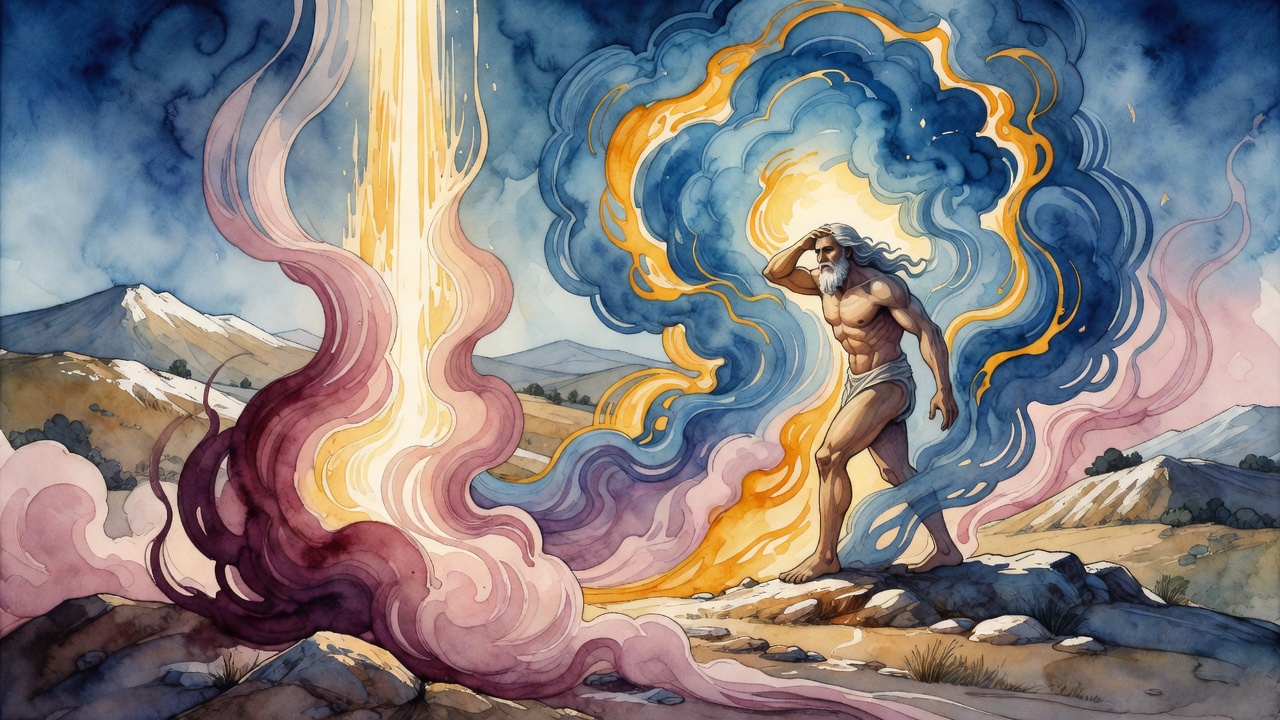
The spirit seized him between two mountains. He tore them loose and ground them together. A bell went ahead of him through the camp of Dan.
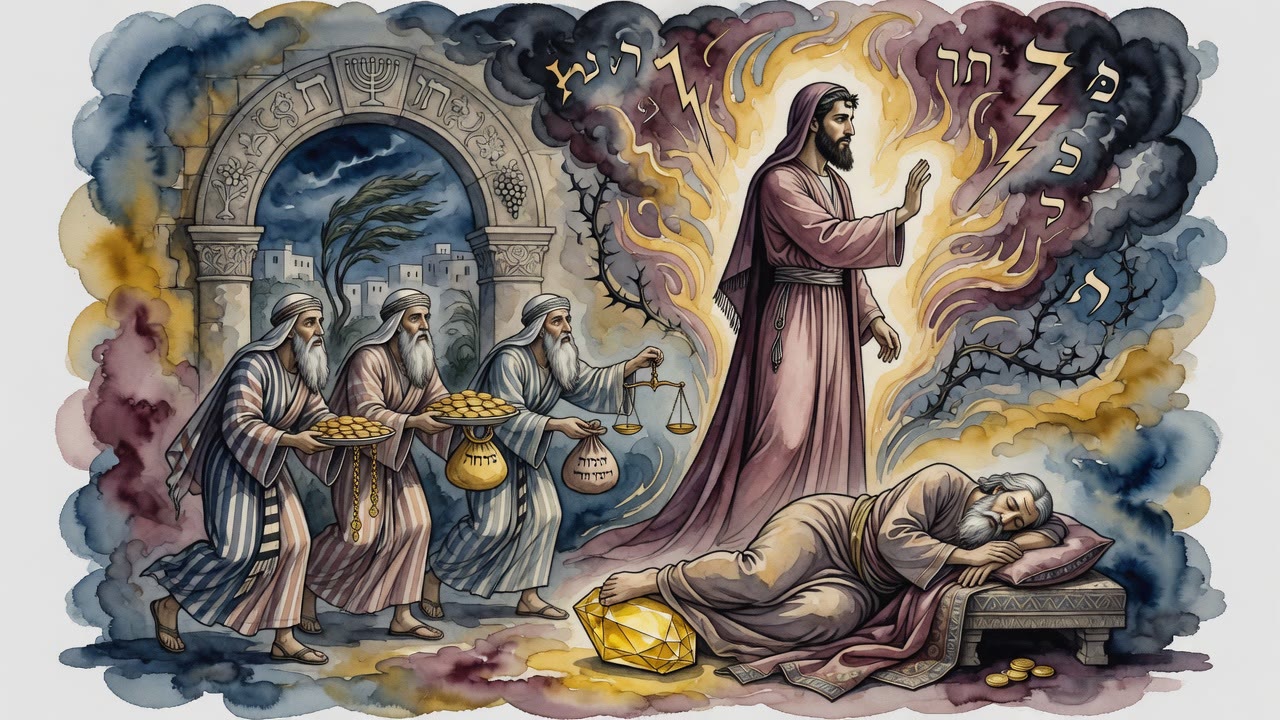
Two Hittite wives had made Isaac's camp bitter for decades. Then Esau stood near enough to the tent to hear the rule he had already broken.
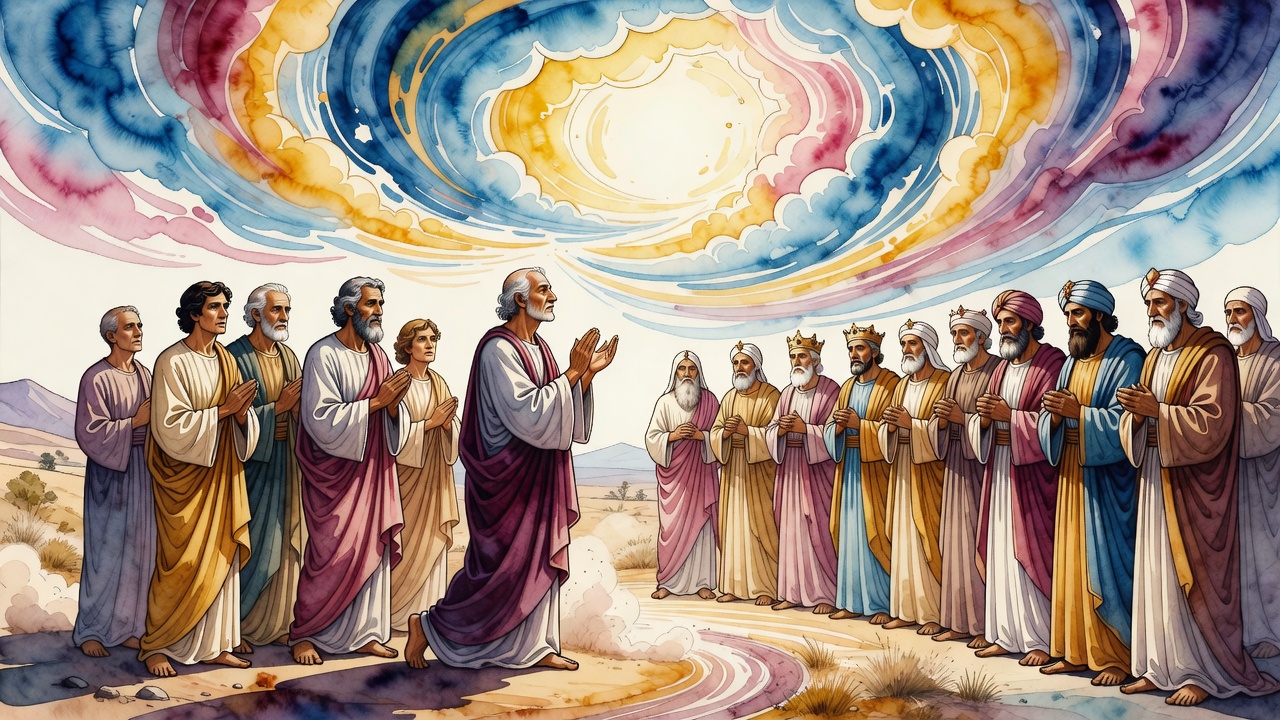
Fathers and sons look the same until Abraham prays old age into the world. When he dies, foreign kings stand in a row and call him the lost captain of the ship.
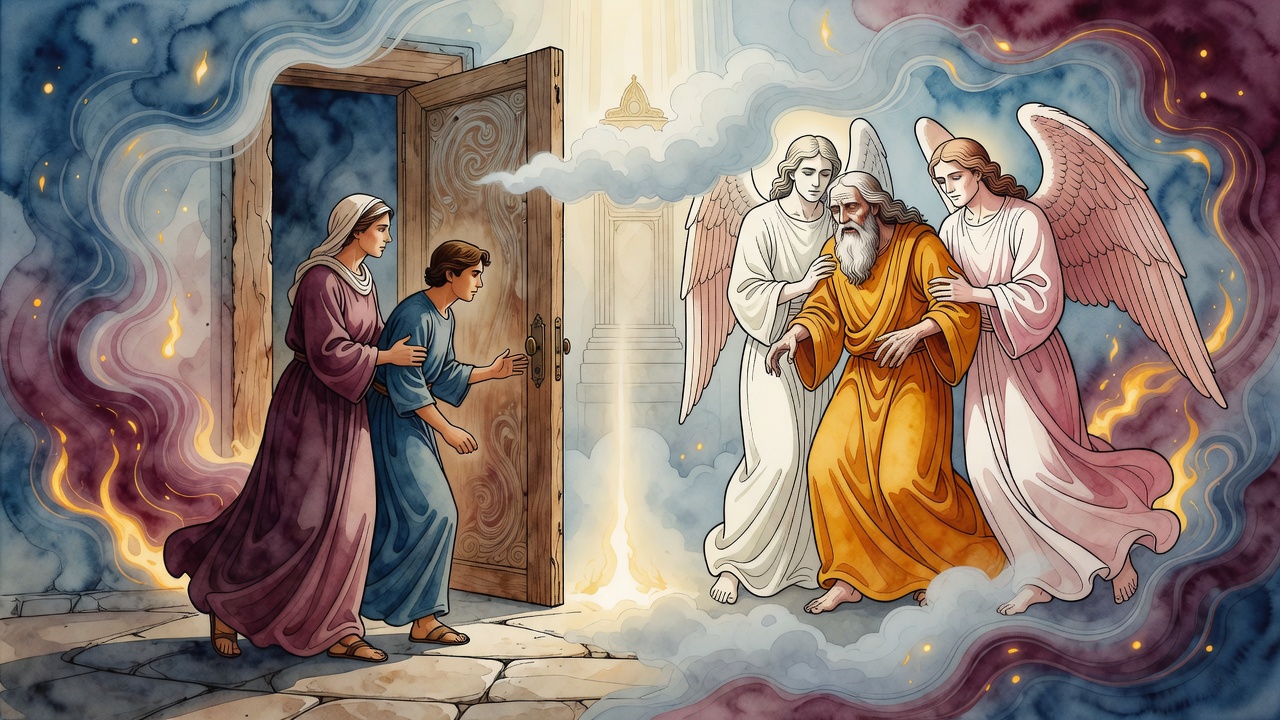
Rebecca leads Jacob to the threshold, then lets go. Blind Isaac hears God's name in the wrong mouth, trembles, and two angels hold him while the blessing holds.
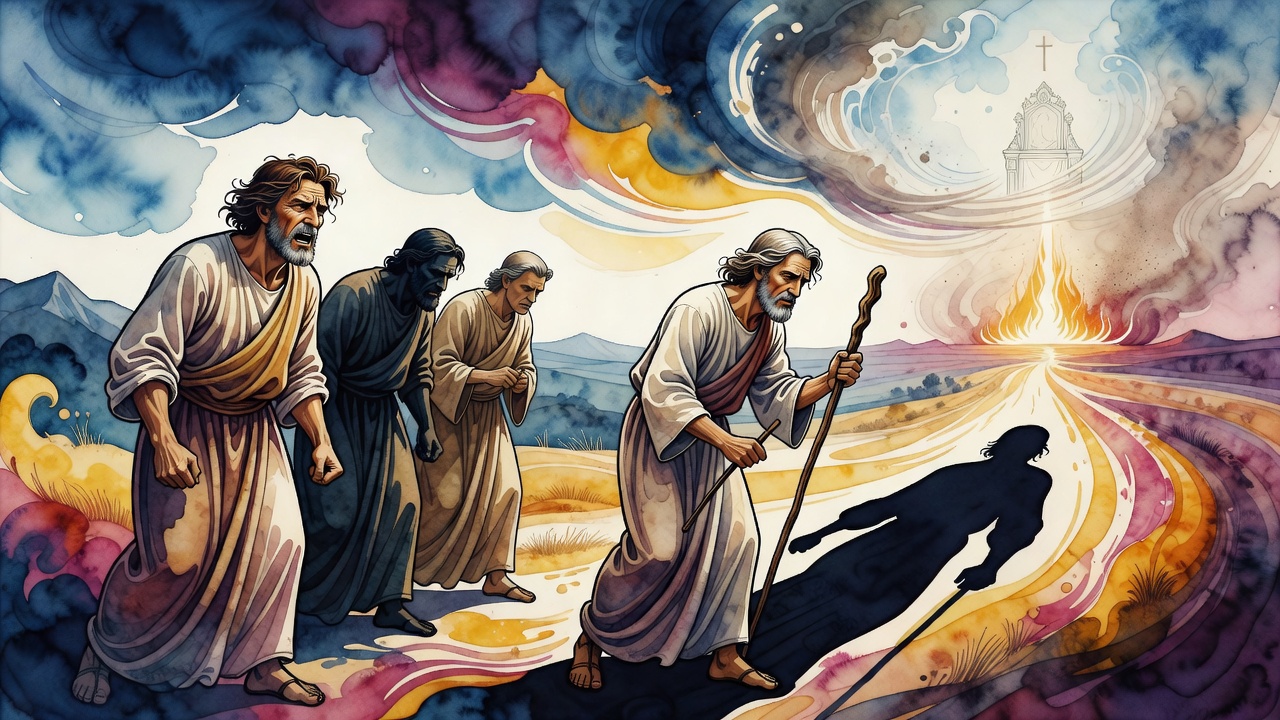
Esau dresses his loss as a crime, lining up with Cain and Manasseh. Jacob measures a whole life and finds only one day of peace under his brother's shadow.
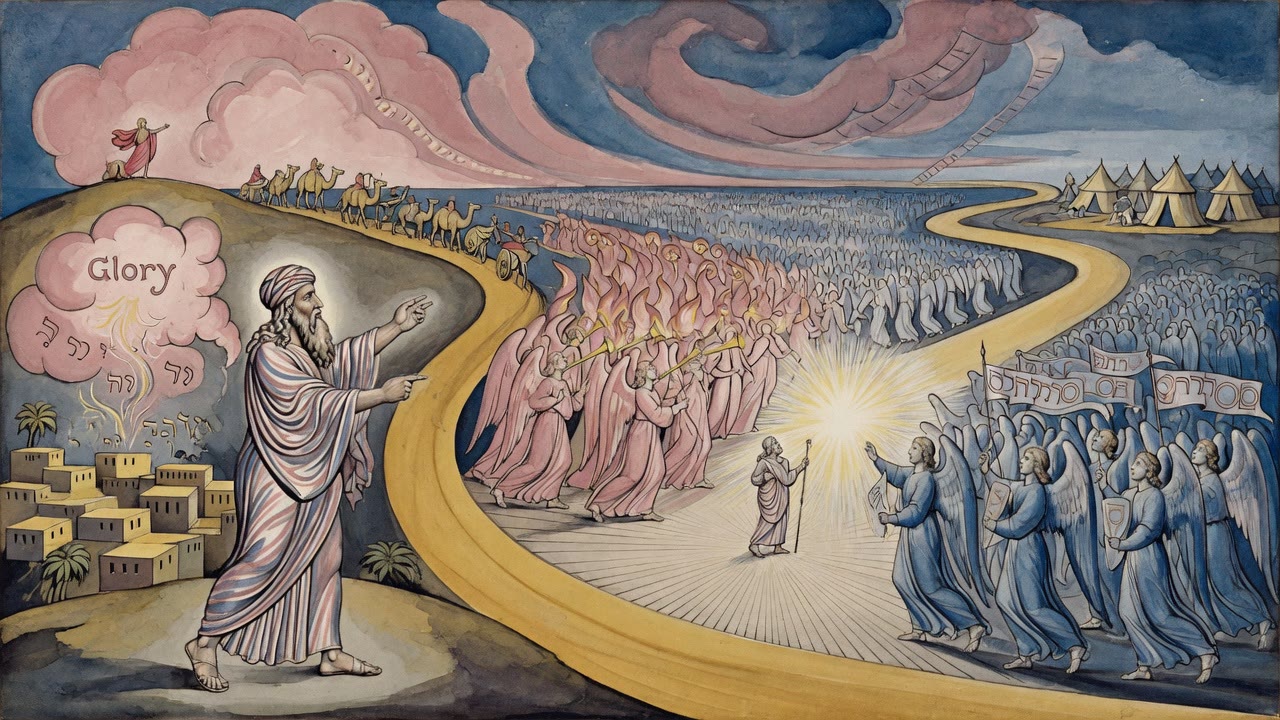
Jacob tells Esau he is coming to Seir, then turns toward Succoth. Glory leaves Beersheba with him, and at Mahanaim two camps of angels fill the road.
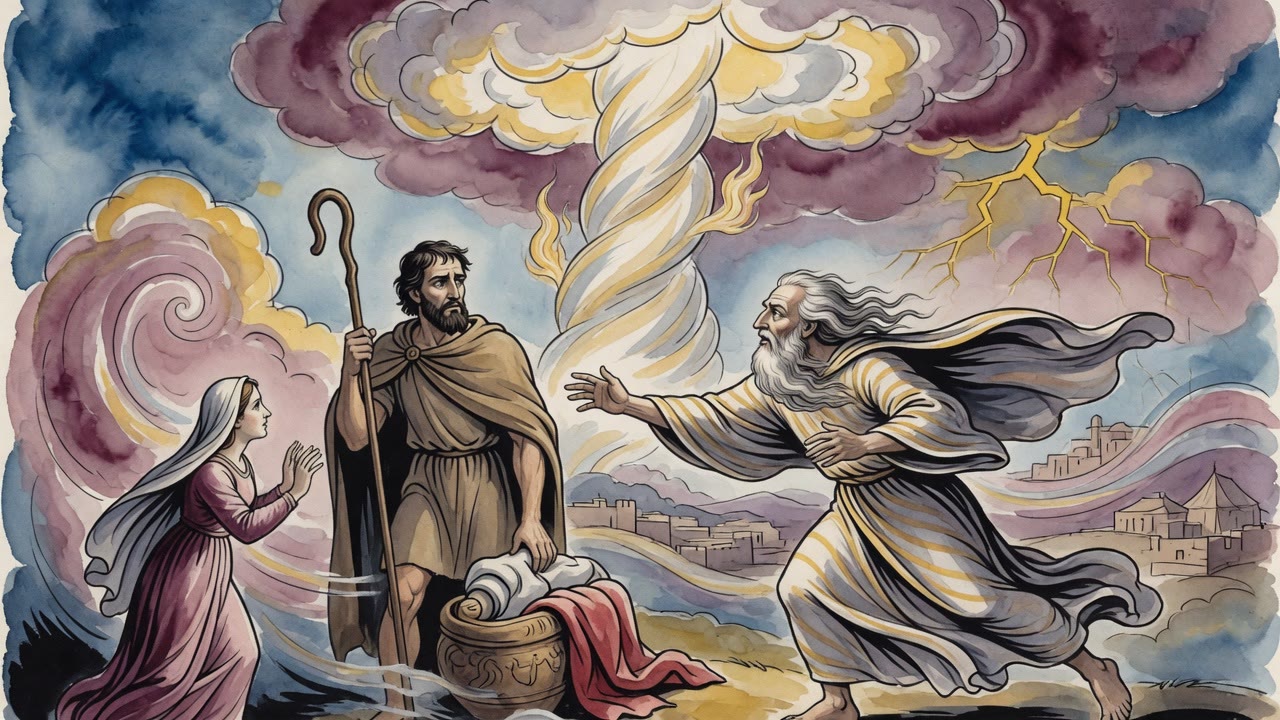
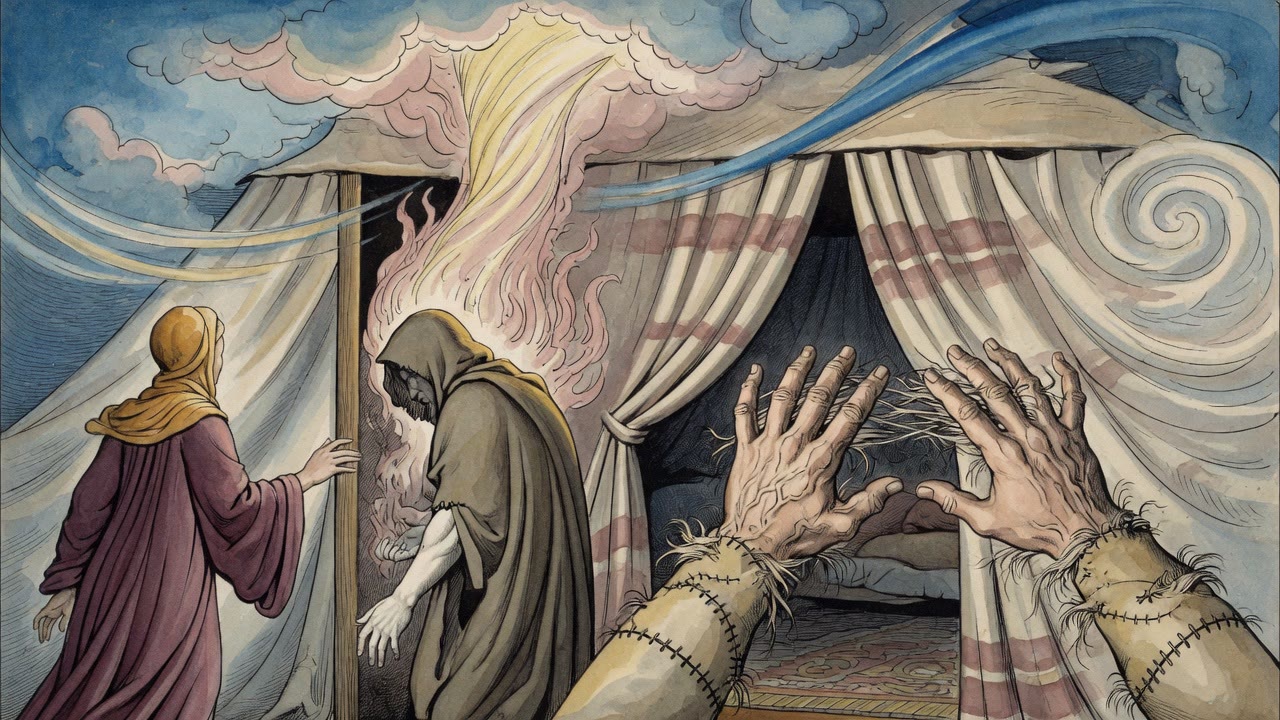
Rebecca stopped at the tent flap and would not cross. Jacob went in wearing goat hair on marble arms. Isaac's fingers believed the wrong son.
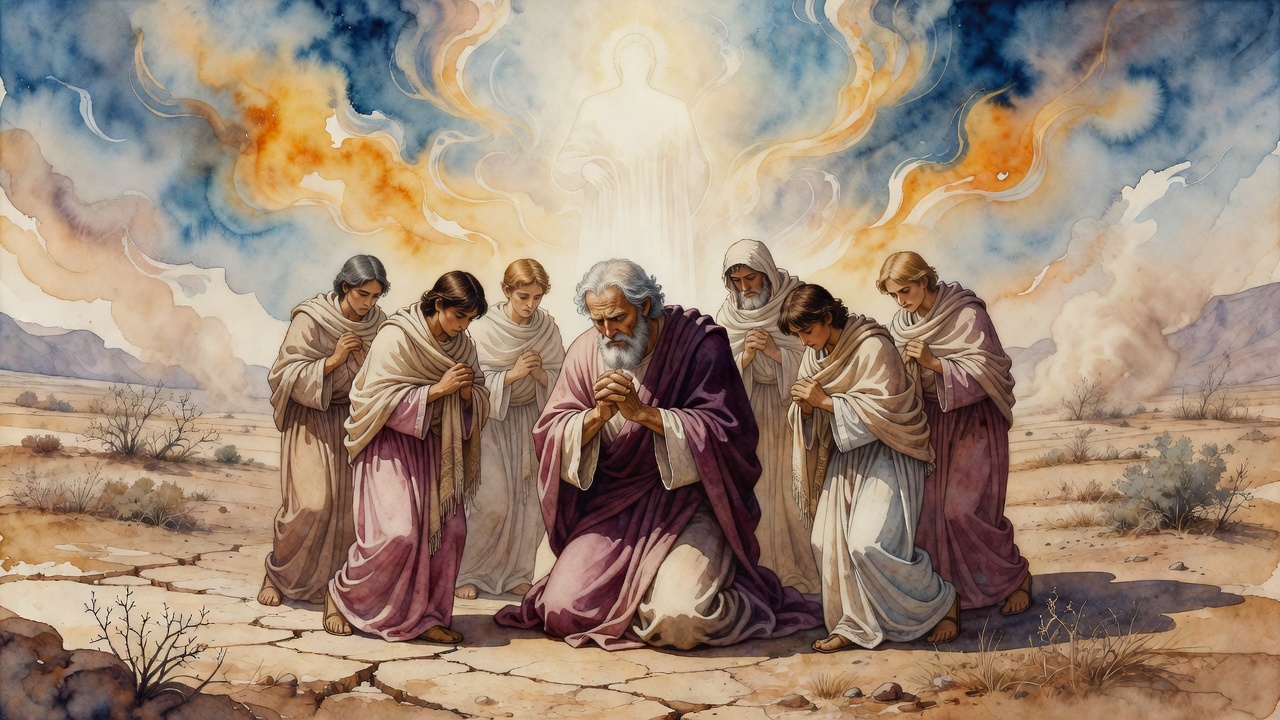
Famine presses Canaan. Jacob will not send Benjamin naked into Egypt. He wraps the boys in prayer first, and warns them to walk small under foreign eyes.
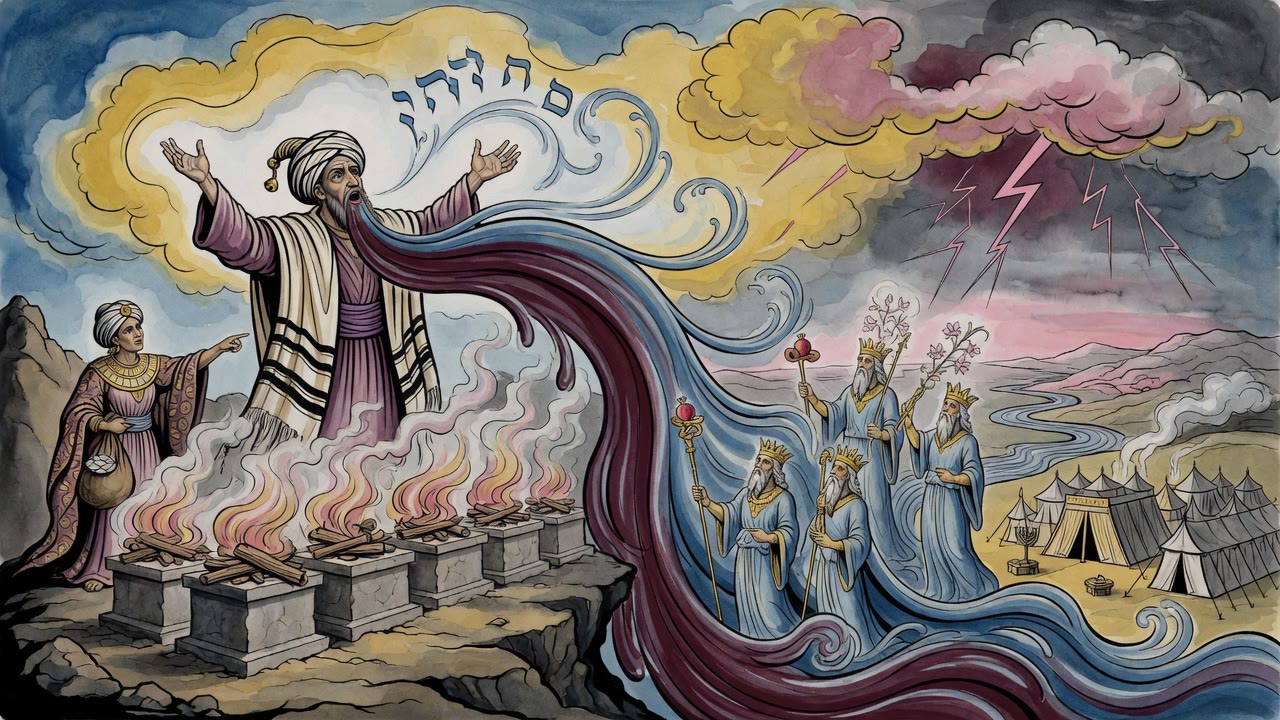
Balak hires a mouth to ruin Israel. Heaven bars the journey, the curse, and even the blessing. Balaam learns Jacob is the Kings own sealed portion.
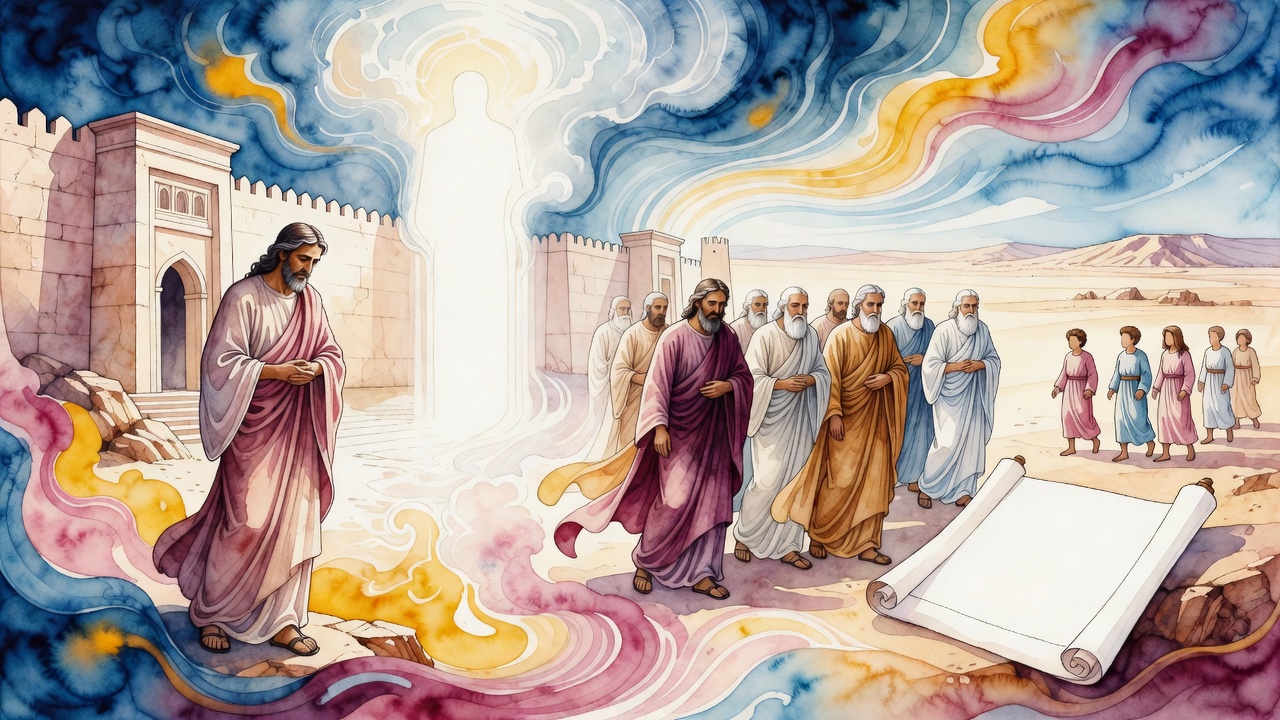
Grief kept Joseph out of the throne room. The second man in Egypt sent his request through clean-shaven mouths. Then a coffin pulled the court toward Hebron.
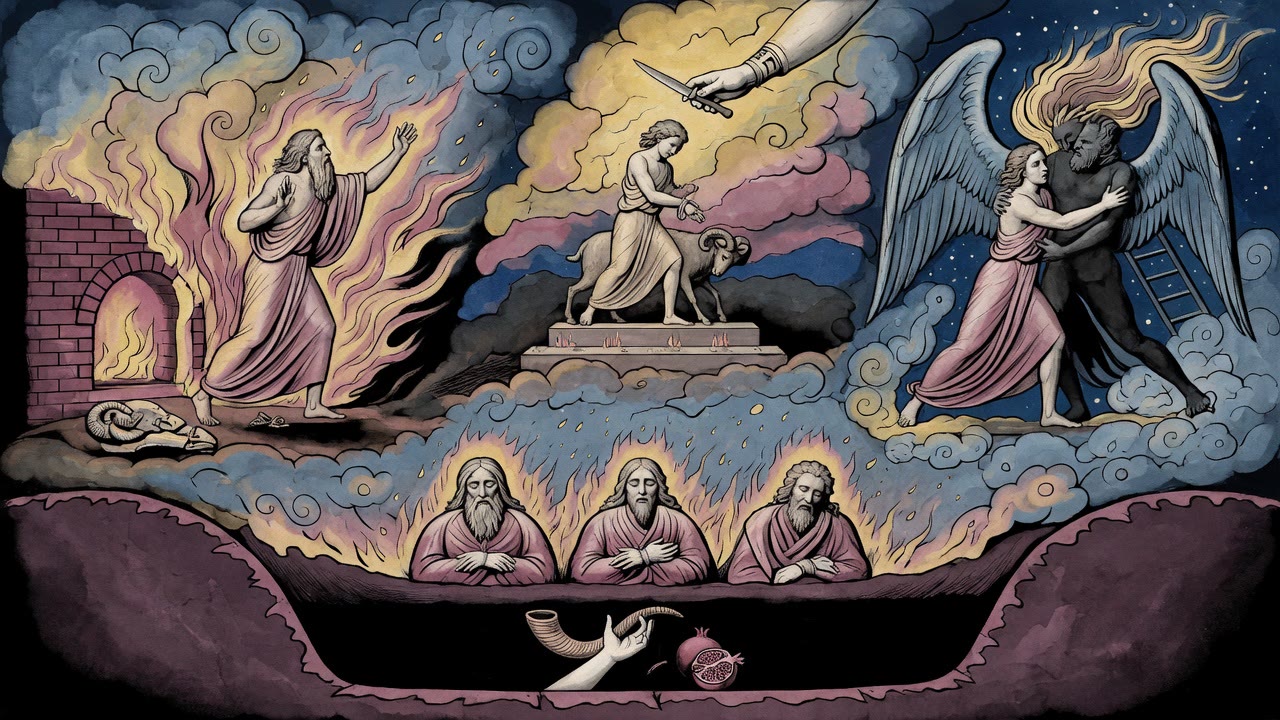
Abraham leaves the furnace alive, Isaac leaves the altar alive, Jacob leaves the angel alive. None of them leaves the grave unvisited.
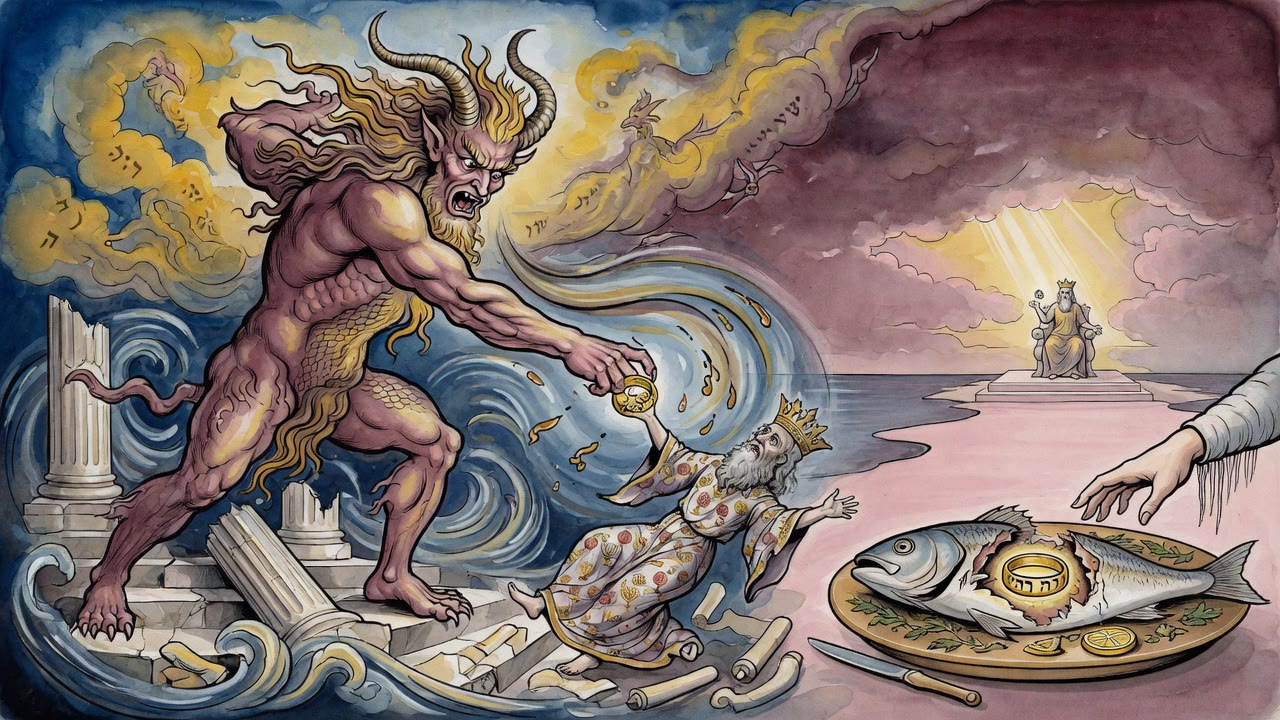
Jacob hangs a golden plate on Dinah's infant, leaves her by Egypt's wall, and years later that foundling becomes the wife of Egypt's lord.
